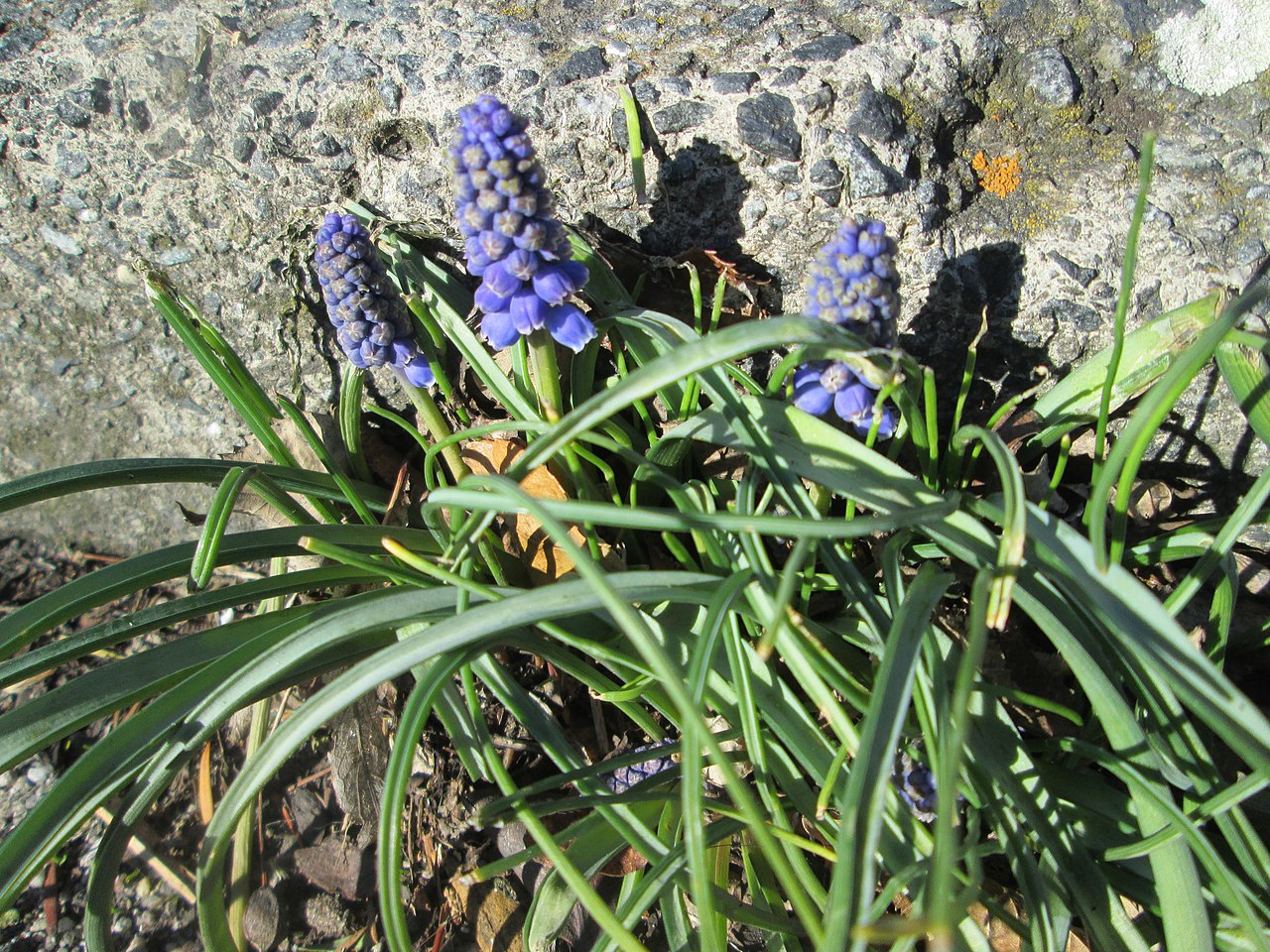
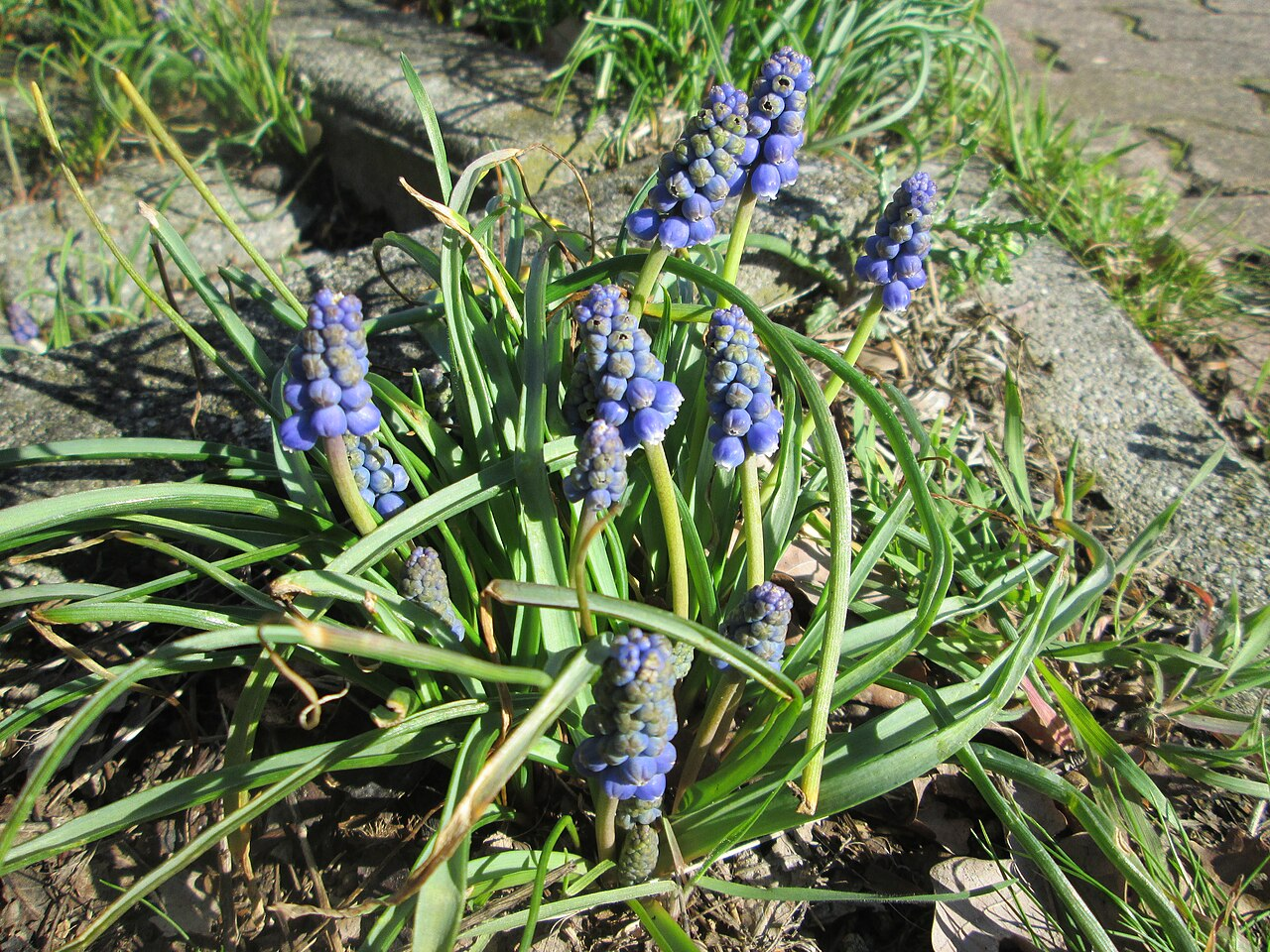
🌱 Plant Features
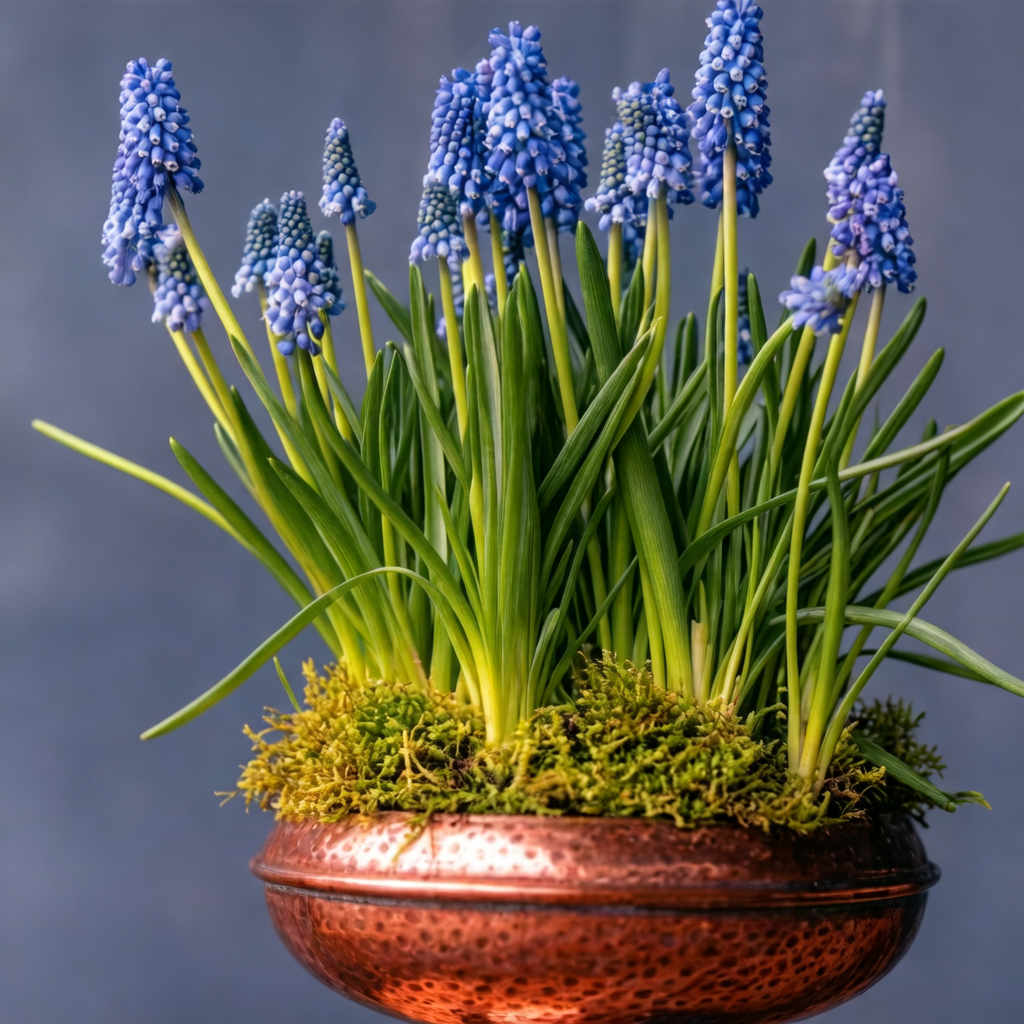
- Size:Typically 15–20 cm (6–8 in) tall with a spread around 10 cm (4 in).
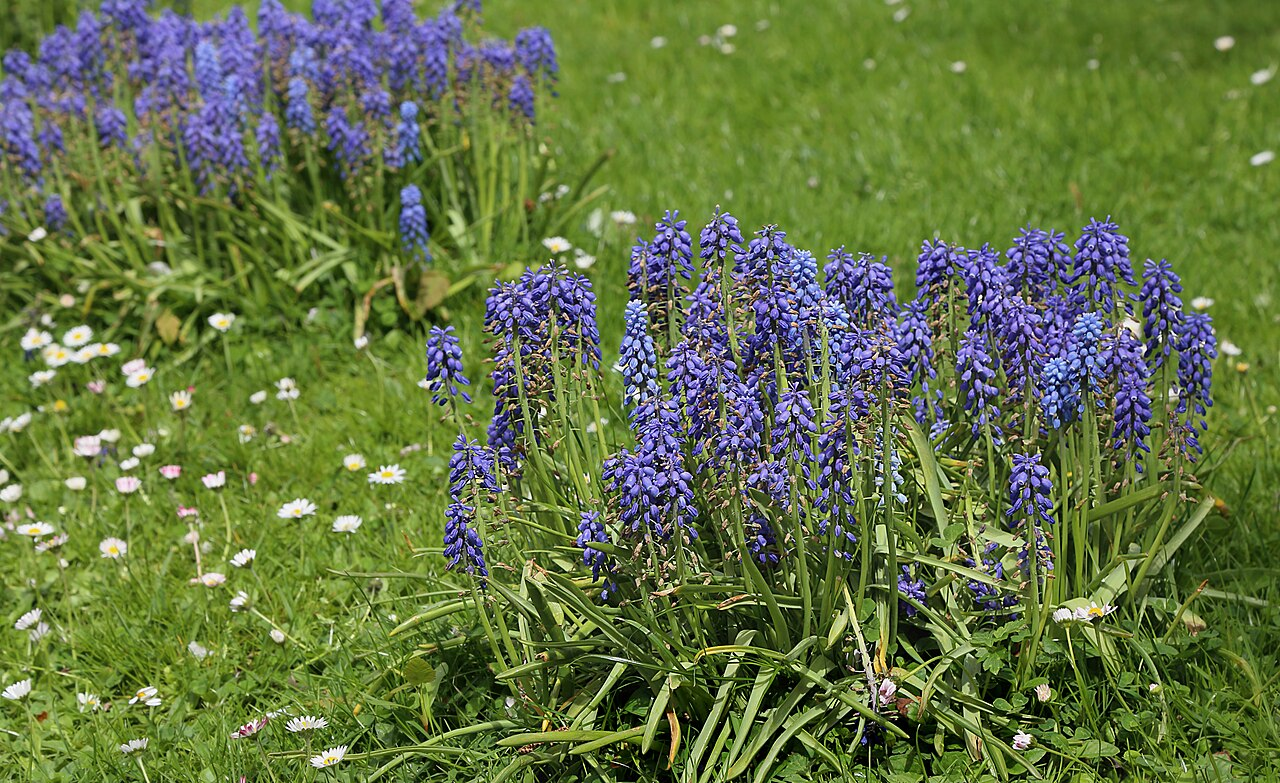
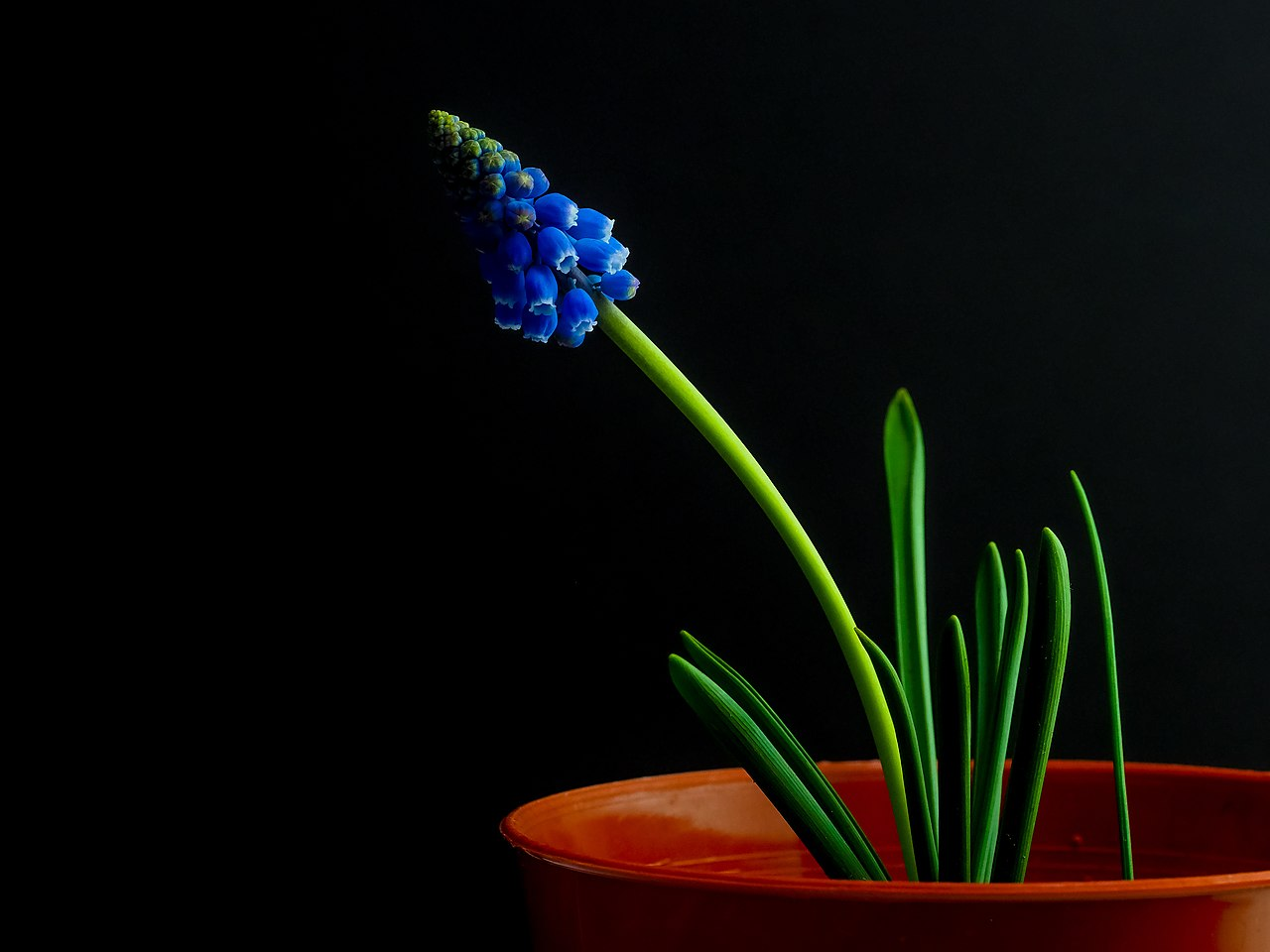
- Foliage:Narrow, strap-like leaves in fresh light green, emerging from the base.
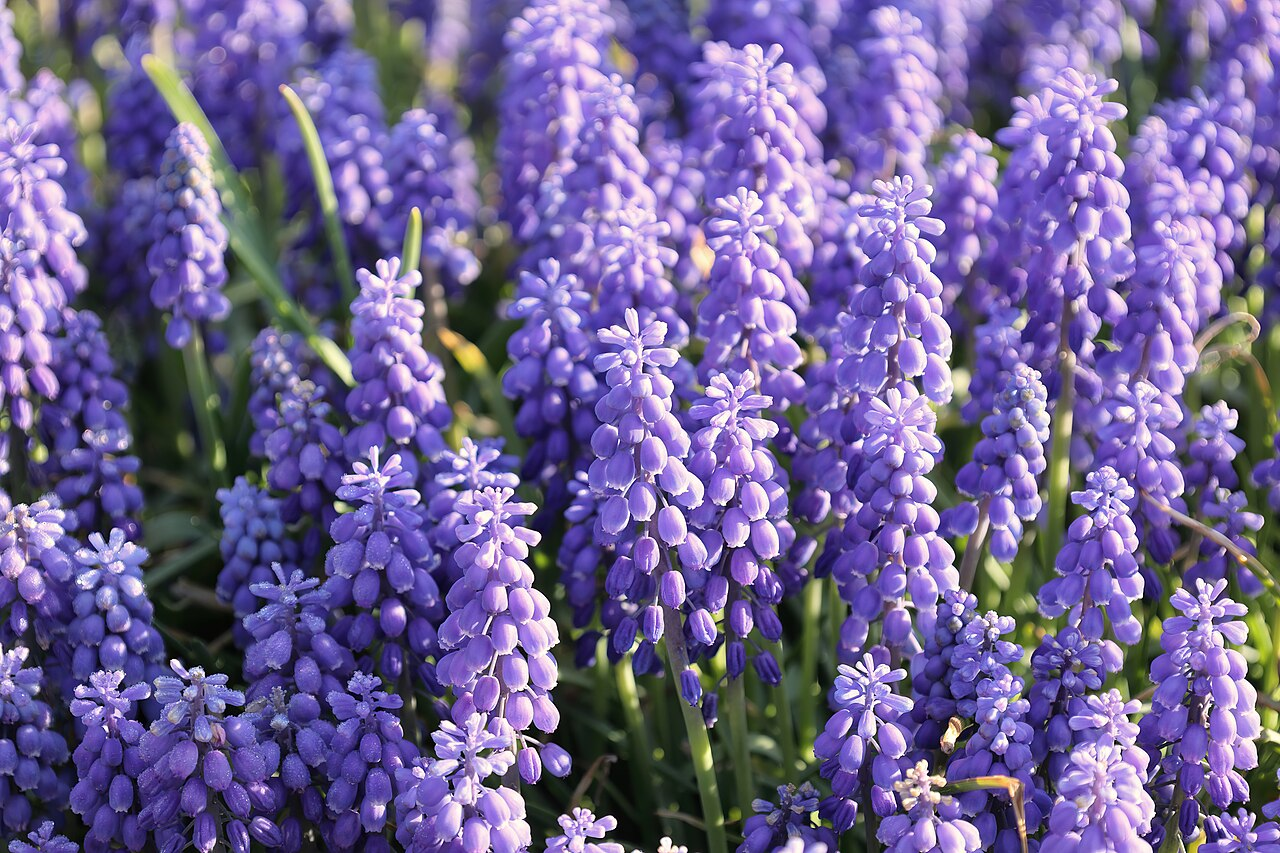
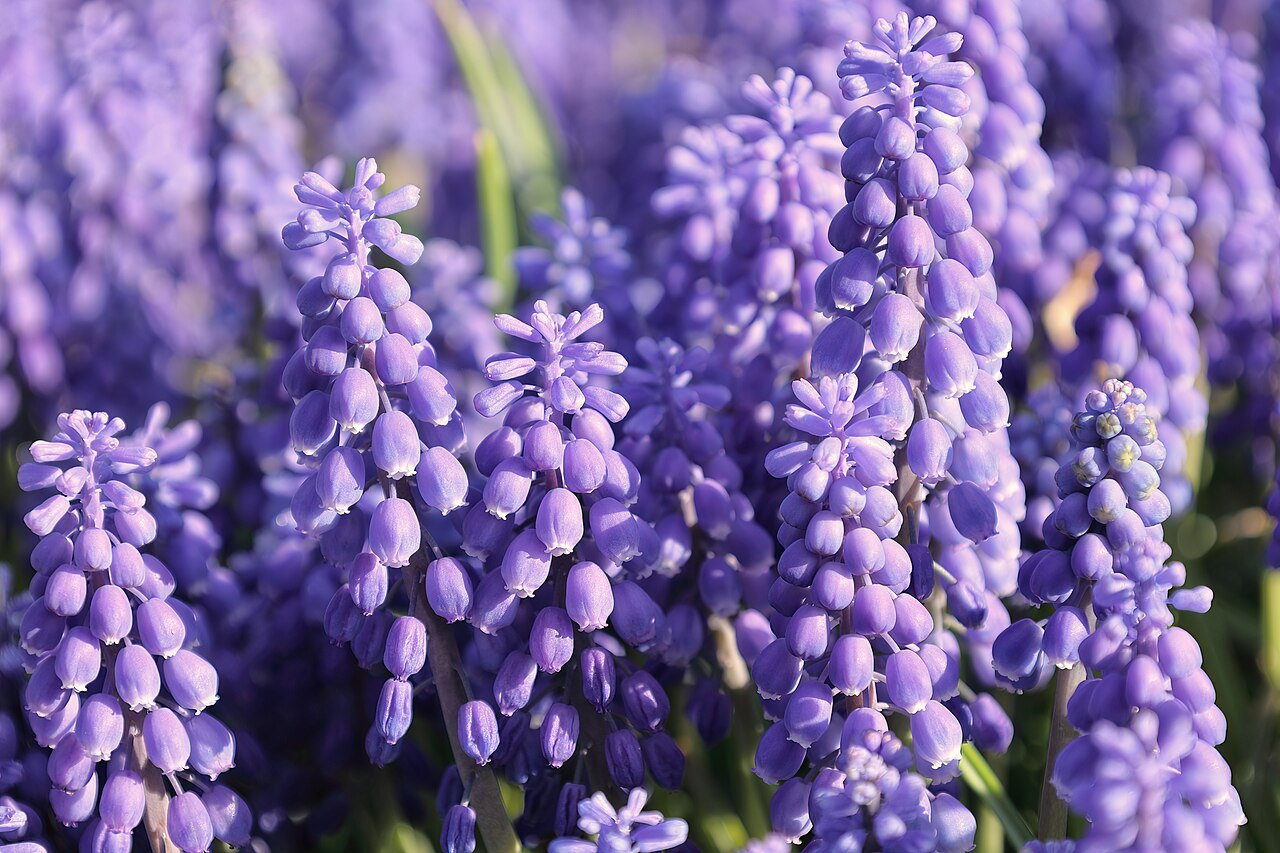
- Flower:Tight, conical clusters of small urn-shaped flowers; usually rich blue, also purple or white; often lightly scented.
- Flowering Season:Spring (often mid to late spring, depending on climate).
- Growth Habit:Bulbous perennial forming clumps; gradually increases by offsets and can naturalize into drifts over time.
🌤️ Environment
Sunlight
Part sun to full sun; flowers best in bright light. In hotter areas, a bit of afternoon shade helps extend bloom and keep plants looking fresh.
Temperature
Cold-hardy and happiest growing/flowering in cool spring weather. Tolerates winter lows to about -15°C (5°F) once established; generally performs well across typical temperate spring conditions.
Humidity
Average to low humidity is fine. In containers, avoid stagnant, constantly damp conditions that encourage rot.
Soil
Well-drained soil is essential. In pots, use a free-draining potting mix and choose a container at least 15 cm (6 in) wide and 15 cm (6 in) deep. Plant bulbs point-up, close together but not touching, with tips just at or slightly above the surface.
Placement
Great for balcony/patio pots, borders, rock gardens, and naturalized areas. For forcing, start bulbs indoors after chilling; after flowering, move pots outdoors to a lightly shaded spot while foliage matures and recharges the bulbs.
Hardiness
USDA Zone 4–8 (can vary a bit by cultivar and local conditions).
🪴 Care Guide
Difficulty
Very easy; a beginner-friendly bulb for pots, borders, and naturalized plantings.
Buying Guide
Choose firm, plump bulbs with intact skins—avoid any that feel soft, show mold, or have cuts. Larger bulbs usually bloom more strongly in the first season.
Watering
Water once after planting to settle the soil. Over winter keep the mix almost dry (slightly moist at most—never soggy). Once leaves and flower spikes appear, water more regularly so the mix stays evenly moist while the plant is actively growing.
Fertilization
After flowering, as the foliage begins to yellow, feed every 2 weeks with a balanced liquid fertilizer (follow label directions) to help the bulb recharge for next year.
Pruning
Snip off spent flower spikes to keep things tidy. Let the leaves die back naturally—don’t cut green foliage early, because it fuels next year’s bloom.
Propagation
Separate and replant offsets after the foliage dies back. In pots, use a container at least 15 cm (6 in) wide and 15 cm (6 in) deep; plant bulbs point-up, close but not touching, with tips just showing. You can also chill/force bulbs indoors for earlier bloom, then move them outdoors after flowering so they can rebuild strength.
Repotting
Divide or repot crowded containers after foliage has died back (late spring to summer). Refresh the potting mix and replant bulbs/offsets at the same depth.
📅 Seasonal Care Calendar
After planting: water once to settle. Winter: keep compost almost dry. When leaves/flowers emerge: keep evenly moist. Post-bloom: as foliage starts to yellow, feed every 2 weeks. After flowering: move outdoors to light shade and allow foliage to die back fully so bulbs can rebloom next year.
🔬 Pests, Diseases & Safety
Common Pests & Diseases
Usually trouble-free. Watch for bulb rot in waterlogged soil, slugs/snails on tender growth, and occasional aphids. Prevent problems with sharp drainage and sensible watering; use barriers or targeted controls if infestations appear.
Toxicity
Mildly toxic if bulbs are eaten and may cause stomach upset in people and pets. Keep bulbs away from children and animals; wear gloves if you have sensitive skin.
🎋 Culture & Symbolism
Symbolism:Often linked with spring renewal and cheerful simplicity; blue-flowered forms are commonly associated with calm, trust, and serenity.
History & Legends:Grown in European gardens for centuries, grape hyacinths became beloved for their reliable spring color and their ability to naturalize into bright, blue drifts.
Uses:Primarily ornamental—ideal for spring pots, balcony containers, borders, rock gardens, and naturalizing in lawns or woodland edges. Bulbs also force well indoors for early seasonal color, then can be moved outside after bloom to recharge.
❓ FAQ
Can grape hyacinths be forced indoors?
Yes. Chill bulbs for about 10–12 weeks at 2–9°C (36–48°F), then bring them into bright, cool conditions. Water lightly until growth begins; once shoots appear, keep the mix evenly moist.
Why didn’t my bulbs flower well the second year in a pot?
The usual culprits are removing foliage too early or keeping the pot too wet (or bone-dry) after flowering. Let leaves die back naturally, give the pot good light after bloom, and make sure drainage is excellent so the bulbs can recharge.
💡 Fun Facts
- The genus name Muscari refers to a musky scent noted in some species.
- In the ground, grape hyacinths can naturalize and form colorful spring carpets over time.
- The flower clusters resemble tiny bunches of grapes—hence the common name.