🌱 Plant Features
- Size:15–30 cm (6–12 in) tall and about 15–20 cm (6–8 in) wide
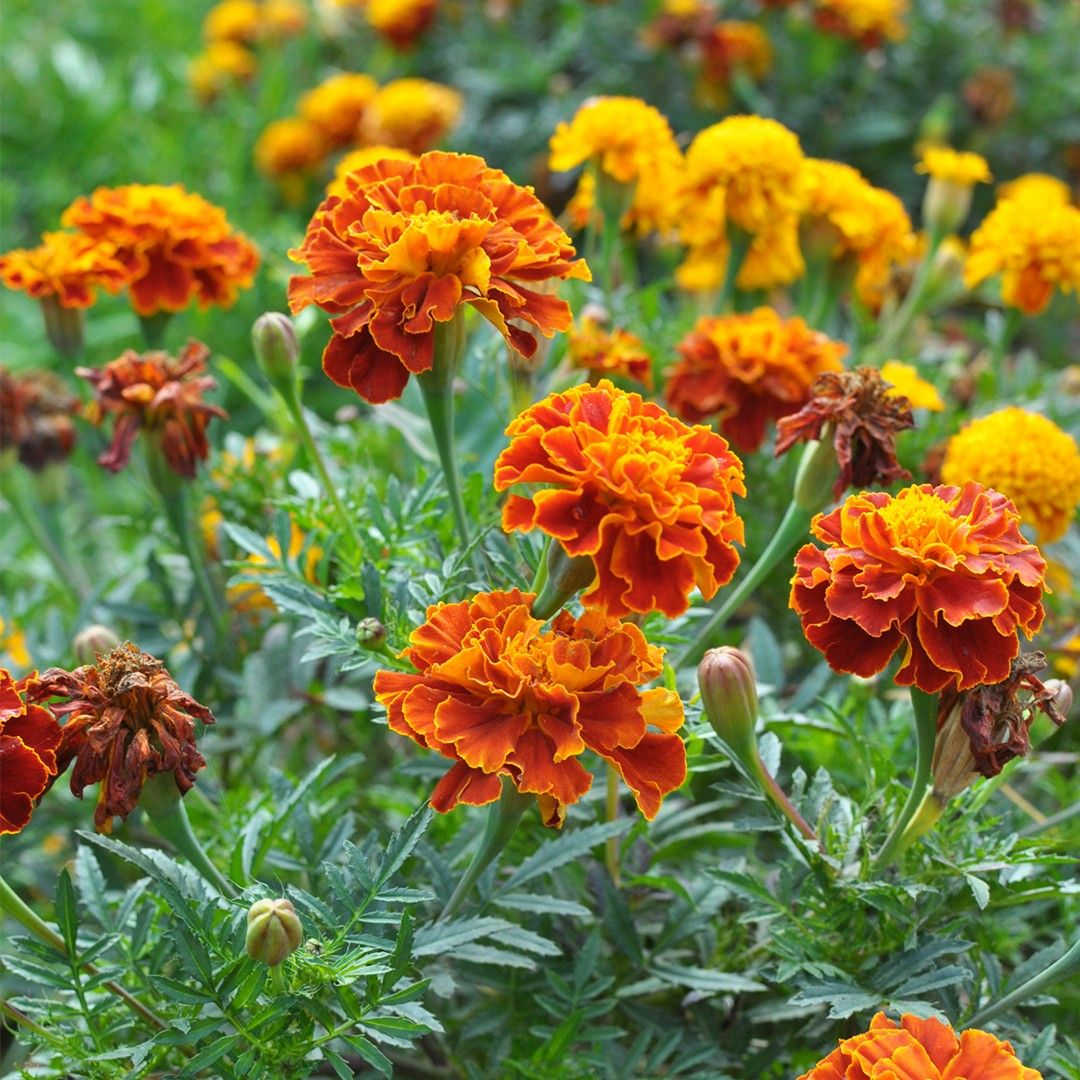
- Foliage:Bright green, pinnately divided, fern-like foliage with a noticeable aromatic, spicy scent when handled or brushed.
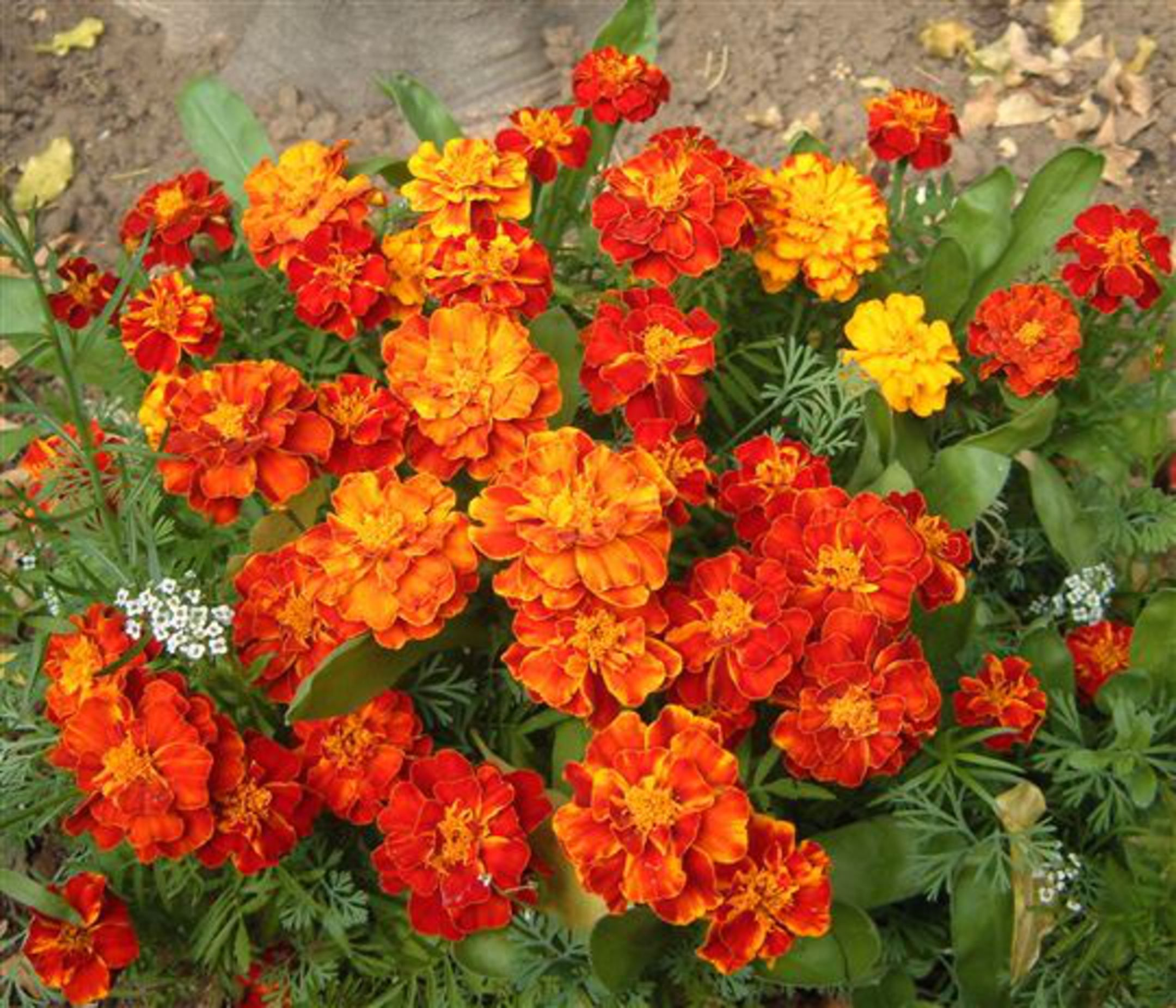
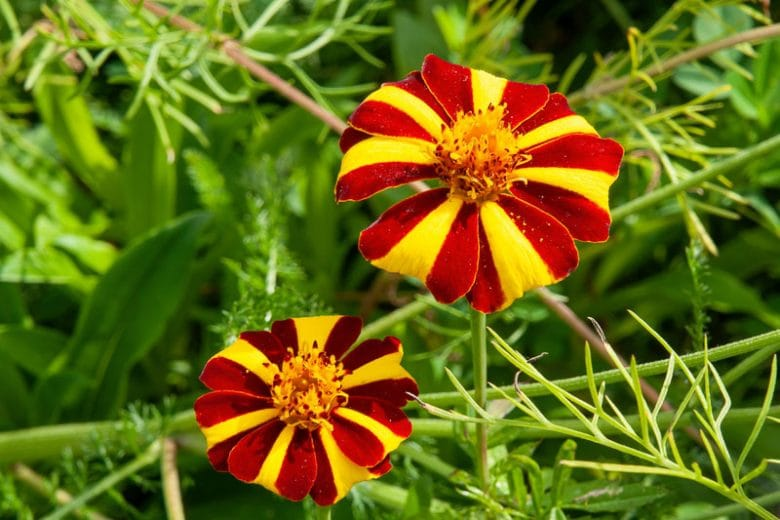
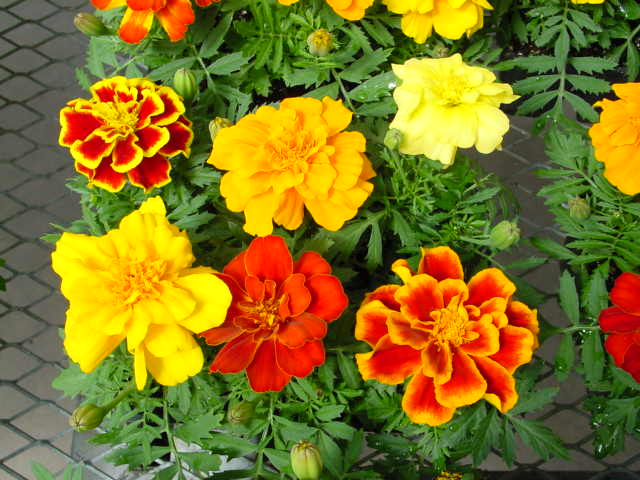
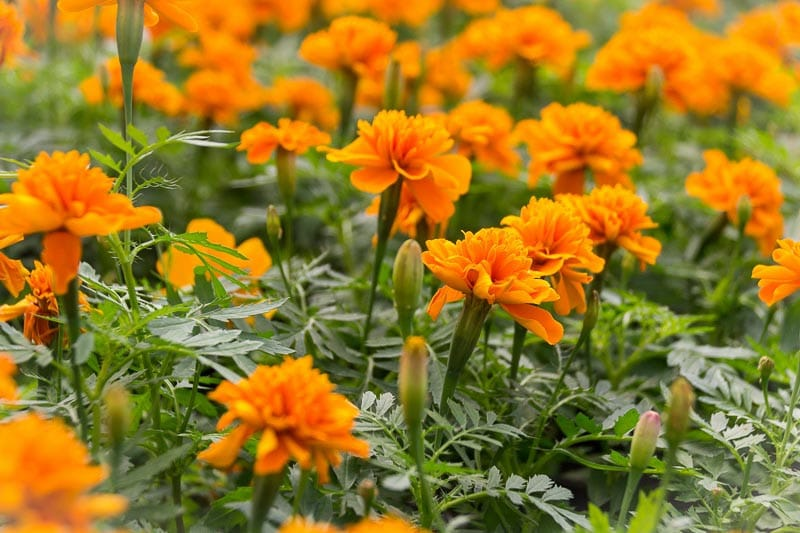
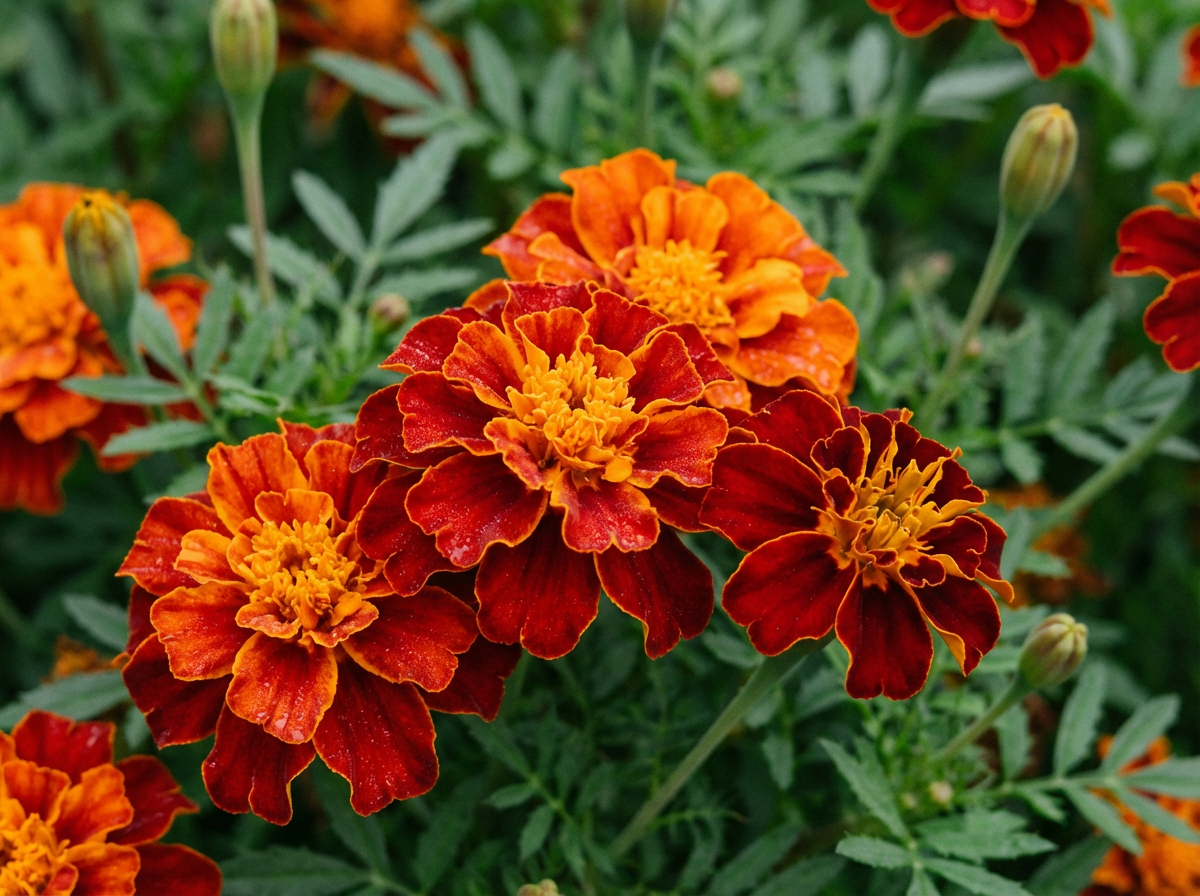
- Flower:Flowers are typically 2.5–7.5 cm (1–3 in) across, often semi-double to fully double or crested with a frilly, decorative look. Colors range from golden yellow to orange and deep red, commonly bicolored; single forms may show a golden-yellow face with a central garnet/maroon blotch.
- Flowering Season:Early summer through autumn, often right up to the first frost; blooming may slow in extreme midsummer heat and pick up again as temperatures cool.
- Growth Habit:Compact, bushy, vigorous annual. Often self-seeds lightly in the garden when spent blooms are left to mature.
🌤️ Environment
Sunlight
Full sun (at least 6 hours/day) for best flowering; tolerates light afternoon shade in very hot climates, but too much shade reduces blooms.
Temperature
Flowers best around 20–24°C (68–75°F). Not frost-hardy; growth and flowering slow around 4°C (40°F) and plants are killed by hard frost.
Humidity
Adaptable—handles both humid and drier conditions once established, as long as air circulation is decent.
Soil
Well-drained soil is key. Prefers moderately fertile, dry-to-evenly moist soil with a pH around 6–7, but is tolerant of poorer soils (sand, loam, or clay if drainage is adequate).
Placement
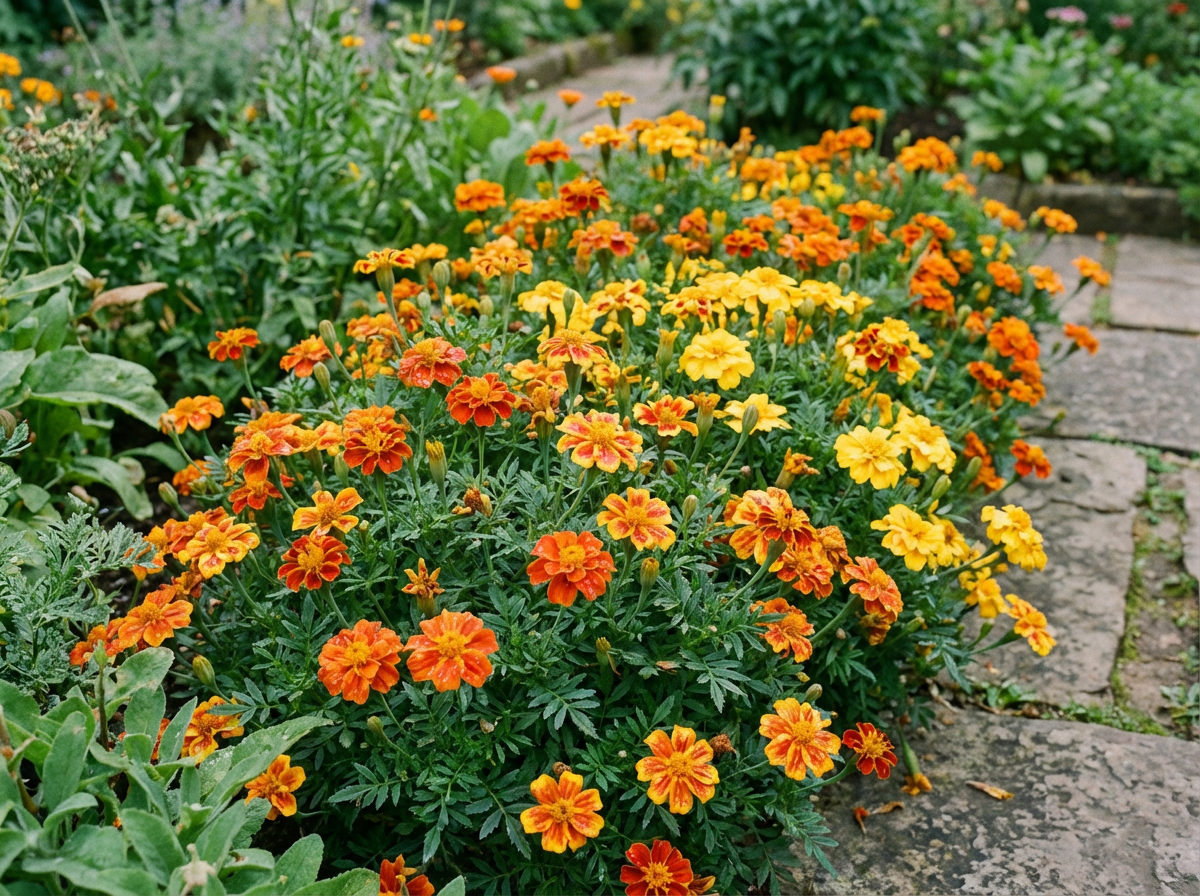
Great in sunny beds and borders, along edging, and in pots on patios/balconies. Also excellent tucked into vegetable and herb gardens for companion planting.
Hardiness
Grown as an annual in USDA Zones 2–11; not cold-hardy and will die back with frost.
🪴 Care Guide
Difficulty
Easy—reliable, forgiving, and a classic beginner-friendly flower (also great for kids’ gardens).
Buying Guide
Pick plants with sturdy stems, bright healthy foliage, and no obvious pest/disease damage. Transplants with buds (rather than full bloom) usually settle in and branch out better after planting.
Watering
Water well after planting to help roots establish. Once established, let the top of the soil dry to the touch and then water thoroughly; they’re fairly drought-tolerant but flower best with consistent moisture. In hot spells, container plants may need watering more often (sometimes 2× weekly). Water at soil level to keep foliage dry and reduce fungal issues; avoid waterlogged soil to prevent root rot.
Fertilization
Not a heavy feeder. In containers or very depleted beds, mix in a balanced fertilizer (e.g., 10-10-10) at planting. Avoid excess nitrogen, which can push leafy growth at the expense of flowers. (For intensive/soilless production, some growers alternate formulas like 20-10-20 and 14-0-14 at 200–250 ppm every 7–10 days.)
Pruning
Pinch early tips/buds to encourage branching for a fuller plant. Deadhead regularly (remove spent blooms) to keep flowers coming. If plants get leggy, trim back stems just above a leaf set; avoid removing more than one-third of the plant at a time.
Propagation
Very easy from seed. Seeds germinate in about 7–14 days with warm soil around 21–24°C (70–75°F). Sow outdoors after frost, about 6 mm (1/4 in) deep; thin or space plants about 25–30 cm (10–12 in) apart. You can also start indoors 6–8 weeks before the last frost. Plants may self-seed if flowers are left to set seed.
Repotting
Usually grown as a seasonal annual rather than repotted. For containers, dwarf types do well in about 15 cm (6 in) pots (often 2–3 plants per pot), while standard types are happier in about 30 cm (12 in) containers; avoid overcrowding to reduce disease.
📅 Seasonal Care Calendar
Spring: Start seeds indoors 6–8 weeks before last frost or plant outside after frost risk passes. Summer: Peak bloom—deadhead, water during dry spells, give light afternoon shade in extreme heat, and feed lightly only if growth is weak. Autumn: Keeps blooming until frost; in frost-free areas, can be planted for fall color in late summer. Winter: Plants die after frost (or gradually decline with age in mild climates).
🔬 Pests, Diseases & Safety
Common Pests & Diseases
Common pests include spider mites and thrips. Reduce outbreaks with strong water sprays and treat heavier infestations with neem or horticultural oil. Fungal problems (powdery mildew, botrytis) and bacterial leaf spots are more likely with crowded plants and wet foliage—space plants well and water at the base. Root rot is usually a drainage/overwatering issue. Fusarium/verticillium wilts can cause sudden collapse; prevention (clean soil, good drainage, resistant varieties) is most effective. The strong scent tends to discourage deer and rabbits.
Toxicity
Generally considered low-toxicity, but the foliage sap/oils can irritate sensitive skin—wear gloves if you react easily. Typically regarded as safe around pets with normal exposure, though chewing large amounts of any plant may cause mild stomach upset.
🎋 Culture & Symbolism
Symbolism:Often associated with warmth, passionate affection, and steadfast love—yet in some traditions it can also symbolize grief or bittersweet feelings about lost love. In many cultures, marigolds are also seen as protective, lucky plants believed to ward off negativity.
History & Legends:Despite the common name, French marigold isn’t French at all—its roots are in Mexico and Central America. The “French” label likely stuck because the plant became popular through European (including French) gardening and trade. Marigolds are especially famous in Mexican traditions, where they feature prominently in Day of the Dead celebrations.
Uses:A top-notch ornamental for beds, borders, edging, and containers, and a colorful addition to bouquets. In companion planting, it’s valued for helping suppress root-knot nematodes and for supporting beneficial insects, making it a classic partner for tomatoes and other vegetables. Petals have also been used historically for natural dyes, and the plant has a long history of folk and ritual use in various cultures.
❓ FAQ
Do French marigolds come back every year?
They’re annuals, so the original plants won’t survive winter frost. However, they can drop seed and pop up again the next season, especially if you leave a few spent flowers to mature.
How do I keep French marigolds blooming for as long as possible?
Give them plenty of sun, don’t overfeed with nitrogen, and deadhead regularly. Keep watering consistent during dry weather. If extreme heat slows flowering, they usually rebound when temperatures cool.
Why are my marigold leaves turning brown or spotted?
Common causes include leaf spot diseases (often made worse by wet foliage), stress from drought/heat, and poor airflow in crowded plantings. Water at the soil line, thin or space plants for better circulation, and remove badly affected leaves.
What’s the difference between French and African marigolds?
French marigolds (Tagetes patula) are compact (about 15–30 cm / 6–12 in tall) with smaller blooms in many red-orange-yellow blends. African marigolds (Tagetes erecta) are taller with larger flowers. Care is broadly similar, but spacing and height in the garden differ.
Why is my whole marigold plant suddenly wilting?
Most often it’s water-related (root rot from soggy soil) or a soil-borne wilt disease. Check drainage and avoid overwatering; if wilting persists and stems look unhealthy, remove the plant to limit spread and replant in fresh, well-drained soil.
💡 Fun Facts
- It’s called “French” marigold, but it’s native to Mexico and Central America.
- French marigolds are famous companion plants because their roots can help suppress root-knot nematodes.
- Their strong, spicy scent is a big part of why many pests (and even deer/rabbits) tend to leave them alone.
- They’re one of the easiest flowers to grow from seed—quick to sprout and quick to bloom.