🌱 Plant Features
- Size:Typically 30–60 cm (12–24 in) tall indoors, with a similar spread of about 30–60 cm (12–24 in), depending on cultivar and pot size.
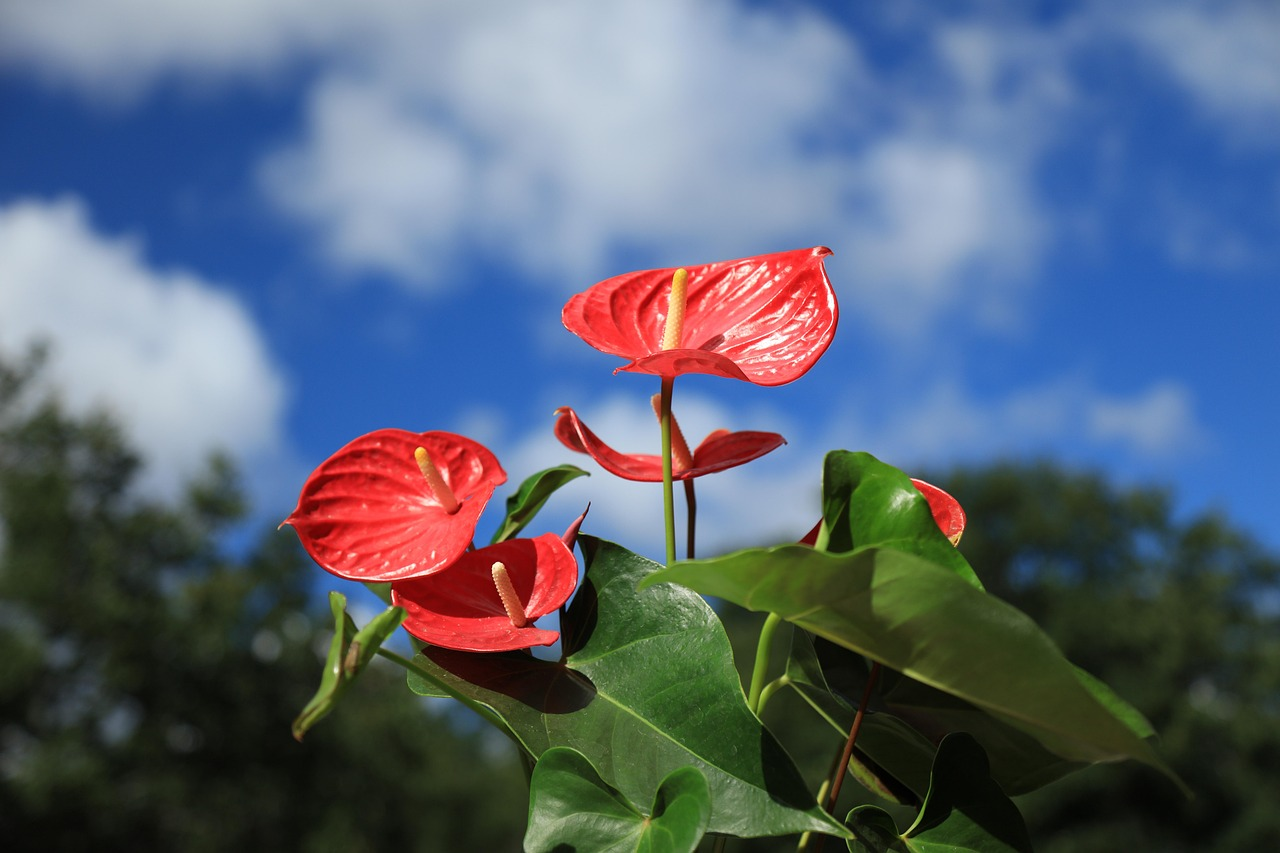
- Foliage:Evergreen, leathery, glossy leaves that are heart-shaped to broadly oval, held on long petioles. The foliage is usually a rich deep green and forms a neat, clump-like plant.
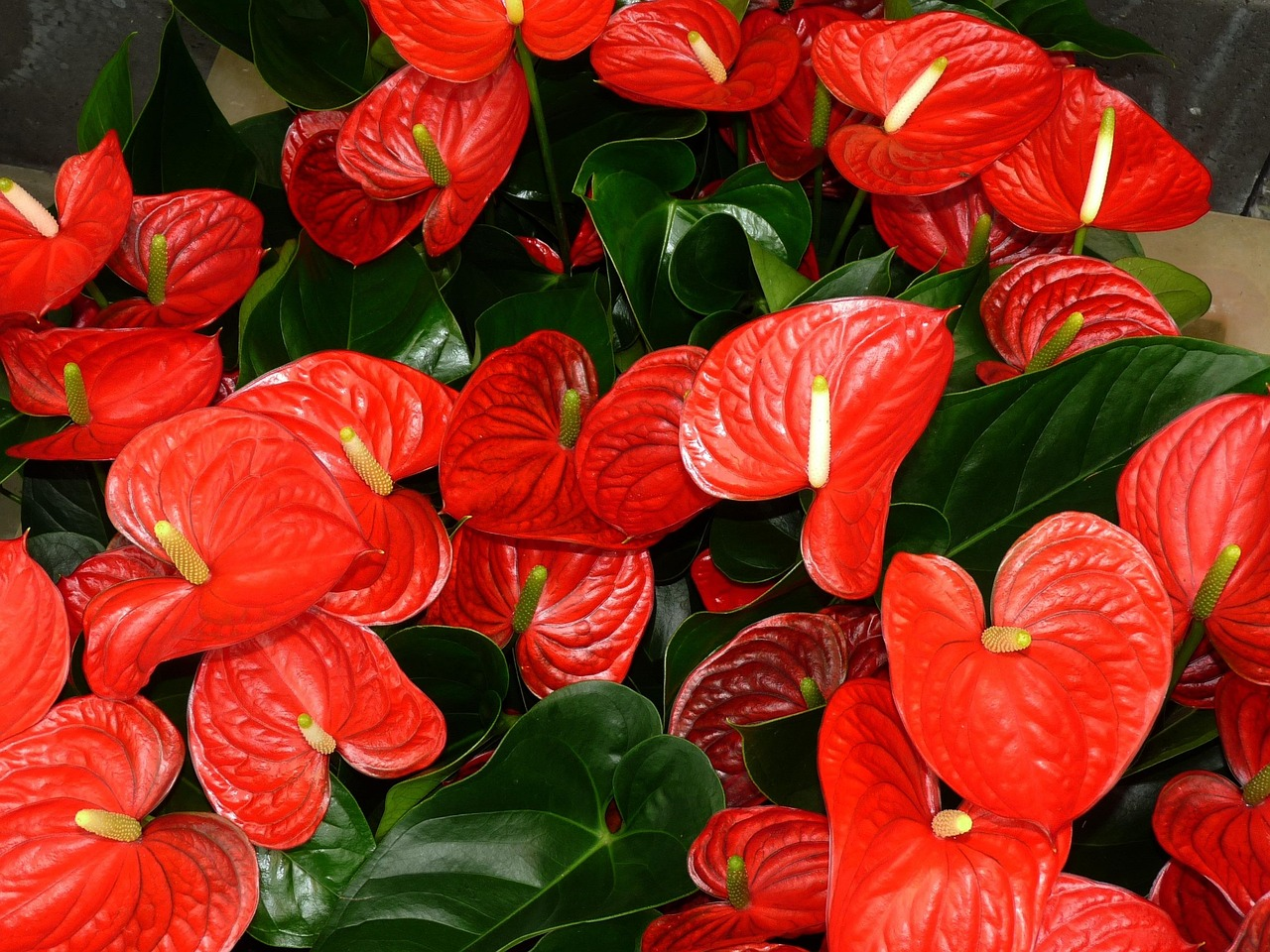
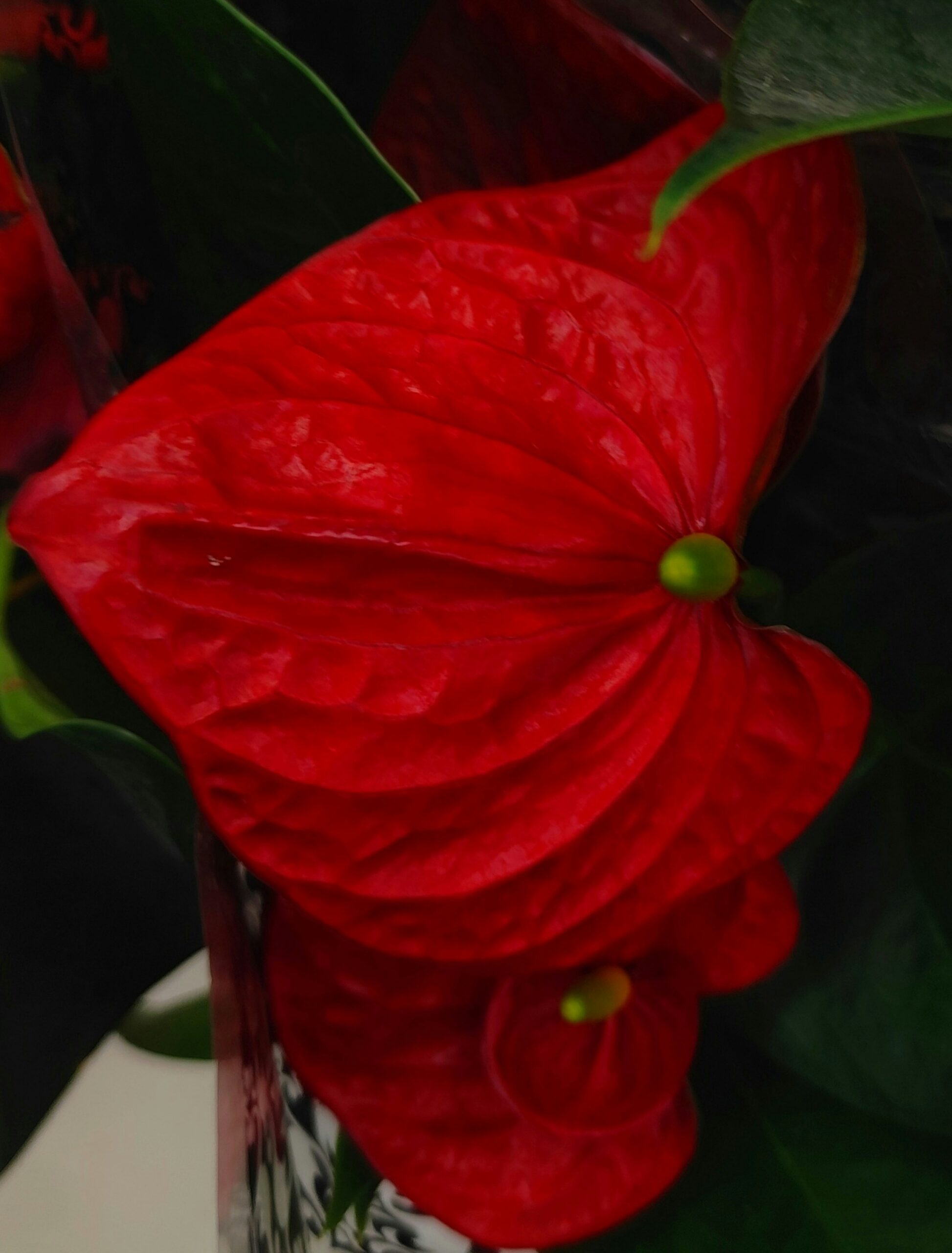
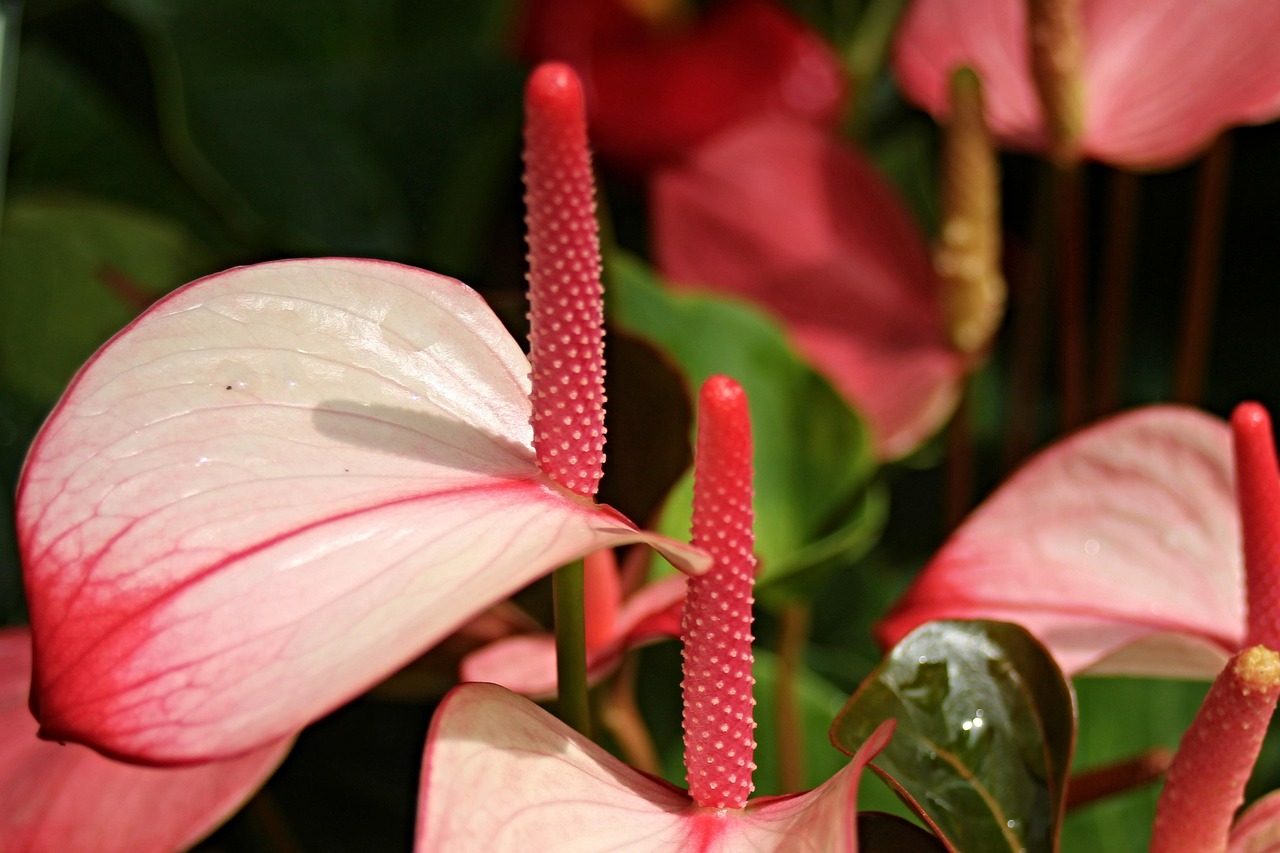
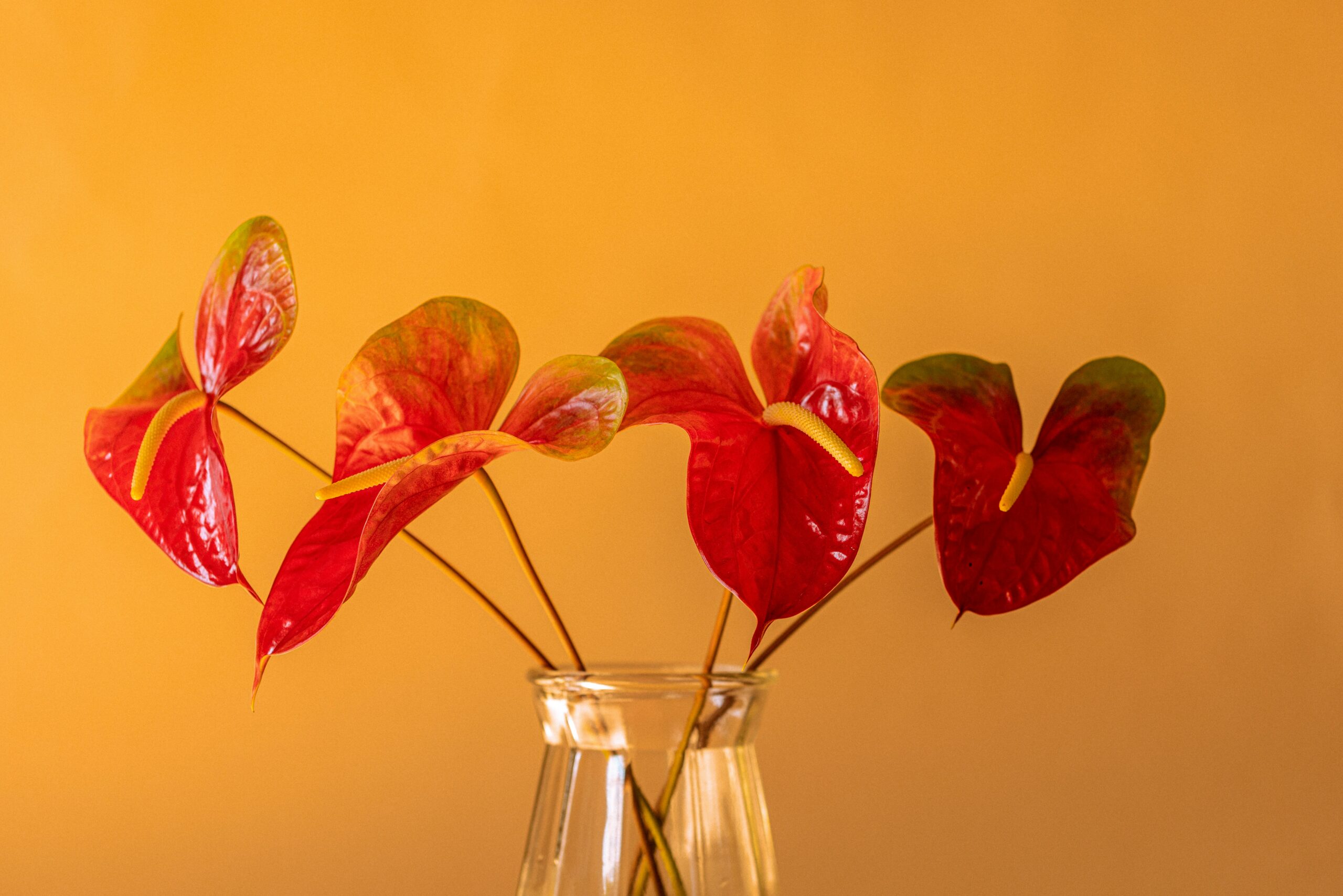
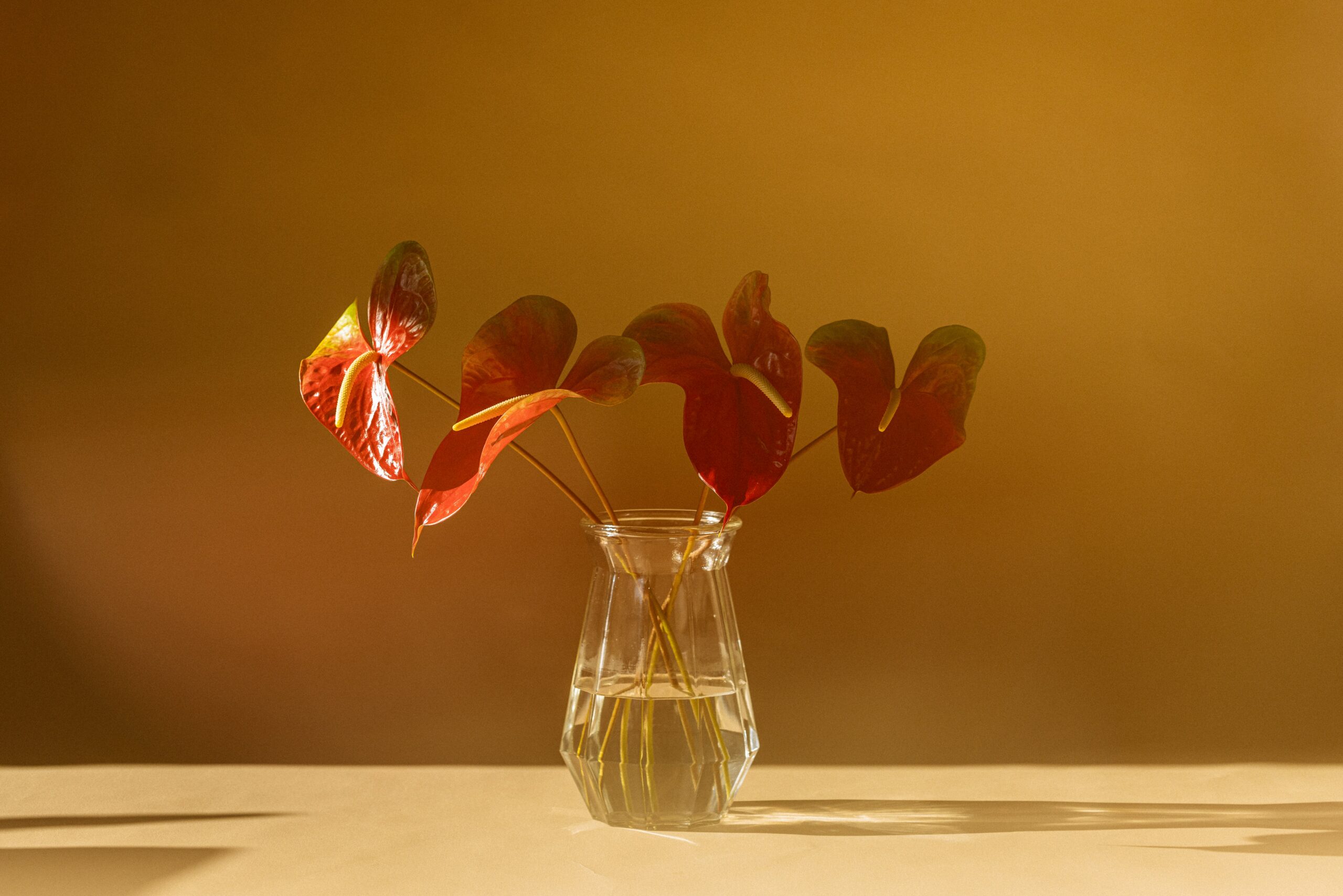
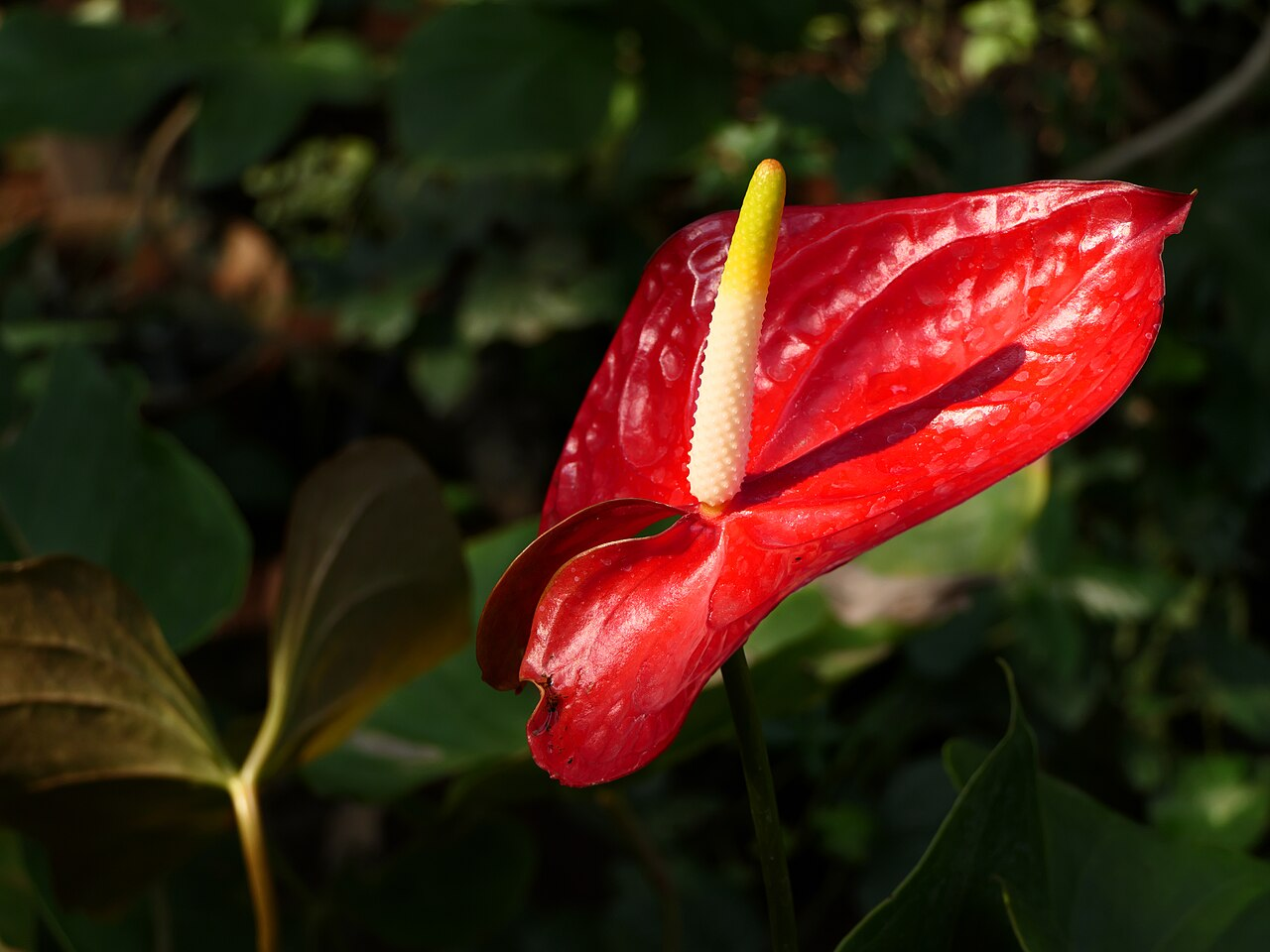
- Flower:Showy, long-lasting spathes (often mistaken for petals) in red, pink, or white, paired with a central spadix that can be cream, yellow, or greenish. White cultivars are especially clean and elegant-looking, though they can show bruising more easily.
- Flowering Season:Can flower intermittently year-round indoors, usually with stronger flushes in spring to summer when light is brightest.
- Growth Habit:Clump-forming evergreen perennial with upright to gently arching leaves; not a vining plant.
🌤️ Environment
Sunlight
Bright, indirect light is best for steady growth and flowering. It tolerates medium light, but blooms may slow down. Avoid harsh direct midday sun, which can scorch leaves and spathes.
Temperature
Prefers 18–27°C (64–81°F). Avoid prolonged chills below about 15°C (59°F).
Humidity
Enjoys moderate to high humidity, ideally around 50–70%. Keep it away from drying heaters and AC vents to prevent crispy edges and brown tips.
Soil
Use an airy, fast-draining aroid mix (for example: orchid bark + perlite + peat/coco coir). The goal is “evenly moist, never soggy”—good airflow around roots is key to avoiding rot.
Placement
A bright indoor spot such as near an east- or north-facing window, or set a few feet back from a bright south/west window filtered with a sheer curtain. Great for living rooms and well-lit offices.
Hardiness
USDA Zone 11–12 (minimum roughly 11–16°C / 52–60°F). Not frost-tolerant; typically grown as an indoor plant.
🪴 Care Guide
Difficulty
Moderate: easygoing once you nail the trio of bright indirect light, warmth, and a chunky, breathable potting mix. The most common mistakes are overwatering and letting humidity get too low.
Buying Guide
Choose a plant with firm, glossy leaves and no mushy stems or blackened tips. Spathes and spadix should look clean (no brown patches). Check that the pot doesn’t smell sour or stay waterlogged—both can hint at root problems. White-spathed plants show marks easily, so pick the least-bruised spathes if you want a pristine look.
Watering
Water when the top 2–3 cm (about 1 in) of the mix feels dry. Water thoroughly, then let excess drain completely—never leave the pot sitting in water. In winter or low light, water less often; in warm bright conditions, it may need slightly more frequent watering.
Fertilization
Feed lightly during active growth with a balanced houseplant fertilizer at 1/4–1/2 strength every 4–6 weeks. To prevent fertilizer-salt buildup (a common reason for brown leaf tips), flush the pot occasionally with plain water.
Pruning
Snip off spent spathes and yellowing leaves by cutting the stalk at the base with clean shears. Wiping the leaves occasionally helps them stay glossy and photosynthesize well.
Propagation
Most reliable at home by division during repotting: split clumps/offsets so each section has roots. Stem cuttings with nodes can work, but division is usually simpler and more successful indoors.
Repotting
Repot every 1–2 years in spring, or sooner if roots are crowded. Move up just one pot size (about 2–5 cm / 1–2 in wider). Use a chunky aroid mix and a pot with drainage holes.
📅 Seasonal Care Calendar
Spring–summer: give the brightest indirect light, water as the mix dries, feed lightly, and repot/divide if needed. Fall–winter: keep it warm, reduce watering frequency, pause or cut back fertilizer, and boost humidity to avoid brown tips.
🔬 Pests, Diseases & Safety
Common Pests & Diseases
Can attract spider mites (especially in dry air), mealybugs, scale, and thrips. Root rot is the big risk in heavy or constantly wet soil. Improve airflow, keep leaves clean, isolate affected plants, and treat pests with insecticidal soap or horticultural oil; prevent rot by using a chunky mix and adjusting watering.
Toxicity
Toxic if chewed by people or pets because it contains calcium oxalate crystals. Can cause mouth irritation, drooling, and gastrointestinal upset—keep away from cats, dogs, and small children.
🎋 Culture & Symbolism
Symbolism:Often linked with hospitality, warmth, and lasting love. White forms are especially popular for expressing purity and elegance.
History & Legends:Brought into cultivation from tropical South America and developed into a major houseplant and cut-flower crop. Many modern “flamingo flowers” sold today are selected cultivars and hybrids bred for spathe color, shape, and long indoor display life.
Uses:Primarily ornamental—grown as a long-blooming houseplant and widely used as a cut flower. White varieties are favorites for minimalist styling, weddings, and bright, clean interior décor.
❓ FAQ
Why are the leaves getting brown tips?
Most often it’s low humidity, uneven watering, or fertilizer salts. Aim for about 50–70% humidity, water evenly (never soggy), and flush the pot occasionally to wash out excess salts.
Is the white “flower” a real flower?
Not exactly—the showy white part is a spathe (a modified leaf). The true tiny flowers are clustered on the central spike called the spadix.
💡 Fun Facts
- The dramatic “petal” is actually a spathe; the real flowers are the tiny blooms packed along the spadix.
- Red is the classic anthurium look, but white anthuriums are widely grown and loved for their crisp, modern feel.