🌱 Plant Features
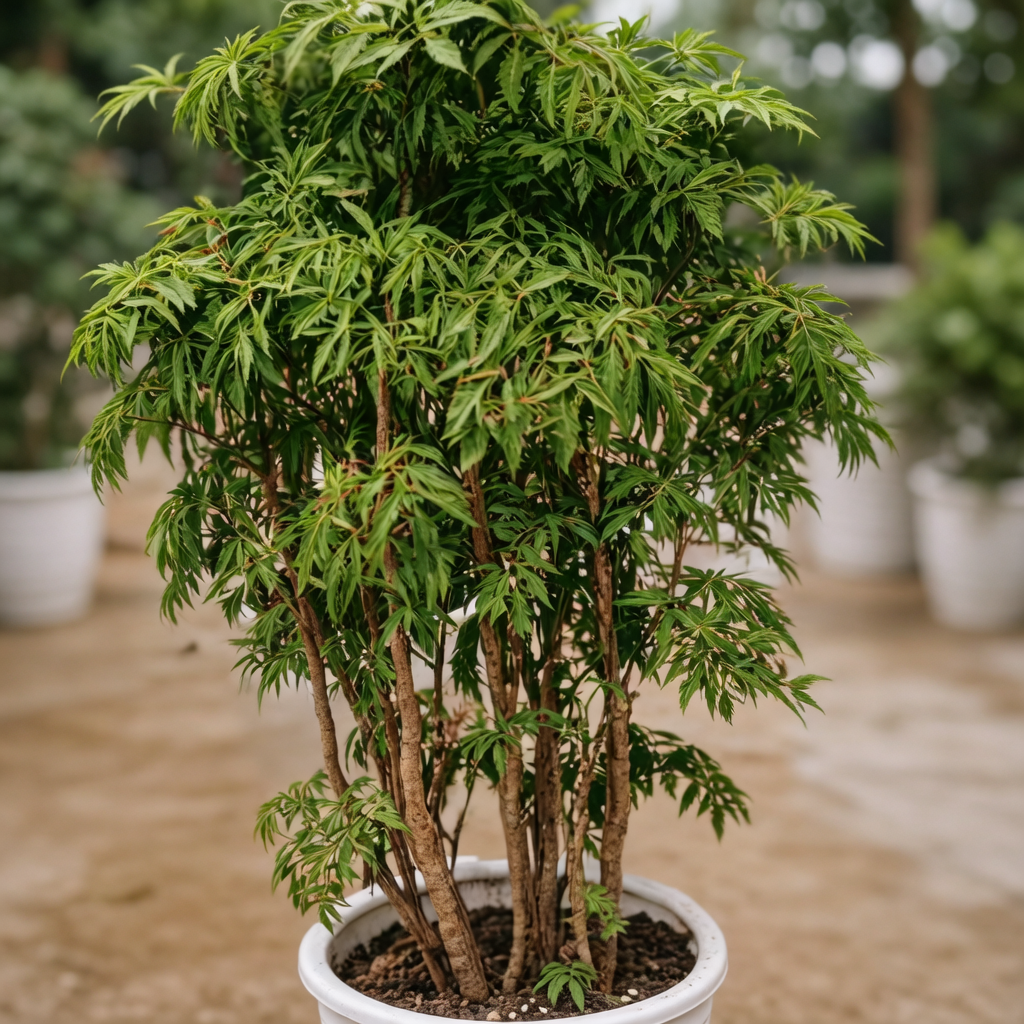
- Size:Indoors typically 1–2 m (3–6.5 ft) tall and can be kept smaller with pruning. Outdoors in frost-free climates it may reach about 3–6 m (10–20 ft).
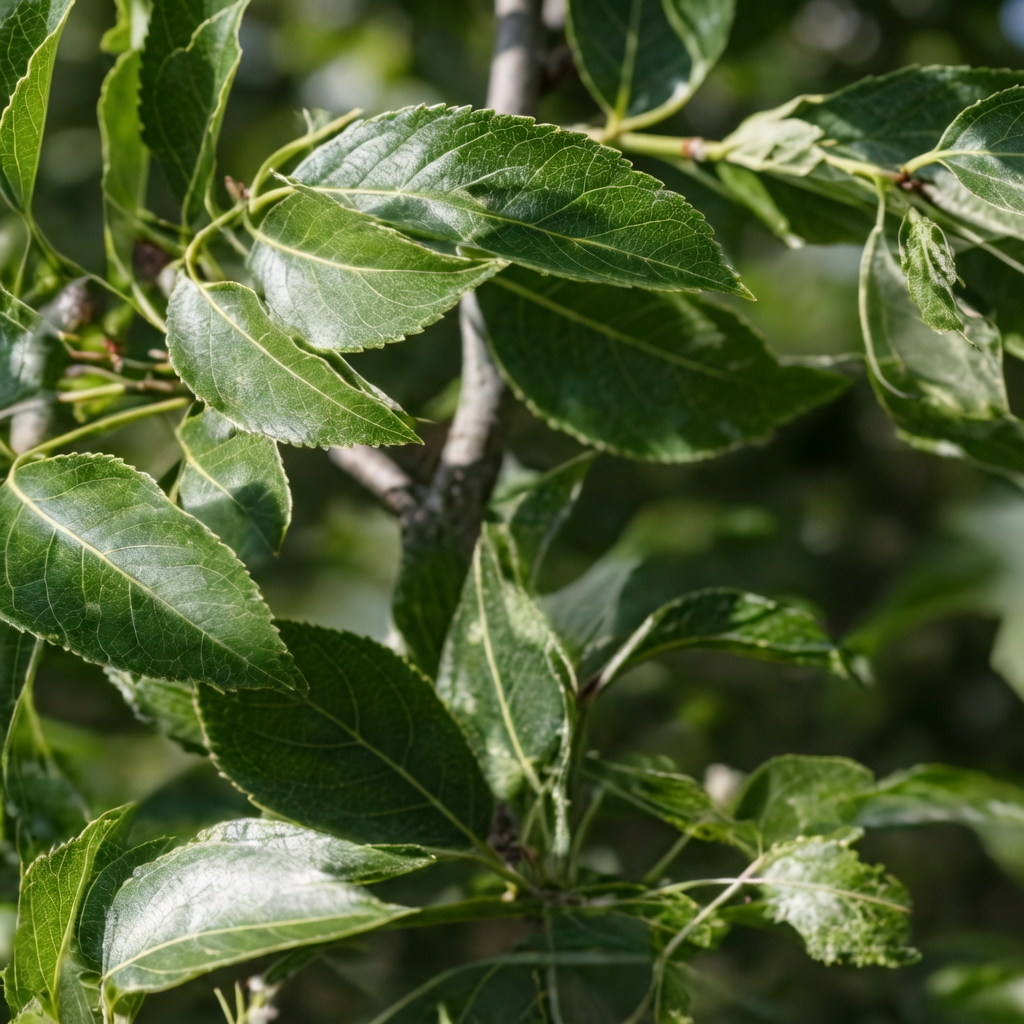
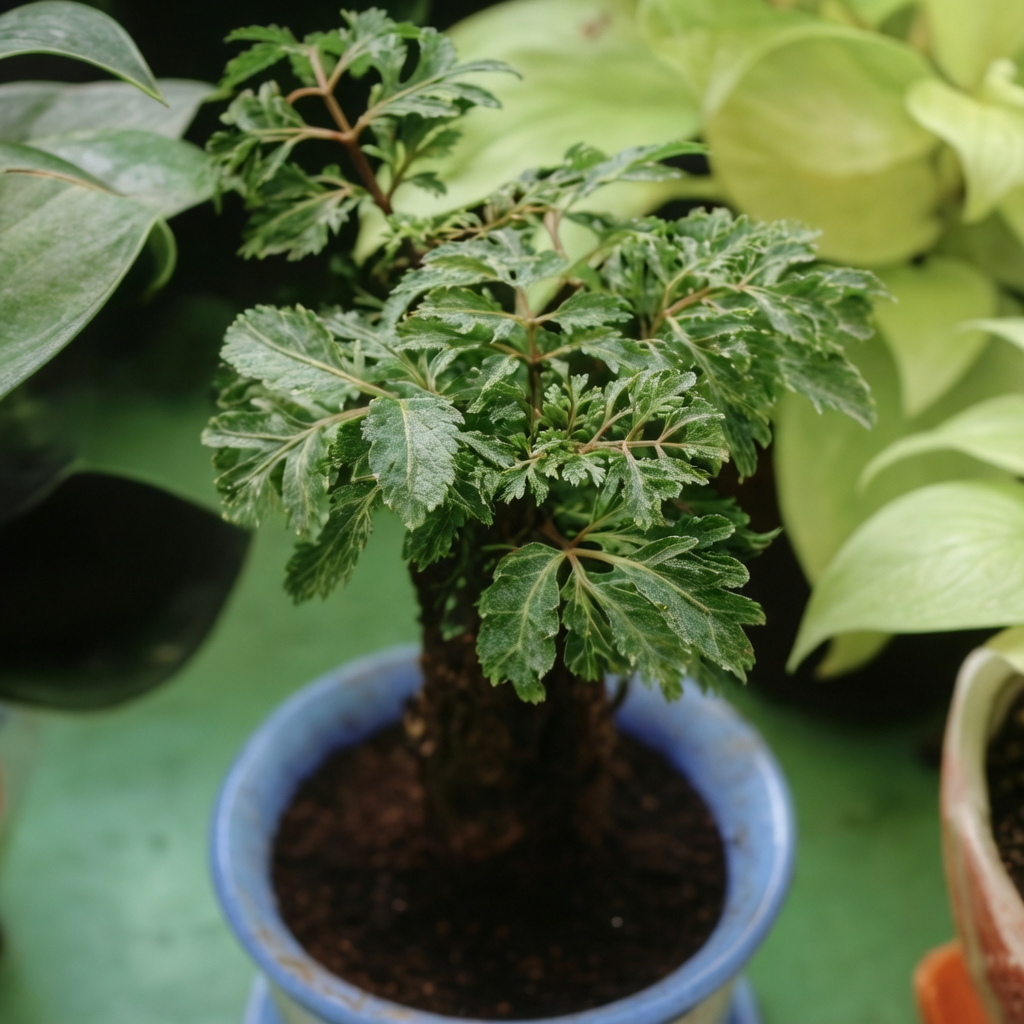
- Foliage:Dense, decorative evergreen foliage with narrow, deeply cut leaflets that create a finely textured, feathery silhouette. Bright, filtered light keeps the foliage looking crisp and glossy; strong, harsh sun can scorch leaves.
- Flower:Small, inconspicuous flowers may appear in summer, but blooming is uncommon indoors; it’s grown mainly for its foliage.
- Flowering Season:Summer
- Growth Habit:Evergreen shrub to small tree; naturally fast-growing and can become leggy if not shaped. Often used as a shade-tolerant ornamental in warm regions.
🌤️ Environment
Sunlight
Bright, filtered light to partial shade; avoid strong direct sun. In summer, provide roughly 70% shade. Indoors placement tip: east-facing light in spring/autumn, gentler north-facing light in summer, and the brightest spot (often south-facing) in winter.
Temperature
Ideal 20–30°C (68–86°F). Keep above 13°C (55°F) in winter; around 8°C (46°F) or below can cause damage and leaf drop. Not cold-hardy and dislikes drafts.
Humidity
Prefers warm, humid air—aim for about 60%+ humidity if possible. In dry periods, mist foliage and lightly dampen nearby surfaces to boost humidity. In winter, slightly drier air/soil is safer than staying cold and wet.
Soil
Loose, well-drained mix such as a peat- or leaf-mold-based potting mix amended with coarse sand for drainage. Typical houseplant pot size: 15–20 cm (6–8 in) diameter (then step up as it grows).
Placement
Great for living rooms, bright windowsills, and studies. Seasonal indoor positioning: east-facing in spring/autumn, north-facing in summer, and a bright south-facing window/balcony in winter.
Hardiness
Frost-tender; best suited to USDA Zone 11–12 (approx.). Sensitive to cold, harsh sun, drought, and waterlogged soil.
🪴 Care Guide
Difficulty
Moderate. It’s happy in most homes when kept warm with bright indirect light, steady moisture (never soggy), and decent humidity. Most issues trace back to cold drafts, harsh sun, or inconsistent watering.
Buying Guide
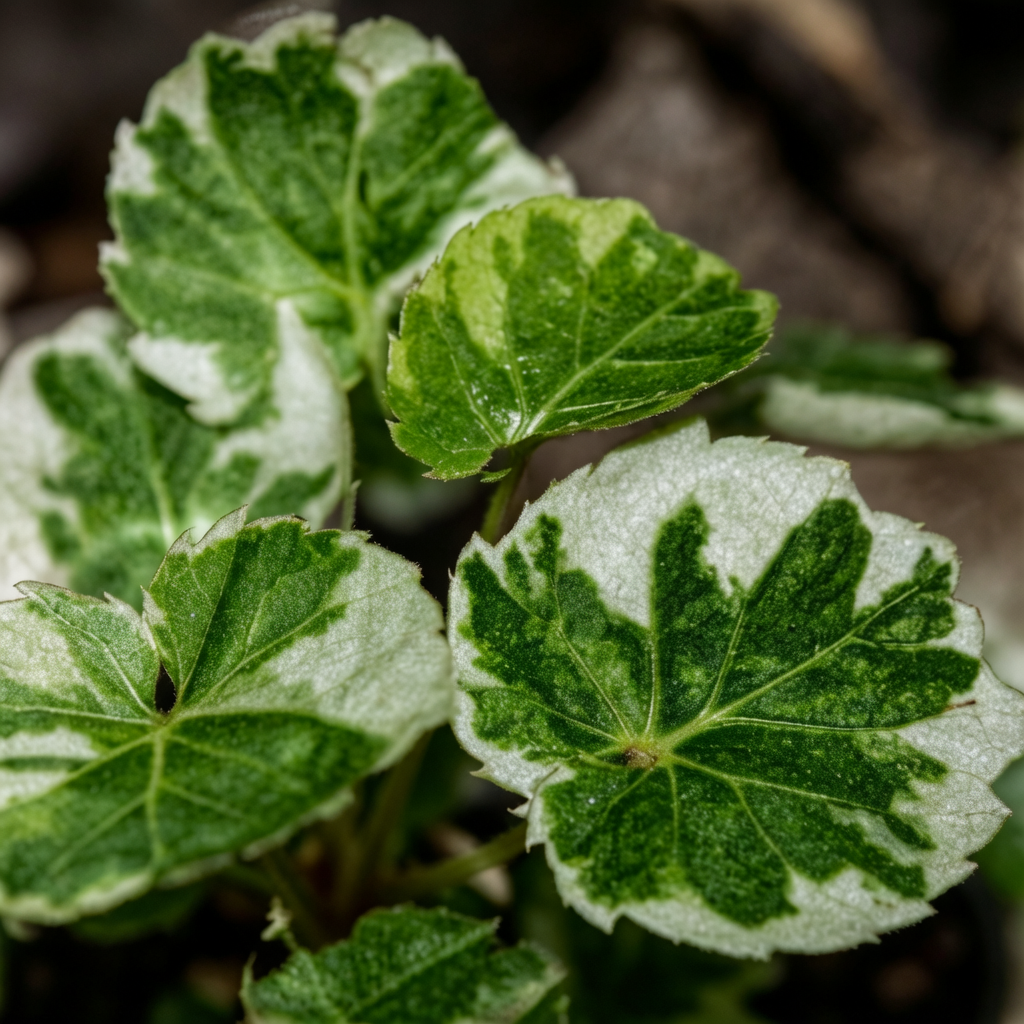
Choose a plant with sturdy stems, a well-balanced shape, full branching, and deep green, glossy leaves without tears, bare patches, or pest/disease signs. For variegated forms, look for clean, bright patterning. After bringing it home, place it in bright filtered light (often an east-facing window with a sheer/screen), keep temperatures at or above 15°C (59°F), keep the mix slightly moist, and raise humidity (around 60%+ helps it settle). Once you see fresh new leaves, give one light feeding.
Watering
During active growth, keep the potting mix evenly and slightly moist. Avoid waterlogging, and avoid repeated swings from very dry to very wet—both can trigger leaf drop. In dry summer/autumn weather, mist leaves and lightly wet nearby surfaces to increase humidity. In winter, water less and keep the mix a touch drier (but don’t leave it bone-dry for long stretches).
Fertilization
Feed monthly during the growing season with a balanced fertilizer (such as 20-20-20) or a well-diluted organic liquid feed. Stop fertilizing in winter.
Pruning
Light shaping works well on young plants. Older, over-tall plants tolerate harder pruning to reduce height. Remove weak or leggy shoots promptly. For a fuller crown, prune in early summer by cutting stems back about one-third; after new shoots emerge, prune again. Repeating this 2–3 times encourages branching and a denser, more attractive form.
Propagation
Stem cuttings in spring: take 10–12 cm (4–5 in) semi-ripe tip cuttings, remove lower leaves, and root in sand or another very free-draining medium. Keep around 25°C (77°F) with high humidity; rooting often takes 3–4 weeks. Also possible via water-rooting cuttings or air layering. Seed propagation is possible: sow immediately or in spring; germinate at 19–24°C (66–75°F), usually sprouting in about 3–4 weeks; transplant when seedlings are about 10 cm (4 in) tall.
Repotting
Repot in spring about once every 2 years, moving up to the next pot size. Use a well-drained mix (peat/leaf mold plus coarse sand). A common container size for many indoor specimens is 15–20 cm (6–8 in), adjusted upward as needed.
📅 Seasonal Care Calendar
Spring: repot (about every 2 years), take cuttings, sow seed; place near an east-facing window. Early summer: prune back stems by about one-third to promote branching; repeat after new shoots appear. Spring–autumn: keep slightly moist and feed monthly; give ~70% shade in summer; mist during dry spells for humidity. Winter: keep above 13–15°C (55–59°F), water less, stop feeding, and move to the brightest indoor position (often south-facing).
🔬 Pests, Diseases & Safety
Common Pests & Diseases
Possible leaf spot—remove affected leaves, improve airflow, avoid wetting foliage late in the day, and use an appropriate fungicide if needed. Common pests include scale insects and aphids; treat early with insecticidal soap or horticultural oil and repeat as required.
Toxicity
Toxicity isn’t consistently confirmed across major references; it’s best treated as potentially irritating if chewed. Keep away from children and pets, and wash hands after pruning.
🎋 Culture & Symbolism
Symbolism:Often seen as a good-luck foliage plant, linked with prosperity, well-being, and a thriving home atmosphere.
History & Legends:Native to Madagascar and cultivated worldwide as an ornamental. In warm southern regions it’s also planted outdoors as a shade-tolerant foliage shrub or small tree.
Uses:Mainly used as an ornamental indoor foliage plant for bright rooms (living rooms, windows, studies). In frost-free climates it can be used outdoors in shaded gardens as a foliage shrub/small tree.
❓ FAQ
How do I make false aralia bushier and fuller?
Prune in early summer: cut stems back by about one-third. When new shoots appear, prune again. Doing this 2–3 times helps it branch more and look much fuller.
How do I choose a good plant, and what should I do right after bringing it home?
Pick one with strong stems, a balanced shape, and dense, glossy leaves free of damage or pests; variegated plants should show clear, bright patterning. Place it in bright filtered light (often an east-facing window), keep it above 15°C (59°F), keep the mix slightly moist, and boost humidity if the air is dry (around 60%+ helps). Feed lightly once you see new growth.
💡 Fun Facts
- Despite the name “false aralia,” it’s in the ginseng family (Araliaceae), not a true Aralia.
- It’s native to Madagascar but grown worldwide as a decorative foliage plant.
- Regular pruning is the secret to turning a tall, sparse plant into a compact, branched showpiece.
- You can propagate it several ways: stem cuttings, water-rooting, air layering, or even from seed with warmth and patience.