🌱 Plant Features
- Size:Typically 0.9–3.0 m (3–10 ft) tall indoors depending on cultivar; many home-grown plants stay around 0.9–1.5 m (3–5 ft) tall and about 1.0 m (3.3 ft) wide. Canes can become more tree-like over time as lower leaves drop.
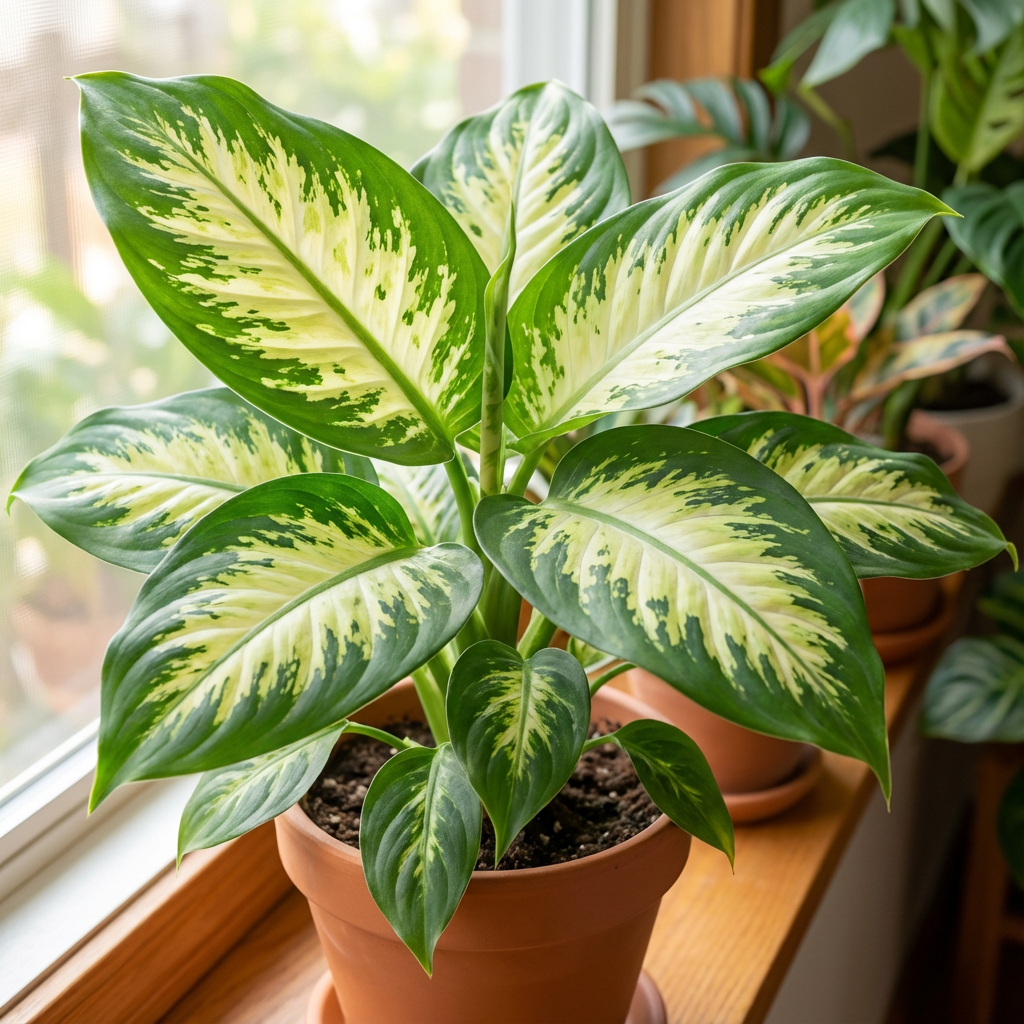
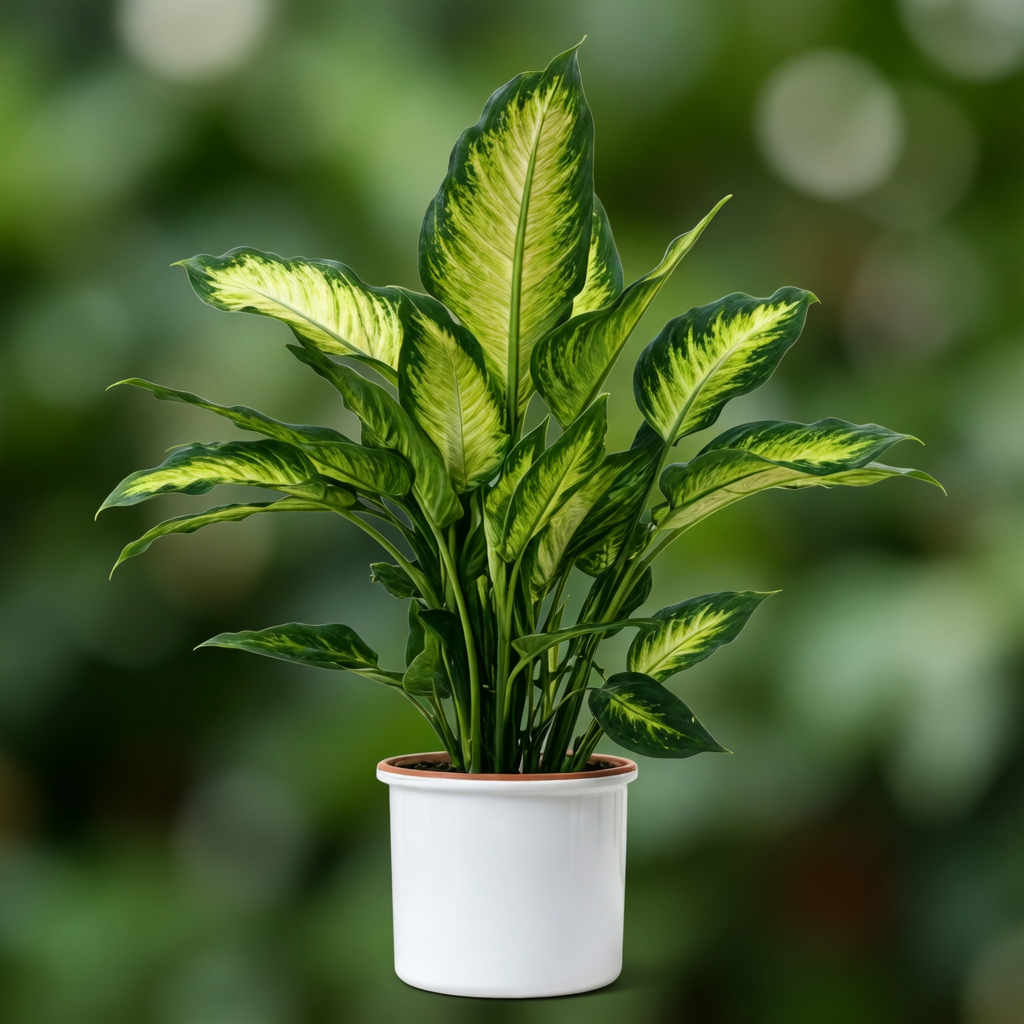
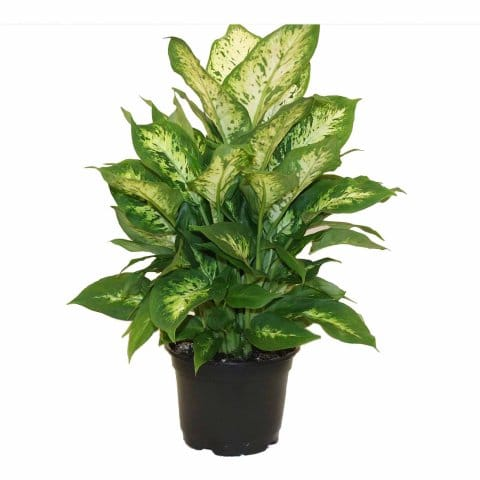
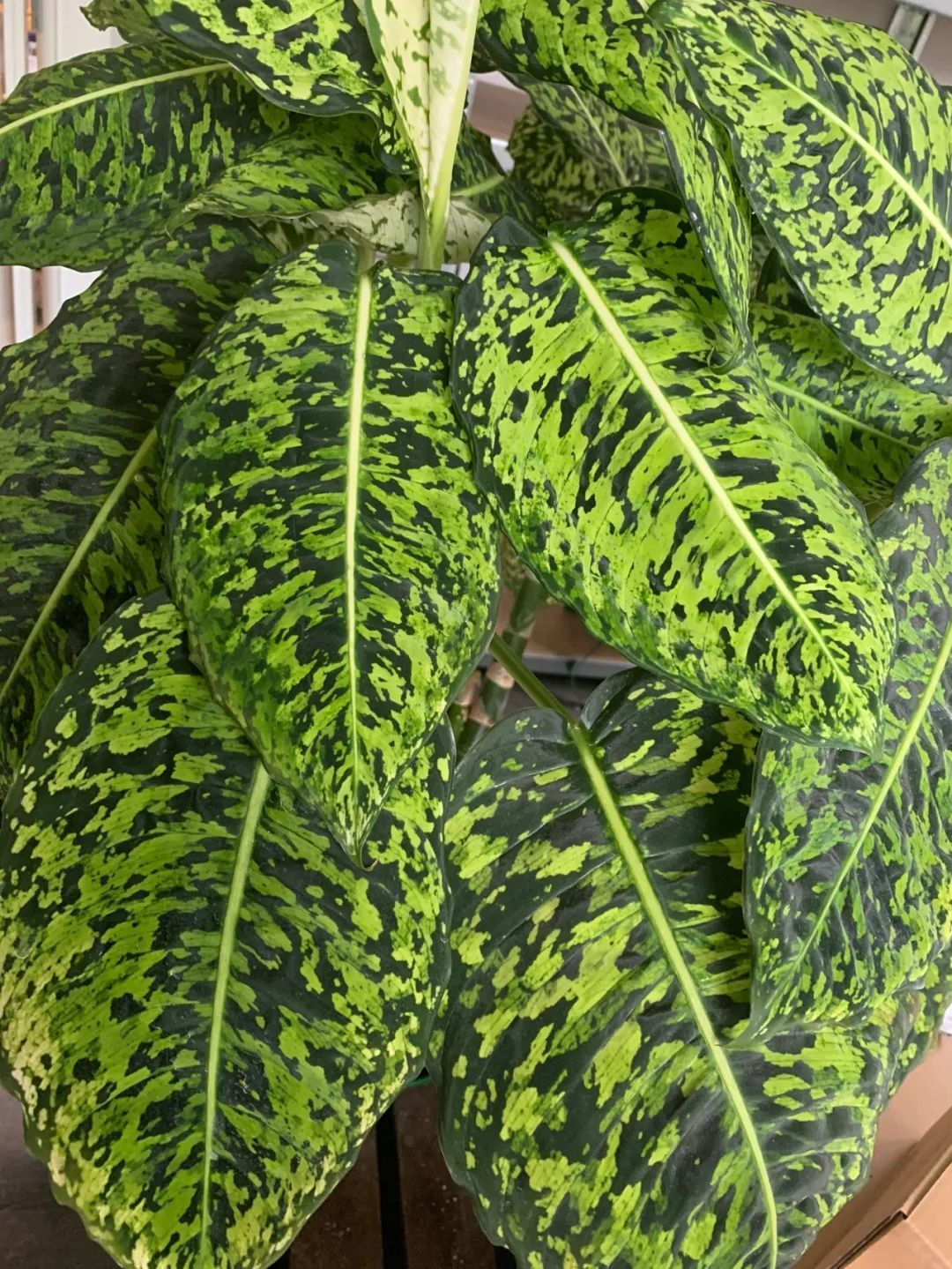
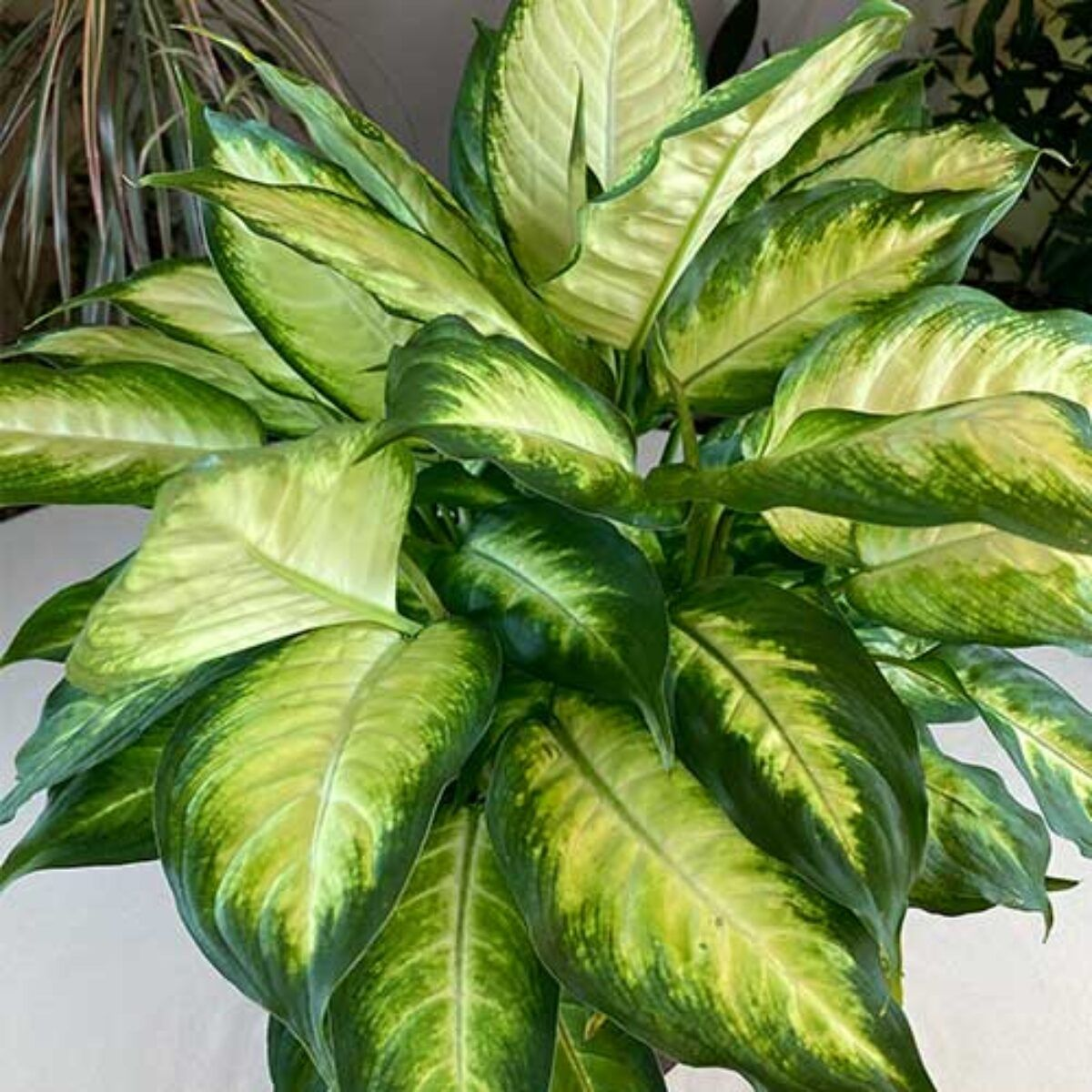
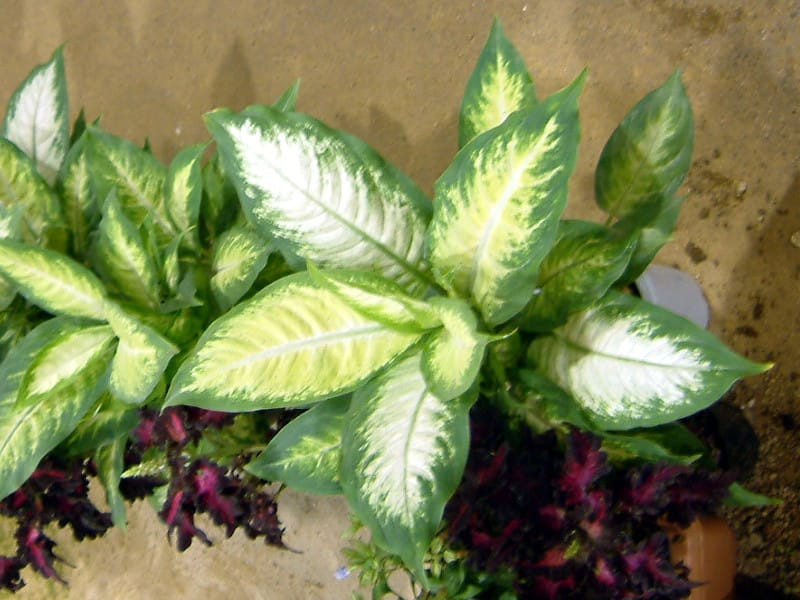
- Foliage:Large, oval to ovate leaves with pointed tips and a smooth, glossy texture. The base color is medium to deep green, usually with creamy white/cream-yellow variegation concentrated along the midrib and central blade; patterns may appear as blotches, speckles, splotches, or stripes.
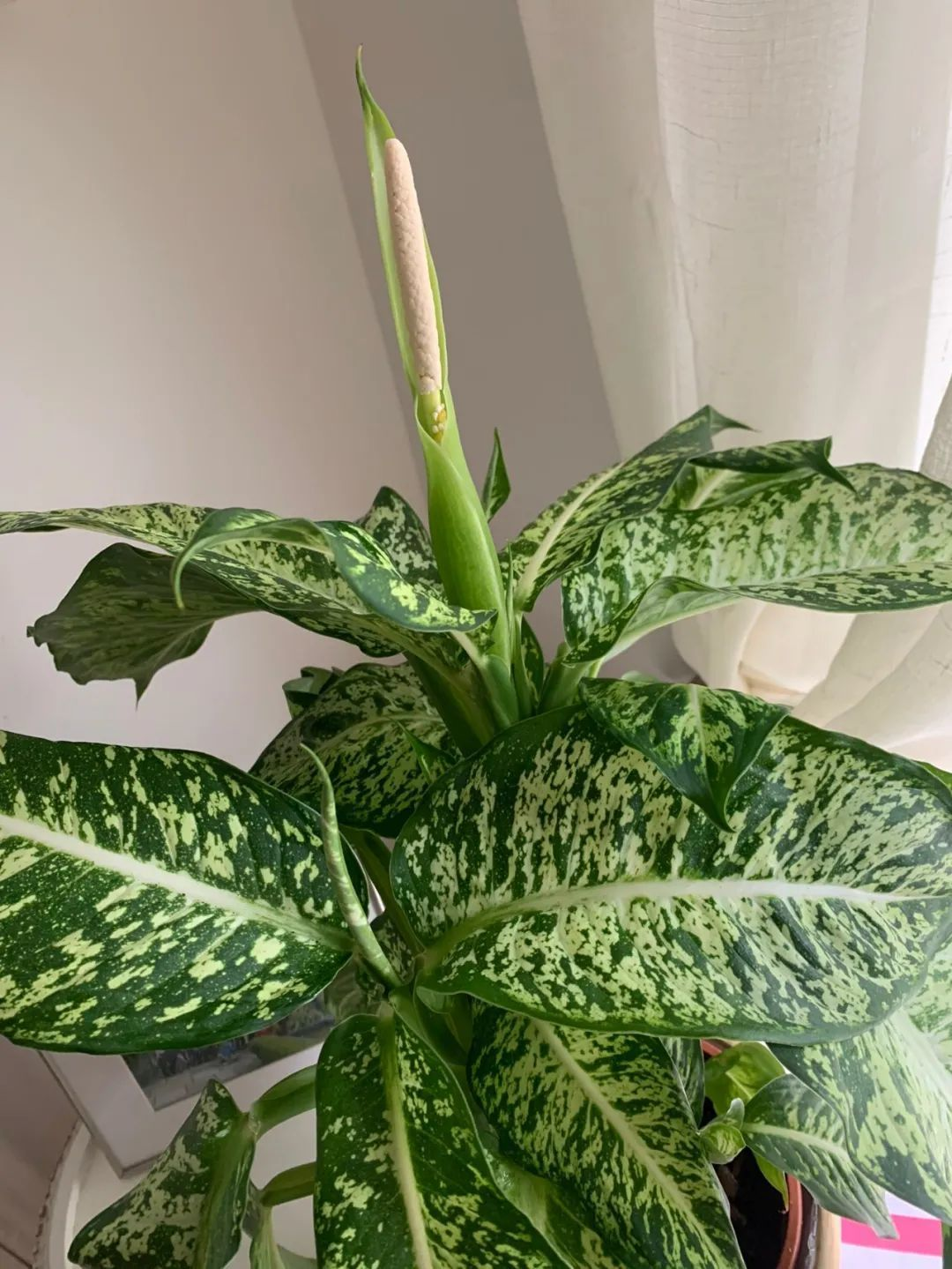
- Flower:Produces an aroid-style bloom: a pale greenish-white to white spathe surrounding a spadix. Flowers are not especially showy and are uncommon indoors.
- Flowering Season:Mostly spring–summer in warm conditions, but flowering indoors is occasional/irregular and often absent.
- Growth Habit:Upright, cane-forming evergreen herbaceous perennial; erect stems with a clumping, architectural habit over time.
🌤️ Environment
Sunlight
Bright, indirect light is ideal. Tolerates partial shade and even lower light, but growth slows and variegation may fade. Avoid direct sun, which can scorch leaves.
Temperature
Best around 18–24°C (65–75°F), with strong growth up to about 27°C (81°F). Protect from cold drafts; avoid prolonged exposure below about 12–15°C (54–59°F).
Humidity
Enjoys higher humidity (around 50%+), but adapts to average household levels. Pebble trays, grouping plants, or occasional misting can help in dry homes.
Soil
Loose, well-aerated, well-draining potting mix (often peat/coco-based) that holds some moisture without becoming waterlogged. Slightly acidic to neutral is ideal; good drainage is key to preventing root rot.
Placement
Great for living rooms, offices, lobbies, and entryways. Place near an east or north window, or set back from a bright south/west window with sheer filtering; naturally humid rooms (like a bright bathroom) can be excellent.
Hardiness
USDA Zones 10–12 (commonly grown as a houseplant; not frost tolerant).
🪴 Care Guide
Difficulty
Easy to moderate—very straightforward if kept warm and not overwatered. Most problems come from cold drafts, soggy soil, or harsh direct sun.
Buying Guide
Choose plants with firm, upright canes and crisp, well-colored leaves with clear variegation. Avoid mushy stems, strong yellowing, heavy spotting, or signs of rot. Check leaf undersides and stems for spider mites, mealybugs, and scale.
Watering
Aim for evenly moist, not soggy. Water when the top 2.5–5 cm (1–2 in) of mix feels dry. In spring–summer, this may be about once or twice a week for larger plants; in winter, reduce watering and keep the mix only lightly moist. Always empty saucers and avoid waterlogging to prevent root/stem rot.
Fertilization
Feed during active growth (spring through early autumn). Use a balanced liquid fertilizer about every 4–6 weeks, or monthly at label rate (half-strength if the plant is sensitive). Pause feeding in winter or when temperatures drop below about 15°C (60°F).
Pruning
Remove yellowing lower leaves as they age. If the plant becomes tall and bare, cut back leggy canes to encourage fresh shoots (use clean, sharp tools). Wear gloves—sap can irritate skin.
Propagation
Commonly propagated from stem/cane cuttings (sections with nodes) or by division; air layering also works. Let cut ends dry briefly, then root in warm, humid conditions. For cane cuttings, sections around 10–13 cm (4–5 in) with multiple nodes are commonly used; rooting often takes a few weeks in good warmth.
Repotting
Repot in spring when root-bound or roots appear from drainage holes. Many plants appreciate repotting about every 1–3 years (annually for fast growers; otherwise every 2–3 years). Move up about 2.5–5 cm (1–2 in) in pot diameter and refresh the mix.
📅 Seasonal Care Calendar
Spring: repot if needed, start feeding, and propagate; increase watering as growth resumes. Summer: keep moisture steady, maintain humidity, and protect from direct sun. Fall: taper feeding and slightly reduce watering as light drops. Winter: water sparingly (keep just lightly moist), stop fertilizer, and keep above about 15°C (60°F) away from drafts.
🔬 Pests, Diseases & Safety
Common Pests & Diseases
Watch for spider mites (especially in dry air), mealybugs, scale, thrips, and aphids. Treat early with insecticidal soap or horticultural oil and improve humidity for mite prevention. Overwatering can lead to root/stem rot; poor airflow and wet foliage can contribute to leaf spots or gray mold—use well-draining mix, avoid soggy soil, and provide gentle air circulation.
Toxicity
Highly toxic if chewed or ingested by people or pets (dogs/cats). Contains calcium oxalate crystals that can cause intense burning, drooling, mouth/throat swelling, and temporary speech difficulty; sap may irritate skin and eyes. Keep out of reach of children and pets, and wear gloves when pruning or taking cuttings.
🎋 Culture & Symbolism
Symbolism:Often appreciated simply as a symbol of lush, tropical greenery in interiors. In Brazilian folk tradition it’s sometimes said to help ward off negative energy, and its vigorous foliage is commonly linked with prosperity and abundance.
History & Legends:The genus was named by botanist Heinrich Wilhelm Schott in honor of Joseph Dieffenbach (1790–1863). The nickname “dumb cane” comes from the intense mouth and throat irritation that can temporarily affect speech if plant tissue is chewed. While there are darker historical anecdotes tied to misuse of the plant, today it’s grown worldwide mainly for its dramatic foliage.
Uses:Primarily an ornamental indoor foliage plant—especially effective as a large, architectural focal point in homes, offices, and commercial interiors. It’s also commonly listed among houseplants associated with improved indoor air quality, though good ventilation remains the most reliable way to refresh indoor air.
❓ FAQ
Why are my Dieffenbachia leaves turning yellow?
The usual culprits are watering issues (too wet or too dry), low light, cold drafts, or nutrient shortage. Check that the pot drains well, let the top 2.5–5 cm (1–2 in) dry before watering again, keep it warm (above about 15°C/60°F), and give it bright, indirect light.
Can Dumb Cane grow in low light?
Yes, it tolerates lower light, but it will grow more slowly and the leaf patterning may look less bold. For the best color and fuller growth, aim for bright, filtered light without direct sun.
How should I water it through the year?
In spring–summer, water when the top 2.5–5 cm (1–2 in) is dry and keep the mix evenly moist. In winter, reduce watering so the mix stays only lightly moist—overwatering in cool, dim conditions is the fastest way to cause rot.
Is this plant safe for pets?
No. It’s toxic if chewed or swallowed and can cause painful mouth irritation and swelling. Place it well out of reach and contact a vet promptly if a pet bites it.
When should I repot?
Repot in spring when roots crowd the pot or poke out of drainage holes—often every 1–3 years depending on growth speed. Move up only one pot size to avoid keeping the mix wet for too long.
💡 Fun Facts
- The famous nickname “Dumb Cane” comes from the temporary speech problems that can follow chewing the plant’s tissues.
- Indoors, it rarely flowers—Dieffenbachia is grown almost entirely for its bold leaves.
- If your plant gets tall and bare at the bottom, cutting the cane back can trigger new shoots and create a fuller, rejuvenated plant.
- Variegation can shift by cultivar and lighting—brighter indirect light usually brings out the best patterns.