
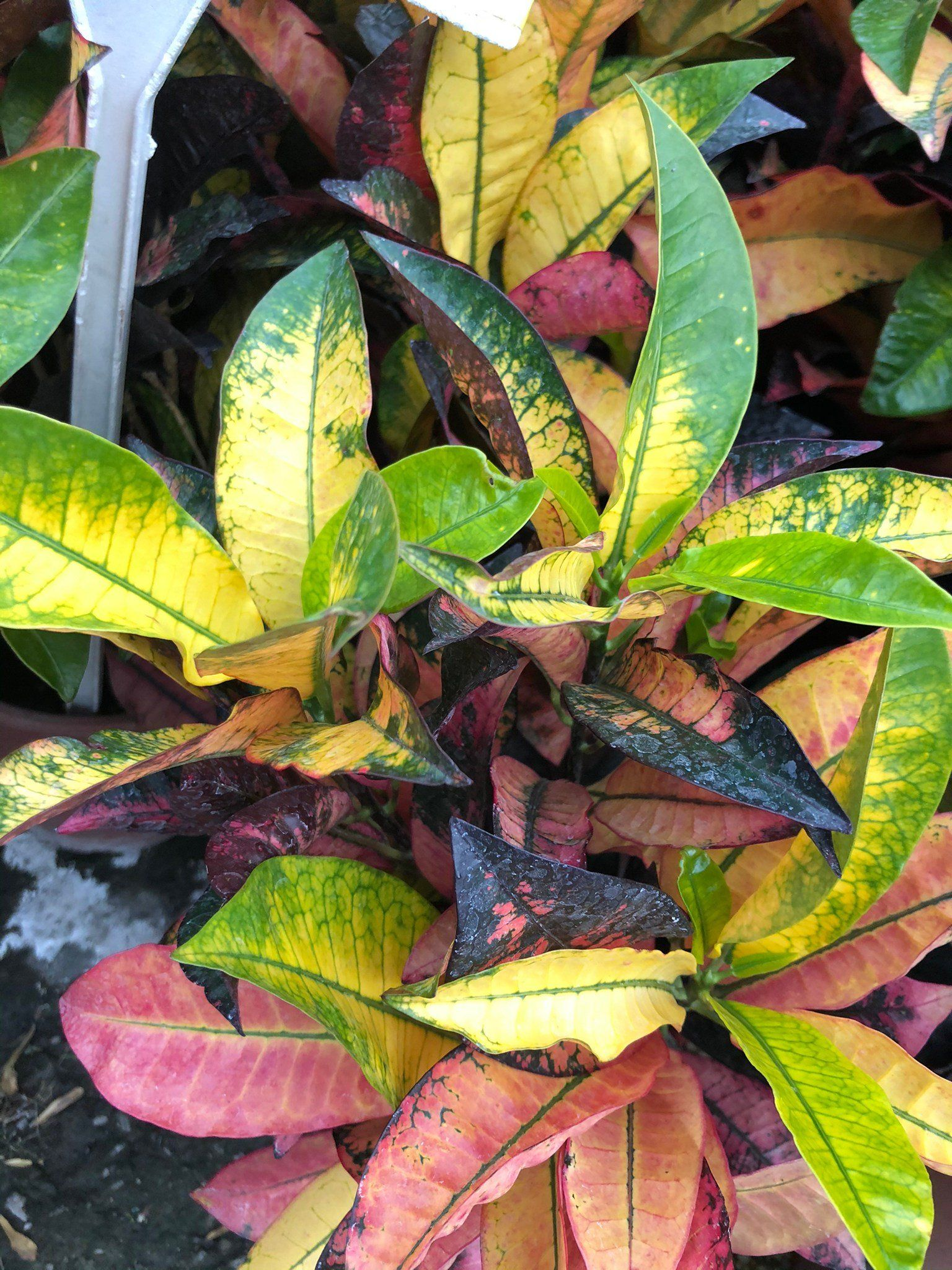
🌱 Plant Features
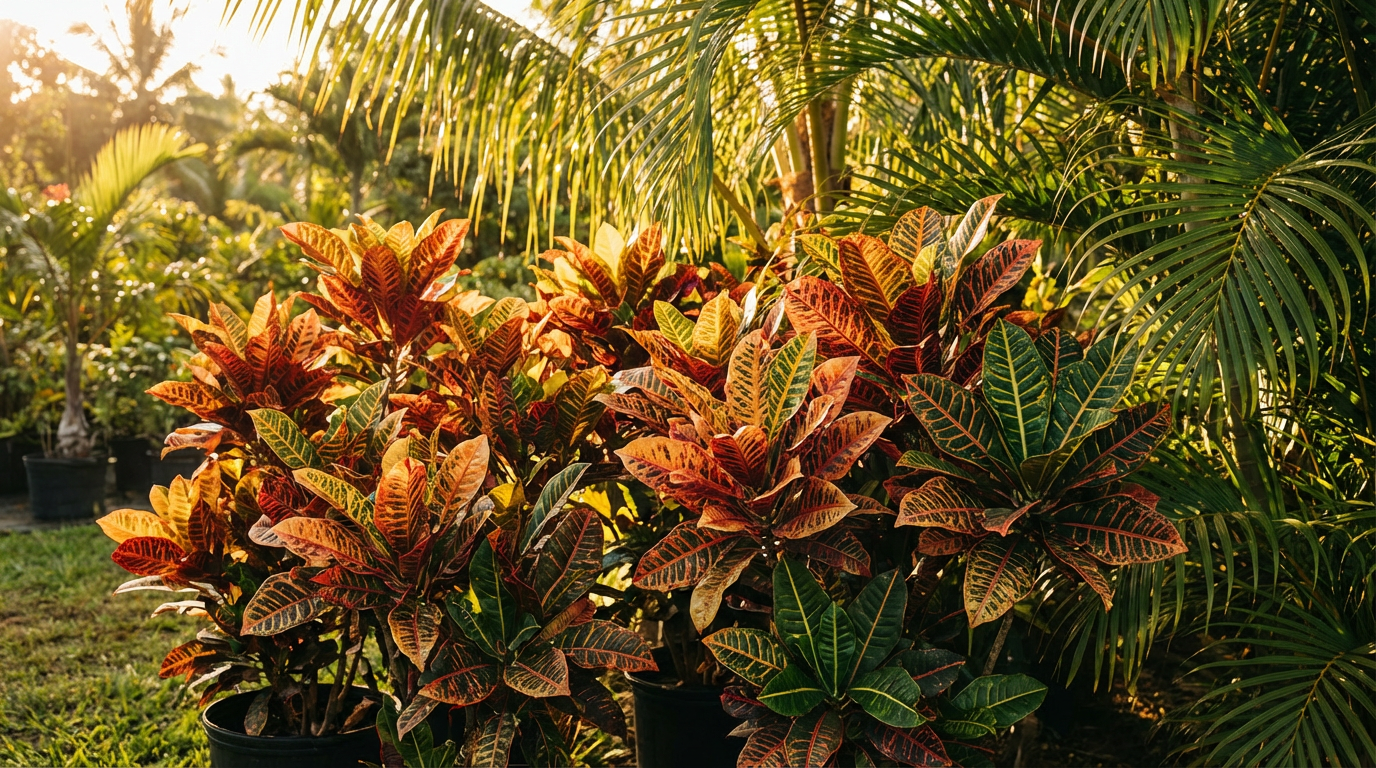
- Size:Indoors, typically 30–90 cm (12–36 in) tall, but with time and good conditions it can reach about 1.5 m × 0.75 m (5 ft × 2.5 ft) in cultivation. Outdoors in tropical climates and native habitats, it can become a branching shrub up to about 3 m (10 ft) tall.
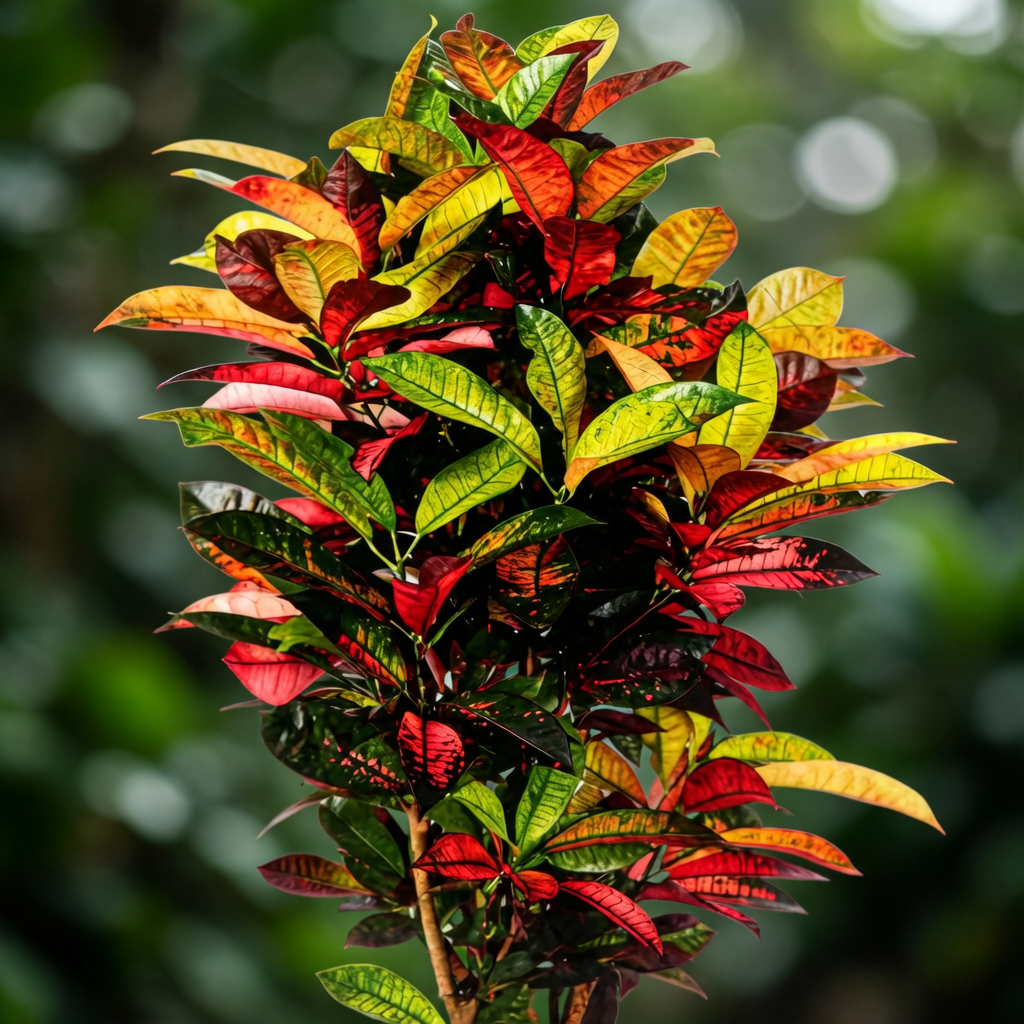
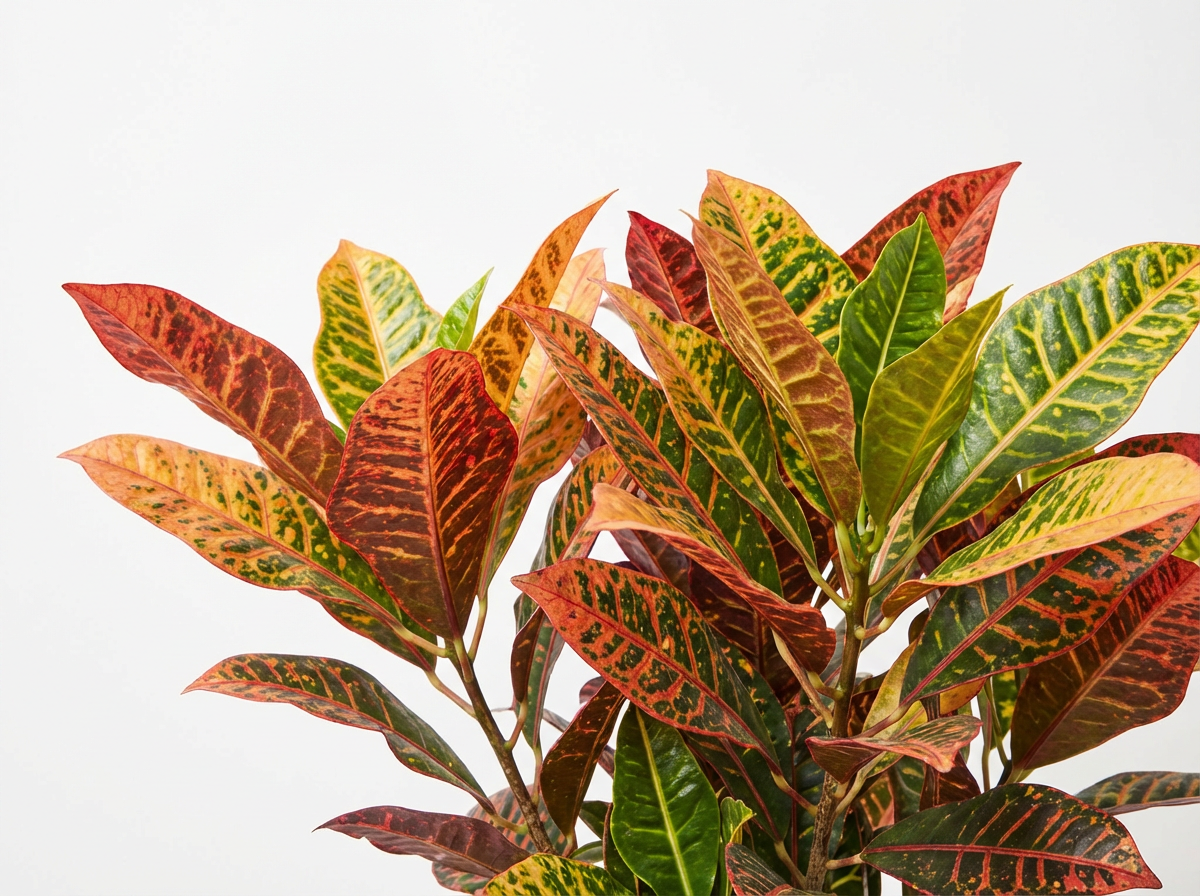
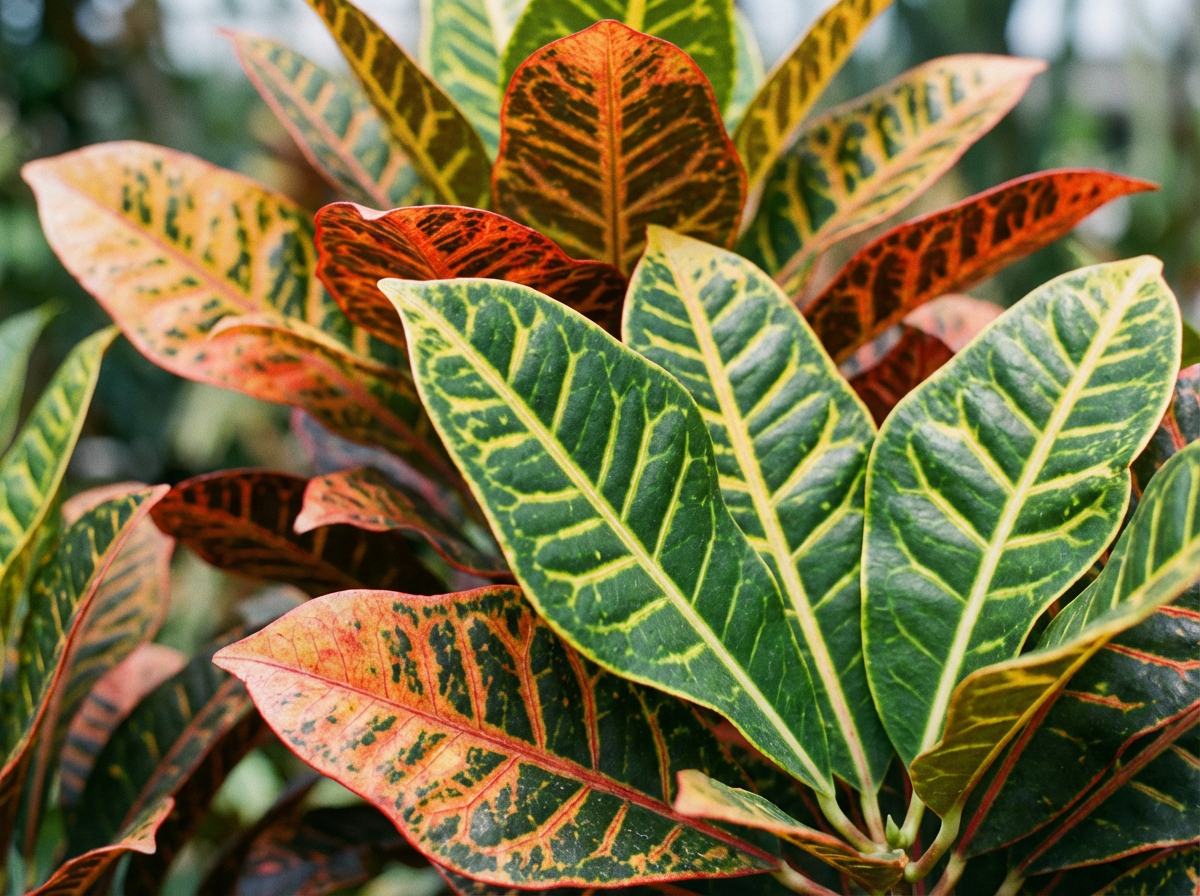
- Foliage:Leaves are thick, leathery, glossy, and highly variable—often 5–30 cm (2–12 in) long. Depending on the cultivar they may be narrow and lance-shaped, linear, oval, lobed, wavy, or twisted/spiraled. Color is the main attraction: green overlaid with vivid variegation in yellow, orange, red, pink, purple, and sometimes creamy tones. Patterns may follow the main veins or appear as blotches and marbling, and the coloration often shifts as leaves mature. Best color develops in bright light.
- Flower:Flowers are small and not very showy, usually appearing on slender spikes/axillary racemes. When it blooms (more likely outdoors), male flowers are whitish with tiny petals and many stamens, while female flowers are yellowish and lack petals. Indoors it flowers only occasionally and is generally grown for leaves, not blooms.
- Flowering Season:Spring in outdoor plantings; indoors it’s occasional and not a reliable bloomer.
- Growth Habit:Upright, evergreen, branching shrub that can become woody and larger over time (especially if allowed to grow without frequent pruning).
🌤️ Environment
Sunlight
Bright, indirect (filtered) light is ideal. A little gentle sun can be helpful, but avoid harsh midday direct sun that can scorch or dull the leaves. Too little light reduces variegation and can cause foliage to turn greener.
Temperature
Best kept warm and steady: roughly 15–29°C (59–85°F), with an indoor sweet spot around 21–27°C (70–80°F). Avoid chills and sudden swings. Prolonged cold can trigger leaf drop; as a practical rule, keep it above 15°C (59°F), and certainly out of conditions approaching 10°C (50°F).
Humidity
Likes moderate to high humidity—about 50–70% is a great target, and it can tolerate higher (up to ~80%) if there’s decent air circulation. Dry air encourages leaf drop and spider mites. A pebble tray, humidifier, or grouping plants helps; misting can help in some homes, but avoid it if it causes leaf spotting.
Soil
Fertile, well-draining potting mix that stays lightly moist but never waterlogged. A high-quality indoor mix amended for aeration (e.g., bark/perlite) works well; slightly acidic to neutral is ideal.
Placement
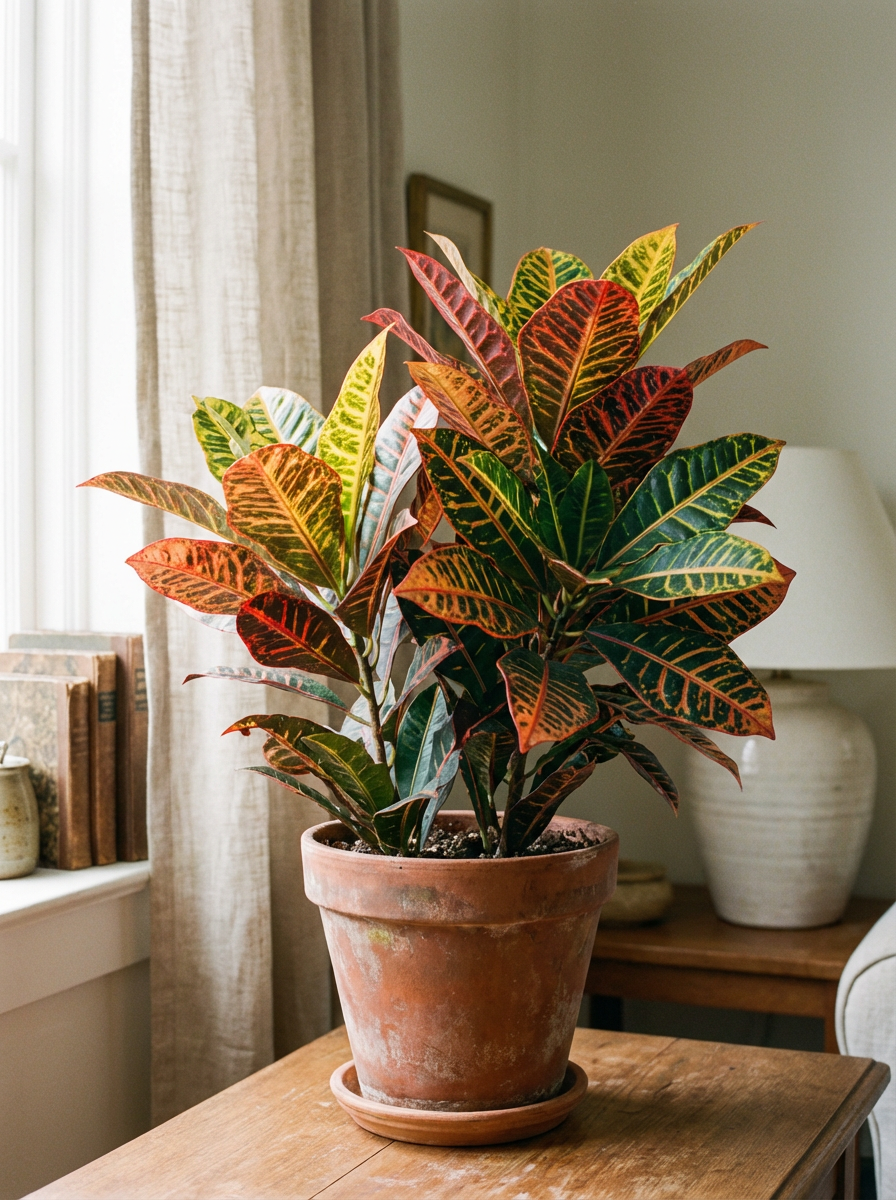
A bright bathroom, kitchen, or any warm, humid room near an east/south/west window with filtered light. Keep away from cold drafts, air-conditioning vents, and heaters for the best leaf retention.
Hardiness
Frost-tender; suitable outdoors year-round mainly in USDA Zones 11–12. In cooler regions it’s best as a container plant brought indoors before temperatures fall.
🪴 Care Guide
Difficulty
Moderate to challenging. Croton rewards consistency: steady warmth, higher humidity, and stable light. It may drop leaves when stressed by drafts, cold, low humidity, or abrupt changes.
Buying Guide
Pick a plant with strong, vivid color and glossy leaves, with foliage carried low on the stems (not bare and leggy). Avoid plants with many dropped leaves, limp growth, brown/black spotting, or visible pests—especially scale, mealybugs, and spider mites.
Watering
Aim for “evenly moist, never soggy.” In spring through fall, water thoroughly when the top 1–2.5 cm (0.5–1 in) of mix dries, using lukewarm water (cold water can shock roots). In winter, slow down: water when the surface dries and the pot feels lighter—often about every 10–14 days, depending on your home. Don’t let it sit in water; if using a pebble tray, keep the pot above the waterline. Avoid letting the mix dry out completely for long periods.
Fertilization
Feed during active growth (spring through fall). A balanced liquid fertilizer works well: either every 2 weeks at label rate (or half-strength if the plant is sensitive), or every 4–6 weeks at half-strength—both approaches are commonly used successfully. Some growers prefer slightly acidifying formulas (often marketed for foliage plants). Reduce or stop feeding in winter.
Pruning
Prune to control size and encourage bushiness, ideally in early spring before strong new growth. Cut just above a node/leaf set and avoid removing more than about one-third of the plant at once. Remove unhealthy leaves/branches promptly. Wear gloves—sap can irritate skin.
Propagation
Most often propagated by stem cuttings in warm conditions (late spring/summer is ideal). Take 10–15 cm (4–6 in) cuttings with a few leaves, optionally use rooting hormone, and root in a well-draining medium under warm, humid conditions (around 21–27°C / 70–80°F; bottom heat helps). Let cut ends dry briefly to reduce sap issues, then plant. Air layering also works well. Seed is uncommon and not reliable for true-to-type plants because cultivars don’t come true from seed.
Repotting
Repot in spring. Young plants can be repotted annually; mature plants typically every 2–3 years or when roots show from drainage holes. Move up only one size—about 2.5–5 cm (1–2 in) wider—and avoid overpotting to reduce the risk of waterlogged soil.
📅 Seasonal Care Calendar
Spring: increase watering as growth resumes; start feeding; best time to prune and repot. Summer: peak growth—keep moisture steady, boost humidity, and protect from harsh afternoon sun. Fall: taper fertilizer and slightly reduce watering while keeping warmth consistent. Winter: water sparingly once the surface dries; stop or greatly reduce feeding; keep above 15°C (59°F) and away from drafts—some leaf drop can happen if conditions fluctuate.
🔬 Pests, Diseases & Safety
Common Pests & Diseases
Watch for spider mites (especially in dry air), scale insects, mealybugs, and thrips. Raise humidity, rinse foliage occasionally, and treat early with insecticidal soap or horticultural oil. Leaf drop is commonly triggered by cold drafts, low humidity, inconsistent watering, or sudden moves. Disease issues can include fungal leaf spots (e.g., anthracnose—tan/brown spotting; remove affected leaves and improve airflow, copper-based fungicide if severe). More rarely, bacterial problems like crown gall can cause swollen growths—severely affected plants are best discarded to prevent spread.
Toxicity
Toxic to humans and pets if ingested. The milky sap can irritate skin and eyes and may cause dermatitis—wear gloves when pruning and keep out of reach of children, cats, and dogs.
🎋 Culture & Symbolism
Symbolism:Often associated with transformation and change (thanks to its color-shifting leaves), as well as creativity, passion, abundance, and upbeat energy—making it a fun “new chapter” gift for moves, graduations, or fresh starts.
History & Legends:Croton was noted in European writing as early as 1578 (by Cristóbal Acosta). It reached Europe through Dutch horticulture in the late 1600s and later became popular in American plant trade in the 1870s. In some traditions, crotons are thought to ward off negative energy and invite good fortune—fitting for such a bold, lively plant.
Uses:Primarily ornamental: grown indoors as a dramatic foliage houseplant and, in tropical/subtropical climates, used outdoors as colorful shrubs, hedges, and focal plantings. Like many leafy houseplants, it can slightly increase perceived indoor humidity when grown in groups (though it’s not a substitute for ventilation or a humidifier).
❓ FAQ
Why is my croton dropping leaves?
Most leaf drop comes from stress: cold drafts or low temperatures, low humidity, inconsistent watering (too dry or too wet), pest pressure (especially spider mites/scale), or sudden changes in light/location. Keep it warm (above 15°C/59°F), humid, and evenly moist, and avoid moving it frequently.
Why are my croton leaves turning green?
It usually needs more light. Move it to brighter, filtered light (near a bright window with sheer curtain). Better light brings back stronger reds and yellows over time.
How should I water croton?
During spring–fall, water when the top 1–2.5 cm (0.5–1 in) dries, keeping the mix evenly moist. In winter, wait until the surface dries and water less often. Use lukewarm water and never let the pot sit in water.
Can crotons be grown outdoors?
Yes—if you live in a frost-free climate (USDA Zones 11–12). Everywhere else, grow it in a pot and bring it indoors before cool weather.
Is croton safe for pets?
No. It’s toxic to cats and dogs if chewed, and the sap can irritate mouths and skin. Place it out of reach.
Where should I place a croton at home?
Choose a bright, warm spot with filtered light and higher humidity—bright bathrooms are famously good. Keep it away from cold drafts, air conditioners, and heaters.
How often should I repot?
Usually every 2–3 years (or sooner if roots are circling or coming out the drainage holes). Move up only one pot size to avoid soggy soil.
💡 Fun Facts
- There are hundreds of croton cultivars, but they’re largely selections of the same species: Codiaeum variegatum.
- Croton leaf color is strongly light-driven—brighter (filtered) light usually means stronger reds and yellows.
- Leaves often change color as they mature, so the same plant can look different from month to month.
- In the ground in tropical climates, croton can become a sizeable shrub—far bigger than the typical tabletop houseplant.
- Croton is in the spurge family (Euphorbiaceae), making it a cousin of poinsettia—and it shares that telltale milky sap.