🌱 Plant Features
- Size:Height: 30–120 cm (12–48 in), often around 70 cm (28 in) in typical garden conditions
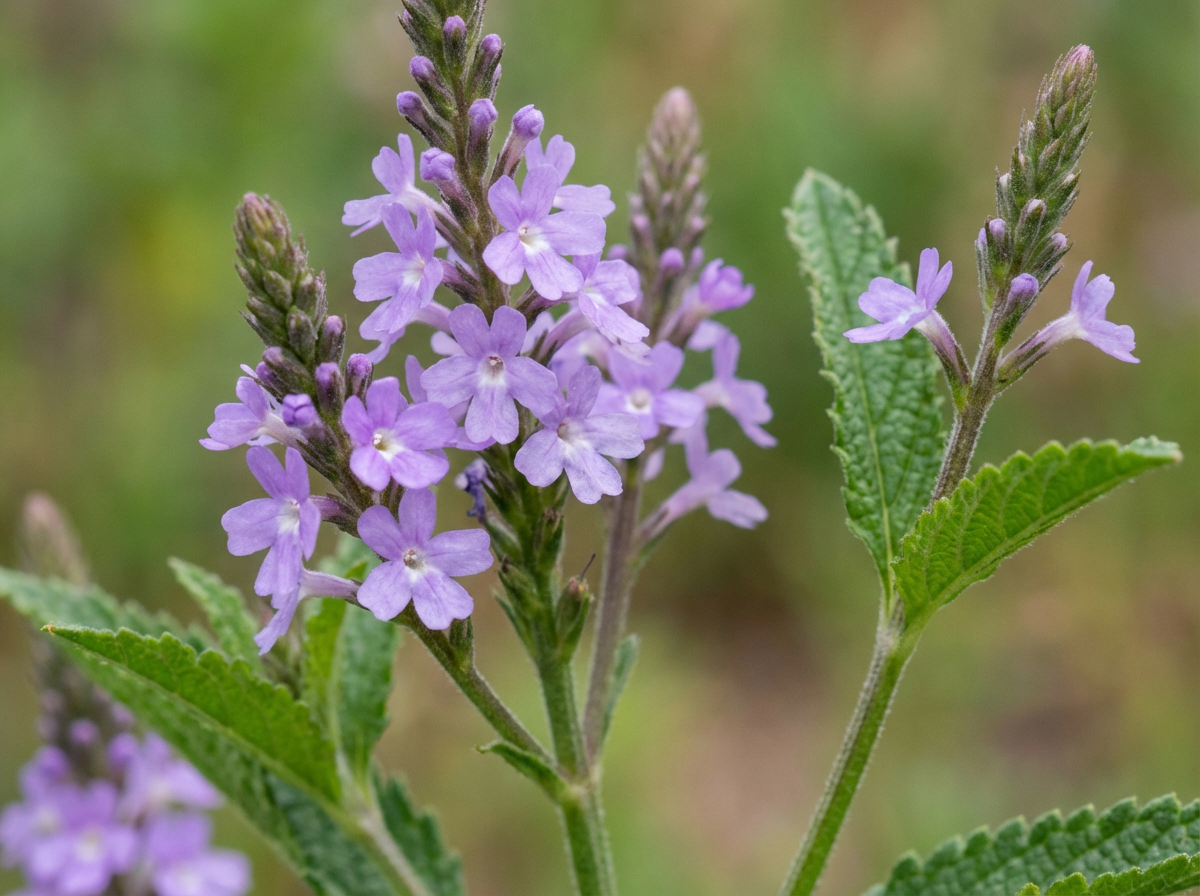
- Foliage:Leaves are ovate to obovate or oblong-lanceolate, about 2–8 cm (0.8–3.1 in) long and 1–5 cm (0.4–2.0 in) wide. Basal leaves are coarsely toothed and notched; stem leaves are often 3‑lobed with irregular toothed margins. Leaf surfaces can feel a bit rough due to stiff hairs, especially along the veins underneath. Stems are four‑angled (square) and may have sparse coarse hairs along nodes and angles.
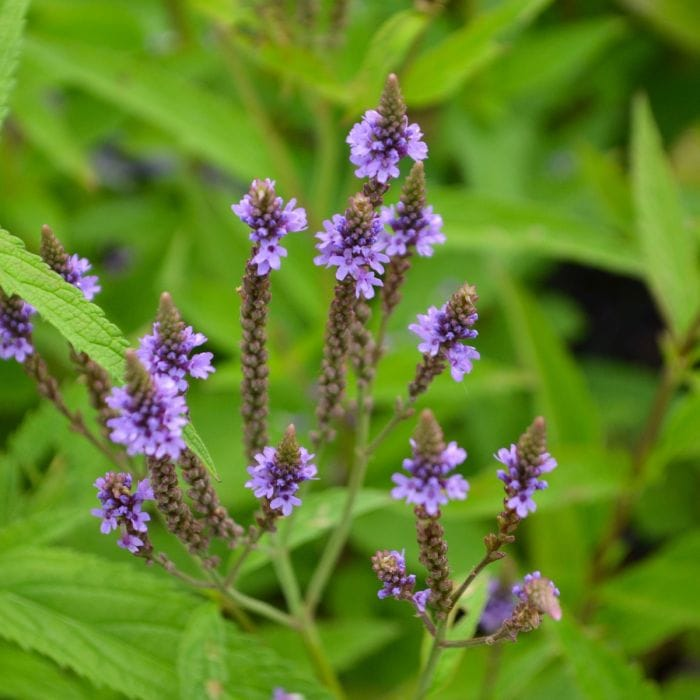
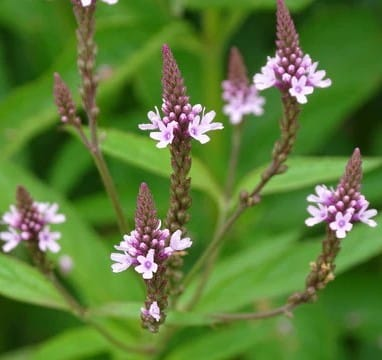
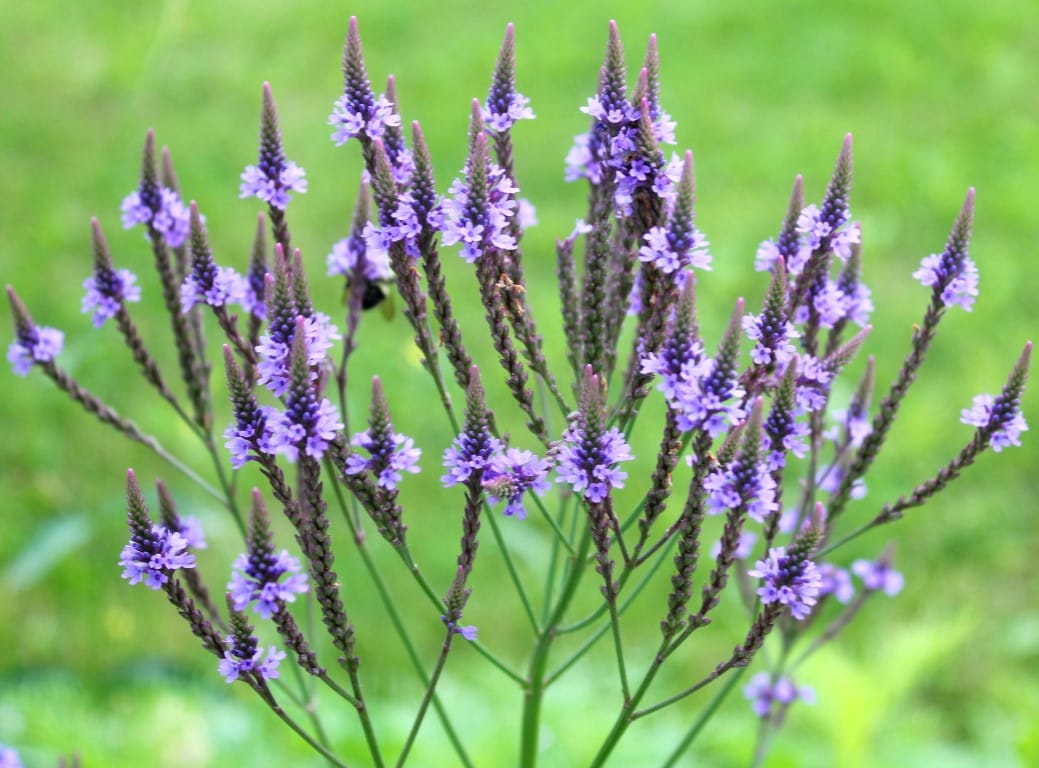
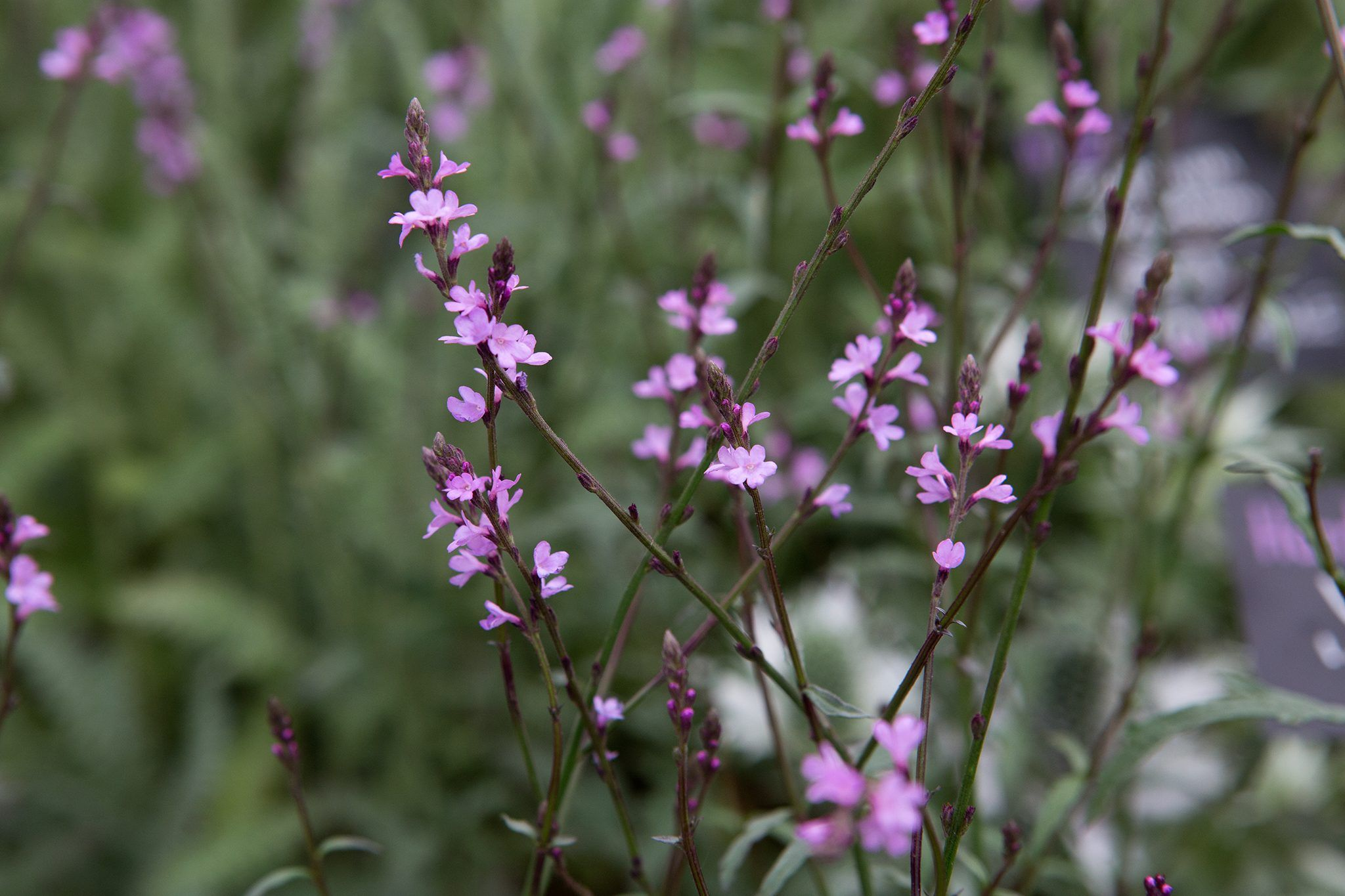
- Flower:Slender terminal and axillary spikes carry small, sparse, mostly sessile flowers. Each bloom is two‑lipped and typically mauve to blue‑purple, around 4–8 mm (0.16–0.31 in) long. The calyx is about 2 mm (0.08 in) long with stiff hairs and visible veins; the corolla has five lobes and fine hairs on the outside.
- Flowering Season:Late spring to early fall (May to October), usually peaking in summer
- Growth Habit:Upright perennial herb with square stems; naturally airy and meadow-like, and it may self-seed when happy
🌤️ Environment
Sunlight
Full sun is best for strong growth and the most flowers (aim for 6–8 hours of direct sun daily). It can tolerate partial shade, but flowering will be lighter.
Temperature
Grows best in mild to warm conditions around 15–27°C (59–81°F). In colder climates it may die back hard in winter or be grown as an annual, depending on local conditions.
Humidity
Prefers moderate moisture and decent airflow. Once established it can handle short dry spells, but prolonged soggy conditions increase disease risk.
Soil
Adaptable, but happiest in well-draining soil, especially moderately fertile ground. Often noted to do well in limey soils; overall it suits slightly acidic to neutral pH (about 5.8–7.2). Improve heavy clay with compost and drainage amendments to avoid waterlogging.
Placement
Great for sunny borders, cottage gardens, wildflower or naturalized meadows, rock gardens, and xeriscaping. Also fits roadsides and rougher edges—think hillsides, stream edges, and woodland margins where it can look pleasantly “wild.”
Hardiness
Often cited as hardy across USDA Zones 4–11 depending on conditions and local forms; commonly most reliable as a returning perennial in warmer temperate zones (roughly Zones 7–10). Dislikes waterlogged winter soil.
🪴 Care Guide
Difficulty
Easy and beginner-friendly. It’s generally low maintenance once established, especially in well-draining soil and full sun.
Buying Guide
Choose plants with fresh green foliage and sturdy, upright stems. Avoid pots with yellowing leaves, mushy roots, or obvious pests (sticky residue, webbing, scale bumps) and any signs of mildew.
Watering
Water regularly while establishing. After that, aim for even moisture with good drainage—roughly 1.3–2.5 cm (0.5–1 in) of water per week in the growing season, adjusting for rainfall and heat. Let the top layer of soil dry slightly between waterings; avoid constant sogginess and reduce overhead watering to help prevent fungal issues.
Fertilization
Not a heavy feeder. A light application of balanced, slow‑release fertilizer in spring (and optionally again in mid‑summer) is usually plenty. Alternatively, feed with a water‑soluble fertilizer every 4–6 weeks during active growth. Compost or well‑rotted manure at planting time helps steady growth without overdoing it.
Pruning
Deadhead to keep flowers coming and to tidy the airy spikes. If plants get lanky, shear back lightly once or twice during the season. In late winter or early spring, cut stems back by about one‑third (or remove dead growth) to encourage fresh, bushier regrowth.
Propagation
Easily grown from seed (sow in spring after the last frost; or start indoors 8–10 weeks before last frost). Also propagates by stem cuttings taken in late spring/early summer (about 10–15 cm / 4–6 in cuttings), or by division of mature clumps in early spring or fall. It can self-seed readily in suitable sites.
Repotting
Mostly grown in the ground, but it can be container-grown in a well-draining mix. Repot in spring when rootbound and refresh the potting mix. Many plants behave as short-lived perennials (often around 2–3 years), so renewing from seed or cuttings is common.
📅 Seasonal Care Calendar
Spring: Plant out after last frost; sow seeds or take early cuttings; give a light feed/compost. Summer: Peak bloom—water during dry spells, deadhead, and watch for mildew if air is still/humid. Fall: Collect seed if desired; divide mature plants if needed. Winter: Cut back dead growth and mulch lightly in colder areas, especially where soils stay wet.
🔬 Pests, Diseases & Safety
Common Pests & Diseases
Generally tough, but can see aphids, spider mites, whiteflies, thrips, scale, and leafminers. Use strong water sprays, insecticidal soap, or neem as needed. In humid, poorly ventilated spots it may develop powdery mildew or botrytis; improve spacing/airflow and avoid wetting foliage late in the day. Root rot is a risk in waterlogged soils—drainage is key.
Toxicity
Ornamentally, it’s generally considered low-risk, but medicinal use deserves caution. Traditional herbal use is common; however, it’s typically advised to avoid internal use during pregnancy (historically associated with uterine stimulation). For pets, toxicity varies by species within the broader “verbena” group—when in doubt, prevent chewing and consult a vet if ingestion occurs.
🎋 Culture & Symbolism
Symbolism:Often linked with peace, protection, loyalty, trust, and justice. In Victorian flower language it’s been associated with sentiments like “pray for me” and “you have bewitched me,” reflecting its long reputation as a magically charged plant.
History & Legends:Vervain’s reputation stretches back to antiquity. Ancient Egyptians called it “Tears of Isis,” Romans associated it with Venus and used it in rituals, and Druids prized it among sacred herbs. Christian-era folklore claims it helped staunch wounds from the Crucifixion, inspiring names like Holy Herb and Herb of the Cross. Across medieval Europe it was carried or hung in homes as a protective charm and used in folk magic to ward off evil or break curses.
Uses:Ornamental: A long-blooming, pollinator-friendly choice for naturalistic plantings and sunny borders. Pollinators: Valued in butterfly and bee gardens. Traditional medicine: Historically used as teas and preparations for a variety of complaints (such as digestive upset, feverish feelings, tension, and sleep troubles), and it’s known from systems like Bach flower remedies (often described for “over-enthusiasm”). Cultural: Frequently appears in folk rituals and protective traditions.
❓ FAQ
Is common vervain annual or perennial?
Verbena officinalis is a perennial herb, but in colder climates it may behave like an annual or a short-lived perennial. Many gardeners find individual plants last about 2–3 years, with self-seeding filling in the gaps.
Does it come back every year?
In milder areas it often returns from the base each year. In colder or wetter-winter regions it may not overwinter reliably, but it can reseed and reappear in spring.
How much sun does it need?
Full sun is ideal—about 6–8 hours of direct sun daily for the best flowering. It can tolerate partial shade, but it will bloom less.
Is it drought-tolerant?
Once established, it tolerates short dry spells quite well. For the most consistent blooming, water during extended drought and avoid letting it wilt repeatedly.
Can I grow it in a pot?
Yes. Use a pot with drainage holes and a well-draining mix, and water when the top of the mix dries slightly. Containers dry faster than garden beds, so check more often in summer.
💡 Fun Facts
- The name “Verbena” traces back to ancient Rome, where “verbenae” could mean sacred sprigs used in ceremonies.
- In some Central and Eastern European languages, vervain is linked with iron—like the German name “Eisenkraut” (“iron herb”).
- Its square stems look mint-like, even though common vervain isn’t actually in the mint family.
- It’s one of the better-known Verbena species with origins outside the Americas, as many popular garden verbenas are New World natives.