🌱 Plant Features
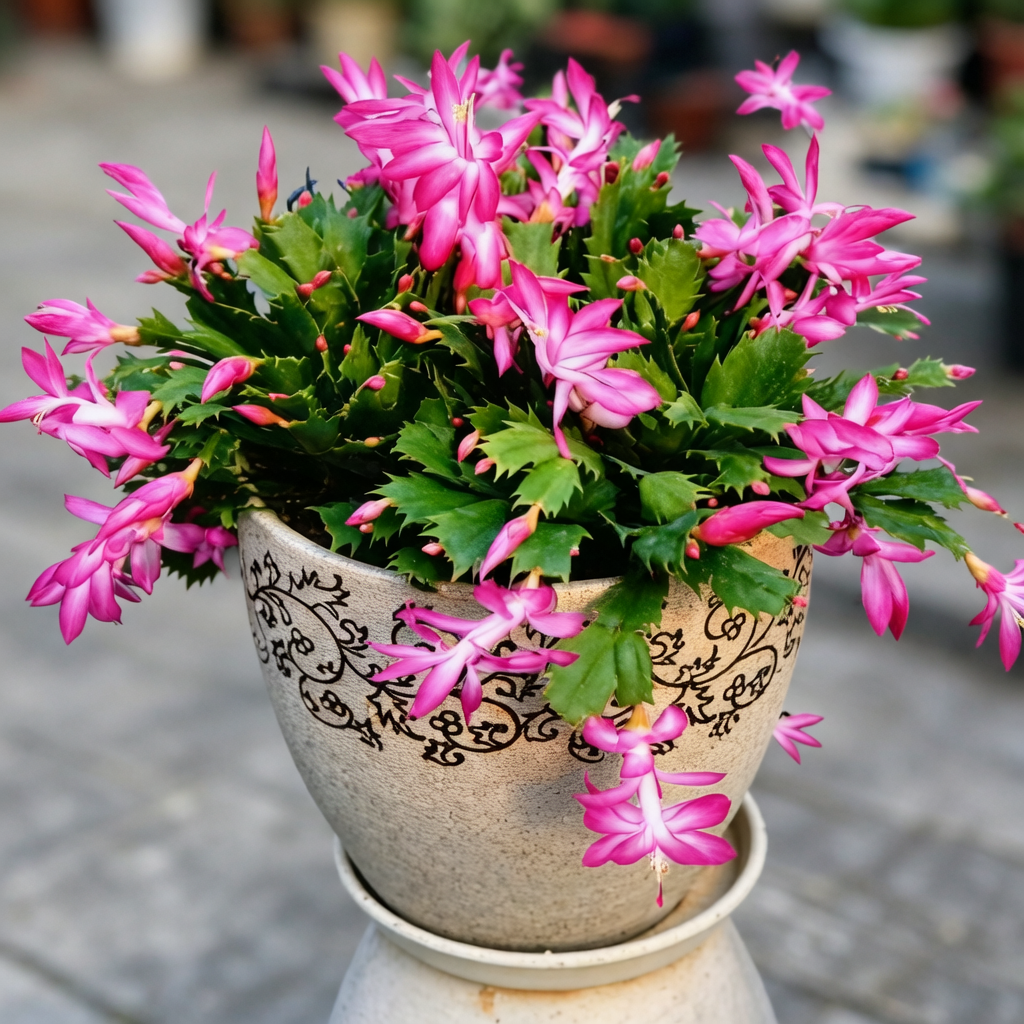
- Size:Typically about 20–40 cm (8–16 in) tall with a spread around 30–60 cm (12–24 in) in pots; stems can trail longer in hanging baskets. Retail plants are often sold in 12–15 cm (4.7–5.9 in) pots and may be around 20 cm (8 in) tall when in bloom.
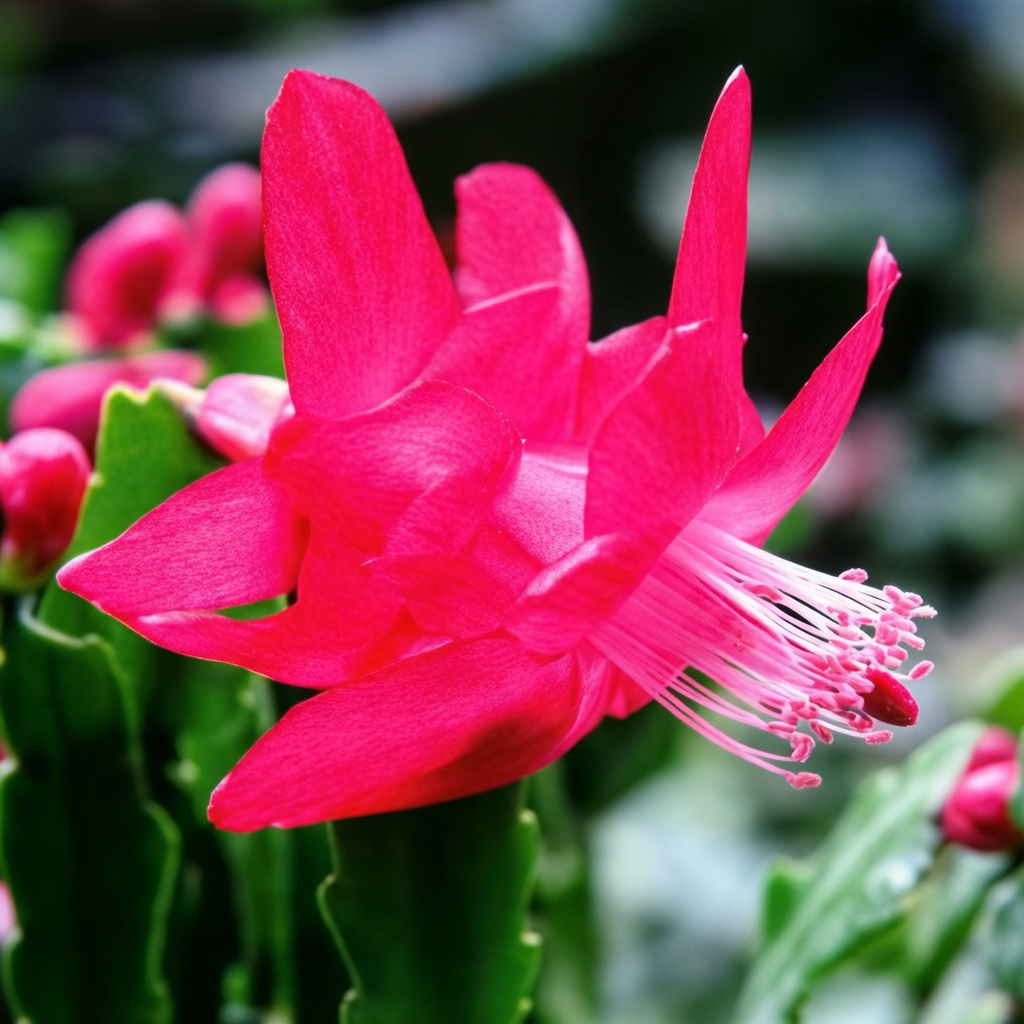
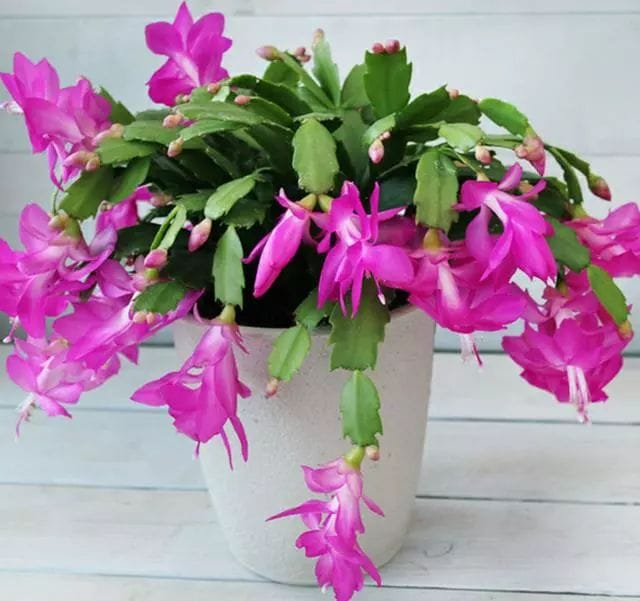
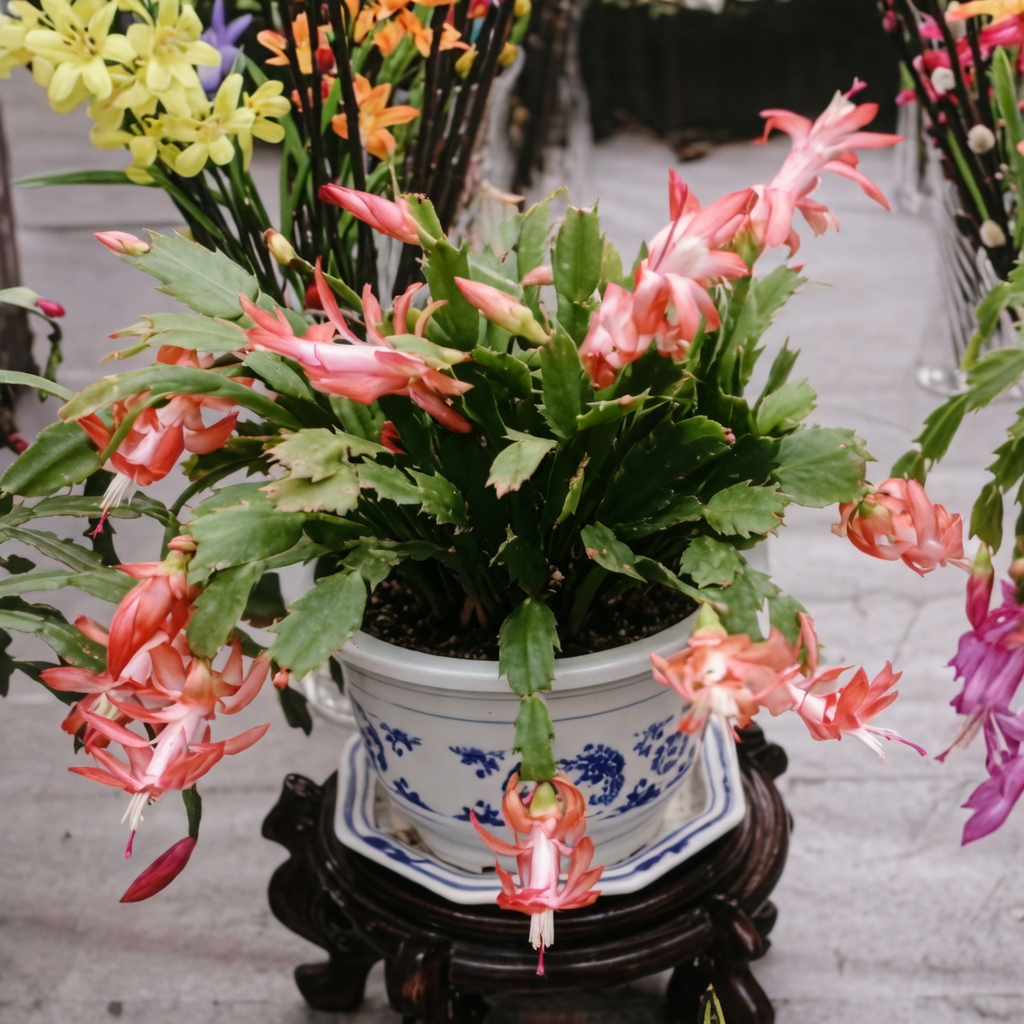
- Foliage:No true leaves—what you see are flattened, jointed, succulent stem segments. Segments are mid- to bright green (sometimes with a purple tinge in strong light), glossy, and edged with small teeth/scallops; plants branch readily into a compact mound when young and become arching to cascading with age.
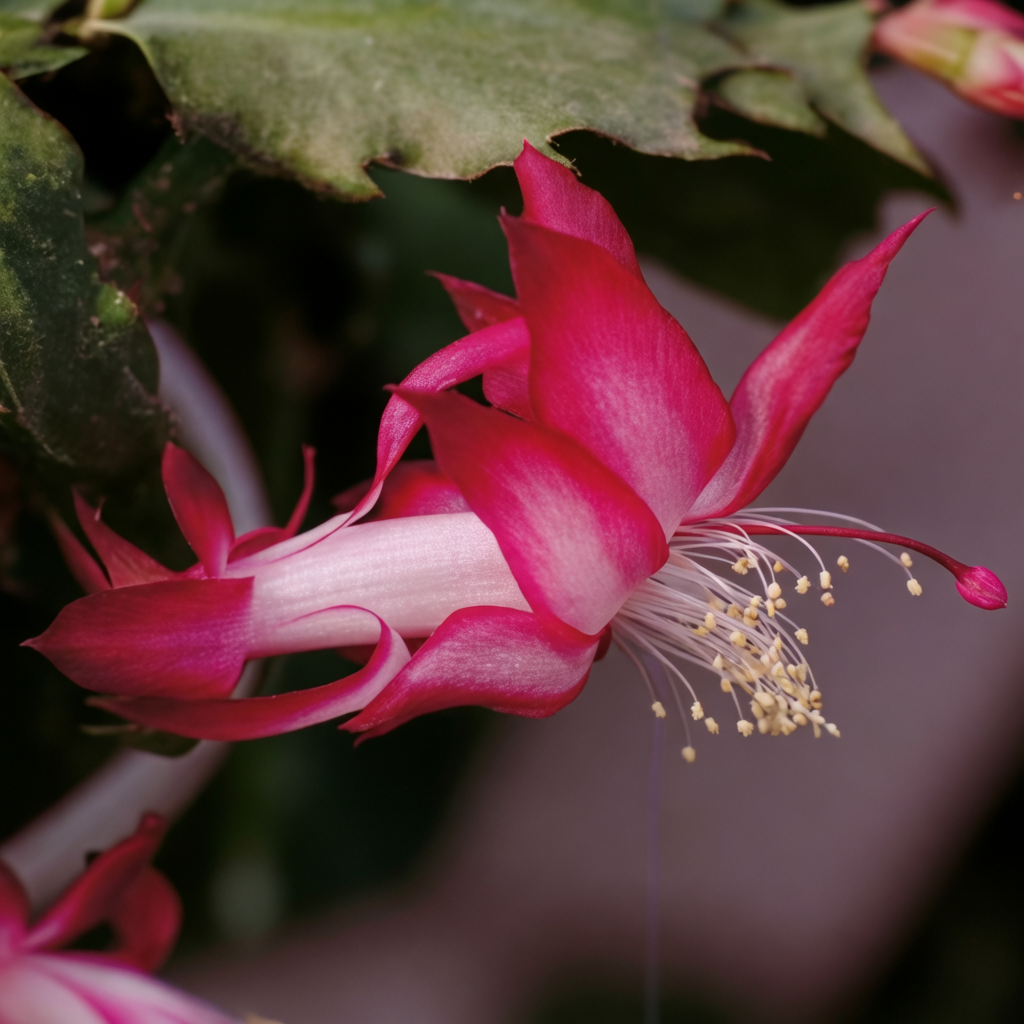
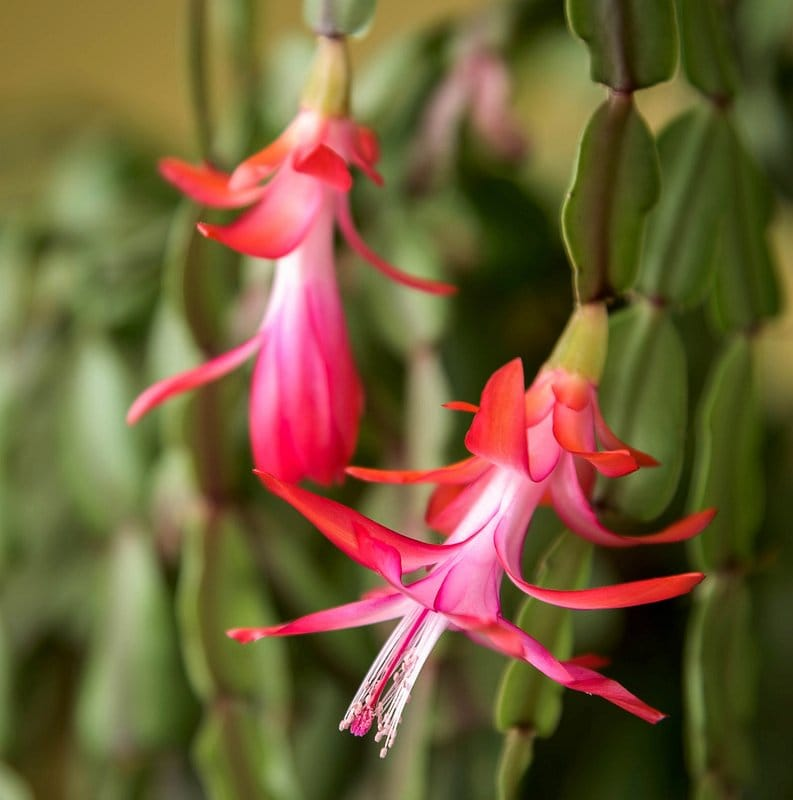
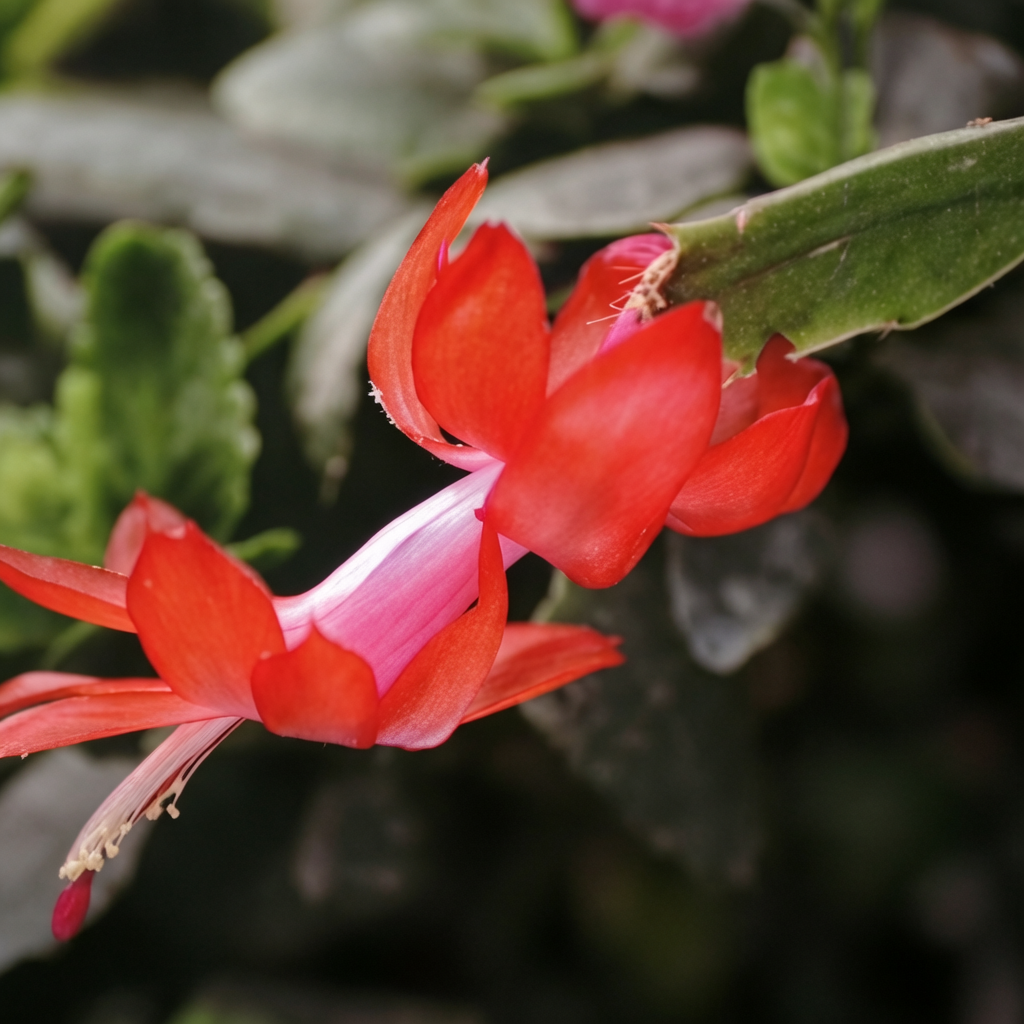
- Flower:Showy, tubular, layered flowers open at the tips of the segments, often in generous numbers on mature plants. Colors vary widely by cultivar, commonly pink, magenta, red, white, orange, and bicolors. Individual flowers are often about 6–9 cm (2–3 in) long, with noticeable stamens; blooms are generally not fragrant.
- Flowering Season:Late fall to winter—most commonly November–January indoors; blooms can last several weeks (often around 4–6 weeks depending on temperature and stability).
- Growth Habit:Evergreen epiphytic cactus with arching to trailing/cascading stems; strongly leans toward the light and may drop buds if rotated or moved repeatedly while setting buds.
🌤️ Environment
Sunlight
Bright, indirect light to light partial shade. An east-facing window is ideal; a south-facing window usually works if filtered by a sheer curtain. Avoid harsh midday summer sun (can scorch/bleach segments), but also avoid deep shade. For better budding, provide long, uninterrupted nights in autumn (short-day response).
Temperature
Best growth around 18–23°C (64–73°F). Budding is improved by cooler nights and is often reduced when temperatures stay above about 25°C (77°F). Keep above 10°C (50°F) for safety (many growers treat 10°C/50°F as a practical minimum), and avoid frost; during flowering, cooler conditions around 10–15°C (50–59°F) can help blooms last longer.
Humidity
Prefers moderate to higher humidity compared with desert cacti. In dry heated homes, use a pebble tray or humidifier; light misting/rinsing of stems can help, but reduce humidity and improve airflow if fungal issues appear.
Soil
A fast-draining, airy medium: cactus mix or a peat/coco-based potting mix amended with perlite/coarse sand and/or fine bark. Slightly acidic to near neutral is fine (about pH 5.5–6.5). Always use a pot with drainage; roots hate sitting wet.
Placement
Indoors near a bright window with filtered light (living room, bright bathroom, office). Keep away from heaters, AC vents, frequently opened doors, and cold drafts; during budding/flowering, choose a stable spot and avoid moving or rotating the pot.
Hardiness
Frost-tender; best outdoors year-round only in warm climates (roughly USDA Zones 10–12).
🪴 Care Guide
Difficulty
Easy to moderate: day-to-day care is forgiving, but consistent flowering is easiest when you nail two things—bright indirect light plus long, uninterrupted nights in autumn—and avoid stress (especially soggy soil and moving the plant while in bud).
Buying Guide
Choose a sturdy, well-branched plant with thick, glossy green segments and no shriveling, scars, black/reddish spots, or pest residue. Slightly dry soil is safer than soggy soil at purchase. If buying in season, pick a plant with lots of buds and a few flowers just starting to open for the longest show; acclimate it to bright filtered light after bringing it home.
Watering
Water thoroughly, then let excess drain completely—never leave the pot standing in water. During active growth and flowering, keep the mix lightly to evenly moist, watering again when the top layer to about the top half of the mix has dried (homes vary; this may be roughly once a week, sometimes more in warm bright rooms). After flowering, many plants take a short semi-rest: reduce watering and let the mix dry a bit more between waterings to prevent root/stem rot, then increase again when new growth resumes. Adjust for season, pot size, light, and temperature rather than following a rigid schedule.
Fertilization
Feed during active growth (spring through summer) with a diluted balanced fertilizer; a bloom-leaning formula can also be used. Common approaches are monthly at half-strength or every 2 weeks at reduced strength—either works as long as you don’t overdo it. Pause feeding during the post-bloom rest and when buds are forming in late summer/early fall; resume after flowering if the plant is actively growing again.
Pruning
Prune right after flowering to encourage branching and a fuller plant. Twist off or snip segments cleanly (often 1–2 segments from the ends, or up to about one-third of the plant if needed). Avoid rough handling when buds are forming—stress and movement can trigger bud drop.
Propagation
Most easily from stem-segment cuttings. Take 1–5 segments (depending on the look you want), let the cut end callus for about 2–4 days, then insert into a barely moist, free-draining mix (or root in water first, then pot up). Keep in bright shade at about 15–20°C (59–68°F); rooting commonly takes about 2–3 weeks. It can also be grafted onto other cacti by growers to make specimen plants.
Repotting
Repot after flowering or in spring. Many plants prefer being slightly rootbound; repotting too often can reduce blooming. A practical interval is every 2–4 years, using a pot only about 2.5–5 cm (1–2 in) wider than the old one. Fresh, airy mix matters more than a big pot; some growers plant 3–5 rooted cuttings together in a 12–15 cm (4.7–5.9 in) pot for a fuller display.
📅 Seasonal Care Calendar
Spring: post-bloom growth—prune, resume regular watering, begin light feeding. Summer: keep in bright shade, avoid heat stress; water when partially dry. Early fall: reduce watering slightly and stop feeding; provide long, uninterrupted nights and cooler evenings to encourage buds. Late fall–winter: flowering—keep conditions steady (don’t rotate/move), water moderately, and keep away from drafts; cooler temps help flowers last longer. After flowering: brief semi-rest—water less until growth restarts.
🔬 Pests, Diseases & Safety
Common Pests & Diseases
Pests can include mealybugs, scale, aphids, thrips, whiteflies, spider mites, and fungus gnats (often a sign the mix stays too wet). Treat early with insecticidal soap or horticultural oil, and isolate heavily infested plants. The most common serious problem is root/stem rot from soggy soil, cool conditions, or poor airflow—use a fast-draining mix, empty saucers, and water only after partial drying. If rot is suspected, remove the plant, trim mushy roots/stems, and restart healthy segments as cuttings in fresh mix.
Toxicity
Generally considered non-toxic to pets, but chewing or ingesting the fibrous segments can cause mild gastrointestinal upset (vomiting/diarrhea) in cats or dogs. Keep out of reach of persistent plant-chewers.
🎋 Culture & Symbolism
Symbolism:A cheerful symbol of holiday celebration and bright hope in the darkest months; also associated with longevity and “sticking with you,” since well-cared-for plants can thrive for decades.
History & Legends:A classic houseplant descended from Brazilian Atlantic Forest cacti and popular in cultivation since the 1800s. It has been widely bred internationally into many compact, heavy-flowering cultivars, and it’s famous for being handed down as an heirloom from one home to the next.
Uses:Primarily ornamental: a winter-blooming pot plant for windowsills, tabletops, and hanging baskets. It’s especially popular as a seasonal gift plant and a centerpiece for late-fall and winter indoor displays.
❓ FAQ
Why isn’t my Christmas cactus blooming?
The usual causes are (1) not enough long, uninterrupted nights in autumn (it’s a short-day plant), (2) nights that are too warm (bud set drops when temperatures stay high), (3) light exposure at night from lamps/TV, (4) overfeeding late in the season, or (5) stress from overwatering or frequent moving.
Why are the buds shriveling or falling off?
Bud drop is commonly triggered by change: rotating/moving the pot while budding (it strongly leans toward the light), sudden temperature swings, cold drafts, or the soil cycling between too wet and too dry. Keep it in a stable spot, water moderately, and avoid drafts.
How often should I water it?
Water deeply, then wait until the mix has partially dried before watering again. In bright, warm homes this may be around weekly during growth/flowering; in cooler or dimmer spots it can be much less. The goal is “evenly moist, never soggy,” especially after flowering when the plant may rest.
Can I put it outside in summer?
Yes—when nights stay above about 10°C (50°F), it can enjoy a shaded outdoor spot with dappled light. Acclimate gradually, avoid harsh sun and heavy rain, and bring it back inside before temperatures drop.
💡 Fun Facts
- It’s a forest cactus that naturally grows on trees in humid Brazilian woodlands, not in desert sand.
- The “segments” are modified stems, not true leaves.
- If you keep the plant facing the same direction during bud set, you’ll often get a noticeably better flower display.
- Schlumbergera truncata typically flowers earlier than the true traditional “Christmas cactus” (often sold as Schlumbergera × buckleyi), which is why the common names get mixed up so often.
- With good care, these plants can live for decades and are famous as hand-me-down houseplants.