

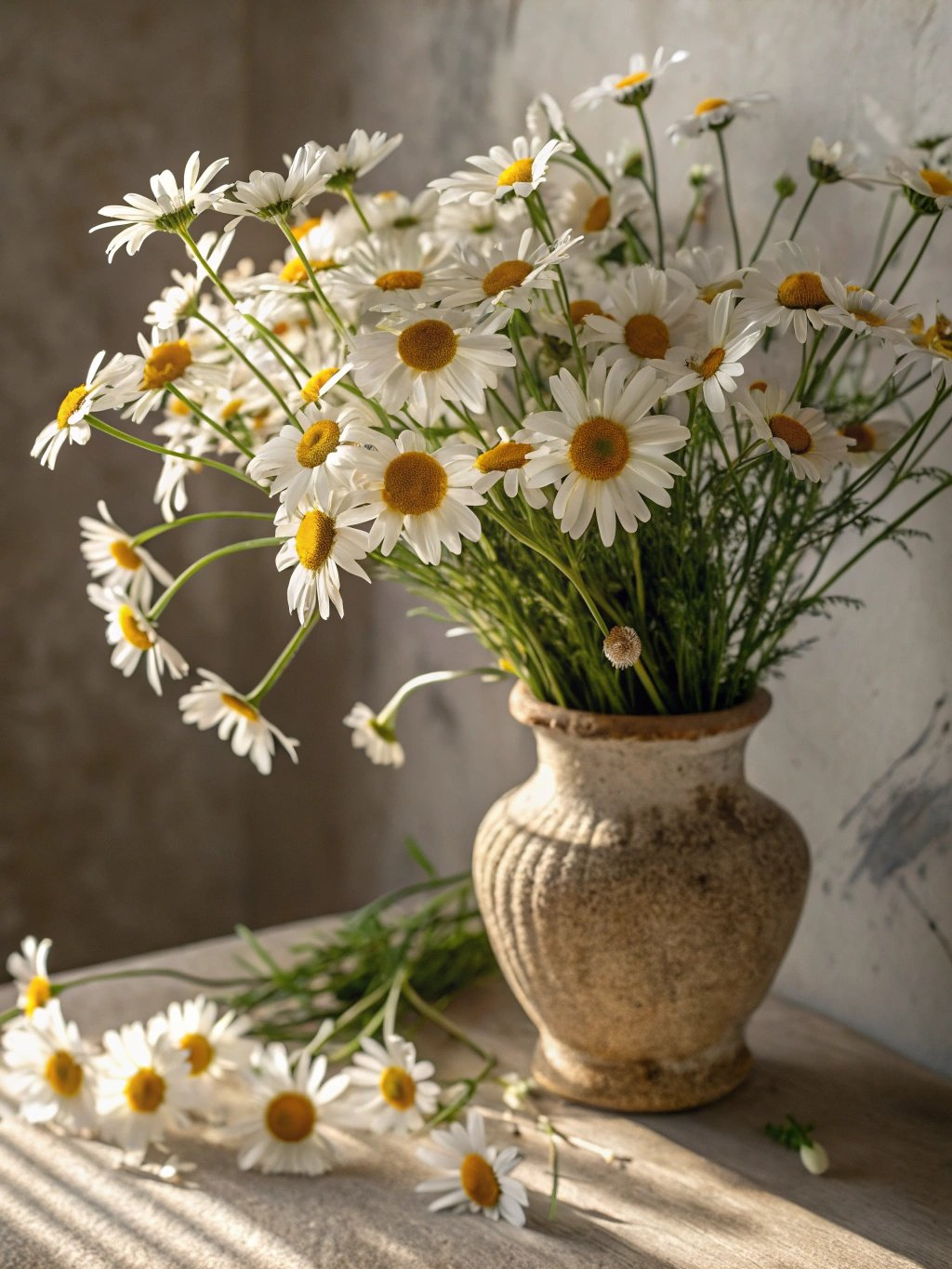
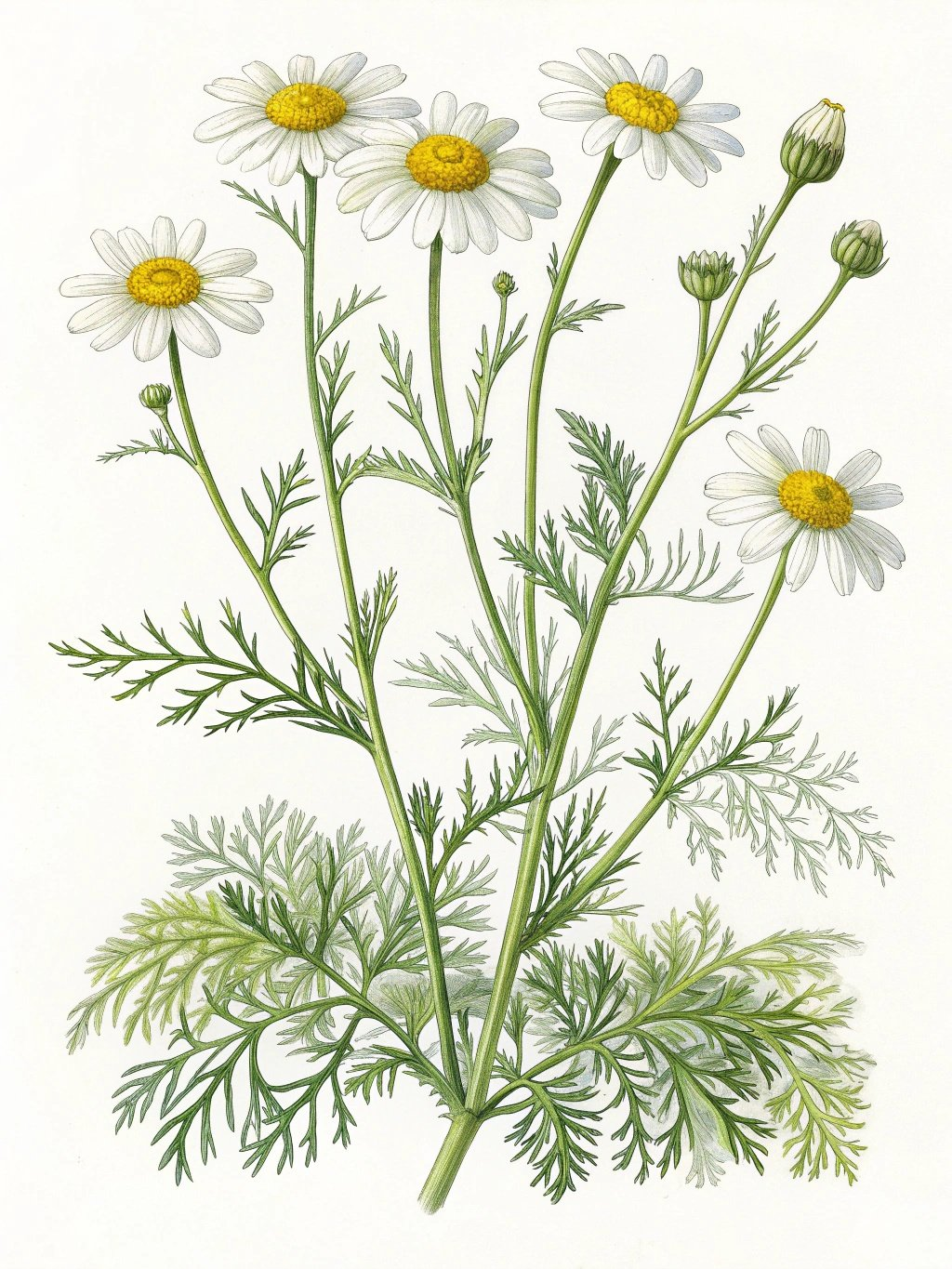

🌱 Plant Features
- Size:German chamomile: 15–60 cm (6–24 in) tall. Roman chamomile: 20–30 cm (8–12 in) tall with a spreading, mat-forming habit
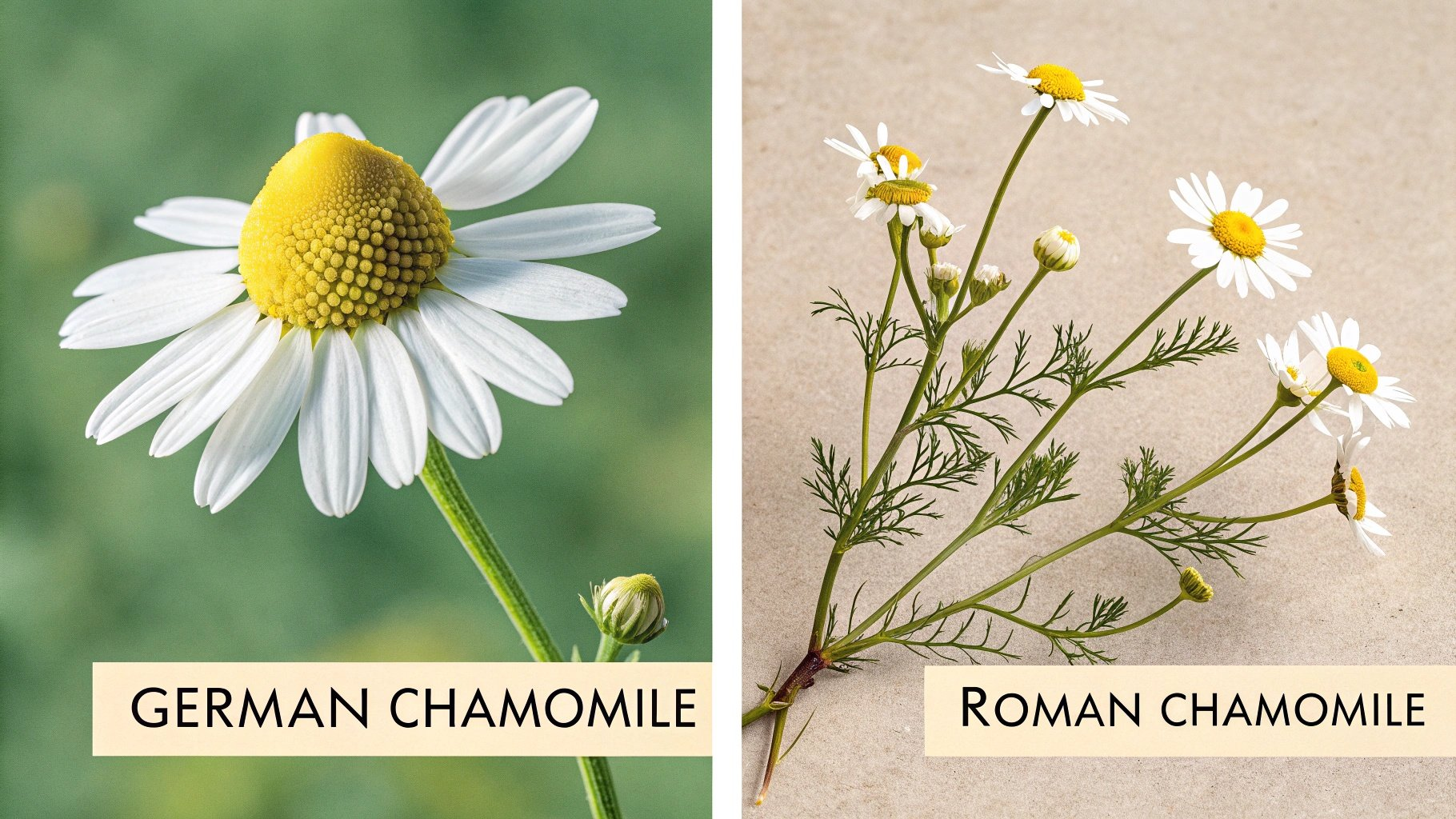
- Foliage:Soft, feathery, finely divided leaves (often bi- to tripinnate) in a fresh to deep green, strongly aromatic when brushed. German chamomile typically looks finer and more thread-like than Roman chamomile.
- Flower:Classic mini “daisy” blooms: white ray petals around a bright yellow disc, carrying a sweet, fruity apple scent. German chamomile commonly develops a hollow, conical receptacle and the ray petals may droop as flowers mature; Roman chamomile’s flowers are generally smaller and borne on a low, creeping plant.
- Flowering Season:Spring to midsummer (typically May to July); with good conditions it may bloom in multiple flushes (often 2–3 times per year). A flowering run can last about 50–65 days, and individual blooms form over roughly 20–25 days.
- Growth Habit:German chamomile is an erect, branching annual. Roman chamomile is a low-growing perennial with creeping/prostrate stems that can root as they spread.
🌤️ Environment
Sunlight
Full sun is best (about 6–8 hours/day) for sturdy growth and heavy flowering. Tolerates partial shade—especially helpful in hot climates where a bit of afternoon shade can prevent flower scorch.
Temperature
Happiest in mild conditions around 15–20°C (59–68°F). Can handle hot spells up to about 38°C (100°F) if watered sensibly and not kept soggy. Roman chamomile is generally more cold-hardy; German chamomile is frost-sensitive because it’s typically grown as an annual.
Humidity
Prefers moderate humidity and good airflow. Once established it tolerates some dryness, but prolonged high humidity plus poor ventilation can invite mildew and rot.
Soil
Well-drained, loose soil is key. It will tolerate poorer soils, but plants may get floppy if conditions are too rich or too wet. Often prefers neutral to slightly alkaline conditions; improving drainage with sand/grit can help in heavier soils.
Placement
Great for sunny balconies, patio pots, border edges, and along paths (especially Roman chamomile as a groundcover). Indoors, use the brightest window you have and keep air moving to reduce mildew.
Hardiness
Often grown across USDA Zones 2–9 (as an annual in cold zones). Roman chamomile is commonly hardy to about Zone 4; German chamomile does not overwinter in freezing conditions.
🪴 Care Guide
Difficulty
Easy and beginner-friendly. The main trick is simple: sun + drainage, and don’t overwater.
Buying Guide
Pick plants with fresh green, aromatic foliage and buds/flowers, avoiding any signs of sticky residue, distorted growth, or spotting. Choose German chamomile if your goal is tea harvest; choose Roman chamomile if you want a low, spreading ornamental or fragrant groundcover.
Watering
Water regularly while young so roots establish (roughly the equivalent of about 2.5 cm (1 in) of water per week), then let the topsoil dry a bit between waterings. Avoid waterlogging—soggy soil is the fastest route to root/stem rot. Increase watering in hot weather; reduce sharply in cool seasons.
Fertilization
Light feeder. Too much fertilizer can produce lush, floppy growth with fewer flowers. In containers, a diluted, balanced water-soluble feed about once a month is plenty; in garden beds it often needs none unless soil is extremely depleted.
Pruning
Deadhead to keep blooms coming. If plants stretch or get leggy mid-season, shear back to about 10 cm (4 in) above the soil to encourage bushier regrowth and another flush of flowers. Trimming after the first harvest also helps rebloom.
Propagation
Most commonly from seed. Sow in spring (around March) or fall (around September), with fall/winter sowing favored in warmer regions. Seeds need light—press onto the soil surface without covering and keep evenly moist; germination often occurs in 7–14 days. German chamomile readily self-seeds. Roman chamomile can also be propagated by division in early spring by separating rooted runners.
Repotting
German chamomile (annual) usually doesn’t need repotting; it’s typically sown and grown for the season. Roman chamomile benefits from division/refreshing every 2–3 years in spring. Use pots at least 15 cm (6 in) deep with strong drainage. Transplant seedlings when small (about 5–8 cm (2–3 in) tall) and avoid moving plants during heavy flowering if possible.
📅 Seasonal Care Calendar
Spring (Mar–May): sow/plant out, early growth, first flowers. Summer (Jun–Aug): peak bloom; water during heat and give a touch of afternoon shade in very hot climates. Fall (Sep–Nov): excellent time for sowing in mild-winter areas; collect seed/flowers. Winter (Dec–Feb): Roman chamomile rests and appreciates protection from harsh wind; German chamomile typically finishes as an annual.
🔬 Pests, Diseases & Safety
Common Pests & Diseases
Usually trouble-light, but can get aphids, thrips, or leafminers—often managed with a strong water spray or insecticidal soap/neem. In damp, still conditions it may develop leaf spot, powdery mildew, botrytis blight, rust, or stem/root rot; prevention is mostly airflow, sun, and careful watering (avoid constantly wet leaves and soil).
Toxicity
Generally considered non-toxic, but it can trigger allergic reactions—especially in people sensitive to Asteraceae (daisy family) plants such as ragweed. Possible contact dermatitis in sensitive individuals. Use extra caution with concentrated extracts/essential oils, during pregnancy, for very young infants, and if taking anticoagulant medications (potential interactions have been reported).
🎋 Culture & Symbolism
Symbolism:Often associated with comfort and gentle healing, as well as resilience—staying cheerful and useful even when conditions are less than perfect.
History & Legends:Chamomile has been cherished since antiquity. Ancient Egyptians reportedly honored it as a sacred plant linked to the sun god Ra and used it in ritual and healing. Greeks and Romans valued it as a calming herb, and in medieval Europe it was a classic “strewing herb,” scattered on floors so it released fragrance when walked upon—fueling the old saying that chamomile spreads best when trodden.
Uses:A favorite ornamental for borders and pots, and (especially Roman chamomile) as a fragrant groundcover. The dried flower heads are widely used for chamomile tea and traditional soothing herbal preparations. Essential oil—famously deep blue in German chamomile after distillation—is used in skincare, perfumes, and aromatherapy for its gentle, calming reputation.
❓ FAQ
When is the best time to drink chamomile tea?
Anytime—it’s naturally caffeine-free. Many people like it after meals for comfort, or about 1 hour before bedtime to wind down. If you’re sensitive or new to it, start with 1 cup and see how you feel.
What’s the difference between German and Roman chamomile?
German chamomile (Matricaria chamomilla) is an upright annual most often grown for tea and essential oil. Roman chamomile (Chamaemelum nobile) is a low, creeping perennial that’s great as a fragrant groundcover. Their scent is similar, but German chamomile oil is famously blue after distillation and is often described as stronger, while Roman chamomile is commonly considered gentler for skincare.
Is chamomile easy to grow?
Yes—give it plenty of sun, sharply draining soil, and don’t overwater. It’s generally forgiving and a great beginner herb.
Can I drink chamomile tea every day?
Many people do, but moderation is wise. If you’re pregnant, allergic to ragweed/daisies, taking blood thinners, or giving it to a very young infant, check with a medical professional first.
Does chamomile attract pests?
Not usually. It often has a reputation as a helpful companion plant, though aphids or thrips can occasionally show up—typically easy to manage with water spray or mild soap treatments.
💡 Fun Facts
- The name “chamomile” comes from Greek words meaning “ground apple,” a nod to its apple-like fragrance.
- German chamomile essential oil can turn a striking deep blue during steam distillation thanks to chamazulene—an unusual color for a plant oil.
- A traditional garden saying claims chamomile spreads better the more it’s walked on, which fits Roman chamomile’s groundcover habit.
- Chamomile appears in popular culture—like Beatrix Potter’s story where Peter Rabbit is given chamomile tea.