🌱 Plant Features
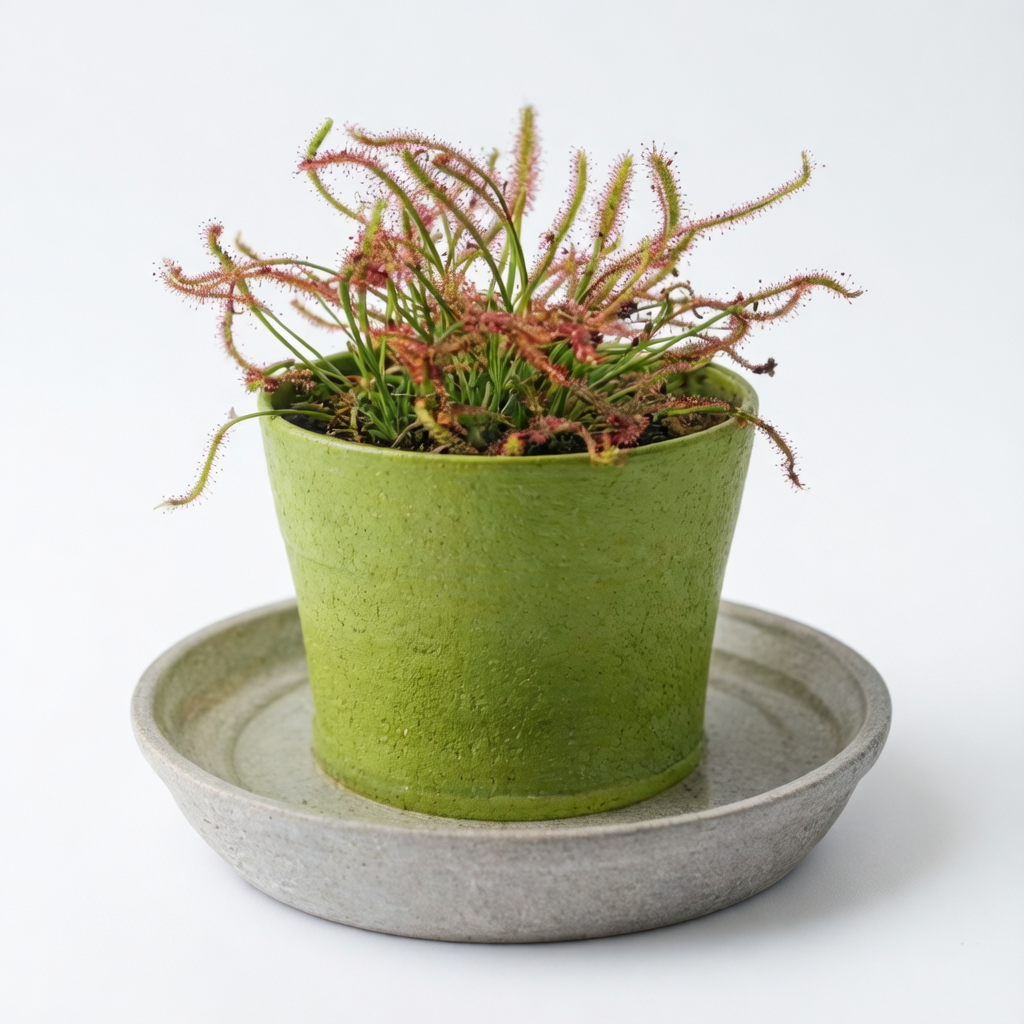
- Size:About 15 × 20 cm (6 × 8 in) for height × spread
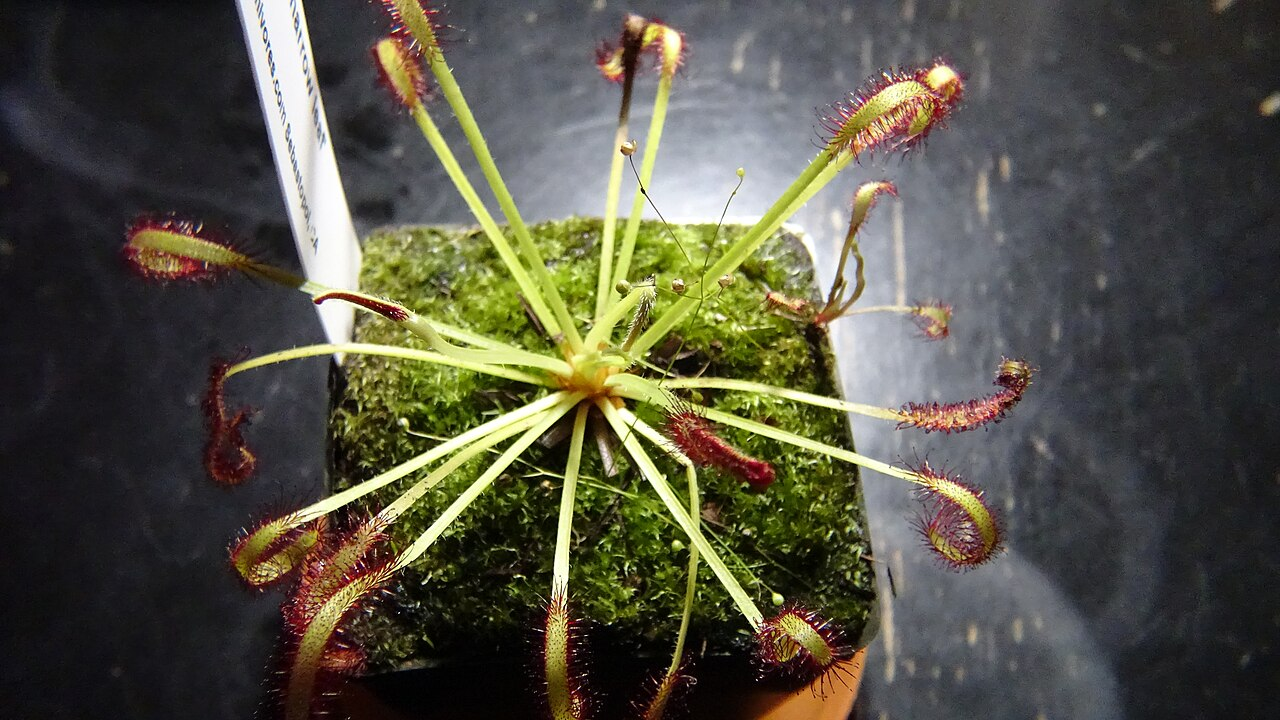
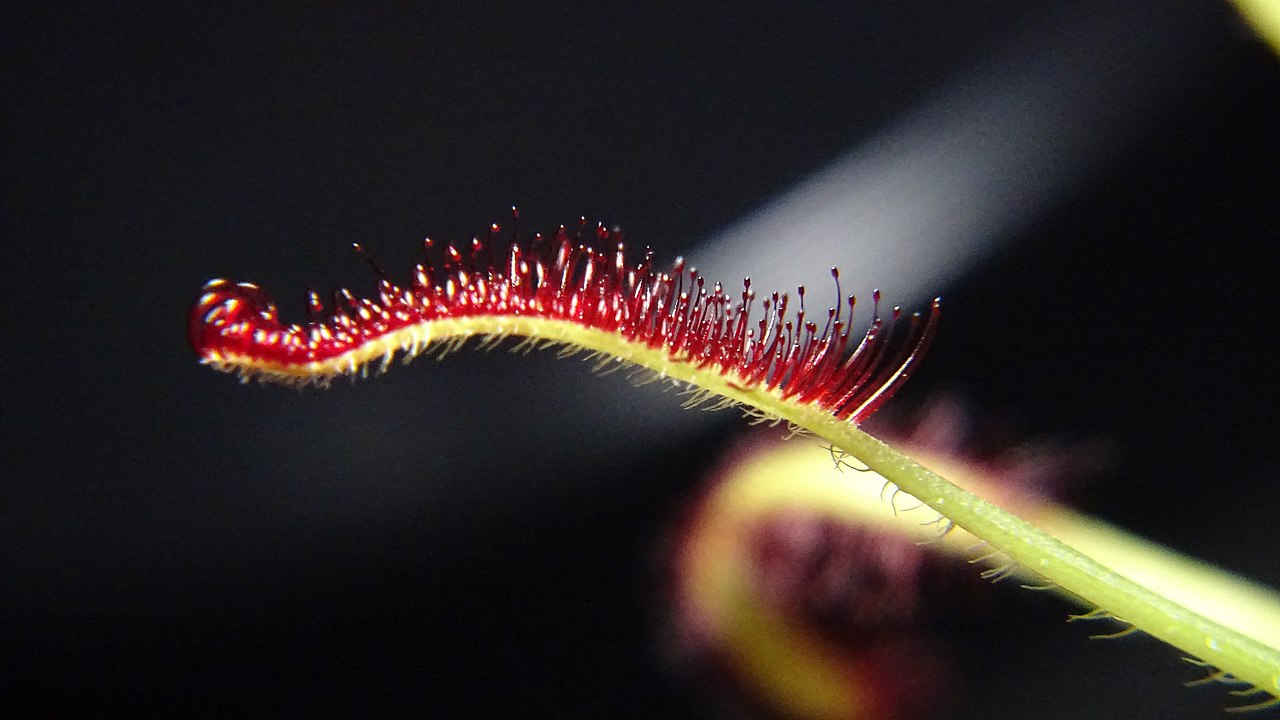
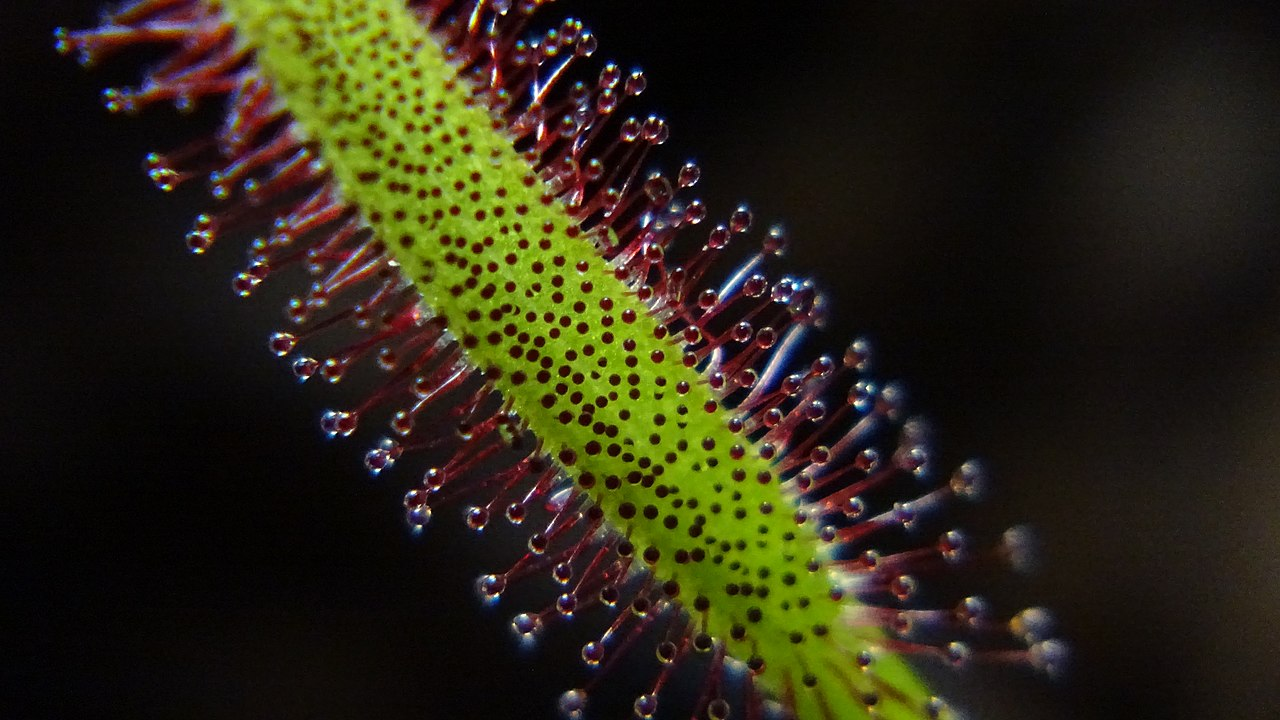
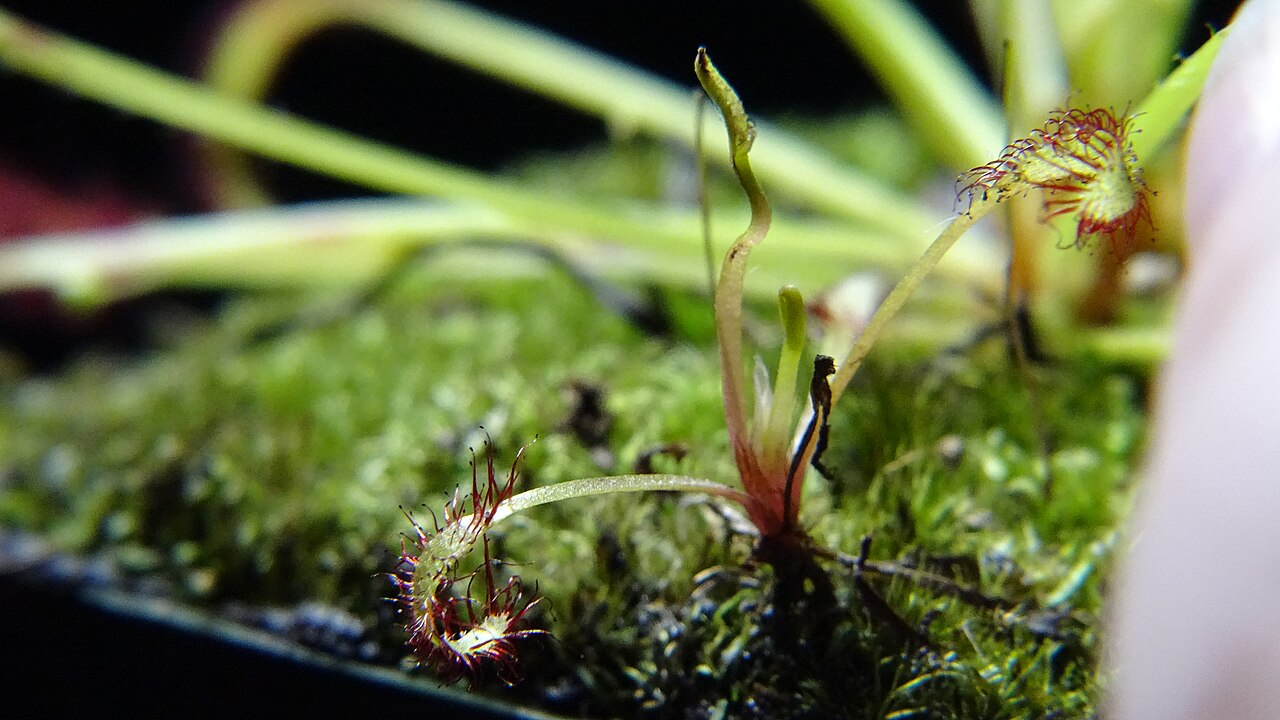
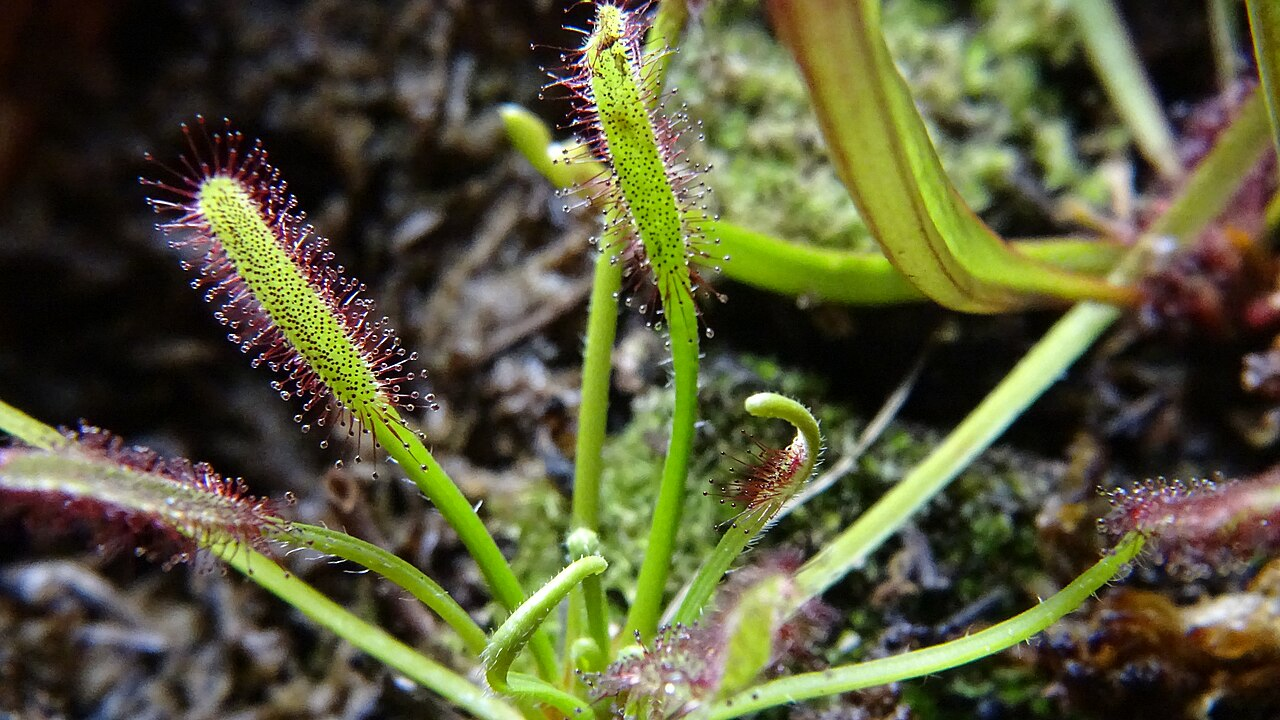
- Foliage:Slender, strap-like leaves arranged in a rosette. The leaf surfaces are lined with bright gland-tipped tentacles that ooze sticky mucilage, forming glittering droplets. When an insect is caught, the leaf may gradually curl inward to help secure and digest the prey.
- Flower:Small, delicate pink flowers carried on upright stalks. Individual blooms are very short-lived—usually opening in the morning and closing by afternoon—yet a healthy plant can produce many flowers in succession on the same stalk.
- Flowering Season:Late spring to early summer
- Growth Habit:Rosette-forming carnivorous perennial
🌤️ Environment
Sunlight
Full sun to very bright light. Aim for at least 4–6 hours of direct sun indoors (for example, a sunny windowsill) or use strong grow lights.
Temperature
7–29°C (45–84°F); strongest growth is usually around 15–27°C (59–81°F).
Humidity
Moderate humidity is fine. It’s generally adaptable as long as it stays consistently wet and has decent air movement.
Soil
Nutrient-poor carnivorous mix, such as sphagnum peat moss and perlite mixed 1:1. Avoid standard potting soil or any mix with added fertilizer—these can quickly harm or kill the plant. A taller pot about 10–15 cm (4–6 in) deep helps keep moisture stable.
Placement
Brightest spot available (sunny windowsill, greenhouse, or under strong grow lights). Good ventilation helps reduce mold; an open window can also allow occasional small insects for natural feeding.
Hardiness
Not frost-hardy; treat as a tender perennial. Typically grown outdoors only in USDA Zone 9–11, and protected from freezing.
🪴 Care Guide
Difficulty
Easy (for a carnivorous plant).
Buying Guide
Pick plants with active, “dewy” leaves and fresh green/red growth. Avoid any that have been allowed to dry out, or that are potted in ordinary compost/potting mix.
Watering
Use the tray method: stand the pot in a saucer/tray of rainwater or distilled water and keep the medium consistently wet. In cooler conditions, growth may slow in winter and it can be kept slightly less wet (still never bone-dry). In warm indoor homes it often grows year-round and can remain in water year-round. Avoid tap water unless it is extremely low in dissolved minerals.
Fertilization
Do not fertilize the soil. If the plant needs feeding, occasional small insects are enough; avoid chemical fertilizers.
Pruning
Remove dead leaves to prevent mold, especially in still air. Flower stalks can be cut if you want to prevent self-seeding or conserve the plant’s energy.
Propagation
Often self-seeds if flowers are left to mature. It can also be propagated intentionally from seed or by leaf cuttings.
Repotting
Repot about once a year into fresh, nutrient-poor carnivorous medium. Use a taller pot about 10–15 cm (4–6 in) deep, and never switch to standard potting soil.
📅 Seasonal Care Calendar
Late spring–early summer: flowering season. Cooler winters: growth may slow and water needs can ease slightly (keep moist). Warm indoor conditions: can grow year-round in a water tray. Year-round: remove dead leaves for airflow and hygiene. Annually: refresh the potting mix; cut flower stalks if you want to reduce self-seeding.
🔬 Pests, Diseases & Safety
Common Pests & Diseases
Usually trouble-free. Possible issues include aphids on flower stalks, fungus gnats breeding in constantly wet media, and gray mold on dead leaves when airflow is poor. Remove dead material, increase ventilation, and use appropriate controls if needed.
Toxicity
Not known to be toxic to people or pets. It isn’t edible; keep it out of reach of children and pets to prevent accidental nibbling, irritation, or damage to the plant.
🎋 Culture & Symbolism
Symbolism:Often associated with cleverness and resilience—thriving in nutrient-poor habitats by “making its own luck” through insect-catching.
History & Legends:Native to South Africa’s Cape region, Cape sundew became popular worldwide because it adapts well to indoor growing compared with many other carnivorous plants, making it a classic starter species for new collectors.
Uses:Grown mainly as an ornamental carnivorous plant. It naturally supplements nutrients by attracting, trapping, and digesting small insects.
❓ FAQ
Why does my Cape sundew stop making “dew”?
The most common causes are insufficient light, mineral-rich water (tap water), or stress from drying out. Move it to brighter light, use only rainwater/distilled water, and keep the medium consistently wet.
Can I feed it fertilizer or plant food?
Don’t fertilize the soil—Cape sundews are adapted to nutrient-poor conditions and fertilizer can burn the roots. If feeding is needed, offer the occasional small insect instead.
Do the flowers harm the plant?
Flowering is normal. If you want to avoid heavy self-seeding or save the plant’s energy, you can trim the flower stalk, but a healthy plant typically handles blooming well.
💡 Fun Facts
- The “dew” is sticky mucilage, not water—touching it can temporarily reduce dew production.
- Each flower usually lasts only one day, but a single stalk can bloom repeatedly over time.
- Cape sundew is considered one of the most forgiving carnivorous plants for indoor growers—as long as the water and soil are right.