🌱 Plant Features
- Size:Typically 30–76 cm (12–30 in) tall with a spread of about 30–60 cm (12–24 in).
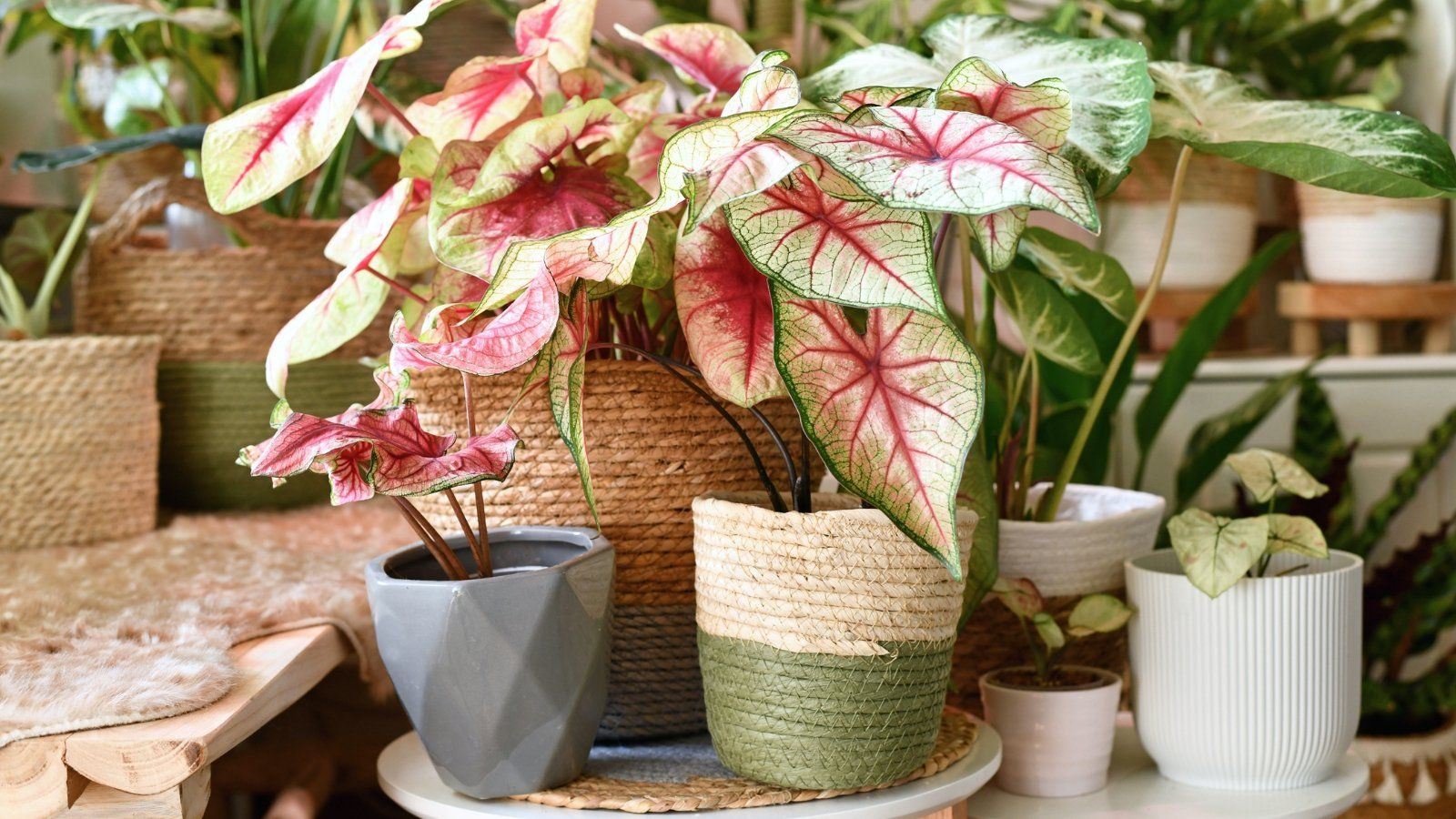
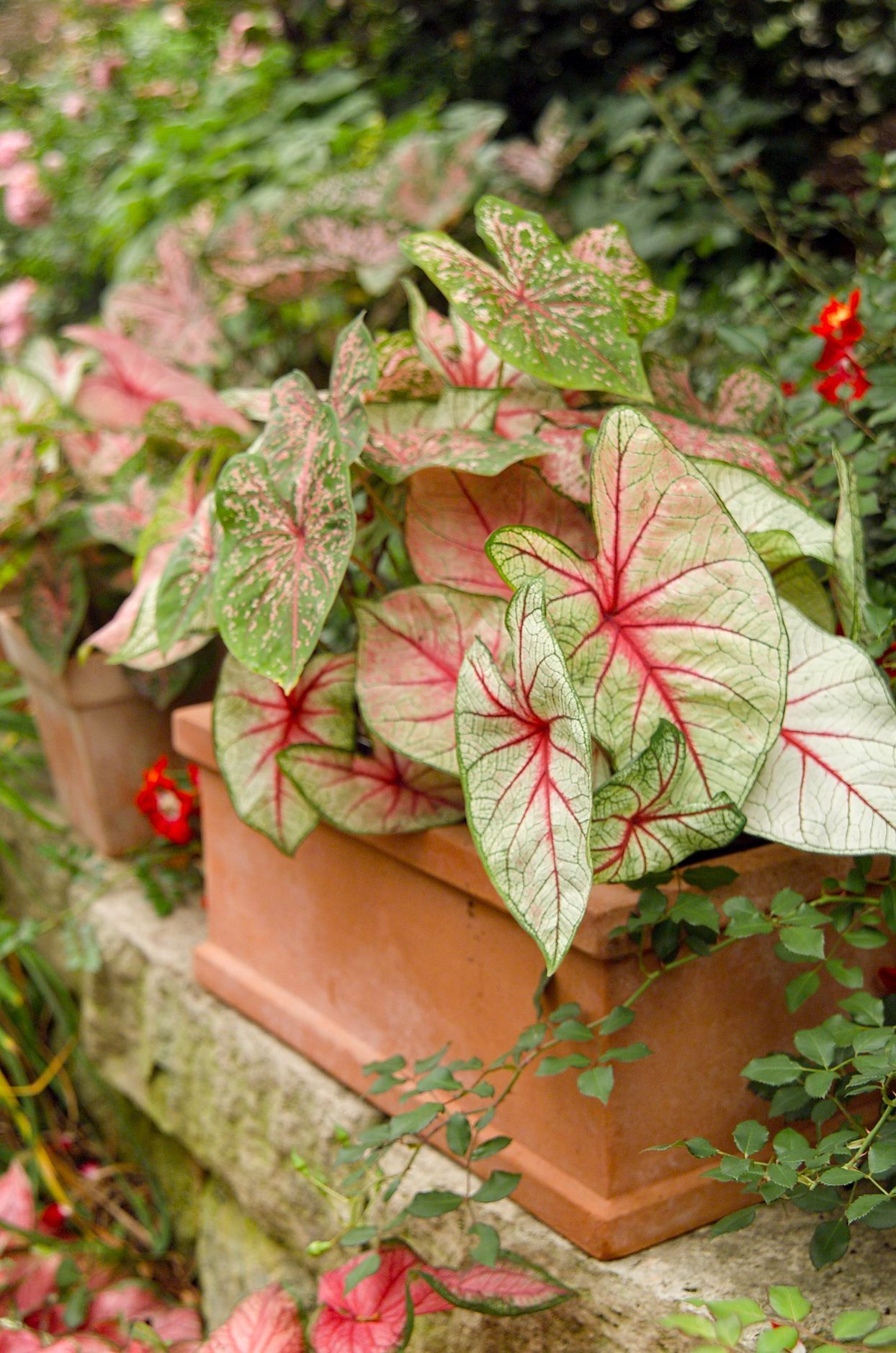
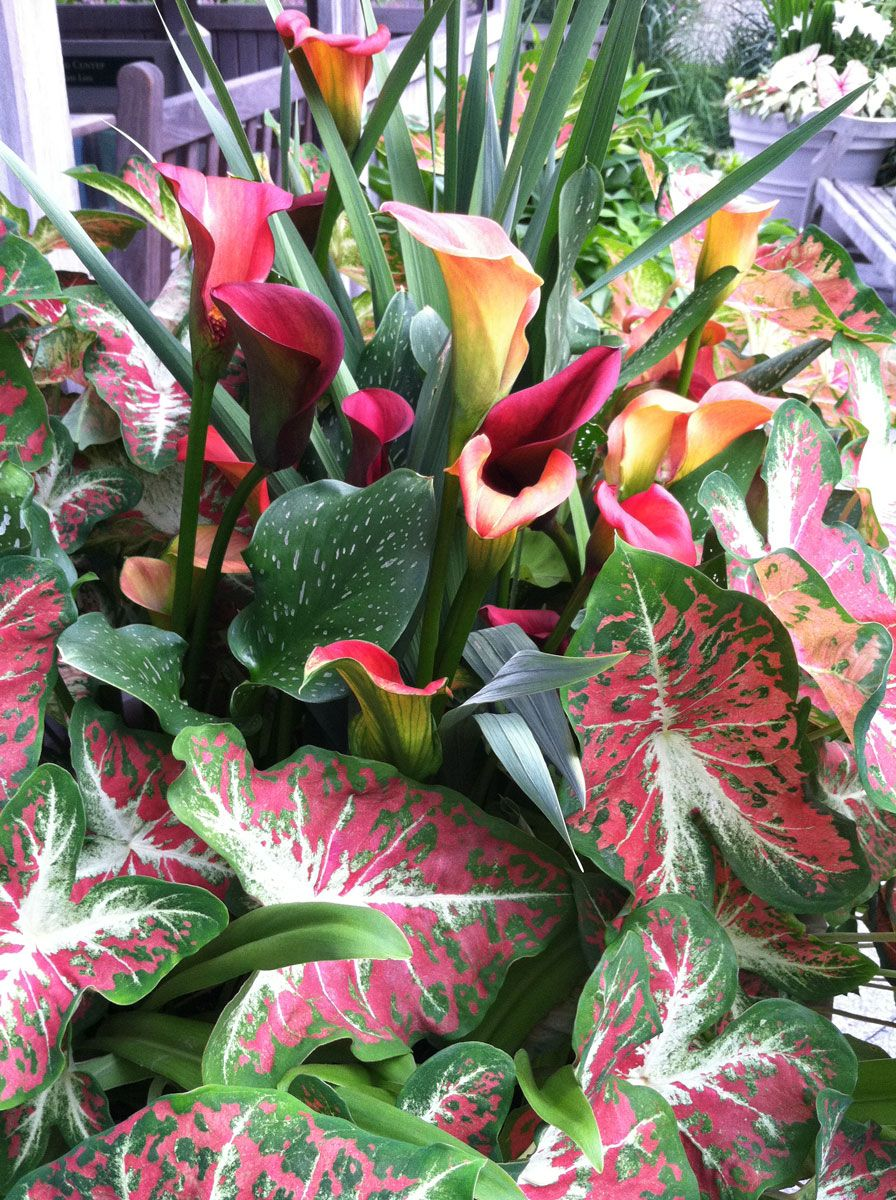
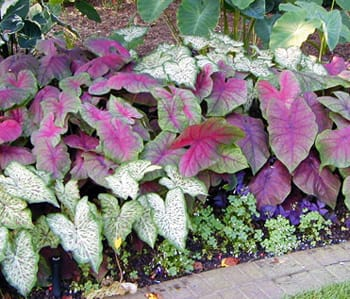
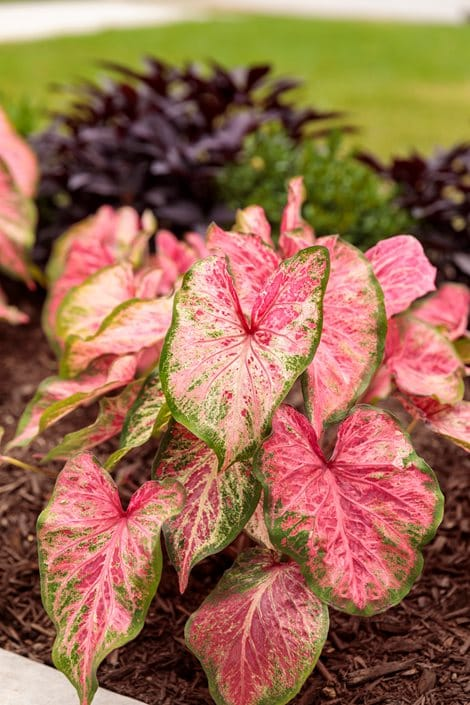
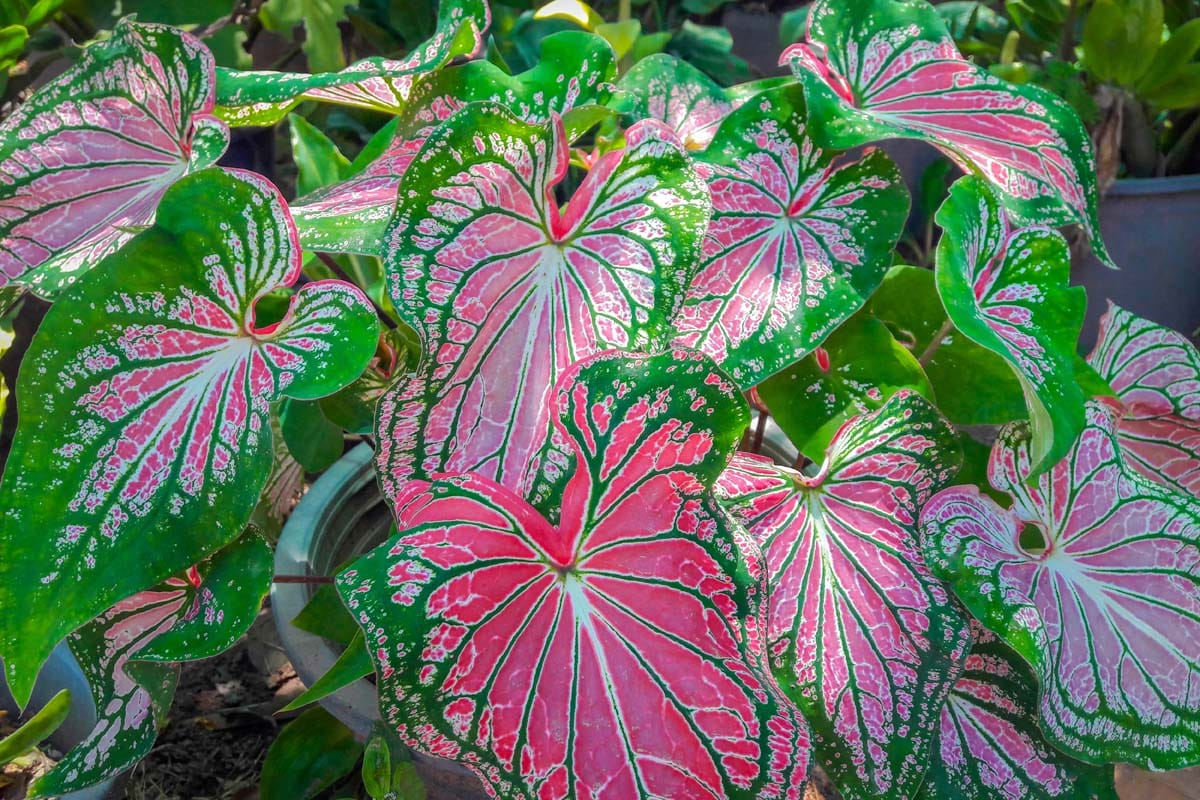
- Foliage:Basal, very thin (almost paper-like) leaves that are shield-shaped, heart-shaped, or arrow-shaped, usually 10–30 cm (4–12 in) long. Petioles can be 2–3× the leaf length. Color patterns vary widely—red, pink, white, purple, and many greens—often arranged as dramatic veins, speckles, blotches, or marbling, with main veins radiating from the leaf base.
- Flower:Occasionally produces a typical aroid bloom: a green to pinkish-green spathe surrounding a spadix (the spadix is shorter than the spathe). Flowers are not showy and are often removed so the plant can put more energy into leaf growth.
- Flowering Season:Spring to summer (flowers are not ornamental)
- Growth Habit:Clump-forming, tuberous perennial. Underground tubers are flattened and round, up to about 10 cm (4 in) across. Many cultivars are grouped into fancy-leaf (broad, heart-shaped) and strap-leaf (narrower, more lance/arrow-like) types.
🌤️ Environment
Sunlight
Best in bright, filtered light or part shade. Around 4–6 hours of gentler sun can work outdoors, but strong direct sun often scorches leaves. Indoors, bright indirect light keeps colors crisp.
Temperature
Warmth-loving: ideal about 21–27°C (70–81°F) by day and 15–18°C (59–65°F) at night. Try not to let temperatures fall below 15°C (60°F), especially for active growth.
Humidity
Prefers high humidity—often happiest above ~70%. In average homes, a humidifier, pebble tray, or grouping plants together helps prevent crispy edges.
Soil
Rich yet well-draining mix that stays lightly moist: slightly acidic is ideal (about pH 5.5–6.2). A container blend like peat-based potting mix loosened with perlite works well; avoid soggy soil to prevent rot.
Placement
Indoors: bathrooms, bright humid rooms, or near north/east-facing windows (or any window with sheer-filtered light). Outdoors: shaded patios, under trees, or bright-shade garden beds where hot midday sun won’t hit the leaves.
Hardiness
USDA Zones 9–11 as a perennial; elsewhere it’s commonly grown as a seasonal plant or overwintered by storing tubers.
🪴 Care Guide
Difficulty
Moderate—easy once you dial in warmth, humidity, and evenly moist (not wet) soil. Most “problems” come from cold drafts, dry air, or overwatering.
Buying Guide
Choose plants with vivid, unblemished leaves and no yellowing, spotting, or pest signs. If buying tubers, pick firm ones (not soft or shriveled). Larger tubers generally sprout faster and make fuller plants; tubers are commonly sold by size grades (e.g., No. 2/medium, No. 1/large, jumbo).
Watering
During active growth, water when the top ~2.5 cm (1 in) of soil feels dry, aiming for evenly moist soil—not waterlogged. In warm weather this is often about weekly, sometimes more in heat. If possible, use rainwater or filtered water. As leaves begin to yellow in fall, gradually reduce watering and stop during dormancy to keep tubers from rotting.
Fertilization
Feed in the growing season about every 2 weeks with a balanced liquid fertilizer (e.g., 20-20-20) diluted to 1/4 strength, or use a slow-release fertilizer. Stop fertilizing when the plant slows down and enters dormancy.
Pruning
Snip off damaged or yellowing leaves with clean, sterilized scissors. If flower spikes appear, many growers remove them early to encourage stronger foliage display.
Propagation
Most commonly by tuber division in late winter to spring: cut tubers with a sterile blade so each piece has at least one eye/growth point, let cuts callus for about a week, then plant with eyes facing up once soil is warm (~21°C/70°F). Commercially, tissue culture is widely used to produce clean, uniform plants. Leaf/petiole propagation is sometimes attempted in warm conditions, but division is the standard home method.
Repotting
Repot in spring as growth resumes, typically yearly. Use a pot with strong drainage (often at least 15 cm/6 in deep) and fresh mix. Handle gently—caladiums can sulk briefly after disturbance—then keep them warm and lightly moist until they re-establish.
📅 Seasonal Care Calendar
Spring (Mar–May): Plant or wake tubers; increase light gradually; resume watering and begin feeding once leaves expand. Summer (Jun–Aug): Peak growth—keep humidity up, protect from harsh sun, water consistently, feed every ~2 weeks. Fall (Sep–Nov): Growth slows; reduce watering as foliage yellows; prepare for dormancy. Winter (Dec–Feb): Dormant period—keep tubers dry; in cold climates, lift and store tubers in a dry medium (like dry sand/peat) around 13–18°C (55–65°F) or keep them dry in their pots in a warm spot.
🔬 Pests, Diseases & Safety
Common Pests & Diseases
Watch for spider mites, aphids, thrips, whiteflies, mealybugs, and scale; treat early with insecticidal soap or horticultural oil and improve humidity/airflow. Chewing pests like caterpillars and grasshoppers can also damage leaves outdoors. Root and tuber rots (often linked to Fusarium/Pythium) are encouraged by cold, wet soil—use a well-draining mix, avoid overwatering, and discard badly rotted tubers. Leaf spots may require improved airflow, keeping foliage dry, and targeted fungicide use if severe.
Toxicity
Toxic if eaten (people and pets) due to calcium oxalate crystals. Chewing can cause intense mouth/throat burning, drooling, swelling, and stomach upset. Sap may irritate skin—wear gloves if you’re sensitive, and keep plants away from curious kids, cats, and dogs.
🎋 Culture & Symbolism
Symbolism:Often associated with love and heartfelt emotion (thanks to its dramatic heart-shaped leaves), as well as protection and transformation—fitting for a plant that vanishes into dormancy and returns in a fresh flush of color.
History & Legends:A rainforest native from tropical South America, caladium became a global ornamental star through extensive cultivation and hybridizing, especially during the 20th century. In some cultural storytelling, it’s linked with themes of love and fertility, echoing its lush, expressive look.
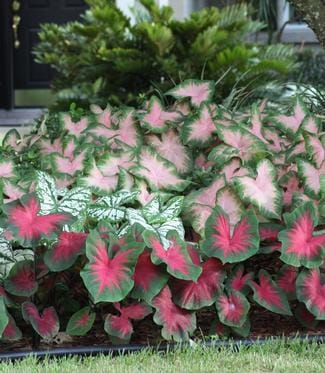
Uses:Mainly ornamental: a go-to foliage plant for bright shade, adding “flower-like” color to garden beds, borders, containers, hanging baskets, and indoor displays. Although some traditional medicinal uses have been mentioned historically, it is not recommended because the plant is poisonous.
❓ FAQ
How often should I water my caladium?
Water during active growth when the top 2.5 cm (1 in) of soil is dry—often about weekly, more in heat. Keep the mix evenly moist but never soggy, and reduce sharply as the plant heads into dormancy.
Why are my caladium leaves turning yellow?
Common causes include overwatering, underwatering, too much direct sun, chilly temperatures, or low nutrients. If it’s late season, yellowing is often normal and means dormancy is starting.
Why are my caladium leaves turning brown?
Browning usually points to dry air/low humidity, drying out too much, sun scorch, or fertilizer burn. Check humidity, move it out of direct sun, and flush the soil if you suspect overfeeding.
Do caladiums come back every year?
Yes in warm climates (generally USDA Zones 9–11). In colder areas, you can treat them as annuals or lift and store the tubers warm and dry over winter.
How do I care for caladiums during dormancy?
Let foliage yellow naturally, then stop watering. Store tubers dry in darkness around 13–18°C (55–65°F), or keep the pot dry in a warm place. Replant/restart when soil temperatures are about 21°C (70°F) and rising.
💡 Fun Facts
- There are over 1,000 caladium cultivars, offering an enormous range of leaf colors and patterns.
- Some varieties look almost translucent when backlit, like living stained glass.
- Even though they’re sometimes called “elephant ears,” caladiums are not edible taro—don’t eat them.
- Commercial growers often use tissue culture to create uniform, virus-free plants and preserve special cultivars.