🌱 Plant Features
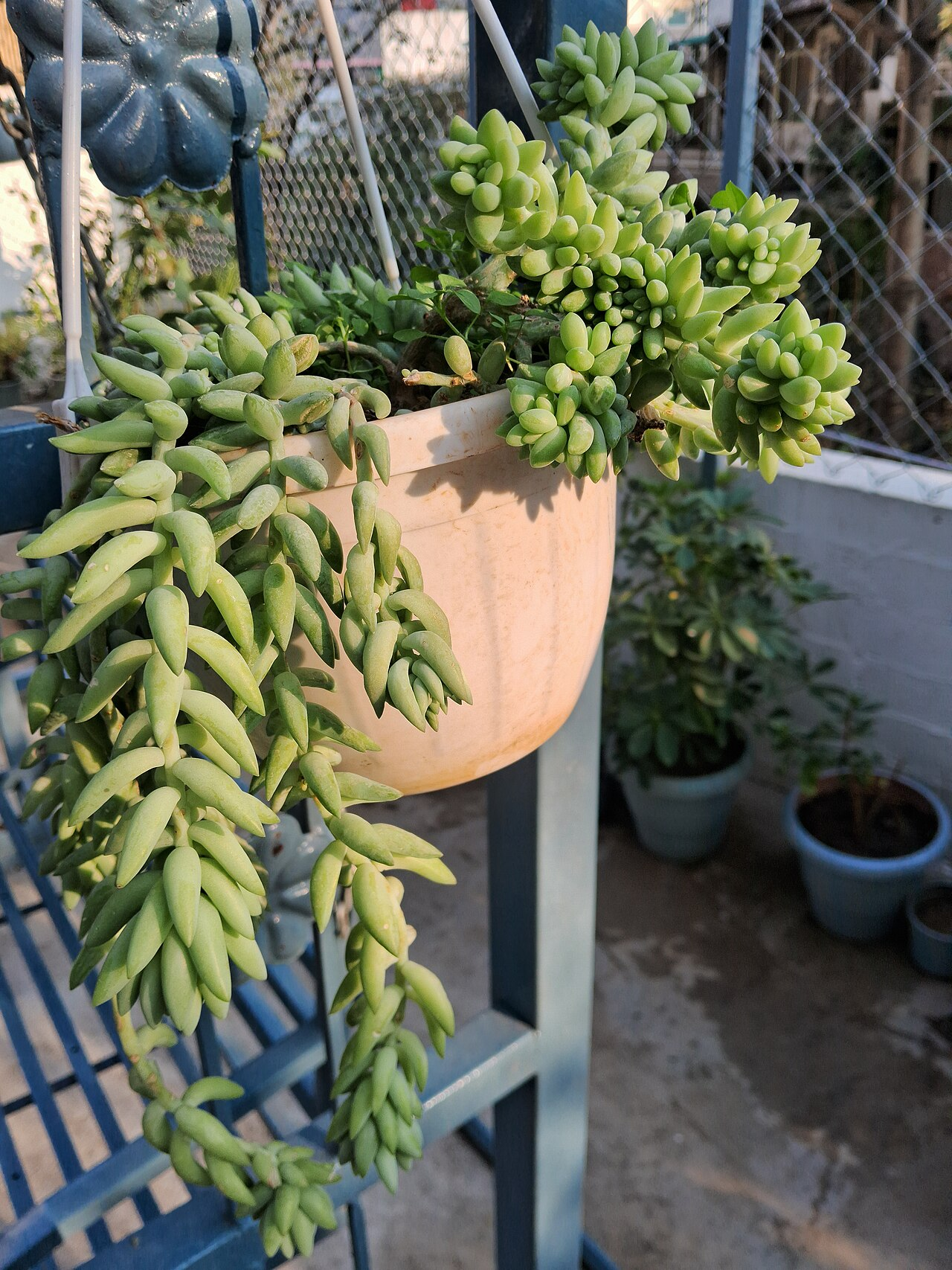
- Size:Typically about 10 cm (4 in) tall with trailing stems around 30 cm (12 in) long in containers.
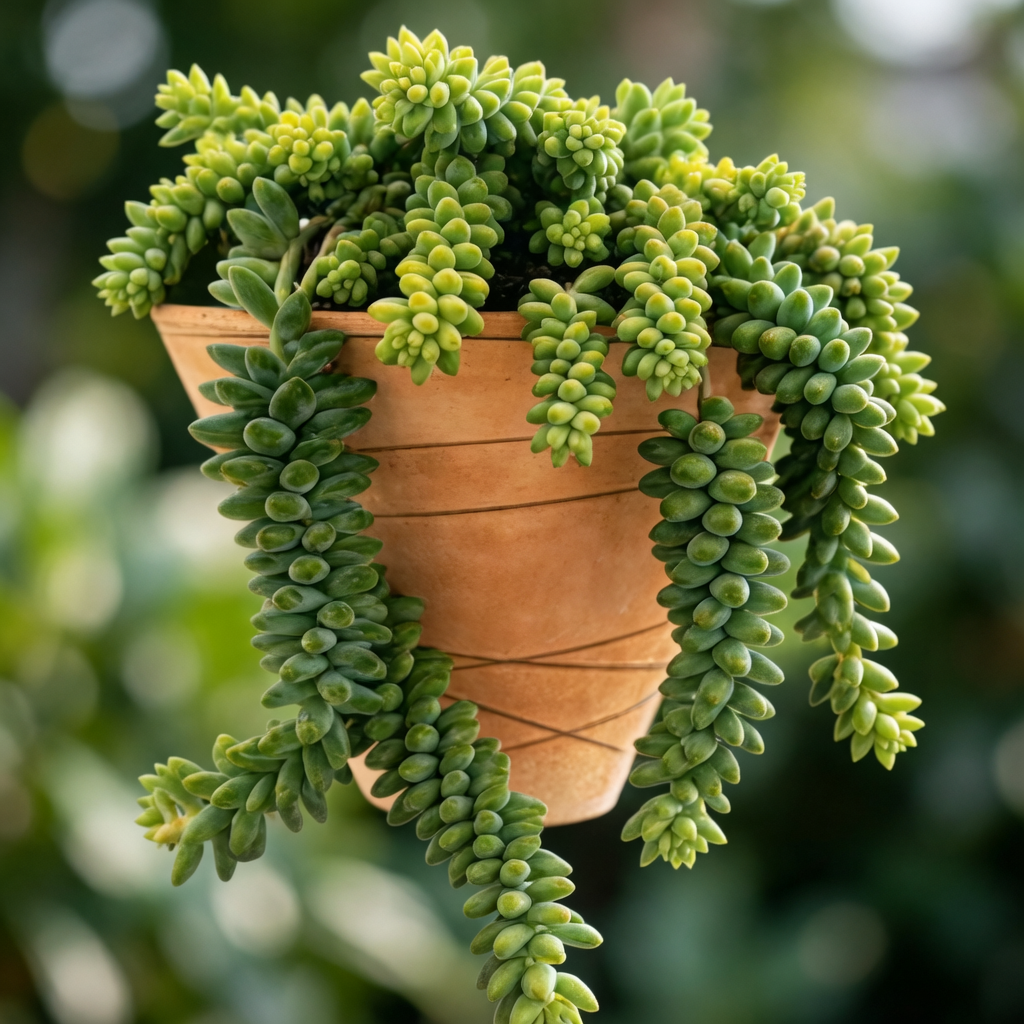
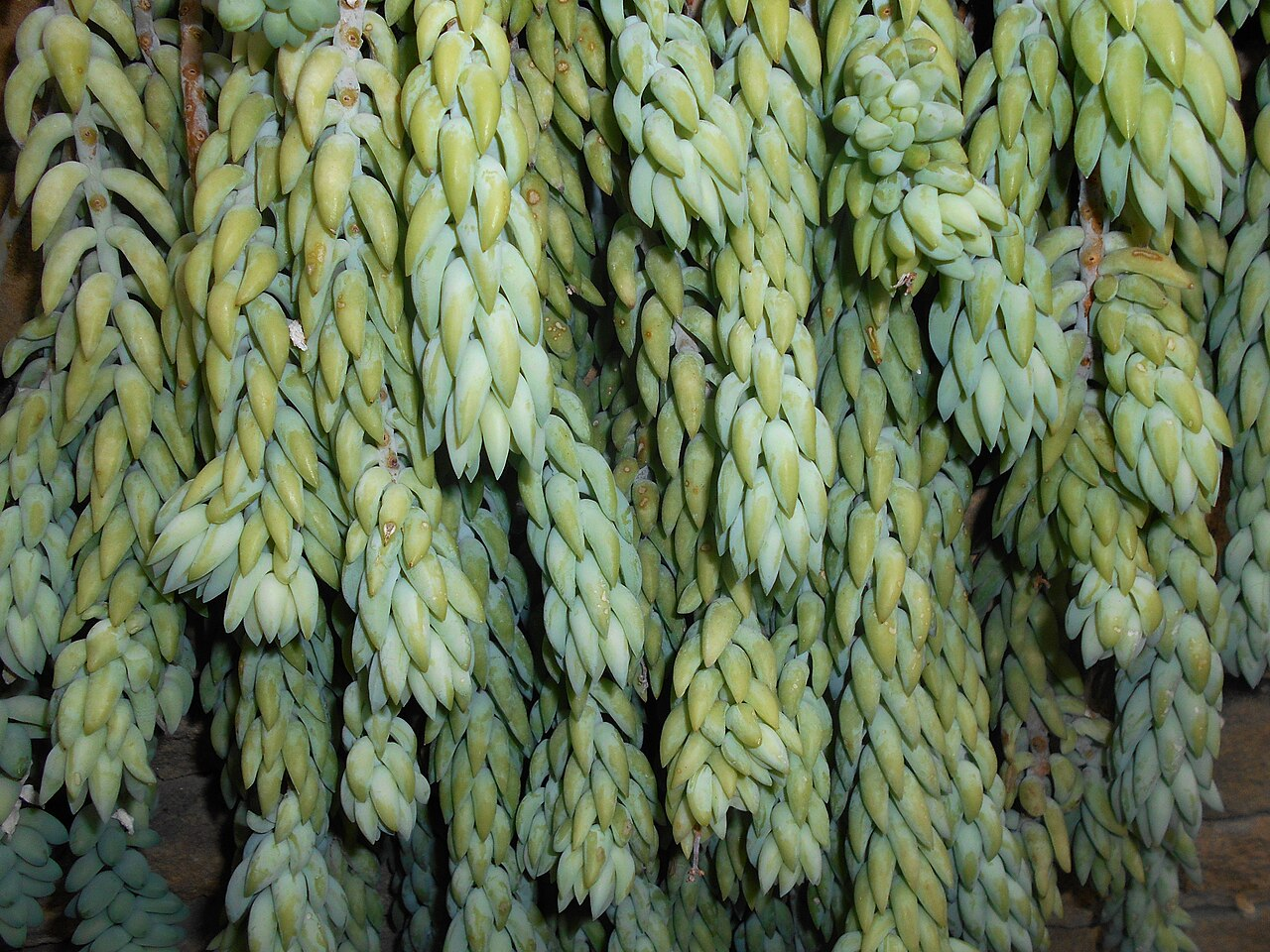
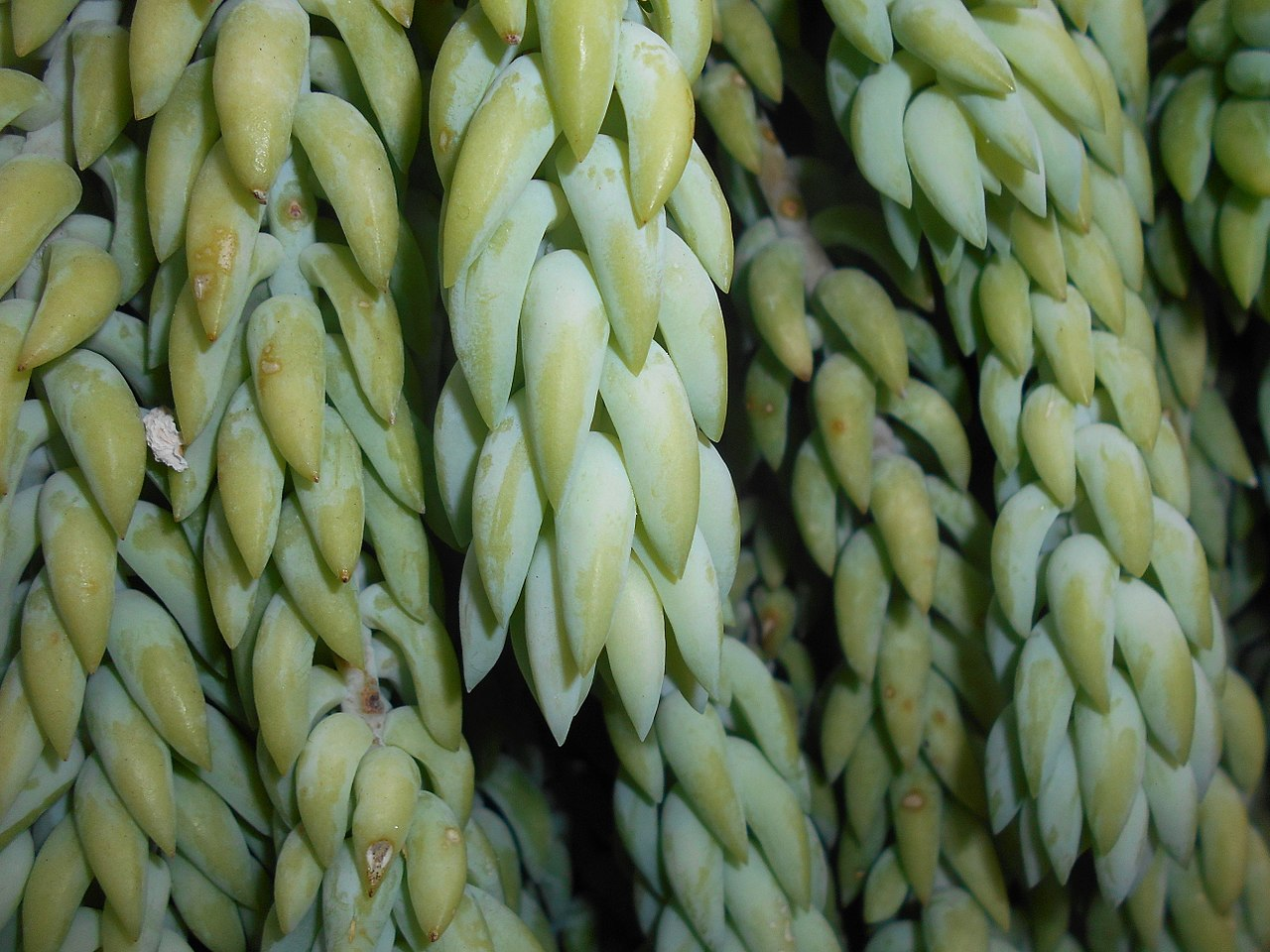
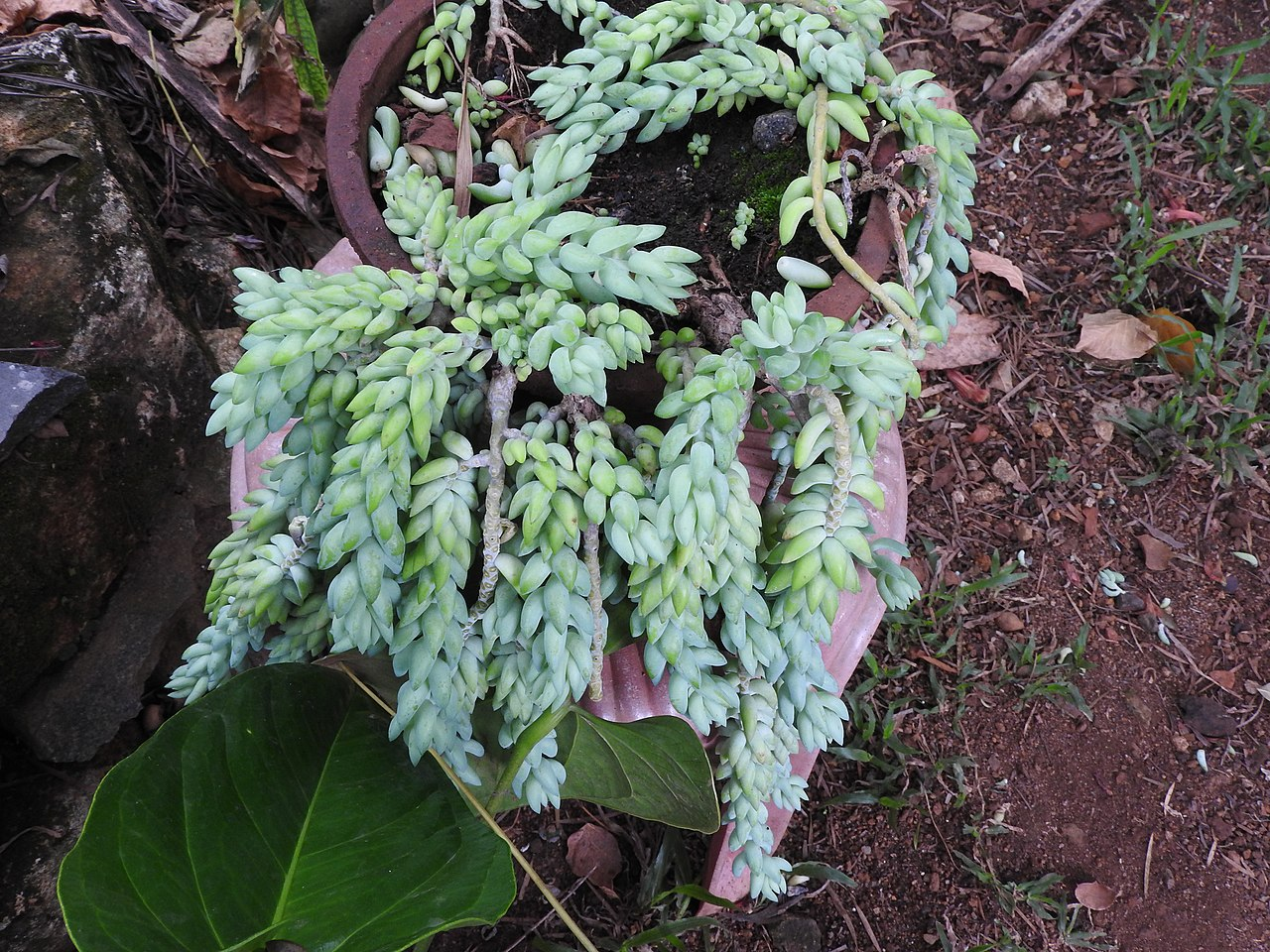
- Foliage:Thick, rounded, tightly overlapping leaves densely packed along pendant, rope-like stems. The leaves are firm and plump but brittle—they detach easily if the plant is brushed or handled.
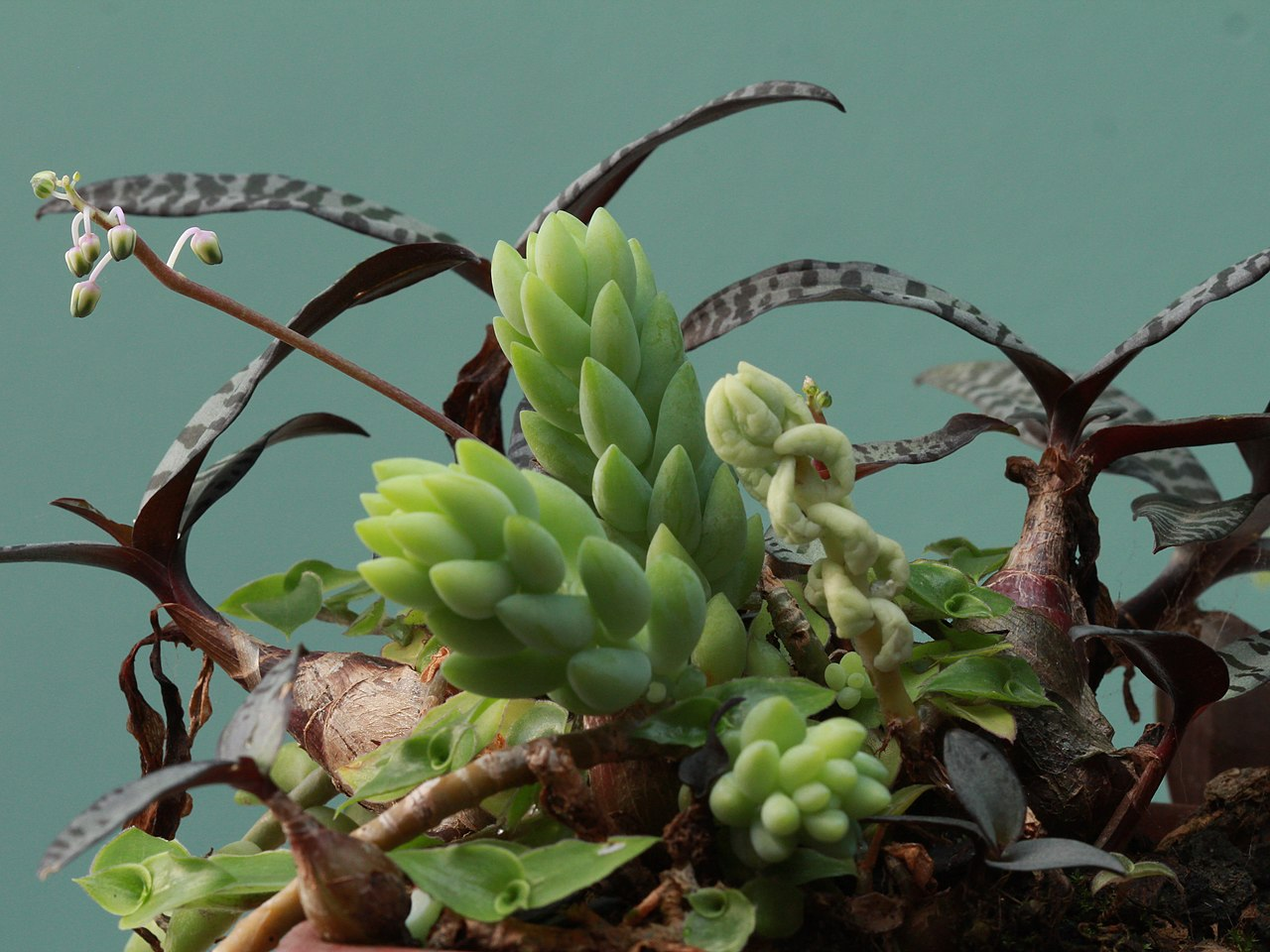
- Flower:Small, delicate flowers may form at the tips of the stems, but blooming indoors is uncommon unless light levels are very high.
- Flowering Season:Occasional in summer (more likely in very bright conditions); often absent indoors.
- Growth Habit:Trailing/cascading; naturally spills over pot edges and looks best displayed where stems can hang freely.
🌤️ Environment
Sunlight
Bright light to full sun. Aim for several hours of sun if possible, but protect from harsh midday summer sun through glass (which can scorch leaves).
Temperature
10–27°C (50–81°F). Keep above about 5°C (41°F) to avoid cold damage.
Humidity
Low humidity preferred; enjoys dry, well-ventilated conditions.
Soil
Very fast-draining soil is essential: a cactus/succulent mix works well, or combine all-purpose potting mix with gritty sand/gravel at about 2:1 (mix: grit). Use a pot with excellent drainage.
Placement
A bright windowsill or very bright room, ideally on a shelf or in a hanging/raised pot where stems can trail. Keep it away from high-traffic spots to prevent leaf drop.
Hardiness
Not frost hardy; suitable outdoors year-round only in warm climates (roughly USDA Zone 10–11).
🪴 Care Guide
Difficulty
Easy overall, with the main challenge being its fragility—leaf drop happens easily if it’s knocked or frequently moved.
Buying Guide
Look for plants with firm, plump leaves and full, intact trailing stems. Avoid plants with lots of bare patches (from excessive leaf drop), widespread shriveling (chronic underwatering), or mushy/dark stems (overwatering and rot).
Watering
Spring to autumn: water thoroughly only when the top of the mix has dried out, then let excess water drain completely. Winter: reduce sharply—about once a month, or just enough to prevent severe shriveling. Err on the dry side to avoid rot.
Fertilization
Spring to autumn: feed monthly with a balanced liquid fertilizer at half strength. Do not fertilize in winter.
Pruning
Usually unnecessary. Trim overly long or damaged stems if desired; fallen leaves and trimmed stem pieces are useful for propagation.
Propagation
Very easy from stem cuttings or individual leaves. Let cut ends callus for about 2–3 days, then place on/in dry, gritty mix. Begin light watering only after roots form.
Repotting
Prefers a relatively small pot (about 7.5–10 cm (3–4 in) wide). Repot in spring every 2–3 years or when root-bound. Move up only one pot size and refresh with a gritty, free-draining mix.
📅 Seasonal Care Calendar
Spring–autumn: water when the surface dries; feed monthly at half strength. Winter: water about once per month. Spring: repot if root-bound (typically every 2–3 years).
🔬 Pests, Diseases & Safety
Common Pests & Diseases
Can attract mealybugs and scale, especially tucked in leaf axils or along stems. Overwatering and poor drainage commonly lead to root/stem rot. Prevention is simple: strong light, gritty fast-draining soil, and good airflow. Treat pests with insecticidal soap or alcohol swabs as needed.
Toxicity
Generally considered low toxicity, but chewing or ingesting may cause mild stomach upset in pets or people. Best kept out of reach of curious pets and children.
🎋 Culture & Symbolism
Symbolism:Often associated with resilience and abundance, thanks to its dense, cascading growth and its ability to start new plants from fallen leaves.
History & Legends:A longtime favorite houseplant worldwide, Burro’s Tail is cherished for its dramatic trailing look and the almost magical way dropped leaves can root and become new plants.
Uses:Ornamental: a standout trailing succulent for bright shelves, windowsills, and hanging or elevated containers where the stems can cascade freely.
❓ FAQ
Where should I place it indoors?
Give it very bright light—ideally a sunny windowsill. It can take sun, but avoid harsh midday summer sun through glass. Place it somewhere the stems can trail freely and won’t be brushed often, because the leaves snap off easily.
How do I water it?
In spring through autumn, water only after the top of the soil has dried. In winter, reduce to about once a month (or just enough to stop extreme shriveling). Good drainage is more important than frequent watering.
How should I fertilize it?
Feed monthly from spring to autumn with a balanced liquid fertilizer at half strength. Don’t fertilize in winter.
What soil should I use?
Use a fast-draining cactus/succulent mix, or mix potting soil with gritty sand/gravel at about 2:1. Always use a pot with drainage holes to prevent rot.
When should I repot?
Repot in spring every 2–3 years, or when root-bound. Move up only one pot size and refresh with a gritty, well-draining mix.
💡 Fun Facts
- It’s famous for dropping leaves if bumped—many growers turn those fallen leaves into new plants.
- A hanging or elevated pot shows it off best, because the stems naturally cascade as they grow.
- It can flower, but indoor blooms are much more likely with very strong light than in typical room conditions.