🌱 Plant Features
- Size:Indoors, most mature plants reach about 60–120 cm (24–48 in) tall and 60–120 cm (24–48 in) wide, depending on cultivar and care; compact houseplant forms are often around 60 × 40 cm (24 × 16 in). Outdoors in truly tropical conditions, plants can become much larger, with fronds sometimes reaching 90–150 cm (3–5 ft) long and a spread around 90 cm (3 ft) or more.
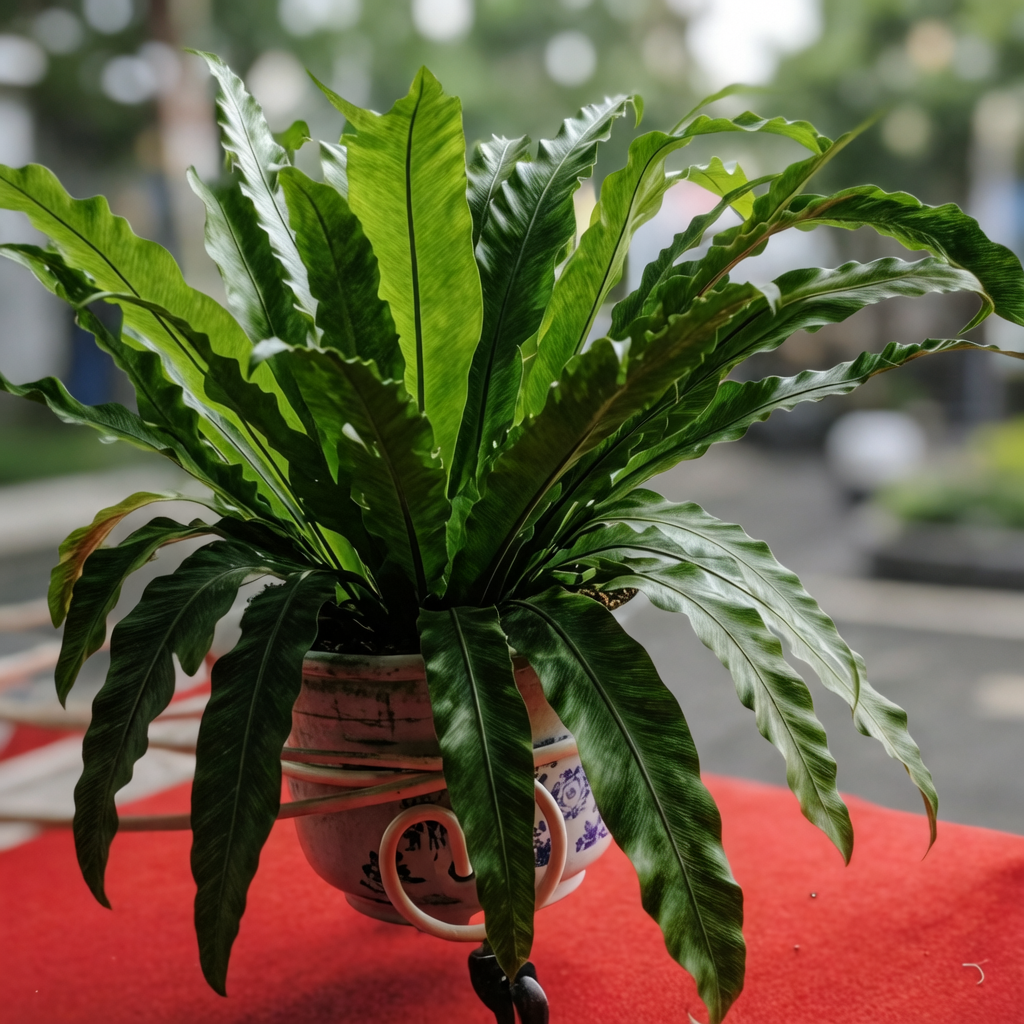
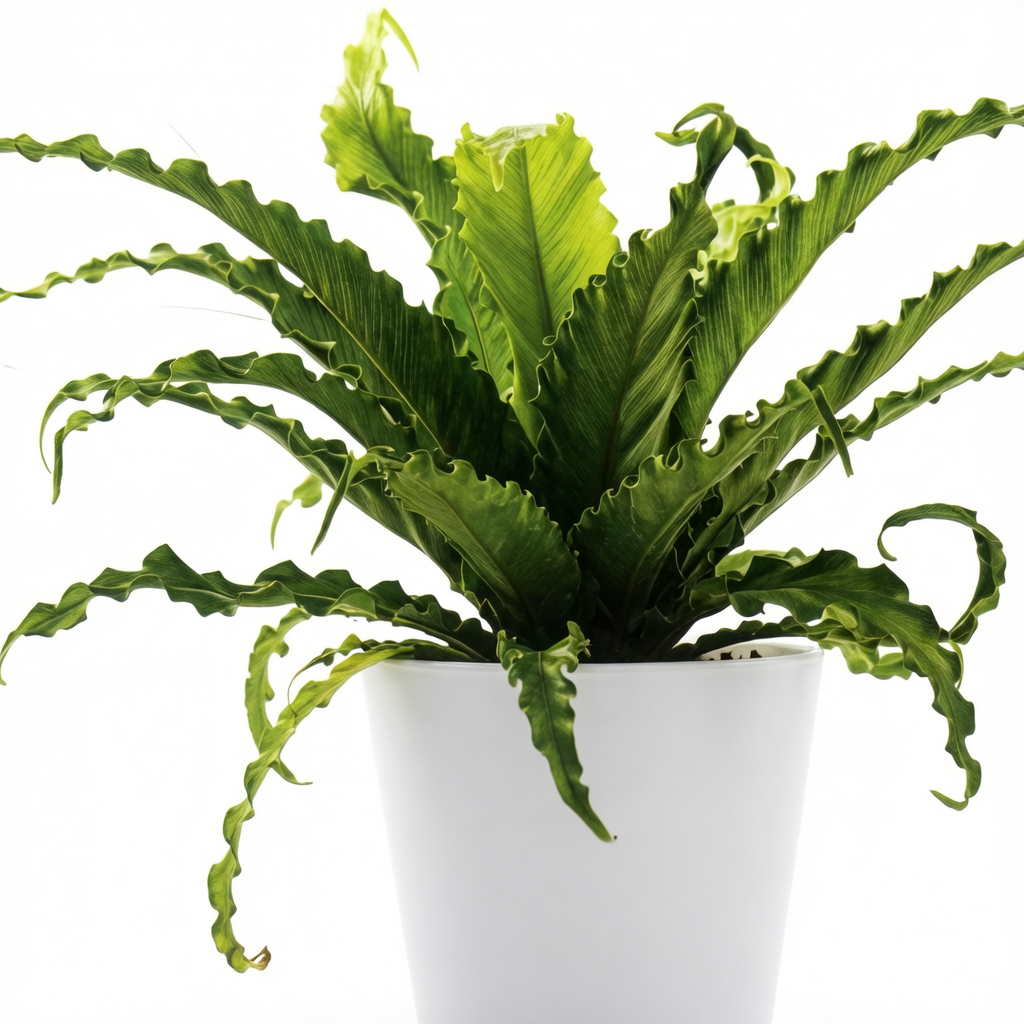
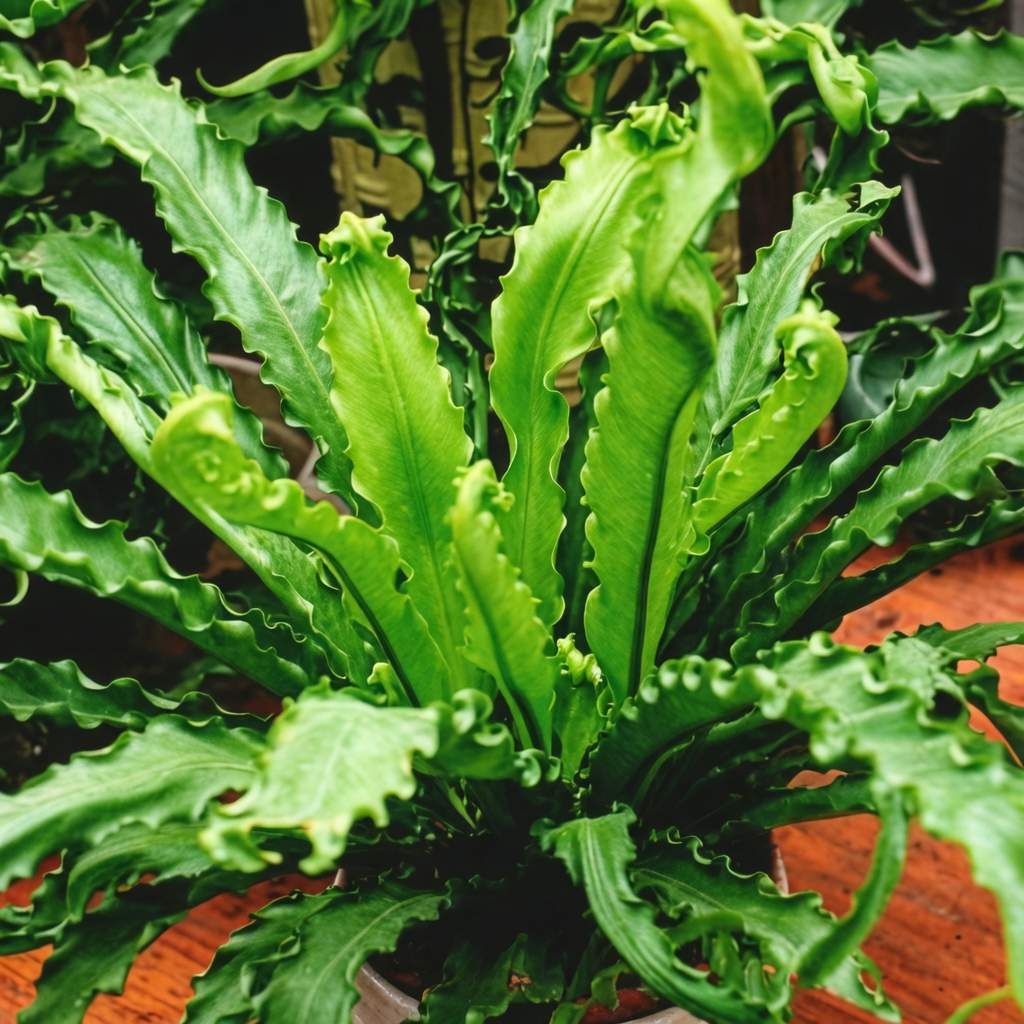
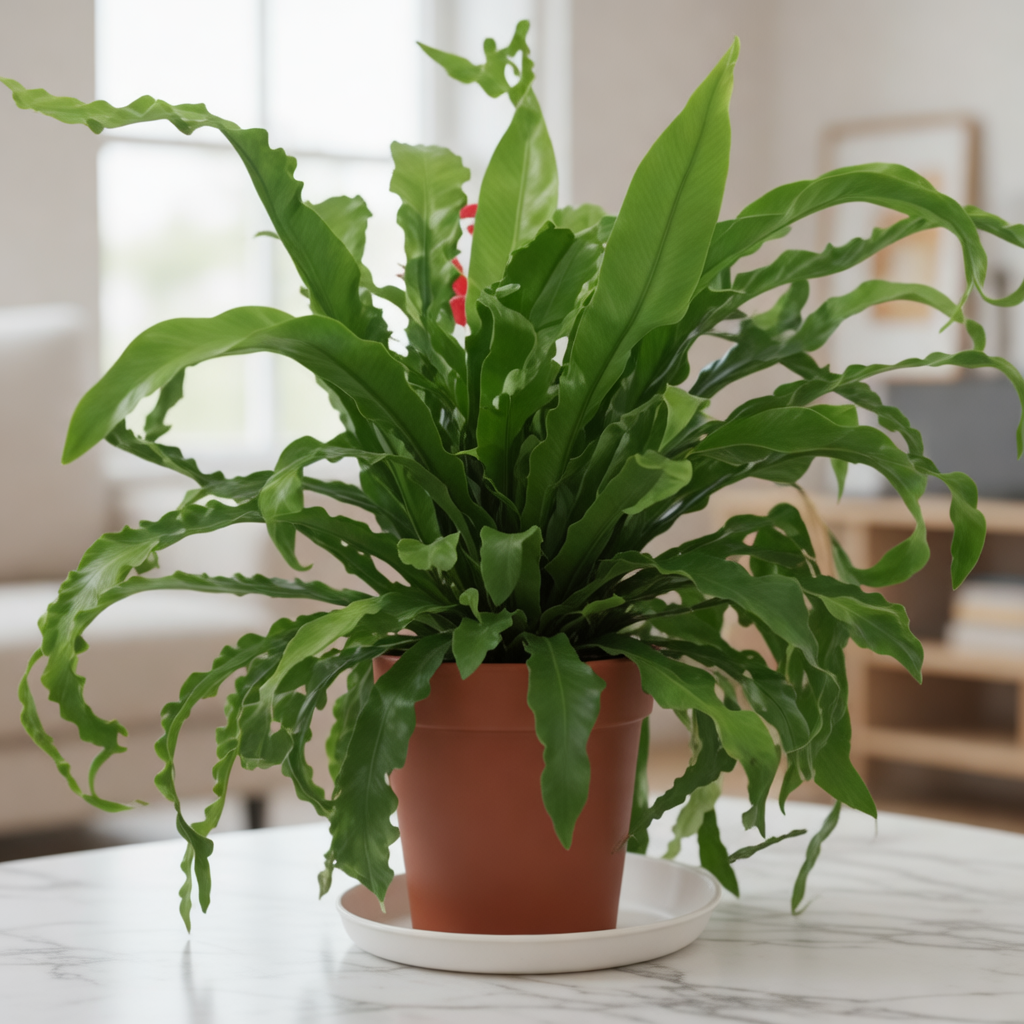
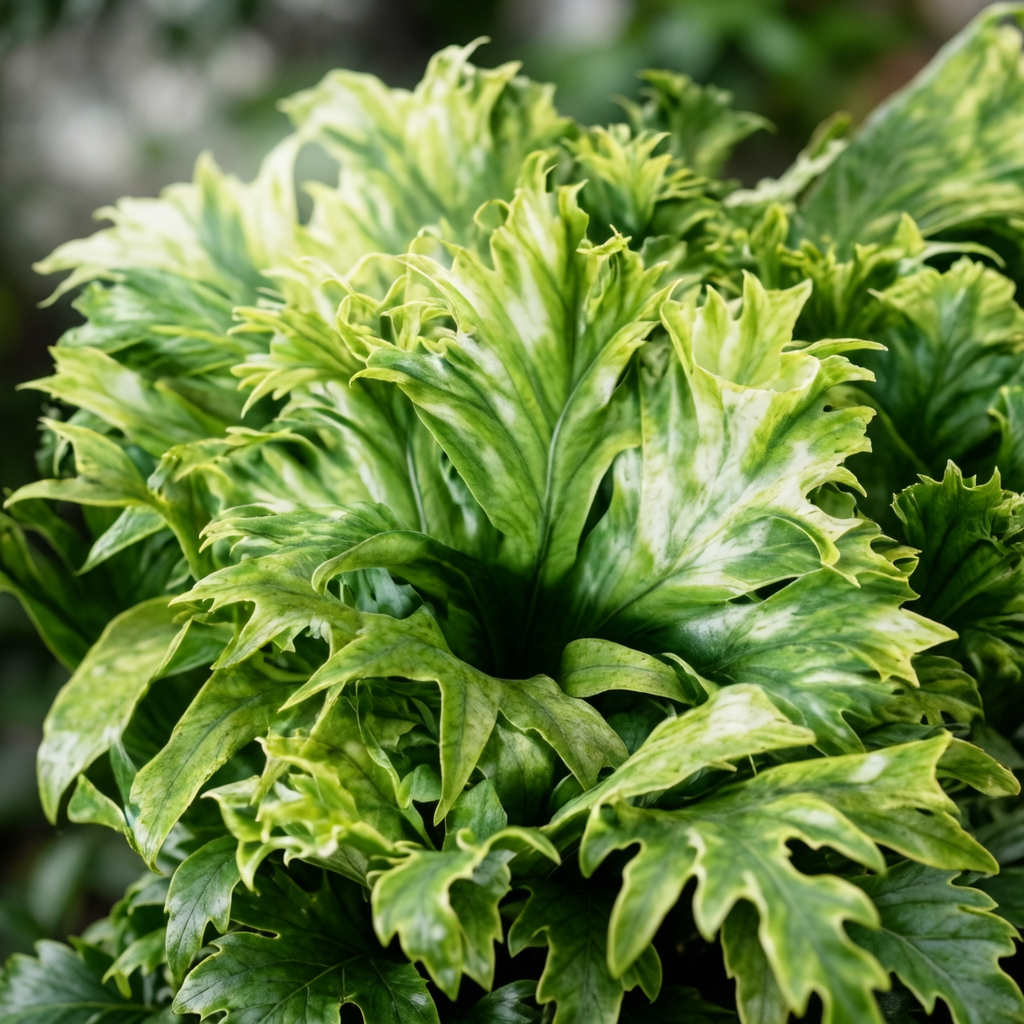
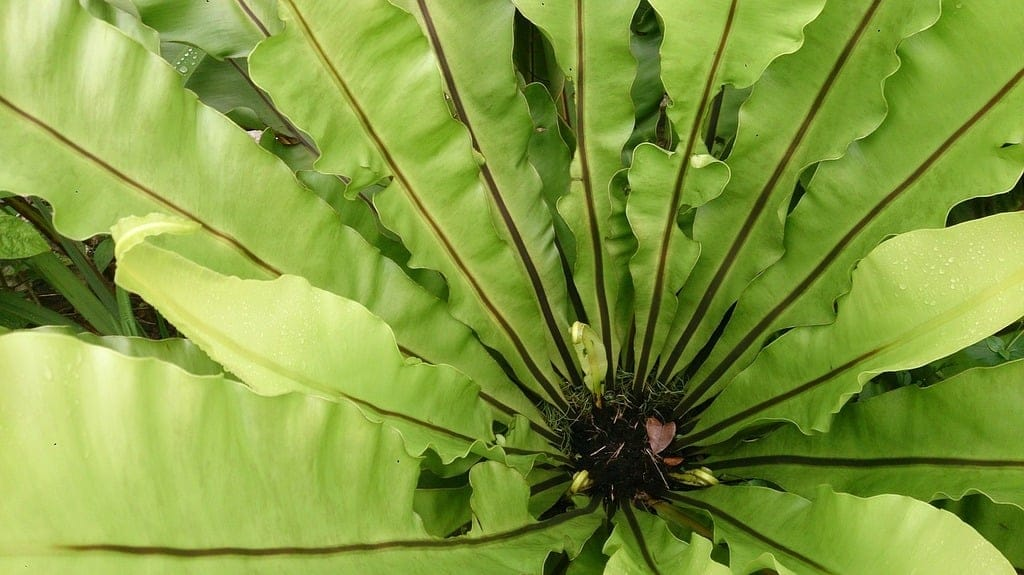
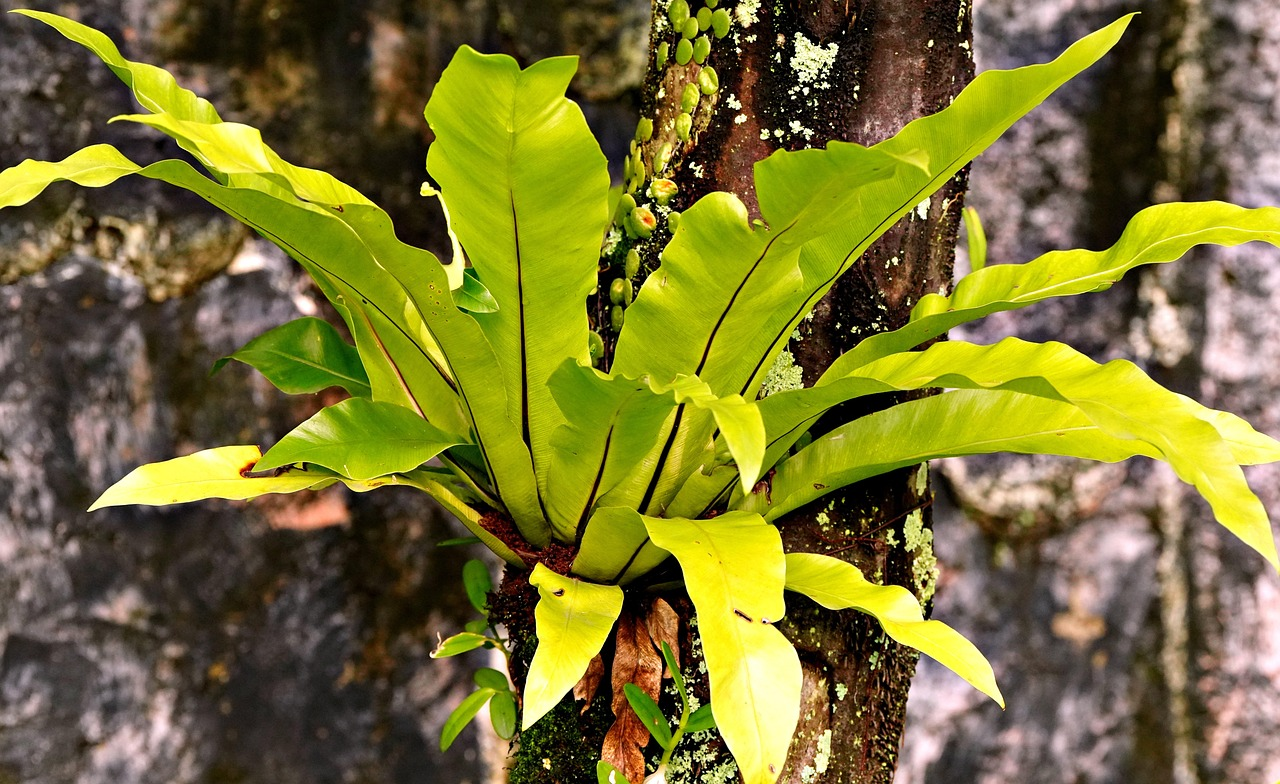
- Foliage:Fronds are large, glossy, leathery, and strap- to lance-shaped, forming a central rosette. Color is typically bright apple-green to mid/deep green, with a distinctive darker midrib. Margins may be smooth and gently undulating, or strongly rippled/crinkled in ruffled cultivars (e.g., “Crispy Wave”). New fronds emerge tightly coiled from the crown and unfurl slowly; they bruise easily, so handling is best kept to a minimum.
- Flower:No flowers (it’s a true fern). It reproduces via spores; mature fronds develop linear sori (spore lines) on the undersides.
- Flowering Season:Not applicable (spore-bearing fern; no flowering season).
- Growth Habit:Compact to upright, vase-shaped, nest-forming rosette with fronds radiating from a central crown. Naturally epiphytic, with the central “nest” able to catch water and leaf litter in the wild. Growth is slow to moderate; under good conditions it produces a handful of new fronds each year.
🌤️ Environment
Sunlight
Bright, indirect light to partial shade. Avoid harsh direct sun (it scorches); gentle early-morning sun can be tolerated. Great near east-facing windows, bright north windows, or filtered south light behind a sheer curtain; also adapts to bright artificial light.
Temperature
Prefers warm, stable conditions. A good everyday range is 15–27°C (60–80°F), with many plants growing fastest around 22–27°C (72–81°F). Protect from chills and drafts; try to keep above about 12–15°C (54–59°F) and avoid prolonged exposure below 10°C (50°F).
Humidity
Medium to high humidity is ideal—aim for 50%+ for good frond quality, and 60–80% for truly rainforest-lush growth. In dry indoor air, fronds may curl or brown at the edges; bathrooms and kitchens often suit it well if light is adequate.
Soil
An airy, organic-rich, moisture-retentive but well-draining mix. Think “epiphyte-friendly”: peat/coco-based potting mix blended with bark and perlite, optionally with a little horticultural charcoal. The goal is even moisture with lots of oxygen around the roots (never a dense, waterlogged pot).
Placement
Indoors in a draft-free spot with bright, filtered light—living rooms, offices, bright bathrooms, and kitchens are all good. Keep away from heating/AC vents. Displays nicely on a plant stand or shelf; also works in hanging setups where its rosette can be admired from the side (use a stable container so it doesn’t tip as it grows).
Hardiness
Frost-tender; best outdoors year-round only in USDA Zones 11–12 (approx.). In cooler zones it’s primarily grown as a houseplant and must be protected from cold snaps.
🪴 Care Guide
Difficulty
Easy to moderate. It’s more forgiving than many ferns, but it does insist on two things: steady moisture (not soggy) and decent humidity. Most problems trace back to dry air, direct sun, cold drafts, or water sitting in the crown.
Buying Guide
Pick a plant with a neat, symmetrical rosette and firm, evenly green fronds. The center (crown) should look healthy—avoid any plant with a blackened, mushy, or collapsing middle. Minor linear sori on mature fronds are normal; skip plants with widespread spotting, pests on the undersides, or crispy brown edges that suggest chronic stress.
Watering
Keep the potting mix evenly moist, not waterlogged. Water when the top 2–3 cm (about 1 in) feels slightly dry, then let excess drain away—don’t leave the pot standing in water. Use room-temperature rainwater/filtered/distilled water if possible (hard tap water can contribute to browning tips). Important: water the soil around the plant, not into the central rosette, because water pooling in the crown can cause rot. In warmer months this may mean watering 2–3 times per week; in winter, water less often, keeping it slightly drier while never letting the root ball fully dry out.
Fertilization
Feed during active growth (spring through early autumn). A practical approach is either: (1) a balanced liquid fertilizer at 1/2 strength every 2 weeks, or (2) 1/2 strength about once a month if you prefer a lighter routine. Avoid getting fertilizer on the fronds, and reduce/stop feeding in winter.
Pruning
Minimal. Remove yellow, torn, or fully brown fronds by cutting them cleanly at the base with sterilized scissors. Do not cut into the central crown or emerging fronds. Also don’t “clean off” the brown lines/dots on leaf undersides—those are normal sori, not damage.
Propagation
Most commonly by spores (slow and fiddly at home) or by division of multi-crown clumps during spring repotting. Spore method (for the patient): collect mature spores from a frond with well-developed sori, sow onto a sterile, fine medium (e.g., peat + fine bark/crumbs 1:1), cover to maintain high humidity, and keep warm in bright shade. Spores may germinate in about 7–10 days; the prothallus stage can take ~10 weeks, with tiny fern plantlets sometimes forming around ~3 months under steady warmth and humidity.
Repotting
Repot about every 2–3 years, or sooner if the mix breaks down or the plant becomes unstable/top-heavy. Best done in spring. Step up only one pot size (about 2.5–5 cm / 1–2 in wider). Typical indoor pots are around 20–25 cm (8–10 in) across; hanging or display baskets are often 25–30 cm (10–12 in). Keep the same planting depth and choose a heavier pot (like ceramic) if tipping is an issue.
📅 Seasonal Care Calendar
Spring: resume/boost watering as growth picks up; start fertilizing; ideal time to repot or divide. Summer: keep out of strong sun; water more often; raise humidity with misting, a pebble tray, or a humidifier; provide gentle airflow. Fall: gradually reduce feeding and watering as growth slows. Winter: keep warm (avoid drafts), stop or reduce fertilization, and water less frequently—slightly drier than summer, but never bone-dry.
🔬 Pests, Diseases & Safety
Common Pests & Diseases
Key issue: crown rot if water sits in the center or the mix stays soggy—always water the soil, keep drainage excellent, and improve airflow. Leaf spots (including anthracnose) can show up in warm, humid, poorly ventilated conditions; remove affected fronds and increase air circulation. Pests may include scale, mealybugs, aphids, and spider mites (especially in dry indoor air). Treat gently with insecticidal soap/horticultural oil and regular inspections; avoid harsh chemicals that can damage fronds. Nematode damage can appear as brown, net-like spotting—severely affected plants may need to be discarded and the potting mix replaced.
Toxicity
Generally considered non-toxic to humans and pets (commonly listed as pet-safe, including by the ASPCA). Chewing may still cause mild stomach upset in sensitive pets, but serious toxicity is not expected.
🎋 Culture & Symbolism
Symbolism:Often linked with “home” and shelter (its nest-like rosette makes the symbolism feel obvious), plus renewal and calm thanks to its fresh green look. In feng shui and modern home décor, it’s frequently treated as a harmonizing, supportive plant for workspaces and living areas; it’s also sometimes marketed as a good-luck/guardian-style houseplant gift.
History & Legends:An ancient fern lineage widely grown in conservatories and tropical gardens for its bold, architectural form. In parts of Southeast Asia, it has been associated with protective, nurturing energy in local traditions, and in the wild its “nest” can become a tiny habitat by collecting water and organic debris.
Uses:Primarily an ornamental foliage plant for indoor decorating and tropical landscaping. Especially popular for bright bathrooms and other humid rooms. It’s also often mentioned as a helpful indoor air-quality plant; in some Southeast Asian cuisines, very young fronds have been eaten as a vegetable (only where this is a known, safe local practice).
❓ FAQ
Why are my fronds curling?
Curling usually means the plant is conserving moisture—either the mix got too dry, humidity dropped too low, or both. Water thoroughly, then raise humidity (humidifier, pebble tray, or a more humid room) and keep it in bright, indirect light.
Why are the tips/edges turning brown?
Most often it’s low humidity, inconsistent watering, or mineral-heavy tap water. Move it away from drafts/vents, keep moisture more even, aim for 50%+ humidity, and consider rainwater/filtered/distilled water. Over-fertilizing can also crisp edges, so dilute feeds.
Can I pour water into the center of the plant?
It’s best not to. Water sitting in the crown can lead to crown rot. Water the potting mix around the plant instead.
What are the brown lines/spots on the undersides of leaves—are they pests?
Those are sori (spore structures), a normal part of fern reproduction. They often appear as neat lines on mature fronds and shouldn’t be scrubbed off.
Most fronds dried up—can it recover?
Often yes, if the central crown is still firm and green. Trim dead fronds, keep the plant warm in bright shade, and increase humidity (some people loosely tent it with a clear bag). New fronds can return once conditions stabilize.
💡 Fun Facts
- It’s an epiphyte, not a parasite—trees are just its “furniture,” not its food.
- In nature, the rosette can trap leaf litter and rainwater, slowly making its own compost-like snack right in the “nest.”
- Those tidy dark lines under mature fronds are spore factories (sori), not disease.
- New fronds are surprisingly delicate and bruise easily—less handling usually means a prettier plant.