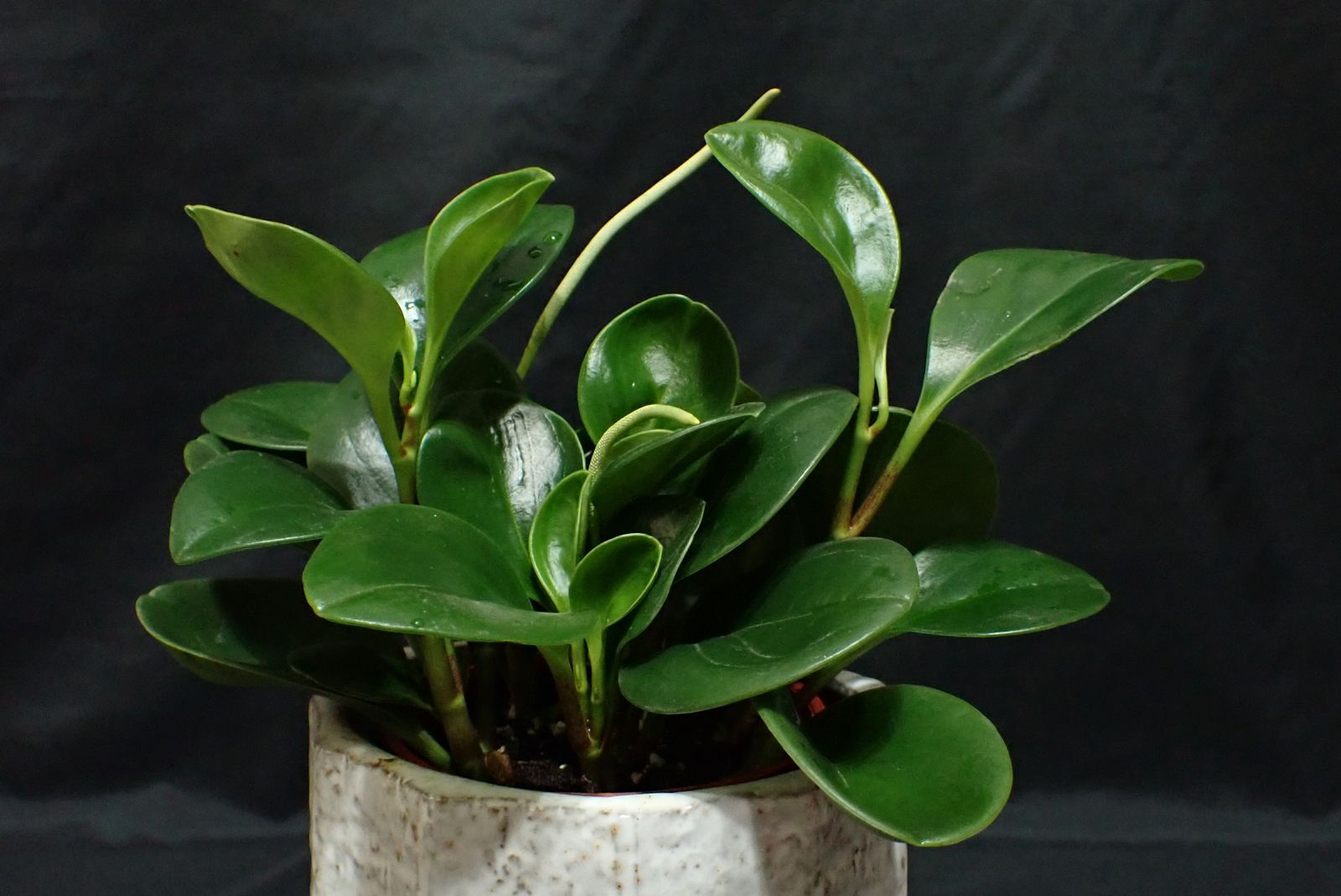
🌱 Plant Features
- Size:Typically 20–30 cm (8–12 in) tall and 20–30 cm (8–12 in) wide indoors; many Peperomia types overall commonly stay around 15–30 cm (6–12 in) in both height and spread, depending on cultivar and pruning.
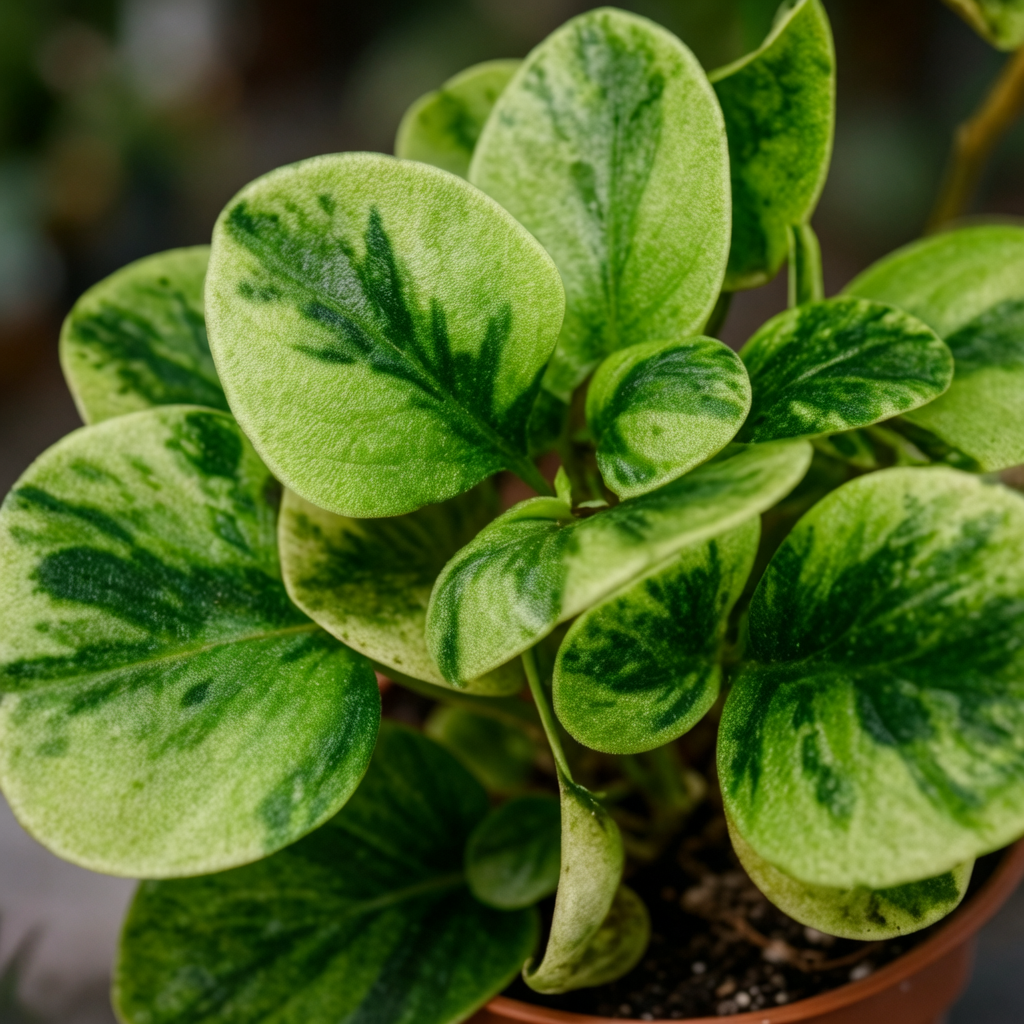
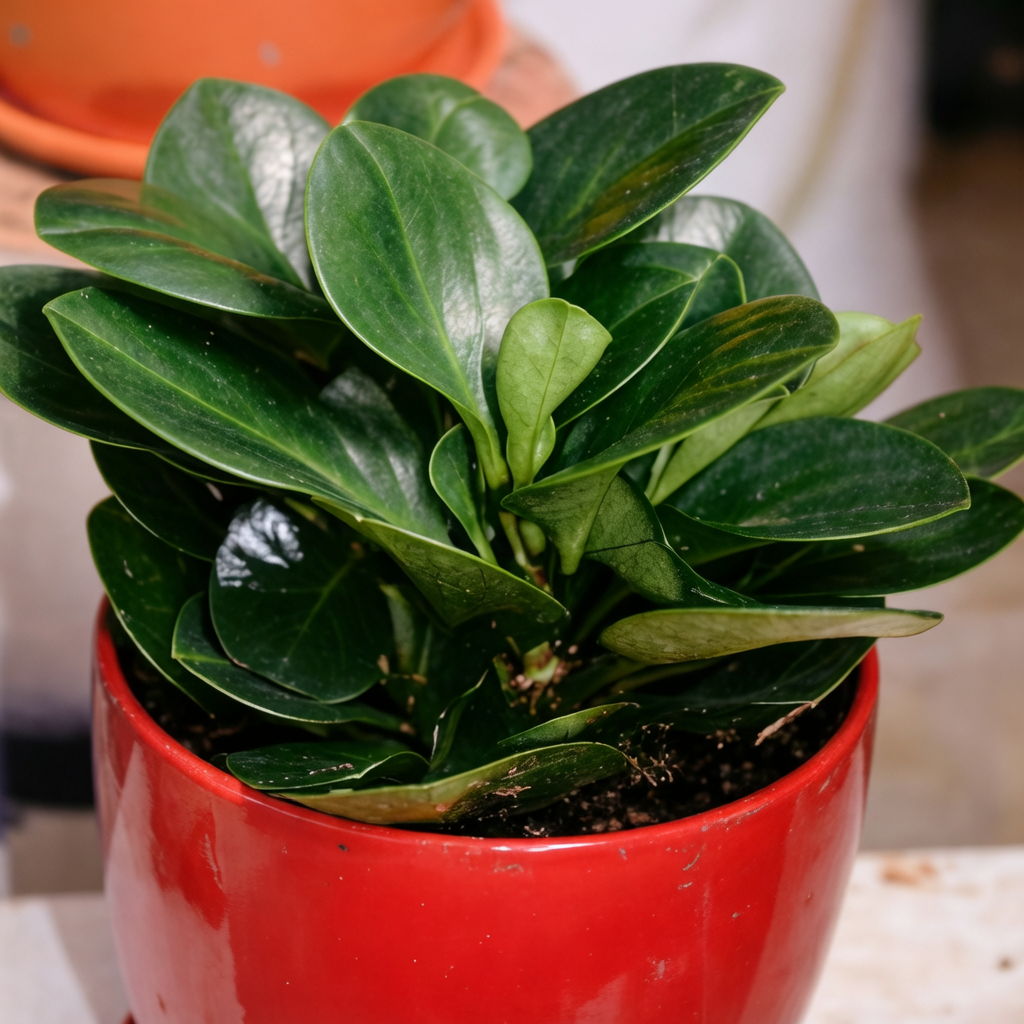
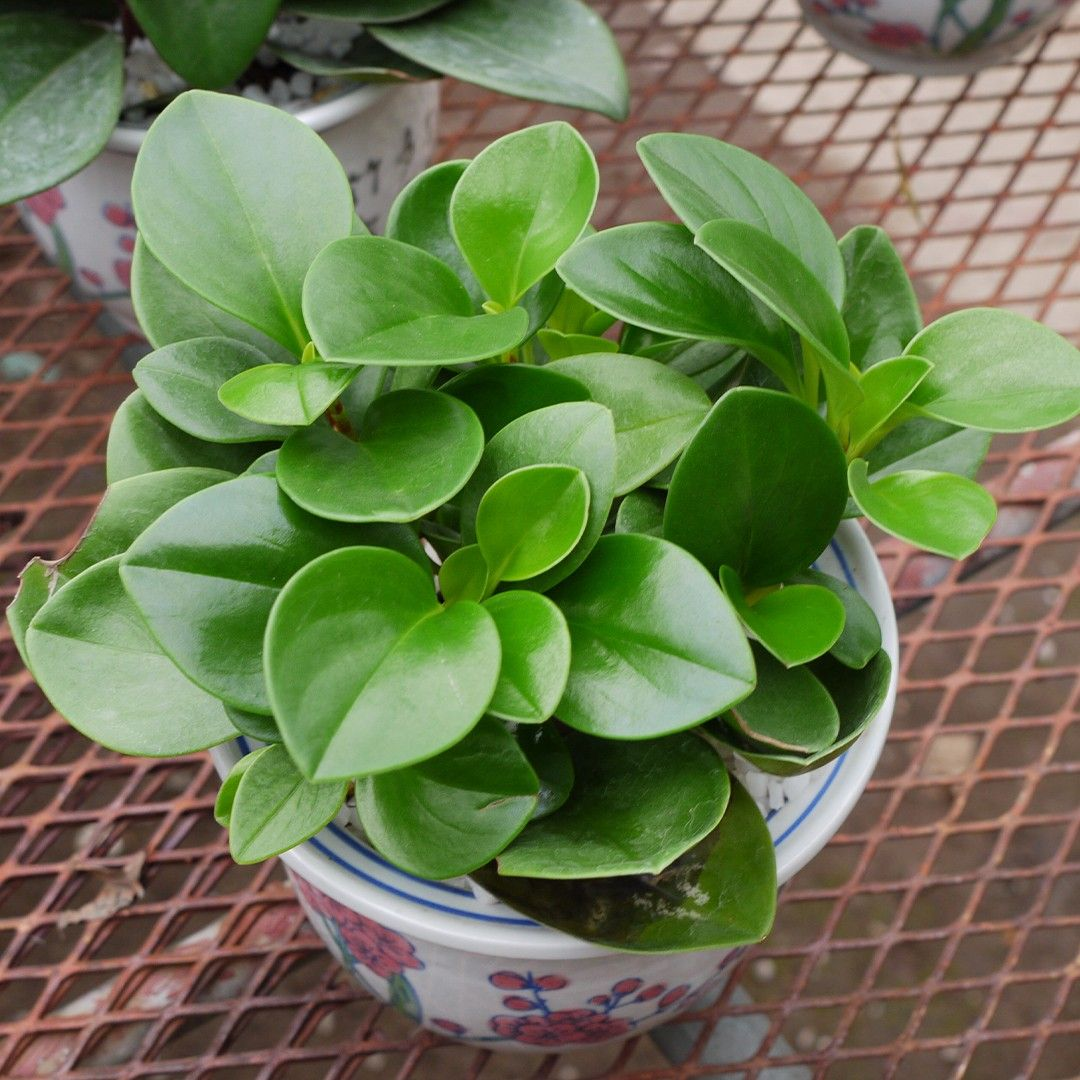
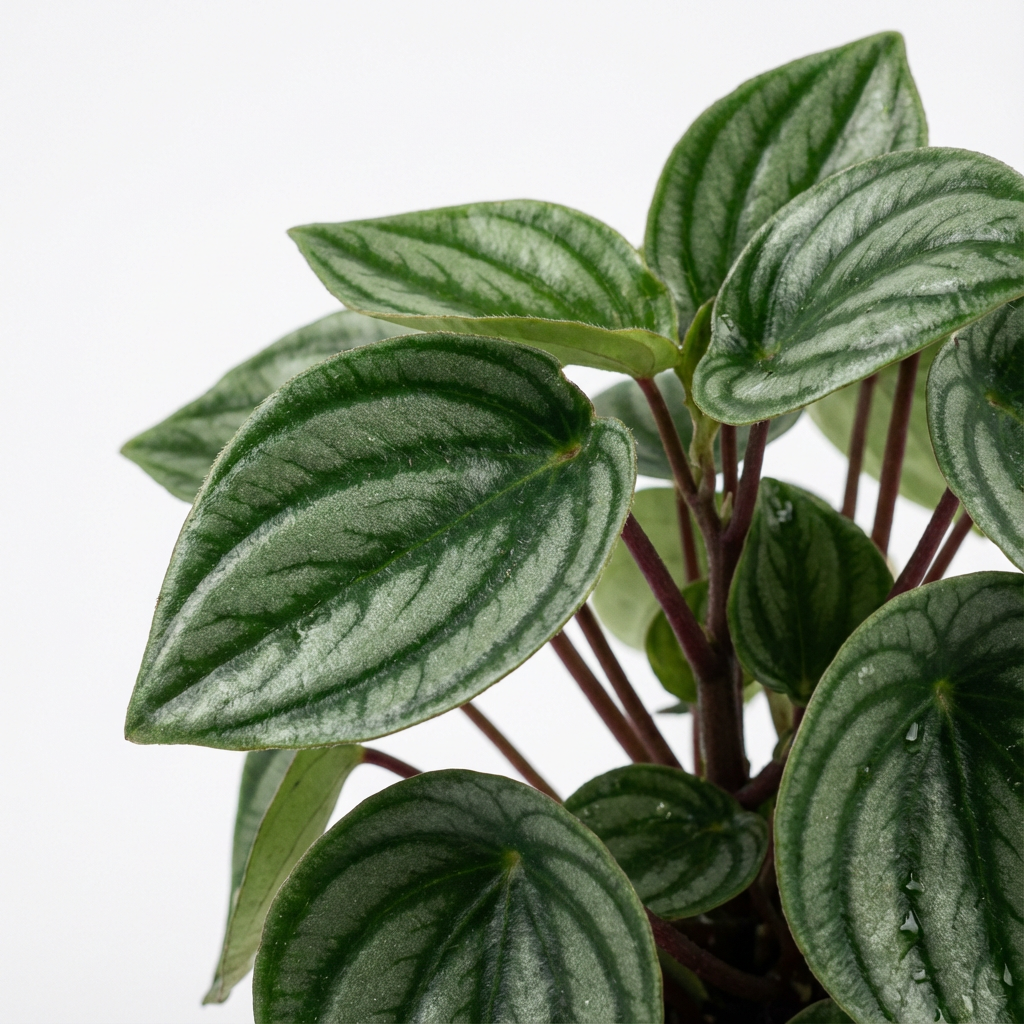
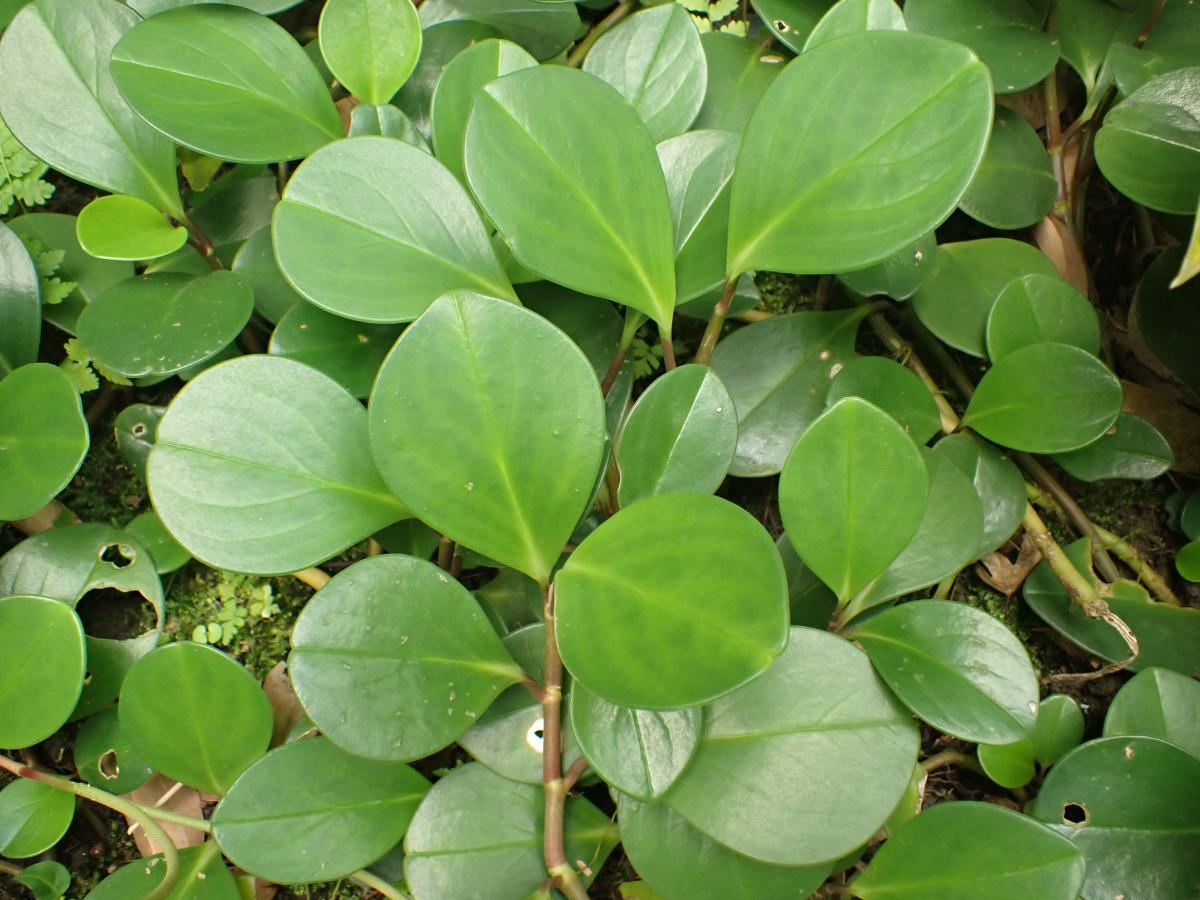
- Foliage:Leaves are thick, fleshy, smooth, and often waxy-glossy—excellent at storing water. Most are rich green, but many cultivars show cream/yellow variegation; across the wider Peperomia group, foliage can also appear textured or patterned with silvery, red, gray, or purple tones. If the potting mix stays too dry, leaves may lose their shine; if crowded or kept too wet, older leaves can yellow and drop. Cold is a big enemy—below 10°C (50°F) leaves can show chilling damage. On variegated plants, too much nitrogen can dull the pattern.
- Flower:Flowers are small and unscented, carried on thin upright spikes (often described as tail-like). They’re not showy and the plant is mainly grown for foliage.
- Flowering Season:Late summer to early autumn (often rare or sporadic indoors; generally summer into early autumn).
- Growth Habit:Compact, upright to mounding evergreen perennial with slow, steady growth; the broader Peperomia genus also includes trailing forms. Often naturally clumping, and typically lives well for years indoors when kept warm and not overwatered.
🌤️ Environment
Sunlight
Bright, indirect light to partial shade. Avoid harsh direct sun (it can scorch leaves). Tolerates lower light, but may grow leggier and less dense. From spring to autumn, gentle filtering (about 40–50% shade) is helpful; in winter, give brighter light.
Temperature
Best around 16–24°C (61–75°F); generally comfortable in 15–27°C (59–81°F). Keep above 10°C (50°F) and protect from cold drafts—growth slows below this and rot risk rises. Prolonged heat above 30°C (86°F) can also slow growth.
Humidity
Prefers moderate humidity with good airflow, but adapts well to average home humidity. In very dry winters, a humidifier or pebble tray can help; avoid constantly damp, stagnant air.
Soil
Loose, fast-draining mix is essential: a peat/coco-based houseplant mix amended with perlite/coarse sand (and optionally a little orchid bark) works well. Slightly acidic to neutral is ideal. Always use a pot with drainage holes.
Placement
Great for desks, shelves, living rooms, and offices; also suits bathrooms with enough light. Best near an east window, or a south/west window with a sheer curtain for filtered light.
Hardiness
Frost-tender. Outdoors year-round mainly in USDA Zones 11–12 (some Peperomia species may extend to Zone 10 in very sheltered conditions).
🪴 Care Guide
Difficulty
Easy. A classic beginner-friendly houseplant: the main pitfalls are overwatering, cold exposure, and strong direct sun.
Buying Guide
Pick a plant with firm stems and thick, glossy leaves with strong color/variegation. Avoid yellowing, drooping, mushy spots, blackened (cold-damaged) patches, or a sour-smelling, waterlogged pot. After bringing it home, place in bright filtered light, water lightly at first, and rotate the pot about half a turn weekly for even growth. Wait for new growth before feeding, and keep fertilizer off the leaves.
Watering
Let the mix partially dry between waterings—“less is more.” A good rule is to water when the top ~5 cm (2 in) feels dry, then water thoroughly and empty the saucer. Typical rhythm: about every 7–10 days in summer (sometimes weekly in active growth), and every 2–3 weeks in winter (often around every 2 weeks), depending on light, temperature, and pot size. Overwatering is the #1 cause of decline (root rot). If kept too dry for too long, leaves may soften and lose shine.
Fertilization
Light feeder. During active growth, fertilize with a diluted balanced liquid fertilizer: either monthly in spring/summer, or every 2 weeks from May–August if the plant is actively growing well. Avoid excess nitrogen—especially for variegated cultivars—since it can reduce variegation and encourage stretched, uneven growth. No feeding in fall/winter.
Pruning
Pinch growing tips to encourage branching and keep a compact shape, especially if stems get leggy in lower light. Remove yellowing or damaged leaves anytime. Older plants (around 2–3 years in a pot) can be cut back harder to rejuvenate; thinning overly dense growth also improves airflow and reduces leaf drop.
Propagation
Very easy. Stem cuttings: take tip cuttings about 3–4 cm (1.2–1.6 in) long with 3–5 leaves, ideally in late spring to early summer (May–June); root in a light mix or moist sand, often in ~3 weeks. Leaf cuttings: insert a mature leaf with about 1 cm (0.4 in) of petiole; rooting often takes 2–3 weeks, and tiny plantlets may appear in ~1 month. Water propagation also works. Clumping plants can be divided during repotting.
Repotting
Likes to be slightly root-bound. Repot only when clearly tight (e.g., roots filling the pot or emerging from drainage holes), typically every 2–3 years. If repotting, go up just 2.5–5 cm (1–2 in) in pot diameter; many small plants do well in about a 12–15 cm (4.7–5.9 in) pot. Spring is ideal. Refresh the mix, and you may lightly trim roots and thin crowded foliage if needed.
📅 Seasonal Care Calendar
Spring: resume regular watering; start light feeding; best time to repot, prune, and propagate. Summer: peak growth—keep evenly but lightly moist (never soggy), fertilize during active growth, and watch for pests. Fall: reduce watering and stop fertilizing. Winter: brighter light, minimal watering, no fertilizer; keep warm (above 10°C/50°F) and avoid drafts.
🔬 Pests, Diseases & Safety
Common Pests & Diseases
Common pests include mealybugs, spider mites, whiteflies, and sometimes scale (often worse with poor airflow). Treat early with insecticidal soap or horticultural oil and repeat weekly until controlled. The most common serious issue is root rot from overwatering or cold, wet soil—prevent with fast drainage and letting the mix dry partially. Viral problems (such as ring-spot-like symptoms, distortion, or stunting) are best managed by removing affected leaves/plants and using clean tools and sterile potting media.
Toxicity
Generally considered non-toxic to humans, cats, and dogs. As with many houseplants, chewing may still cause mild stomach upset in sensitive pets or people.
🎋 Culture & Symbolism
Symbolism:Often linked with steady, calm growth and a tidy, comfortable home or workspace. In some traditions it’s also gifted as a wish for happiness, prosperity, and the reassuring message that “everything will be alright.”
History & Legends:The genus Peperomia was named in 1794 by Ruiz López and Pavón Jiménez following South American botanical exploration. The nickname “Radiator Plant” is often said to come from its liking for warm, bright indoor spots—historically near sunny windows (sometimes above radiators). Baby rubber plant became especially popular as modern homes and offices embraced compact, easy-care greenery.
Uses:Primarily an ornamental foliage houseplant, ideal for desktops, shelves, and small spaces. Some studies and popular references cite Peperomia as helpful for indoor air quality (often discussed in connection with VOC reduction), though real-world effects depend on ventilation and the number of plants. Separately, certain Peperomia species (e.g., Peperomia pellucida) have traditional medicinal uses—ornamental houseplant varieties should not be treated as edible.
❓ FAQ
Why are my leaves turning yellow and dropping?
Most often it’s overwatering (leading to root stress/rot), but it can also be too little light, harsh direct sun, overcrowding, or poor airflow. Move it to bright indirect light, let the mix dry partially between waterings, thin crowded growth, and improve ventilation. Recovery is gradual—focus on new healthy growth.
How often should I water it?
Water when the top ~5 cm (2 in) of soil feels dry. In many homes that’s about every 7–10 days in summer and every 2–3 weeks in winter, but always adjust to your light, temperature, pot size, and soil mix.
Should I mist my baby rubber plant?
Misting gives only a brief humidity boost and can be unnecessary. If your air is very dry, a humidifier or pebble tray is more effective. Prioritize good airflow to avoid fungal issues.
Are Peperomia succulents?
They’re often called “semi-succulent” because their fleshy leaves store water, but they’re not true desert succulents. They like a bit more consistent (but still careful) moisture than cacti.
💡 Fun Facts
- Peperomia is a huge genus with well over 1,000 described species, offering everything from upright mini shrubs to trailing basket plants.
- Baby rubber plant is native to Brazil and is famous for its glossy, “freshly polished” leaves when grown in good light.
- Tip cuttings can root in roughly 3 weeks, and leaf cuttings may root in 2–3 weeks—with baby plantlets sometimes forming about a month later.
- Variegated cultivars can lose their crisp pattern if overfed with nitrogen-heavy fertilizer.