🌱 Plant Features
- Size:Highly variable by species and form: many common indoor air plants are about 5–20 cm (2–8 in) tall and 5–20 cm (2–8 in) across, while larger types can exceed 30 cm (12 in). Some forms can spread broadly when mature (for example, certain rosettes may be around 10 cm (4 in) tall but up to ~45 cm (18 in) wide).
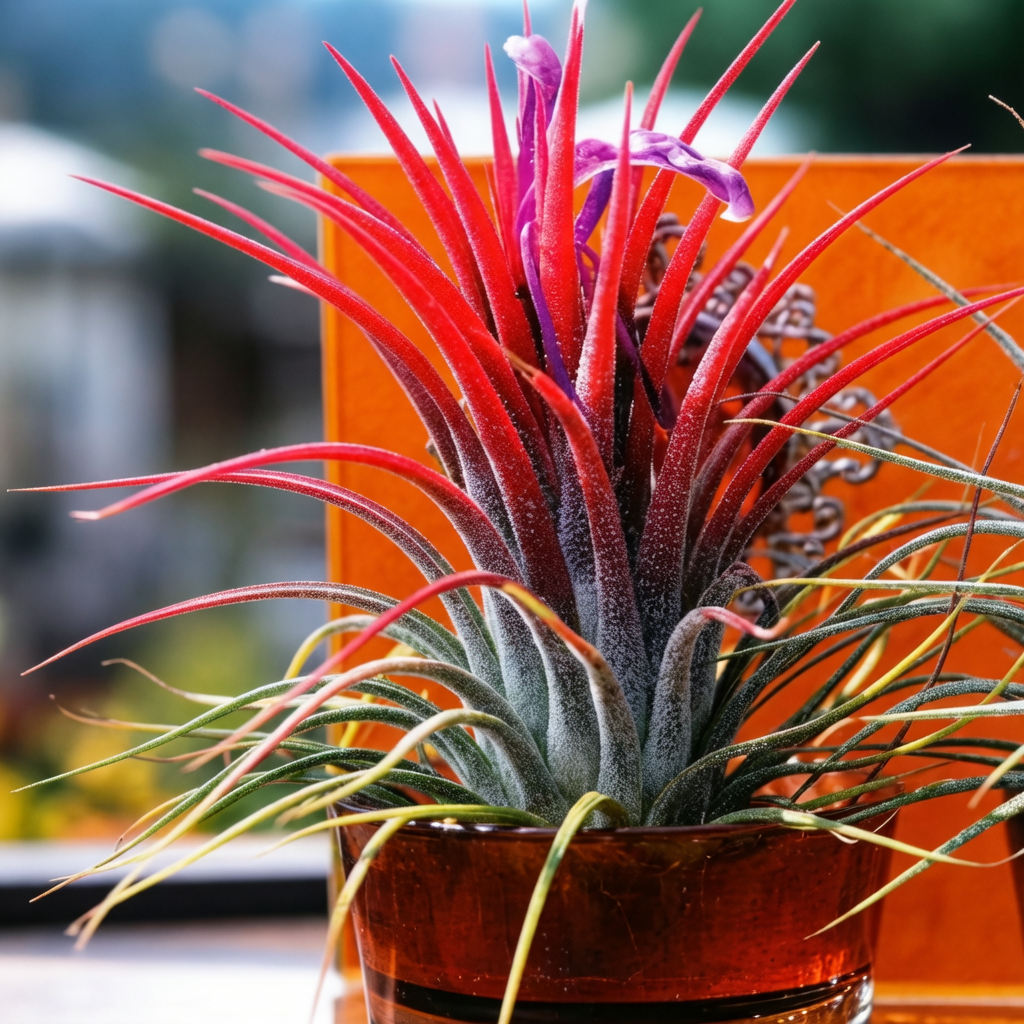
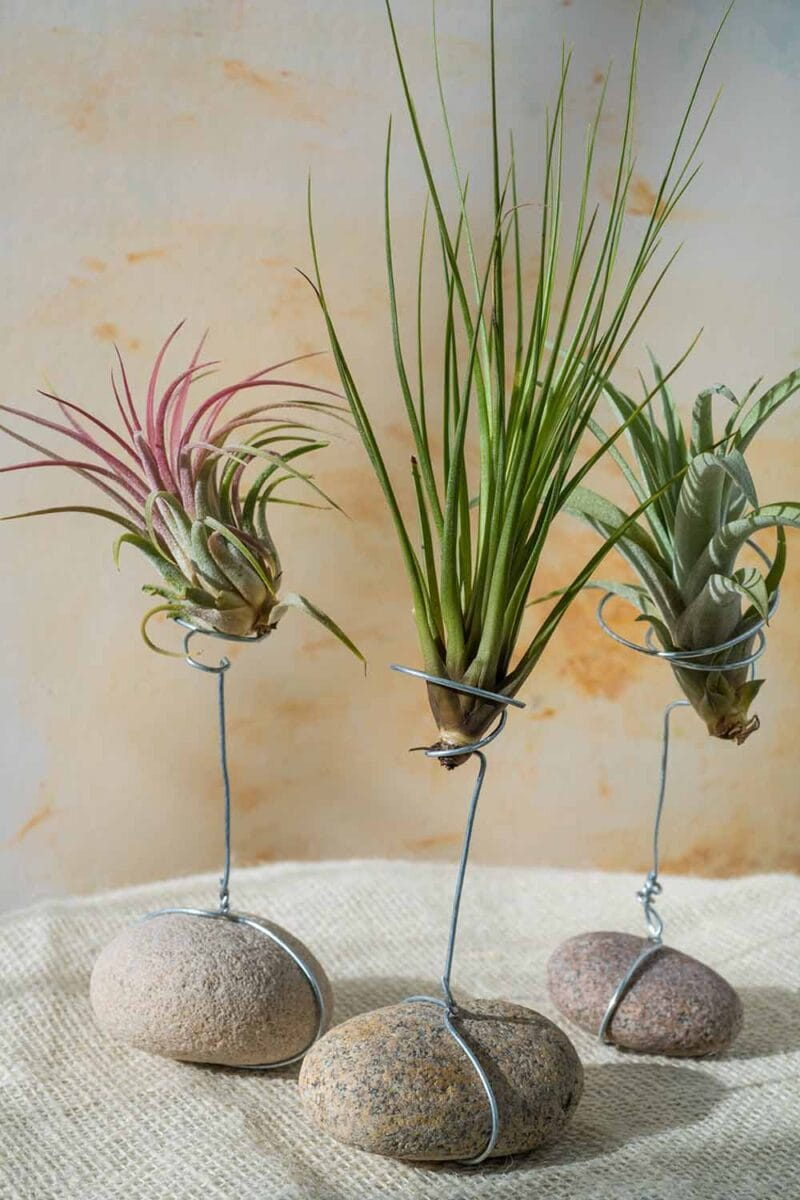
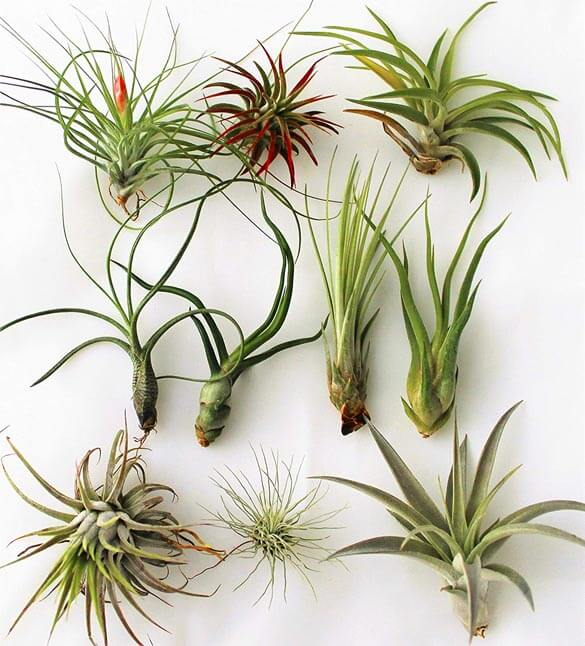
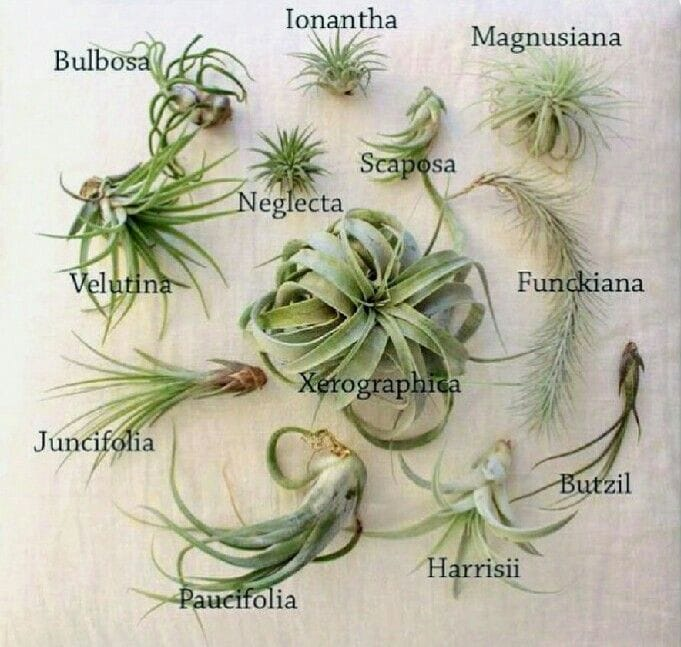
- Foliage:Leaves form a compact rosette and come in many styles—straight and needle-like, arching, or strongly curled with a “spider-leg” look. Color ranges from green to blue-gray to silvery-gray; many species show a frosty sheen from dense trichomes (leaf scales). In general, grayer/silver-leaved types with heavier trichomes tolerate brighter light and drier air better than softer green-leaved types.
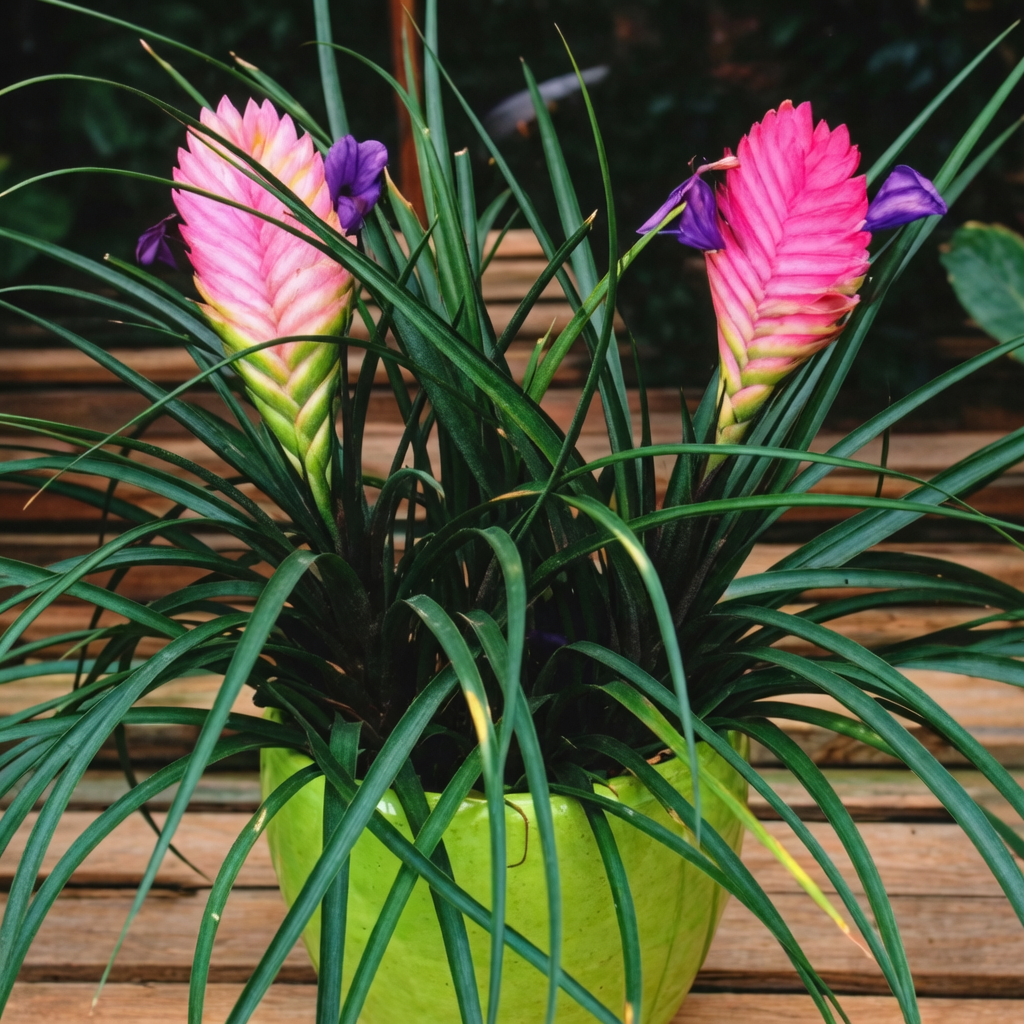
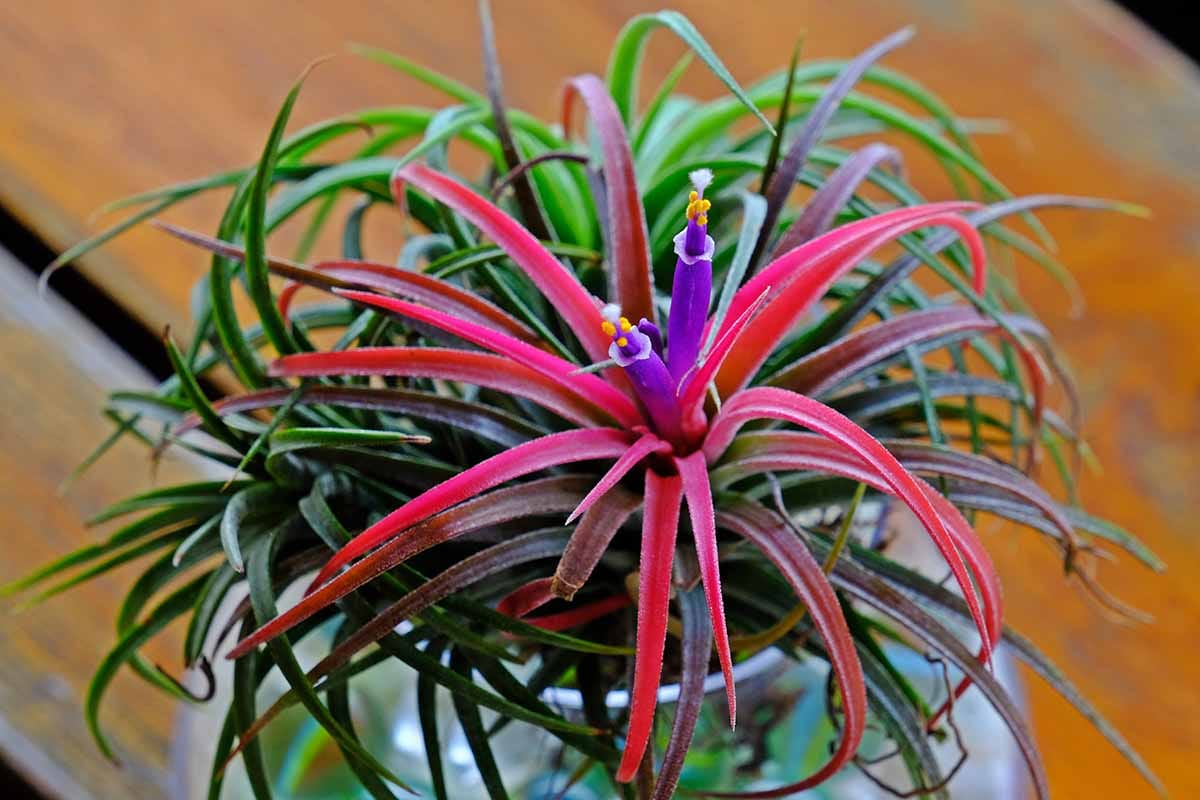
- Flower:Blooms are typically produced once per rosette and are prized for their colorful bracts and tubular flowers. Colors vary by species and can include purple/violet, pink, red, yellow, and multicolor combinations. In some species, foliage may blush red or purple around flowering to help attract pollinators. After flowering, the mother rosette gradually declines while producing one or more offsets (“pups”) that develop into the next generation.
- Flowering Season:Varies by species and indoor conditions; commonly spring for many popular house forms, but some may bloom at other times of year (often once annually when mature).
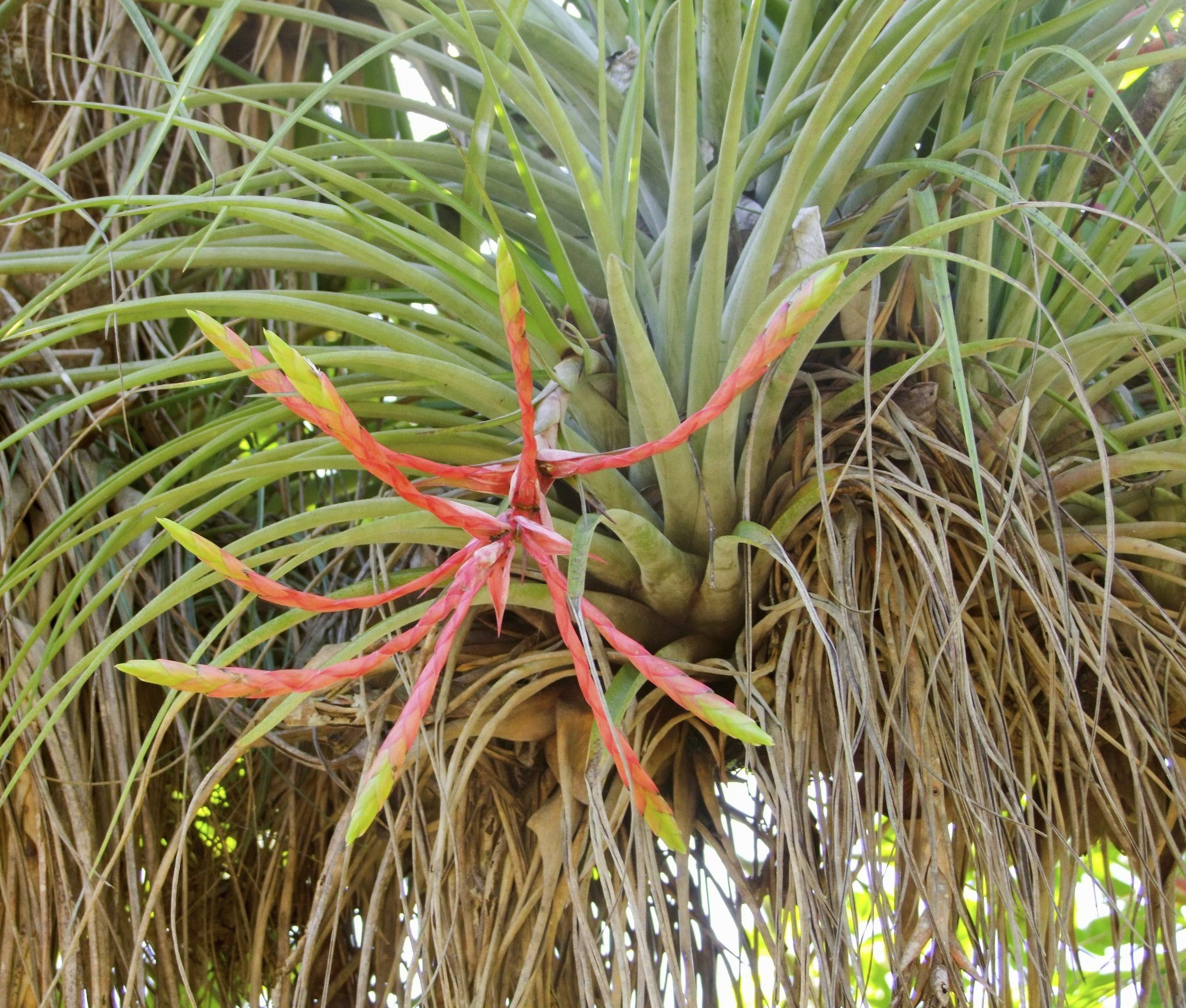
- Growth Habit:Mostly epiphytic rosettes that attach to bark, branches, rocks, or other surfaces. Roots function mainly for anchoring rather than feeding. Plants often become clump-forming over time as pups develop.
🌤️ Environment
Sunlight
Bright, indirect light to light shade. Filtered sun is ideal; avoid harsh midday sun (especially behind glass) which can scorch leaves. Gray-leaved species generally tolerate more sun and can handle gentle morning sun; greener types prefer brighter shade.
Temperature
Best around 15–25°C (59–77°F). Keep most commonly grown types above about 10°C (50°F) in winter. Some may tolerate brief dips to about 5°C (41°F) if kept dry, protected, and well-aired, but they are not frost-hardy.
Humidity
Moderate to high humidity with strong airflow. A practical target is around 50–70%+ humidity, but ventilation matters just as much as moisture—still, wet air is a recipe for rot.
Soil
No soil is needed for true air-plant culture. Mount or place in open displays (cork bark, driftwood, shells, rocks, wire cradles). If used in a “pot” purely for aesthetics, use an extremely airy, fast-draining mix (e.g., peat/leaf mold with coarse sand) and keep the plant’s crown well ventilated. Avoid permanently gluing plants so they can be removed for soaking and fully dried.
Placement
Near a bright window with filtered light (east window is often ideal, or set back from south/west exposure). Great for shelves and hanging displays, living rooms and offices, and bright bathrooms with a window. Keep away from heater/AC vents, and prioritize spots with consistent airflow.
Hardiness
Frost-tender; generally suitable outdoors in USDA Zone 10–11 (some species can be marginal in Zone 9 with protection).
🪴 Care Guide
Difficulty
Easy to moderate. They’re beginner-friendly once you learn the rhythm: bright indirect light + regular watering + fast drying. The most common mistakes are keeping them too wet in cool/dim conditions, or cooking them in strong sun.
Buying Guide
Pick plants with a symmetrical, firm rosette and crisp leaves (not limp, mushy, or badly wrinkled). Avoid blackened bases, soft crowns, sour smells, or obvious rot. Check for pests (mealybugs/scale). If buying in bloom, choose plants with intact bracts and no soft spots where water could collect.
Watering
Use rainwater, distilled water, or low-mineral water when possible. A reliable routine is to soak about once weekly for 30–60 minutes, then shake off excess water and place the plant upside down or on its side to drain—aim for it to dry within about 4 hours. In hot, dry, or heated rooms, add light misting between soaks (often 2–3 times per week; daily misting may be helpful during very dry spells). In winter or low light, reduce frequency and keep plants drier overall, but don’t let them stay bone-dry for long periods. Keep flowers as dry as possible during soaking to avoid damage.
Fertilization
Feed lightly during active growth using a bromeliad/air-plant (or orchid) fertilizer at weak dilution (commonly 1/4 strength). Foliar feeding works well: mist or soak with diluted fertilizer about monthly; some growers feed more often (e.g., every 2 weeks) in summer at very low strength. Rinse occasionally with plain water to prevent mineral buildup. Pause or greatly reduce feeding in winter; avoid heavy feeding.
Pruning
Minimal. Remove fully dead, dry, or yellowing leaves to keep airflow clean. After blooming, you can remove spent flower stalks/bracts once they’re fading to prevent decay, especially if moisture tends to sit in the bracts.
Propagation
Primarily by offsets (“pups”) that appear after flowering. You can leave pups attached to form a fuller clump, or separate when pups are about 1/3–1/2 the size of the mother plant (ideally with some roots/attachment). Seed is possible but slow; for many species, seedlings may take around 3 years to reach flowering size under good conditions.
Repotting
No traditional repotting needed. If you keep an air plant in a decorative pot or holder, simply re-mount or re-place as it grows. If grown in a pot purely for display, use a small container (often 9–15 cm (3.5–6 in)) with a very airy mix and refresh it every 2–3 years in spring—keeping in mind the plant still needs to be removable for soaking and drying.
📅 Seasonal Care Calendar
Spring–summer: brighter filtered light, water a bit more often, and feed lightly; ensure strong airflow during heat. Autumn: begin tapering watering and feeding as light drops. Winter: keep warm (generally >10°C (50°F)), water less often, stop or reduce fertilizer, and prioritize fast drying and ventilation to prevent rot.
🔬 Pests, Diseases & Safety
Common Pests & Diseases
Most problems are cultural rather than contagious: rot (crown/base rot) from staying wet too long, especially in cool or still air, and sunscald from harsh light. After watering, always drain thoroughly and dry quickly. Common pests include mealybugs and scale; treat with insecticidal soap or dab with diluted isopropyl alcohol, keeping the crown from staying wet. Occasional spider mites may appear in very dry indoor air; improve humidity and rinse/soak more consistently. Good airflow is the best preventative medicine.
Toxicity
Generally considered non-toxic to people, cats, and dogs. Chewing or ingestion may still cause mild stomach upset, and pets can damage the plant, so it’s best placed out of reach of curious nibblers.
🎋 Culture & Symbolism
Symbolism:Often linked with freedom, resilience, creativity, and “living lightly.” Some sources also associate it with “perfection,” reflecting its neat rosette form and minimalist beauty.
History & Legends:Tillandsia is named after Swedish botanist Elias Tillandz (1640–1693). As epiphytes, many species evolved leaf trichomes that let them capture moisture and minerals from rain, fog, and runoff—an elegant adaptation that helped them spread into habitats ranging from rainforests to deserts, from sea level up into high mountains.
Uses:Primarily ornamental: modern indoor décor, hanging installations, mounted displays on driftwood/cork bark, arrangements in shells or trays, and terrariums—preferably open or very well ventilated. They’re also popular as “clean” houseplants because there’s no messy soil, making them easy to use in creative styling.
❓ FAQ
Do air plants really live on air alone?
They don’t need soil, but they absolutely need water, light, and nutrients. In nature they absorb moisture and minerals through leaf scales (trichomes). Indoors, regular misting/soaking plus occasional weak fertilizer keeps them thriving.
Why is my air plant rotting at the base or crown?
Almost always it stayed wet too long—often in cool temperatures, low light, or poor airflow. After watering, drain thoroughly and dry the plant quickly (ideally within about 4 hours). Increase ventilation and reduce watering frequency in winter.
What are pups, and should I remove them?
Pups are baby offsets produced after flowering. Leave them attached if you want a fuller clump, or separate them once they’re about 1/3–1/2 the mother’s size to grow new individual plants.
Can I keep an air plant in a closed glass terrarium?
Not for long-term success. They can look great in glass, but they need airflow and must dry after watering. If you use glass, keep it open or very well ventilated, and only return the plant once it’s fully dry.
How do I know when it needs water?
Common signs include curled/rolled leaves, dullness, crispy tips, and a slightly “shrunk” look. When in doubt, a proper soak followed by fast drying is usually safer than frequent light spritzing in a stagnant spot.
💡 Fun Facts
- Those silvery leaf scales (trichomes) act like tiny sponges, helping Tillandsia capture water and nutrients from mist and rain.
- Many Tillandsia flower once per rosette, then live on through pups—so a clump can last for years.
- Spanish moss (Tillandsia usneoides) is an air plant.
- Some species can grow on telephone wires, fences, and rooftops in suitable climates—roots are mainly anchors, not “drink straws.”
- Airflow is as important as watering: an air plant can rot in still air even if you’re not “overwatering.”