🌱 Plant Features
- Size:Typically about 10–23 cm (4–9 in) tall with a 15–30 cm (6–12 in) spread; miniature types can be as small as 5–10 cm (2–4 in) across, depending on cultivar.
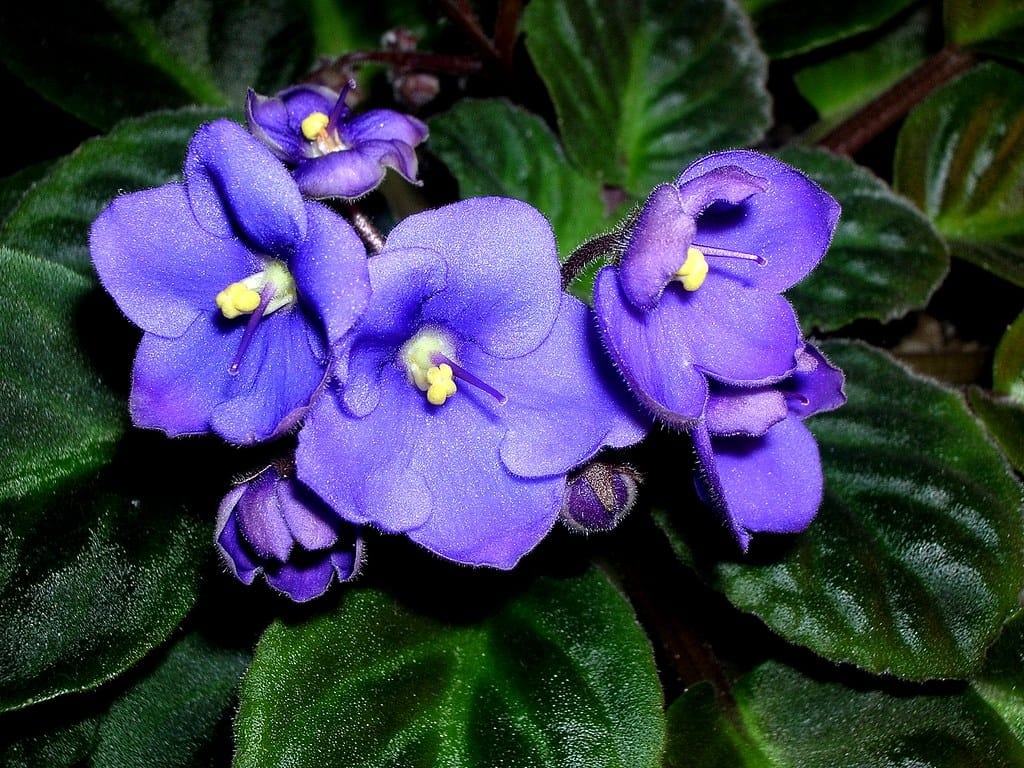
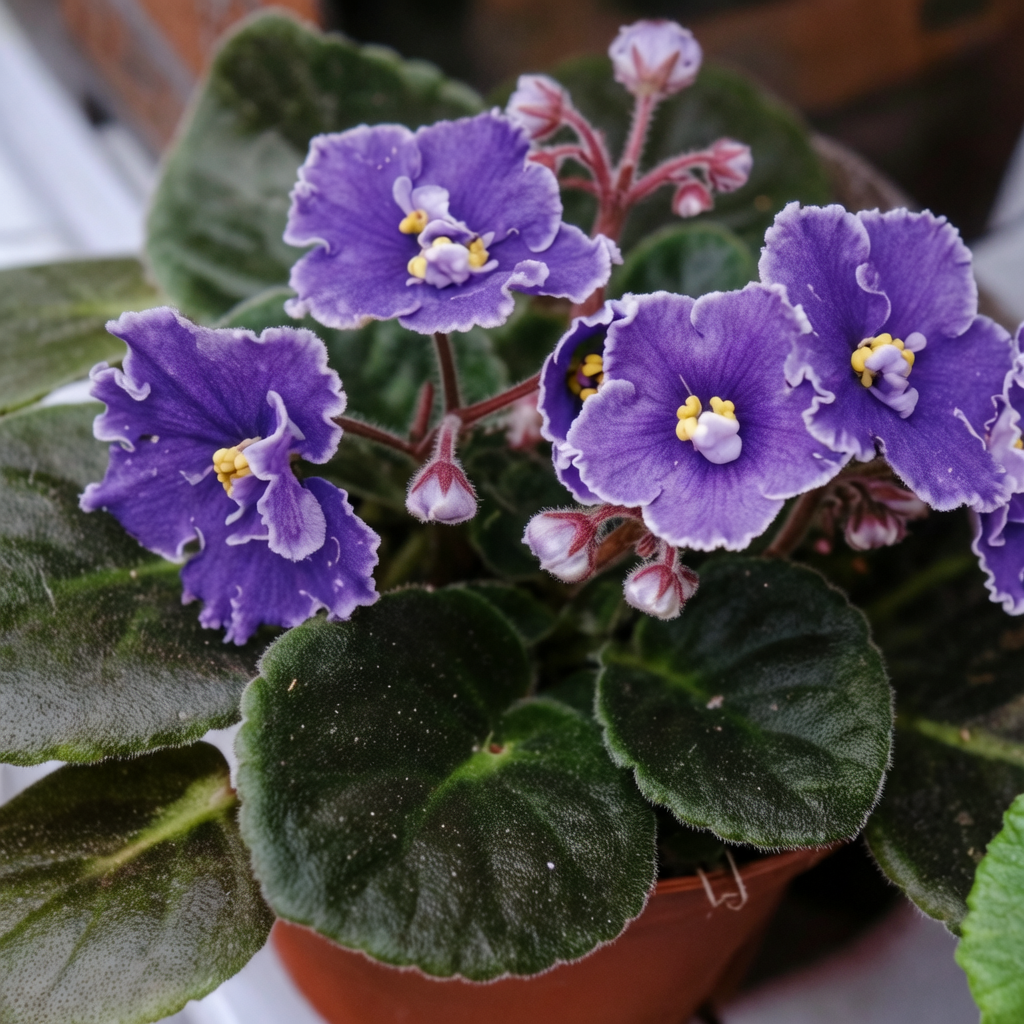
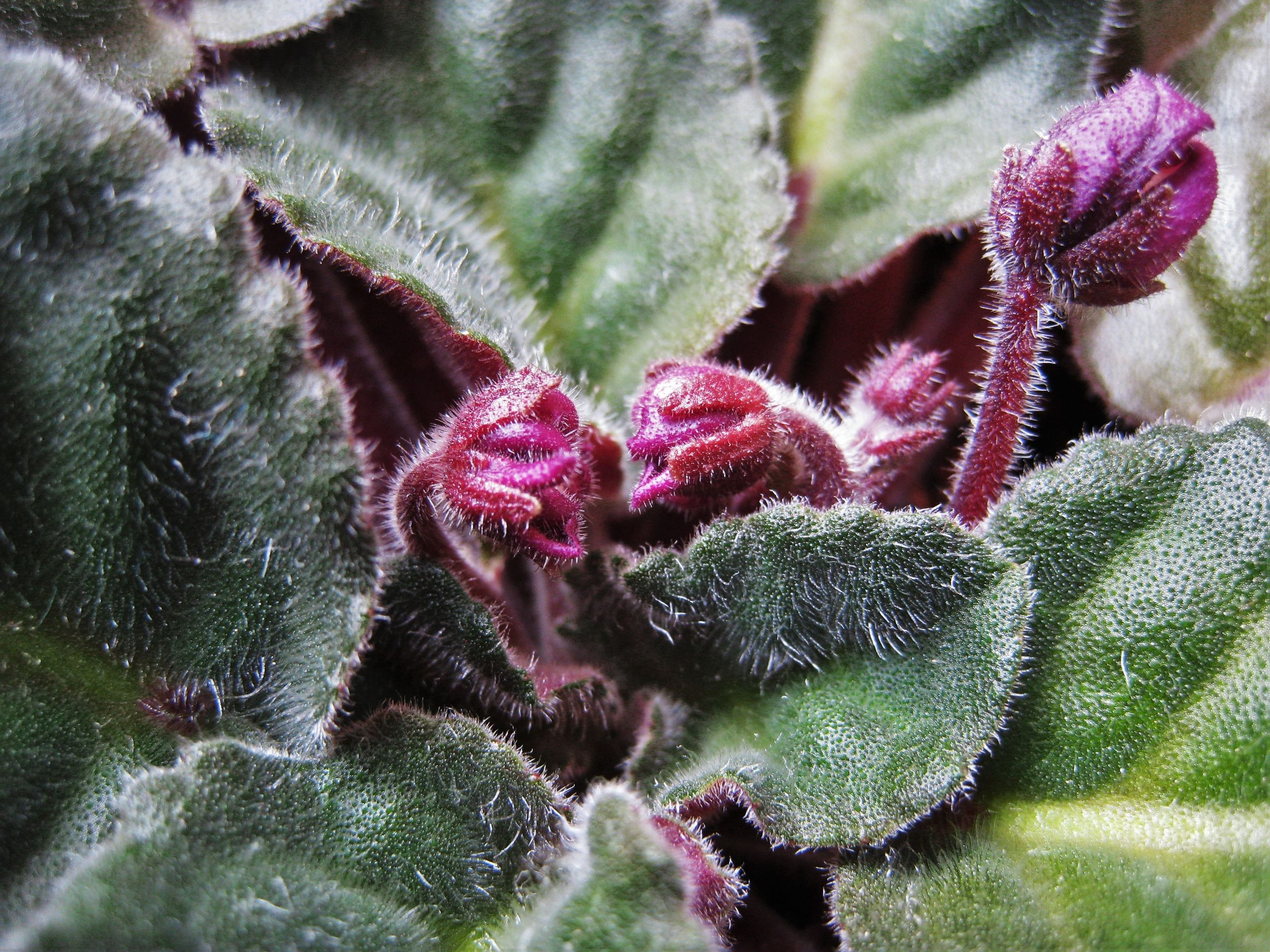
- Foliage:Leaves form a neat basal rosette and feel soft and velvety due to fine hairs. They are usually oval to slightly heart-shaped, thick and slightly succulent, deep green on top with some plants showing variegation; the underside is often tinged purple. Petioles (leaf stems) are fleshy and can be noticeably long; keep leaves dry because water droplets can leave marks on the fuzzy surface.
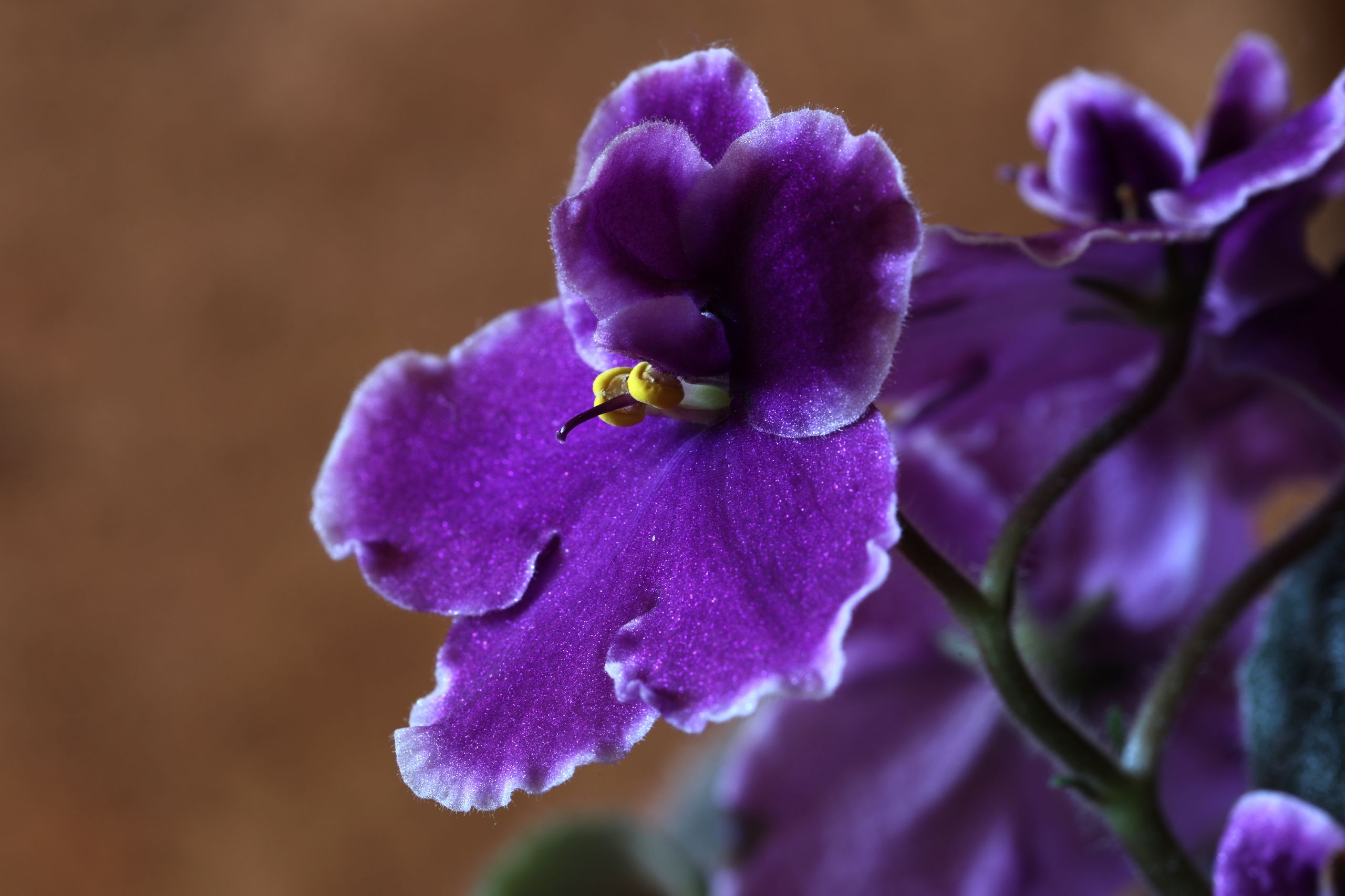
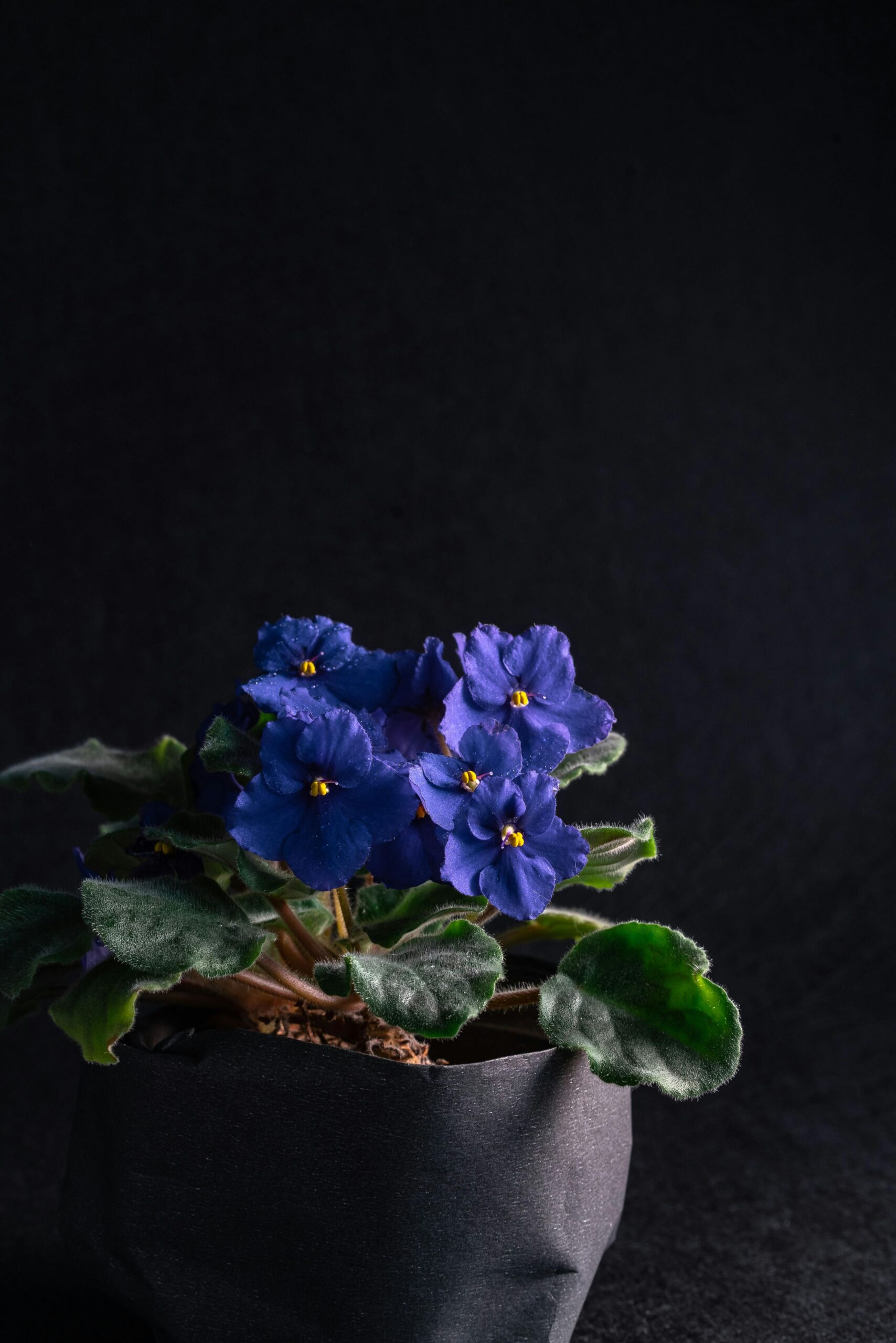
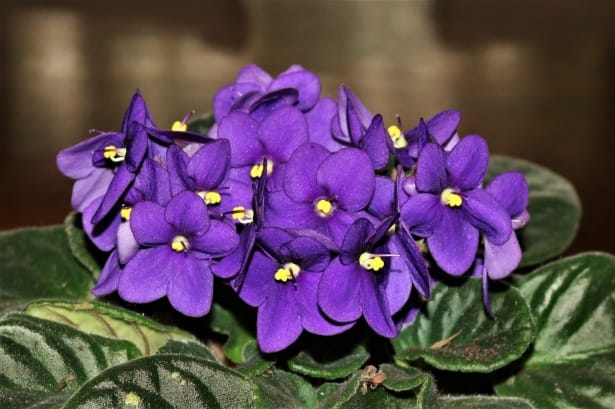
- Flower:Produces clusters of small but showy blooms (often around 2–3 cm / 0.8–1.2 in wide) held above the foliage from the leaf axils. Flower colors include purple, blue, pink, white, and red, with many bicolors and patterned forms (edged, eyed, striped, speckled). Depending on the cultivar, flowers may be single, semi-double, or fully double, and can appear starry, wavy/ruffled, bell-like, or in the classic “violet” shape. Removing spent flowers helps keep the plant tidy and encourages more blooming.
- Flowering Season:Capable of blooming year-round indoors with good light and warmth; often strongest in spring (March–May) and again in fall (September–November).
- Growth Habit:Compact, rosette-forming plant with very short stems and a relatively shallow root system; naturally suited to container growing.
🌤️ Environment
Sunlight
Bright, indirect light is ideal. Avoid harsh direct sun (especially summer midday), which can scorch or bleach leaves. East windows are excellent; south windows work well if filtered. Under grow lights, positioning about 30–38 cm (12–15 in) above the plant for roughly 12–14 hours can maintain strong growth and blooming. Too little light leads to upward-reaching leaves and fewer flowers.
Temperature
Best around 16–27°C (61–80°F), with many plants happiest near about 21°C (70°F). Avoid cold drafts; keep above about 15°C (60°F) when possible. Prolonged heat above 30°C (86°F) can slow growth and reduce flowering, while cold below 10°C (50°F) can seriously stress the plant.
Humidity
Prefers moderate to high humidity. Around 40–60% works well in many homes, though some growers aim higher (about 70–80%) for peak performance. Use a pebble tray, grouping, or a humidifier rather than misting—wet fuzzy leaves can spot and invite rot.
Soil
A loose, airy, fast-draining African-violet mix (typically peat- or coir-based) with perlite/vermiculite for aeration. Slightly acidic to neutral (about pH 6.0–7.0). Excellent drainage is essential to prevent crown/root rot. If possible, use low-mineral water because hard, lime-rich water can cause mineral buildup and decline over time.
Placement
Bright indoor spots such as a living room, office, or an east/filtered-south windowsill; keep away from heating/cooling vents and drafty windows. Kitchens/bathrooms can help with humidity if light is adequate; supplemental lighting is helpful in winter or in dim homes.
Hardiness
Frost-tender; generally grown as an indoor plant. Outdoors only in very warm climates (roughly USDA Zone 11–12).
🪴 Care Guide
Difficulty
Easy to moderate. It’s beginner-friendly once you learn two key habits: steady bright-but-gentle light and careful watering that keeps the crown and leaves dry. With consistent conditions, it’s one of the most rewarding blooming houseplants.
Buying Guide
Choose a plant with a symmetrical rosette and firm, healthy leaves (variegation is a bonus if you like it). Avoid yellowing, torn, wilted, or brown-spotted leaves; check leaf undersides for pests. Look for multiple buds (and a few open flowers so you can confirm the color). Transport carefully—petioles snap easily and cold drafts can stress plants.
Watering
Water when the top 2–3 cm (about 1 in) of mix feels dry. Many homes land around every 7–10 days, while active growers may water about 1–2 times per week—adjust to your light, pot size, and season. Use room-temperature water to prevent leaf spotting. Bottom-watering (or wick/self-watering setups) is popular to keep foliage dry; if top-watering, pour around the pot edge and never into the center crown. Keep the mix evenly moist but never soggy—waterlogging is the fastest route to root/crown rot. Low-mineral water is preferred to reduce salt buildup.
Fertilization
Feed lightly but regularly during active growth: about every 2–4 weeks (or “weakly, more often,” such as 1/8–1/4 strength). A balanced fertilizer works, and a bloom-supporting formula a bit higher in phosphorus/potassium can improve flowering. Reduce or pause feeding when light is low and temperatures are cool (often winter). Underfeeding can lead to fewer, smaller blooms; overfeeding can cause salt buildup and stressed roots.
Pruning
Remove spent blooms and stalks promptly (a gentle wiggle usually releases them). Trim older yellowing or damaged lower leaves to keep airflow and shape. Remove suckers/side shoots if you want a single strong crown (unless you’re using them for propagation). Avoid allowing seed pods to develop if your goal is continuous blooming.
Propagation
Most commonly by leaf cuttings. Take a healthy mature leaf (often from the second or third row) with about 1–2.5 cm (0.4–1 in) of petiole, cut at a slight angle, and insert into sterile, lightly moist vermiculite/perlite or a propagation mix (some growers use clean sand). Keep warm and bright (about 18–24°C / 64–75°F) with high humidity (a clear cover works). Roots often form in ~3–4 weeks; plantlets typically appear in ~8–12 weeks. Can also be propagated by division of multiple crowns or from seed (slower and variable).
Repotting
Repot about every 12–18 months, often in spring, or whenever the mix breaks down or the neck elongates. They bloom best slightly pot-bound; a common guide is choosing a pot about 1/3 the diameter of the plant’s leaf span. Use fresh airy mix, ensure strong drainage, and keep the crown at soil level. Water lightly after repotting and avoid chilling the plant.
📅 Seasonal Care Calendar
Spring (Mar–May): Strong growth and bloom—great time to repot and propagate; fertilize more consistently. Summer (Jun–Aug): Protect from heat and harsh sun; increase humidity without wetting leaves; good airflow helps. Fall (Sep–Nov): Often another bloom flush—maintain steady light and feeding. Winter (Dec–Feb): Provide supplemental light if days are dim; water a bit less; keep above about 15°C (60°F) when possible and avoid cold, damp conditions; reduce/stop fertilizer if growth slows.
🔬 Pests, Diseases & Safety
Common Pests & Diseases
Pests include aphids, spider mites, thrips, mealybugs, scale insects, and cyclamen mites (often seen as distorted new growth). Treat early with insecticidal soap/horticultural oil or an appropriate product, repeating as needed, and isolate affected plants. Diseases/problems include powdery mildew, leaf spot, soft rot, and especially crown/root rot from overwatering or water sitting in the crown. Thrips can also spread Impatiens Necrotic Spot Virus (INSV), which is incurable—discard infected plants and control thrips. Prevention: airy mix, careful watering, warm stable temperatures, good airflow, and keeping leaves dry.
Toxicity
Generally considered non-toxic to people, cats, and dogs. Still, chewing a large amount may cause mild digestive upset, so it’s best kept out of reach of persistent nibblers.
🎋 Culture & Symbolism
Symbolism:Often associated with devotion, loyalty, and enduring love. Color meanings are sometimes shared by growers and gift-givers: purple for loyalty/wisdom, blue for calm, white for purity, and pink for gentle affection.
History & Legends:First brought to wider attention in 1892 after being discovered in the Usambara Mountains (in present-day Tanzania) by Baron Walter von Saint Paul-Illaire, who sent material back to Germany—hence the historic genus name Saintpaulia. Over time it became a classic “grandmother’s windowsill” plant and a collector’s favorite, with countless named varieties traded among enthusiasts and frequently given as heartfelt gifts (especially around Mother’s Day in some places).
Uses:A top ornamental indoor bloomer for windowsills, desks, and small spaces; popular in dish gardens and under lights. Because it propagates easily from leaves, it’s also a favorite plant for sharing, swapping, and building collections.
❓ FAQ
Why won’t my African violet bloom?
The most common causes are not enough light (needs bright, indirect light or a grow light), a pot that’s too large (they bloom better slightly pot-bound), too much nitrogen-heavy fertilizer, low humidity that causes buds to dry, or uneven watering/temperature swings. Improve light, keep it warm and steady (about 18–27°C / 65–80°F), fertilize lightly for blooms, and you’ll usually see new flowers within a few weeks.
What causes brown spots on the leaves?
Often it’s water droplets—especially cold water—sitting on the fuzzy leaves and leaving marks. Use room-temperature water and keep foliage dry. If spots spread or look fuzzy, it may be a disease issue (like leaf spot or mildew); improve airflow, avoid wet leaves, and isolate the plant if needed.
How do I clean dusty leaves without ruining the fuzz?
Use a soft brush (like a clean makeup brush) to gently sweep dust from the center outward. If you rinse, use lukewarm water, then carefully blot dry and keep the plant out of direct light until fully dry. Avoid leaf-shine products—they clog the leaf hairs.
Why are the leaves stretching upward or looking floppy?
Upward stretching with long stems usually means not enough light—move it brighter or add a grow light. Floppy leaves often point to root stress from overwatering or a mix that stays too wet. Check drainage, let the mix dry slightly between waterings, and keep temperatures stable.
How often should I repot African violets?
About every 12–18 months, or sooner if the mix becomes dense, the neck elongates, or you see mineral buildup. Use fresh airy mix and keep the pot modest in size—oversized pots often mean lots of leaves and fewer flowers.
💡 Fun Facts
- African violets aren’t true violets (they’re in the Gesneriaceae family, not Violaceae)—they’re simply named for their violet-like blooms.
- A single leaf can produce multiple baby plants, which is why they’re famous as “swap plants” among houseplant fans.
- Their fuzzy leaf hairs help shed water away from the crown—great in nature, and a reminder to keep leaves dry indoors.
- Thousands of cultivars exist, including ruffled doubles and striking bicolors with stripes, speckles, or contrasting edges.
- Wild populations in Tanzania have faced habitat pressure, making responsible cultivation and sharing of propagated plants especially important.