
🌱 Plant Features
- Size:Up to about 1.2 m tall × 1.0 m wide (120 cm tall × 100 cm wide; 4 ft tall × 3.3 ft wide) in ideal conditions; typically smaller as an indoor pot plant.
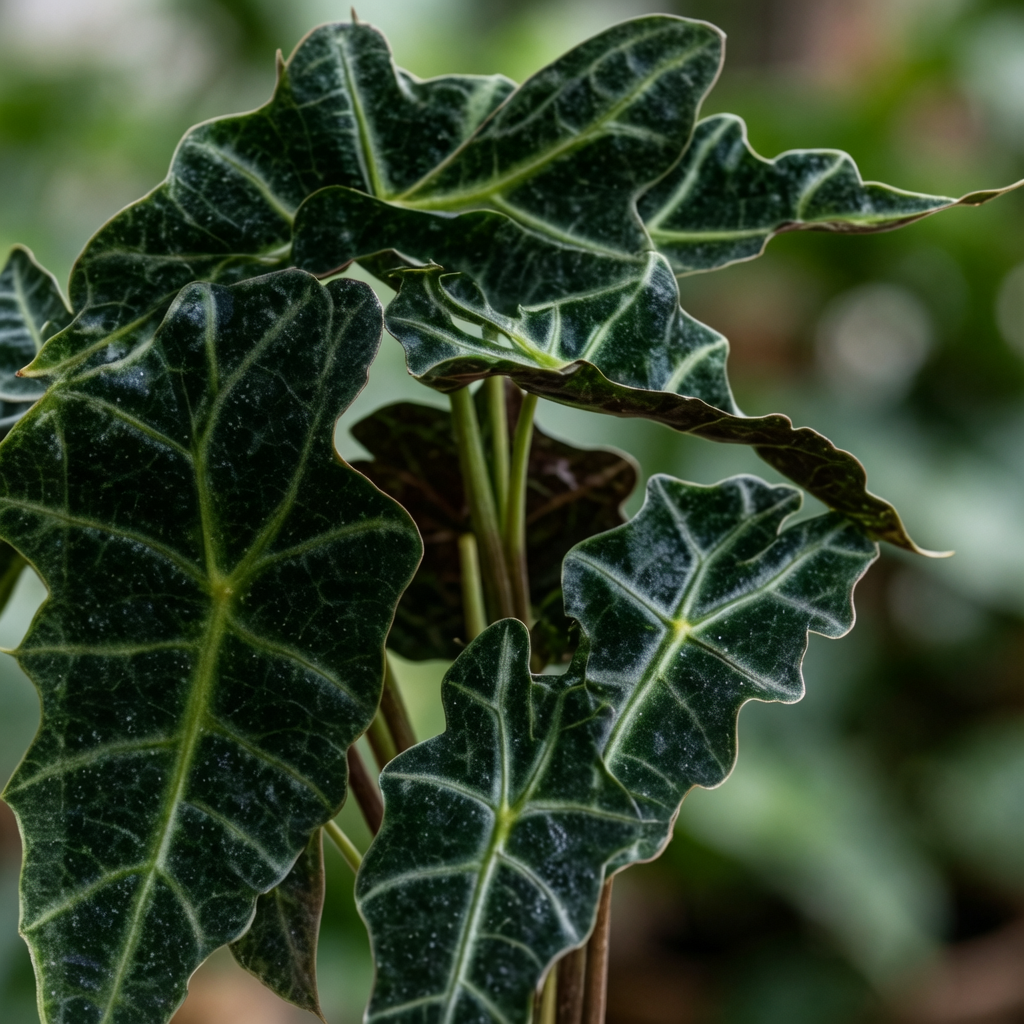
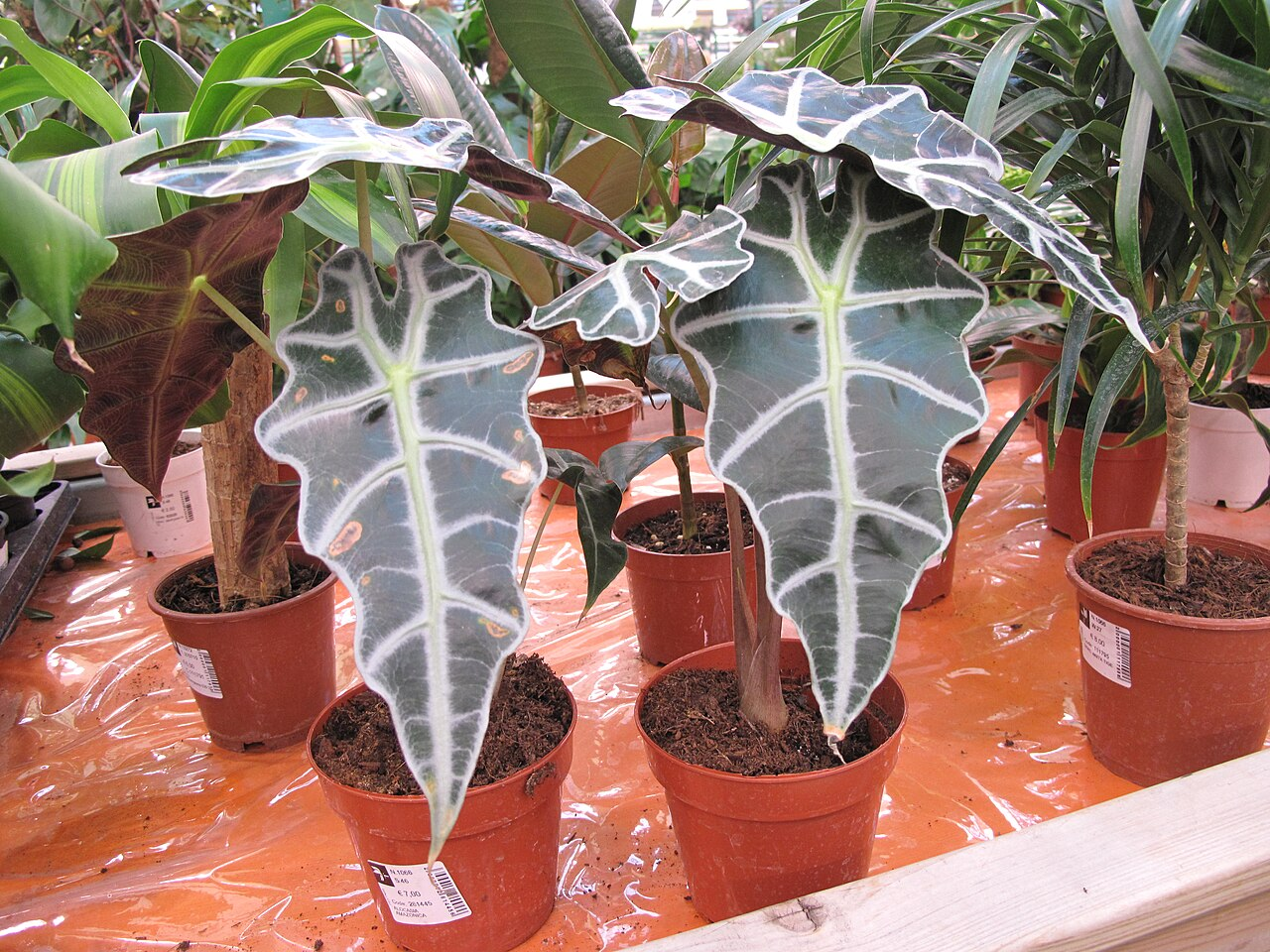
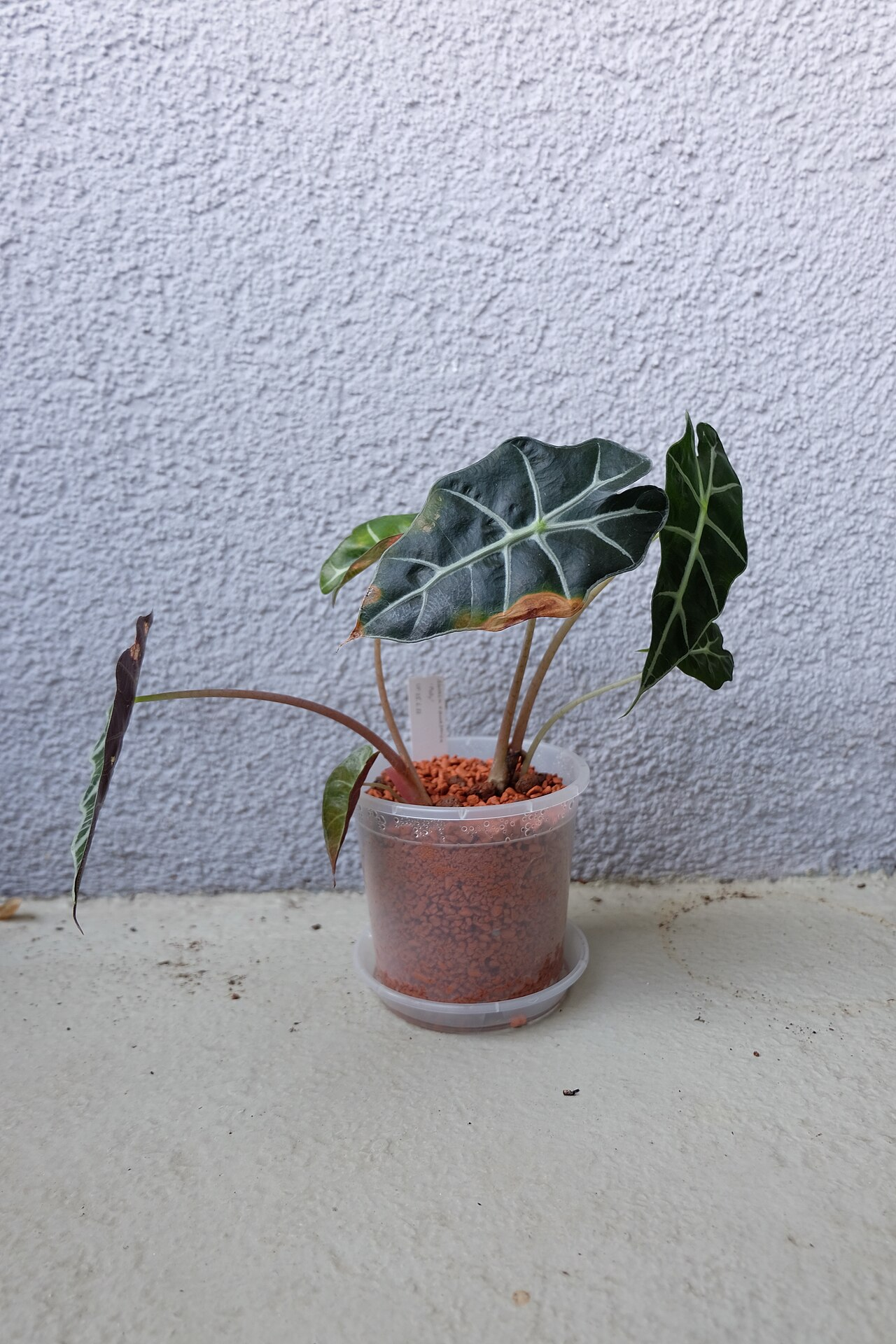
- Foliage:Dramatic arrowhead leaves with a deep green upper surface, bold silvery-white veins, and strongly undulating/scalloped margins; the underside may show a purplish tone depending on light and cultivar.
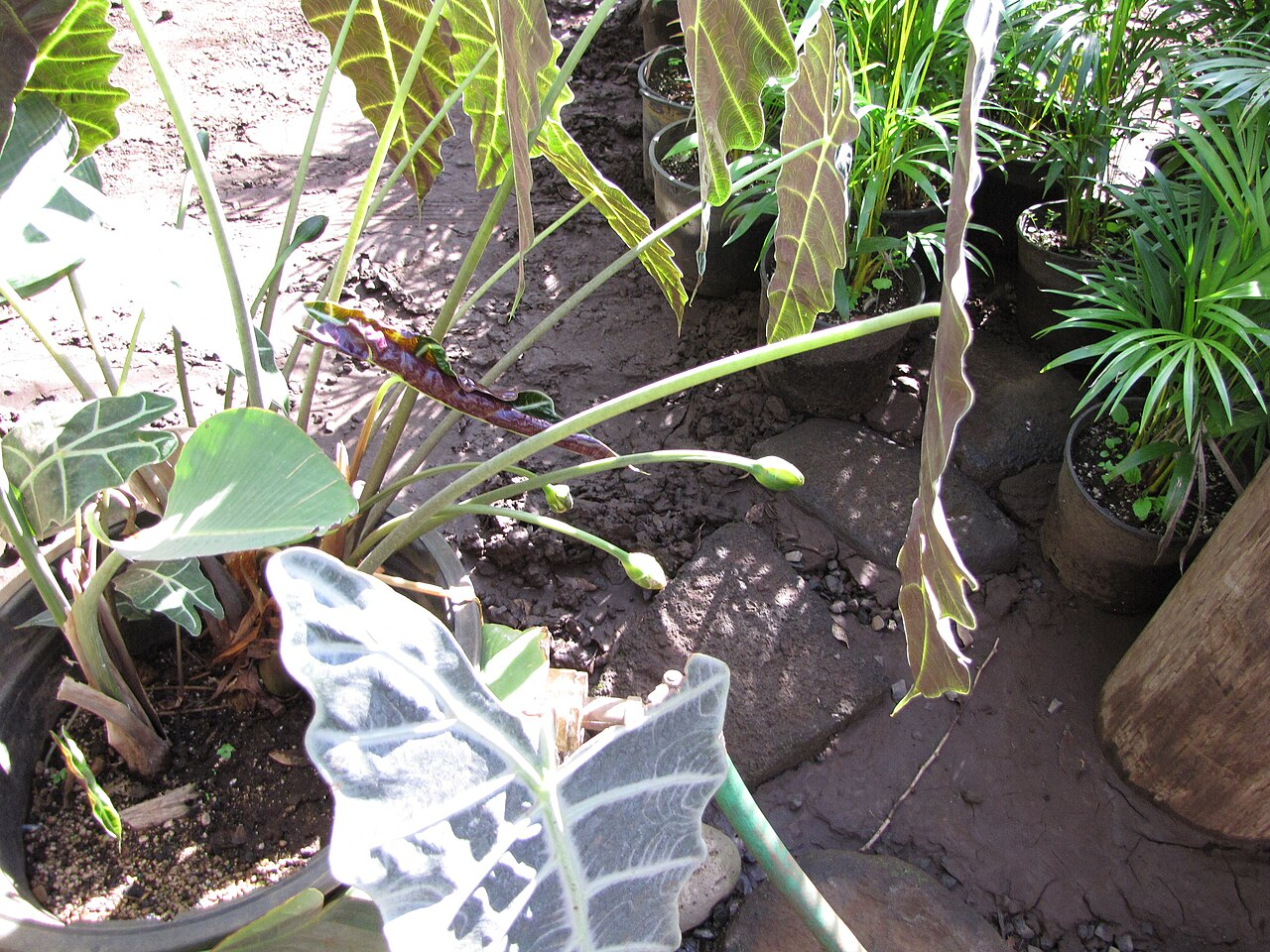
- Flower:Small, pale aroid inflorescences (spathe and spadix), often considered secondary to the foliage and frequently removed by growers.
- Flowering Season:Intermittent; most likely from spring to summer indoors, but not reliably seasonal.
- Growth Habit:Clump-forming, upright, herbaceous perennial arising from a rhizome/corm.
🌤️ Environment
Sunlight
Bright, indirect light is best; tolerates partial shade. Avoid harsh, direct sun that can scorch leaves.
Temperature
Prefers warm, steady temperatures around 18–25°C (64–77°F). Avoid prolonged drops below about 15°C (59°F) and keep away from cold drafts and air-conditioning vents.
Humidity
High humidity is key for pristine leaves; aim for 60%+ if possible to reduce crispy edges and discourage spider mites.
Soil
An airy, fast-draining aroid mix works best—think a chunky blend such as fine orchid bark + quality potting mix/coco-based substrate + perlite/coarse sand. Mature plants often do well in a pot about 25–30 cm (10–12 in) wide, provided drainage is excellent.
Placement
A bright spot with filtered light, away from heaters, drafts, and AC. Boost humidity with a humidifier, a pebble tray, or grouping plants together; misting can help briefly but won’t replace consistently humid air.
Hardiness
Not frost-hardy; outdoors year-round only in warm, frost-free climates (approximately USDA Zone 11–12).
🪴 Care Guide
Difficulty
Challenging: it thrives on stable warmth, high humidity, and careful watering—too dry leads to crisp edges, too wet risks rot.
Buying Guide
Pick a plant with firm stems and upright leaves, minimal browning at the margins, and no soft or mushy areas at the base. Check leaf undersides for spider mites and inspect the potting mix—avoid plants sitting in soggy, sour-smelling media.
Watering
Spring through autumn: keep the mix evenly moist but never waterlogged; water thoroughly, then let excess drain away. Winter: allow the top 2–3 cm (about 1 in) to dry before watering again. Empty saucers after watering, and avoid using very cold water when roots are cool. Rainwater or distilled water can help if your tap water is hard.
Fertilization
From spring to early autumn, feed every 2–3 weeks with a balanced liquid fertilizer at half strength. Reduce or stop feeding in winter if growth slows.
Pruning
Remove yellowing or damaged leaves by cutting at the base with clean tools. If it flowers and you prefer foliage growth, you can remove the bloom.
Propagation
Best propagated by division: separate offsets or divide rhizomes/corms during repotting. Each piece should have roots and at least one growth point; keep divisions warm and humid while they re-establish.
Repotting
Repot every 2–3 years (or when rootbound) into a pot only 2–5 cm (1–2 in) wider. Refresh with a chunky aroid mix and avoid oversized pots that stay wet too long. Typical mature pot size is around 25–30 cm (10–12 in).
📅 Seasonal Care Calendar
Spring–autumn: bright indirect light, evenly moist mix, and high humidity; fertilize every 2–3 weeks. Winter: water less (let the top layer dry), keep warm and draft-free, and pause feeding if growth stalls. Repot/divide about every 2–3 years and maintain humidity year-round.
🔬 Pests, Diseases & Safety
Common Pests & Diseases
Spider mites are common in dry air; thrips, mealybugs, and scale can also appear. Overwatering and poorly aerated soil can cause root rot. Keep leaves clean, improve general air circulation (without cold drafts), isolate infested plants, and treat with insecticidal soap or horticultural oil as needed.
Toxicity
Toxic to humans and pets if chewed or ingested due to calcium oxalate crystals. May cause mouth/throat irritation, drooling, and digestive upset—keep away from children and animals.
🎋 Culture & Symbolism
Symbolism:Often linked with protection and a bold, dramatic presence—its shield-like leaves look like living armor.
History & Legends:Despite the name, it isn’t an Amazon rainforest native. It’s a cultivated Alocasia hybrid that became famous as a graphic, statement-making houseplant.
Uses:Primarily grown as an ornamental foliage plant indoors; in truly frost-free regions it can also be used outdoors in bright shade as a tropical accent plant.
❓ FAQ
Is the whole plant toxic?
Yes—every part is considered toxic if ingested. Keep it away from pets and children, and wash hands after handling if you have sensitive skin.
How can I raise humidity?
A humidifier is the most reliable option. You can also group plants together or use a pebble tray; misting helps only briefly and doesn’t replace steady humidity.
What water should I use?
Rainwater or distilled water is ideal, especially where tap water is hard. Whatever you use, avoid keeping the soil soggy—moist, not wet, is the goal.
When should I fertilize?
Feed in the active growing season (spring through early autumn) about every 2–3 weeks with a balanced liquid fertilizer at half strength, then reduce/stop in winter if growth slows.
Should I remove the flowers?
You can. Many growers cut blooms off because they’re not the main attraction, and removing them may help the plant put more energy into leaf growth.
💡 Fun Facts
- The bold white veining and scalloped leaf edges are the real ‘wow’ feature—flowers are usually a bonus, not the main event.
- Dry indoor air is one of the quickest ways to trigger crispy leaf edges and invite spider mites.