🌱 Plant Features
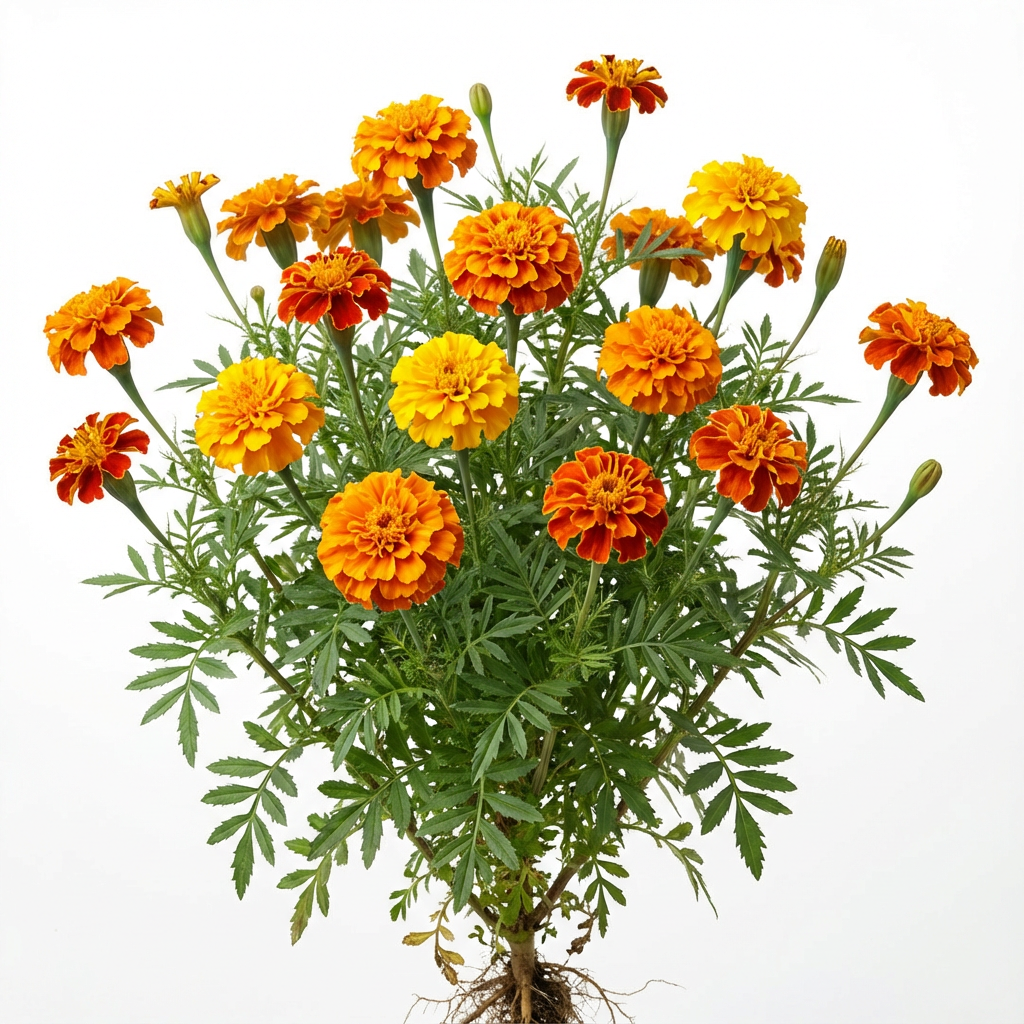
- Size:Commonly about 30–90 cm (12–35 in) tall and 20–45 cm (8–18 in) wide, but some tall cultivars can reach 120 cm (4 ft). Many compact forms stay under 30 cm (12 in).
- Foliage:Leaves are pinnately divided with narrow, serrated leaflets; foliage is mid‑green to gray‑green, strongly aromatic, and the plant branches freely in good light (shorter internodes and a fuller shape).
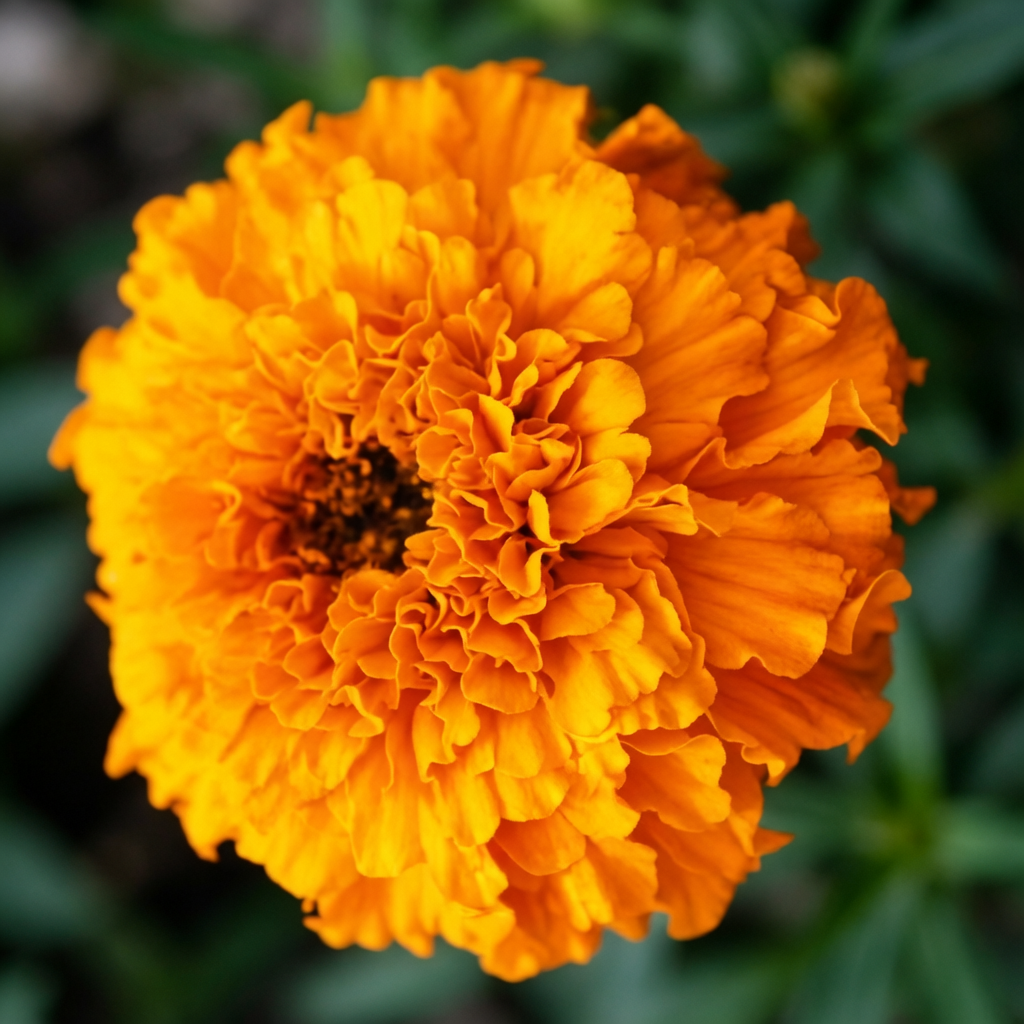
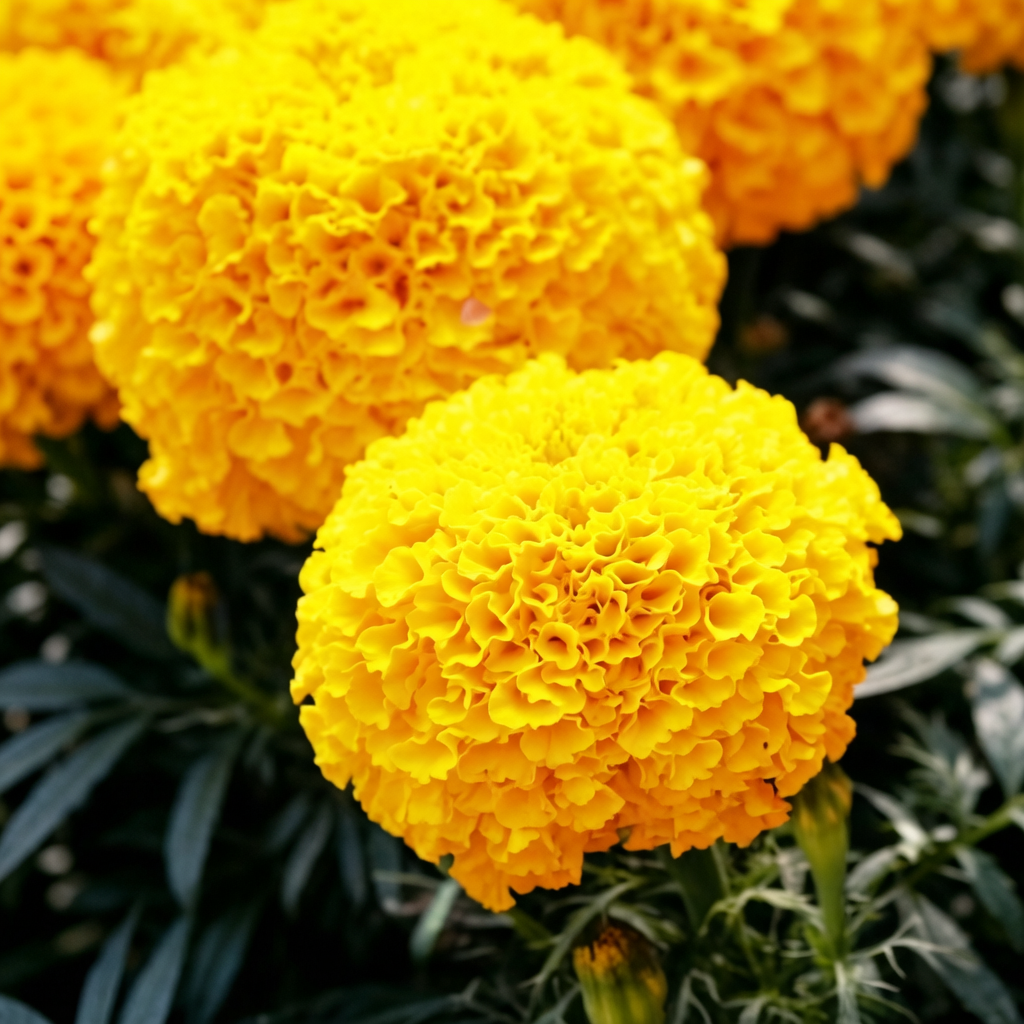
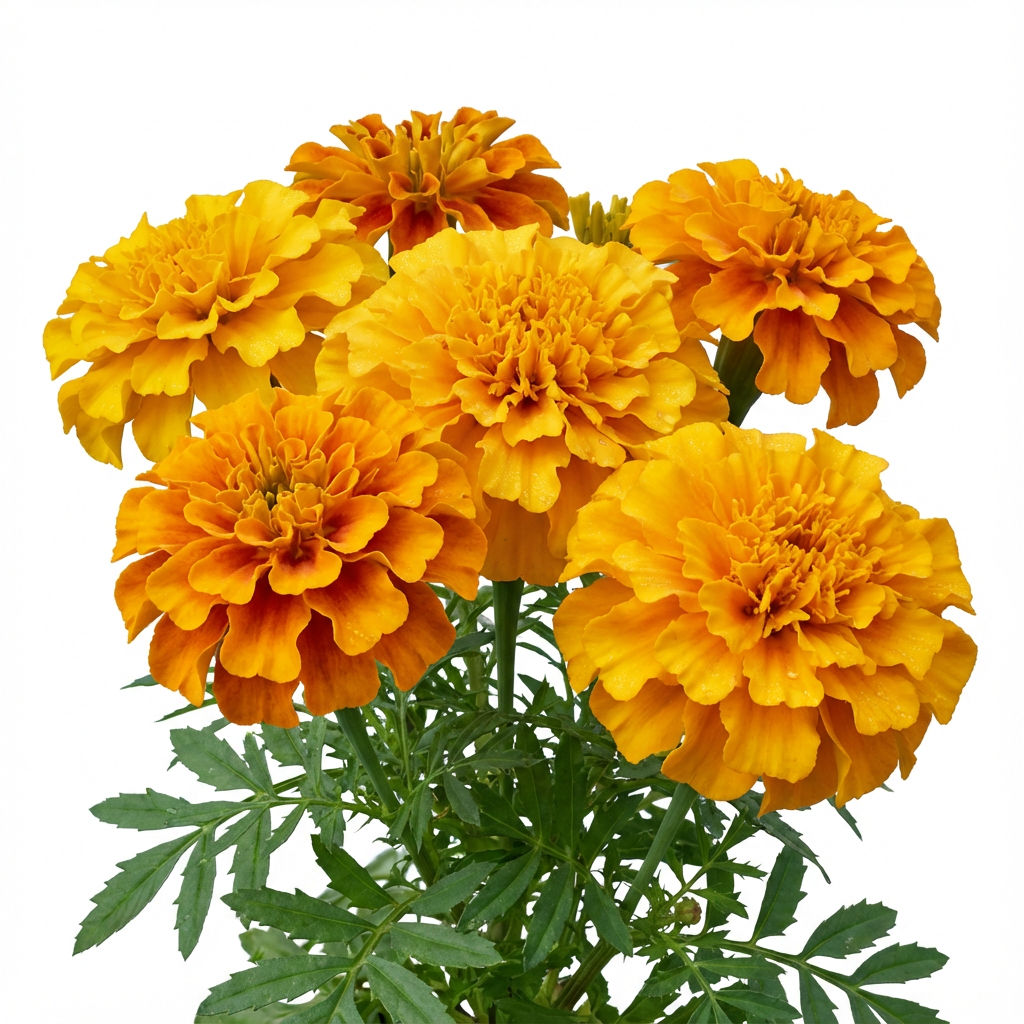
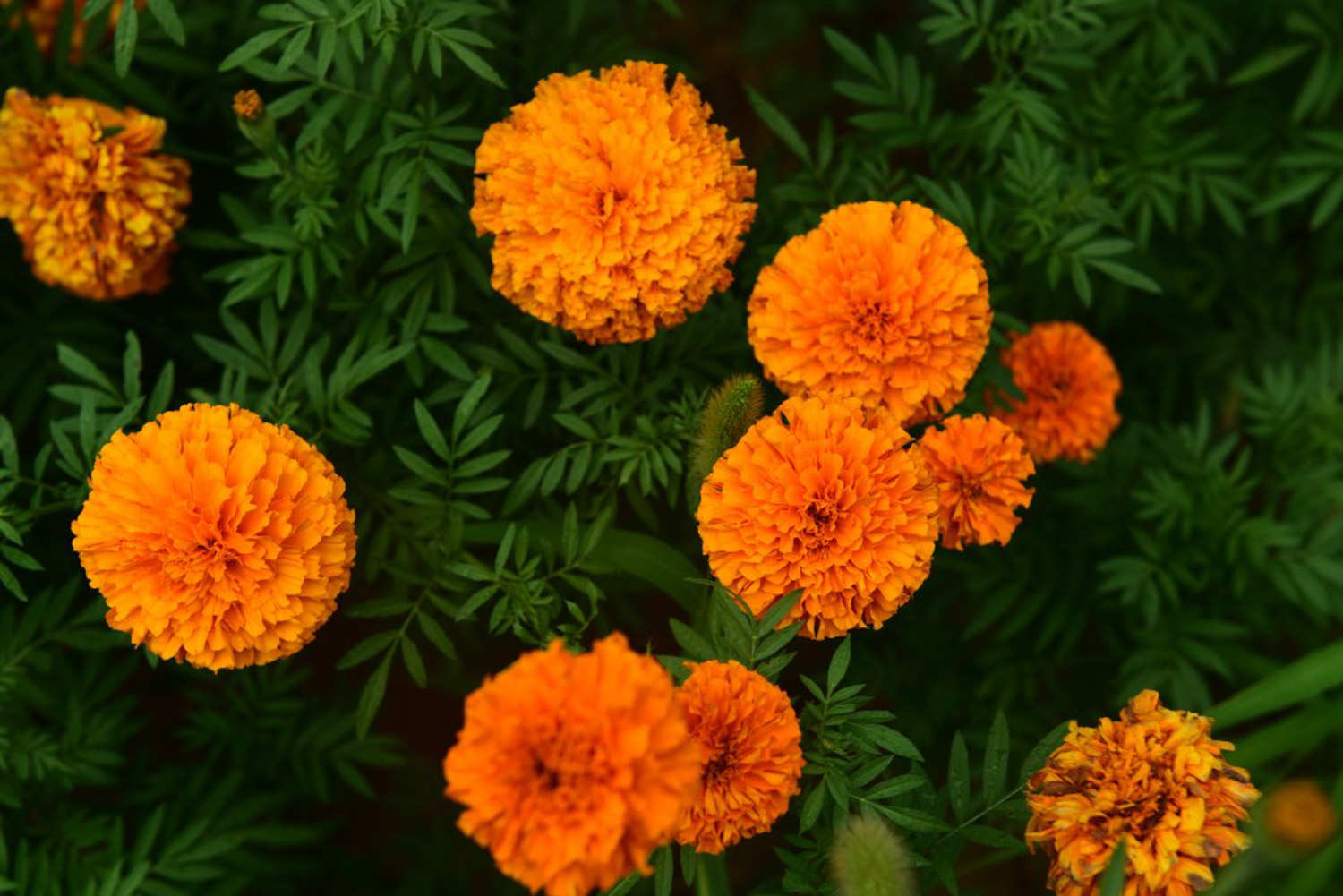
- Flower:Large, showy flower heads that can be single and daisy‑like or densely double and pom‑pom/ruffled. Blooms are typically about 5–12 cm (2–5 in) across, in shades of bright yellow, gold, and orange, sometimes with creamy tones or red/bicolored effects. Long-stemmed cultivars are popular for cutting.
- Flowering Season:Summer to fall; often from late spring to first frost in warm climates (roughly May to October).
- Growth Habit:Upright, bushy, herbaceous plant with sturdy stems; tender perennial where frost-free, but usually grown as an annual.
🌤️ Environment
Sunlight
Full sun for best blooms—aim for 6–8+ hours of direct sun daily. In very hot climates, light afternoon shade can help prevent stress.
Temperature
Likes warmth and grows best roughly around 18–27°C (65–80°F). It’s frost-sensitive; protect from chills and ideally keep above about 5°C (41°F). Seeds germinate well around 19–24°C (66–75°F). Prolonged extreme heat (around/above 32°C / 90°F), especially with high humidity and stagnant air, can reduce flowering.
Humidity
Generally adaptable, but performs best with moderate humidity and good airflow. Avoid persistently hot, humid, stagnant conditions; it tolerates short dry spells far better than soggy soil.
Soil
Well-draining garden loam or potting mix is key. Moderately fertile soil is ideal, but it’s quite adaptable; improve heavy soils with compost/leaf mold plus coarse sand/perlite. Typical pH tolerance is about 6.0–7.5. Avoid waterlogging.
Placement
Sunny balcony, patio, windowsill with strong light, containers, borders, and vegetable beds. Dwarf cultivars shine in pots/window boxes; taller cultivars work well in beds and can be grown for cut flowers.
Hardiness
Usually grown as an annual in most regions; tender perennial only in frost-free climates. Outdoors overwintering is most realistic in USDA Zones 10–11; elsewhere it dies with frost.
🪴 Care Guide
Difficulty
Easy overall. The main “rules” are: strong sun, good drainage, and not overwatering. In low light it gets leggy; in wet soil it can rot; in prolonged hot-humid still air it may bloom less.
Buying Guide
Choose compact, stocky plants with sturdy stems and short internodes, healthy gray‑green/mid‑green leaves, and no yellowing, spots, or rot. The best picks have plenty of buds plus a few flowers just opening (bright, intact petals). For cut-flower use, select plants/blooms with long stems and flowers that are fully open or just at peak.
Watering
Water deeply, then let the surface dry slightly before watering again. Once established, it tolerates short dry spells, but containers dry faster and may need more frequent watering in heat. Avoid overhead watering on foliage and blooms to reduce spotting, mildew, and rot. The biggest danger is waterlogged soil—ensure drainage to prevent root/stem rot and sudden collapse.
Fertilization
Moderate feeding is plenty. At planting, mix in compost or use a balanced fertilizer. During active growth, a light feed every 2–4 weeks works well (for example, a balanced fertilizer such as 10‑10‑10 or 20‑20‑20). Avoid excess nitrogen, which makes lush leaves but fewer flowers. A bloom-boost (higher phosphorus/potassium) feeding shortly before peak flowering can improve bud and bloom quality.
Pruning
Pinch early to encourage branching and a bushier shape. Deadhead spent blooms to keep flowers coming (it’s helpful, though marigolds can still bloom without constant deadheading). If plants get tall/loose in mid‑season, a harder cutback can trigger fresh growth and another flush of blooms.
Propagation
Mostly grown from seed. Sow outdoors after the last frost once soil warms to about 18°C (65°F), or start indoors 6–8 weeks before the last frost. Germination typically takes about 5–9 days at warm temperatures. From sowing to bloom is often ~60 days for earlier types and ~80 days for big, ball‑flowered types.
Repotting
For container culture, use a free-draining potting mix. Pot size depends on cultivar: dwarf types can manage in about a 15 cm (6 in) pot; larger African marigolds do better in pots at least about 25 cm (10 in) across. Pot up seedlings once they have 5–7 true leaves; a common method is 3 seedlings in a 10–12 cm (4–5 in) pot, or pot individually for bigger plants. Usually treated as an annual—most gardeners simply resow each year.
📅 Seasonal Care Calendar
Spring: sow or transplant after frost; maximize sun and keep evenly moist but not wet. Summer: water during dry spells/heat, deadhead, and improve airflow in humid weather; cut back if leggy to encourage rebloom. Fall: enjoy heavy flowering until frost; you can save seed from open‑pollinated plants. Winter (frost‑free areas only): plants may continue growing/flowering with bright light and careful watering.
🔬 Pests, Diseases & Safety
Common Pests & Diseases
Pests can include aphids, spider mites, thrips, leafhoppers, snails, and slugs. Diseases/issues include powdery mildew, botrytis, leaf spot, rust, aster yellows, and root/stem rots—often tied to wet foliage, poor airflow, or soggy soil. Prevention: full sun, spacing for airflow, and watering at the base. Control: rinse/spray pests off with water, or use insecticidal soap/horticultural oil as needed; remove badly infected plants (especially viral diseases like aster yellows) and dispose of them.
Toxicity
Tagetes marigolds are generally considered mildly toxic/irritating rather than dangerously poisonous. Sap and foliage can cause skin irritation or allergic reactions in sensitive people, and pets may get mild stomach upset if they chew a lot. If you plan to taste flowers (a regional practice), only use unsprayed plants grown for edible use and try a small amount first. Note: Calendula (pot marigold) is a different plant and is more commonly used as an edible flower.
🎋 Culture & Symbolism
Symbolism:A plant of big feelings and bright wishes. In Mexican traditions it’s closely tied to remembrance and honoring the dead (especially Día de los Muertos). In parts of South Asia it symbolizes purity, good luck, and prosperity. In Chinese culture it’s often linked with longevity and respect for elders (matching the meaning in its Chinese name). Western symbolism can also associate marigolds with remembrance—and sometimes jealousy or grief—depending on the era and region.
History & Legends:Native to Mexico and Central America, Tagetes erecta was valued by Aztec and other Mesoamerican cultures long before it traveled abroad. Spanish explorers carried marigolds to Europe in the 16th century, and from there they spread worldwide. The English name “marigold” is often explained as “Mary’s gold,” linked to the Virgin Mary in European tradition, while in Mexico the flowers are famously used to help guide spirits home during Día de los Muertos.
Uses:Ornamental: mass bedding, borders, pots, and patio containers; taller cultivars also make excellent cut flowers. Garden/ecological: often planted as a companion plant, with roots and scent that can help reduce certain pests (notably some nematodes) and attract beneficial insects. Culinary/traditional: petals are used in some regions as garnish/seasoning (flavor can be strong). Industrial/agricultural: petals are a source of lutein used for natural coloring and supplements (including poultry feed to deepen egg-yolk color). Traditional herbal uses exist across regions, though they vary and aren’t a substitute for medical advice.
❓ FAQ
Do African marigolds come back every year?
In most climates they’re grown as annuals and die with frost. In frost-free areas they can behave like a short-lived perennial, and in many gardens they self-seed so you may get volunteer seedlings the next season.
Why is my African marigold making lots of leaves but few flowers?
Usually it’s one (or more) of these: not enough sun, too much nitrogen fertilizer, or stressful weather—especially prolonged hot, humid, still air. Move to brighter light, improve airflow, and use a bloom-friendly feeding approach rather than high-nitrogen fertilizer.
Why are my marigolds suddenly collapsing?
The most common culprit is root/stem rot from soggy soil or poor drainage. Let the top of the soil dry slightly between waterings, ensure drainage holes are clear, and avoid heavy, waterlogged mixes.
Can I grow African marigolds indoors?
Yes, if you can give them very bright light (a sunny south-facing window or grow lights). Choose compact varieties, use a fast-draining mix, and water carefully—indoors they dry more slowly and can rot if kept too wet.
What vegetables grow well with marigolds?
They’re commonly paired with tomatoes, peppers, cucumbers, squash, melons, beans, and potatoes. They’re best used as one part of an overall pest-management approach: good spacing, healthy soil, and crop rotation plus companion planting.
Are African marigold flowers edible?
They can be used as garnish/seasoning in some regions, but the flavor is strong and some people are sensitive to Tagetes. Only eat flowers grown without ornamental-only pesticides, and try a small amount first.
💡 Fun Facts
- Despite the name “African marigold,” Tagetes erecta is native to Mexico and Central America.
- Some Tagetes roots release compounds that can help suppress certain root-knot nematodes when used thoughtfully in crop rotations.
- Marigold pigments (especially lutein) are used to deepen the color of egg yolks and as natural food/feed coloring.
- The strong, distinctive marigold scent is part of why gardeners use it in mixed plantings.
- Marigolds are one of October’s birth flowers (often listed alongside cosmos).