

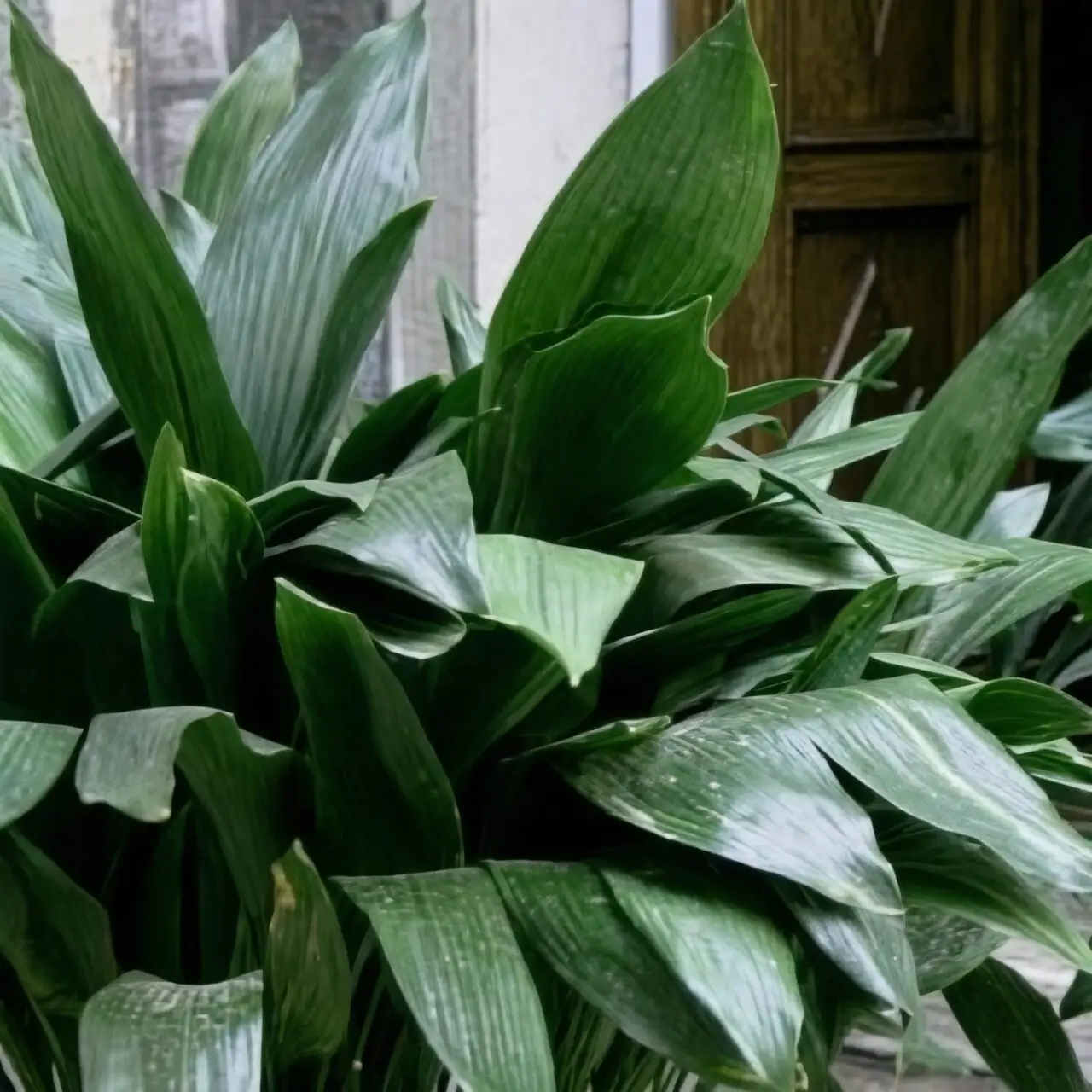
Step into a shady corner and you might find it: a quiet fan of deep green leaves, standing as if it has all the time in the world. That’s Aspidistra elatior—the cast-iron plant, the bar-room plant, the unflappable housemate whose very presence has inspired a language of endurance, purity, and steadfast grace.
The flower language of Aspidistra: endurance, purity, steadfast grace
Endurance
Aspidistra earned its “cast-iron” moniker the honest way. It thrives where many plants fade—dim hallways, low-light rooms, and forgetful watering routines. Clump-forming and evergreen, it grows from tough rhizomes and keeps its poise even when conditions are far from perfect. This tenacity is the root of its symbolic “endurance.”
Purity
Aspidistra’s glossy, clean-lined leaves and its historic role in Japanese food culture (more on that below) link it to ideas of cleanliness and thoughtful order. Its flowers—small, brownish-purple, and nestled right at soil level—are so modest they’re often missed, a quiet gesture of restraint and simplicity that deepens its association with “purity.”
Steadfast grace
There’s an understated elegance to its long, leathery leaves and slow, reliable growth. Aspidistra isn’t showy; it’s serene. That dependable, unhurried beauty conveys “steadfast grace.”
Where these meanings come from
Life in the shade
Native to Japan (especially the Ryukyu Islands) and Taiwan, Aspidistra elatior naturally inhabits shaded understories. Indoors, it typically reaches about 60 × 60 cm (24 × 24 in), forming tidy clumps. Its small, ground-level, brownish-purple flowers appear from late winter to spring (sporadically inside). Surviving—and looking good—in low light is its superpower, and the source of its reputation for resilience.
Victorian “respectability”
In the late 19th and early 20th centuries, Aspidistra was the darling of smoky parlors and pubs—hence the nickname “bar-room plant.” It withstood gaslight, soot, drafts, and neglect, becoming a badge of respectable domesticity. When a plant keeps thriving in such unglamorous settings, it naturally comes to symbolize endurance and solid, reliable values.
Japan’s haran: cleanliness, courtesy, and care
In Japan, broad Aspidistra leaves are known as haran (or baran) and have long been used to line and partition bento and sushi trays. The leaves help keep foods separate and tidy—originally for practical hygiene and aesthetics—while signaling care for the diner’s experience. In this context, Aspidistra speaks a language of purity, order, and thoughtfulness. Even today, the iconic green “baran” dividers in lunch boxes echo the shape and spirit of real Aspidistra leaves.
Origins and identity at a glance
- Scientific name: Aspidistra elatior (family Asparagaceae)
- Common names: Cast-iron plant, Aspidistra, Bar-room plant; Chinese name: 一叶兰
- Native range: Japan (notably the Ryukyu Islands) and Taiwan
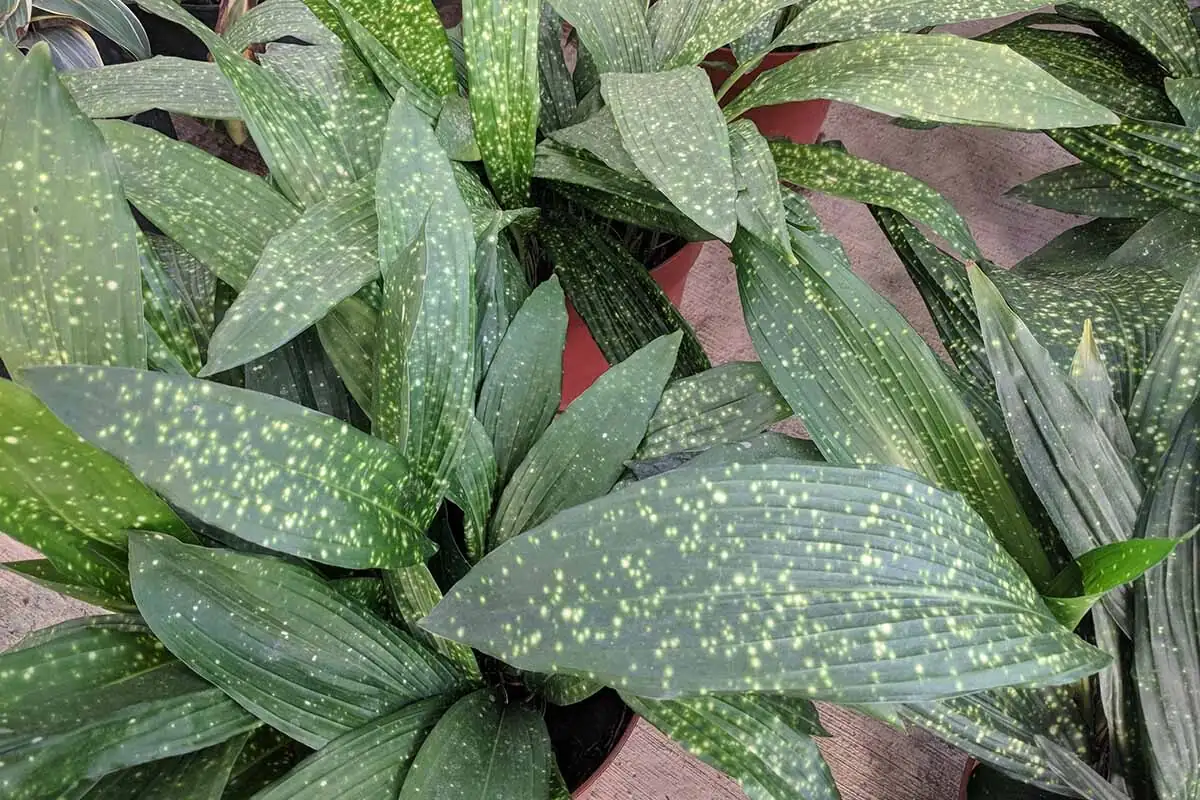
- Look and habit: Clump-forming evergreen with long, leathery, arching leaves; classic deep green or with creamy stripes/speckling in select cultivars
- Size: About 60 × 60 cm (24 × 24 in) indoors
- Flowers: Small, bell-shaped, brownish-purple, right at soil level; easy to miss
- Bloom time: Late winter to spring (indoors, often sporadic)
Feng Shui: a calm anchor for shaded spaces
Aspidistra is a natural stabilizer—visually and energetically. In Feng Shui–inspired interiors:
- Place it where steadiness is needed: entryways, halls, and low-light corners benefit from its grounding presence.
- Favor gentle lines: its smooth, arching leaves cultivate a hospitable, yin-softened calm.
- Keep it healthy to keep the “qi” fresh: bright, indirect light or shade is ideal; avoid harsh midday sun and soggy soil.
- Consider odd-numbered groupings: trios of plants create movement and balance without visual clutter.
Think of Aspidistra as a quiet guardian that refreshes dim nooks without demanding attention.
Gift-giving: when Aspidistra says it best
Choose the cast-iron plant when you want to send a message that lasts.
- Housewarming or new job: “May your new chapter be steady and successful.”
- Encouragement and recovery: “I believe in your strength—one calm day at a time.”
- Thank-you to mentors and caregivers: “For your reliable grace under pressure.”
- Pet-friendly households: Commonly regarded as non-toxic to cats, dogs, and people—peace of mind included.
- Minimalist, low-maintenance lifestyles: Elegant foliage, easy care, and a long lifespan fit right in.
Gift note ideas:
- “For the shade and the sunshine—may you thrive through both.”
- “Steadfast grace for your steadfast heart.”
- “Clean lines, calm days, and the quiet strength to carry on.”
Styling and care that reinforce the message
To keep the symbolism alive, keep the plant content—calm, clean, and consistent.
- Light: Partial to full shade; bright, indirect light is welcome, but avoid strong direct sun.
- Water: Let the surface of the mix dry before watering; reduce in winter. Never leave it sitting in water.
- Soil: Loose, well-draining potting mix (a 1:1 blend of standard potting soil and multi-purpose mix; add perlite if needed).
- Temperature: Comfortable in cool to moderate rooms (about 5–20°C / 41–68°F). Protect from hard frost.
- Humidity: Adapts to low-to-average indoor humidity—no misting routine required.
- Feeding: Monthly at half-strength from spring through late summer.
- Potting: A 12.5–20 cm (5–8 in) pot is usually plenty; repot every 2–3 years, just one size up.
- Grooming: Remove yellowing or damaged leaves cleanly at the base for a perpetually “tidy” look.
- Propagation: Divide rhizome clumps during repotting; plant each section with roots attached.
- Pests: Generally trouble-free. In dry homes, peek for scale, mealybugs, or spider mites. Avoid waterlogged soil to prevent root rot.
Pro tip for presentation: Slip a single variegated Aspidistra among classic deep-green plants to suggest “purity within endurance”—that pale streaking reads like morning light on shade leaves.
A tiny, secret flower—and what it means
Aspidistra’s blossoms hide at the soil line, modest and earth-toned, appearing when they please from late winter into spring. Because they’re easy to miss, the plant’s “flower language” tilts toward inward virtues: resilience, discretion, and self-contained grace. You don’t need attention to be beautiful; sometimes it’s enough to endure—and to do it elegantly.
Cultural echoes, then and now
- Victorian and early 20th-century interiors embraced Aspidistra for its survival skills in inhospitable rooms, cementing its link to respectability and grit.
- In Japan, its leaves (haran) remain icons of cleanliness and care in culinary presentation, and the plant itself appears in traditional arts and shaded gardens.
- Indoors worldwide today, Aspidistra is having a quiet renaissance: designers love its sculptural leaves for dim foyers, moody bedrooms, and refined restaurant corners; collectors seek creamy-striped or speckled cultivars for subtle contrast.
Say it with Aspidistra
When you offer Aspidistra elatior, you’re offering a promise: this living gift won’t quit on you. It carries the tidy purity of a bento divider, the steady manners of a Victorian parlor survivor, and the calm of a leaf poised in permanent shade. Endurance, purity, steadfast grace—spoken fluently by a plant that thrives where life is gentlest and most dim.