

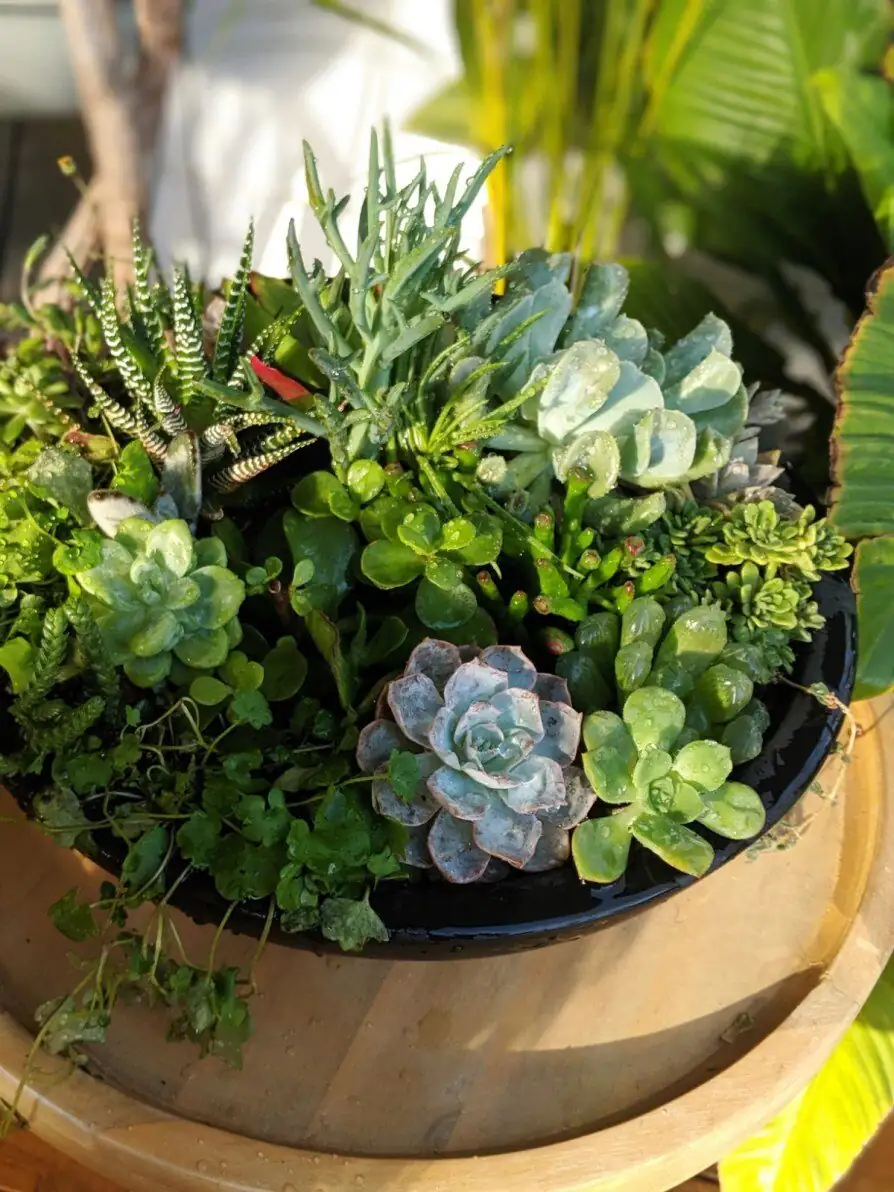
Think of Bear’s Paw Succulent as the teddy bear of your sunny bowl—chubby, fuzzy, and impossibly cute, with little red “claws” when light is just right. Now give that star a cast of sun-loving, drought-tolerant friends and you’ve got a living sculpture that stays neat with almost no fuss. Here’s how to design a breezy, low-maintenance bowl that keeps those “paws” dry, happy, and huggably plush.
Meet the star: Bear’s Paw Succulent (Cotyledon tomentosa)
- Look and feel: Plump, paw-shaped grey‑green leaves with soft velvet hairs; tips often blush red in strong light.
- Habit and size: A compact, branching mini‑subshrub. In containers it commonly stays 10–20 cm (4–8 in) tall and 10–30 cm (4–12 in) wide when kept bright and airy; older plants can reach 20–50 cm (8–20 in).
- Light preferences: Bright, with several hours of sun—morning sun plus bright indirect light later is ideal. Protect from harsh midday/afternoon scorch in hot climates, and acclimate to stronger sun gradually.
- Personality: Wonderfully drought‑tolerant and easy from cuttings, but sensitive to overwatering, soggy soil, and stale air. Keep the leaves dry.
- Origins and hardiness: Southern Africa; not frost hardy. Best outdoors year‑round only in warm regions (around USDA 10–11). Indoors, a bright east or south window with airflow is perfect.
The bowl concept: sun, grit, and a gentle breeze
- Sun and airflow: Place where it gets morning sun and moving air (a breezy balcony, a bright sill with a cracked window, or a desk fan on low).
- Soil: Very free‑draining mix—roughly 1:1 organic to mineral grit (coarse sand, pumice, perlite, or small gravel). Always use a pot with drainage holes.
- Watering vibe: “Soak and dry.” Water thoroughly, then let the mix dry well. Keep extra dry in winter and during extreme summer heat.
What you’ll need
- A low, wide bowl (25–30 cm / 10–12 in diameter) with drainage holes; unglazed clay helps airflow.
- Mesh or a shard to cover the holes (no “drainage layer”—use a uniform gritty mix).
- Gritty mix ingredients: quality cactus/succulent mix cut 1:1 with pumice/perlite/coarse sand.
- Top-dress: 3–6 mm (1/8–1/4 in) gravel, pumice, or granite chicken grit.
- A squeeze bottle/turkey baster/narrow-spout watering can to target soil—not leaves.
Design recipe: one cuddly focal point, three textural foils
- Focal (1): Cotyledon tomentosa (Bear’s Paw)
- Fillers (2–3): Low, sun‑tolerant Sedum for sparkle and seasonal color accents
- Try Sedum rupestre ‘Angelina’ (chartreuse), S. reflexum ‘Blue Spruce’ (blue‑green), or S. spurium cultivars (pink/red seasonal tones).
- Miniature structure (2–3): Crassula micro‑forms for petite, architectural rhythm
- Crassula rupestris ‘Tom Thumb’ (tiny stacked leaves), Crassula perforata ‘Little Jade Necklace’, Crassula congesta subsp. laticephala (compact, sunny form).
- Punctuations (1–2): Dwarf Aloe to add bold geometry without overpowering
- Aloe rauhii ‘Snowflake’, Aloe ‘Pepe’, or a small Aloe juvenna pup.
This mix thrives in the same gritty soil, low watering cadence, and bright morning sun that Bear’s Paw loves—so everyone grows on the same schedule.
Spacing that keeps “paws” dry
- Give the Bear’s Paw a breathing halo: 5–7 cm (2–3 in) of open space from its leaves to neighbors and the rim for airflow.
- Let leaves never touch: Maintain at least 2–3 cm (about an inch) of leaf‑to‑leaf gap among companions to prevent trapped moisture.
- Seat the crown high: Plant Cotyledon with its stem base slightly above the final gravel line so fuzzy leaves don’t rest on substrate.
- Add a grit collar: After planting, lay a 1–2 cm (0.4–0.8 in) ring of plain pumice or gravel around the Bear’s Paw stem base—this acts like a “dry moat” to keep splash off the fuzz.
Step‑by‑step planting
- Pre‑moisten the mix lightly so it’s just barely damp—never wet.
- Fill the bowl and make a slight center mound so the Bear’s Paw sits high.
- Tease roots gently; set the Bear’s Paw first, off‑center for a natural look.
- Tuck in Sedum as living groundcover, then the Crassula minis for tiny “columns,” and finally dwarf Aloe as sculptural accents.
- Top‑dress the entire surface with 3–6 mm mineral gravel. Add the grit collar at the Bear’s Paw’s base.
- Blow off any dust from leaves. Wait 2–3 days before the first thorough watering to let any disturbed roots settle.
Light and placement
- Ideal exposure: 2–4 hours of morning sun, then bright indirect light.
- Acclimate slowly: Increase sun over 1–2 weeks to avoid leaf scorch.
- Heat strategy: In extreme summer heat, give midday shade and extra airflow; keep very dry between waterings.
Watering that preserves the plush
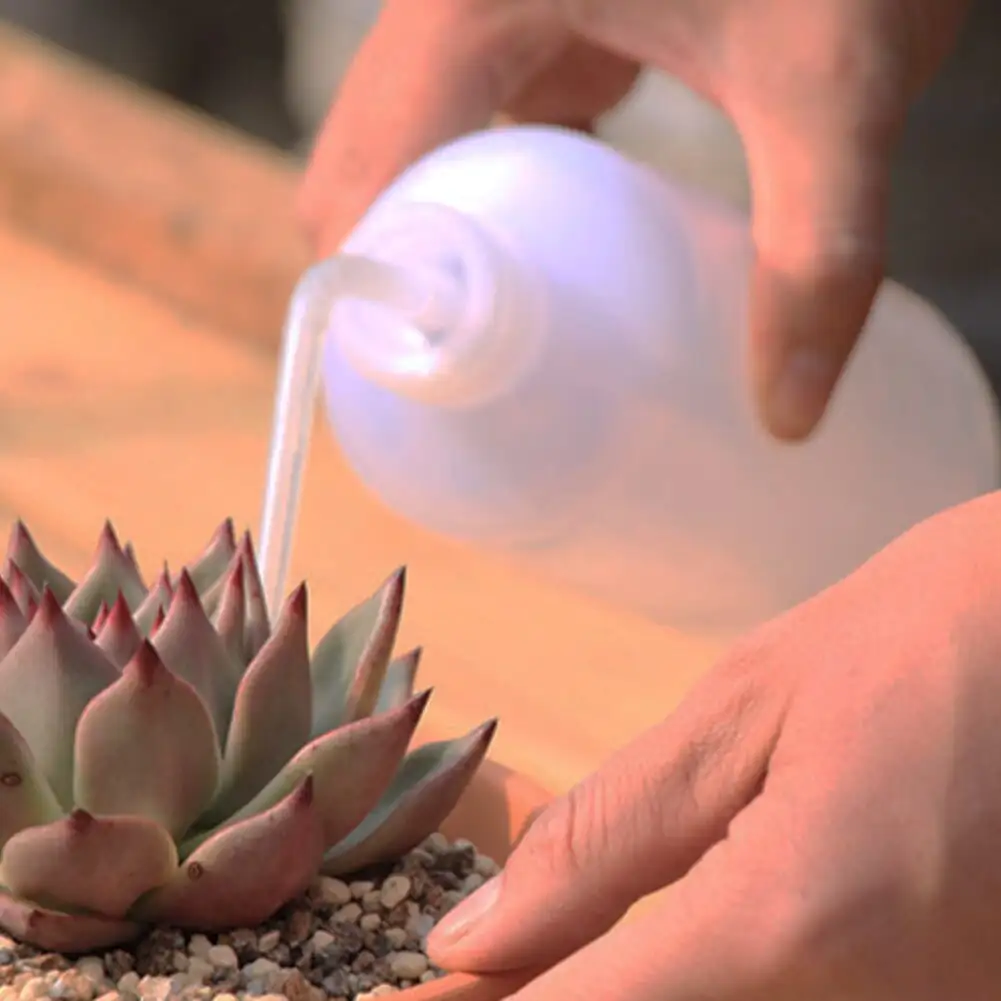
- Soak and dry: Water thoroughly, then wait until the mix dries well. Use a squeeze bottle to aim at the soil, not the leaves.
- Seasonal rhythm:
- Spring/Autumn: Sparing yet steady—enough to prevent severe shriveling, never keeping soil constantly moist.
- Summer heat: Reduce frequency; shield from heavy rain outside.
- Winter: Keep almost dry above 10°C (50°F); water lightly only if leaves wrinkle.
- Never mist: Water sitting on fuzzy leaves can spot and invite rot. Keep foliage dry at all times.
Feeding, grooming, and refreshes
- Fertilizer: During active growth (spring to early autumn), feed monthly at reduced strength with a low‑nitrogen succulent fertilizer; pause in winter.
- Shaping: Pinch tips once the Bear’s Paw reaches ~15 cm (6 in) to encourage branching. Trim Sedum runners to maintain the bowl’s outline.
- Repotting: Refresh mix in spring if it compacts or roots fill the bowl. Many mature Bear’s Paw plants are happiest in a snug 12–15 cm (5–6 in) pot—use that as a size reference per plant in larger groupings.
- Propagation: Tip cuttings root easily. Take 5–7 cm (2–3 in) firm stems, let callus, then set into gritty medium; expect rooting in about 2–3 weeks at 18–22°C (64–72°F).
Troubleshooting quick guide
- Leaves elongating or plant getting leggy: It needs more light. Add morning sun and boost airflow; fertilize lightly at most once a month in active seasons.
- Missing red “claws”: Increase light gradually and keep a bit drier.
- Spots or rot on leaves: Foliage likely got wet or air is stale. Improve airflow, keep leaves dry, remove affected parts, and correct watering/drainage.
- Pests: Watch for mealybugs and whiteflies. Isolate, then treat with insecticidal soap or horticultural oil; repeat as needed.
Temperature and hardiness
- Best growth: 18–24°C (64–75°F).
- Minimum: Keep above 10°C (50°F). Not frost hardy; move indoors before chills.
- Outdoors long‑term: Limited to warm zones around USDA 10–11 in dry, sheltered sites.
Top‑dress tricks that double as design
- Use pale gravel to spotlight red‑tipped “claws,” or charcoal pumice to make greens glow.
- Keep gravel a leaf’s breadth below foliage to avoid wicking moisture onto the fuzz.
- Avoid bark or organic mulches—they hold too much moisture against stems.
Safety note
Toxicity for Cotyledon tomentosa is not consistently documented. Treat it as potentially irritating/toxic if ingested. Keep out of reach of pets and small children, avoid tasting, and wash hands after handling if you’re sap‑sensitive.
A final flourish
Bear’s Paw is often seen as a symbol of comfort, warmth, and playful companionship—fitting for a bowl that feels like a tiny sunlit living room. Give it gritty soil, bright mornings, and a light breeze, then let Sedum, miniature Crassula, and dwarf Aloe play supporting roles. With smart spacing and a clean gravel top‑dress, those plush little “paws” will stay dry—and irresistibly adorable.