

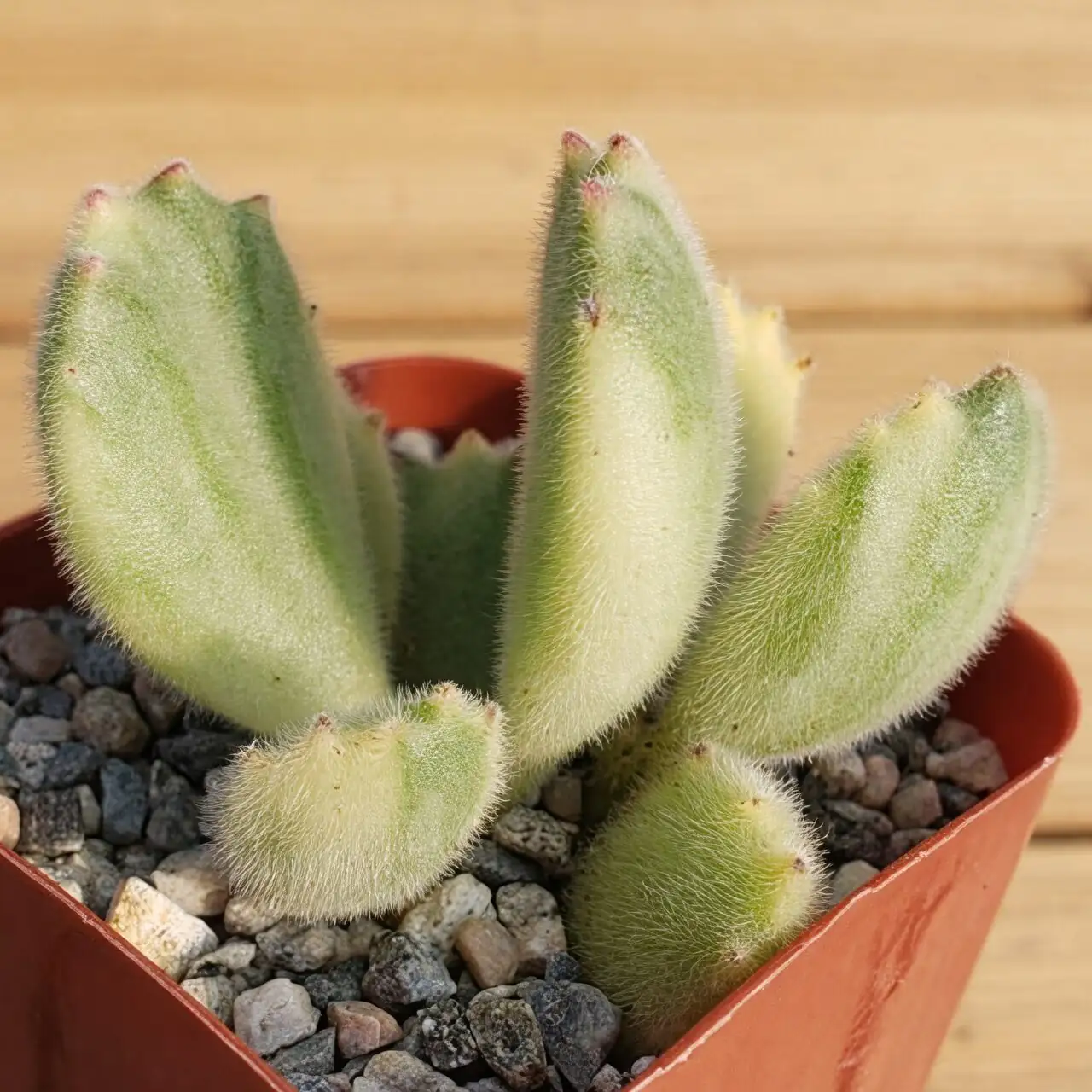
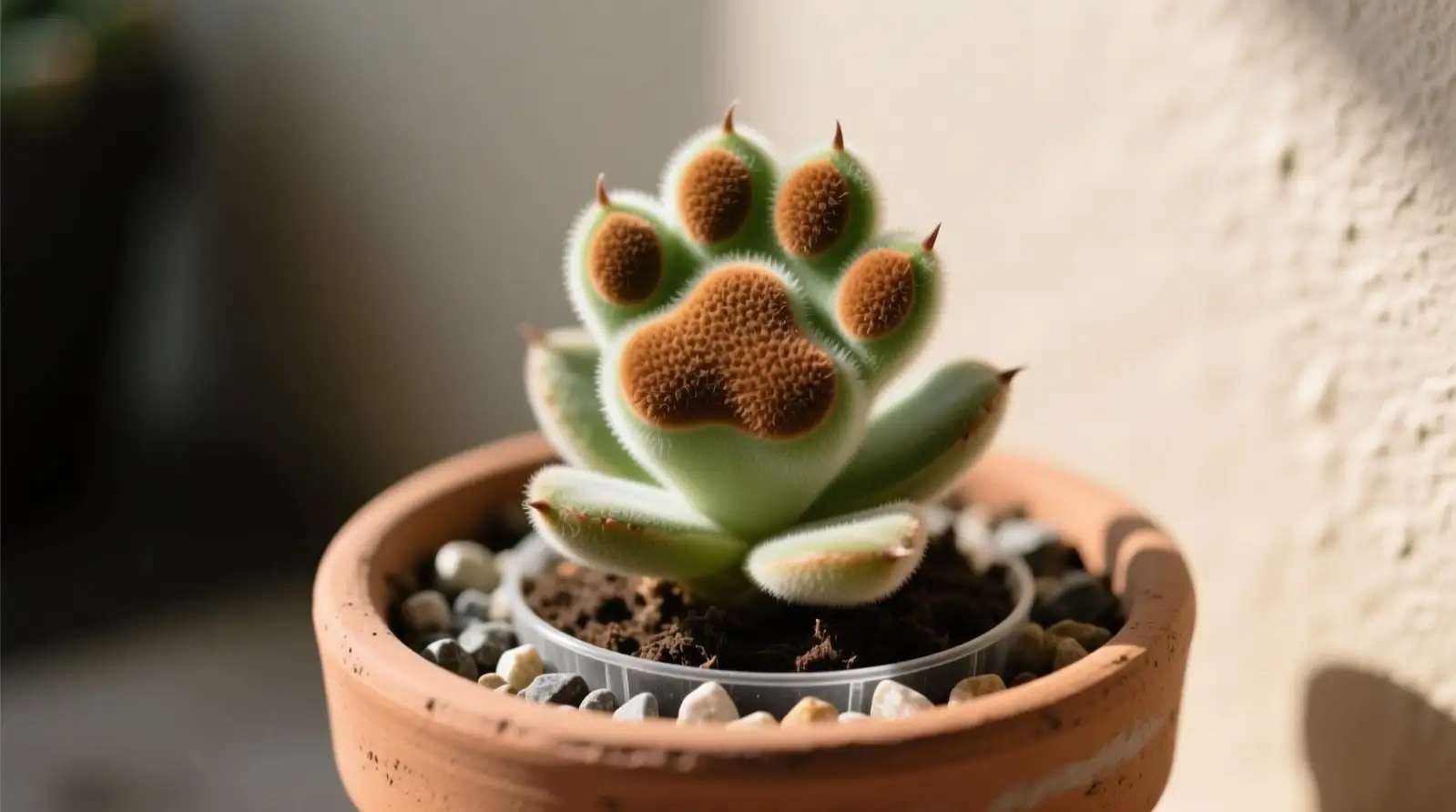
Imagine a tiny bear paw dipped in velvet and outlined with cherry-red nail polish—that’s Cotyledon tomentosa, the Bear’s Paw Succulent, showing off. Those soft, plush leaves aren’t just cute; they’re high-performance gear built for sun, drought, and drama. Let’s peel back the science behind the fuzz (trichomes), the paint (anthocyanins), and the conditions that bring out those famous red “claws”—and bust a few myths along the way.
Meet the Bear’s Paw (Cotyledon tomentosa)
- Family: Crassulaceae (the succulent crowd)
- Origin: Southern Africa, especially South Africa; rocky, fast-draining habitats
- Look: Chubby, grey-green “paw-shaped” leaves with little notches—often blushing red at the tips in strong light
- Size in pots: Commonly 10–20 cm (4–8 in) tall and 10–30 cm (4–12 in) wide when compact; older plants can reach 20–50 cm (8–20 in)
- Growth habit: Compact, branching subshrub; will stretch and get lanky in low light
- Vibe: Drought-tolerant, sun-loving, and allergic to soggy soil and stale air
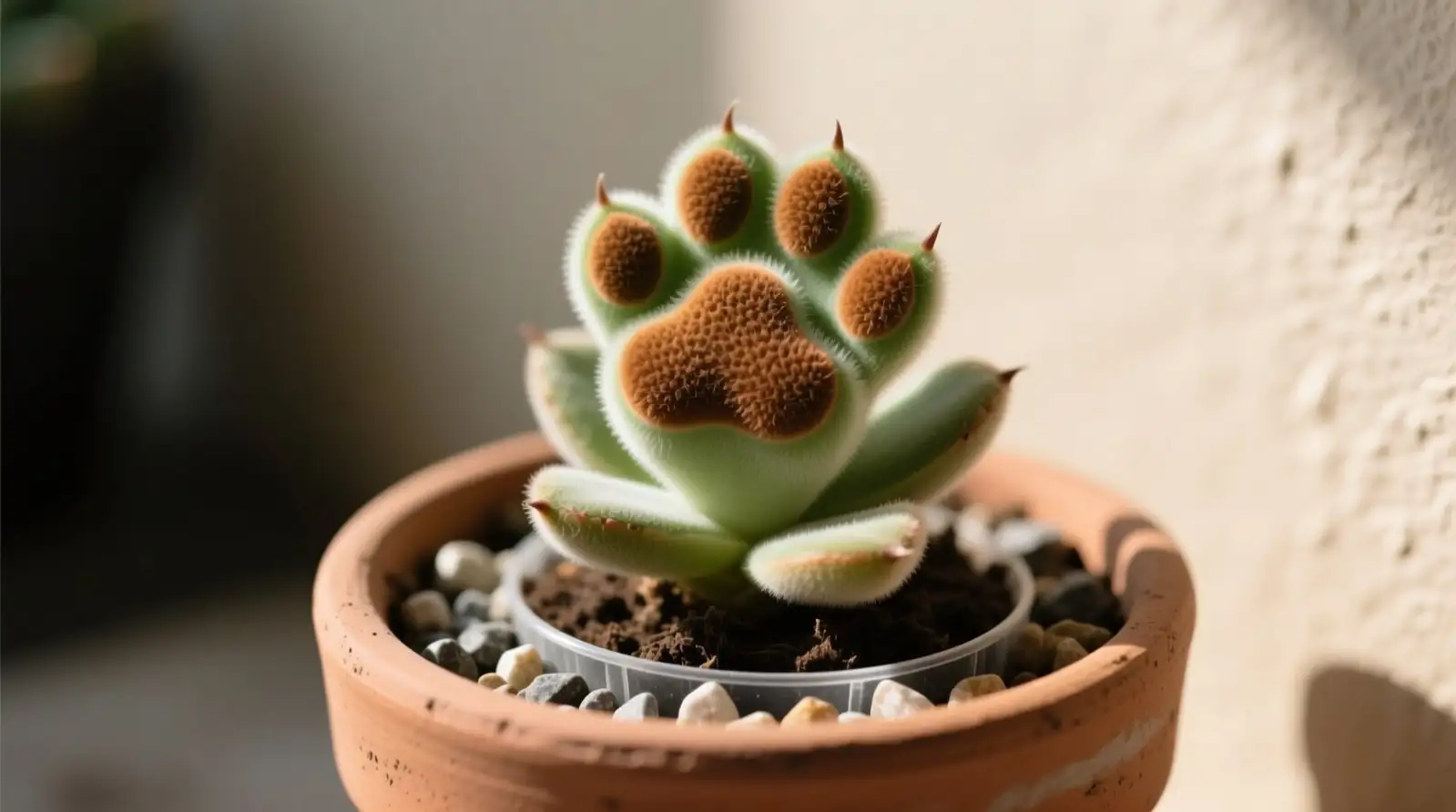
The Velvet Explained: Trichomes 101
Run a fingertip along a leaf and you’ll feel a fine, velvety nap. Those are trichomes—tiny hairs with big jobs:
- Mini sun umbrellas: They scatter and reflect intense light, reducing leaf temperature and sunburn risk.
- Anti-evaporation jackets: By slowing airflow across the leaf surface, they curb water loss.
- Desert camouflage: A softly gray, matte finish reduces glare in bright habitats.
Even the species name “tomentosa” nods to this fuzz—tomentum means a woolly covering. It’s not just adorable; it’s survival tech.
The Red “Claws”: Anthocyanins as Sunscreen and Style
The crimson edging on the leaf tips isn’t paint; it’s anthocyanin pigment—a multitasker that:
- Acts like antioxidant sunscreen, buffering excess light and UV
- Shows up most on exposed tips/edges (the “claws”), where light hits hardest
- Deepens with the right mix of light, temperature, and dryness
Think of anthocyanins as your plant’s mood ring: brighter light, cooler nights, and slightly drier soil often dial up the color.
Your Color Recipe: How to Coax the Red Safely
Want those picture-perfect claws? Follow this gentle, plant-friendly plan.
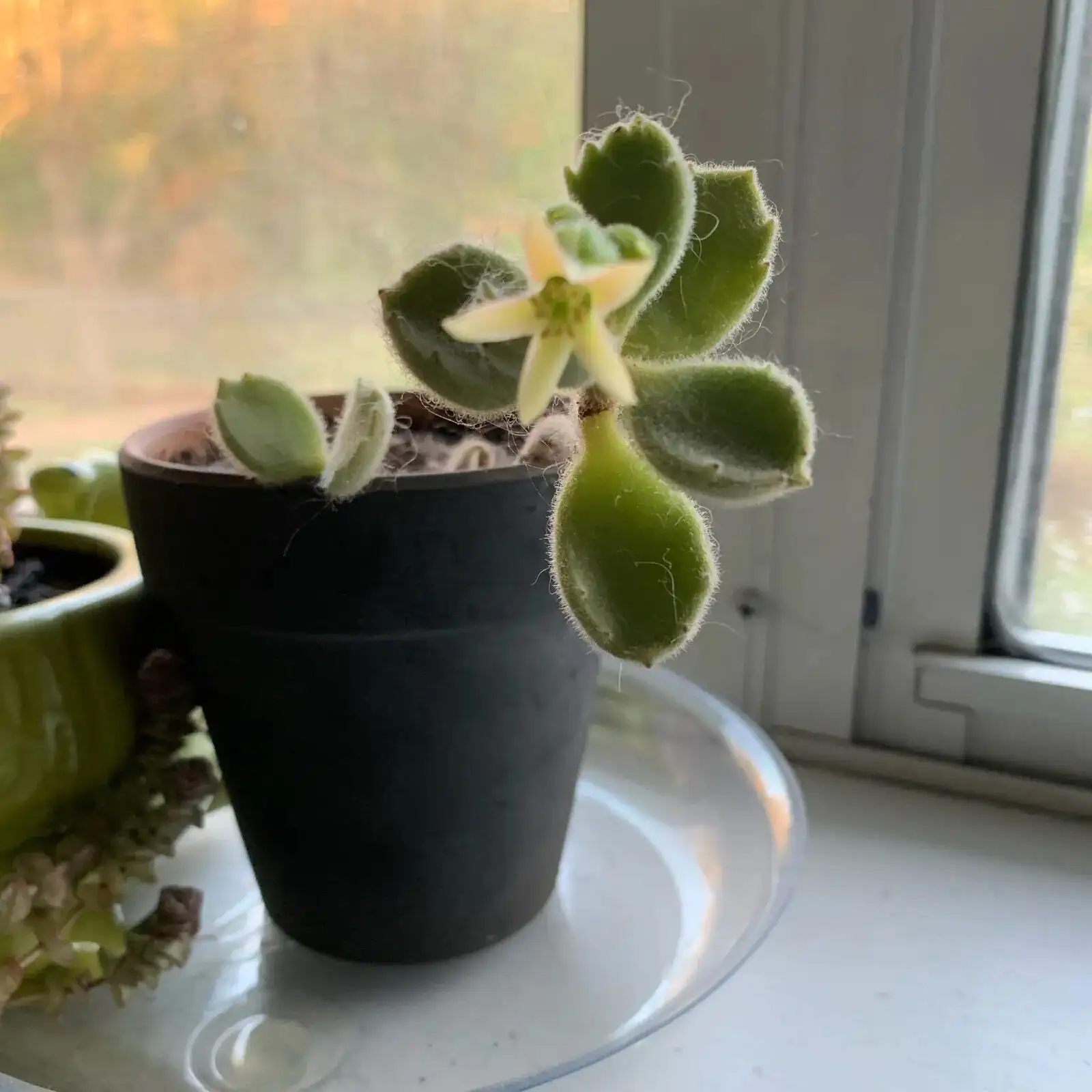
Light (the main lever)
- Aim for: Several hours of gentle sun (morning sun is ideal), then bright indirect light.
- Acclimate: Increase exposure gradually over 2–3 weeks to avoid scorch.
- In hot climates: Add shade during harsh midday/afternoon sun; strong light plus airflow is better than brutal heat.
Temperature
- Best growth: 18–24°C (64–75°F).
- Cooler nights (while staying above 10°C / 50°F) can intensify anthocyanins—especially with strong light.
Dryness (but not deprivation)
- Use the soak-and-dry method: water thoroughly, then let the mix dry well before watering again.
- Keep slightly drier during summer heat and especially in winter rest.
- A modest “dry bias” brings color; chronic thirst doesn’t. Leaves should stay plump, not pruney.
Airflow
- Good air movement keeps leaves cool, reduces spotting, and supports healthy pigment production under brighter light.
Feeding
- Light monthly feeding in spring to early autumn with a diluted, low-nitrogen succulent fertilizer.
- Pause in winter or during stress.
Pro tip: Variegated forms color up too, but they’re more sensitive to strong sun—acclimate even slower.
Misting Myths (and Fuzzy-Leaf Folklore)
Let’s retire a common bit of advice: misting the Bear’s Paw.
- Don’t mist the leaves. Water sitting on fuzzy foliage can cause leaf spotting and encourages rot.
- Low humidity is preferred. This is a dryland succulent, not a cloud-forest epiphyte.
- To cool the plant in summer, prioritize airflow, morning sun plus midday shade, and water the soil early in the day—never the leaves.
- If your environment is humid, double down on airflow and extremely well-draining soil.
Bottom line: keep the velvet dry. Water the soil directly.
Everyday Care Cheat Sheet
- Light: Bright light with hours of gentle sun; more light = better shape and color. Shield from intense midday scorch.
- Water: Soak-and-dry. In spring/autumn, water sparingly; in summer heat, reduce and shield from heavy rain; in winter, keep almost dry, watering only if leaves begin to wrinkle.
- Soil: Very free-draining succulent mix—roughly 1:1 potting soil to mineral grit (coarse sand, perlite, pumice).
- Pot: Always with drainage; snug is safer than oversized.
- Temperature: Keep above 10°C (50°F). Not frost hardy; outdoors year-round mainly in USDA Zones 10–11.
- Humidity: Low. Keep foliage dry; good airflow is essential.
- Pruning: Pinch tips around 15 cm (6 in) tall to encourage branching. Cut back if leggy.
- Repotting: Spring, typically yearly or when mix compacts; refresh with gritty medium.
- Placement: Indoors—bright east or south window with airflow. Outdoors (warm seasons)—sunny, sheltered balcony/patio with midday protection.
Bloom Cameo: Bells on Stems
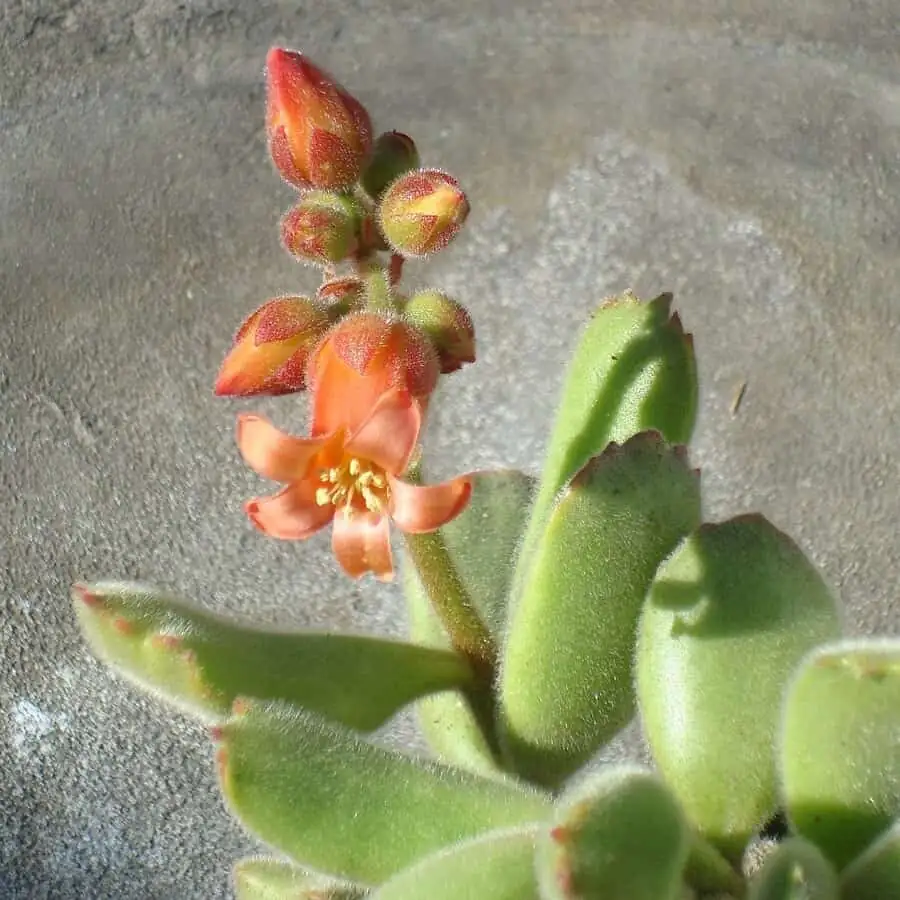
With strong light and a cooler, drier rest, mature plants can send up upright stalks of small tubular, bell-like flowers in warm oranges and corals. Blooming can happen in spring and/or from late summer into autumn, depending on conditions.
Propagation: More Paws, Please
- Best method: Stem cuttings in spring or autumn.
- How-to:
- Take firm tip cuttings 5–7 cm (2–3 in) long.
- Let cut ends callus.
- Insert into a gritty medium; keep warm and bright (18–22°C / 64–72°F).
- Rooting typically takes 14–21 days.
- Leaf propagation is possible but slower and less predictable.
Quick Troubleshooter
- Stretched, leggy growth: It needs more light. Acclimate to brighter conditions; keep on the dry side and feed lightly only in active growth.
- No red tips: Increase gentle sun, ensure good airflow, keep a slight dry bias, and let nights run a bit cooler (above 10°C / 50°F).
- Soft or mushy leaves, black patches, sour smell: Likely overwatering/poor drainage. Unpot, inspect roots, trim rot, repot into a drier, grittier mix, and adjust watering.
Pests, Diseases, and Safety
- Pests: Watch for mealybugs and whiteflies. Isolate and treat with insecticidal soap or horticultural oil; repeat as needed.
- Diseases: Root rot (wet soil) and leaf spot/rust (humid, stagnant air). Keep foliage dry, improve airflow, and correct watering.
- Toxicity: Not consistently documented. Treat as potentially irritating/toxic if ingested; keep away from pets and small children and wash hands after handling.
Fun Facts + Symbolism
- The velvet (trichomes) helps the plant shed harsh light and conserve water—nature’s built-in parasol and windbreaker.
- Water on fuzzy leaves can spot the nap—another reason to skip misting and water the soil.
- Variegated Bear’s Paw is slower and often more sun-sensitive than the green type.
- Symbolism: Thanks to its paw-like leaves and huggable look, Bear’s Paw is often embraced as a symbol of comfort, warmth, and playful companionship. This is modern, design-era “plant language,” born from how it feels to live with the plant—less an ancient code and more a smile in a pot.
Buying and First-Week Game Plan
- Choose: A compact, well-branched plant with plump, evenly fuzzy leaves; avoid soft spots, pests, lanky stems, and sour-smelling soil.
- Settle-in: Bright light with airflow; water only after the mix dries well. In extreme summer heat, provide midday shade; in winter, keep it very bright and above 10°C (50°F).
The takeaway? Treat your Bear’s Paw like a tiny desert traveler in a deluxe lounge: bright seats by the window, breezy air, a firm “no” to damp blankets, and the occasional sun-kissed glow-up. Do that, and those red-tipped velvet paws will wave back, happily.