

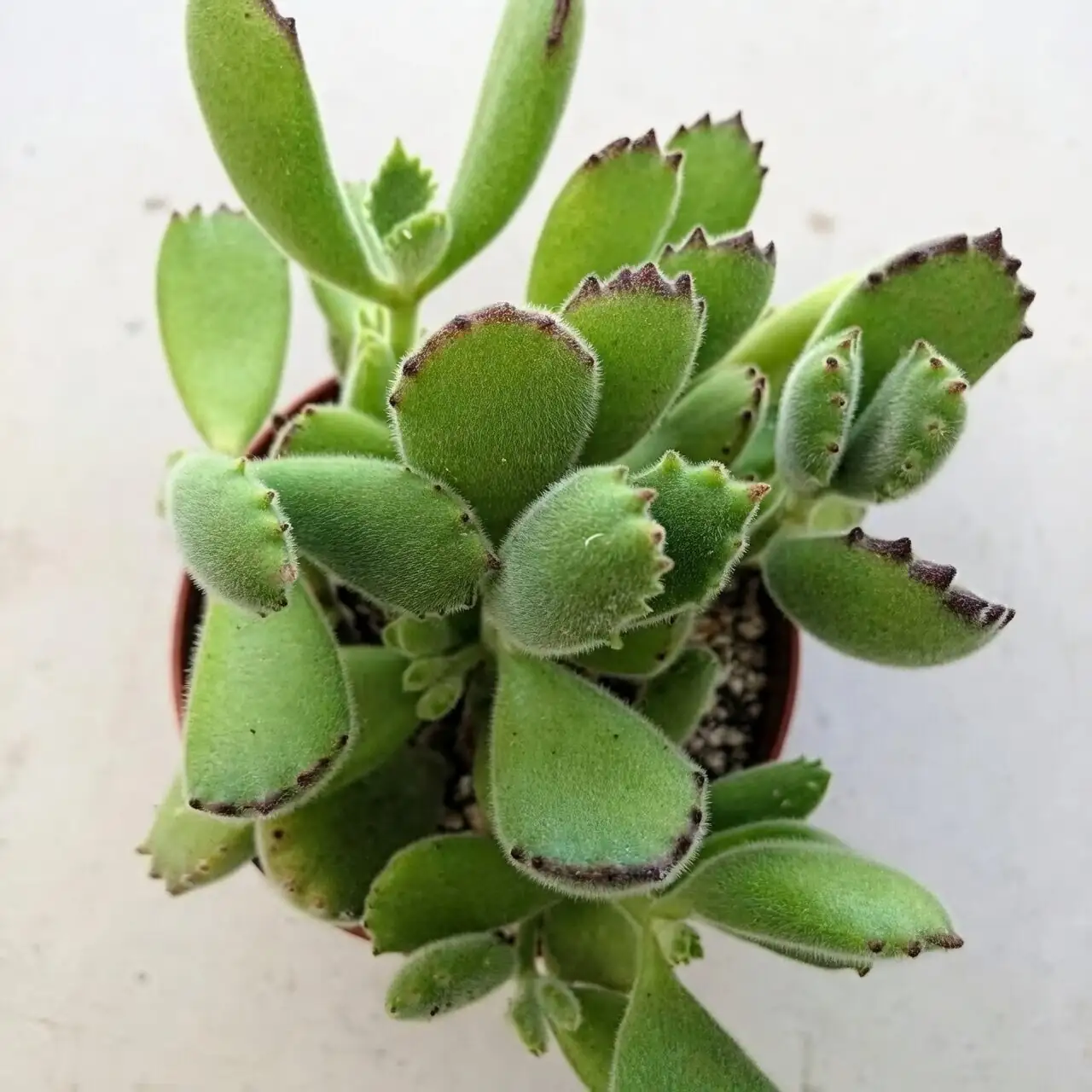
If you’ve ever glanced at a windowsill and thought you saw tiny bear prints, chances are it was Cotyledon tomentosa—the Bear’s Paw succulent—waving its plush, paw-shaped leaves hello. Those little “toes,” often blushed red, aren’t just cute; they’re the living signatures of a shrublet that learned to thrive in Southern Africa’s dry, stony expanses, and then charmed its way into homes around the world.
Where the “paws” first padded: Southern Africa’s drylands
In its homeland of Southern Africa (especially South Africa), Bear’s Paw sinks its roots into rocky, fast-draining terrain—quartz plains and stony slopes where rain is rare, winds are real, and sunshine is the currency of survival. This arid, airy upbringing forged a plant that:
- Stores water in chubby, oval-to-oblong leaves.
- Stays compact and branching, forming a neat, miniature subshrub.
- Loves bright conditions but sidesteps punishing, stagnant heat.
Out there, excellent drainage isn’t optional—it’s life or death. That’s why, on a balcony or windowsill, the plant suddenly “makes sense” when you give it gritty soil, bright light, and a chance to dry between drinks.
The fuzz that won: why the leaves are velvety
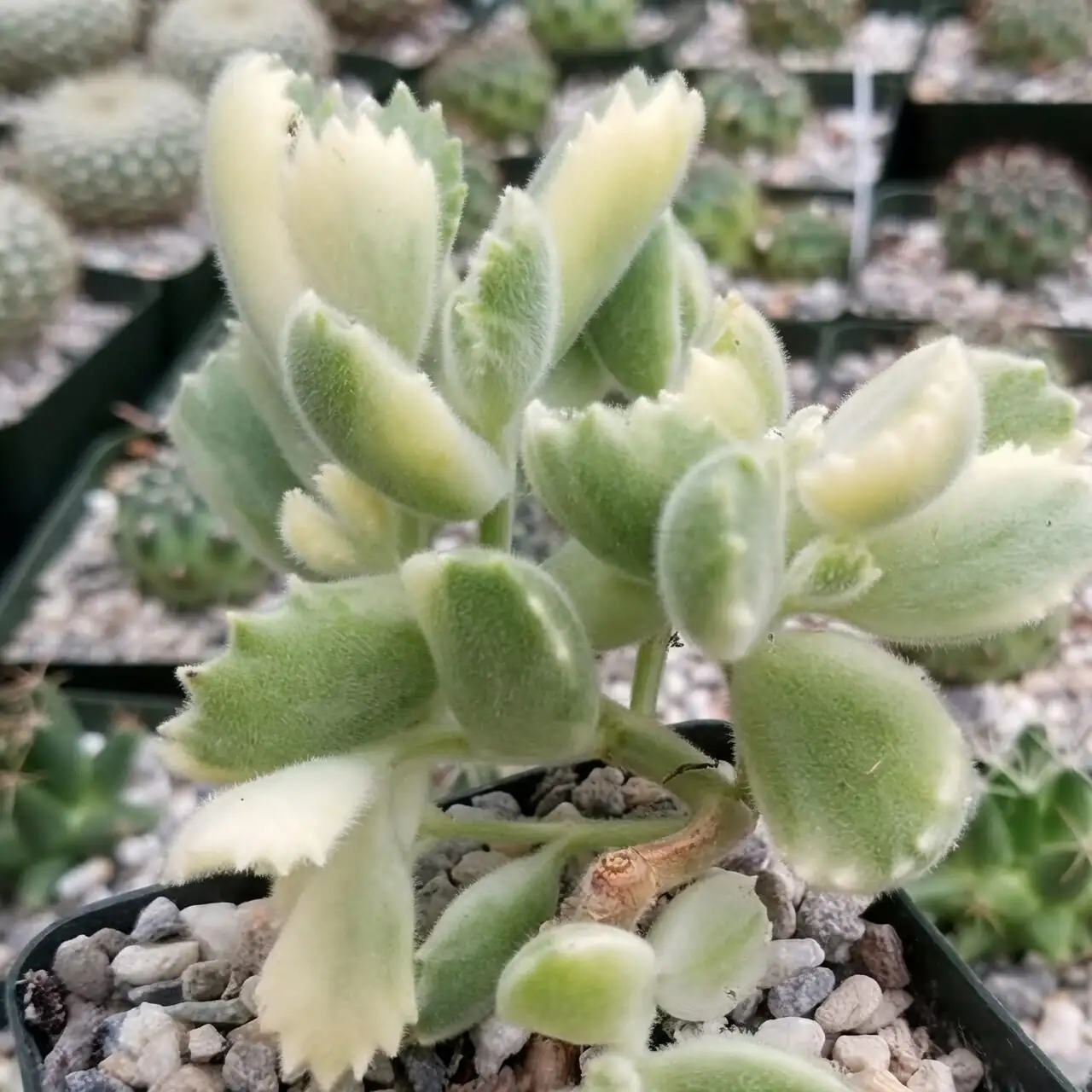
Those silvery hairs are more than adorable. They’re armor—an elegant evolutionary toolkit called tomentum.
- Tiny hairs trap a cushion of still air, slowing water loss.
- They scatter and soften intense light, acting like a miniature sun-shield.
- They help the leaves shed harsh heat, keeping tissues cooler.
- Bonus: they make every touch feel like a baby animal’s paw.
In bright light, the “toes” (leaf notches) often blush red—protective pigments that act like plant sunscreen. That’s how you get the classic “claws.”

Nights are for breathing: CAM 101 (the Bear’s Paw survival script)
Bear’s Paw runs on Crassulacean Acid Metabolism (CAM), a drought-smart strategy common in succulents:
- Night: Stomata open when it’s cooler and drier, taking in CO₂ and storing it as organic acids.
- Day: Stomata close to conserve water; stored CO₂ fuels photosynthesis under bright light.
What this means for you:
- Bright conditions are a must for compact, paw-perfect growth.
- Watering should be deep but infrequent (“soak and dry”)—wet feet undo the whole strategy.
- Stale, humid air and soggy soil are its nemeses; airflow and drainage are your allies.
Blooming on its own clock
Many Bear’s Paws bloom with warm-toned, bell-like flowers perched on upright stems—think orange to coral to orange-red.
- Season: Often spring and/or late summer into autumn, depending on light and whether it enjoyed a brighter, cooler, drier rest.
- Trick to coax blooms: Give strong light all year and a gentle “rest” in winter—cool, very bright, and quite dry.
Not every plant will flower indoors, but the ones that do offer an enchanting, lantern-tipped display (especially after a sunlight-rich season).

From Karoo shrublet to windowsill icon
How did a shrub from stony South African country win fame on global sills?
- The form factor: Naturally compact—commonly 10–20 cm tall and 10–30 cm wide in containers—effortlessly cute in a 12–15 cm pot.
- The face: Paw-shaped leaves with red “claws” are irresistible, a perfect blend of whimsy and botanical oddity.
- The lifestyle fit: Drought-tolerant and easy to propagate from stem cuttings—ideal for urban growers and giftable to friends.
- The collector’s hook: Variegated forms add buttery-cream streaks but grow more slowly and sun-scorch more easily, amping up the “rare and precious” appeal.
Care, translated from the wild
Think bright, breezy, and fast-draining. Here’s the cheat-sheet that mirrors its native logic:
- Light
- Bright light with several hours of sun keeps it compact and encourages red-tipped “claws.”
- Morning sun plus bright indirect light later is ideal. Shield from harsh midday/afternoon scorch in hot climates.
- Low light = leggy, stretched stems that lose their paw-like charm.
- Temperature and air
- Sweet spot: 18–24°C (64–75°F).
- Winter minimum: above 10°C (50°F). Not frost hardy (best outdoors year-round only in about USDA 10–11; some list to 12).
- Loves airflow; dislikes stale, humid pockets.
- Soil and pot
- Very well-draining cactus/succulent mix—aim for a roughly 1:1 blend of potting soil and mineral grit (coarse sand, perlite, pumice).
- Always use a pot with drainage; a snug 12–15 cm (5–6 in) pot suits many mature plants.
- Watering
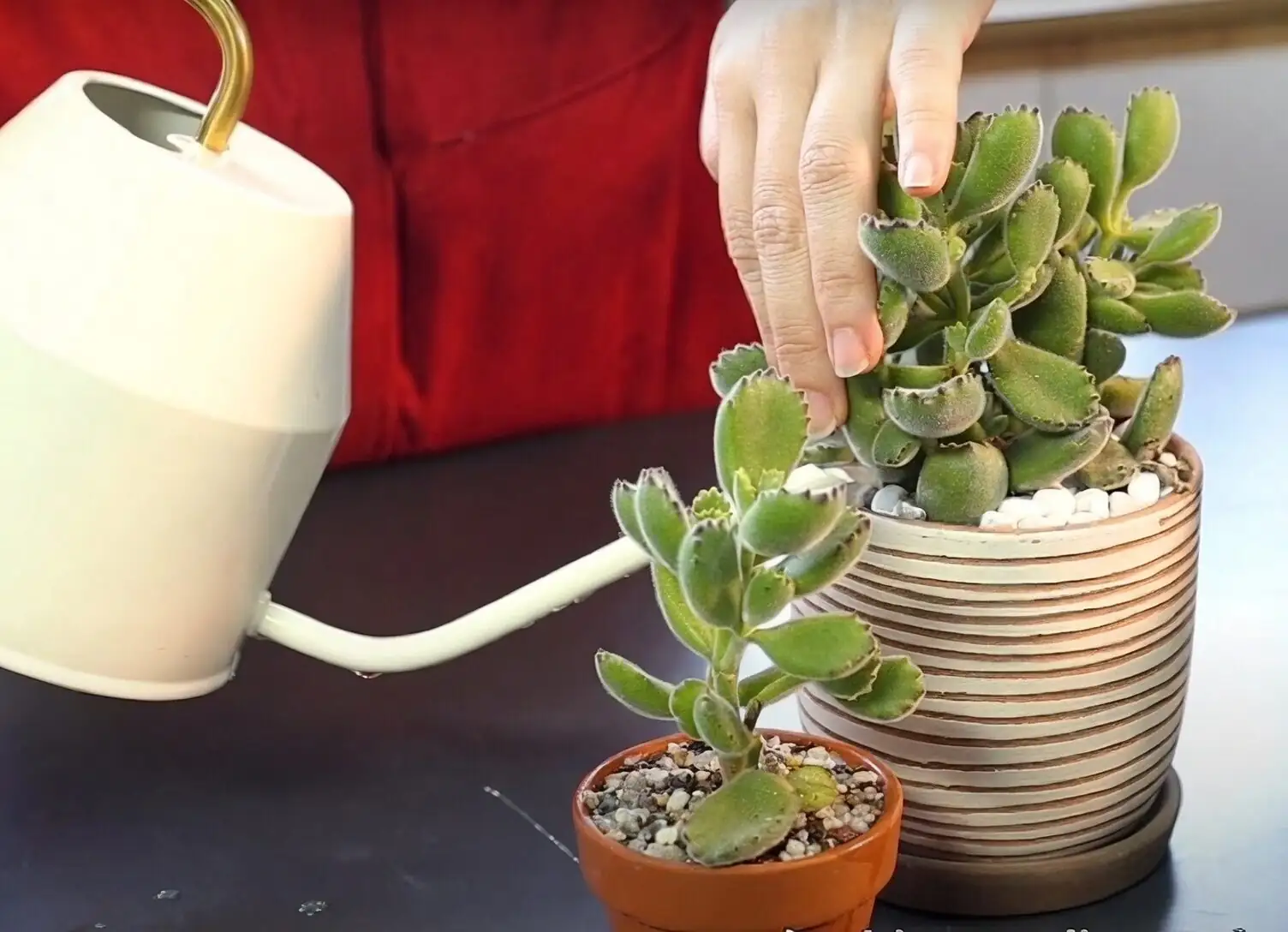
- “Soak and dry”: water thoroughly, then wait until the mix dries well before repeating.
- Spring and autumn: sparing sips to prevent severe wrinkling; never keep constantly moist.
- Summer heat: reduce watering; protect from heavy rain.
- Winter: keep almost dry; water lightly only if leaves begin to wrinkle.
- Important: Avoid misting or wetting the fuzzy leaves—water the soil directly to prevent spotting and rot.
- Feeding
- Light monthly feeding spring through early autumn with a diluted, low-nitrogen succulent fertilizer. Pause in winter.
- Pruning and shaping
- Pinch tips around 15 cm (6 in) tall to encourage branching.
- If it stretches, cut back and restart tighter growth in better light.
- Refresh older plants every 4–5 years from healthy cuttings.
- Propagation
- Stem cuttings are easy: take 5–7 cm (2–3 in) tip cuttings in spring or autumn, let callus, then set in gritty medium.
- Roots typically form in ~2–3 weeks at 18–22°C (64–72°F).
- Leaf cuttings can work but are slower and less reliable.
- Placement
- Indoors: bright east- or south-facing windowsill with airflow.
- Outdoors (warm seasons): sunny, sheltered balcony/patio; protect from long, harsh midday sun and heavy rain.
Choosing a healthy “cub”
When you shop, look for:
- A short, sturdy, well-branched plant with a thick stem and evenly fuzzy, plump leaves.
- No mushy spots, black patches, or falling leaves.
- A clean potting mix without sour or swampy smells (a rot red flag).
- No visible pests such as mealybugs or whiteflies.
Pests, diseases, and what they’re telling you
- Overwatering and poor airflow invite root rot and leaf spots. Let the mix dry, improve drainage, and keep leaves dry.
- Pests: mealybugs and whiteflies are the usual suspects. Isolate, then treat with insecticidal soap or horticultural oil; repeat as needed.
Safety note
Toxicity for Cotyledon tomentosa isn’t consistently documented. Treat it as potentially irritating/toxic if ingested—keep out of reach of pets and small children, and wash hands after handling if you’re sap-sensitive.
Flower language and what it really means
There’s no centuries-old legend behind Bear’s Paw; its modern symbolism springs from its look and how we live with it. Those plush, paw-like leaves make it a natural emblem of:
- Comfort and warmth (a soft companion on the sill)
- Playful friendship (a plant that seems to wave back)
- Cheerful resilience (thriving on light and restraint)
In other words, its “language” is contemporary: an internet-age affection for plants that feel like tiny friends.
Bloom-season quirks, decoded
If yours won’t flower, check the levers nature uses:
- Light: abundant, year-round.
- Rest: bright, cooler, and quite dry in winter.
- Timing: plants may flower in spring and/or from late summer into autumn, shifting with clone and conditions.
- Feeding: light and infrequent—too much nitrogen fuels leaves, not lantern-bells.
Quick size and habit snapshot
- Habit: compact, branching, cylindrical-stemmed subshrub.
- Container size: commonly 10–20 cm (4–8 in) tall and 10–30 cm (4–12 in) wide when kept tight; older plants can reach 20–50 cm (8–20 in) tall.
- Looks best when kept bright, airy, and on the dry side—just like home.
Fast answers to common puzzles
- My Bear’s Paw is stretching. What now?
- It wants more light. Move it brighter (acclimate gradually), water only after the mix dries, and feed lightly at most once a month in active growth.
- How do I get the red “claws”?
- Stronger light and a drier rhythm. Ease into sun exposure to avoid scorch, and keep good airflow.
- Just brought one home—first steps?
- Give it a bright, airy sill. Water only after the medium dries well. Shade from harsh summer midday heat; in winter, keep very bright and above 10°C (50°F).
From quartz-scattered slopes to your favorite sill, Cotyledon tomentosa survives by being selective—about light, about water, about air. Meet it on those terms, and it will reward you with the softest paws in the plant world, and maybe, in time, a handful of glowing bells to prove it.