

Imagine steam curling up from a morning shower, light bouncing softly off tile, and a fern with phoenix-tail fronds catching every glimmer. That’s Pteris cretica—the Chinese Brake Fern—made for bright shade and sultry air. Set it up with moisture-matched companions, layer the soil to the right depths, and let texture do the talking. Here’s how to design living, breathing plant arrangements that thrive where the air is warm and humid.
Meet the star: Pteris cretica in brief
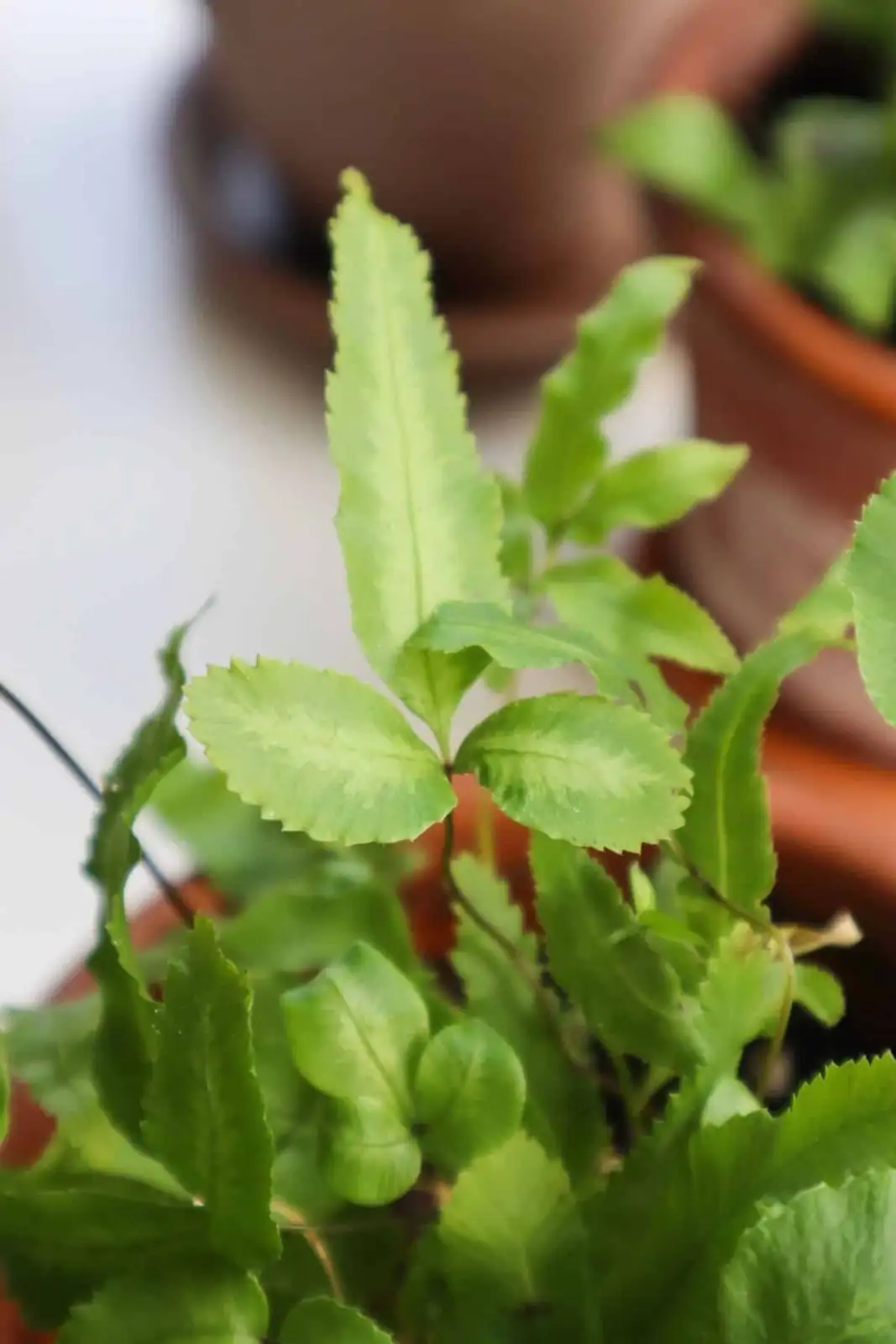
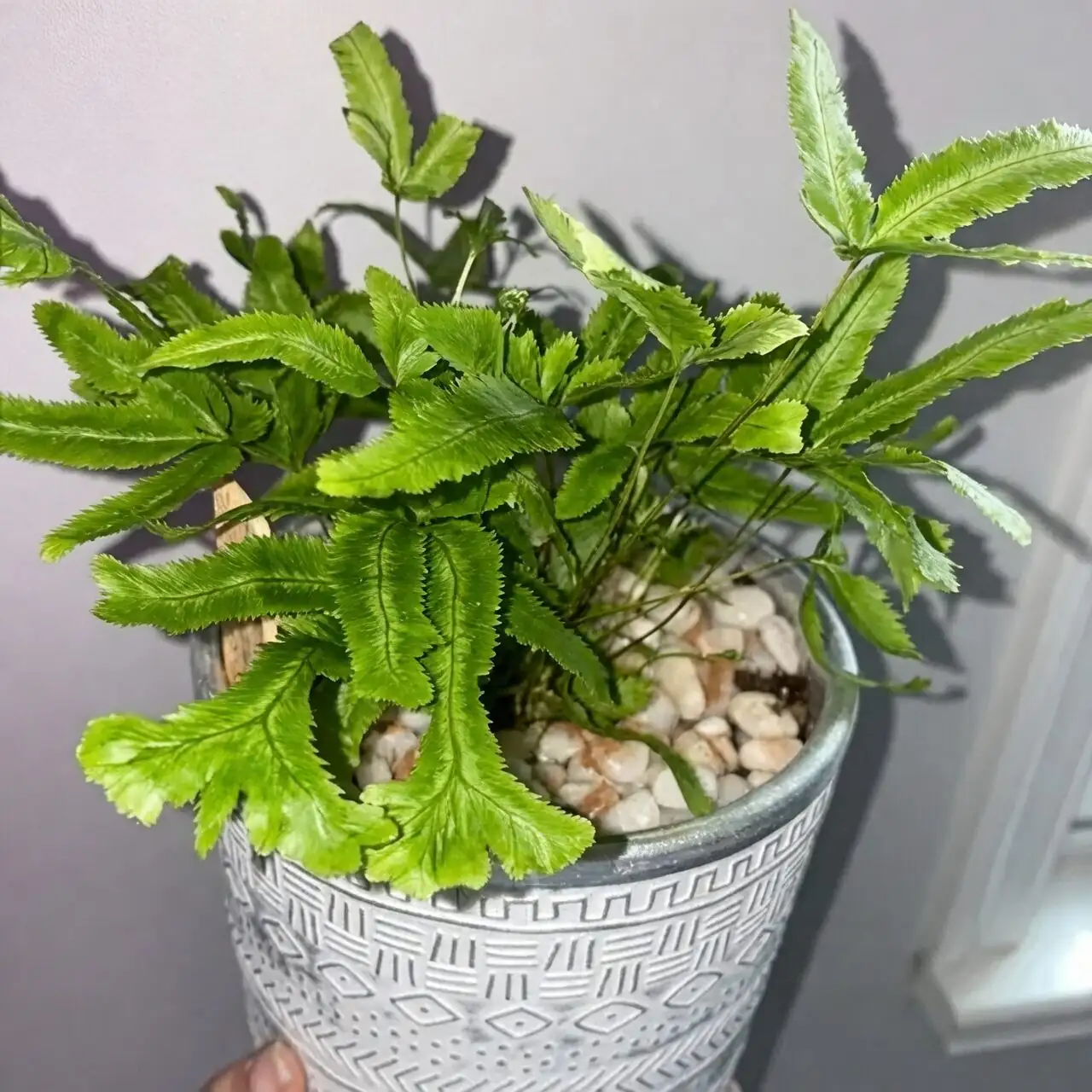
- Look and feel: Arching, feathered fronds with a graceful, tail-like outline—airy enough to read as “lace,” bold enough to anchor a planting.
- Size: Typically 30–60 cm (12–24 in) tall and wide in containers.
- Light: Partial shade to bright, indirect light. It tolerates lower light, but direct sun can scorch.
- Temperature: Best around 12–22°C (54–72°F); keep above 10°C (50°F).
- Humidity: Thrives at 50%+—bathrooms, pebble trays, and humidifiers are your allies.
- Soil: Moisture-retentive yet free-draining. Think peat‑free potting mix + fine bark/orchid mix + perlite.
- A note on style: Variegated selections (such as “silver ribbon” types) keep their crisp contrast best in bright, indirect light.
Why bright shade + high humidity is this fern’s sweet spot
Pteris cretica evolved for filtered light and consistent moisture. Give it steady humidity and even moisture and it responds with fresh fronds and a calm, buoyant silhouette. Starve it of humidity or blast it with hot sun and the tips say “no thanks” by browning.
Textural contrasts that sing
In bright shade, texture is your color wheel. Pair the fern’s fine filigree with leaves that read glossy, quilted, or velvety so the arrangement has depth even in softer light.
Try these companions that enjoy similar humidity and moisture:
- The silk-and-lace duo:
- Fittonia albivenis (nerve plant) — low, quilted, veined leaves; loves even moisture.
- Maranta leuconeura (prayer plant) — satiny patterned paddles; appreciates humidity and gentle light.
- The gloss anchor:
- Asplenium nidus (bird’s-nest fern) — broad, lacquered leaves contrast beautifully with Pteris’s featheriness.
- The woodland carpet:
- Selaginella kraussiana — tiny, ferny, lime-green cushions that keep the soil surface humid.
- Sheet/cushion moss — softens edges and discourages splash-back on crowns.
- The velvet foil:
- Episcia cupreata (flame violet) — plush leaves with coppery sheen; trailing habit cools the composition.
- The textured echo:
- Pilea involucrata (friendship plant) — puckered foliage; enjoys humidity and steady moisture.
- The fern-on-fern chorus (use sparingly for balance):
- Adiantum raddianum (maidenhair fern) — a delicate counterpoint if you can keep humidity high and watering consistent.
- Microsorum musifolium ‘Crocodyllus’ (crocodile fern) — bold, patterned fronds; shallow crown like Pteris.
Tip: Keep leaf shapes varied—lanceolate with rounded, pinnate with entire—to avoid “all fronds, no focus.”
Potting depth is design—and plant health
How deep you set each plant changes both the look and the longevity of your arrangement.
- Pteris cretica
- Crown position: Keep the crown at or just above the soil surface. Never bury where new fronds emerge.
- Container: A wide, moderately deep pot (not tall and skinny) encourages stable, arching fronds.
- Material: Avoid unglazed terracotta if you struggle with moisture—it wicks water away too quickly. Glazed ceramic or plastic maintains even moisture.
- Companion depth cues
- Asplenium nidus: Set high, crown proud and dry.
- Fittonia & Maranta: Slightly lower than Pteris, but not sunken—aim for a gently cupped profile to retain humidity without pooling.
- Selaginella & moss: Very shallow; topdress to hug the surface and create a living mulch.
- Episcia: Shallow to moderate; avoid burying stolons.
A layered planting cross-section (for one mixed bowl)
- Base (drainage insurance): A thin layer of coarse bark or chunky perlite to keep the root zone airy.
- Main mix: Peat‑free potting blend enriched with fine orchid bark and perlite (roughly 2:1:1).
- Moisture “pockets”:
- Standard mix under Pteris and Asplenium.
- Slightly finer, more moisture-retentive pocket (add a bit of coco coir) for Fittonia/Maranta.
- Extra-chunky edge (more bark/perlite) near pot rim to prevent soggy crowns.
- Surface: Moss/selaginella for humidity buffering, leaving a neat ring of open mix around each crown.
Match the thirst: moisture-compatible plant groups
Think of your arrangement as an ensemble that drinks in rhythm.
- Even-moisture lovers (anchor group):
- Pteris cretica, Fittonia, Maranta, Selaginella, Pilea involucrata
- Slightly sturdier sippers (tolerate a touch less frequency but still like humidity):
- Asplenium nidus, Microsorum ‘Crocodyllus’
- High drinkers (advanced pairing; only if you’re consistent):
- Adiantum raddianum
Design trick: If you love a plant with slightly different needs, keep it in its own nursery pot and cache-pot it inside the composition. You get the look together, but each pot gets tailored watering.
Four creative combos for bright shade and humidity
1) The “Bathroom Breeze” bowl
- Container: 28–35 cm wide glazed bowl.
- Plants:
- Center: Pteris cretica (standard green or a ribbon-variegated form)
- Flank: Asplenium nidus for glossy heft
- Front edge: Fittonia in two contrasting vein colors
- Surface: Selaginella kraussiana ‘Aurea’ and patches of sheet moss
- Potting depth:
- Pteris and Asplenium crowns slightly high; Fittonia slightly lower; selaginella skims the surface.
- Why it works: Steam keeps fronds supple; textures bounce off tile light.
2) Shelf-edge cloudforest trough
- Container: Long planter with drainage.
- Plants:
- Repeating rhythm of Pteris cretica clumps
- Episcia threads weaving between clumps
- Pilea involucrata tufts for puckered contrast
- Driftwood piece to lift fronds visually
- Potting depth:
- Keep Pteris crowns level; Episcia shallow, stolons unobstructed; Pilea moderate depth.
- Styling cue: Let Episcia trail slightly over the rim to soften edges.
3) Pebble-tray trio (the “control freak” collection)
- Setup: Three individual pots grouped on one large humidity tray filled with pebbles and water (water line below pot bases).
- Plants:
- Pot A: Pteris cretica
- Pot B: Maranta leuconeura
- Pot C: Fittonia mix
- Why it works: Unified humidity, customized watering. Slide a pot out if it needs a different drink.
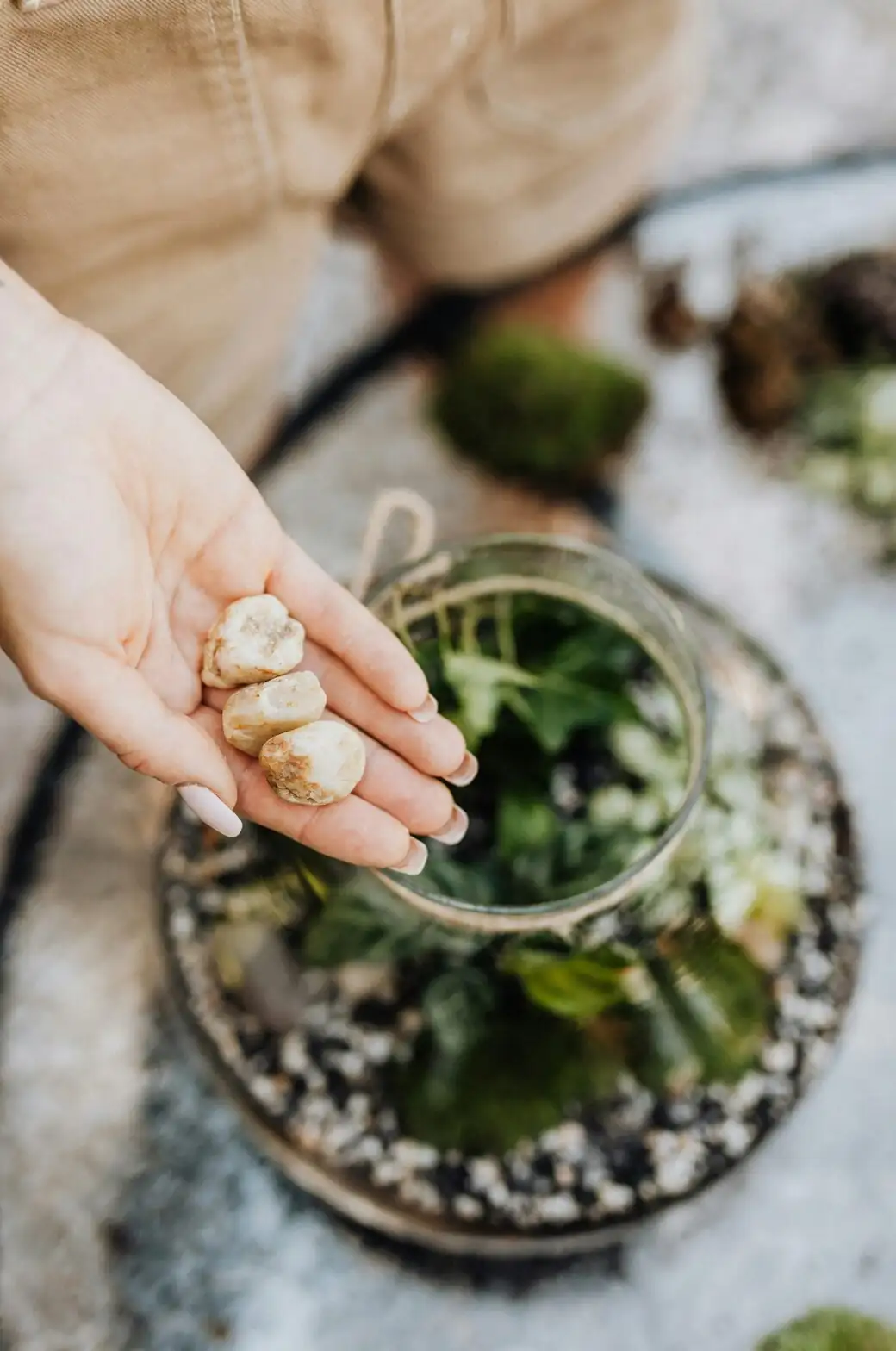
4) Open-top terrarium vignette
- Vessel: Wide, low glass with ample airflow (or a glass dome propped for ventilation).
- Plants:
- Pteris cretica (juvenile)
- Selaginella carpeting
- A sliver of mossy rock
- Substrate: Layered, airy, and never waterlogged. Avoid sealing fully; this fern likes fresh air.
- Visual: A miniature ravine—feathery fronds over a chartreuse floor.
Note for outdoor, frost-free courtyards (USDA 9–11): Tuck Pteris into sheltered shade near rocks or pond edges. Pair with low clumps of mondo grass and mossy stone for a cool, evergreen palette—always protected from direct sun and cold snaps.
Care that keeps the whole composition humming
Light
- Bright, indirect light to partial shade. North or east windows are ideal; set back from south/west exposures.
- Signs of too much sun: Pale, crisped tips. Too little: Stretched, splayed fronds and slowed growth.
Water and humidity
- Water when the top 1–2 cm (0.4–0.8 in) of mix is slightly dry; then water through and drain.
- Keep humidity 50%+:
- Pebble trays or humidity trays
- Regular misting (morning, so fronds dry by night)
- Humidifier in heated rooms
- Avoid waterlogging. Use breathable, chunky mixes and pots with drainage.
Feeding
- Spring–summer: Balanced houseplant fertilizer at 1/4–1/2 strength every 4–6 weeks.
- Autumn–winter: Ease off; never overfeed—fronds can scorch.
Grooming and repotting
- Prune: Snip yellow or damaged fronds at the base; avoid cutting into the crown.
- Repot: Every 1–2 years in spring, moving up just one size and refreshing the mix.
Temperature
- Best at 12–22°C (54–72°F). Keep above 10°C (50°F) for good winter looks.
- Growth can halt below about 5°C (41°F); protect from drafts and chilly glass.
Pests and prevention
- Likely visitors: Scale, mealybugs, spider mites (especially if air is dry). Fungus gnats show up in soggy soils.
- Prevention: Good airflow, evenly moist (not wet) media, occasional gentle rinse of fronds.
- Treatment: Insecticidal soap or horticultural oil; repeat as directed.
Safety
- Generally considered non-toxic to people and pets. Still, discourage nibbling—it can cause mild stomach upset.
Troubleshooting in mixed plantings
- Browning tips: Low humidity, inconsistent moisture, or too much sun. Raise humidity, steady the watering cadence, soften the light.
- Yellowing plus limp soil: Overwatering. Increase drainage, let the top layer recover between waterings, and reduce frequency.
- Fronds collapsing outward: Light too low or crown set too deep. Raise the plant slightly and brighten the exposure.
- Fungus gnats: Let the top layer dry slightly between waterings, improve airflow, and consider a topdress of coarse grit around crowns.
Origin, names, and a note on “flower language”
- Where it hails from: Wild ancestry traces from the Mediterranean region to Western Asia; most plants on offer are cultivated ornamental selections.
- Names to know: Chinese Brake Fern, Cretan Brake, and Ribbon Fern all refer to Pteris cretica; the Chinese name 凤尾蕨 nods to the elegant “phoenix-tail” look.
- Symbolism: Ferns don’t flower, so any “flower language” is modern symbolism rather than floral tradition. Pteris cretica often stands for freshness, resilience, and a soothing green presence—fitting for a plant that restores calm to bright shade corners and bathroom retreats.
Set your Pteris cretica at the right depth, invite companions that sip water at the same pace, and let texture carry the melody. In a bright, humid nook, this phoenix-tail fern doesn’t just live—it composes a garden you can breathe.