

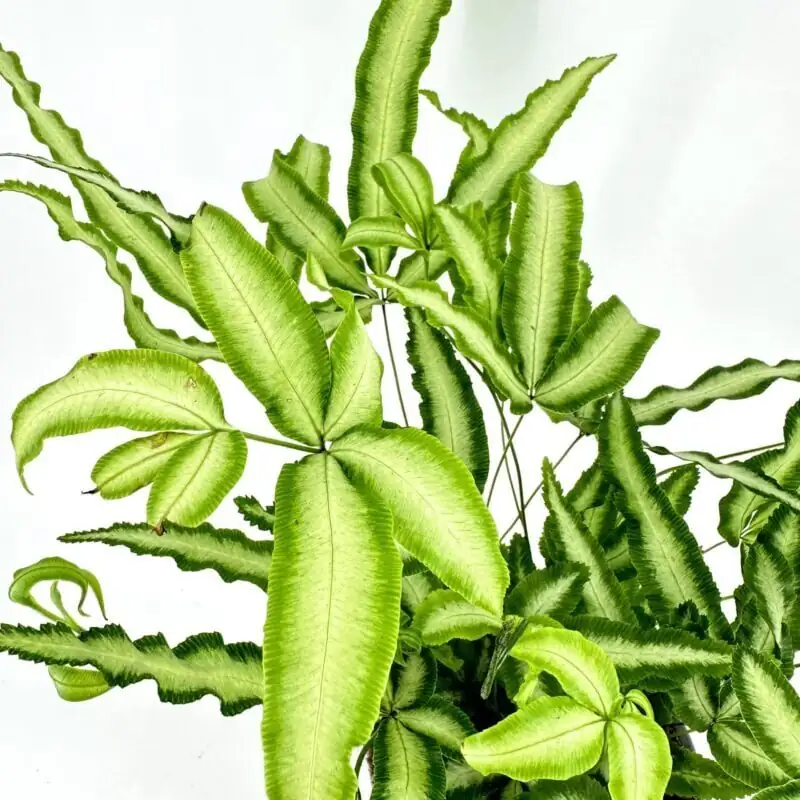
Step close as the fronds unfurl—like green ribbons waking from a dream—and you’ll understand why Pteris cretica is beloved in homes and stories alike. Known in English as Chinese Brake Fern and in Chinese as 凤尾蕨 (“phoenix‑tail fern”), this elegant species brings a hush of forest calm to a windowsill—and a surprisingly rich language of symbolism to the modern home.
Meet Pteris cretica, the “Phoenix‑Tail” Fern
Names and origins
- Scientific name: Pteris cretica (family Pteridaceae)
- Common names: Chinese Brake Fern, Cretan Brake, Ribbon Fern
- Origin: Native from the Mediterranean region to Western Asia; widely grown today as cultivated ornamental forms
- The Chinese name “凤尾蕨” captures its look: fronds shaped like the flowing tail of a phoenix—an image steeped in auspicious lore.
Look and habit
- Habit: Clump‑forming evergreen (or semi‑evergreen) fern with upright‑to‑arching fronds
- Size: Typically 30–60 cm (12–24 in) tall and wide in containers
- Foliage: Feathered, ribbon‑like fronds that read as refined and airy; indoors, foliage can remain attractive through winter if kept above about 10°C (50°F)
- Reproduction: No flowers—this is a fern. Instead, neat lines of sori (spore clusters) form on the undersides of mature fronds during the growing season

Where it thrives
- Light: Partial shade to bright, indirect light; protect from harsh direct sun
- Climate: Warm, humid air; best growth at 12–22°C (54–72°F); keep above 10°C (50°F) in winter
- Placement: A filtered‑light windowsill, desk, or bright bathroom; outdoors in frost‑free, sheltered shade in mild climates (USDA 9–11)
What Ferns Meant in the Victorian Language of Flowers
The Victorians loved secret messages. In their floriography (the “language of flowers”), ferns were an artful way to say what lips didn’t dare. Even though ferns don’t bloom, they still found a place in coded bouquets during the 19th‑century fern craze (often called “pteridomania”).
- Sincerity: A fern frond signaled honest feeling with no pretense.
- Fascination: It also conveyed “I’m intrigued by you”—a polite, magnetic kind of attention.
- Prudence: In some contexts, a tucked fern suggested measured, thoughtful restraint.
Why these meanings? Ferns seem both modest and mysterious: they emerge tightly coiled, then unfurl with patient grace, thriving in cool shade rather than showy sun. Their quiet beauty made them a perfect emblem for sincerity and deeper fascination rather than flashy infatuation.
A modern take: Gifting Pteris cretica is a way to say “I mean what I say” and “you captivate me,” while bringing the recipient a living emblem of calm, steady growth.
The Phoenix‑Tail Aura: Auspicious by Design
The phoenix in East Asian symbolism evokes renewal, nobility, and harmonious fortune. Pteris cretica’s Chinese name—“phoenix‑tail fern”—casts its fronds as lucky plumage: flowing, balanced, and refined. Combine that with the fern’s evergreen resilience and you get a plant that quietly suggests:
- Renewal after challenges (each new frond unfurls like a fresh chapter)
- Graceful composure (arching fronds that soften a room’s edges)
- Good taste and good omens (a nod to the phoenix’s elegant, auspicious presence)
Place one where your eye rests often, and you’ll feel the aura—gentle, cool, evergreen composure, like a deep breath you can see.
Feng Shui: Inviting Calm, Wood‑Element Vibes
Ferns are pure Wood energy: green, upward‑arching, and alive. Pteris cretica is especially good at delivering “soft Wood”—soothing rather than aggressive—making it ideal for restoring balance and freshening the qi of lived‑in rooms.
Best placements
- East (Family/Health): Reinforce vitality and harmony at home. A bright bathroom or a softly lit shelf here is perfect.
- Southeast (Wealth/Abundance): Encourage steady, well‑rooted growth in projects or finances—especially on a desk where you plan or budget.
- Workspaces and reading nooks: Its fine, rhythmic fronds help focus and lower visual “noise,” promoting sustained attention.
- Bathrooms with daylight: Warm humidity plus filtered light equals a happy fern—and a spa‑calm qi.
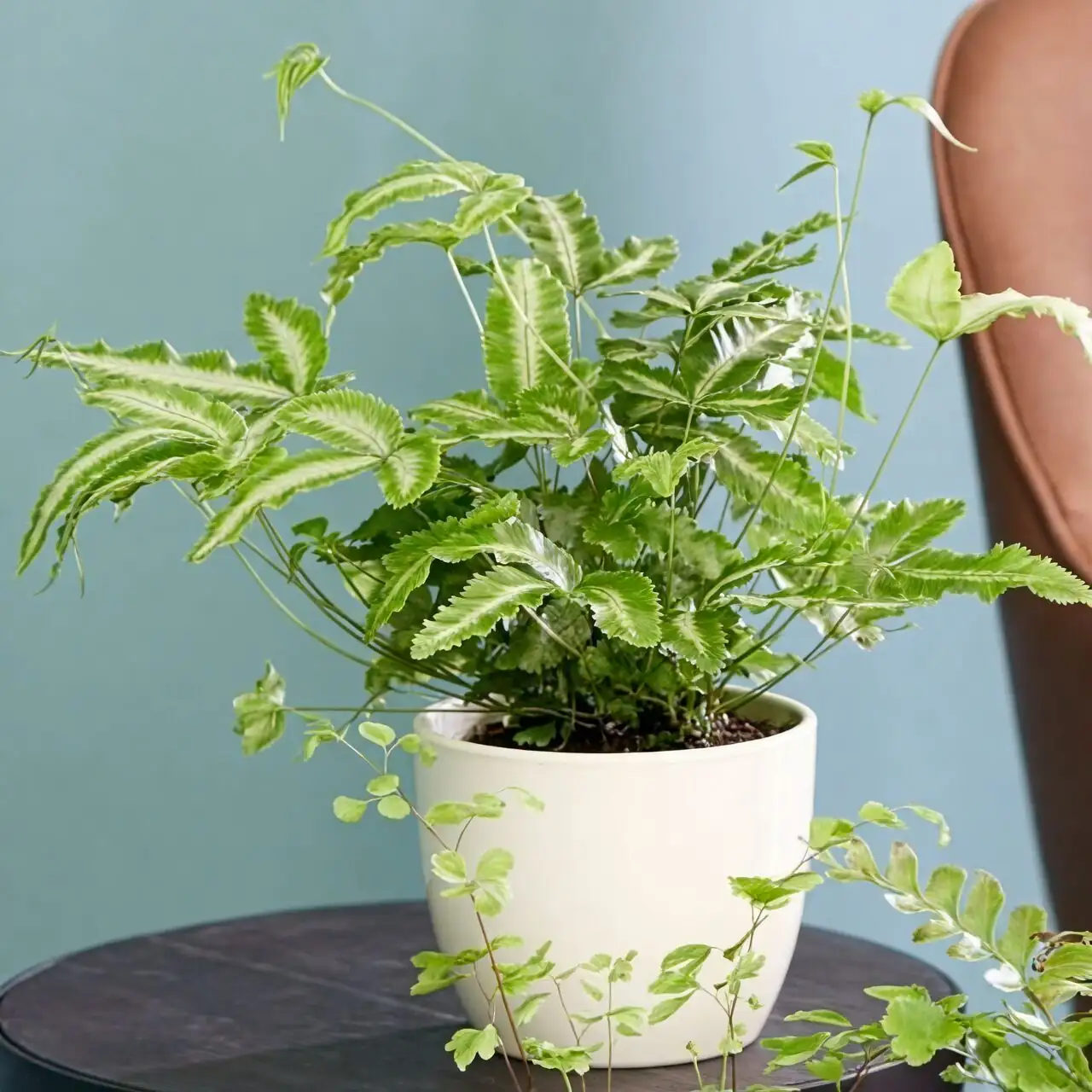
Tip: Avoid harsh direct sun and drafty doorways. Ferns prefer a cocoon of even moisture and gentle airflow; that consistency is the secret to both good feng shui and good horticulture.
Element pairings
- With Water: A pebble tray or nearby fountain complements Wood and boosts humidity.
- With Wood/Earth: A matte clay or wooden cachepot grounds the look; keep drainage free and the mix airy to prevent soggy roots.
- With Metal/Glass: A simple metal plant stand or glass shelf adds clarity without overpowering the fern’s softness.
Care that supports good energy
In feng shui, healthy plants equal strong qi. For Pteris cretica:
- Humidity: Aim for 50%+; mist, use a pebble tray, or a humidifier.
- Moisture: Keep the potting mix evenly moist—never bone‑dry, never waterlogged.
- Temperature: Best at 12–22°C (54–72°F); try to keep above 10°C (50°F) in winter.
- Grooming: Snip tired fronds at the base; new crosiers will unfurl to replace them—an ongoing cycle of renewal.
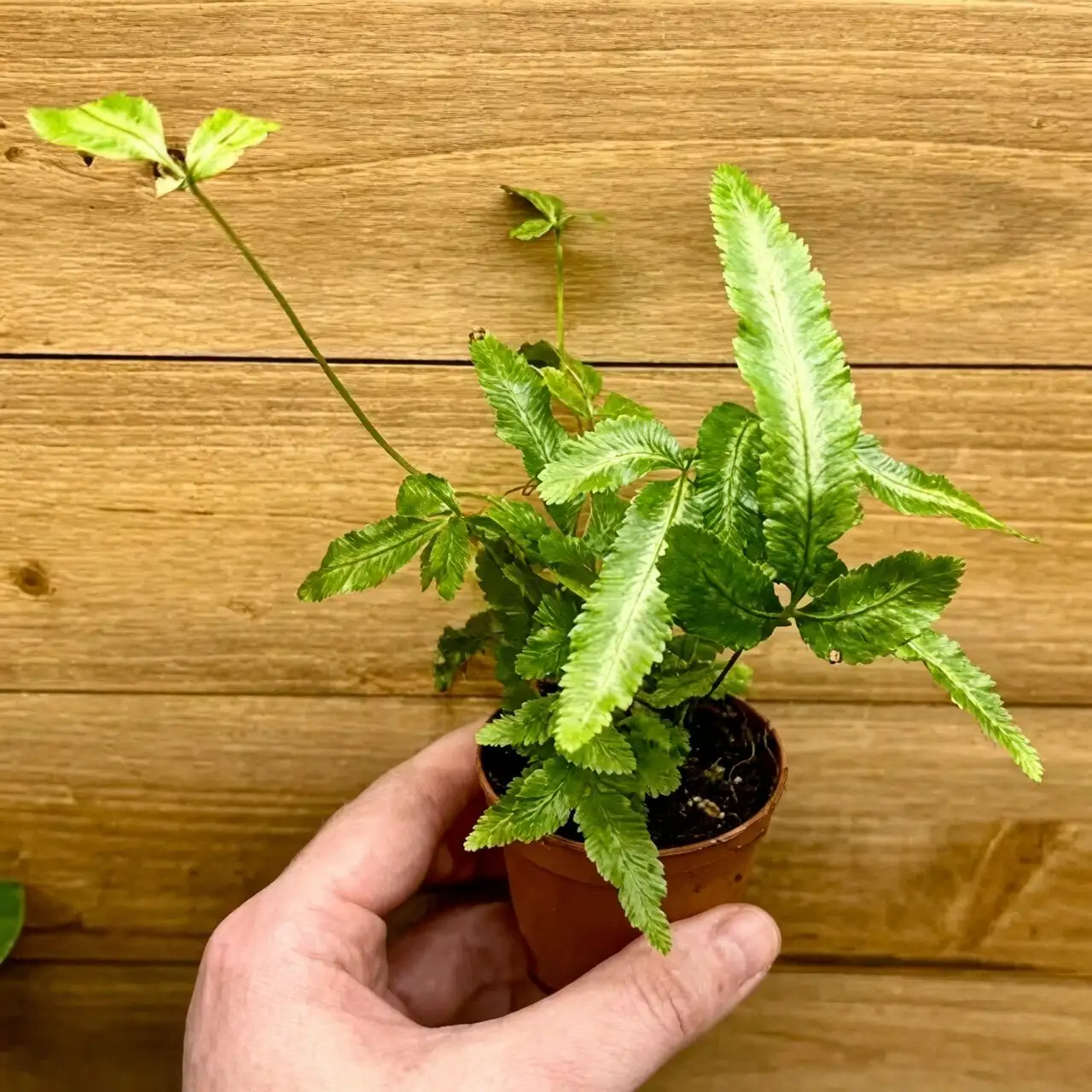
Care Cheat Sheet (so the symbolism lasts)
- Light: Bright, indirect light to partial shade; shield from harsh sun that can scorch fronds.
- Watering: When the top 1–2 cm (0.4–0.8 in) feels slightly dry, water thoroughly and let excess drain.
- Humidity: Prefers high humidity; bolster in heated or air‑conditioned rooms.
- Soil: Moisture‑retentive yet free‑draining; a peat‑free potting mix blended with bark/fine orchid mix plus perlite works well.
- Feeding: Spring–summer, a balanced houseplant fertilizer at 1/4–1/2 strength every 4–6 weeks; easy does it—too much can tip‑burn fronds.
- Temperature: Keep above 10°C (50°F) for good winter looks; growth slows markedly below ~5°C (41°F).
- Repotting: Every 1–2 years in spring, stepping up just one pot size and refreshing the mix.
- Pruning: Remove yellowed or damaged fronds at the base; avoid cutting into the crown.
- Propagation: Best by division of an established clump during repotting; spores are possible but slow.
- Pests: Watch for scale, mealybugs, and spider mites (especially in dry air); maintain airflow and rinse foliage occasionally. Treat with insecticidal soap or horticultural oil if needed.
- Safety: Generally considered non‑toxic to people and pets; nibbling may cause mild tummy upset—so display out of reach of curious chewers.
Styling and Gifting: Say “Sincere, Softly Spellbound”
- As a gift: Pair a Chinese Brake Fern with a handwritten note—“For sincerity and the fascination you spark”—and a simple ribbon or wooden cachepot for Wood‑element warmth.
- In the home: Use one fern to soften a bright office shelf or compose a trio with moss and a shade‑tolerant companion on a humidity tray for an instant “cool‑green” vignette.
- For rituals of renewal: New job, new home, new season—let a fresh flush of fronds mark the moment.
A Quiet Legend on Your Windowsill
Victorian floriography gave ferns a voice for sincerity and fascination; the phoenix‑tail name wraps them in optimism and grace; feng shui reads their green, rhythmic fronds as Wood’s calming pulse. Pteris cretica gathers all three threads into one easy, elegant houseplant—an everyday emblem of resilience that unfurls its poetry, one frond at a time.