

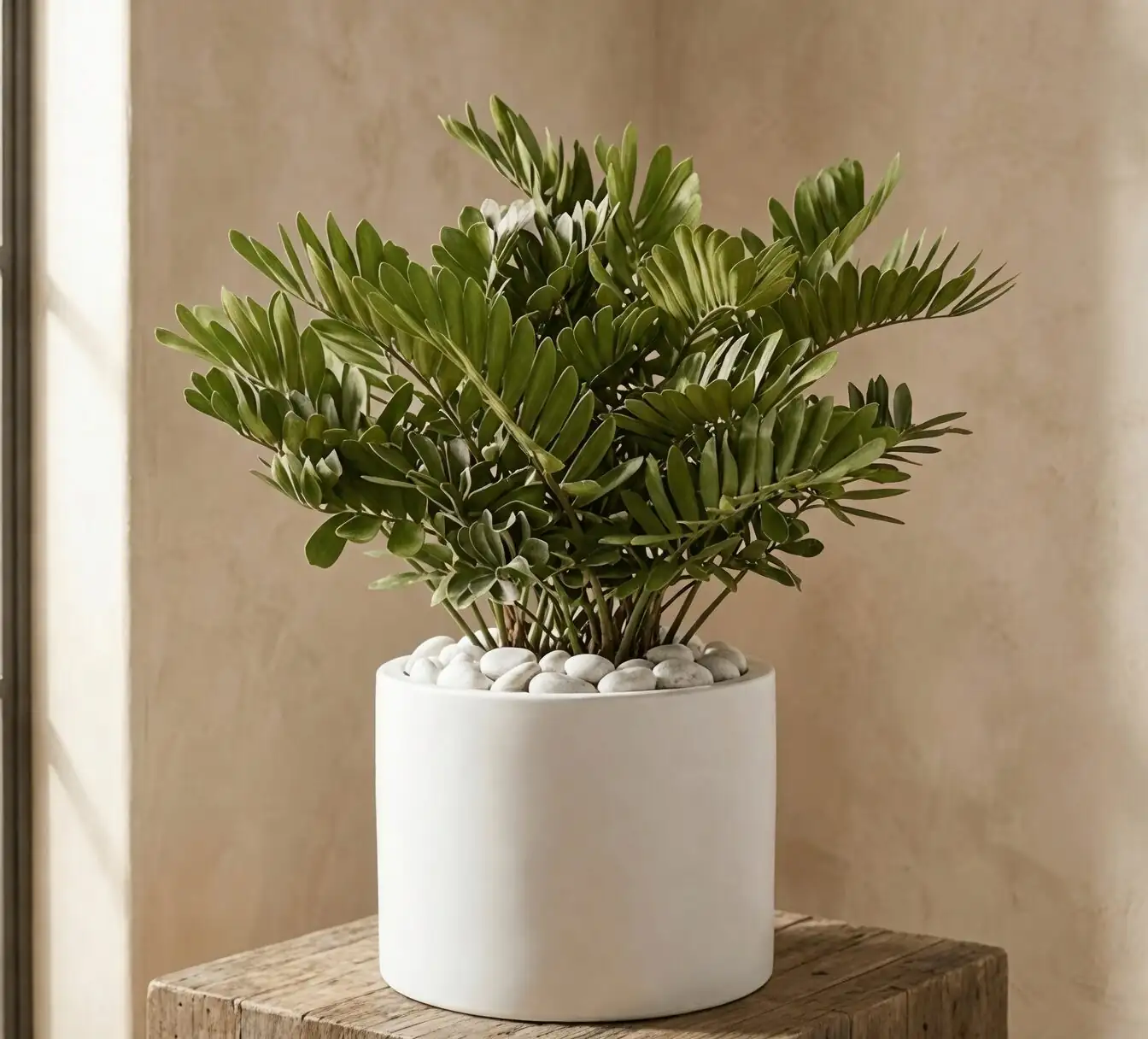
Meet the plant that looks like a tiny prehistoric sculpture and laughs at your watering can: Zamia furfuracea, better known as the Cardboard Palm. It’s not actually a palm, it grows so slowly you could time it with a sundial, and in summer it swaps flowers for cones like a proper ancient cycad. Ready for a fun, listicle-style romp through this living fossil’s greatest hits? Let’s go.
Quick ID card (so you two can get acquainted)
- Names: Cardboard Palm, Cardboard Cycad, Mexican Cycad
- Scientific name: Zamia furfuracea
- Family: Zamiaceae (cycads, not palms!)
- Origin: Eastern Mexico (Veracruz)
- Vibe: Architectural, evergreen, drought-tolerant, shade-tolerant, ultra-slow and steady companion for bright rooms, offices, and sheltered balconies
9 delightful truths about the “Cardboard Palm”
1) It’s not a palm—here’s the cycad scoop
- Palms are flowering plants. This is a cycad, an ancient gymnosperm that makes cones, not flowers.
- Think “dinosaur-era lineage” with modern interior-design sensibilities.
- The crown looks palm-ish at a glance, which is how the nickname stuck—but botanically, it’s as palm-adjacent as a pineapple is to a pine tree.
2) The leaflets really do feel like cardboard
- Expect stiff, feather-like fronds lined with thick, glossy, deep-green leaflets that feel firm and almost papery-leathery to the touch.
- Older basal leaves naturally yellow with age—snip them off at the base to keep the rosette crisp and clean.

3) Slow-mo growth you can actually enjoy watching
- Zamia furfuracea is famously slow-growing. That’s part of its charm: tidy proportions, no surprise growth spurts.
- Over time, it forms a compact rosette above a chunky, trunkless-to-short trunk base (a caudex) that slowly thickens like a living canteen.
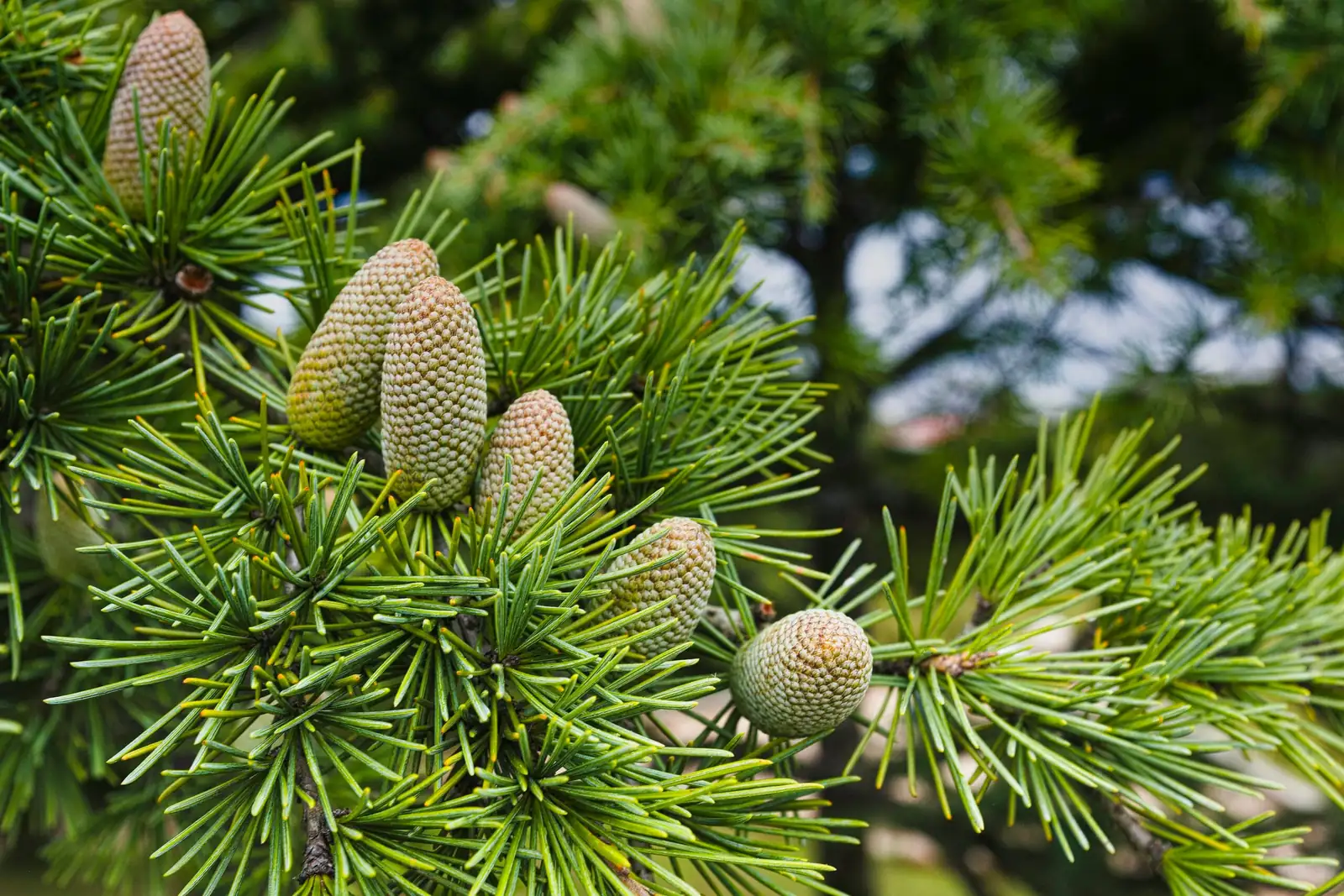
4) Summer is cone season (not flower time)
- Separate male and female cones appear on different plants (dioecious), typically in warm, bright conditions—and most often in summer.
- If yours cones, celebrate: it’s a sign the plant feels mature, warm, and well lit.
5) It offsets—hello, tidy clumps and free plants
- Mature specimens may produce pups near the base, slowly forming a clump.
- Those offsets can be separated in spring (more on that in the propagation playbook below).
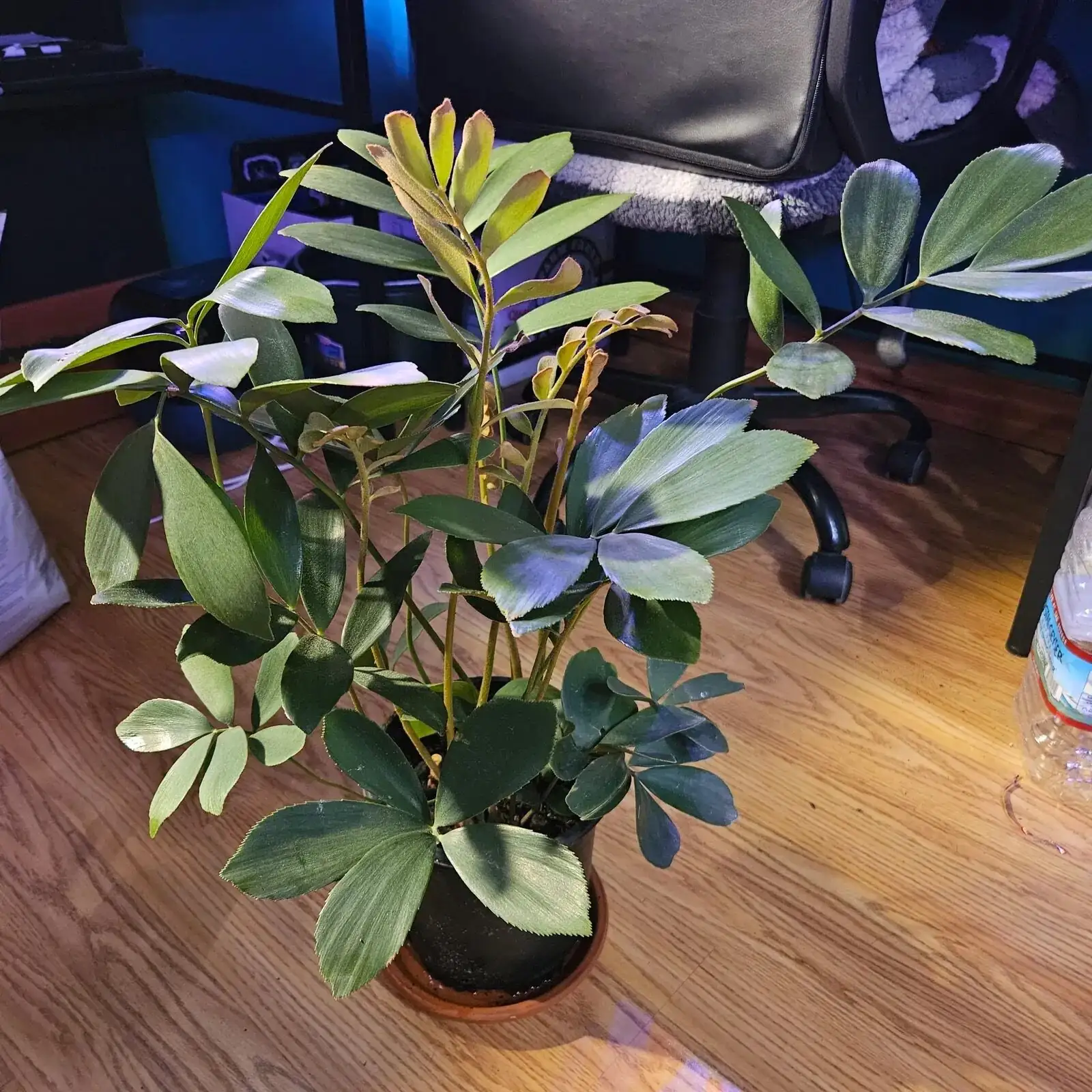
6) Shade-savvy but sun-loving
- Best indoors in bright light to full sun, or on a sheltered, sunny balcony.
- It tolerates bright shade surprisingly well, but looks densest with strong light and good airflow.
- Window alert: behind glass, harsh midday sun can scorch—give it a lacy curtain or step it back slightly.
7) Drought-tough, not swamp-friendly
- Water thoroughly, then let the top layer of mix dry before you water again.
- Keep lightly moist in the active season but never soggy. Reduce in autumn; in winter, err dry. The one thing it won’t forgive? Staying wet in cool conditions.
- Wipe leaves occasionally (or light misting in hot, dry weather) to keep that glossy green camera-ready.
8) Soil like a beach vacation (with drainage for days)
- Use a very free-draining mix: roughly 2 parts peat/leaf-mold–based potting mix to 1 part coarse sand/grit/perlite.
- Pots must have drainage holes; a shallow, wide container suits the root system and keeps the plant stable.
- Typical container sizes are 15–40 cm (6–16 in) in diameter—and you won’t be repotting often.
9) Not for nibblers—keep it away from pets and kids
- Like many cycads, all parts—especially the seeds—are toxic if ingested. Display high and handsome, not snackable.
Light, temp, humidity: your placement cheat sheet
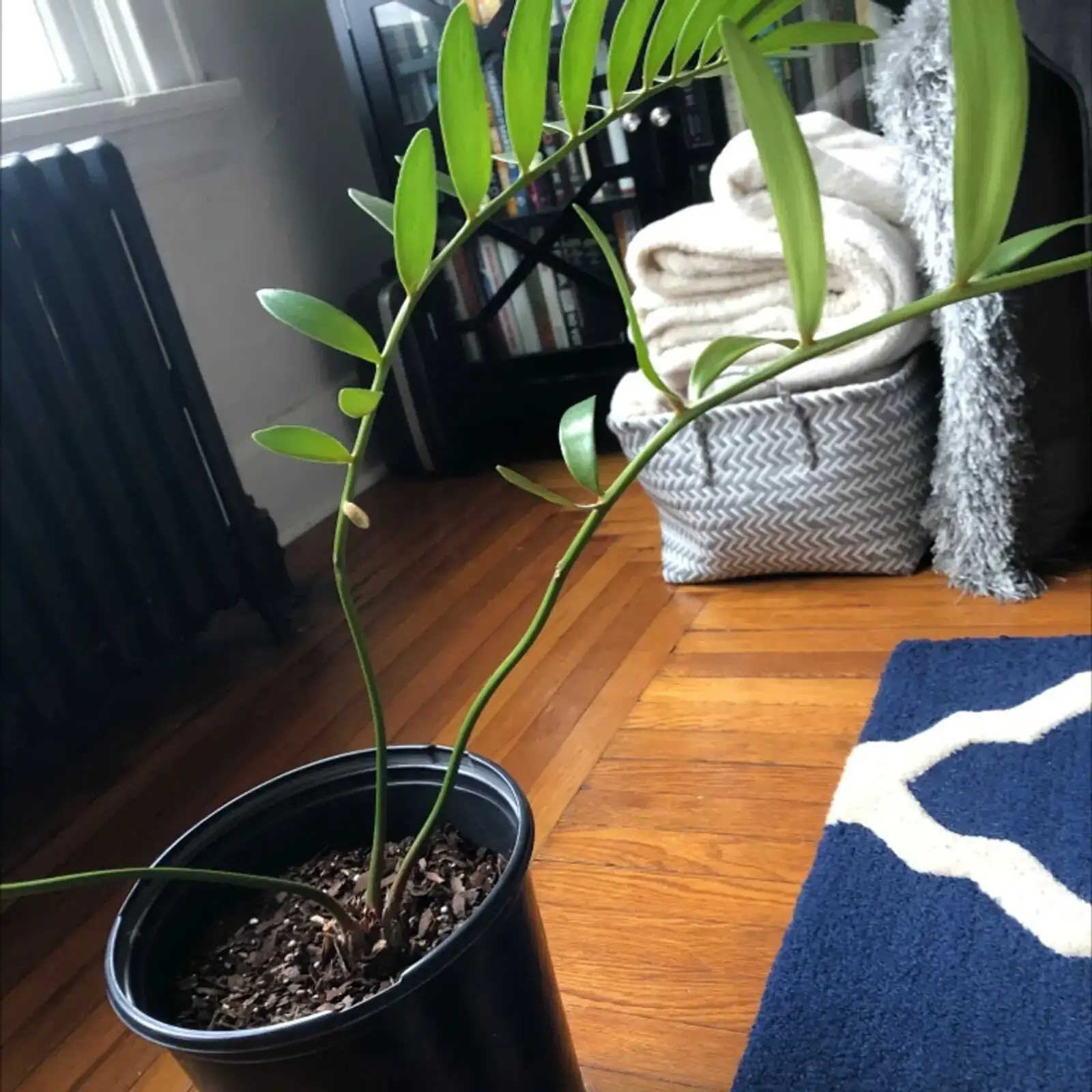
- Light: Bright light to full sun indoors; also tolerates bright shade. Best near a sunny, well-ventilated window. Protect from scorching midday rays behind glass.
- Temperature: Sweet spot is 13–24°C (55–75°F). Keep above 2°C (36°F); leaves can be damaged below 0°C (32°F).
- Humidity: Average indoor humidity is fine. Clean, lightly mist, or leaf-wipe during warm spells to keep dust down and pores happy.
- Outdoors: Not frost-hardy; generally only viable year-round in USDA Zones 9–11 with frost protection. Overwinter indoors in a bright, cool spot if your nights get nippy.
The minimalist’s maintenance plan
Watering rhythm
- Growing season: Soak, then let the top layer dry. Aim for “evenly, lightly moist,” never wet.
- Autumn: Dial it back as temperatures drop.
- Winter: Keep it on the dry side; cold + wet roots = cycad heartbreak.
Feeding for form
- Feed monthly in the growing season with a balanced fertilizer (e.g., NPK 20-20-20) at label rates.
- Or use a gentle organic liquid feed.
- Pause feeding in winter if growth slows.
Grooming, not pruning
- No shaping required—this plant comes pre-architected.
- Remove yellowing or damaged leaves at the base with clean tools. Don’t nick the caudex; tiny buds/offsets can form near it.
Repotting rhythm
- This plant is in no rush. Repot small ones every ~2 years; larger specimens every 3–4 years.
- Keep that fast-draining mix and a pot with excellent drainage every time.
Season-by-season playbook
- Spring
- Gradually increase watering.
- Sow seeds indoors; divide offsets in April–May.
- Repot if needed before summer heat arrives.
- Summer
- Brightest light + fresh air; fertilize monthly.
- Keep the mix lightly moist, never soggy.
- Cones may appear in warm, bright conditions.
- Autumn
- Reduce watering as nights cool.
- Winter
- Brighter and cooler is ideal.
- Water sparingly; keep above 2°C (36°F).
Propagation playbook (two satisfying ways)
1) Seeds (for the patient and curious)
- Timing: Spring.
- Method: Cover seeds with ~2 cm (0.8 in) of mix.
- Warmth: 24–30°C (75–86°F) speeds germination—sometimes in as little as ~2 weeks if kept consistently warm.
- Note: You need both male and female plants for viable seed production.
2) Offsets (for faster wins)
- Timing: April–May.
- Method: Gently separate pups with minimal wounding. Let cuts callus dry.
- Rooting: Start in clean sand at ~26–30°C (79–86°F), then pot into your fast-draining cycad mix.
Troubleshooting: quick fixes to common quirks
- Yellowing by the second spring?
- Prime suspects: low winter temps or big day–night swings, weak light, drafts from vents, overwatering in cool weather, severe underwatering, off-gassing from recent renovations, or fertilizer misfires.
- Fixes: Stabilize temps, boost light and airflow, recalibrate watering, and go easy on salts.
- Scale insects
- Wipe off and treat with horticultural oil or insecticidal soap; repeat as needed.
- Leaf spot
- Improve airflow and avoid wetting the crown late in the day; remove affected leaves.
- Root issues (including root-knot nematodes in contaminated media)
- Prevention is king: sterile, well-draining mix; never waterlog. Discard severely affected plants.
Buying guide: pick a winner, then help it settle in
- Choose a plant with:
- A firm, chunky caudex/base
- Symmetrical, deep-green leaves
- No spots, scale, or mechanical damage
- After you bring it home:
- Park it in your brightest, best-ventilated spot.
- If it’s pushing new leaves, skimping on light can stretch and thin the leaflets.
- Water lightly at first—this species is drought-tolerant and dislikes staying wet.
Styling ideas: small plant, big presence
- Crisp rosettes shine in minimalist interiors, sculptural planters, and on bright office credenzas.
- Try a shallow, wide pot for a bonsai-style presentation (form-focused, not true bonsai techniques).
Symbolism and “flower language” (花语), decoded
- Meaning often ascribed: resilience and longevity.
- Why it fits: As a cycad, Zamia furfuracea hails from an ancient lineage that survived dramatic shifts in Earth’s history. Its ultra-slow, steady growth and evergreen poise read as quiet strength. In plant collections, it’s the calm center—unhurried, enduring, and beautifully self-possessed.
Five fast facts to impress your plant pals
- Not a palm: it’s a cycad that makes cones, not flowers.
- Summer is showtime: cones are most likely then, in warm, bright conditions.
- Built-in water bank: that thick caudex stores reserves—hence the drought tolerance.
- Biggest care mistake: overwatering in cool weather.
- Shareable: it forms offsets you can root in spring.
The 30-second do/don’t list
- Do: Give bright light, great drainage, warmth, and airflow.
- Do: Water thoroughly, then let the top layer dry—keep it drier in winter.
- Do: Feed monthly in the growing season; skip in winter.
- Don’t: Leave it wet in cool conditions or scorch it behind unfiltered midday glass.
- Don’t: Let pets or kids nibble—this plant is toxic, especially the seeds.
Slow, sculptural, and blissfully low-drama, the so-called Cardboard Palm rewards patience with year-round, architectural beauty—and if you’re lucky, a summer cone or two to remind you it’s not just a looker, but a living fossil with stories to tell.