

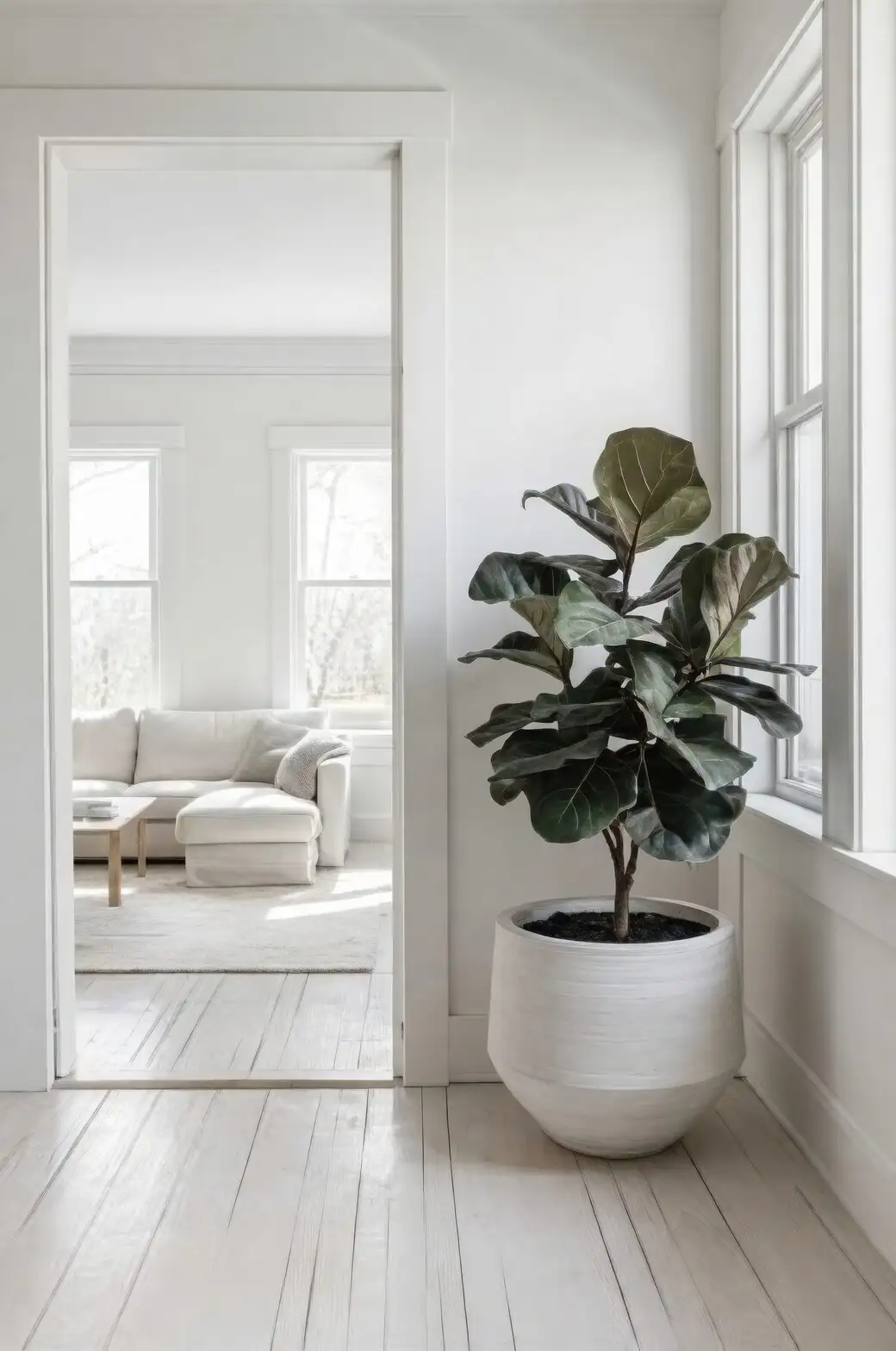
Podocarpus macrophyllus (Buddhist Pine) is the quiet-luxury evergreen your minimalist dreams were asking for—tidy, glossy, and beautifully architectural. Think of it as the plant equivalent of a crisp white shirt: timeless on its own, elevated with the right materials and light. Below, design-forward ways to pair Podocarpus with ceramics and soft light, choose the right pot (12–25 cm), and even float a young plant in water for a clean, modern desktop display.
Meet Podocarpus macrophyllus: your glossy, evergreen line-break
- Aesthetic: Deep-green, glossy leaves arranged in dense, upright sprays—always polished, never fussy.
- Form: Evergreen shrub to small tree; commonly sold as compact indoor plants up to about 60 cm tall.
- Origin: China and Japan.
- Nicknames you’ll see: Buddhist Pine, Japanese Yew, Yew Plum Pine, Podocarpus.
Light as a design tool: soft, bright, and beautifully filtered
Podocarpus loves bright, indirect light to partial shade. Indoors, let it read as “glow,” not “glare.”
East windows: a morning-ritual glow
- Why it works: Gentle morning sun delivers crisp color without harsh heat.
- Look to try: Satin-white, celadon, or fog-gray ceramic cylinders. The leaf gloss mirrors subtle ceramic sheen for a composed, gallery-like vibe.
South windows with sheers: softened geometry
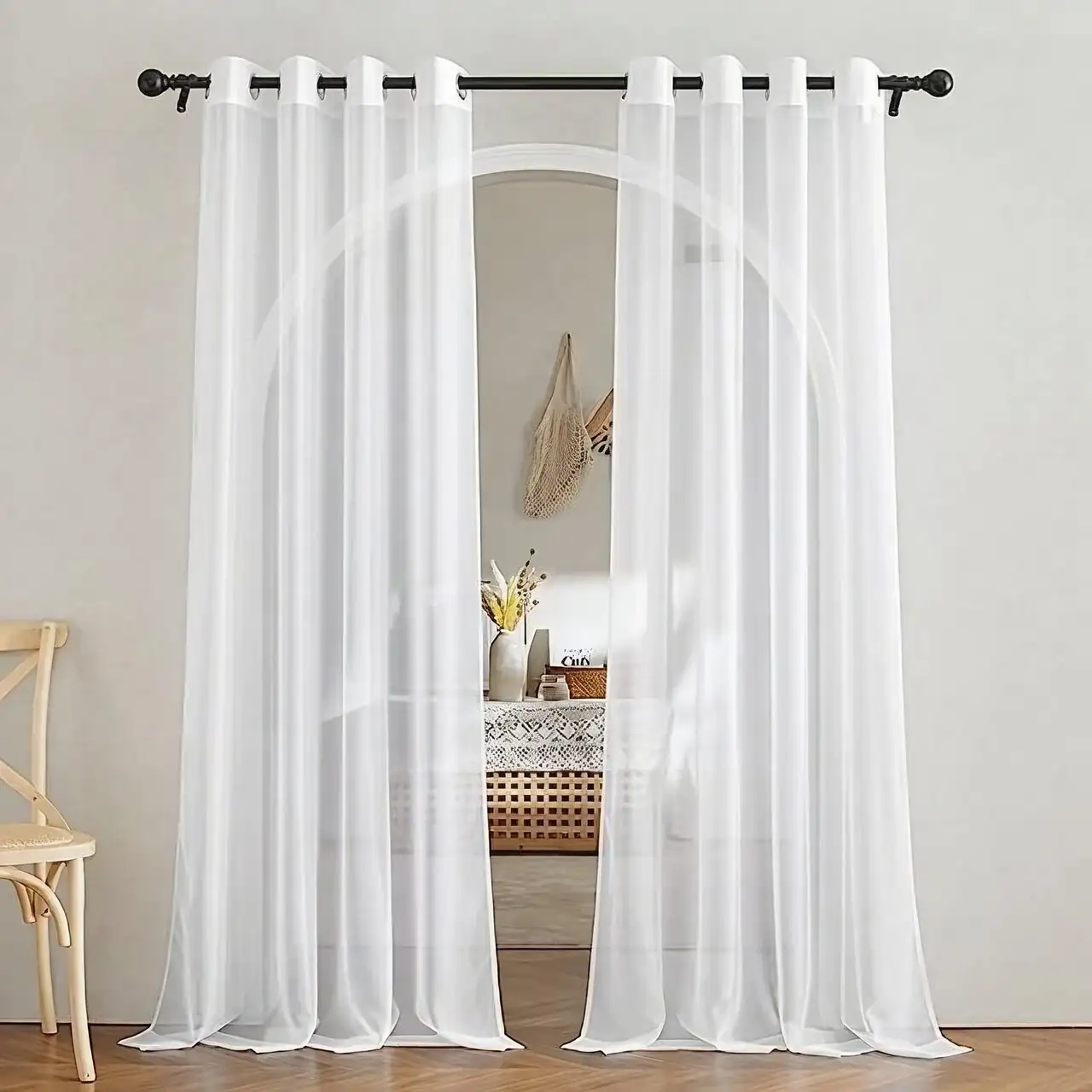
- Place just behind a sheer curtain to filter intensity.
- Look to try: Charcoal, ink, or speckled stoneware for contrast; the filtered light sharpens the Podocarpus silhouette without scorching the leaves.
- Pro tip: Keep it out of hot, direct sunbeams and away from heating vents and cold drafts.
Pot size and silhouette: 12–25 cm, edited for proportion
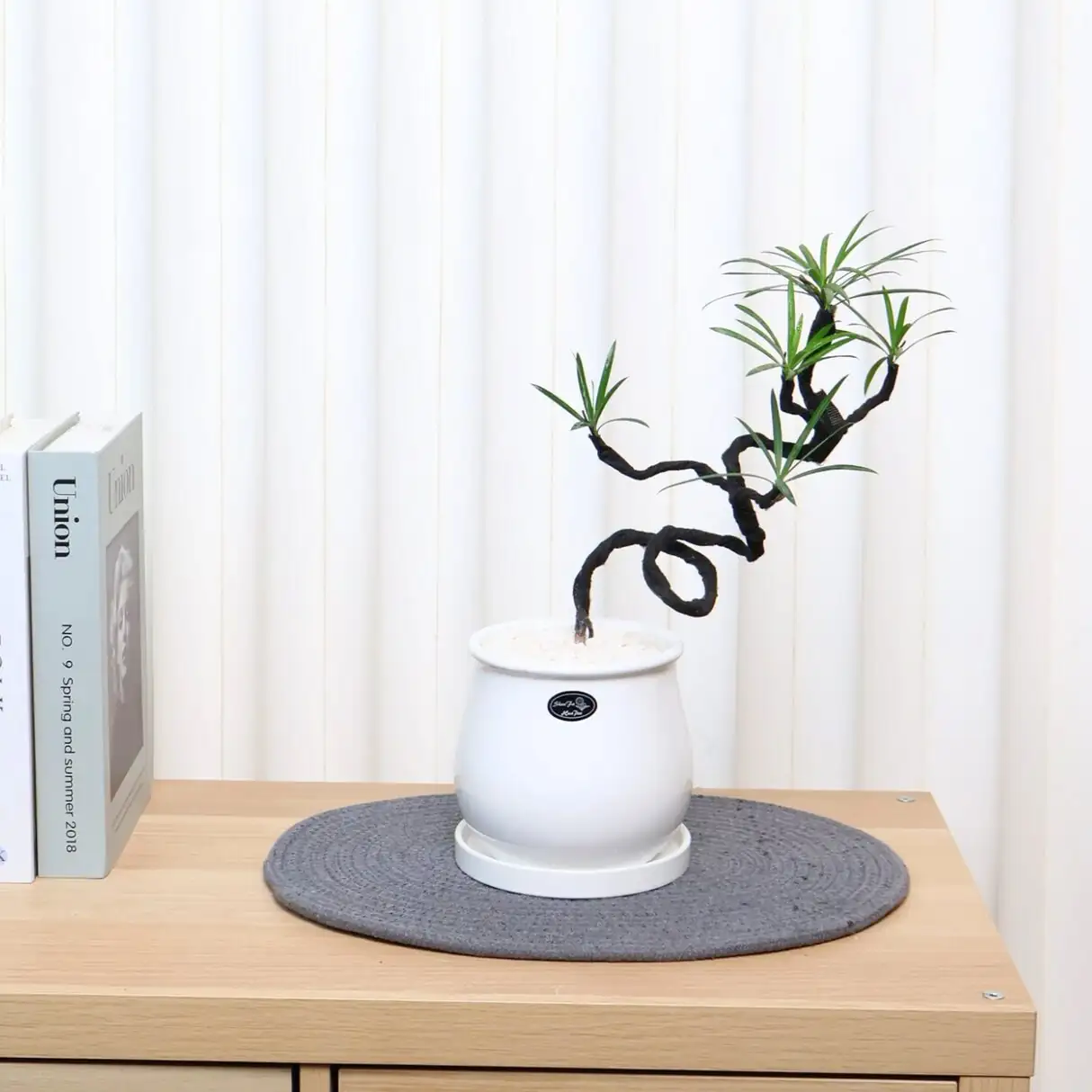
Common nursery sizes hover at 12–15 cm and around 25 cm in diameter. Use size to shape the vibe:
- 12–13 cm (slim, vertical emphasis)
- Best for: Clean, columnar lines on a windowsill or narrow shelf.
- Style: Matte-white or smooth celadon cylinder for a featherweight, contemporary note.
- 15–17 cm (balanced, still minimal)
- Best for: A fuller, “bonsai-adjacent” presentation that still reads modern.
- Style: Soft-sheen gray or ash-beige stoneware for warmth without visual heaviness.
- 20–25 cm (architectural anchor)
- Best for: A living “punctuation mark” beside a sofa or desk edge.
- Style: Charcoal, slate, or subtly grooved ceramic to amplify structure.
Repotting rhythm:
- Step up to a 15–20 cm pot when roots circle or watering frequency jumps.
- Use a free-draining, airy mix: compost/leaf mold + garden loam + coarse sand, with a gritty drainage layer at the base.
- Repot every 2–3 years in late spring.
Vessel curation: ceramics, glass, and the cachepot trick
- Drainage first: Plant in a nursery pot with holes, then slip into a ceramic cachepot for the clean-lined look. Hide the saucer under the inner pot to keep surfaces pristine.
- Palette: Pair glossy leaves with satin or matte finishes—think porcelain white, celadon, ink, sand, or speckled granite.
- Texture: Vertical fluting or a soft-rolled rim echoes the plant’s upright sprays without stealing the show.
Water-culture for a modern desktop: calm, clear, and ultra-clean
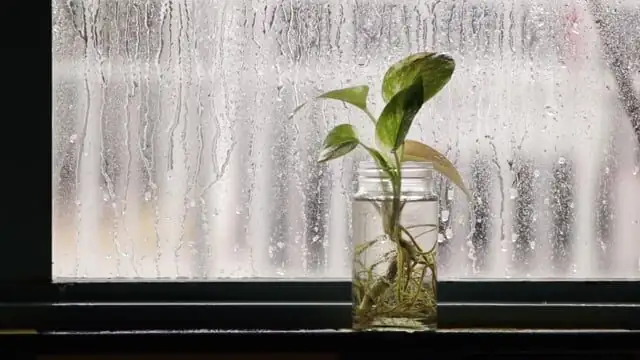
Young Podocarpus can live in water culture, creating that coveted “floating forest” effect.
How to set it up:
- Choose the right plant: A clean, healthy, seed-grown seedling about 15–20 cm tall.
- Rinse: Gently wash all soil from the roots.
- Anchor: Set in a glass, ceramic, or metal container with large LECA/clay pebbles or smooth decorative stones.
- Light: Bright, indirect light (east window is perfect; south with sheers also works).
- Temperature: Aim for 18–26°C.
- Water ritual: Change water every 3–5 days for crystal clarity and healthy roots.
- Feeding: Add a hydroponic nutrient solution about once per month.
- Edit as it grows: Prune to keep proportions neat; mist lightly if indoor air is very dry.
Design ideas:
- A smoke-glass cylinder on a walnut tray beside your laptop reads equal parts studio and spa.
- A white ceramic “halo” vase with a hidden glass insert blurs the line between art object and plant.
Placement and microclimate finesse
- Ideal indoor range: 13–25°C (keep above 10°C for the nicest winter foliage).
- Humidity sweet spot: Around 50–60% indoors; a quick morning mist helps during dry spells.
- Keep away from heating/cooling vents and cold drafts to avoid leaf stress.
- On desks: Podocarpus plays well near computers—just ensure bright, gentle light and wipe leaves occasionally for a fingerprint-free sheen.
Care that preserves the look
Watering (potted in soil):
- Keep the mix evenly moist—never soggy, never bone-dry. Weekly watering is common; adjust for pot size, light, and season.
- Empty any water from the saucer.
Feeding:
- Spring and autumn: once per month with a balanced fertilizer (e.g., 20-20-20) or a well‑rotted organic cake fertilizer.
- Pause feeding in winter.
- Water culture: monthly hydroponic nutrients.
Pruning and grooming:
- Trim to shape if it gets tall or leggy; cutting back a stretched stem encourages side shoots and a fuller outline.
- Wipe leaves (a soft, damp cloth) for that high-gloss finish.
Pests and health:
- Scale insects are the most common indoors—wipe away and treat with horticultural oil or an appropriate insecticidal soap, repeating as needed.
- Improve airflow and avoid wetting foliage late in the day to minimize leaf spot.
Styling recipes to steal
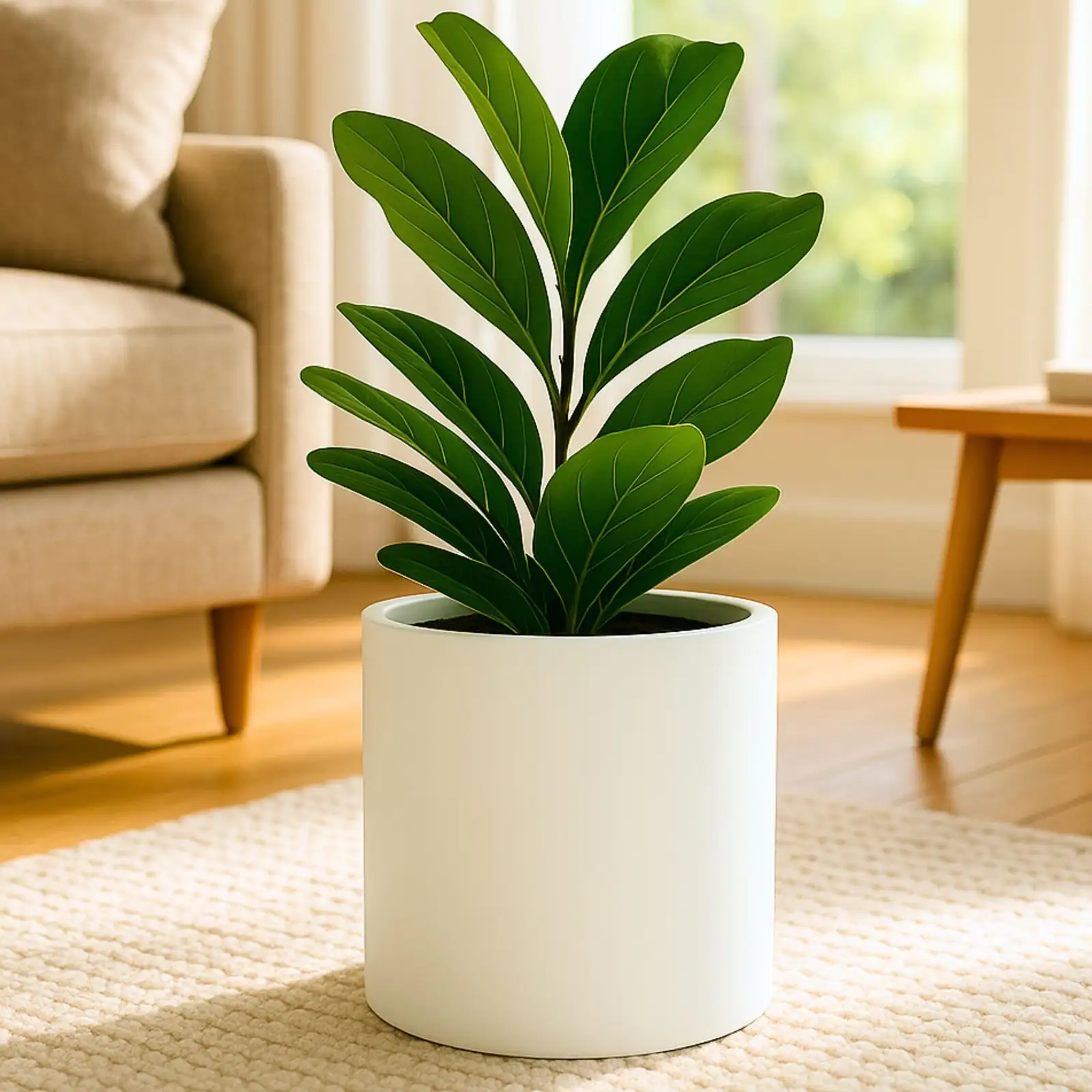
1) Minimalist Monochrome (windowsill)
- Pot: 12 cm matte-white cylinder with inner nursery pot and hidden saucer.
- Light: East window.
- Finishes: White pot + deep-green leaves = effortless contrast.
- Care cue: Even moisture; leaf wipe every two weeks.
2) Soft Modern Desk (water-culture)
- Vessel: Clear smoke-glass cylinder, LECA base, cable‑managed lamp nearby.
- Light: Near an east window or a south window with sheers.
- Ritual: Water change every 3–5 days; monthly nutrient dose.
3) Calm Corner Anchor (living room)
- Pot: 25 cm charcoal, footed ceramic with a gritty drainage layer; airy mix inside.
- Light: South window filtered by a sheer curtain.
- Look: A vertical green column grounding a neutral sofa and wool rug.
Safety and practicalities
- Podocarpus is widely reported as toxic if ingested—especially to pets. Keep out of reach of pets and children.
- Choose stable, weighted ceramics for tall forms; use felt pads or a tray to protect surfaces.
“Lucky plant” symbolism (and what it really means)
You’ll often see Buddhist Pine marketed under auspicious names promising prosperity or good fortune. Historically, the “luck” is more retail myth-making than formal flower language—and yet, its evergreen calm, longevity, and poised geometry do symbolize continuity and composure in a space. In design terms, it brings “good luck” by delivering reliable structure and serenity all year.
The gallery-care calendar
- Spring & autumn: Water as needed (often weekly), fertilize monthly, shape lightly.
- Late spring (every 2–3 years): Repot to the next size up (15–20 cm or beyond) with a free-draining mix and a gritty drainage layer.
- Winter: Keep above 10°C, stop fertilizing, and protect young plants from temperatures below about 5°C.
- Water culture (anytime): Bright, indirect light; 18–26°C; change water every 3–5 days; add nutrients monthly.
With the right ceramic, the right light, and a restrained hand, Podocarpus macrophyllus turns any corner into a modern still life—quiet, precise, and unmistakably alive.