


If you’ve ever admired those round, silver-striped “watermelon” leaves and thought, I want ten more of these—good news. Peperomia argyreia (Watermelon Peperomia) is one of the easiest houseplants to multiply from a single leaf or a little stem section. This is your masterclass: exact tools, pro-grade medium recipes, humidity hacks that don’t invite rot, and a realistic timeline—roots in 3–4 weeks, plantlets in 4–6—plus the most common pitfalls to dodge.
Meet the plant (and why it propagates so well)
- Botanical profile: Peperomia argyreia, family Piperaceae; native to northern South America, especially Brazil.
- Look and size: Compact, desk-friendly mounds about 15–30 cm tall and wide, with thick, slightly succulent leaves patterned like mini watermelon rinds; petioles often reddish.
- Light and comfort zone: Bright, indirect light to part shade; avoid harsh midday sun and deep shade. Happy around 15–24°C (59–75°F). Keep it away from cold drafts and don’t let it chill below ~10°C (50°F).
- Personality: Forgiving, but hates two things—soggy soil and strong direct sun. It’s also generally pet-safe.
Why it propagates easily: The leaves store some water, and both leaves-with-petioles and short stem pieces can root quickly in airy media.
The propagator’s toolkit
- Clean, sharp snips or a scalpel (sanitize with 70% isopropyl alcohol).
- Small nursery pots or shallow trays with drainage.
- Fresh, airy propagation mix (see recipes below).
- Labels (date and method—future-you will thank you).
- Clear cover for humidity (vented dome, zipper bag with pinholes, or a clear container; never fully sealed).
- Fine mister or squeeze bottle for targeted moistening.
- Optional: rooting hormone, hygrometer/thermometer, heat mat set to low (only if your space is cool).
Proven propagation media (choose one)
- Leaf-cutting champion (soilless): 1:1 perlite : coarse sand (or 2:1 perlite : coco coir). Exceptionally fast-draining, reduces rot risk.
- Leaf or stem, classic: Quality peat/coco houseplant mix cut with 30–50% perlite. Think fluffy, not heavy.
- Water for stems (optional): Clean, room-temp water in a narrow glass; change every 3–5 days.
Pro tip: Pre-moisten media so it’s evenly damp but never wet. Squeeze test: when you fist a handful, it should hold together lightly but no water should drip.
Leaf cuttings: the most reliable route
Watermelon Peperomia shines with leaf propagation. It’s tidy, fast, and remarkably consistent when you get the depth and humidity right.
When to cut
- Best seasons: Spring and summer while the plant is actively growing. Rooting is slower in cool, short days.
How to take the leaf cutting
- Choose a mature, blemish-free leaf.
- Snip it with a short petiole, about 1–2 cm long.
- Let the cut end air-dry for 10–15 minutes (a brief callus helps in airy media).
Planting depth and orientation
- Insert the petiole and about one-third of the leaf blade into the medium. Leave two-thirds of the leaf above the surface, angled slightly so water can’t pool on the blade.
- Firm the mix gently around the petiole and buried blade so it stands steady.
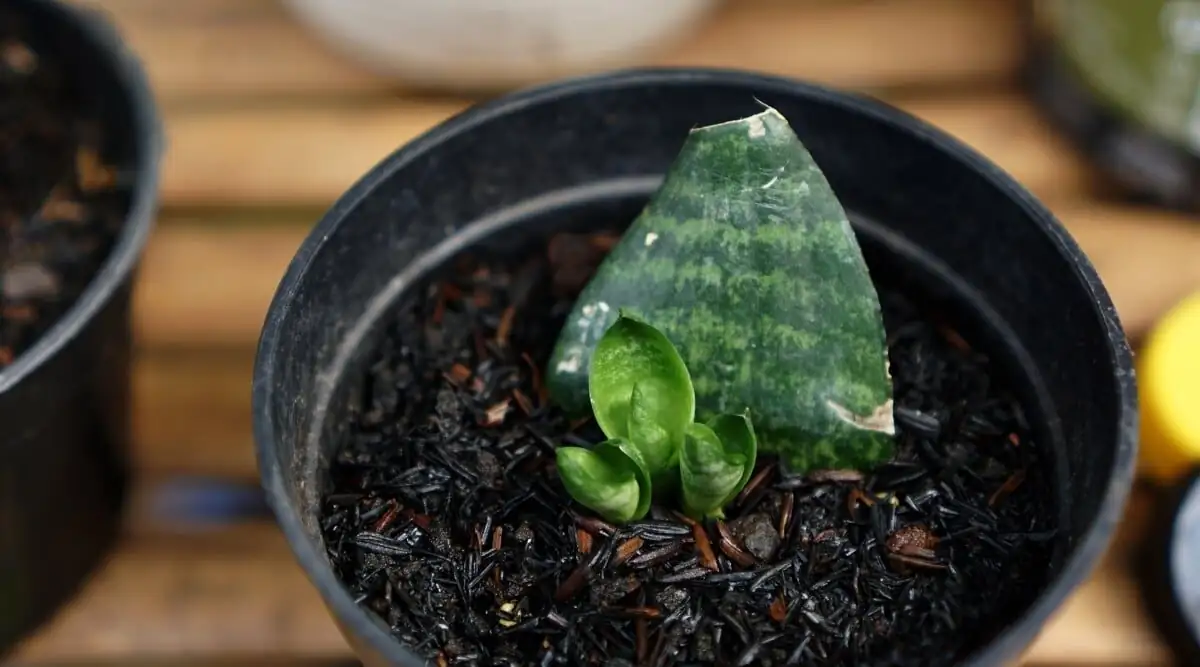
Why this works: The new roots form from the petiole and buried leaf tissue; the exposed blade keeps photosynthesizing without smothering.
Placement and conditions
- Light: Bright, indirect light—no direct sun. An east window or set-back from a bright south/west window (with a sheer) is ideal.
- Temperature: Aim for 20–24°C (68–75°F) while rooting; avoid going below 15°C (59°F).
- Humidity: Moderately high (think 60–80%) via a vented dome or bag with pinholes. Provide gentle airflow to discourage fungus and pests.
Moisture management
- Keep the medium lightly moist, never soggy. Mist the medium surface or add a few teaspoons of water along the pot edge; avoid wetting the leaf blade repeatedly.
- If using a dome, vent daily and wipe any heavy condensation.
Your week-by-week timeline
- Weeks 0–2: Cut end calluses; first root initials form (invisibly). Leaf stays firm if moisture is right.
- Weeks 3–4: Roots develop. Gentle tug should meet slight resistance—don’t yank.
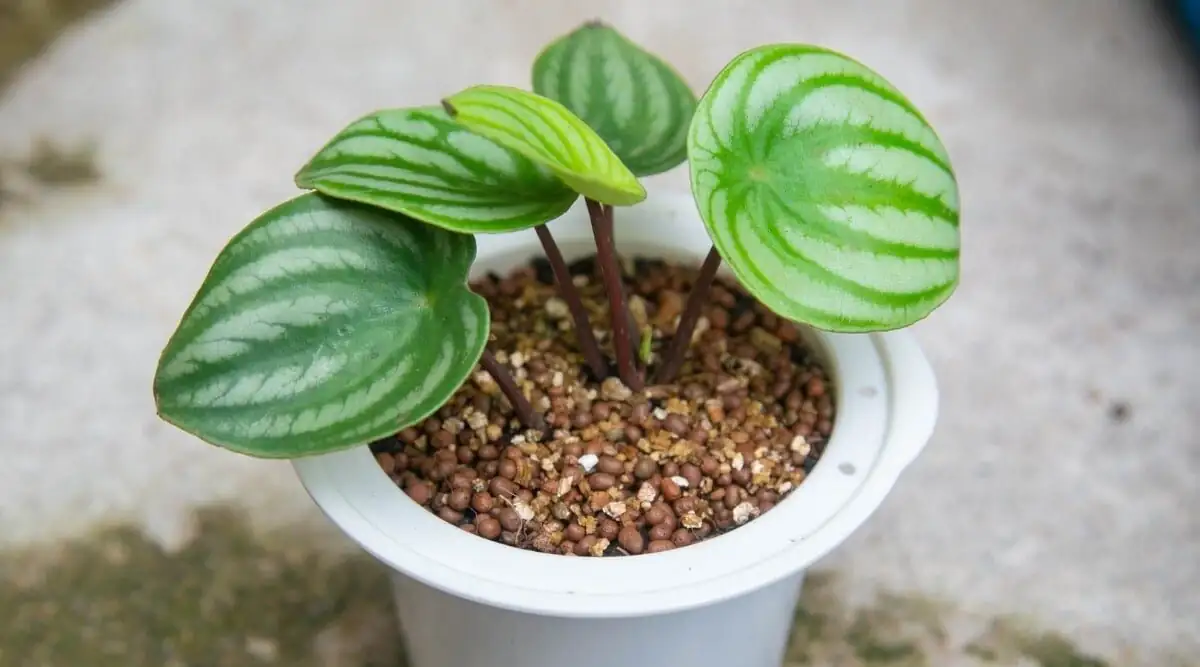
- Weeks 4–6: Tiny plantlets emerge at the base or from the buried leaf section.
Potting up the babies
- When plantlets have 2–3 true leaves and their own small root nubs, separate gently (if multiple) and pot into a fast-draining houseplant mix amended with perlite/coarse sand.
- Choose small pots (6–8 cm/2.5–3 in). Water to settle, then let the top dry lightly before the next watering.
- Feeding: Wait until you see active new growth; then feed lightly during the growing season (e.g., monthly at half-strength). Skip winter feed.
Stem cuttings: when you’ve got a node
Peperomia argyreia is naturally clump-forming with short internodes, but if you can take a stem section with a node, it will root well.
How to take a stem cutting
- Select a healthy section with at least one node (a joint where leaves/petioles arise). Keep one leaf attached if possible.
- Cut just below the node. Remove any lower leaf so you can plant the node.
- Optional: Dip in rooting hormone.
Rooting in a mix (recommended for this species)
- Plant the node into an airy medium so the node is at or just below the surface.
- Stake the leaf if it’s heavy, to prevent wobble.
- Maintain the same bright-indirect light, 20–24°C temps, and lightly moist—not wet—conditions under a vented dome.
Rooting in water (optional)
- Submerge only the node; keep leaves out of the water.
- Change water every 3–5 days.
- Pot up into a fast-draining mix as soon as roots are a few centimeters long to avoid water-to-soil shock.
Timeline mirrors leaf cuttings: roots in about 3–4 weeks; visible new growth within 4–6 weeks in warm, bright-indirect conditions.
Humidity hacks (that don’t invite rot)
- Vented dome: Use a clear cover but keep a gap or punch 6–10 pinholes. Open daily for a minute of fresh air.
- Pebble tray assist: Place the pot on pebbles with water below the pot base (never sitting in water).
- Room airflow: A small fan on low across the room keeps air moving without chilling the cuttings.
- Heat without scorch: If your space is cool, a low-setting heat mat can help. Monitor so the mix never dries out or overheats.
- Condensation check: Heavy fog on the dome = too wet or too cold. Vent more, blot excess moisture, and reduce watering volume.
Watering rhythm for propagation
- First watering: After planting, moisten the medium thoroughly, then let excess drain.
- Thereafter: Water lightly when the top feels dry to the touch. Err on the dry side of “evenly moist.”
- Never leave pots sitting in saucer water; this species is root-rot-prone in persistently wet media.
Aftercare once rooted
- Light: Keep bright-indirect light to maintain crisp striping; avoid harsh direct sun that can fade or scorch.
- Potting: Keep plants slightly pot-bound; graduate only one pot size at a time.
- Routine watering: Water well, then let the top portion of the mix dry before watering again. In winter, go lighter and less frequent.
- Feeding: During active growth, use a balanced fertilizer either monthly at half-strength or more diluted every couple of weeks in peak season. Pause in winter.
The 12 most common propagation mistakes (and how to avoid them)
- Waterlogged medium: Use a fast-draining mix and water modestly. Soggy = rot.
- Deep shade or hot sun: Provide bright, indirect light. Darkness slows rooting; direct sun scorches leaves.
- Cold snaps: Keep above 15°C (59°F) while rooting; protect from drafts.
- Sealed humidity: Always vent domes/bags. Stale, saturated air encourages fungus and mealybugs.
- Burying too deep: For leaf cuttings, only the petiole and about one-third of the blade go into the mix.
- Heavy, unamended soil: Fluff it with perlite/coarse sand. Roots need oxygen as much as moisture.
- Over-misting leaves: Mist the medium, not the leaf blades, to reduce rot and spotting.
- Impatience tugging: Resist pulling. Look for subtle resistance at 3–4 weeks; otherwise, trust the timeline.
- Fertilizing too soon: Wait for active new growth; early feeding can burn fragile new roots.
- Giant pots: Start small; oversized pots stay wet longer and slow root oxygenation.
- Dirty blades: Always sanitize tools to prevent pathogen spread.
- Stagnant air: Gentle airflow keeps foliage dry and pests at bay.
Quick reference: What to expect
- Best season: Spring–summer.
- Light: Bright, indirect; avoid strong midday sun.
- Temperature: 20–24°C (68–75°F) for fastest rooting; never below ~10°C (50°F).
- Humidity: Moderate to moderately high with airflow.
- Timeline: Roots in 3–4 weeks; plantlets/leaves in 4–6 weeks.
A short note on symbolism (花语)
Watermelon Peperomia is often linked with freshness and playfulness—the year-round “watermelon” pattern feels cheerful and modern. Unlike classical flower language traditions with centuries of lore, this symbolism is contemporary, born from how people experience the plant indoors: bright, tidy, and uplifting on a desk or windowsill. That approachable charm—and the fact you can grow a whole new plant from one leaf—makes it a thoughtful, friendship-forward gift.
Ready to multiply the charm? One pristine leaf, a palmful of perlite, and four to six weeks of patience are all you need to turn one Watermelon Peperomia into many.