

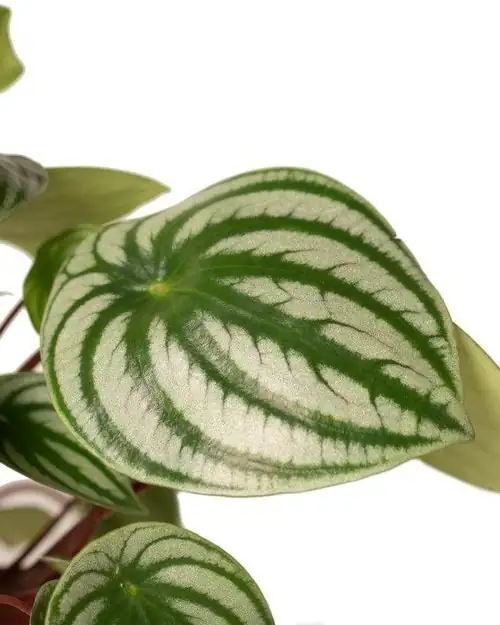
If you’ve ever glanced at a pot of Peperomia argyreia and thought, “Why is there a miniature watermelon on that desk?”, you’re in good company. This plucky understory plant, with leaves striped like rind and petioles blushed red, has traveled a long way from the dappled forests of northern South America—especially Brazil—to become a global office sweetheart. Here’s its lively origin story, why its leaves are built like tiny canteens, and how it conquered the modern desktop.
Born in the understory: where Watermelon Peperomia learned its moves
In the filtered light beneath tropical canopies, Peperomia argyreia makes a compact living on the forest floor and in crevices where leaf litter gathers. Here, sunlight is bright but indirect, moisture cycles between humid abundance and brief dry spells, and breezes are gentle. Survival favors small plants with nimble water strategies, tidy footprints, and leaves designed to make the most of scattered sunflecks.
- Native range: Northern South America, with a strong presence in Brazil.
- Microhabitat: Bright shade to part shade under taller vegetation; airy pockets of organic matter; never baking sun, never deep darkness for long.
- Lifestyle: A slow, neat clumper that keeps close to its resources and avoids drama—perfect training for life in a pot.
The compact blueprint: why those succulent-like leaves evolved
Look closely at a Watermelon Peperomia and you’ll see the compromises and cleverness of understory life written into every organ.
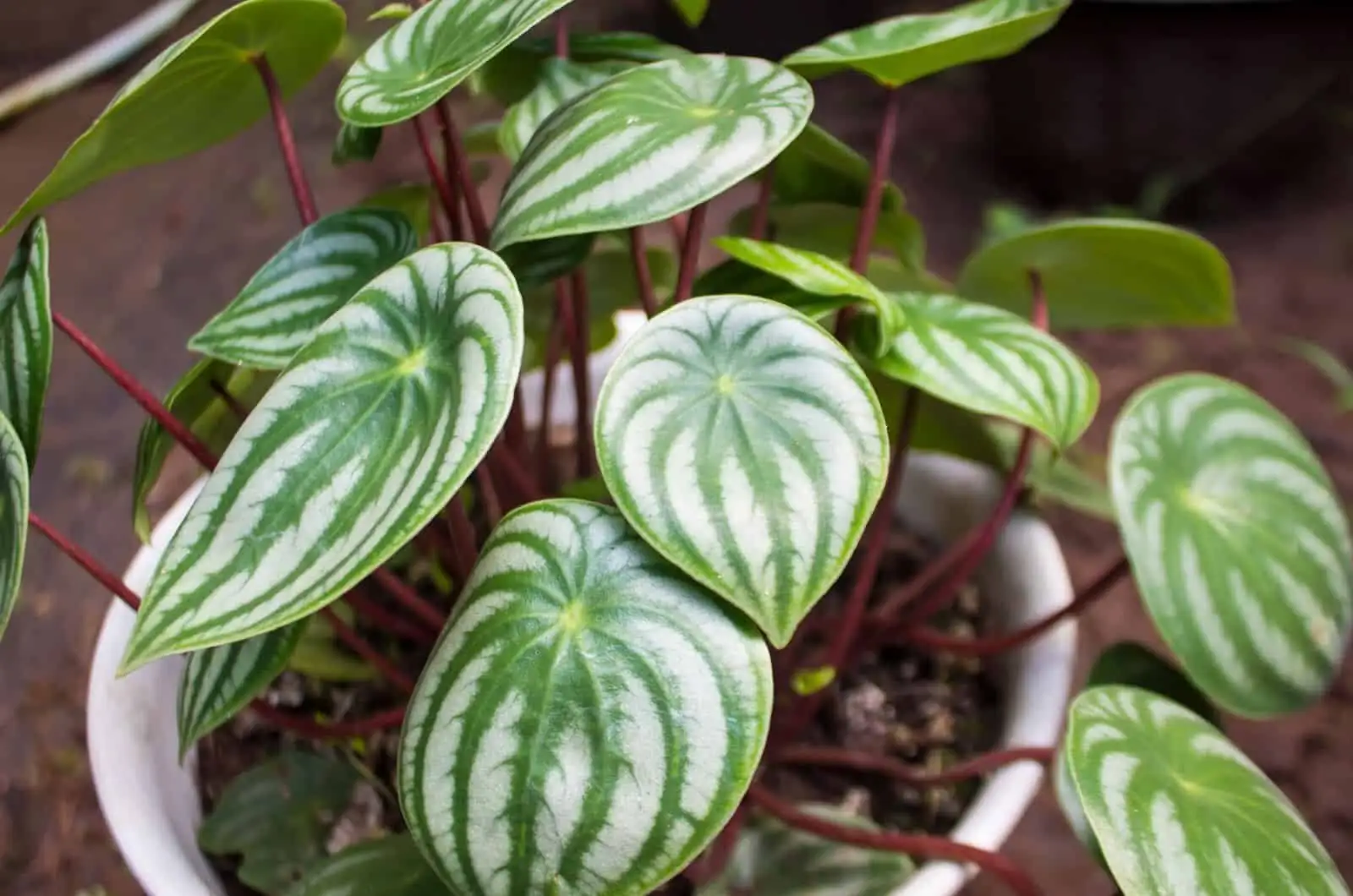
- Water-holding leaves: The blades are thick and slightly succulent—tiny reservoirs that bridge the gap between rain or mist and the next drink. That extra flesh helps prevent wilting when the potting mix (or forest litter) dries at the surface.
- Sunfleck management: The bold silver bands over deep green veins aren’t just a fashion statement. Variegated striping can soften intense sunflecks, spreading and reflecting bursts of light so tissues don’t overheat—useful under canopies that pepper the ground with shifting beams.
- Red petioles as sunscreen: Those often-reddish leaf stalks hint at protective pigments that can buffer leaves from sudden brightness and UV—handy in a world of moving shadows.
- Small stature, big payoff: Staying 15–30 cm tall keeps the plant under the “wind radar,” conserves energy, and retains a humid boundary layer around leaves. It also allows tight rosettes that shed runoff but keep droplets from pooling at the crown.
- Modest roots, efficient mix: With petite roots adapted to airy, quick-draining material, the plant is primed for containers where a loose, fast-draining potting blend mimics its natural litter and moss.
From forest floor to office floor: how it became a desk-plant darling
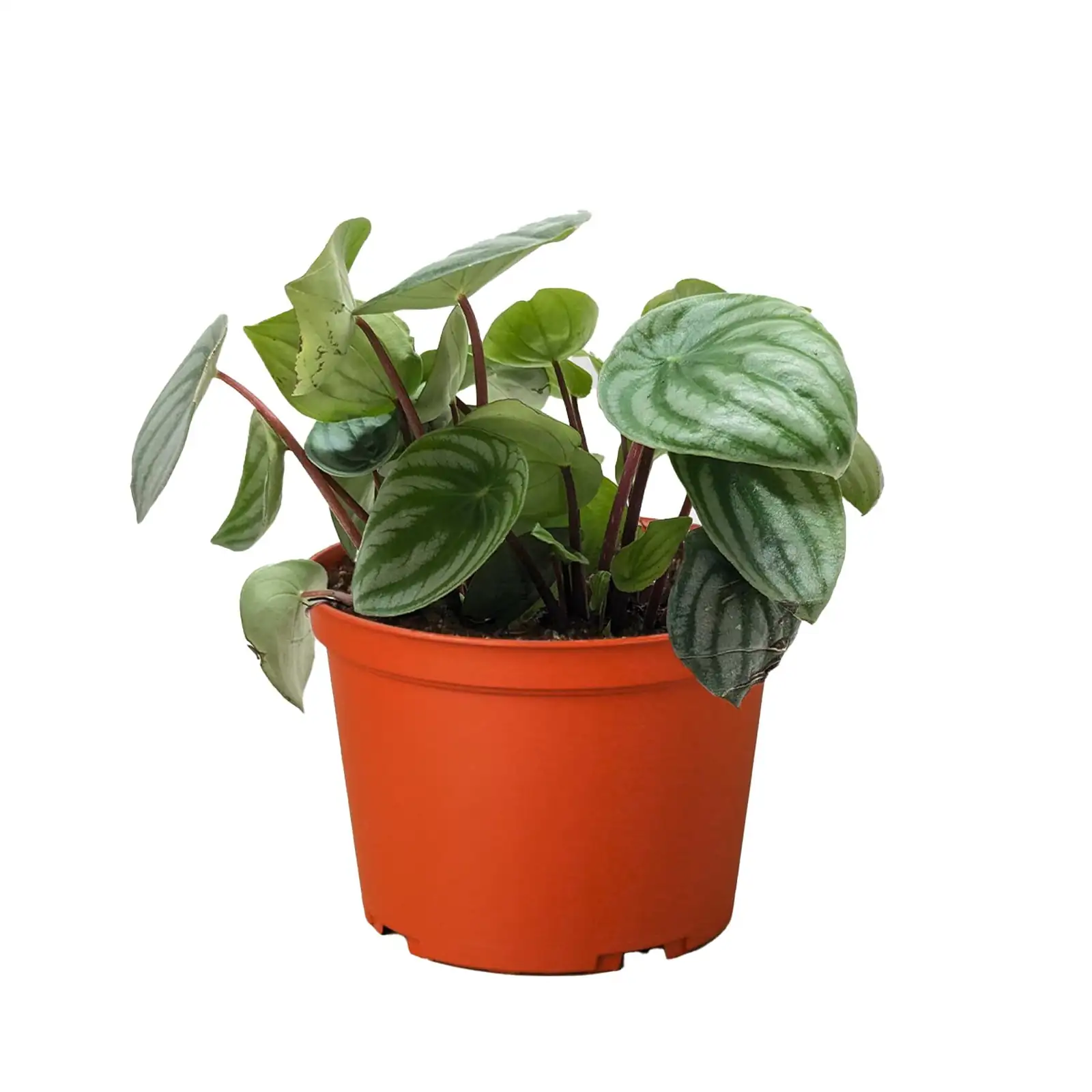
The traits that evolved for the understory turned out to be perfect for modern living.
- Compact by design: It tops out around 6–12 inches with a similar spread—ideal for desks, shelves, and windowsills.
- Bright pattern, low fuss: Those silver-green “watermelon” leaves look sculptural without needing direct sun.
- Forgiving rhythm: Slightly succulent leaves tolerate a missed watering better than many tropicals (just not repeatedly bone-dry).
- Easy to share: You can grow new plants from a single leaf—propagation that invites community and fast distribution.
- Pet-safe reputation: Generally considered non-toxic to cats, dogs, and people—a major plus for home offices and family rooms.
- A memorable name: “Watermelon peperomia” is irresistible branding; people remember it after one glance.
What it looks like up close
- Size and habit: Naturally compact, forming a low clump or mound that stays tidy—especially when slightly pot-bound.
- Leaves: Thick, round to oval blades with bold silvery bands across deeper green veins; a crisp sheen on good days. Held aloft on slender, often reddish petioles.
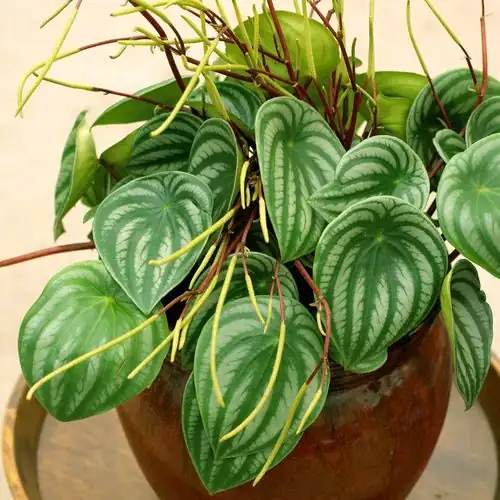
- Flowers: Slim, pale green to cream “rat-tail” spikes in summer to late summer indoors—curious rather than showy.
Re-create the understory at home (care quick-start)
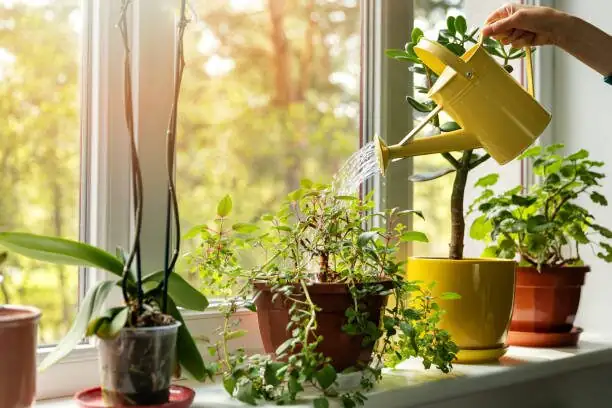
Aim for bright, indirect light, gentle airflow, and a potting mix that dries slightly between waterings.
- Light
- Best: Bright, indirect light to part shade. East windows, bright north windows, or a spot set back from south/west light with a sheer curtain.
- Avoid: Harsh midday sun (scorches and fades striping) and very deep shade (slows growth, dulls pattern).
- Water
- Method: Water thoroughly; then let the top portion of the mix dry before watering again.
- Rhythm: About weekly spring–autumn (adjust to light and heat); slightly less in winter (often ~every 2 weeks).
- Red flags: Sogginess = yellowing, soft leaves, rot. Repeatedly bone-dry = drooping, dull foliage.
- Temperature and humidity
- Sweet spot: 15–24°C (59–75°F). Keep above 10°C (50°F); growth stresses above ~30°C (86°F).
- Draft caution: Protect from cold blasts and hot window glass.
- Humidity: Average indoor is fine; if very dry, use a pebble tray or light misting plus airflow.
- Soil and potting
- Mix: Loose, fast-draining houseplant blend (peat or coco coir) amended with perlite and/or coarse sand.
- Pot: Always use drainage. Slightly pot-bound is preferred.
- Feeding
- During growth: Either monthly at half strength spring–autumn, or more diluted every 2 weeks in peak season (roughly May–August).
- Note: Too much nitrogen can stretch petioles and mute the crisp striping.
- Pruning and repotting
- Prune: Minimal—remove yellow/damaged leaves; thin crowded spots for symmetry.
- Repot: Every 2–3 years or when roots truly fill the pot; move only one size up. Annual top-dressing of fresh mix keeps it perky.
- Propagation (ridiculously fun)
- Leaf cuttings: Take a mature leaf with 1–2 cm petiole. Insert the petiole and the lower third of the blade into a lightly moist, airy medium. Roots in ~3–4 weeks; baby plantlets in ~4–6 weeks.
- Stem cuttings: Root in water or airy mix.
- Division: Split a crowded clump at spring repot.
- Placement ideas
- Desks, bedside tables, bookcases, and windowsills with bright, filtered light. Also lovely in hanging planters in bright shade.
Troubleshooting: what the leaves are telling you
- Yellowing and drooping leaf stalks
- Likely causes: Overwatering, poorly draining mix, low airflow, strong direct sun, or cold drafts.
- Fix: Let the top mix dry between waterings; switch to a faster-draining blend; move to bright-indirect light; increase gentle airflow.
- Curling or drooping without yellowing
- Likely causes: Underwatering or very dry air.
- Fix: Water thoroughly, drain well; boost humidity slightly; keep away from heat vents and cold drafts.
- Faded stripes or scorch
- Likely cause: Too much direct sun.
- Fix: Shift to filtered light or sheer-curtained window.
- Pests
- Usual suspects: Mealybugs, scale, spider mites, whitefly—especially in warm, dry air.
- Response: Treat early with insecticidal soap or horticultural oil; repeat as needed. Improve airflow and avoid overwatering to reduce stress.
Seasonal rhythm at a glance
- Spring: Brighter filtered light; water as the surface dries. Best time to propagate, divide, or repot one size up.
- Summer: Shield from hot midday sun and hot glass; keep evenly moist, never soggy; ensure airflow.
- Autumn: Maintain bright-indirect light; moderate watering; taper feeding.
- Winter: Brightest safe spot, no strong direct sun; water sparingly; pause feeding; protect from drafts.
Safety, symbolism, and a few delightful extras
- Safety: Generally considered non-toxic to cats, dogs, and people. Still, discourage nibbling—any plant can upset sensitive stomachs.
- Symbolism: Often read as freshness and playfulness—its perky, striped leaves feel cheerful year-round. Rather than ancient folklore, this is a modern, visual “flower language” born from the plant’s unmistakable pattern and tidy vitality.
- Fun to know:
- One healthy leaf can launch a whole new plant—shareability is part of its charm.
- The tiny flower spikes intrigue up close, but the real show is the foliage.
- Keeping it slightly pot-bound helps it stay compact and sculptural.
Why it thrives on your desk
In essence, Peperomia argyreia is pre-adapted to the windowsill life: it loves bright but indirect light, prefers a breathable pot and a drink followed by a pause, and keeps its silhouette trim. Evolved for a life under leaves, it slipped neatly into a life under skylights—bringing a slice of South American understory to our everyday spaces, one striped leaf at a time.