

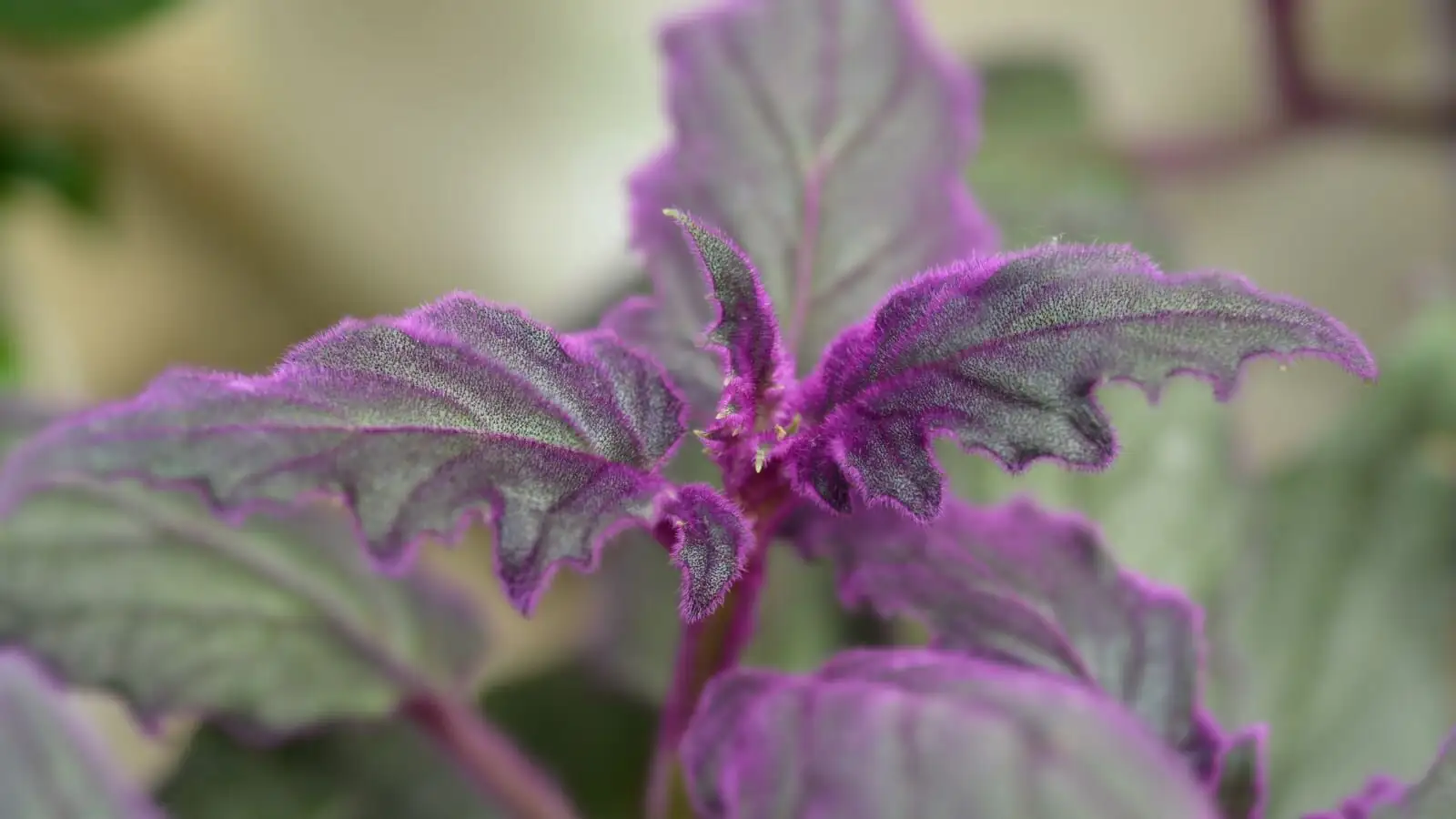
Purple Passion Plant (Gynura aurantiaca) looks like it was dusted with ultraviolet stardust: plush purple hairs cloak green leaves, turning the whole plant into a soft-focus glow in bright light. That glow is delicate, though—and the fastest way to dull it is the most common “care tip” you’ll see online: misting. Let’s bust the myths, dial in easy humidity the right way, and master spill‑proof watering at the soil line so your velvet never loses its luster.
Meet your velvet star
- Botanical identity: Gynura aurantiaca, in the daisy family (Asteraceae). Also called Purple Passion, Purple Velvet Plant, or Velvet Plant.
- Origin: Indonesia (especially Java); now a beloved houseplant worldwide.
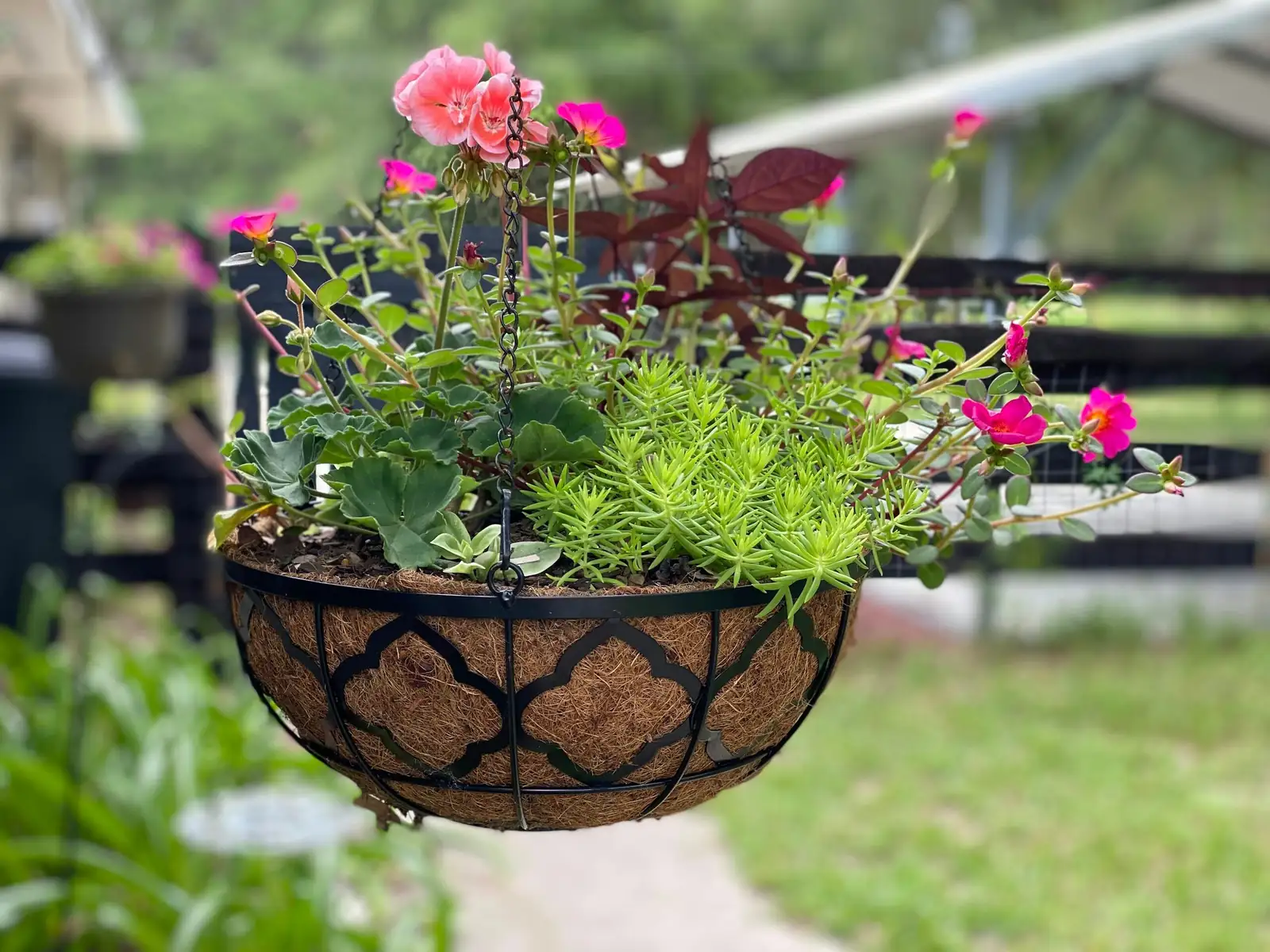
- Habit: Compact when young, then semi‑trailing—perfect for pots or hanging baskets where stems can cascade.
- Look: Green leaves densely coated in fine purple hairs; stems and petioles often purple, too. In bright light, the velvet intensifies.
- Flowers: Small yellow to orange daisies in cooler months; many growers pinch them off indoors because the scent can be unpleasant.
Light it loves: bright, indirect light or light shade—east/west windows or filtered south light are ideal. Too little light = greener, leggier growth; harsh midday sun can scorch and dull the fuzz.
Temperature sweet spot: about 15–24°C (59–75°F). Keep above 10°C (50°F), especially in winter.
The Velvet-Safe Humidity Playbook: Myths vs. what actually works
Myth 1: “It needs rainforest humidity.”
Reality: Moderate humidity is perfect—aim around 40–60%. That’s comfortable for people and keeps the velvet plush. Pushing much higher without airflow can invite issues like rust or dull patches.
Tools that help:
- Hygrometer to spot-check room RH (relative humidity).
- A small circulating fan on the gentlest setting to keep air moving without blasting the leaves.
Myth 2: “Misting boosts humidity and makes the plant happier.”
Reality: Skip it. Water clings to the hairs, leading to spotting, matte patches, or even rot. The result is the opposite of “happy.”
What to do instead:
- Keep leaves dry at all times.
- Water only at the soil line (see the technique below).
- Use a pebble tray, grouping, or a humidifier for hands‑off humidity support.
Myth 3: “Pebble trays don’t work.”
Reality: They do—when set up correctly. They give a modest, steady local boost without wetting leaves.
How to set one up right:
- Fill a wide tray with rinsed pebbles.
- Add water to just below the pebble tops (no pot sitting in water).
- Place the pot on the pebbles so evaporating water bathes the air around the foliage.
- Top up as water evaporates; rinse the tray periodically to prevent mineral buildup.
Pro tip: Wider trays under hanging baskets are terrific for trailing Gynura.
Myth 4: “Grouping plants is all you need.”
Reality: Grouping helps a little by pooling transpiration, but it’s not magic. Keep 2–5 cm of space between pots so leaves don’t trap moisture against each other. Pair grouping with a pebble tray or humidifier for best effect—and always maintain gentle airflow.
Myth 5: “Humidifiers cause disease.”
Reality: A clean, well‑placed humidifier set to 45–55% is your velvet’s best friend. Just:
- Position it a short distance away and never aim directly at foliage.
- Use distilled or filtered water to avoid white mineral dust (especially with ultrasonic units).
- Clean it weekly to prevent microbial growth.
- Keep that gentle fan running so moisture doesn’t stagnate around the leaves.
Myth 6: “Airflow dries plants out and ruins humidity.”
Reality: Airflow prevents wet-leaf troubles, discourages rust, and keeps that velvet pristine. Low, diffuse movement is all you need; think “soft breeze,” not “wind tunnel.”
Precision Watering at the Soil Line (no leaf splashes, no velvet damage)
When to water:
- Spring–fall: when the surface just begins to dry; keep the mix evenly, lightly moist—not soggy.
- Winter: reduce; keep just barely moist with bright light and warmth.
How to deliver water without touching leaves:
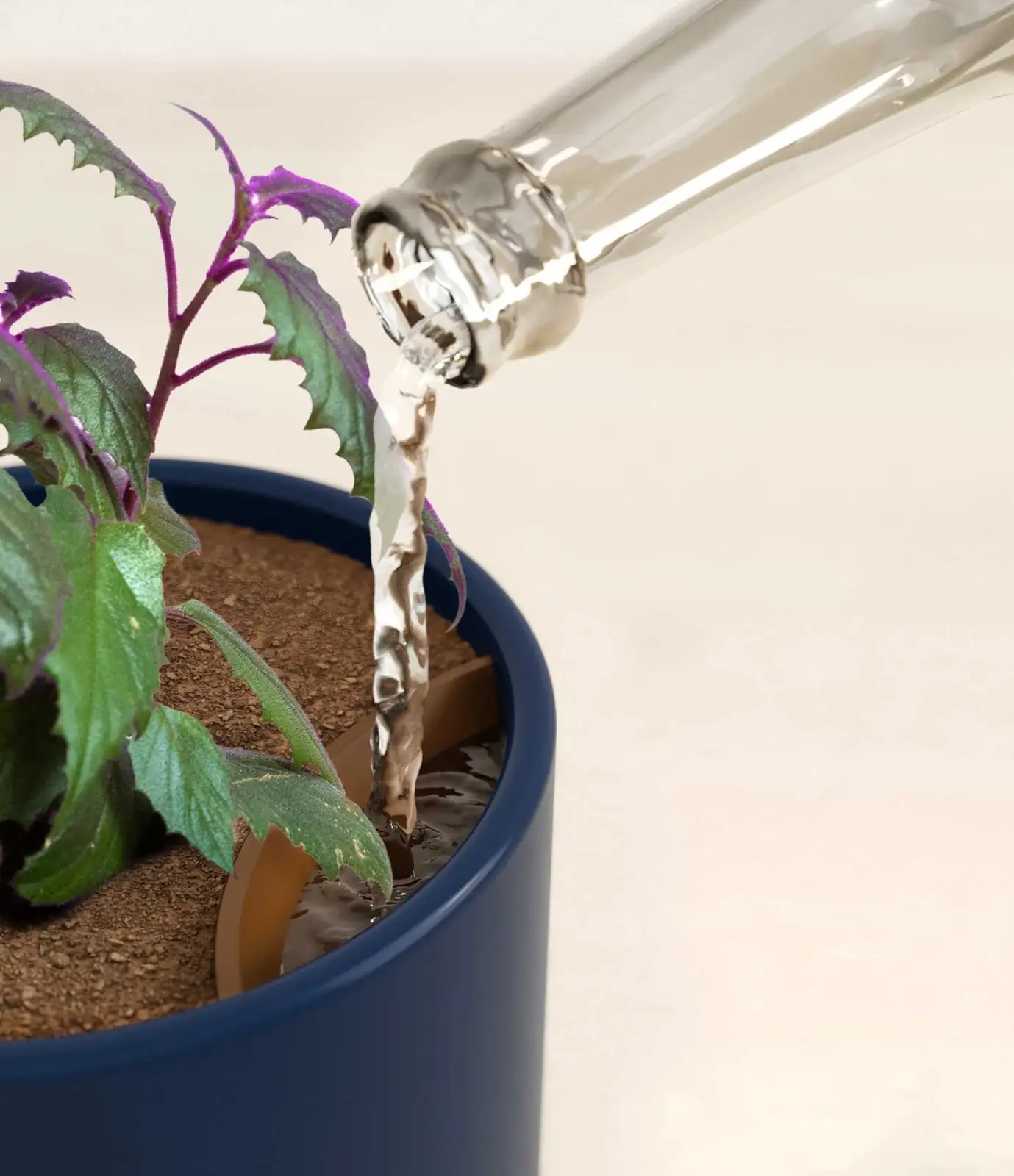
- Use a gooseneck watering can, squeeze bottle, or turkey baster to aim right at the soil.
- Water slowly around the inner rim of the pot so it soaks in rather than surges.
- Shield the crown and lower leaves with your fingers, a piece of plastic, or a paper collar if needed.
- Stop when water trickles from the drainage holes; empty the saucer.
Bottom watering (optional, occasional):
- Set the pot in a tray of water for 10–20 minutes so the mix wicks moisture up.
- Remove and let it drain thoroughly.
- Alternate with top‑watering to flush salts.
If leaves get splashed:
- Gently blot with a soft tissue; don’t rub.
- Run the fan to dry the surface; avoid direct sun until dry.
Water quality:
- Room‑temperature water is ideal (not cold).
- If your tap water leaves residue and you see marks on the hairs, consider filtered water.
Soil, potting, and that lush, trailing shape
- Potting mix: a loose, fertile, well‑draining houseplant mix plus extra perlite; a little compost or leaf mold adds vigor.
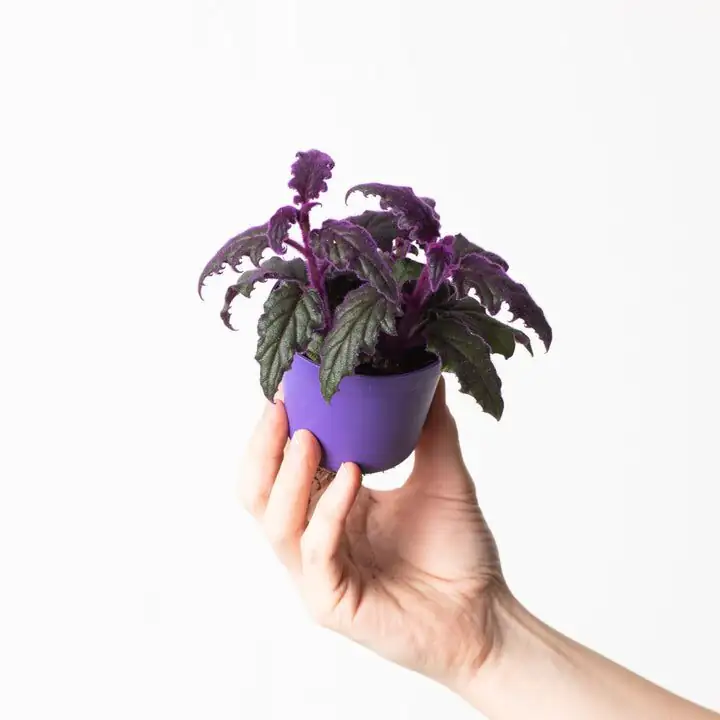
- Pot size: commonly 12–15 cm (4.7–5.9 in). Planting three young starts together makes a fuller, cascading display.
- Repotting: refresh the mix in spring. You can do it yearly for a pristine look, or every 2–3 years if growth stays strong; repot sooner if root‑bound.
- Pinching: nip stem tips as shoots approach about 20 cm (8 in). This encourages branching and that plush “waterfall” of velvet.
A weekly velvet-protection routine
- Light: Confirm bright, indirect light; rotate a quarter‑turn for even color.
- Humidity: Check the hygrometer. Keep 40–60%. Top up the pebble tray; wipe and refill the humidifier.
- Water: Test the top layer; water at the soil line if slightly dry (less in winter).
- Air: Keep a small fan on low to prevent stagnant pockets.
- Groom: Use a soft artist’s brush or microfiber duster to lift dust without wetting the hairs. Remove any yellowing leaves.
- Pinch: Soft‑pinch new tips for density.
- Scout: Check leaf undersides and stem nodes for spider mites, aphids, mealybugs, or whiteflies.
Pest response with velvet in mind:
- Isolate the plant.
- Dab pests with cotton swabs dipped in diluted insecticidal soap or horticultural oil, targeting only the affected spots.
- Allow good airflow to dry quickly; repeat as needed.
Seasonal notes
- Winter care: Keep above 10°C (50°F). Reduce watering but maintain bright light. Buds or small yellow‑orange flowers may appear—pinch them off if you dislike the scent.
- Color fade: If purple looks duller or growth is leggy, move the plant to brighter, indirect light (east/west window or filtered south light).
- Chill damage: Yellowed edges or scorched-looking patches can indicate cold exposure—move away from drafts.
Propagation (because one velvet is never enough)
- Take 7–10 cm (3–4 in) soft tip cuttings with 4–5 leaves; remove the bottom leaves.
- Root in water or a moist, airy mix at 20–25°C (68–77°F) in bright, indirect light.
- Roots typically appear in about two weeks. In humid air, adventitious roots may sprout at nodes—those sections can be snipped and potted.
- Water propagation tip: Once roots reach ~10 cm (4 in), you can add a very dilute nutrient solution; switch back to plain water and change it frequently during hot spells.
Safety
Not considered highly toxic, but ingestion may cause mild stomach upset, and the fuzz/sap can irritate sensitive skin. Keep out of reach of pets and children; wash hands after handling if you’re prone to irritation.
Symbolism and “flower language”
Purple Passion is often linked with bold individuality and vibrant energy—fitting for a plant that glows purple even in a crowd. Rather than stemming from traditional floriography, this meaning springs from its unmistakable presence and electric coloration: it’s a statement plant, more about personality than petals.
Quick-reference: Velvet-saving tools
- Gooseneck watering can, squeeze bottle, or turkey baster for soil-line watering
- Wide pebble tray and plant stand to keep the pot above water
- Hygrometer and clean humidifier with humidistat (set around 45–55%)
- Small oscillating fan on low for steady airflow
- Soft brush/microfiber duster for dry cleaning leaves
- Quality, airy potting mix with perlite; a touch of compost/leaf mold
- Sharp snips for routine pinching and pruning
Keep the leaves dry, the air gently moving, and humidity comfortable. With those simple habits, Gynura aurantiaca will keep its purple velvet—plush, vivid, and irresistibly touchable.