

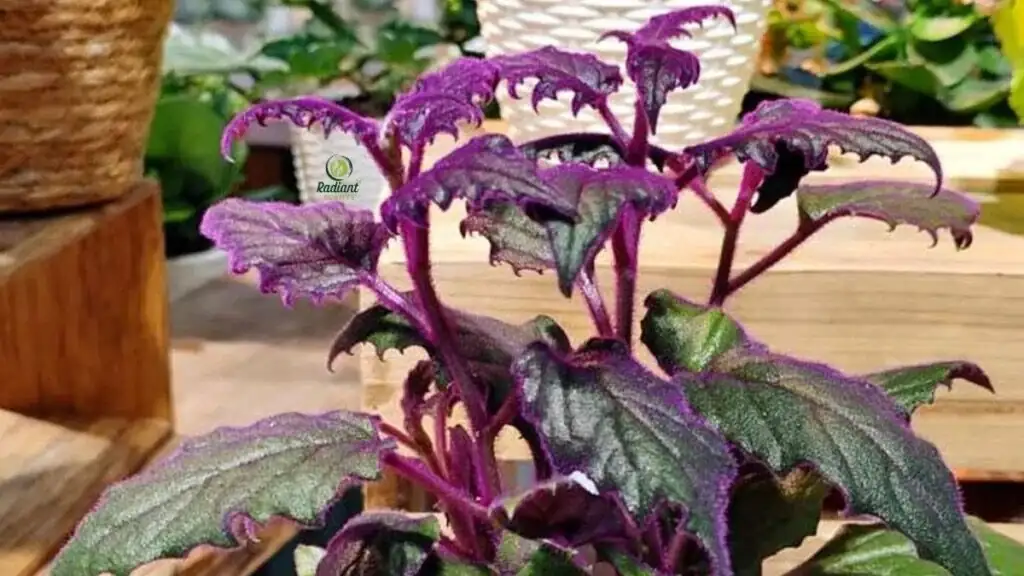
If a velvet blazer were a plant, it would be Gynura aurantiaca—the Purple Passion Plant. In the right light, its leaves glow like brushed suede with a futuristic purple sheen. In the wrong light (or after a casual mist), that magic mattes out. This geek‑chic explainer shows how its fine hairs and pigments bend light, why water droplets ruin the effect, and exactly where to place it—east window, west window, or filtered south—to dial up the glow without bleaching or scorch.
Meet the plant behind the purple shimmer
- Botanical name: Gynura aurantiaca
- Family: Asteraceae (the daisy family)
- Origin: Indonesia, especially Java
- Also known as: Purple Passion Plant, Purple Velvet Plant, Velvet Plant
- Habit: Compact when young; then semi‑upright to trailing—perfect for pots and hanging baskets
- Look: Green leaf blades wrapped in dense, soft purple fuzz; stems often trail and spill elegantly
- Indoors, mature size: Often around 20 × 20 cm (8 × 8 in), spreading wider with age; typically sold in 12–15 cm (4.7–5.9 in) pots
The velvet illusion: how hairs and pigments play with light
Think of each leaf as a green canvas covered by a micro‑forest of purple hairs (trichomes). The glow isn’t just “purple pigment”—it’s optics.
Trichomes: the fiber‑optic pile of the leaf
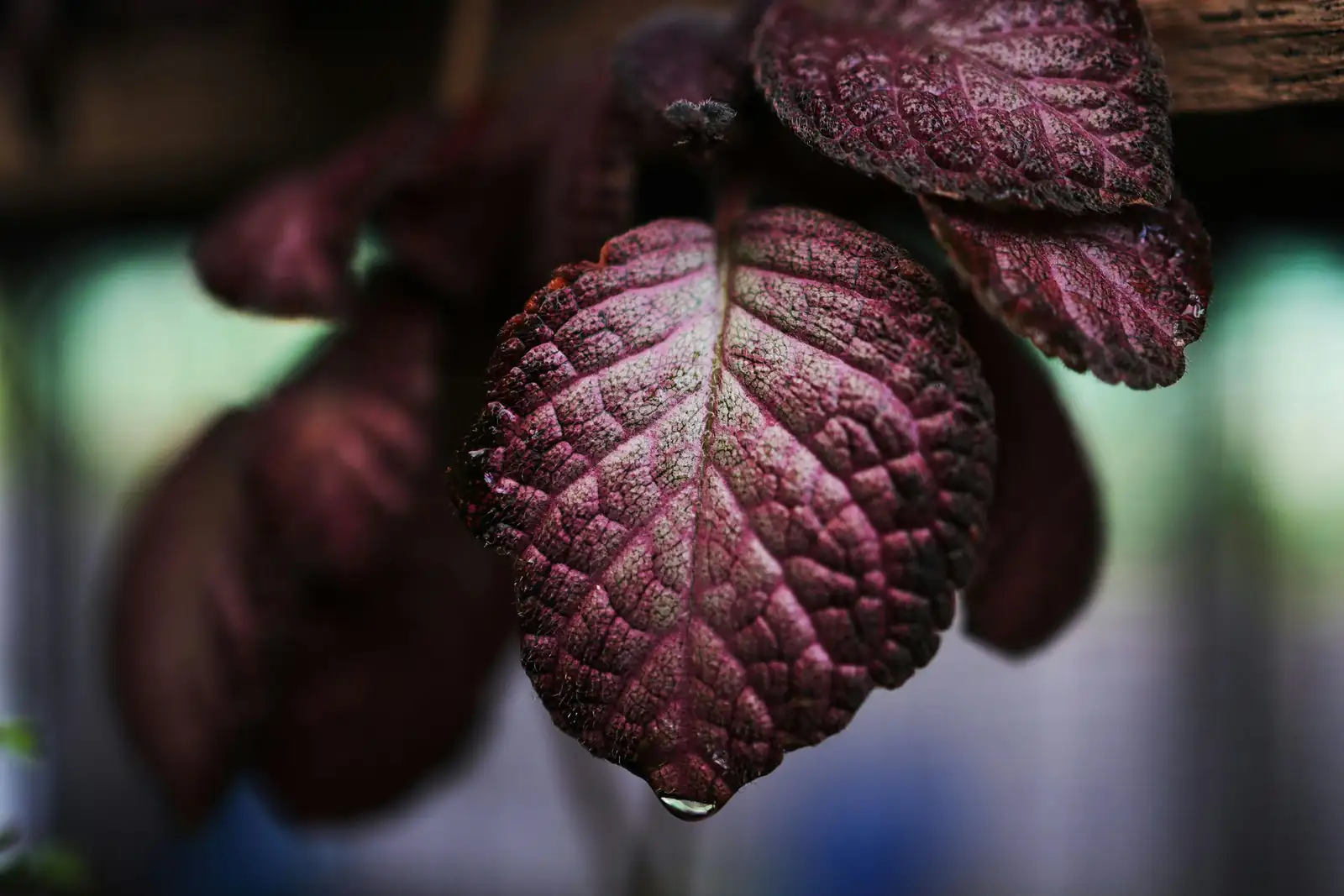
- The leaf surface is carpeted in ultra‑fine hairs that stand proud like velvet pile.
- Light strikes these hairs and is scattered in many directions (diffuse reflection), which creates that plush, soft‑focus shine.
- The “metallic” edge happens when bright, raking light skims the hairs—much like running your hand across velvet and catching a sheen from one angle.
Anthocyanins: built‑in sunglasses with style
- Those hairs (and sometimes outer tissues) are pigmented with anthocyanins—purple/blue/red compounds that:
- Absorb excess light (especially high‑energy wavelengths), protecting the greener tissues beneath.
- Let some purple‑shifted light bounce back to your eye, amping up the color while the green leaf underlay peeks through.
Why droplets dull the sheen (and sometimes damage leaves)
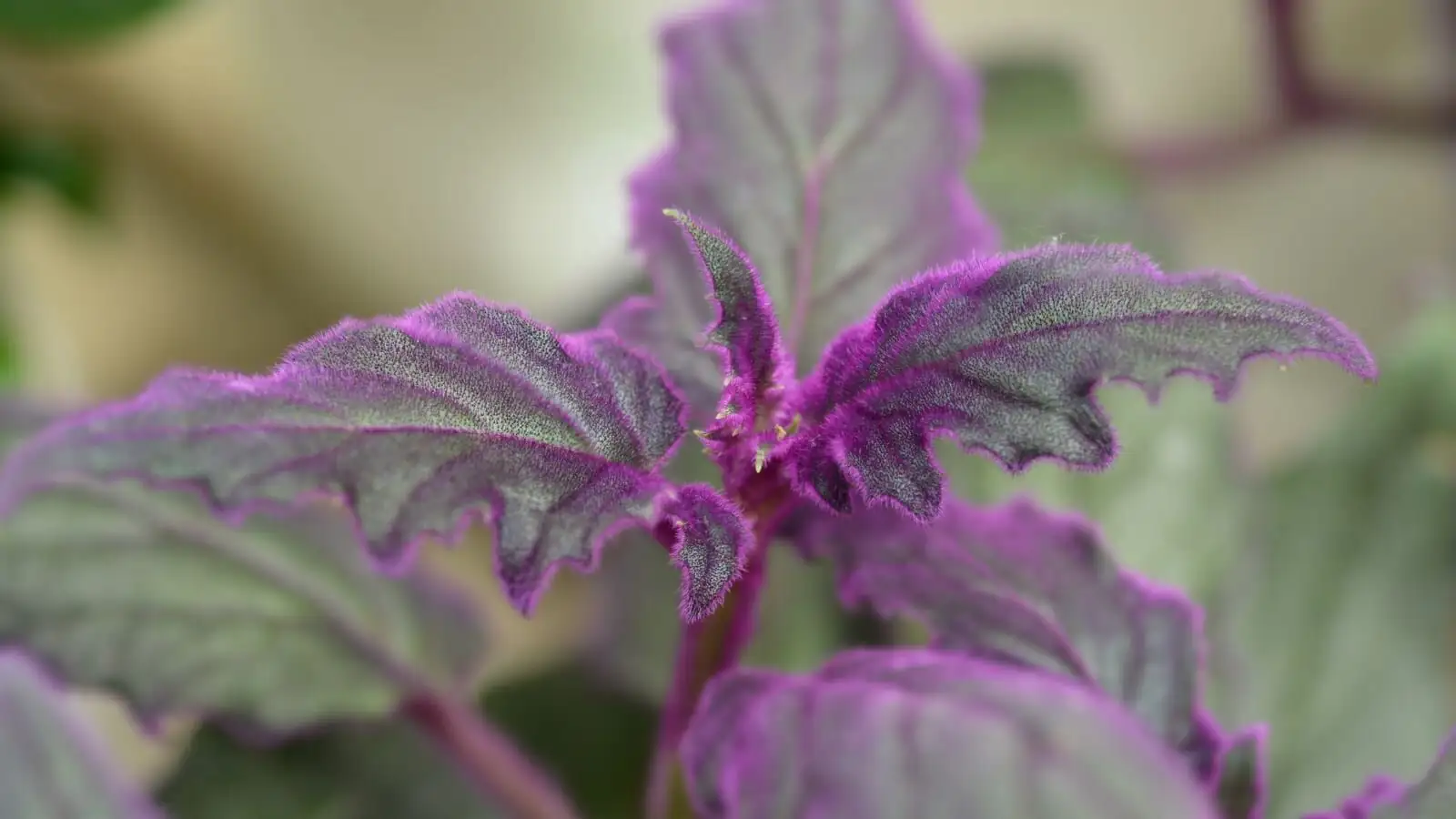
- Water glues down the hairs: Droplets wick along the fuzz, matting it so the micro‑fibers no longer scatter light evenly.
- Refractive “smoothing”: Water fills the air gaps between hairs, reducing the hair‑to‑air contrast that creates diffuse glow—think of wet velvet going flat.
- Spotting and rot: Moisture clings to the fuzz and can invite fungal spotting or rot, leaving dull patches.
- Mini lenses: In strong sun, beads can act like tiny lenses that concentrate light on the leaf surface—another way to get blemishes or scorch.
Bottom line: Keep the foliage dry to keep the velvet loud.
Light placement: east, west, or filtered south for maximum velvet
You want bright, indirect light to energize the purple fuzz without frying it. Placement tweaks the “raking angle” of light that makes the velvet pop.
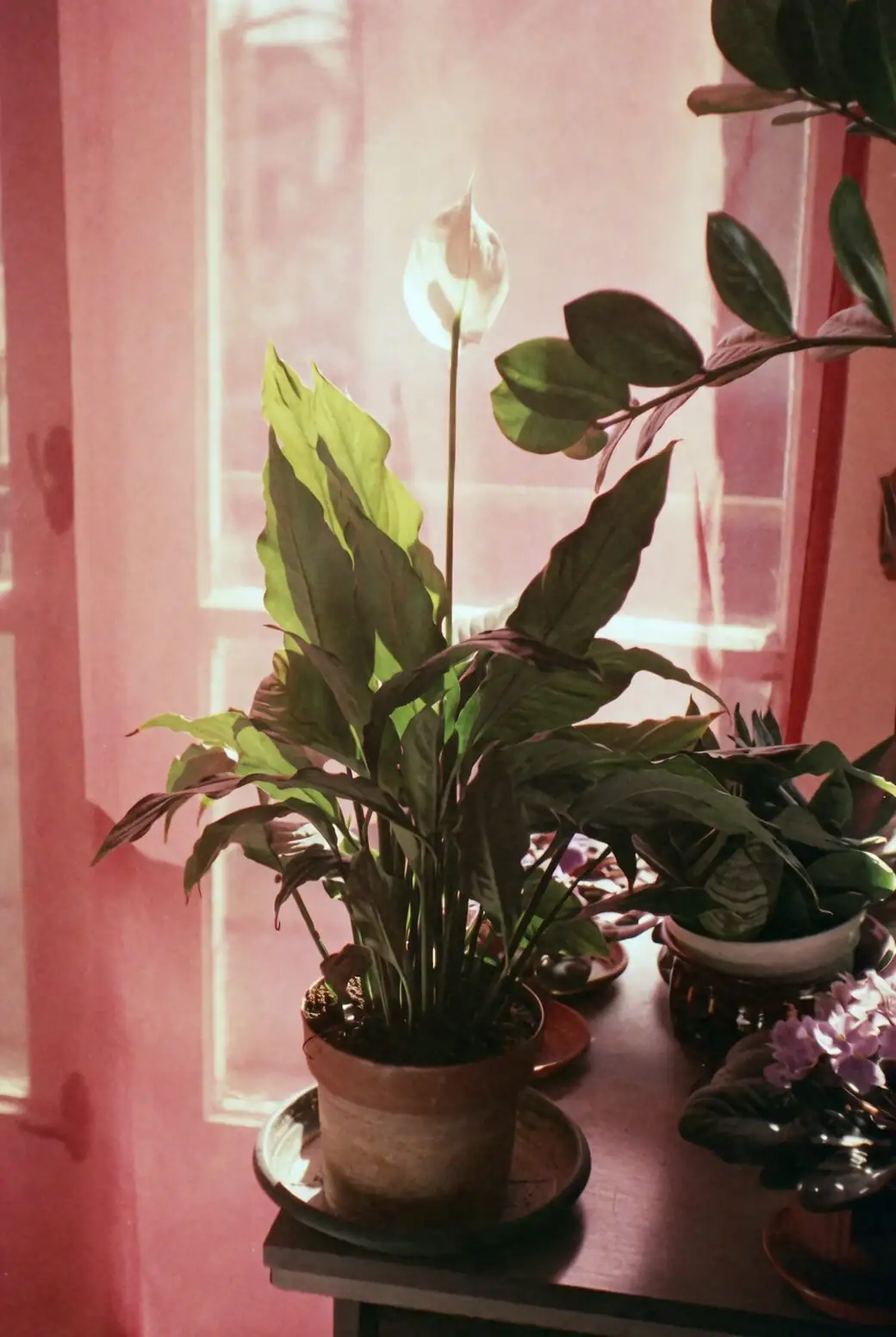
East window (AM glam)
- Pros: Gentle morning sun with excellent side‑lighting that skims the hairs and boosts the glow.
- How‑to: Park it close to the window but out of harsh, direct beams once the sun climbs. Bright mornings + indirect midday is ideal.
West window (golden‑hour spotlight)
- Pros: Late‑day sun arrives at a lower angle, great for sparkle and shadow play on the fuzz.
- Watch‑outs: Summer afternoons can be intense. Pull it a little back from the glass or use a sheer during peak heat to avoid dulling or scorch.
South window (filtered finesse)
- Pros: Reliable brightness for strong color.
- Must: Use a sheer curtain for midday filtering, or place the plant a bit back from the sill so it basks in bright, indirect light. No harsh direct midday sun.
Tips for getting the velvet just right:
- Rotate the pot weekly for even color and growth.
- Target brightness: bright indirect light; if you like numbers, think roughly 5,000–10,000 lux for most of the day.
- Too little light: greener, leggier growth and fading purple.
- Too much direct sun: hairs can look dulled; leaf edges may scorch.
Daily care that keeps the fuzz fabulous
- Watering:
- Spring–fall: Keep the mix evenly, lightly moist. Water when the surface just begins to dry.
- Winter: Reduce—keep just barely moist in bright light and warmth.
- Always water at the soil line. Never mist or pour over the leaves.
- Humidity: Moderate is perfect, around 40–60%. Use a pebble tray or humidifier plus gentle airflow. Skip misting—the hairs hold water.
- Temperature: Best around 13–27°C (55–81°F), with many growers aiming for 15–24°C (59–75°F). Keep above 10°C (50°F), especially in winter.
- Soil: A loose, fertile, well‑draining houseplant mix with added perlite. A pinch of compost/leaf mold boosts vigor.
- Potting note: For a lush look, plant 3 starts in one pot; typical pot sizes 12–15 cm, up to 15–20 cm as it matures.
Shape, refresh, and multiply (pinching + propagation)
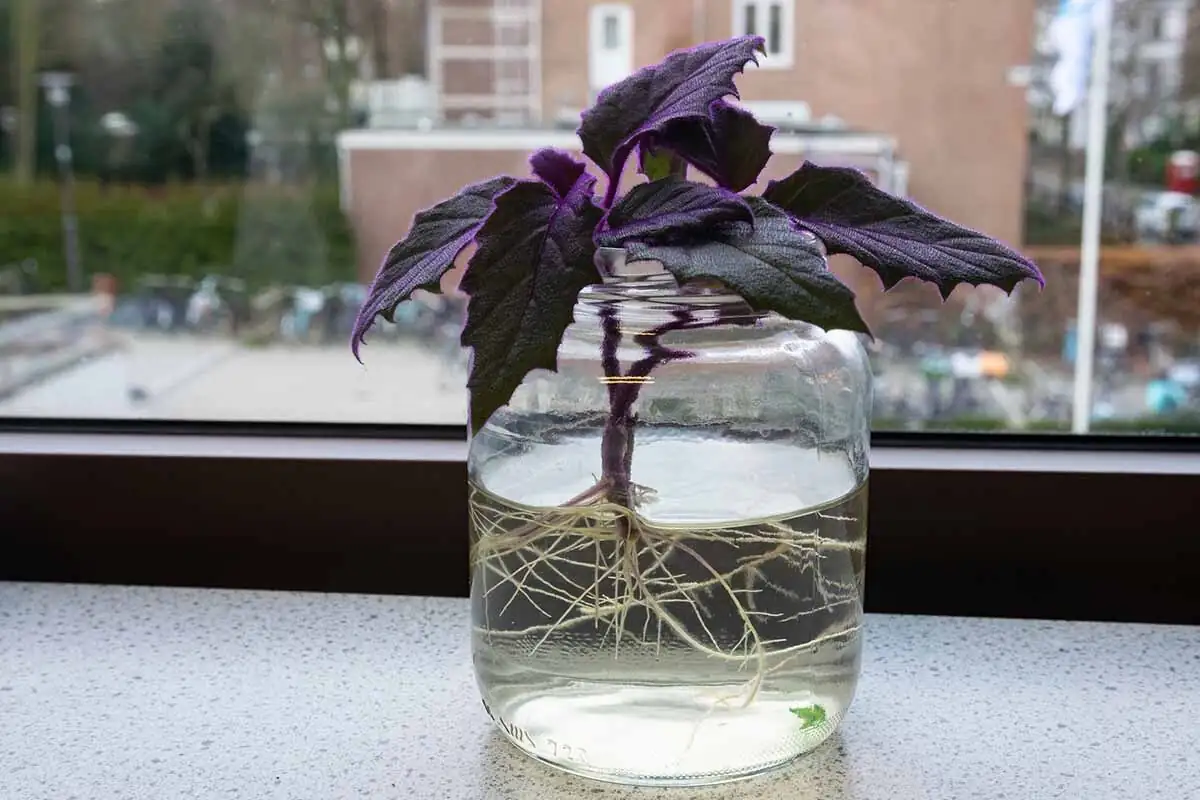
- Pinch for plushness: When shoots hit ~20 cm (8 in), pinch tips to encourage branching and a full, cascading habit.
- Easy cuttings:
- Take 7–10 cm (3–4 in) tip cuttings with 4–5 leaves; strip lower leaves.
- Root in water or a moist, airy mix at 20–25°C (68–77°F) in bright, indirect light.
- Expect roots in ~2 weeks. In very humid air, nodes may sprout little roots on the stem—clip and pot them.
- Water propagation pro tip:
- Once water‑roots reach ~10 cm (4 in), you can add a diluted nutrient solution.
- During hot spells, switch back to plain water and change it frequently; avoid adding fertilizer to the rooting water during heat.
Feeding, repotting, and growth rhythm
- Fertilization (spring–fall):
- Option A: Balanced houseplant feed monthly at label strength.
- Option B: Every 2 weeks at 1/2 strength.
- Reduce or pause in winter. Avoid excessive nitrogen (it can cause weak, leggy growth). A slightly higher‑potassium “bloom” formula (e.g., 15‑15‑30) can be used cautiously if you follow label guidance.
- Repotting:
- Repot in spring to refresh the mix. Yearly keeps it top‑form; otherwise every 2–3 years if vigor stays strong. Repot sooner if root‑bound.
- Quick calendar:
- Spring: Repot, refresh mix, start new cuttings.
- Spring–autumn: Keep lightly moist, feed regularly, pinch for fullness.
- Winter: Bright indirect light, warmer temps, lighter watering; flowers may appear—remove if you dislike the scent.
Flowers: pretty… but pew
- Expect small daisy‑like heads in yellow to yellow‑orange, often in late fall to winter indoors.
- Many growers remove buds: they’re less showy than the foliage and can smell unpleasant.
Troubleshooting and defenses
- Fading purple, legginess: Increase light to bright, indirect (east/west or filtered south).
- Browned edges/patches after a cold snap: Protect from chills; keep above ~10°C (50°F).
- Wet‑leaf woes: Water at the soil line; droplets on the fuzz can cause spotting, dulling, and rot.
- Root rot: Avoid soggy mixes; ensure drainage.
- Pests to watch: Spider mites, aphids, mealybugs, whiteflies—treat early with insecticidal soap or horticultural oil and isolate affected plants.
- Rust in stagnant humidity: Pair moderate humidity with gentle airflow; remove affected parts and keep leaves dry.
Safety notes
- Not considered highly toxic, but ingestion may cause mild stomach upset.
- Sap and fuzzy hairs can irritate sensitive skin—wash hands after handling and keep out of reach of pets and children.
Symbolism and modern “flower language”
While it doesn’t carry old‑world 花语 lore, Purple Passion has become a modern emblem of bold individuality and vibrant energy—very much a “look at me” houseplant. Its glow‑in‑bright‑light aesthetic feels like wearable color for your windowsill: unapologetically expressive, a little avant‑garde, and a reminder that protection (those anthocyanin “sunglasses”) and radiance can coexist.
Quick FAQ
- Why did my plant turn greener?
- It’s a light issue. Move it to brighter, indirect light—east/west window or filtered south. New growth will regain stronger purple; older leaves may stay duller.
- Can I mist to raise humidity?
- No. The hairs trap water, leading to spotting, dull patches, or rot. Use a pebble tray, room humidifier, and airflow instead.
- How should I water without ruining the velvet?
- Water at the soil line. Keep evenly lightly moist in active growth; reduce in winter.
- Do the flowers smell bad?
- Indoors they often do, so many people remove buds.
- How do I propagate it?
- 7–10 cm soft tip cuttings, lower leaves removed; root in water or an airy mix at 20–25°C in bright, indirect light. Usually roots in ~2 weeks.
Fun facts
- That neon‑purple glow is mostly the hairs’ optics, not just pigment in the leaf blade.
- In humid air, stems may sprout adventitious roots at nodes—it almost “self‑propagates.”
- Many treat it as “renewable”: when it looks tired after a couple of years, start fresh from cuttings.
- Below about 10°C (50°F), cold injury shows up fast as yellowed edges and patchy spotting.
The take‑home: give Purple Passion bright, indirect light from an east or west exposure (or a south window with a sheer), keep its velvet dry, and enjoy the kind of shimmer that makes visitors lean in and ask, “Is that… glowing?”