

If you’re craving a houseplant that glows like velvet under good light, Gynura aurantiaca—Purple Passion Plant—is your easy win. Those plush purple hairs catch and amplify light, giving every leaf a neon halo. The trick to keeping that color electric and the growth compact? A simple, seasonal rhythm. Think spring refresh, summer moisture savvy, autumn shaping, and winter light-love with a choice about blooms. Follow this checklist and your plant will stay dense, dramatic, and delightfully touchable (well, almost—keep those leaves dry!).
Meet Gynura aurantiaca at a glance
- Also known as Purple Passion, Purple Velvet Plant, or Velvet Plant; daisy family (Asteraceae).
- Origin: Indonesia (notably Java); grown widely indoors.
- Habit: Compact when young, then semi-trailing—perfect for pots or hanging baskets.
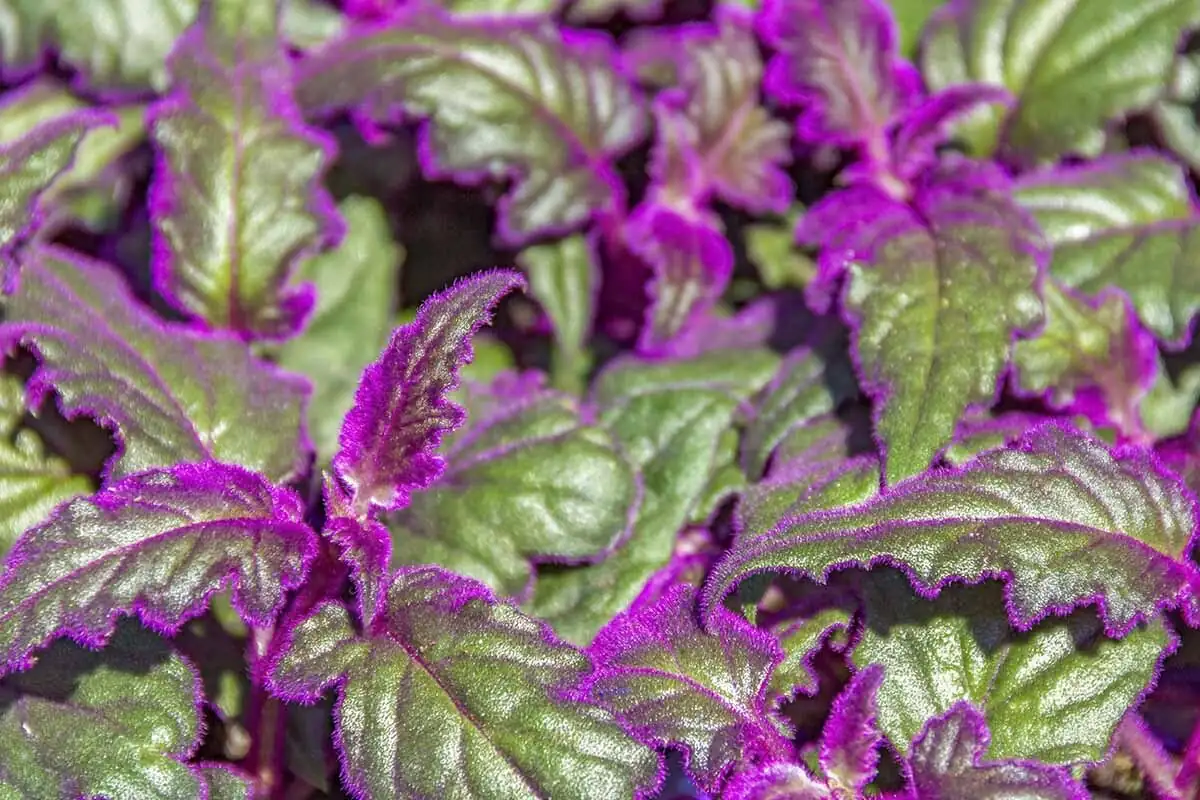
- Star feature: Green leaves swaddled in soft, purple “fuzz” that looks metallic in bright light.
- Flowers: Small yellow to orange daisies in late fall to winter; many growers pinch them off due to a not-so-lovely scent.
The year in easy rhythms
- Spring: Repot, refresh soil, start light feeding, and take cuttings.
- Summer: Keep the mix lightly moist, boost airflow and humidity (without misting), and protect from harsh sun.
- Autumn: Pinch for shape and density; steady your watering and taper feeding.
- Winter: Maximize bright, indirect light, keep warm and barely moist, and decide whether to enjoy or remove blooms.
—
Spring — Reset and relaunch
Fresh start, fuller color.
- Repot for momentum
- Timing: Early to mid-spring.
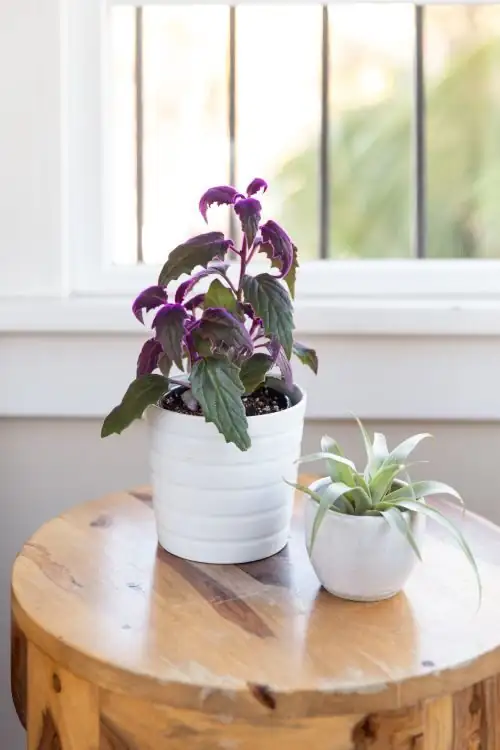
- Size: Commonly grown in 12–15 cm (4.7–5.9 in) pots; move up just one size if root-bound.
- Mix: Loose, fertile, well-draining potting mix; enrich with a little compost/leaf mold and perlite for air.
- Fullness tip: Plant 3 young starts together for a lusher display.
- Light and placement
- Bright, indirect light to light shade. East or west windows are ideal; filter strong south light with a sheer curtain.
- Start feeding—gently
- Option 1: Balanced houseplant fertilizer monthly at label strength.
- Option 2: Every 2 weeks at 1/2 strength.
- Note: Avoid pushing nitrogen too hard (it can cause leggy growth).
- Watering, the velvet-friendly way
- Keep the mix evenly, lightly moist; water when the surface begins to dry.
- Always water at the soil line. Never mist or pour over the foliage—droplets cling to hairs and can spot or rot leaves.
- Pinch and propagate
- Pinch soft tips to spark branching; aim to pinch when shoots reach about 20 cm (8 in).
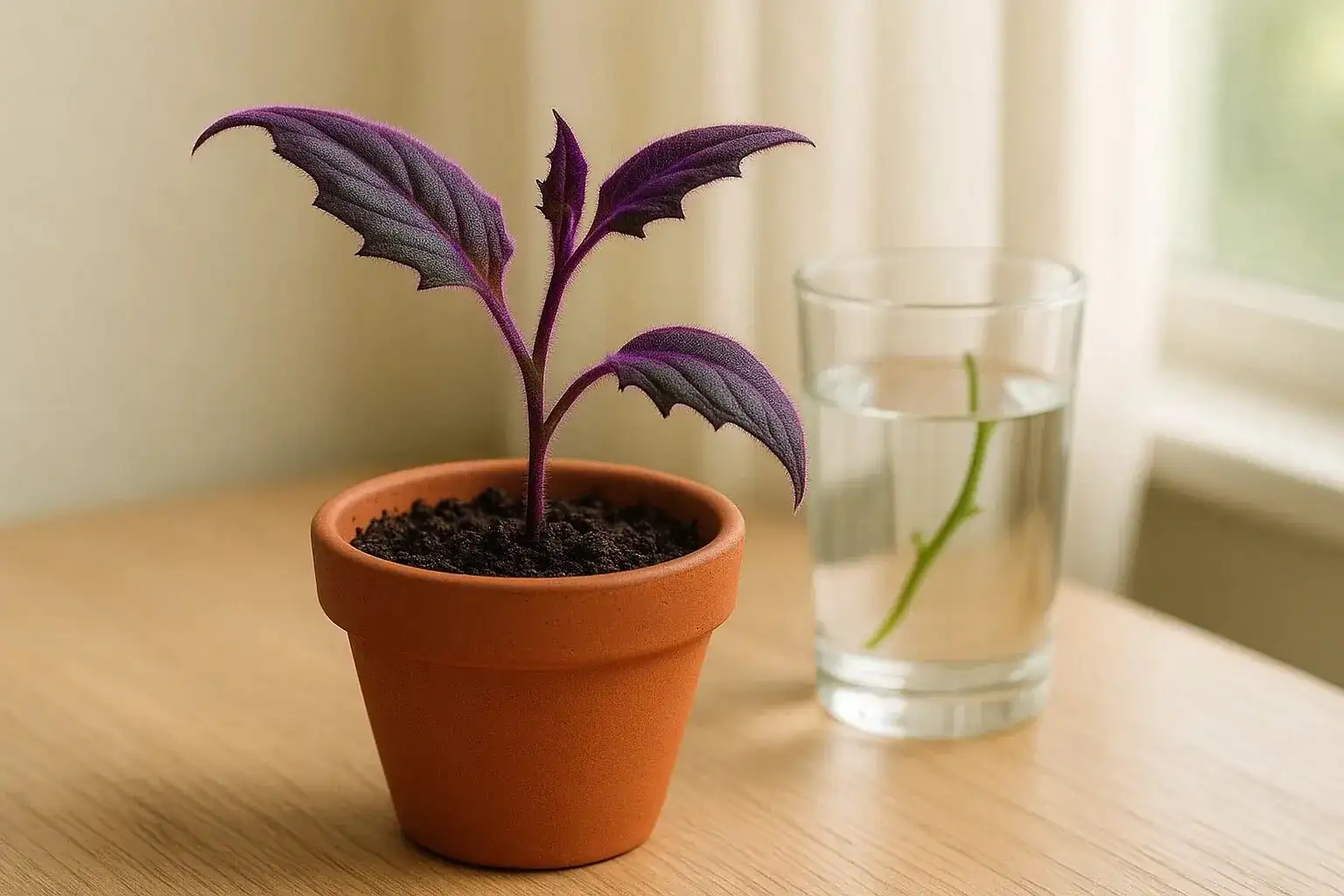
- Take 7–10 cm (3–4 in) tip cuttings; root in water or an airy mix at 20–25°C (68–77°F). Bright, indirect light. Roots often form in ~2 weeks.
—
Summer — Moisture management for maximum velvet
Heat calls for watchful watering and kind light.
- Light
- Bright, indirect is your sweet spot. Shield from harsh midday sun to prevent scorched fuzz and dulled color.
- Moisture, not soggy
- Check more often as heat rises; water when the top looks dry and the pot feels a bit lighter.
- Maintain even moisture, never waterlogged. Let excess drain; empty saucers.
- Keep leaves dry at all times.
- Humidity, without the mist
- Target moderate humidity (around 40–60%) with a pebble tray or nearby humidifier plus good airflow.
- Skip misting; the hairs trap water and can invite spotting or rust.
- Feeding and growth
- Continue your spring schedule. Rotate the pot weekly for even color and compact form.
- Pest patrol
- In dry air, watch for spider mites; also aphids, mealybugs, and whiteflies.
- Treat early with insecticidal soap or horticultural oil and improve airflow. Isolate affected plants to prevent spread.
- Water-prop in hot spells
- If rooting cuttings in water, change water frequently in very hot weather.
- Avoid adding fertilizer to the water during heat; switch back to plain water, then resume dilute nutrients when temps are milder.
—
Autumn — Pinch for poise and steady the pace
Shorter days, stronger shape.
- Shape-up pinching
- Continue tip pinching to keep the silhouette dense and cascading; use pruned tips as fresh cuttings to fill bare spots.
- Light and feeding
- Edging toward lower sun? Slide the plant closer to the window (still filtered).
- Gradually taper feeding as growth slows.
- Watering
- Keep lightly moist but begin easing frequency. Still, no wet leaves—ever.
- Grooming
- Remove yellowing or tired leaves to spotlight vivid new growth.
—
Winter — Hold the light, choose the blooms
The color stays if the light stays.
- Light and warmth
- Brightest indirect light available; a south window with sheer curtain is great.
- Temperature sweet spot: roughly 15–24°C (59–75°F); keep above 10°C (50°F) and away from chilly drafts.
- Watering
- Reduce. Keep the mix just barely moist and never cold-soggy.
- Feeding
- Pause or feed very lightly until spring returns.
- Bloom decisions
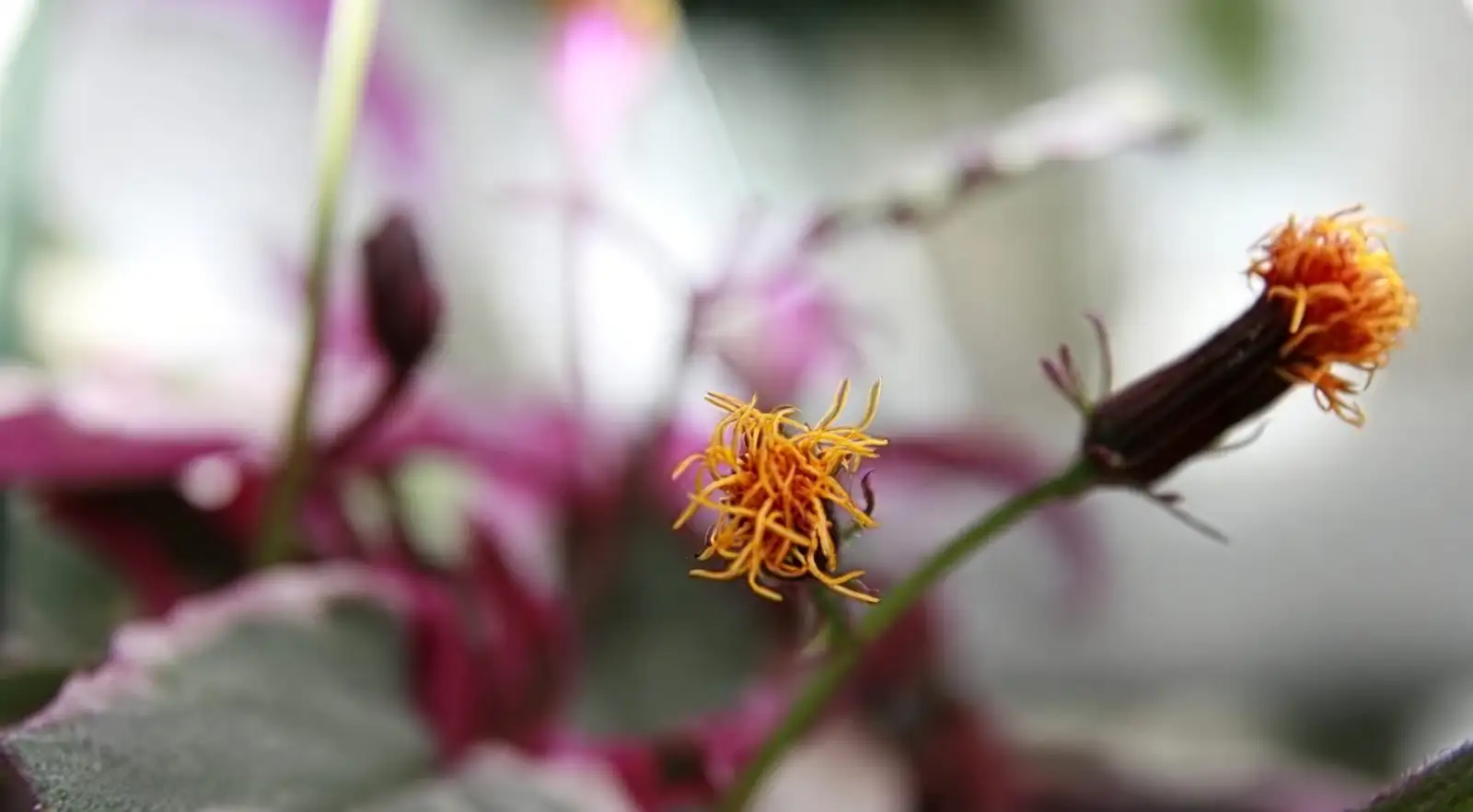
- Expect small yellow to orange daisies late fall to winter. Many growers remove buds/flowers because the scent can be unpleasant and the foliage is the real show. Your call: keep for curiosity, or pinch to conserve energy and maintain the plant’s neat form.
- Velvet care
- Dust gently with a soft, dry brush to keep that plush glow. Avoid wet wiping.
—
Compact color, on repeat: the core habits
- Light drives purple: bright, indirect light keeps hairs vivid; low light = greener, leggier growth.
- Pinch early and often to pack on branches and keep stems from stretching.
- Keep evenly lightly moist; water at the soil line only.
- Refresh the potting mix in spring and repot when root-bound.
- Renew the plant from cuttings every 2–3 years if it gets woody or sparse—fast, easy, and satisfying.
—
Troubleshooting, fast and friendly
- Looks greener or washed-out: increase bright, indirect light.
- Leggy, bare stems: pinch tips; move closer to bright filtered light.
- Scorched edges or patchy spots after a chill: protect from temps below 10°C (50°F).
- Dull, spotty leaves: water is hitting foliage; switch strictly to soil-line watering and improve airflow.
- Limp with wet soil: likely rot risk; let drain, consider repotting into fresh airy mix.
- Tiny webs or sticky leaves: check for mites/aphids; isolate and treat promptly.
—
Safety and smart placement
- Not considered highly toxic, but ingestion can cause mild stomach upset; fuzzy hairs/sap may irritate sensitive skin.
- Best spots: bright shelves, filtered-light windows, or hanging baskets. Use a pebble tray for humidity; avoid misting.
—
A simple seasonal checklist (pin to your pot)
- Spring
- Repot; refresh mix; start cuttings.
- Begin light, regular feeding.
- Pinch tips for branching.
- Summer
- Bright, indirect light; shield midday sun.
- Keep mix lightly moist; raise humidity with a pebble tray and airflow.
- Scout for pests; rotate pot weekly.
- Autumn
- Pinch to refine shape; reduce feeding.
- Maintain gentle, even moisture; remove old leaves.
- Winter
- Max the light, keep warmly above 10°C (50°F).
- Water sparingly—barely moist.
- Decide on blooms: enjoy or pinch off.
—
Symbolism and story
Purple Passion Plant is often linked with bold individuality and vibrant energy—apt for a species that throws a royal velvet cloak over everyday greenery. While there’s no ancient “flower language” traditionally attached to it (it’s cherished mainly for foliage), modern houseplant culture gives it a meaning born from experience: a reminder to seek the right light, prune what no longer serves, and refresh your foundation each spring. In other words, small, steady rhythms create a glow that’s hard to ignore.
Nail the rhythm, and Gynura aurantiaca will reward you with a season-over-season show: compact, cascading, and brilliantly purple.