

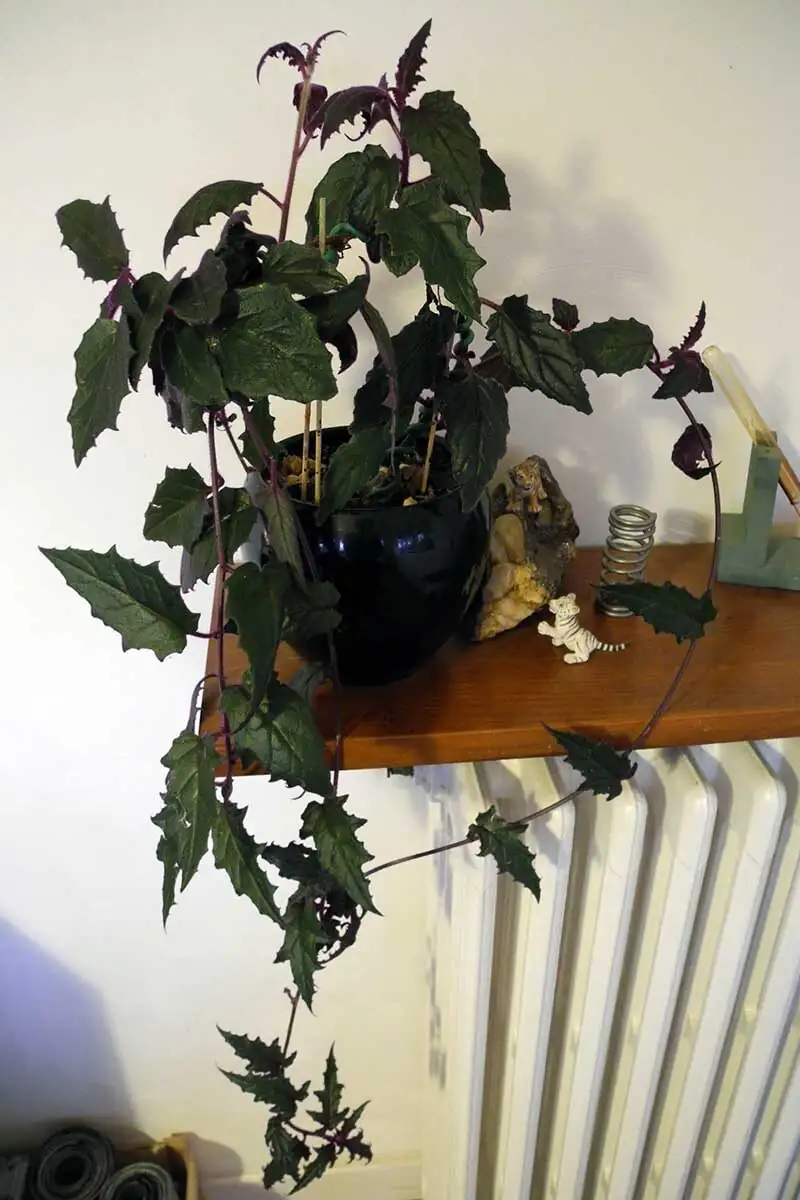
Velvet that trails and glows? Meet Gynura aurantiaca—better known as Purple Passion Plant or Purple Velvet Plant—a dramatic, touchable accent that turns any corner into a jewel box. Its secret is the plush purple fuzz that catches light like mohair, especially when you style it with color and placement in mind. Here’s how to design with it so the foliage stays vivid, lush, and irresistibly soft.
Meet the plant: a quick design brief
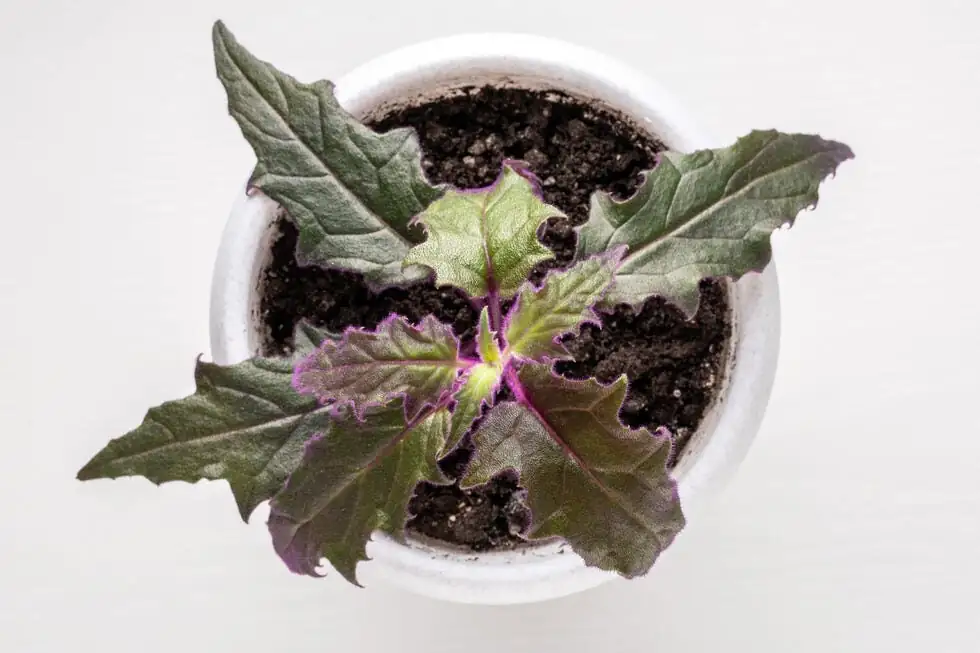
- Look: Green leaves wrapped in fine purple hairs that read as velvety violet—almost metallic in bright, indirect light.
- Habit: Compact at first, then semi-trailing to trailing; perfect for pots on shelves, ledges, and hanging baskets.
- Best light: Bright, indirect or filtered sun (east/west windows, or south with a sheer curtain). Harsh midday rays can scorch and dull the fuzz; too little light turns growth greener and leggy.
- Warmth & humidity: Cozy room temps and moderate humidity suit it best; keep it above about 10°C (50°F).
- Pro tip for fullness: Plant three young starts together in one pot to create instant density and a lush spill.
Planter and wall-color pairings that make purple sing
Think of Purple Passion as a couture fabric: the right backdrop matters.
Planter finishes that flatter velvet
- Matte ceramic in charcoal, smoke, or ink-blue: Deep, low-gloss tones pull the purple forward and add sophistication.
- Soft neutrals (warm greige, putty, taupe): Understate the pot to spotlight the foliage, ideal for minimalist rooms.
- Aged brass or brushed bronze: A subtle warm gleam enriches the purple without competing for attention.
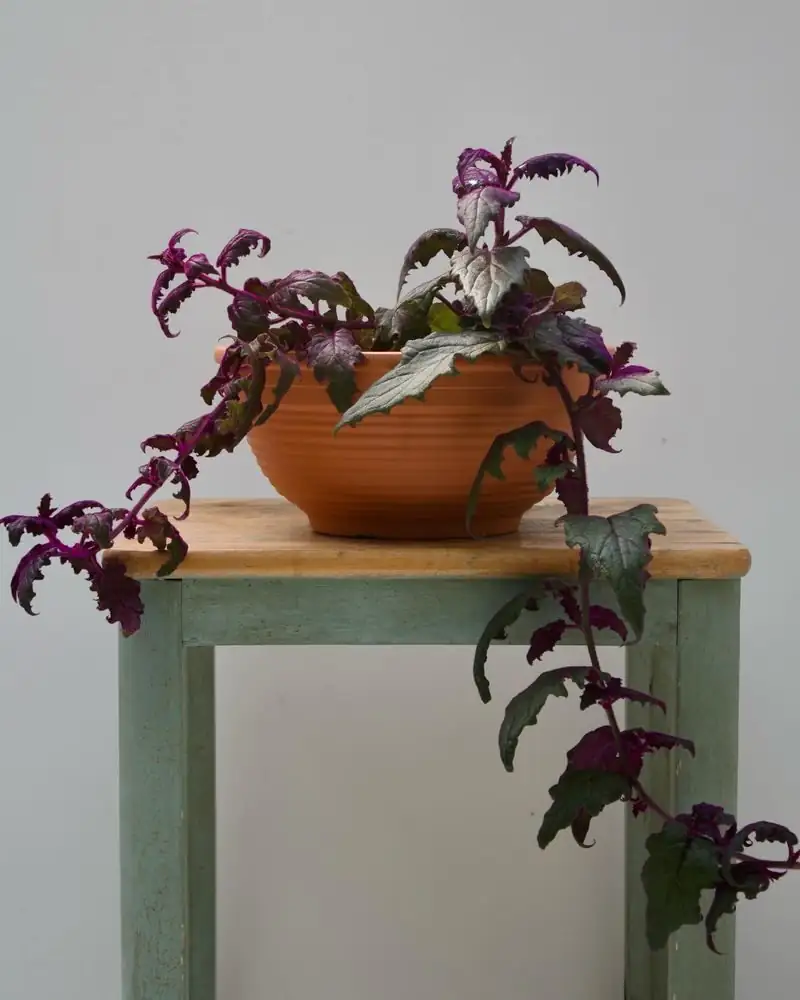
- Terracotta with a satin seal: Earthy contrast that warms the cool violet, especially striking on pale walls.
- Low, wide bowls or shallow footed planters: Encourage the trailing habit to drape over edges and look fuller, faster.
Avoid high-splash zones or self-watering wicks that wet the foliage—the leaf hairs hold droplets, which can spot or dull the velvet.
Wall-color cues
- High drama: Deep charcoal, aubergine, or midnight teal make the purple glow like neon in a gallery.
- Soft contrast: Dusty blush, dove gray, or pale sage keeps things airy while amplifying the violet.
- Botanical luxe: Mossy green or olive creates a tonal dialogue with the leaf undersides and stems.
- Crisp modern: Clean white can work if light is filtered—just avoid direct midday glare that washes the color.
Shelf heights and placements for the best “purple glow”
Velvet shines when light grazes it at an angle. Use that to your advantage.
- Eye-level shelves (or slightly above): Place the pot so stems can trail 10–20 cm (4–8 in) over the edge; the oblique angle makes the hairs shimmer.
- Floating shelves at window height: Mount a shelf beside an east or west window; the plant enjoys bright, indirect light without noon scorch.
- Console or credenza near bright windows: Keep it within bright reach but out of direct beams—perfect for a fuller, slightly cascading look.
- Hanging baskets: A classic move. Install near, not in, the window—think a sheer-filtered south exposure or the bright zone of an east/west room.
Designer’s rule of thumb: Purple Passion reads richest when its top surface faces bright, indirect light and the trailing edges catch side light. Rotate the pot every couple of weeks so all sides sparkle evenly.
Light placement that preserves vivid purple—without scorch
- Best spots indoors: East or west windows with sheer curtains; near a bright south window filtered by a sheer. Avoid harsh, unfiltered midday sun.
- Distance guide: If your window gets strong sun, place the plant a bit back—roughly 0.5–1 m (1.5–3 ft) from the glass—or filter with a sheer curtain.
- Grow lights (if needed): A full-spectrum LED positioned off to the side (not directly overhead) enhances the velvety glow. Keep it bright-but-gentle and give the plant a daily dark period. Place far enough away so leaves don’t heat up.
- Watch the color: Greener, stretched growth means “too dim.” Crispy edges or dulling fuzz means “too intense.”
The “rule of three” for instant fullness
This plant looks extra plush when planted in small groups.
- Pot size: A 12–15 cm (4.7–5.9 in) pot is standard; a 15–20 cm (6–8 in) vessel suits a showier cluster.
- Planting layout: Tuck three young starts evenly spaced in a triangular arrangement. Use a loose, well-draining houseplant mix with added perlite; a little compost or leaf mold boosts vigor.
- Pinch to cascade: When shoots reach about 20 cm (8 in), pinch the tips to trigger branching and a denser trail.
- Refresh cycle: After 2–3 years, if the plant gets sparse, restart with fresh cuttings for that just-fluffed look.
Style recipes you can copy tomorrow
- Jewel-box moment: Matte black footed bowl + aubergine wall + east window with sheer. Let 12–15 cm (5–6 in) of vine spill over; pair with a small brass object for warmth.
- Soft modern: Pale greige planter + dove-gray wall + west light filtered through linen. Add a second shelf below for the cascades to visually connect.
- Indoor pergola: Hanging basket near (not in) a sunny south window, softened with a voile curtain. Mix with trailing green partners in separate pots for contrast—your purple becomes the statement piece.
Care, quietly baked into the design
- Watering: Keep the mix evenly lightly moist in spring–fall; let the surface begin to dry between waterings. Reduce in winter. Always water at the soil line—never over the leaves.
- Humidity: Moderate (about 40–60%) is ideal. Use a pebble tray or a humidifier; avoid misting so the velvet stays pristine.
- Temperature: Aim for 15–24°C (59–75°F). Protect from chills; below about 10°C (50°F) you’ll see damage (yellowed edges, scorched patches).
- Feeding: During active growth, fertilize about monthly at normal strength—or every 2 weeks at half strength. Don’t overdo nitrogen or you’ll get leggy stems.
- Flowers: Yellow-orange daisies may appear in late fall to winter, but many people pinch buds—they’re less showy and can smell unpleasant indoors.
Propagation for effortless refreshes
- Take 7–10 cm (3–4 in) tip cuttings, remove lower leaves, and root in water or a light, airy mix.
- Bright, indirect light and 20–25°C (68–77°F) speeds rooting—often in about two weeks.
- Plant multiple rooted cuttings together for instant fullness.
Quick troubleshooting
- Purple fading, stems stretching: Increase bright, indirect light; move closer to a filtered window.
- Dull, spotted leaves: Likely wet foliage. Keep leaves dry; water at the soil line and improve airflow.
- Limp growth, dark soggy soil: You’re overwatering; refresh the mix if needed and let the top dry slightly between drinks.
- Pests (spider mites, aphids, mealybugs, whiteflies): Treat early with insecticidal soap or horticultural oil and isolate to prevent spread.
Safety note
Not considered highly toxic, but ingestion can cause mild stomach upset, and the fuzzy hairs or sap may irritate sensitive skin. Keep out of reach of pets and children, and wash hands after pruning.
If you’re into plant symbolism
Purple Passion is often associated with bold individuality and vibrant energy—the living equivalent of a statement accessory. It’s a modern, informal reading rather than a traditional “flower language,” but it fits: this plant is hard to ignore, especially when it’s styled to glow.
Bring one home, give it bright-but-gentle light, and pair it like you would a favorite velvet jacket—rich backdrops, thoughtful silhouettes, and just enough shimmer. The result is pure, purple drama.