

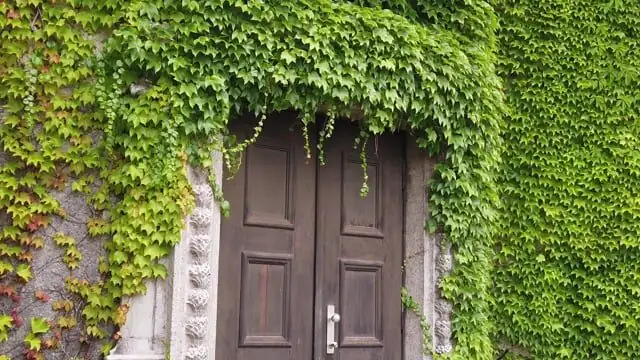
Ivy-draped walls divide opinion: some see a living velvet cloak; others, a creeping threat to brick and budget. With Hedera helix L. (English ivy), both romance and risk are real—and, importantly, measurable. Here’s a data-forward guide to what ivy façades actually do for temperature, air, and noise in cities, alongside the structural and moisture realities and how to install an ivy façade the right way.
Meet the plant behind the façade
- Botanical profile: Hedera helix L., family Araliaceae—an evergreen, woody climber that adheres to surfaces via tiny aerial rootlets.
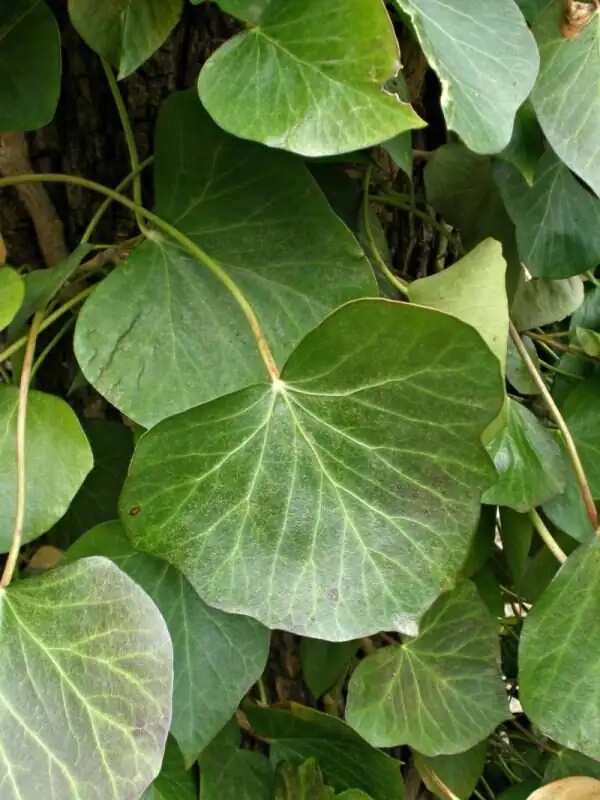
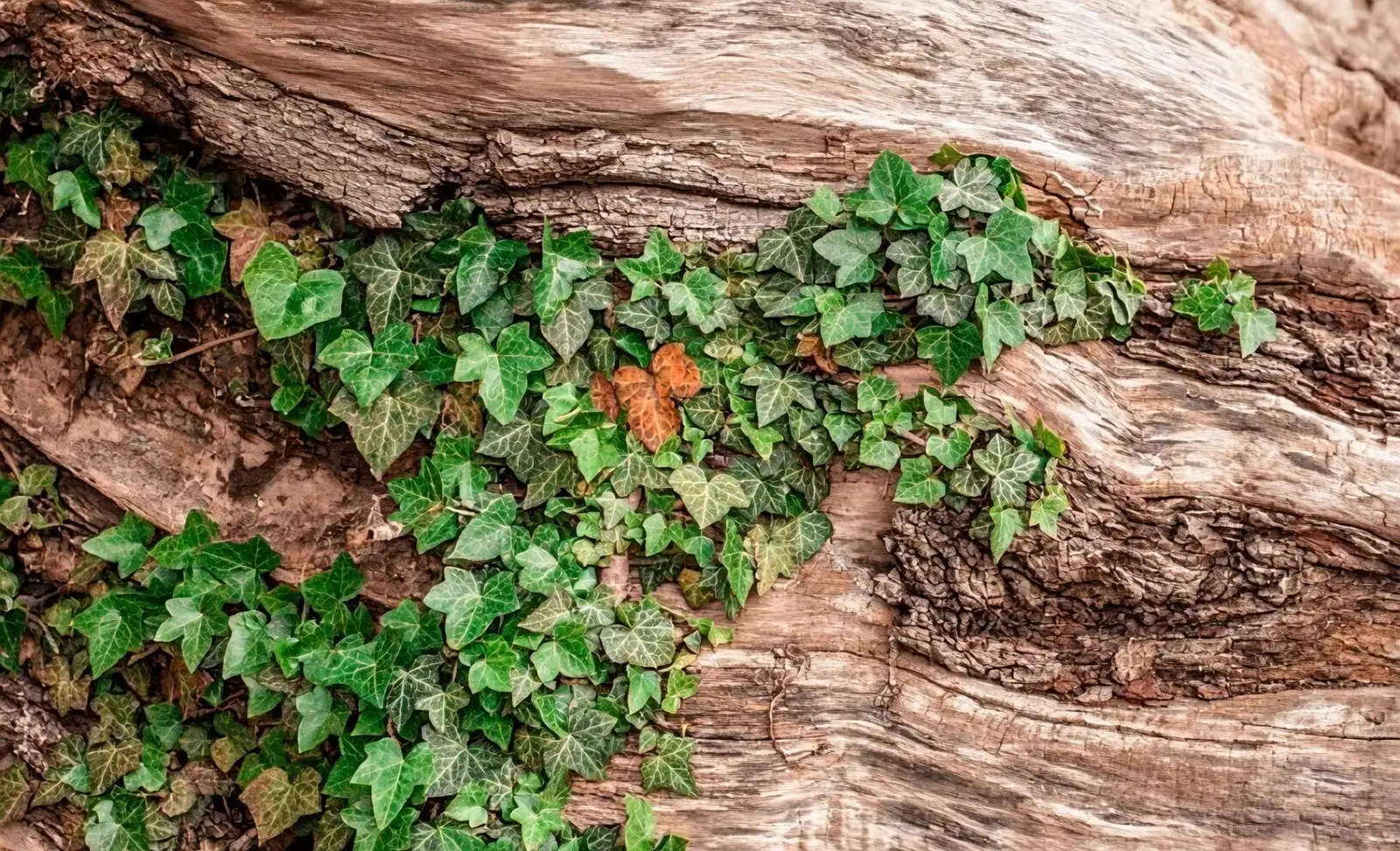
- Two looks, one plant: juvenile shoots bear the classic 3–5 lobed leaves that climb and trail; mature flowering shoots switch to oval or diamond-shaped, mostly unlobed leaves and can produce greenish-white nectar-rich flowers in fall.
- Growth: outdoors it can ascend to roughly 24 m (80 ft); as groundcover it carpets shade; indoors it’s typically kept 3–6 ft as a trailing plant.
- Light: thrives in part to full shade; variegated cultivars need brighter conditions to keep their color. Avoid hot, harsh afternoon sun on exposed façades in warm climates.
- Note on invasiveness and toxicity: potentially invasive outside its native range; berries and leaves are toxic to humans and pets—plan and manage accordingly.
Ivy on façades: what the data says
Temperature buffering: real, and often substantial
What many homeowners have long suspected is now quantified:
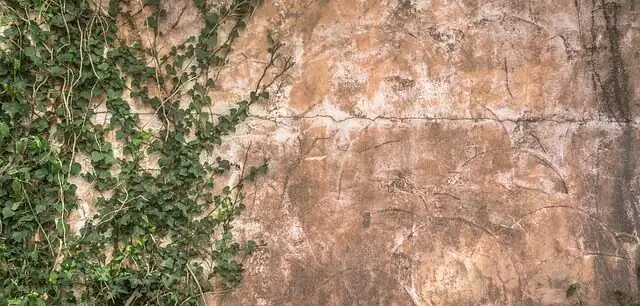
- In model-building trials on sun-exposed walls, Hedera helix provided strong summer cooling. Internal air temperatures were reduced by up to about 7.2°C and external air near the wall by about 5.7°C compared to bare façades. Daily temperature swings also flattened, which eases thermal stress on materials.
- In winter, ivy-clad walls can lose less heat. Measurements on masonry showed the heat transfer coefficient up to roughly 30% lower on greened walls than bare ones—meaning less heat bleeding outward. Surface temperatures under ivy were warmer in winter and cooler in summer than adjacent bare wall, a sign of effective year-round moderation.
- Nighttime effect: temperatures just behind Hedera foliage often stay a bit higher at night in both seasons, which may reduce freeze–thaw cycling right at the wall surface.
Net takeaway:
- Summer: expect a cooler skin on the building and a calmer indoor temperature profile, especially on sun-exposed walls.
- Winter: ivy can function like a thin, porous jacket, reducing conductive and radiative heat loss on masonry.
Humidity and moisture: the nuance you need
- Relative humidity behind the canopy was generally not significantly higher than bare façades, except on warm afternoons when external RH immediately behind ivy rose measurably (peaks of about +11% in summer; +3.7% in winter). That’s a microclimate effect—not a mold guarantee—but one to factor into detailing.
- Rain and wind: a dense ivy layer intercepts driving rain and slows wind at the surface, which can protect sound masonry from wash and thermal shock. However, the same canopy can hold dew and light rainfall on the leaf–wall interface longer, slowing drying if ventilation is poor.
- Where risk rises: on walls with open cracks, crumbling mortar, or soft substrates, aerial rootlets can anchor into defects, expand with growth, and trap moisture inside flaws.
Net takeaway:
- Sound, well-detailed walls can see protective moisture moderation.
- Damaged or damp-prone walls can see problems exacerbated unless repaired and ventilated before greening.
Particulate capture: modest piece, year-round
- Evergreen leaf area means year-round interception of airborne particulates (PM10/PM2.5). The glossy, slightly waxy leaf surface of Hedera helix can load visible dust quickly near traffic.
- Most benefits are local: reductions tend to be most meaningful close to the façade or in street “canyons” where air lingers. Rain periodically washes leaf surfaces; pruning renews cleaner foliage.
- Bonus: by slowing near-wall air and shading masonry, ivy also reduces resuspension of deposited dust from the surface.
Net takeaway:
- Expect a helpful, localized “filter,” not a citywide cure. Positioning (busy streets, courtyards) and canopy density matter.
Urban noise reduction: small but measurable
- Vegetation without a thick substrate is not a soundproof wall. Yet the porous ivy canopy can scatter and absorb some high-frequency noise at the façade.
- Typical outcomes: a small reduction—often around 1–3 dB—perceived as a subtle softening of sharp sounds rather than a hush. Greater benefit comes when ivy combines with setbacks, rough surfaces, or additional acoustic layers.
Net takeaway:
- Think “gentle muffler,” not “studio booth.” Plant density and the geometry of the street strongly influence results.
Risks: structure and maintenance reality check
Where the trouble starts:
- Weak fabric: degraded mortar, hairline cracks, limewash flaking, or soft stone invite aerial rootlets to wedge in and worsen defects.
- Trims and services: gutters, vents, downpipes, and cable penetrations can get obscured or pried by weighty stems; blocked gutters lead to damp inside walls.
- Moisture details: shaded, poorly ventilated corners can dry slowly; ivy can conceal early signs of damp or deterioration.
- Pests and cleanup: the dense canopy can host insects and nesting birds; leaf litter collects on ledges.
- Spread risk: outdoors, ivy can escape into adjacent landscapes and climb trees; in some regions it is invasive—check local guidance.
- Safety: toxic if ingested; sap can irritate skin. Plan safe access for pruning and keep plantings out of easy reach in public-facing areas.
Bottom line: most damage attributed to ivy begins with pre-existing defects or neglect. Healthy walls plus attentive management dramatically reduce risk.
Best-practice installation: how to do ivy façades right
1) Choose your greening type
- Direct greening (self-clinging): ivy climbs the wall via aerial rootlets.
- Best for: robust, well-pointed brick or concrete masonry in good repair.
- Avoid on: soft stone, friable mortar, historic stucco, or walls with hairline cracking.
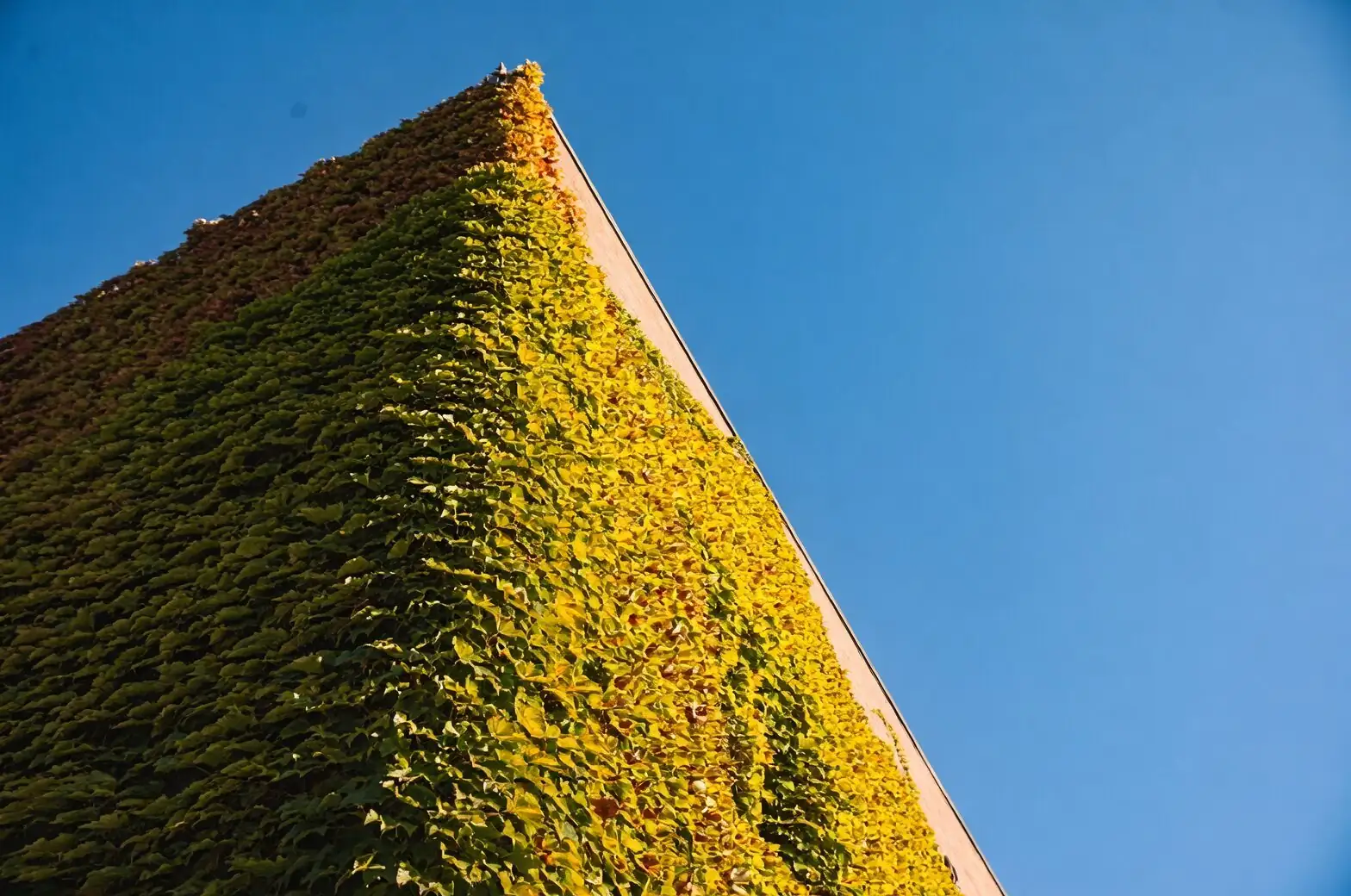
- Indirect greening (stand-off system): cables, mesh, or trellis held 5–15 cm off the wall; ivy climbs the support, not the masonry.
- Best for: heritage façades, insulated/rendered walls, mixed substrates, or where inspection access is vital.
- Bonus: promotes airflow and faster drying behind the canopy.
2) Survey and repair first
- Repoint with appropriate mortar; seal hairline cracks; renew failing render; paint only with compatible, vapor-permeable systems.
- Check and clear gutters, flashings, and downpipes; add leaf guards where feasible.
- Map out exclusions: keep at least 30–45 cm clearance from eaves, gutters, vents, meters, light fixtures, and door/window frames.
3) Planting specs that set you up for success
- Orientation: part shade to full shade suits ivy best; on hot south- or west-facing walls in warm climates, provide irrigation and consider indirect systems to prevent scorch and heat stress.
- Soil: fertile, moisture-retentive but well-drained loam (pH ~6.0–7.5). In planters, use a loose, free-draining mix and pots/boxes with drainage.
- Spacing: 30–60 cm between plants for quick façade coverage; start with multiple plants at the base or on balconies for multi-point training.
- Root management: install root barriers where ivy could migrate into beds beyond your control; never plant at damp-proof course breaches.
- Irrigation: dripline at the base ensures even moisture—aim for roughly 0.5–1 inch (1.3–2.5 cm) of water per week outdoors depending on rainfall and heat. Avoid chronic sogginess.
- Cultivar choice: green-leaved types establish fastest in shade; variegated forms need brighter light and often grow slower—use them where appearance trumps speed.
4) Training, pruning, and access
- Training: fan out young stems; on indirect systems, attach with soft ties; on direct greening, guide shoots horizontally to promote branching.
- Pruning: tip-pinch for density; hard prune in spring to maintain clearance from rooflines and openings; trim stray runners anytime.
- Keep ivy juvenile: regularly cut back any mature, flowering shoots (with unlobed leaves) to limit berry set near public areas and reduce bird dispersal.
- Access: design in a safe anchor point or standing access early; fast, seasonal trims prevent heavyweight-stem problems later.
5) Detail for moisture safety
- Prefer indirect systems or stand-offs where drying is a concern; maintain a continuous 5–15 cm air gap.
- Breaks and reveals: create “breathing zones” (vertical gaps) every 3–5 meters to facilitate inspection and air movement.
- Don’t blanket over known damp patches—fix the source first.
6) Monitoring and maintenance
- Seasonal inspection checklist:
- Masonry, render, mortar, and sealants: intact and crack-free?
- Gutters and downpipes: clear and secure?
- Vents and services: unobstructed?
- Pest presence: manage humanely and legally.
- Pests on the plant: rinse foliage; improve airflow; treat sap-sucking insects with insecticidal soap or neem. Raise humidity only for indoor ivy—outdoors, focus on good plant vigor and clean water.
7) Compliance and context
- Invasiveness: confirm local guidance; consider containment or alternatives if ivy is listed as invasive.
- Fire and code: clearances from openings and boundaries may apply—check local rules.
- Toxicity: plan signage or placement to minimize public contact; all parts can cause stomach upset; sap may irritate skin.
Quick myth-versus-reality roundup
- “Ivy always wrecks walls.” Reality: it exploits existing defects. Sound masonry plus regular trimming and inspections typically fare well; indirect systems add a stronger safety margin.
- “Ivy makes buildings damp.” Reality: it can reduce driving rain and thermal swings on sound walls, but it can slow surface drying in still, shaded spots. Detail for airflow and keep clear of problem areas.
- “It will slash my energy bills.” Reality: ivy moderates surface temperature and can reduce heat transfer through masonry, especially in winter; the exact savings depend on wall construction, exposure, and coverage.
- “It’s a noise shield.” Reality: expect a gentle reduction (often 1–3 dB), most noticeable for high-frequency noise, not a dramatic hush.
Culture corner: why ivy symbolizes fidelity
English ivy’s reputation for devotion and endurance traces to its clinging habit and evergreen leaves—a plant that holds fast and stays green when others fade. In Victorian flower language, ivy spoke of marriage and constancy; in classical Europe it was sacred to Dionysus and adorned revelers. Beautiful symbolism, yes—but on buildings, fidelity is earned with sound detailing and steady maintenance.
Bottom line
Hedera helix can be a hardworking façade partner: cooling in summer, tempering heat loss in winter, catching a little dust, and softening city noise. Those benefits come into their own when the wall is sound, the system (direct or indirect) fits the substrate, and maintenance is routine. Respect its vigor, plan for moisture and access, and prune with intent—and ivy rewards you with a living skin that’s more science than myth.