

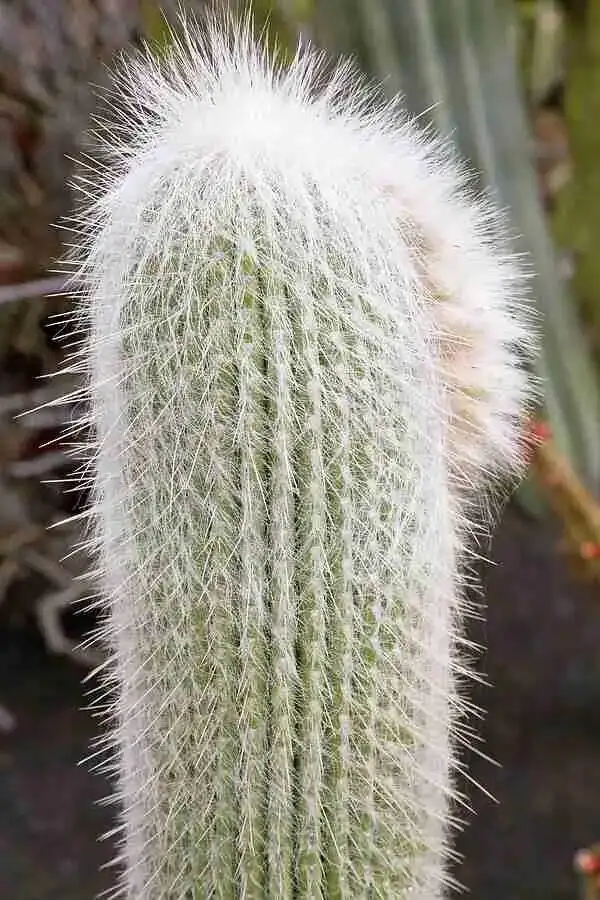
If you’ve ever felt stared down by a plant, it was probably Cephalocereus senilis—the Old Man Cactus. That halo of silky white hair makes it unforgettable, but it’s the flowers that really haunt collectors’ dreams. Here’s the friendly truth: those blooms are elusive. With the right expectations and cues—age, size, strong light, and savvy temperature management—you’ll give yourself the best shot. And when something fuzzy pops near the crown, you’ll know whether it’s just a fresh beard or the start of a bona fide bud.
Meet the sage on the sill
- Botanical name: Cephalocereus senilis (Cactaceae)
- Origin: East‑central Mexico, especially Hidalgo and Veracruz, on arid limestone slopes
- Habit: Upright, columnar stem, usually unbranched; can clump from the base with age
- Signature feature: Long, silky, silver‑white “wool” that cloaks the stem (with hidden spines beneath)
- Typical potted size: About 30 × 10 cm (12 × 4 in); much taller with time in greenhouse/outdoor conditions
- Flower colors: Red, yellow, or white (typically in summer)—but blooming is uncommon in containers, especially indoors
The honest timeline: age and size before flowers
Think of Old Man Cactus as the marathoner of the cactus world—steady, long‑lived, and not in a rush to reproduce. In habitat, it eventually becomes a towering column; on a windowsill, it often remains a tidy 12 inches or so for years.
- Expectation check:
- Indoors or in small pots: Blooming is rare. Enjoy it for its dramatic hair and architecture.
- In a sun-soaked conservatory or warm outdoor climate with years of strong care: More possible, but still a patience play.
- Maturity signals:
- Height: Taller, thicker stems are a good sign, but there’s no single “bloom height” you can bank on in cultivation.
- Age: True maturity often takes many years (think in decades), not seasons.
Translation: If you never see a flower, you’re still growing it right. The “win” with this species is a healthy, shaggy column that slowly becomes more statuesque.
Light: the non‑negotiable bloom driver (and hair thickener)
Full sun is the single best investment you can make.
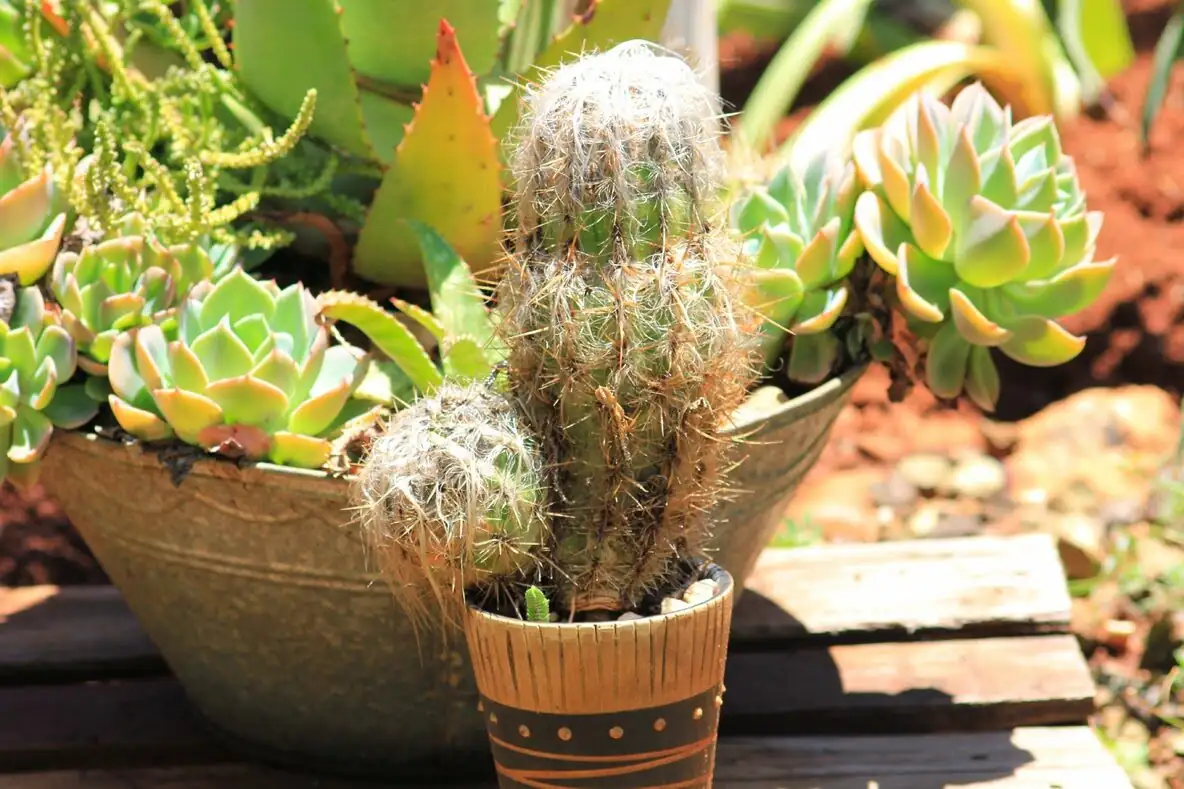
- Best placement: A sunroom, greenhouse, or the brightest south‑facing window you have.
- Daily dose: As much direct sun as you can provide; brighter exposure creates denser, whiter hair.
- Summer strategy: In very hot climates, offer light afternoon shade—especially if you’ve just moved it outdoors—to prevent scorch.
- Acclimate gradually: Increase sun exposure over 10–14 days after winter or a move.
Tip: If the “beard” looks thin or dingy and the stem leans toward the light, it needs more sun.
Temperature cues that whisper “bloom now” (eventually)
Old Man Cactus reads the seasons by temperature and moisture. Use that to your advantage.
- Growing season (spring–summer): 10–32°C (50–90°F) with strong light. Keep the mix fast‑draining and let it dry between waterings.
- Rest season (winter): Keep it cool and very bright. Aim around the lower end of the safe range (near 10°C/50°F) and keep the soil nearly dry.
- Frost line: Protect from frost; aim to keep it above about 5°C (41°F). Cold + wet is dangerous.
That cool, bright, very dry winter is a key cue that mimics its arid habitat—and it’s one of the classic ingredients for flower readiness in many columnar cacti.
Water and feeding: fuel for slow, steady maturity
- Watering:
- Spring–summer: Drench, then let the top 1–2 cm (0.4–0.8 in) dry completely before watering again.
- Winter: Cut way back—just 1–2 waterings for the entire season (or none if kept cool and bright).
- Feeding: Once a month in spring and summer with a cactus fertilizer. Stop in fall and winter.
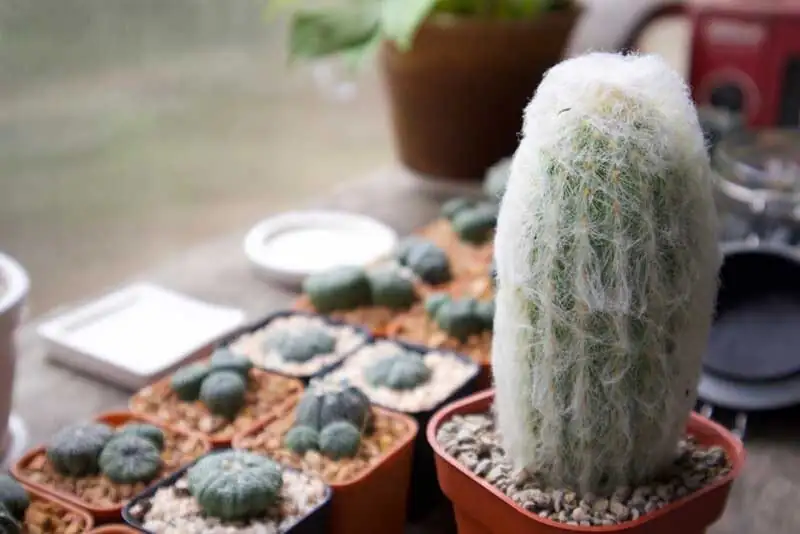
- Soil: Very fast‑draining cactus mix. DIY: equal parts potting soil, coarse sand, and perlite/pumice.
- Repotting: Young plants each spring; mature plants about every 2 years. Only size up slightly to avoid excess wet soil around roots.
How to tell a flower bud from new hair growth
When something changes near the top, grab a magnifying glass—your eyes will thank you. Here’s what to look for:
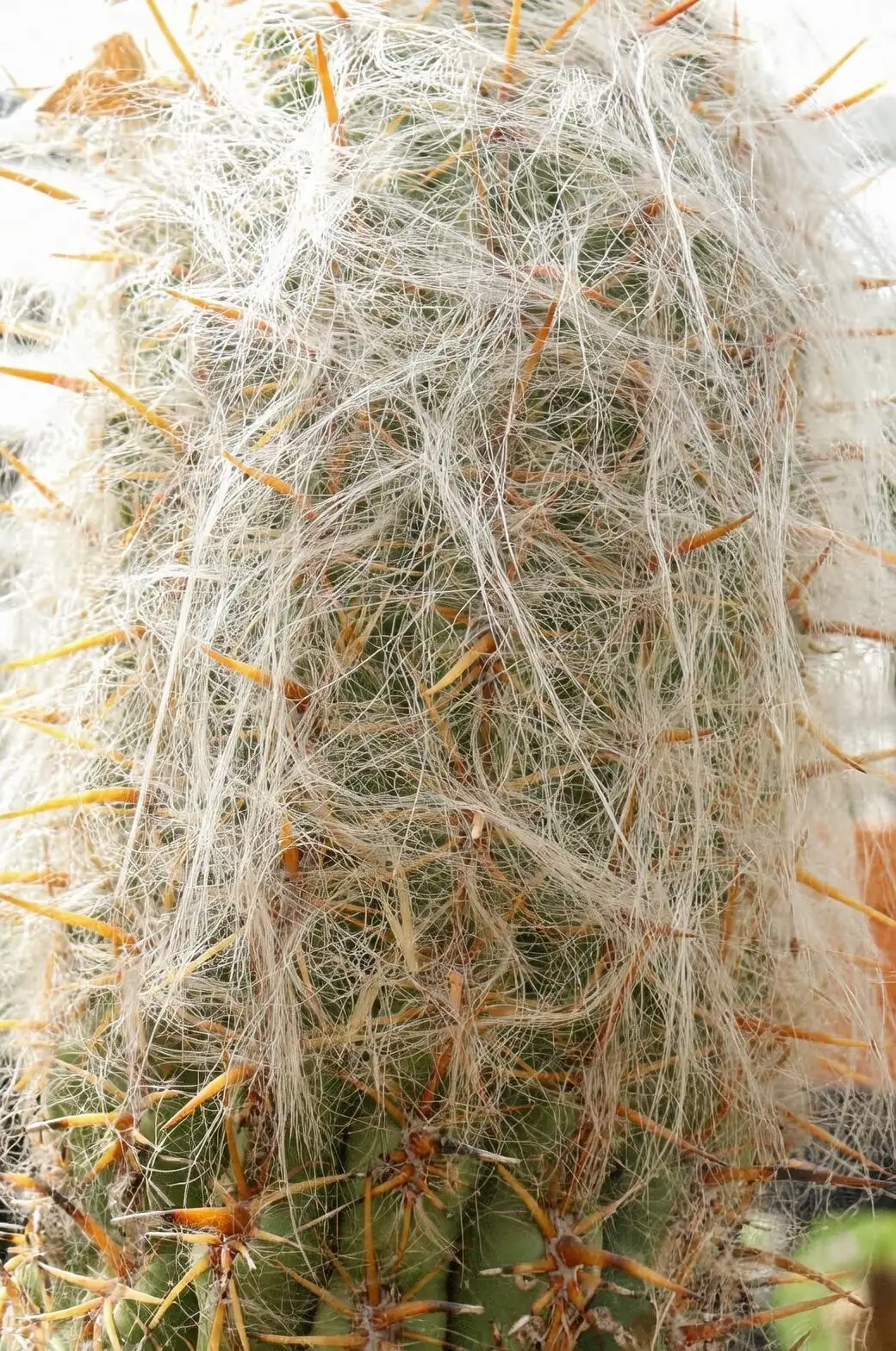
- Location
- New hair: Appears evenly along new stem growth from many areoles (the tiny cushions along the ribs).
- Flower bud: Localized near the upper portion of the plant, often along one side where the plant concentrates reproductive growth.
- Texture and structure
- New hair: Long, silky, flyaway threads; soft and uniform; it “fluffs” with air.
- Flower bud: A firm, plump, ovoid nub that feels solid under the wool; usually shows bristles or tiny scales mixed into the fuzz.
- Color cues
- New hair: Uniform silver‑white from day one.
- Flower bud: Under the hair you may see hints of cream, greenish, yellow, or rosy tones; the bud quickly becomes visibly “different” from hair tufts.
- Speed of change
- New hair: Grows gradually with the stem; changes week to week, not day to day.
- Flower bud: Swells noticeably over several days to a couple of weeks in late spring–summer.
- Pattern over time
- New hair: Continues evenly as the plant elongates.
- Flowering zone: Buds tend to arise repeatedly from a focused area near the apex. On long‑mature plants, this can look like a denser, matted, bristlier strip amid the silk—your plant’s “flower runway.”
Hands off reminder: Those angelic locks hide spines. Don’t tug at anything to “check.” A soft artist’s brush or a gentle puff of air can help you peek without contact.
The micro‑checklist for coaxing blooms (and enjoying the journey)
- Give full, acclimated sun; brightest possible placement.
- Provide a cool, very bright, almost dry winter rest.
- Keep the white hairs dry and the air moving; avoid high humidity.
- Use a gritty, fast‑draining mix; water only when the top layer is dry.
- Feed monthly in spring and summer; stop in fall/winter.
- Repot modestly and not right before the growing season you hope for buds—let roots settle first.
- Be patient. Even with perfect care, this species is famously reluctant to flower in containers, especially indoors.
Quick care guardrails
- Overwatering is the number one risk; cold + wet = rot.
- Pests to watch: mealybugs (including root mealybugs), scale, spider mites. Treat early with insecticidal soap or horticultural oil and improve airflow.
- Safety: Not known to be poisonous, but hidden spines can injure skin. Handle with gloves.
Symbolism and the “flower language” of Old Man Cactus
Because of its shaggy “old man” look and slow, steady growth, this species has come to symbolize longevity, resilience, and quiet wisdom. In modern “flower language” culture, it’s often framed as the sage who thrives under adversity—sun‑scorched slopes, sparse rain—yet endures with dignity. Its rare blossoms add another layer: insight isn’t constant, but when conditions align, it appears—brief, luminous, and unforgettable.
Parting perspective
If you’re chasing flowers, set your sights on the long game: blindingly bright light, a cool and dry winter, and many seasons of steady health. Most Old Man Cacti will never bloom on a windowsill—and that’s okay. Grow it for the glistening silver mane, the slow, sculptural rise, and the quiet company of a true desert elder. And if one summer you spot a firm, bristly nub swelling near the crown? Clear your calendar—you might be witnessing one of the plant world’s rarest curtain calls.