

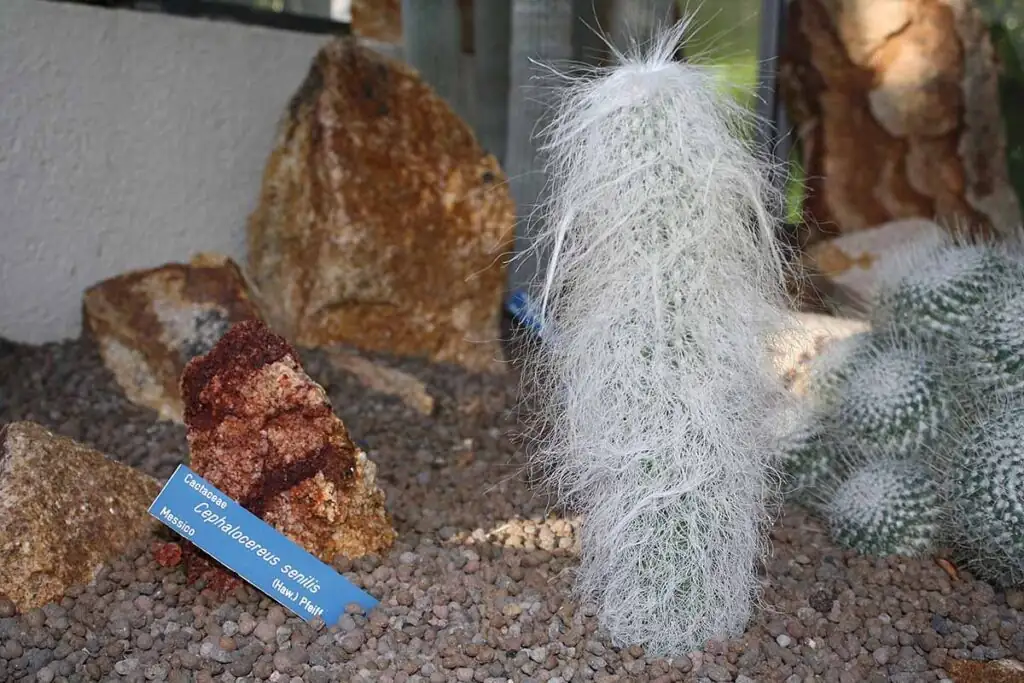
Think of Cephalocereus senilis—Old Man Cactus—as the silver-bearded sage presiding over a moody, modern desert: blues like stormy seas, blacks like cooled lava, and silvers that catch the light like moonlit sand. Below is a complete blueprint for a dramatic, long-lived dish garden that celebrates texture, airflow, and razor-sharp drainage—so your shaggy star stays pristine and happy.
Meet the Muse: Cephalocereus senilis (Old Man Cactus)
- Origin: East-central Mexico (notably Hidalgo and Veracruz), clinging to arid limestone slopes.
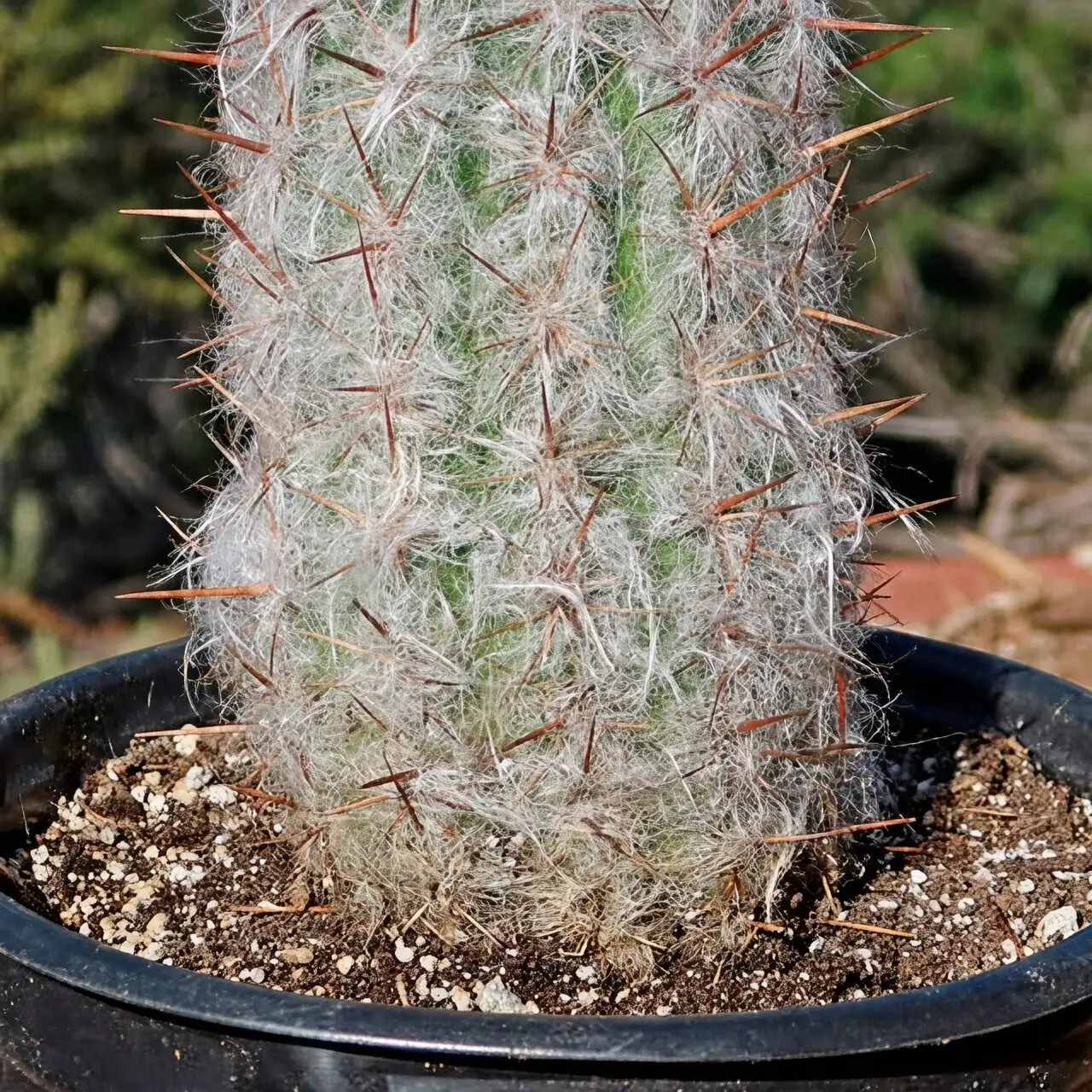
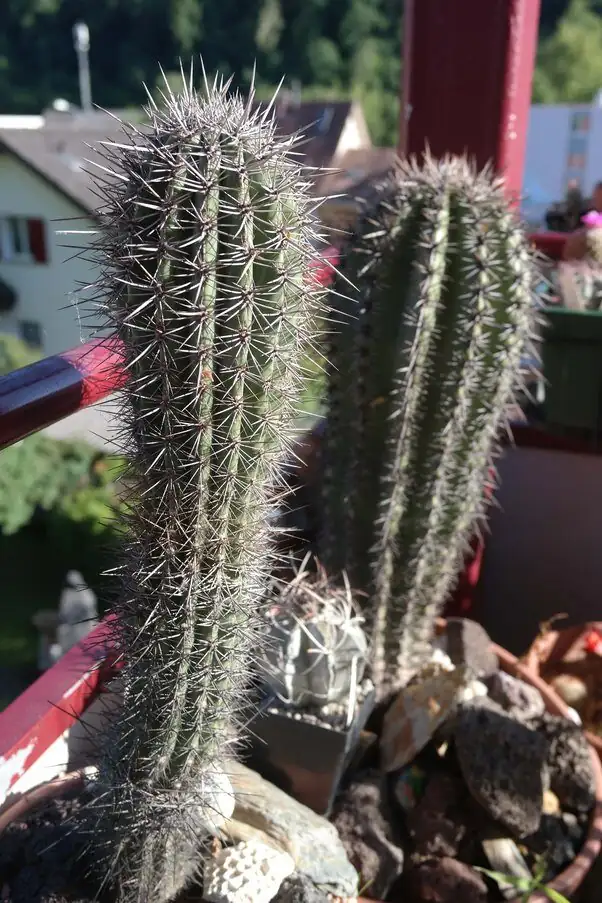
- Look: Tall, upright, usually single-column stems cloaked in a soft-looking but protective coat of long, white hairs. The hairs act like a natural parasol, shielding the green skin beneath.
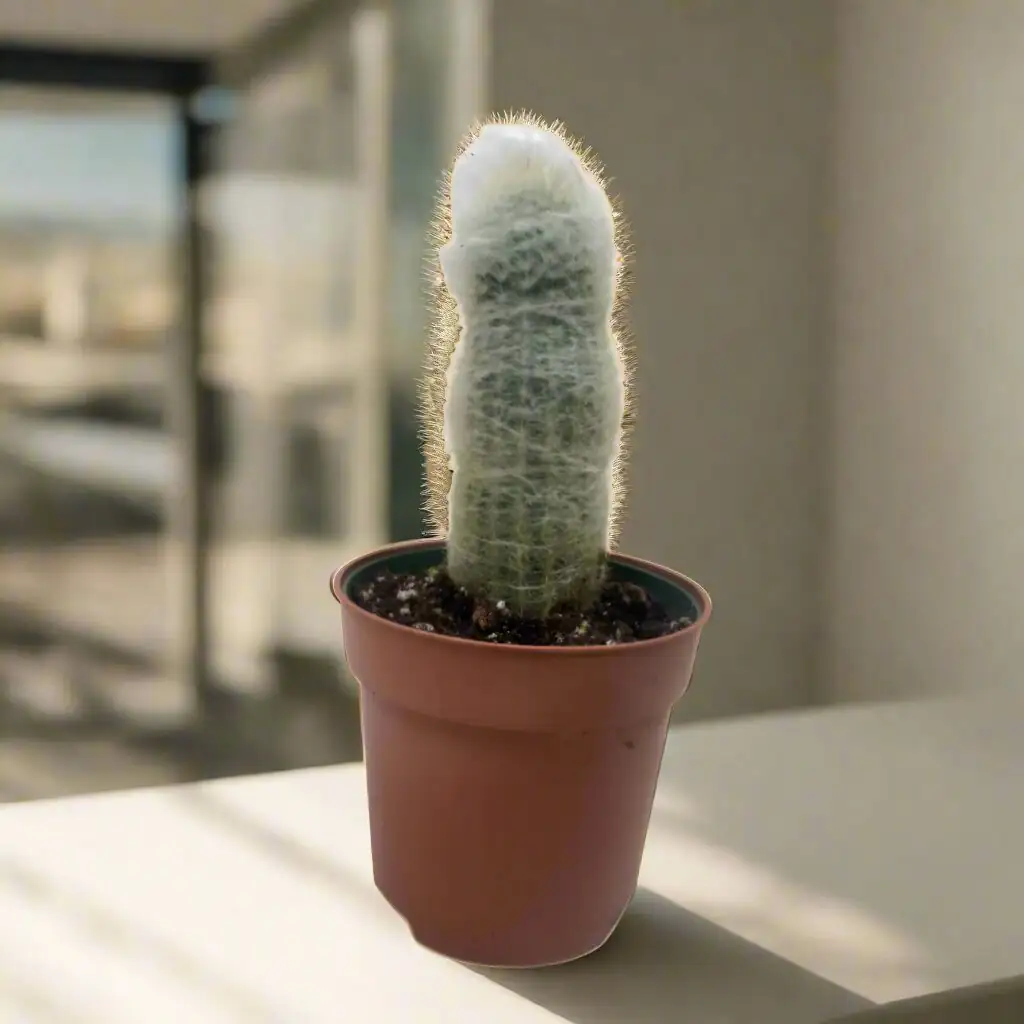
- Indoors: Expect a compact column (about 30 × 10 cm / 12 × 4 in for typical container-grown plants). Flowers are uncommon in pots, so grow it for its silhouette and texture.
- Care personality: Easy, if you give it strong light, fast-draining soil, and restraint with water.
Design Vision: Blues, Blacks, and Silvers
- Palette:
- Blues: cool, powdery, and calming
- Blacks: dramatic punctuation and contrast
- Silvers: reflective, airy, and harmonious with Old Man Cactus’s white “wool”
- Texture strategy:
- One tall, vertical focal point (Old Man Cactus)
- Low rosettes for geometry
- A creeping or tufted accent for movement
- Mineral topdressings in contrasting colors to make the “wool” glow
Pot, Light, and Placement
- Container: Wide, low dish (with drainage holes) in unglazed clay or concrete—30–40 cm (12–16 in) wide and at least 12–15 cm (5–6 in) deep to accommodate a young columnar root ball and companions.
- Light: Full sun for best growth and dense hair. In very hot summers, give bright light with light afternoon shade to prevent scorch, especially after moving outdoors.
- Indoors: Brightest window or sunroom. Outdoors in warm seasons once acclimated. Protect from frost; aim to keep above 5°C (41°F), ideally 10–32°C (50–90°F).
- Airflow: Essential. The hairs should dry quickly after any incidental moisture. Space plants to let air circulate.
The Substrate Stack: Layering for Sharp Drainage
Build from bottom to top:
- Drainage mesh over holes
- 1.5–2.5 cm (0.6–1 in) of coarse lava/pumice as a drainage cushion
- Main mix (fast-draining cactus blend):
- 1 part potting soil
- 1 part coarse sand
- 1 part perlite or pumice
Tip: For shallow dishes, push the mineral fraction even higher (up to ~65–70% total mineral) by adding a little extra pumice or lava. You want water to move through fast.
- Topdressing (1–2 cm / 0.4–0.8 in):
- Around Old Man Cactus: pale silver-gray pumice to keep hairs dry and clean
- For contrast zones: black lava gravel and blue-gray slate chips
Companion Shortlist: Compatible Colors and Care
Choose plants that match Old Man Cactus’s love of strong light and infrequent watering.
- Blues
- Curio repens (syn. Senecio serpens) “Blue Chalksticks”: powdery blue mats; thrives in full sun and gritty soil.
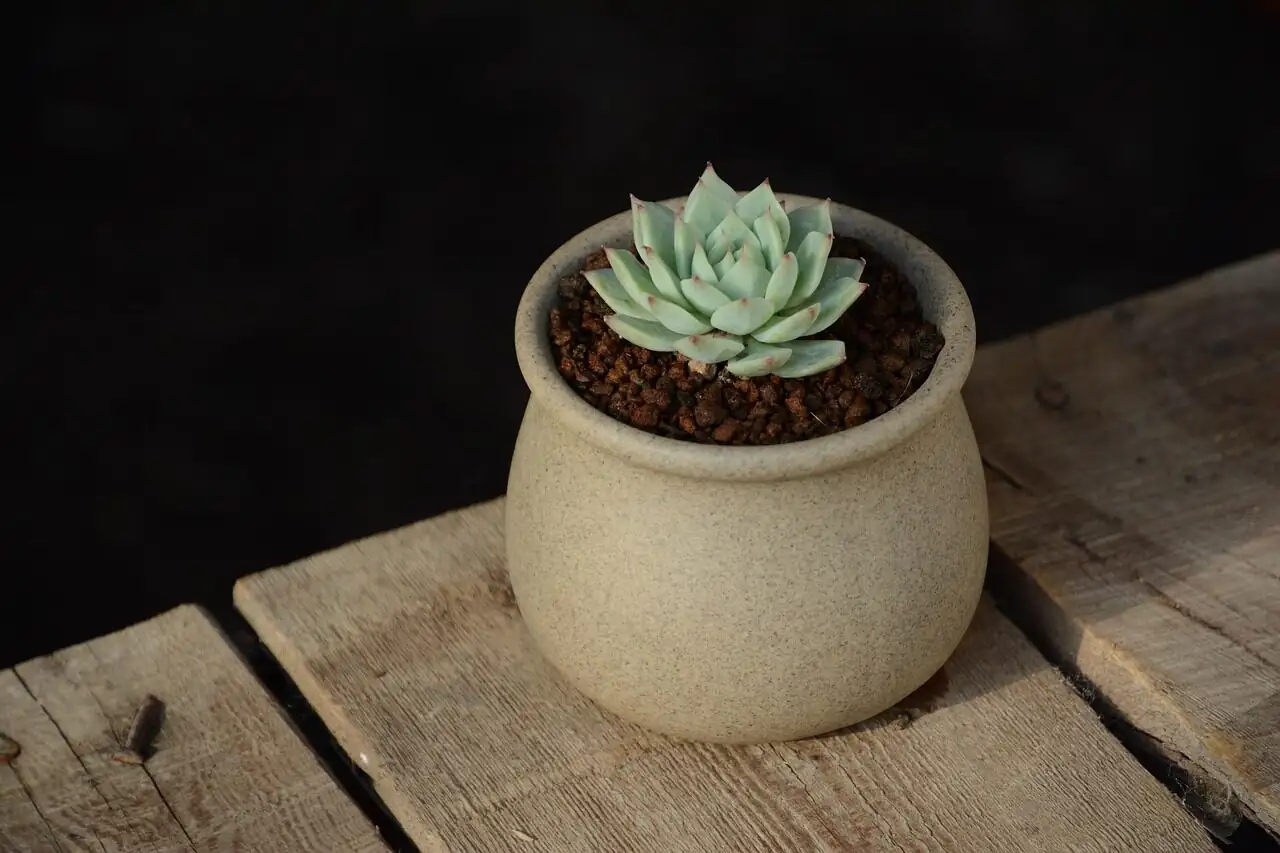
- Echeveria ‘Blue Atoll’ or similar blue-green echeverias: compact rosettes that handle bright light and sparse watering.
- Silvers
- Senecio haworthii (Cocoon Plant): upright, felted silver fingers.
- Graptopetalum paraguayense: glaucous, silver-blue rosettes that blush in sun.
- Blacks (or near-black)
- Echeveria ‘Black Prince’: deep chocolate-black rosettes with similar water needs.
- Black lava rock as a “living shadow” if you prefer fewer plant species.
Avoid pairing with moisture-loving or shade-leaning succulents. Keep the cast sun-loving and drought-tolerant for peace in the pot.
Spacing for Airflow (and Clean “Wool”)
- Center your Old Man Cactus with at least 8–12 cm (3–5 in) of open space to the nearest neighbor—more if the companions are fast spreaders.
- Keep 1–2 cm (0.4–0.8 in) of bare topdressing between stems and decorative stones to prevent splash-back onto the hairs.
- Leave a slim air corridor along the interior rim of the dish for circulation.
Step-by-Step Assembly
- Dry-fit the layout
- Place the cacti and succulents (still in their nursery pots) on the surface of the empty dish to check spacing and the flow of colors.
- Build the substrate layers
- Mesh → drainage cushion → main mix mounded slightly higher in the center to set the “stage” for the columnar focal point.
- Plant the Old Man Cactus first
- Wear gloves; hidden spines lurk beneath the hair. Lift with folded paper bands or silicone tongs to avoid snagging hairs.
- Set it slightly off-center for a naturalistic composition.
- Add companions
- Tuck rosettes and low accents in asymmetric clusters, keeping clear air gaps for the cactus.
- Topdress intentionally
- Silver-gray pumice “halo” around Old Man Cactus.
- River of blue-gray slate weaving through the foreground.
- Patches of black lava at the back or opposite side to balance the weight of the column.
- Post-plant pause
- Wait 5–7 days before the first watering to let any disturbed roots callus—especially important for cacti in a mineral-rich mix.
Watering and Feeding (Keep the Hair Happy)
- Growing season watering: Water thoroughly, then let the top 1–2 cm (0.4–0.8 in) of mix dry completely before watering again.
- Winter: Reduce drastically—often just 1–2 waterings all winter if kept cool and bright.
- Technique:
- Water low and slow with a narrow-spout can, directing flow to the soil, not the hairs.
- Bottom-water for 10–15 minutes if preferred, then drain fully. Keep the hairs dry.
- Feeding: Once a month in spring and summer with cactus fertilizer. Stop in fall and winter.
Seasonal Care and Light Management
- Spring: Repot young plants if needed; resume monthly feeding. Increase light gradually after winter.
- Summer: Full sun; offer light afternoon shade in extreme heat or right after moving outdoors.
- Fall: Taper watering and stop feeding.
- Winter: Keep cool and very bright; protect from frost; water sparingly.
Troubleshooting the Dish Garden
- Hairs look dingy or clumped: Dust gently with a soft, dry paintbrush. Avoid wetting the wool; persistent dampness invites fungus or pests.
- Soft spots at the base: Suspect rot from overwatering or soil that’s too dense. Unpot, cut out rot, let the wound callus, and replant in a gritty mix.
- Pests (mealybugs, scale, spider mites): Improve airflow; spot-treat early with insecticidal soap or horticultural oil applied carefully with a cotton swab or soft brush, keeping the hairs as dry as possible.
Safety Notes
- Not poisonous, but the hidden spines can prick and irritate skin. Handle with protective gloves and keep out of reach of pets and children.
Styling Touches That Elevate the Look
- Use an unglazed charcoal-toned dish to echo the black lava and make the silver hairs pop.
- Let the blue-gray slate form a meandering “wash” that leads the eye from the foreground to the bearded column.
- Keep decorations minimal. The textures and palette are the artwork.
Flower Language and Symbolism
Old Man Cactus is often linked to longevity, resilience, and quiet wisdom—obvious nods to its slow, steady growth and venerable “old man” coat. While not rooted in classical floriography, this modern symbolism fits its character: a plant that endures, reflects the sun with grace, and rewards patience. In a dish garden, it becomes a calm anchor—an emblem of time well spent.
Blueprint at a Glance
- Pot: 30–40 cm (12–16 in) wide, 12–15 cm (5–6 in) deep, unglazed, with drainage
- Layers: mesh → 2 cm lava → fast-draining cactus mix (equal parts potting soil, coarse sand, pumice/perlite) → 1–2 cm topdressing
- Focal: 1 Old Man Cactus (10 cm / 4 in nursery pot size is perfect to start)
- Companions: 3–5 small succulents (choose from Curio repens, Echeveria ‘Black Prince’, silver echeverias, Senecio haworthii, Graptopetalum paraguayense)
- Spacing: 8–12 cm (3–5 in) clear air around the column; keep corridors for airflow
- Light: Full sun; in very hot summers, bright light with light afternoon shade
- Water: Thorough, then wait until the top 1–2 cm dry; winter: 1–2 times total if kept cool
- Temperature: Ideally 10–32°C (50–90°F); protect from frost (aim to keep above 5°C/41°F)
Build it with intention, give it sun and space to breathe, and your Old Man Cactus dish garden will glow—silver hair haloed against blues and blacks—like a quiet desert sunrise captured on your windowsill.