

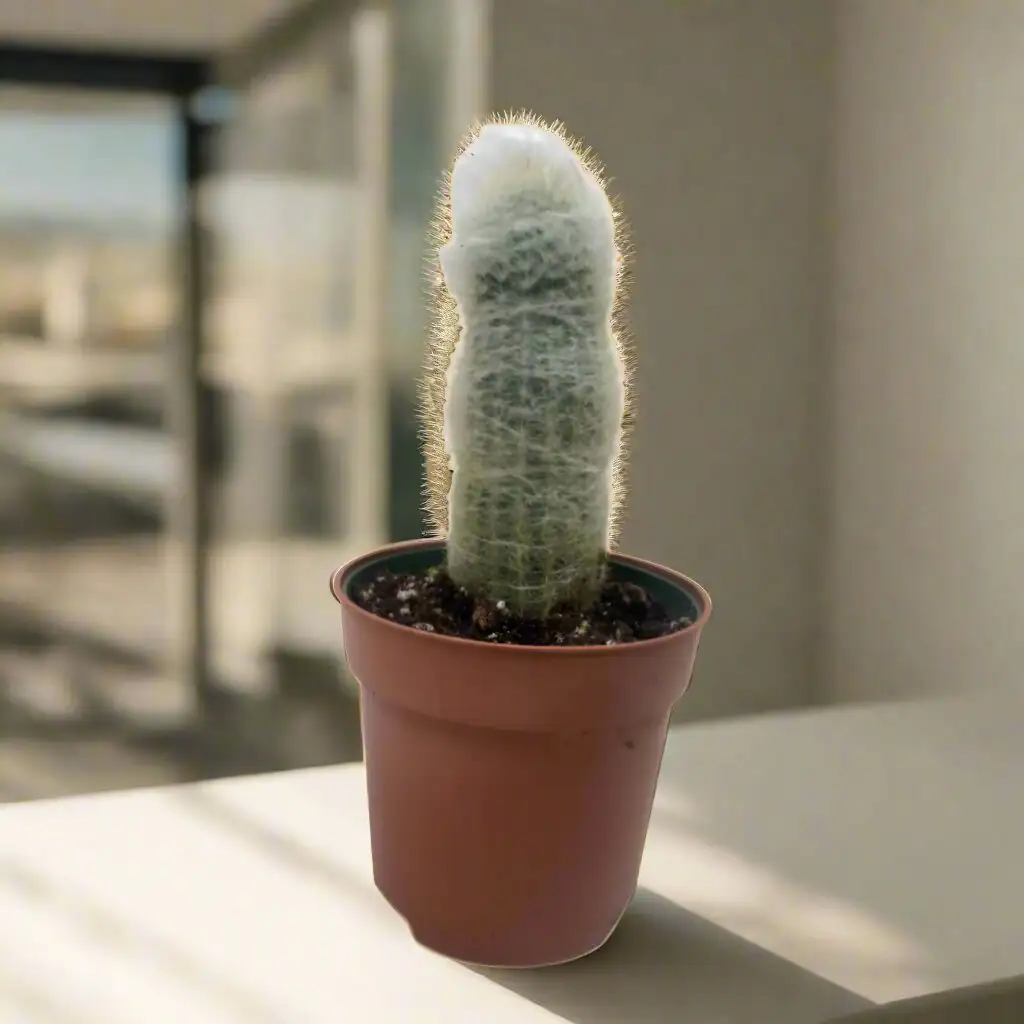
Think of Old Man Cactus (Cephalocereus senilis) as a wise elder in a tailored wool coat: dignified, sun-loving, and surprisingly low-maintenance—until that “coat” gets damp, dusty, or matted. The trick to keeping this icon pristine is simple: airflow, dryness, careful watering, and smart handling around those concealed spines. Here’s your practical, step-by-step guide to keeping the silver mane fluffy and fungus-free.
Meet the plant: what it loves
- Origin: East-central Mexico (notably Hidalgo and Veracruz), on arid limestone slopes.
- Look: Upright, columnar stem wrapped in long, silky white hairs—especially dense on young growth—with sharp spines hidden beneath.
- Light: Full sun for best growth and a denser “beard.” Acclimate to outdoor sun and offer light afternoon shade in extreme heat or right after moving it outside.
- Temperature: 10–32°C (50–90°F). Keep above about 5°C (41°F) and protect from frost.
- Humidity: Low, with steady airflow. Keep the hairs dry whenever possible.
- Soil: Very fast-draining cactus mix (e.g., equal parts potting soil, coarse sand, and perlite/pumice).
Blooming note: Flowers can be red, yellow, or white in nature, but they’re rare in containers—especially indoors.
Why the “beard” mats and molds
Those silky hairs are modified spines that trap air and reflect harsh sun. Indoors, they can also trap dust and moisture. If humidity is high or water splashes cling to the fibers, you get:
- Matting (from dampness + handling)
- Fungal spots or musty odor (from prolonged moisture)
- Sooty mold on honeydew if pests like mealybugs move in
Prevention is far easier than fixing—so aim for dry hair and constant, gentle air movement.
Airflow architecture: fan placement that works
A small, well-placed fan is your best friend. You want a breeze you can feel on your cheek but not a wind that whips the hairs.
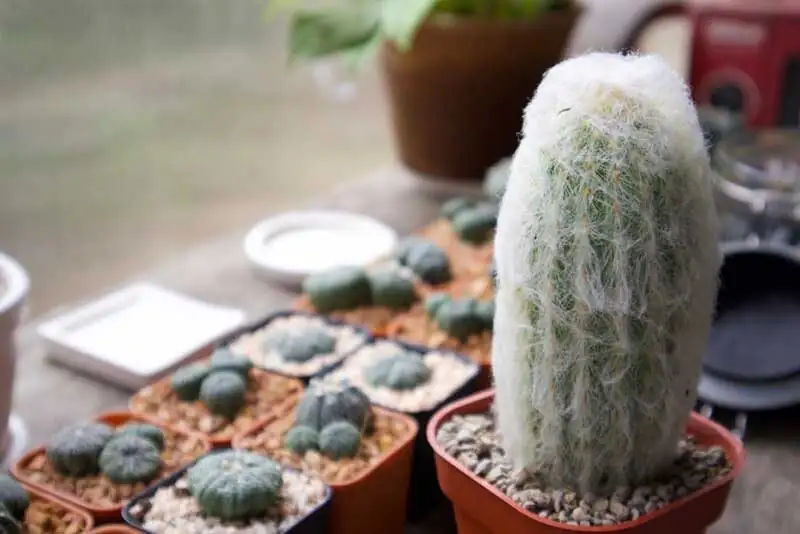
Indoors
- Distance and setting: Place an oscillating fan 1–2 m (3–6 ft) from the plant on the lowest speed. Let it sweep past rather than point directly at one spot.
- Aim path: Angle the breeze to cross the plant at mid-height, not straight down from above (which can compact the hairs).
- Timing: 6–12 hours/day is ideal in warm seasons or whenever humidity is higher than your target. Overnight airflow is excellent after watering days.
- Room choice: Brightest window or sunroom with cross-ventilation. Avoid bathrooms and steamy kitchens.
Outdoors (summering)
- Site: Full sun once acclimated; in very hot spells, provide light afternoon shade. Natural breezes typically suffice—no fan needed unless it’s a sheltered patio.
- Elevation: A pot stand or open bench keeps air moving around the base and reduces splashback onto the hairs.
Winter
- Keep it cool, bright, and drier. Use gentle airflow on low speed in bright windows to discourage condensation on cold glass.
- Avoid strong heater blasts that can desiccate tissue, but do allow normal room air to pass—steady, mild movement is the goal.
Humidity targets and how to hit them
- Target range: Keep relative humidity under 50%. The sweet spot for this species indoors is typically 30–45%.
- Tools: Use a digital hygrometer placed near plant height.
- Tactics:
- Choose drier rooms; skip bathrooms.
- Run a small dehumidifier during muggy spells.
- Space plants so they don’t create a damp micro-jungle.
- Water early in the day so any incidental moisture evaporates quickly.
Watering without wetting the hair
- Frequency: In active growth, water thoroughly, then wait until the top 1–2 cm (0.4–0.8 in) of mix is completely dry. In winter, reduce drastically—often just 1–2 light waterings for the entire season (or none if kept cool).
- Method:
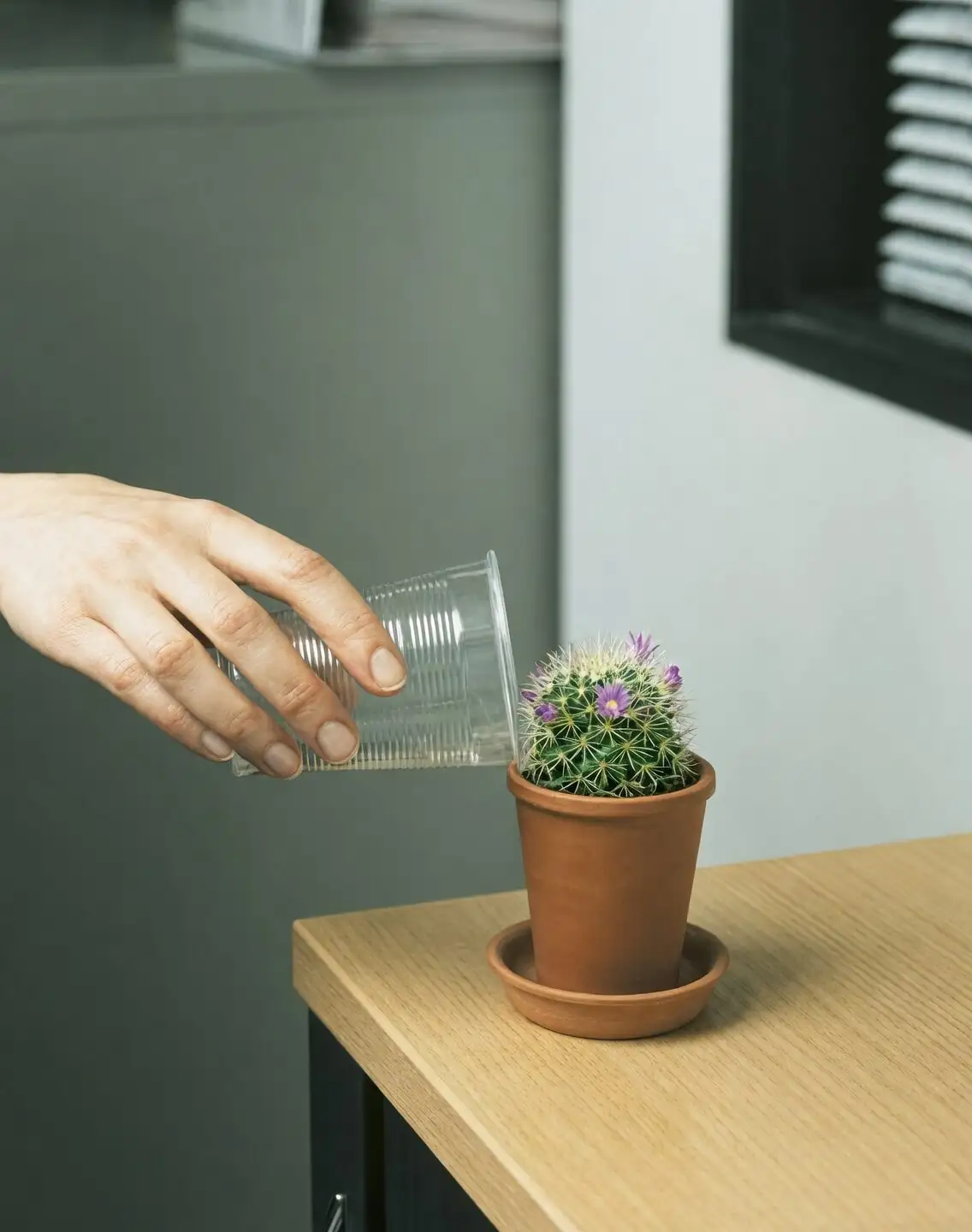
- Soil-line pour: Use a narrow-spout watering can or squeeze bottle to deliver water directly to the mix, under the hair curtain. Avoid splashing the stem.
- Bottom watering: Set the pot in a tray of water for 5–10 minutes. Remove, let drain fully, and wipe any drips off the exterior before returning to its spot.
- Top-dress trick: Add a 1–2 cm (0.4–0.8 in) layer of clean gravel or pumice on the soil surface. This keeps hairs off damp mix and prevents capillary wicking into the “beard.”
Dust removal—absolutely dry, no rinsing
Skip showering or misting. Use gentle, dry tools:
- Bulb blower (the kind used for camera lenses) to puff out fine dust from the hairs and areoles.
- Soft, clean artist’s or makeup brush (natural bristles preferred) to flick away debris.
- Optional: A vacuum on lowest setting with a nylon stocking stretched over the nozzle; hover several centimeters away so you lift dust without tugging hairs.
Clean in bright, dry conditions with a fan running; the light makes dust visible and the airflow helps prevent static and re-settling.
Unmatting the mane (without causing damage)
- Let it dry fully first. Never try to separate damp hairs.
- Tease, don’t tug: Use a soft brush or a smooth bamboo skewer to gently lift and separate sections, always moving in the direction of hair growth.
- Break up clumps over several short sessions rather than one long groom to avoid snagging the hidden spines.
- Do not apply oils, conditioners, or sticky lint rollers. They attract dust and can encourage fungal growth.
- Last resort: If a small patch is badly glued together by old honeydew or residue, spot-trim only the fused tips with sterilized fine scissors. This is cosmetic and removes some protection—so keep it minimal.
Pests and fungus: treat early, keep it dry
- Usual suspects: Mealybugs (including root mealybugs), scale, and spider mites.
- Early response:
- Dab visible pests with cotton swabs dipped in 70% isopropyl alcohol, aiming into the areoles, not the hair.
- For broader outbreaks, use insecticidal soap or horticultural oil—apply carefully to the stem and pest clusters. Shield the hair with paper or apply with a small brush to reduce wetting, then increase airflow until everything is fully dry.
- Fungal flags: Musty smell, gray fuzz on hairs, or persistent damp mats. Isolate the plant, boost airflow, lower humidity, and ensure the mix dries faster between waterings. Remove any pest source that may have produced honeydew (a magnet for sooty mold).
Safe handling around hidden spines
Beneath the white wool sit sharp yellow spines. Treat every touch with respect.
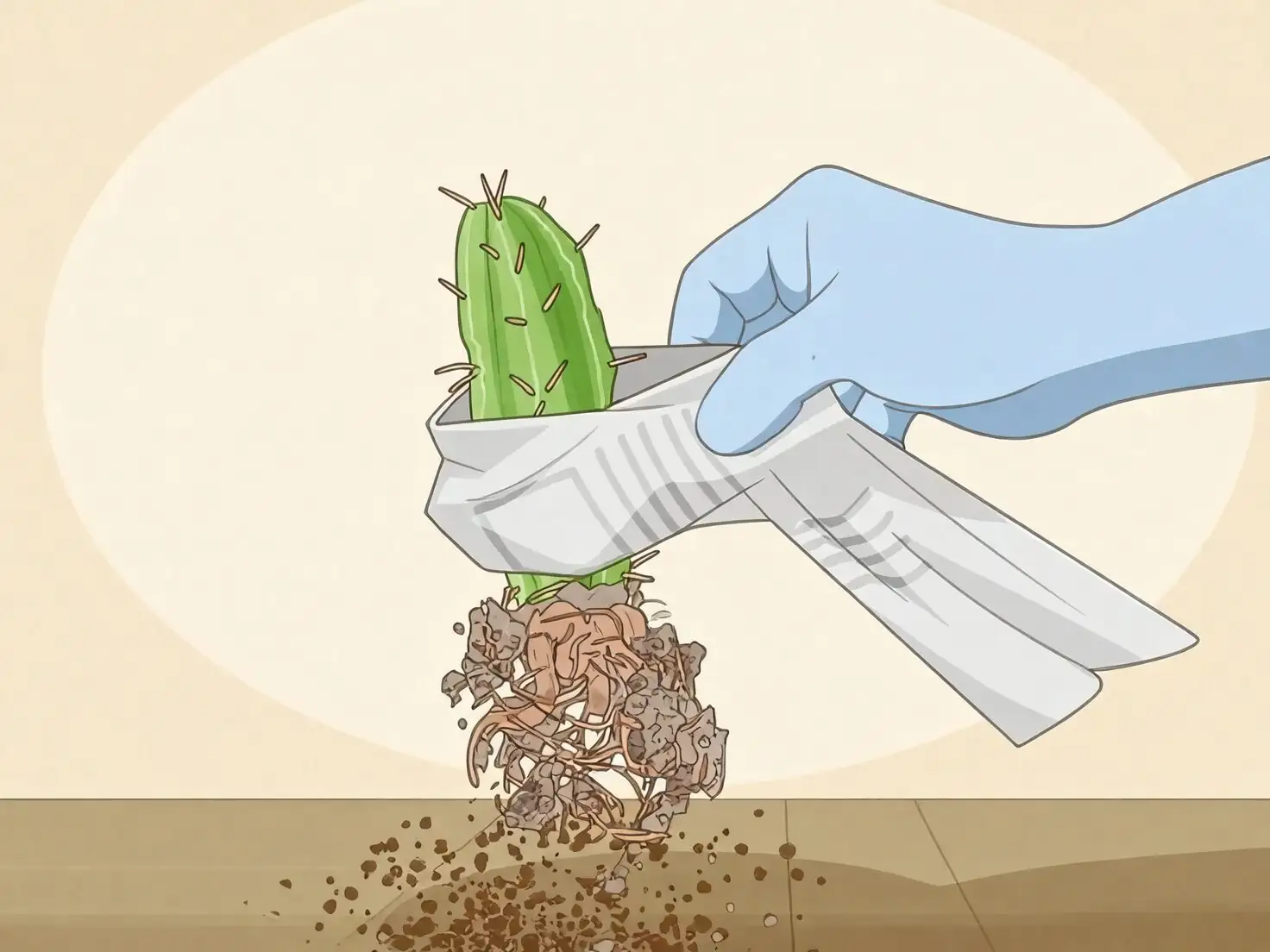
- Gear up: Thick leather or suede-palmed gloves; long sleeves.
- The wrap: For repotting or moving, encircle the column loosely with folded newspaper, a foam sheet, or a soft towel to create a handhold without compressing hairs.
- Lift technique: Support from the base; never yank by the hair.
- If you get stuck: Use fine tweezers to remove spines. Wash the area, then use adhesive tape (pressed gently and lifted) for any remaining fine fragments.
Soil, pot, and repotting that support a clean coat
- Mix: Equal parts potting soil, coarse sand, and perlite/pumice for rapid drainage.
- Pot: Slightly snug fit; unglazed clay is great for evaporation.
- Repotting: Young plants each spring; mature plants about every 2 years. Size up only a little to avoid excess wet soil lingering around roots.
Light and heat for a denser, healthier “beard”
- Full sun promotes stronger, denser hair. Indoors, use the brightest window or supplement with high-output grow lights.
- After moving outdoors, increase sun exposure gradually over 1–2 weeks; in very hot summers, give light afternoon shade to prevent scorch.
A quick seasonal playbook
- Spring: Repot young plants; restart monthly feeding with a cactus fertilizer. Resume airflow and grooming as growth picks up.
- Summer: Full sun with light PM shade in extreme heat; water only after the mix dries; keep fans or breezes active; monitor humidity.
- Fall: Taper watering and stop feeding. Keep grooming dry and light.
- Winter: Bright and cool; water once or twice total (or not at all if kept cool). Maintain low humidity with gentle airflow; absolutely avoid wetting the hairs.
Troubleshooting at a glance
- Hair looks dingy or clumpy: Increase airflow; deep-clean with bulb blower + soft brush; check for honeydew-producing pests.
- Musty smell or visible fuzz: Isolate, lower humidity, improve airflow, lengthen dry-downs, address pests promptly.
- Yellowed or scorched hair patches: Too much sudden sun or reflected heat—acclimate more slowly and offer light PM shade in heatwaves.
- Soft base or leaning: Potential root or basal rot from cold + wet soil. Unpot, inspect roots, trim rot with sterile blade, let callus, and repot into a drier, grittier mix.
A brief note on symbolism
With its slow, steady growth and dignified white mane, Old Man Cactus is often associated with longevity, resilience, and quiet wisdom. The nickname nods to its appearance, but the symbolism fits the plant’s true character: patient, enduring, and happiest when given space, light, and the calm of dry air.
Give Cephalocereus senilis bright sun, quick-drying soil, and a whisper of wind—and that legendary silver “beard” will stay clean, fluffy, and fungus-free for years.