

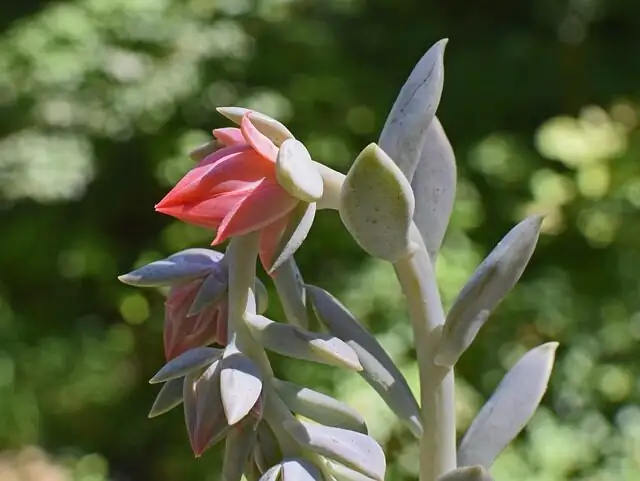
Think of Meililian Echeveria as a stone-sculpted lotus that suddenly launches fireworks. Its tidy, gray-to-deep-gray rosette stays compact and composed—then spring brings tall, branching stalks topped with vivid pink-to-red, starry blooms. If you’re buying one for the first time (or the fiftieth), this guide shows you exactly how to choose a flawless plant and how to outsmart hidden mealybugs before they ever make it into your collection.
Meet “Meililian” (美丽莲): the compact showstopper
- Botanical background: Echeveria (Crassulaceae), cultivated origin; the genus hails mainly from Mexico and Central America.
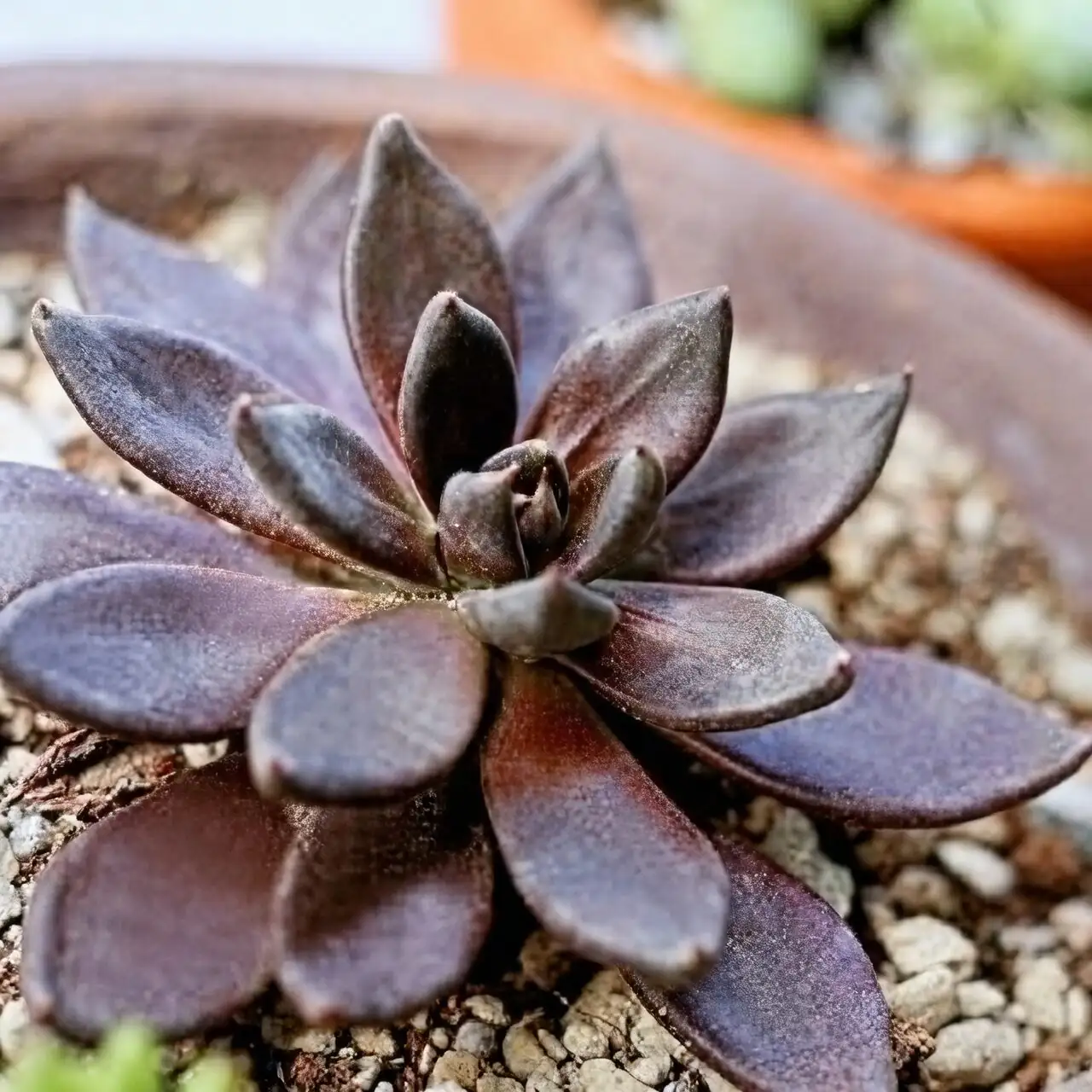
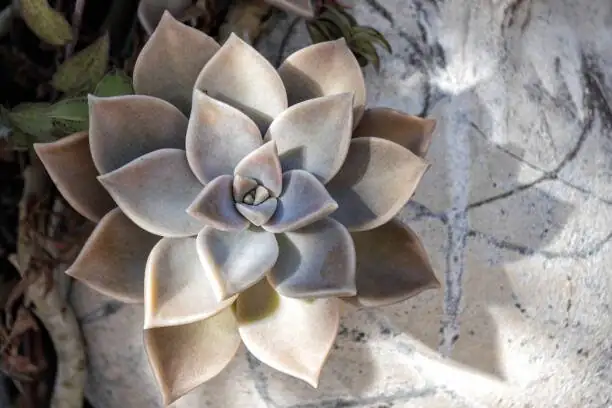
- Look and size: A slow-growing, rosette-forming succulent about 15 × 10 cm (6 × 4 in). Leaves are thick, symmetrical, and gray to dark gray with paler edges; color deepens in strong light.
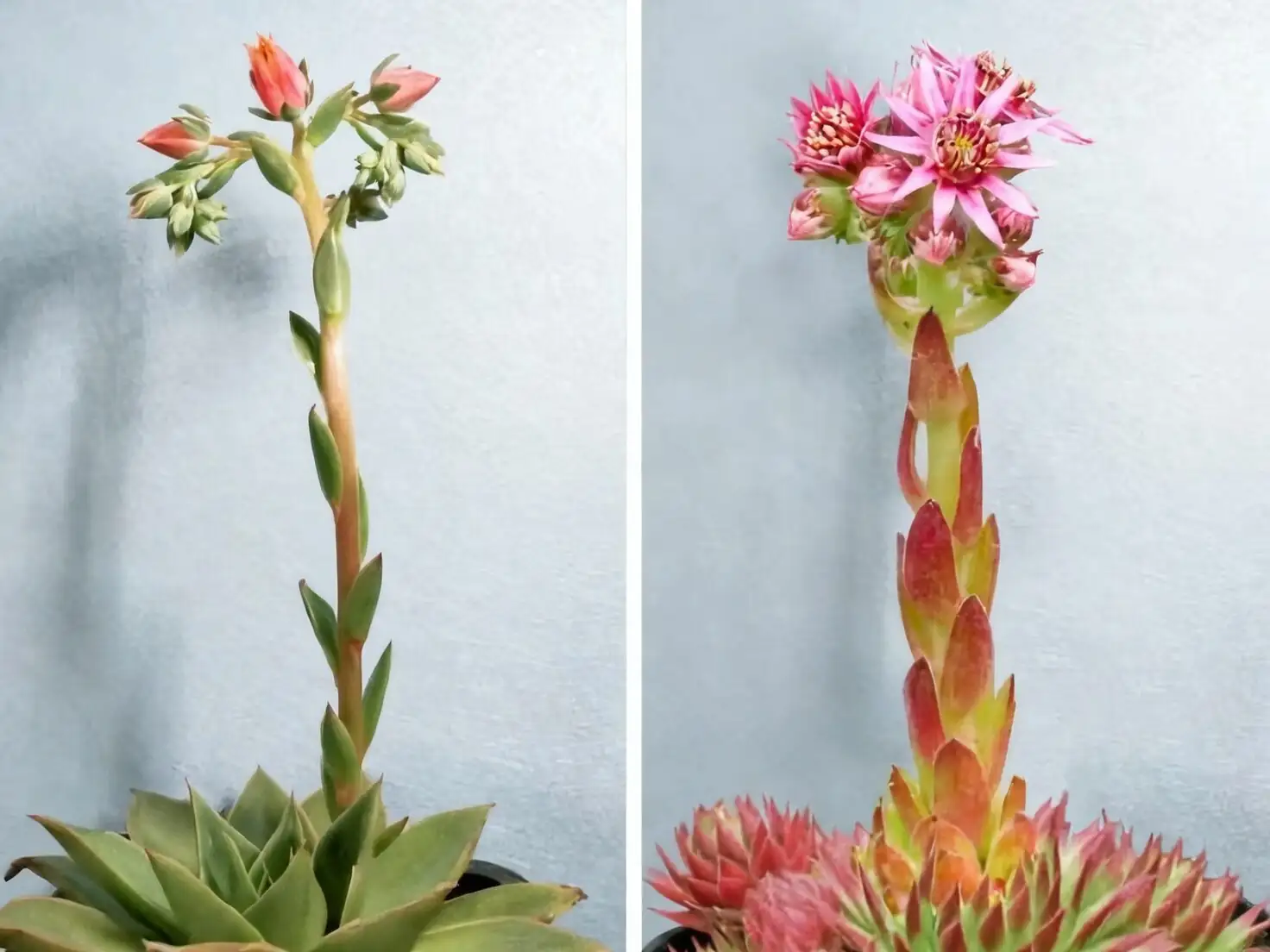
- Flower drama: In spring to early summer, long, branched stalks rise above the rosette with bright pink-to-red, star-shaped flowers—like airy fireworks floating overhead.
- Other names you may see: Beautiful Echeveria, Black Prince-Type Echeveria, Meililian.
The buyer’s brief: what a truly healthy Meililian looks like
You’re hunting for a plant that’s firm, balanced, and pest-free. Use these cues to spot prime stock:
Hallmarks of quality
- Firm, symmetrical rosette: Leaves should form a tight, even circle with no wobble at the center.
- Tight leaf spacing: Short internodes (no stretched “stem” between leaves). Wide gaps signal poor light or stress.
- Thick, turgid leaves: They should feel pleasantly firm, not rubbery or thin.
- Clean coloration: Gray to dark gray leaves, often with paler margins. Edges shouldn’t be yellowing or blackened.
- Dry, well-drained mix: Surface should not be swampy. A gritty, airy substrate is ideal.
Red flags to walk away from
- Mushy base or loose crown: Any softness where stem meets soil is a hard no.
- Black or translucent spots: Often the first sign of rot.
- Sour smell from the pot: A clue that roots have been sitting wet.
- Stretched, lopsided rosette: Evidence of chronic low light.
- Cottony flecks or sticky residue: Classic mealybug calling cards (more on that below).
- Leaf collapse or blistery patches: Can indicate overwatering, sun scorch, or pests.
The hidden mealybug check (before you buy)
Mealybugs look like bits of white lint tucked where you least expect them. A two-minute inspection can save months of trouble.
Bring a mini toolkit
- Phone flashlight
- Tissues or cotton swabs
- A quick, discreet sniff test for sourness at the pot
Where to look (in order)
- Rosette center: Gently part the inner leaves and shine a light into the heart of the plant.
- Leaf axils and undersides: Check where each leaf meets the stem, especially lower leaves.
- Around any flower stalks: Inspect the base and branch points.
- Pot rim and soil surface: Look for white, cottony fluff or tiny gray-white insects.
- Drainage holes: Flip the pot and inspect for cottony residue or crawlers near roots.
- Neighborhood scan: If the nursery tray has ants cruising around, be extra cautious—ants often “farm” mealies for their sugary secretions.
If you spot even a few mealies, choose another plant. Already attached to that exact rosette? Consider asking the shop to hold it while they treat—and only take it home after a clean recheck.
The in-store “hands-on” health test
- The squeeze test: Lightly press a couple of outer leaves. They should feel dense and fleshy, not squishy.
- The wobble test: Hold the pot and nudge the rosette. The crown should feel anchored, not loose at the base.
- The tilt test: Carefully tilt the pot sideways. Any water glistening in the rosette? Pass. Water sitting in the crown can lead to rot.
- The soil check: If soil is heavy peat and sopping wet, skip it—or be prepared to repot into a gritty mix soon.
After you bring it home: quarantine and a calm start
- Quarantine: Park your new Echeveria away from other plants for 2–3 weeks. This quiet period reveals any stowaway pests.
- A preventive wipe: If you’re cautious, dab leaf axils with a cotton swab dipped in 70% isopropyl alcohol. This kills mealies on contact without lasting harm to the plant’s surface bloom.
- First watering: Wait until the mix is fully dry, then water deeply and let the excess drain. Never leave water sitting in the rosette.
Light, temperature, and placement (so it stays compact)
- Sunlight: Full sun to bright partial sun. Increase light gradually to avoid scorch. Strong light deepens leaf color and encourages flowering.
- Indoors: A south- or west-facing windowsill is ideal.
- Outdoors: Only year-round in frost-free climates (USDA 10–11); otherwise bring it in before cold snaps.
- Temperature: Prefers 10–27°C (50–81°F). Cooler and much drier in winter.
- Humidity: Low and airy is best.
Water, soil, and pot: set it up for success
- Watering rhythm:
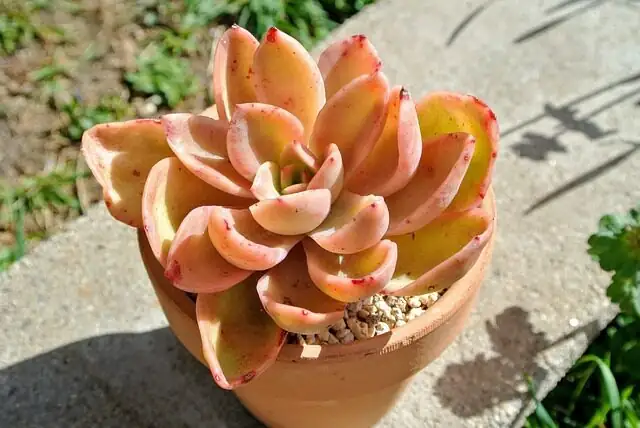
- Spring–autumn: Soak-and-dry. Water thoroughly, then wait for a full dry-down before watering again.
- Winter: Very sparingly—just enough to prevent extreme shriveling.
- Always avoid water pooling in the rosette.
- Soil: A very well-draining cactus/succulent mix. If using regular potting soil, heavily amend with grit, pumice, or coarse sand to keep roots from staying wet.
- Pot: Small and snug is fine—about 10–12.5 cm (4–5 in) wide—with drainage holes. Repot only when root-bound (every 2–3 years).
Feeding and grooming
- Fertilizer: 2–3 light feeds from spring to autumn with a balanced liquid at 1/2 strength (or a low-nitrogen succulent formula). Don’t fertilize in winter.
- Pruning: Not usually needed. After the spring/early-summer show, clip spent flower stalks to keep things tidy.
Propagation notes
- Leaf cuttings or offsets (if produced): Let the cut surface callus, set on dry, gritty mix, and mist very lightly only after roots start forming.
Troubleshooting at a glance
- Soft, dropping lower leaves: A few old leaves shedding is normal; widespread softness points to overwatering or dense soil. Let it dry fully, increase airflow, and repot into a grittier mix if needed.
- Want better color and blooms? Increase light gradually to bright sun, keep to soak-and-dry watering, and avoid heavy feeding. Light is your best color tool.
Mealybug treatment 101 (if trouble slips past you)
- Early signs: White, cottony flecks in leaf axils; sticky residue; slight leaf distortion.
- Immediate response:
- Isolate the plant.
- Dab visible pests with cotton swabs dipped in 70% isopropyl alcohol or use an appropriate insecticidal soap.
- Repeat checks weekly until no new pests appear.
- Prevention: Bright light, good airflow, and a fast-draining mix reduce stress and help deter outbreaks.
Bloom time: the fireworks moment
In spring to early summer, expect long, branched stalks that can rise several times taller than the rosette. Clusters of vivid pink-to-red, star-shaped flowers appear like a floating bouquet—dramatic yet airy. Snip spent stalks to redirect energy back to the rosette.
Safety note
Echeveria are generally considered non-toxic, though the sap may mildly irritate sensitive skin. It’s still wise to discourage curious pets or toddlers from nibbling the leaves.
The quiet meaning behind Meililian
Flower language and symbolism for Echeveria often center on resilience, calm balance, and understated beauty. It’s easy to see why: rosettes hoard water in silence, enduring drought without fuss—then, at the right moment, they unleash a surprising, celebratory bloom. In that contrast lies Meililian’s deeper message: conserve your strength, keep your form, and reveal your brilliance when conditions are right.
Quick buyer’s checklist (print or screenshot)
- Symmetry: Tight, even rosette with close leaf spacing
- Texture: Leaves and base are firm—never mushy
- Color: Gray to deep gray with paler edges; no black or translucent lesions
- Soil: Dry-ish, gritty, and well-draining; no swampy smell
- Pests: No cottony flecks, sticky residue, or ants; drainage holes are clean
- Size and pot: Compact plant in a small pot with drainage holes
- Season: Spring purchases often flower soon; anytime is fine if light is bright
Bring home the Meililian that looks like a perfectly carved stone lotus—firm, centered, and pest-free—and you’ll be rewarded with a compact, drama-free companion that saves its spectacle for those pink-red, firework-like blooms.