

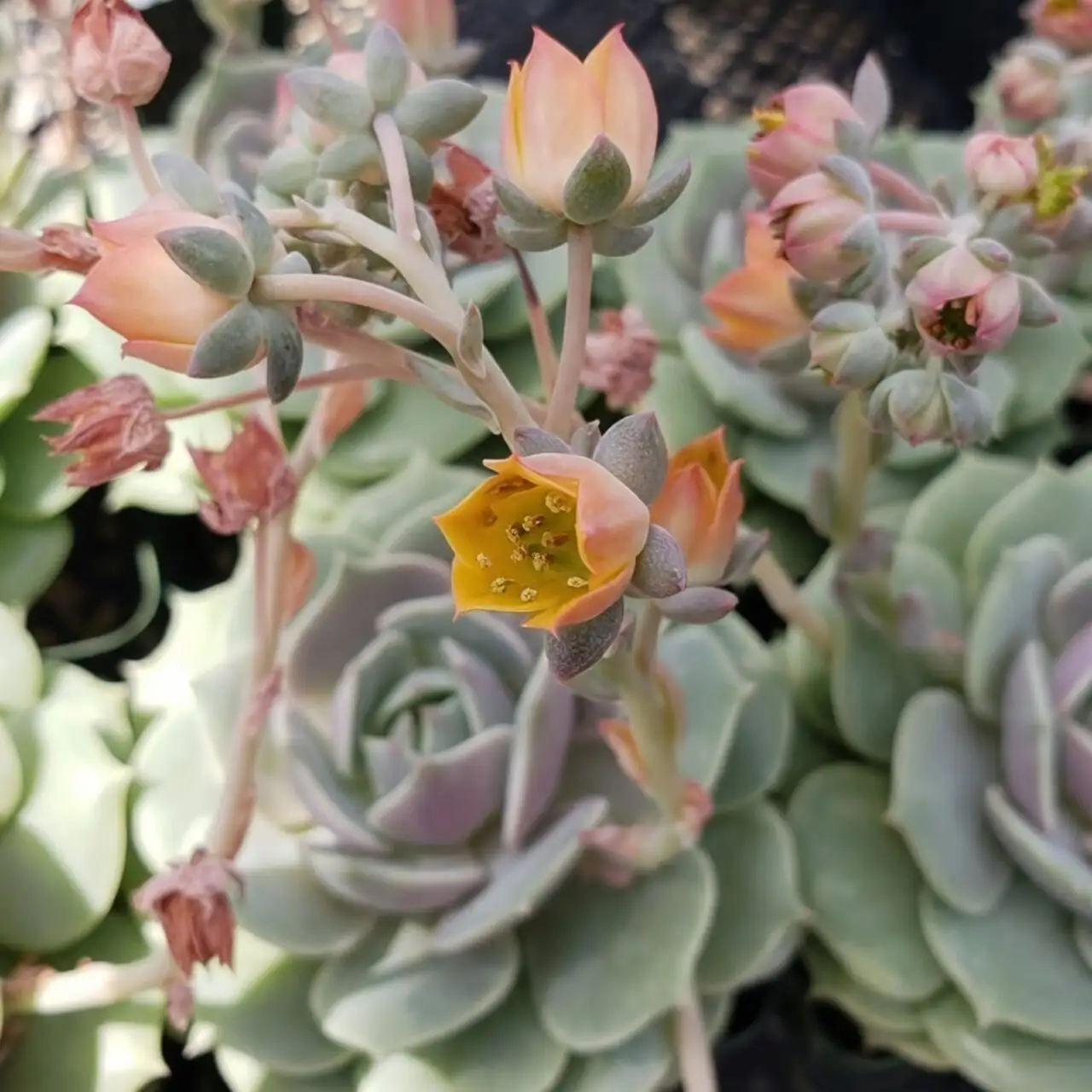
Imagine a charcoal-grey lotus that never wilts, then—just when you least expect it—launches delicate, pink-to-red fireworks on tall, airy stems. That’s Echeveria “Meililian” (美丽莲): a compact, slow-growing rosette that blends crisp design with clever desert physiology. It’s photogenic from every angle, thrifty with water thanks to nighttime “breathing,” and dramatic in bloom without ever losing its neat silhouette.
Meet “Meililian”: From Tidy Rosette to Floating Fireworks
- Family and form: A Crassulaceae succulent in the genus Echeveria, “Meililian” is grown for its tight, symmetrical rosette—about 15 × 10 cm (6 × 4 in)—with thick, gray to dark gray leaves edged in paler margins.
- Color under light: In strong light, leaf color deepens and the edges look extra crisp.
- Showtime: In spring to early summer, several-times-taller, branched stalks rise from the rosette center, each tipped with vivid pink-to-red, star-shaped flowers—like a bouquet hovering above the plant.
Aliases you may see: Beautiful Echeveria, Black Prince-Type Echeveria, Meililian.
The Night‑Breathing Trick: How CAM Keeps It Beautiful and Drought‑Tough
Most houseplants “breathe” by day; “Meililian” plays the desert game differently. Like many Crassulaceae, it uses CAM (Crassulacean Acid Metabolism)—a schedule shift that trades daytime gas exchange for cooler nights.
- Night (cool and less dry): Microscopic pores (stomata) open to take in CO₂. The plant parks that carbon as malic acid in its leaf vacuoles.
- Day (bright and dry): Stomata stay shut to conserve water. The stored acid is broken down, releasing CO₂ internally so photosynthesis can run with minimal moisture loss.
The payoff: slow, steady growth; impressive drought tolerance; and a rosette that keeps its crisp, compact posture even when you forget a watering. Fun science tidbit: right before sunrise, CAM leaves are slightly more acidic than at midday.
Why the Bloom Stalks Tower Above the Rosette
Those tall, branched peduncles aren’t an aesthetic accident—they’re smart engineering.
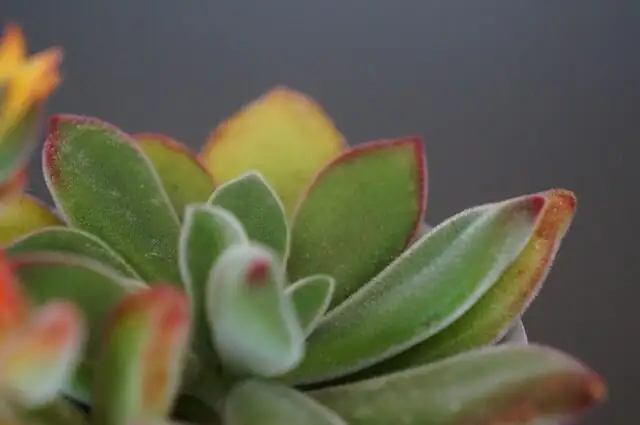
- Clear sky for pollinators: Elevating the flowers lifts color and scent into the airflow where pollinators easily find them.
- No shade on solar panels: By raising blooms high, the plant avoids casting shadows on its own rosette, keeping photosynthesis efficient.
- Protecting the heart: Getting flowers out of the tight rosette reduces moisture traps and keeps the growth center safe from damage and rot.
Result: a plant that stays perfectly composed while the flowers put on their big show.
Light Makes the Look: How High Light Deepens Color and Tightens Form
Echeveria rosettes are masters of “form follows photons.”
- Deeper color: Strong light typically intensifies the gray-to-dark-gray tones and sharpens pale margins, dialing up contrast and camera-readiness.
- Tighter geometry: Ample light reduces internode stretch, keeping leaves densely stacked for that satisfying, symmetrical “lotus” look.
- Bloom boost: Brighter days prime spring-to-early-summer flowering.

Acclimate gradually to stronger light to prevent sun scorch, especially when moving from indoors to a sunny patio.
The Photogenic Geometry: Nature’s Design Language
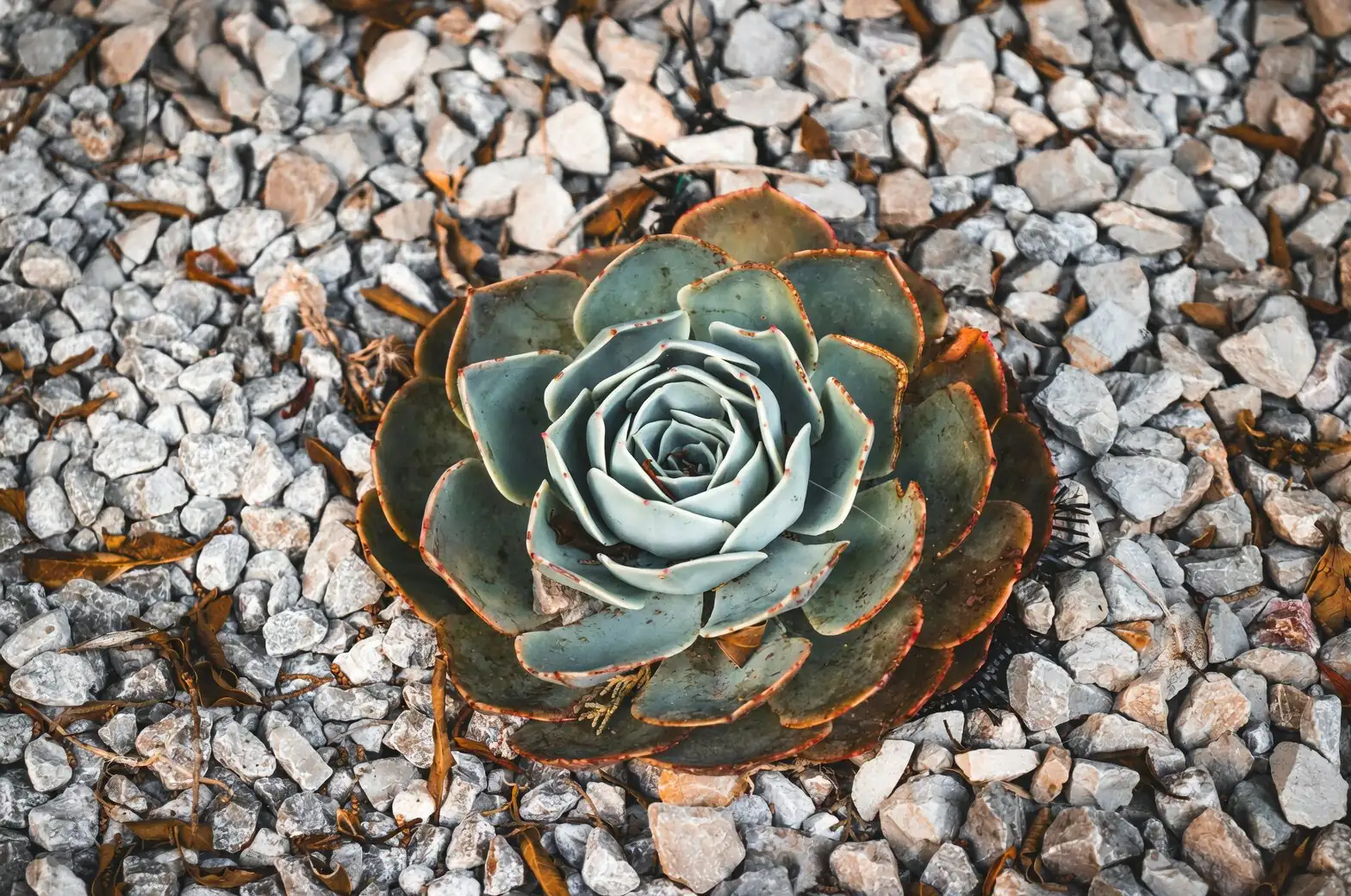
“Meililian” is practically born posed for close-ups.
- Rosette phyllotaxis: Leaves follow spiral packing (think golden-angle logic), distributing light efficiently and shedding droplets away from the crown.
- Sculptural surfaces: Thick, matte leaves soften glare and emphasize contours, so shadows read beautifully in photos.
- Negative space: Those slender, airy bloom stalks frame the rosette without cluttering it—great for depth and scale in a shot.
Pro tip: Side lighting emphasizes leaf relief; top lighting flatters symmetry. Keep water out of the rosette—beads can look pretty but invite rot.
Care, Made Simple
Light
- Full sun to bright partial sun. Indoors, a very bright south- or west-facing window is ideal.
- Higher light = deeper color and better blooms. Increase exposure gradually.
Water
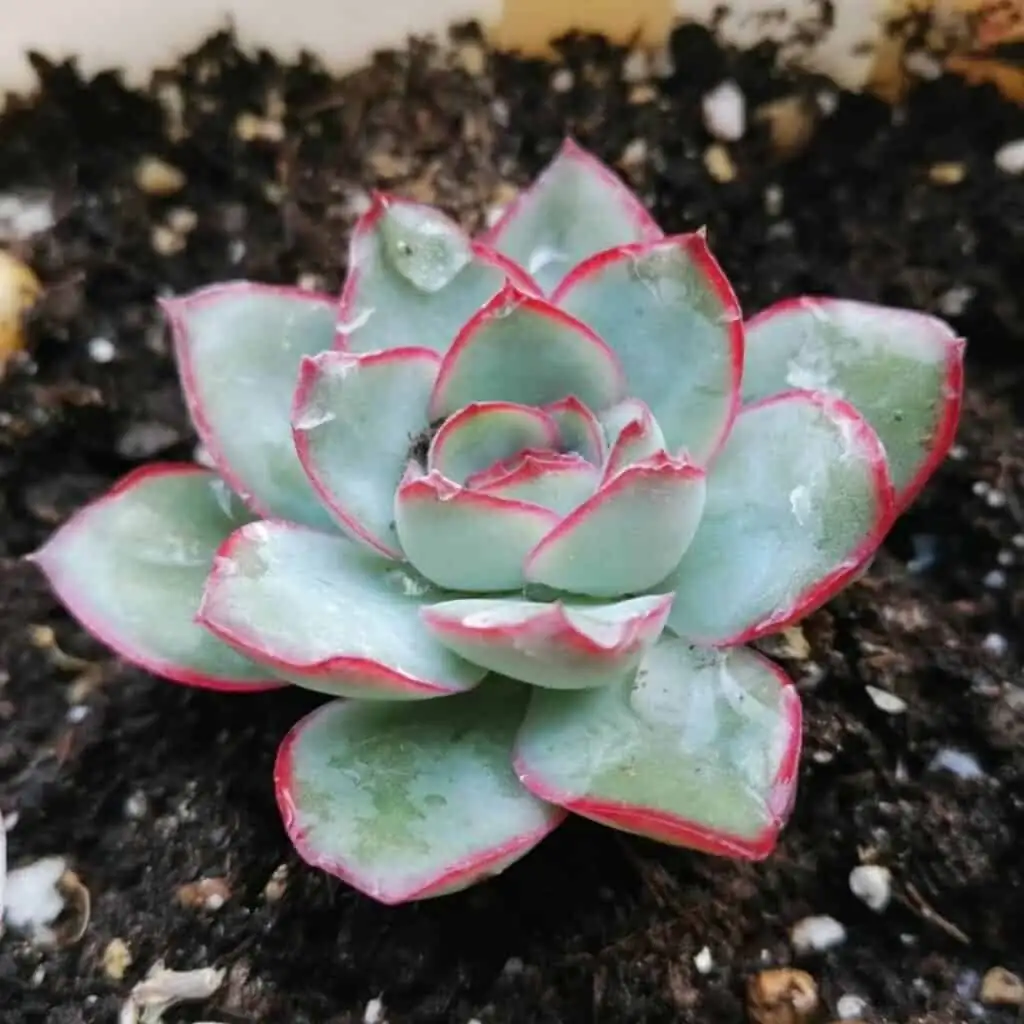
- Soak, then let the mix dry completely before watering again.
- Spring–autumn: water only after a full dry-down.
- Winter: go very sparingly—just enough to prevent extreme shriveling.
- Avoid water sitting in the rosette.
Soil
- Very fast-draining cactus/succulent mix.
- If using regular potting soil, heavily amend with grit, pumice, or coarse sand.
Temperature and Humidity
- Prefers 10–27°C (50–81°F).
- Cooler and drier in winter. Loves dry air and good airflow.
- Frost-tender; safest outdoors year-round only in USDA Zones 10–11.
Feeding
- During active growth (spring to autumn), feed 2–3 times with a balanced liquid fertilizer at 1/2 strength (or a low‑nitrogen succulent formula).
- No fertilizer in winter.
Grooming & Repotting
- Pruning: Not usually needed. Snip off spent flower stalks after bloom to tidy and conserve energy.
- Repot only when root-bound, typically every 2–3 years. Use a small pot (about 10–12.5 cm / 4–5 in) with drainage holes.
Propagation
- Leaf cuttings or offsets (when present).
- Let cut edges callus, place on dry, well‑draining mix, and wait for roots before watering lightly.
The Blooming Playbook
- Give bright to very bright light (acclimated sun is best).
- Keep to a soak‑and‑dry watering rhythm.
- Provide a cooler, drier rest in winter, then resume light feeding in spring.
- Maintain strong airflow and avoid heavy nitrogen—aim for compact growth and sturdy stalks.
Flowering typically peaks from spring to early summer under strong light.
Styling and Placement
- Indoors: a sunny windowsill, plant shelf, or solarium; pairs beautifully with pale ceramics or raw concrete to echo the leaf tones.
- Outdoors (frost-free): a sunny patio, rock garden bowl, or mixed succulent arrangement where bloom stalks can float above companions.
Troubleshooting & Health
- Common issues: mealybugs, scale, and root rot (from overwatering or dense soil).
- Fix-it tips:
- Dab pests with alcohol-dipped cotton swabs; follow with insecticidal soap if needed.
- Improve drainage, light, and airflow to prevent rot.
- Buying guide: Choose a firm, symmetrical rosette with tightly arranged leaves. Avoid softness at the base, black spots, mushy leaves, or visible pests.
Safety
Generally considered non‑toxic, though sap may mildly irritate sensitive skin. Keep curious pets and kids from chewing the leaves.
Symbolism and a Short History
- Symbolism: Echeverias often symbolize resilience and calm balance—orderly and understated until a sudden flourish of color appears above. It’s a quiet reminder that stability and surprise can coexist.
- Backstory: The genus honors Atanasio Echeverría y Godoy, a Mexican botanical illustrator who helped document the botanical richness of Mexico and Central America—regions where many Echeveria species are native.
Quick FAQ
Why are my leaves turning soft or dropping from the bottom?
A few old leaves shedding is normal. Widespread softness or sudden drop usually means overwatering or poor drainage. Let the soil dry fully, improve airflow, and repot into a grittier mix if needed.
How can I get better color and flowers?
Increase light gradually to bright sun/very bright conditions, keep to soak‑and‑dry watering, and avoid heavy fertilizer. Strong light is the biggest driver of deeper leaf color and reliable blooming.
Fun Facts
- The flower stalks can grow several times taller than the rosette, creating a floating bouquet effect.
- Leaf color often deepens under strong light—many plants look their most dramatic right before flowering.
In short: Give “Meililian” bright light, quick‑draining soil, and a rhythm that respects its night‑breathing nature. It will repay you with a rosette so perfectly composed it looks designed—and spring fireworks that make the whole display feel alive.