

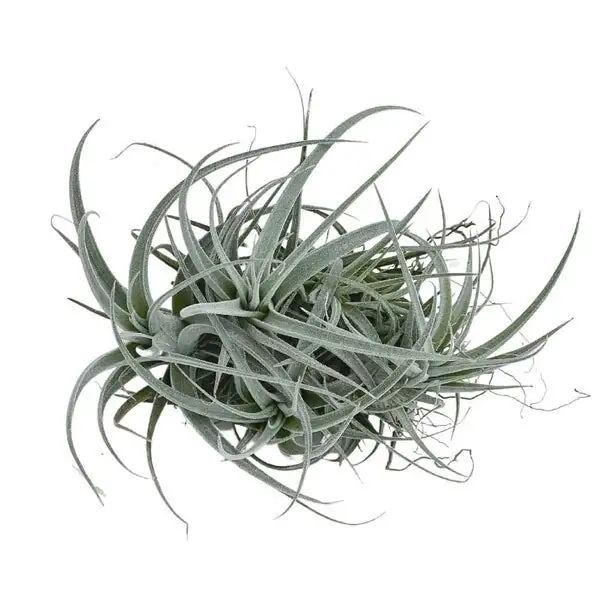
If you love the elegant, grass-like sweep of Tillandsia juncea, you’re in luck: this forgiving air plant is a natural clumper, and with a little timing and technique you can turn a single rosette into a full, fountain-shaped display. Consider this your propagation masterclass—when to separate pups, when to let them knit into a colony, and how to style that signature, cascading silhouette.
Meet Tillandsia juncea: the nimble, fountain-shaped epiphyte
- Identity: Tillandsia juncea (aka Juncea Air Plant, Narrow-Leaf Air Plant), family Bromeliaceae; native to Mexico and Central America.
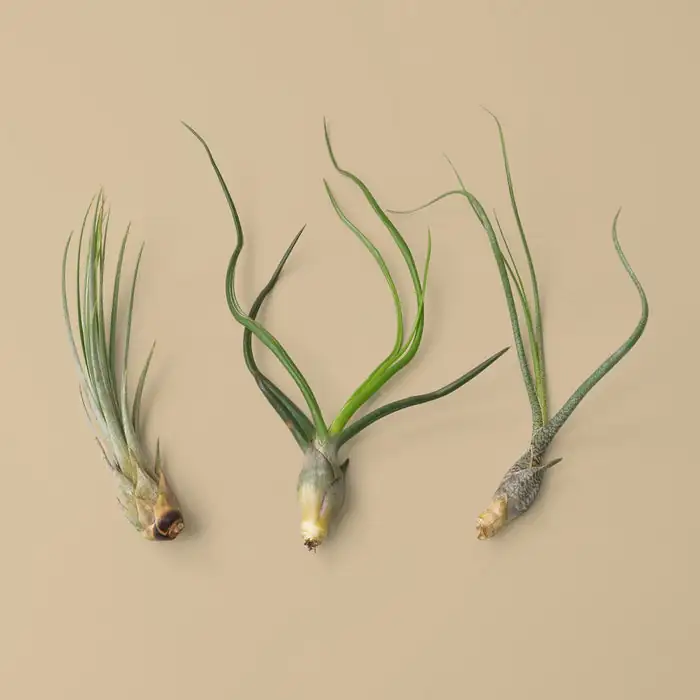
- Look and habit: Long, slender, pointed green leaves forming a tidy, fountain-like tuft. Grows by producing offsets (“pups”) at the base, eventually creating a clump 6–12 in wide.
- Bloom moment: A vivid pink, comet-like spike topped with small purple tubular flowers—bright and jewel-toned.
- Easygoing nature: Missed a soak? T. juncea often bounces back once rehydrated—as long as it can dry fast afterward.
Care snapshot for later:
- Light: Bright, indirect light to gentle morning sun; avoid harsh midday sun unless humidity and airflow are excellent.
- Water: Soak 15–30 minutes about 1–2×/week in warm/dry weather; every 10–14 days in cool/low light. Always dry fully within 2–4 hours.
- Air: Moderate–high humidity (40–70%) paired with strong airflow. No soil—mount or set in an airy spot.
- Temperature: 18–30°C (64–86°F); keep above ~10°C (50°F).
—
Timing is everything: when pups are ready
Most pups appear after the bloom spike fades. Don’t rush. Your best window to separate:
- Size rule of thumb: When each pup reaches about 1/3–1/2 the size of the parent rosette.
- Readiness cues:
- Pup has its own defined leaf fan (not just a nub tucked under a parent leaf).
- A visible “waist” where pup meets the mother, and it feels just the slightest bit independent if you gently nudge it.
- You can slip a sanitized blade into the seam without forcing it.
If a pup resists or the seam isn’t obvious, wait—it will separate easily when mature.
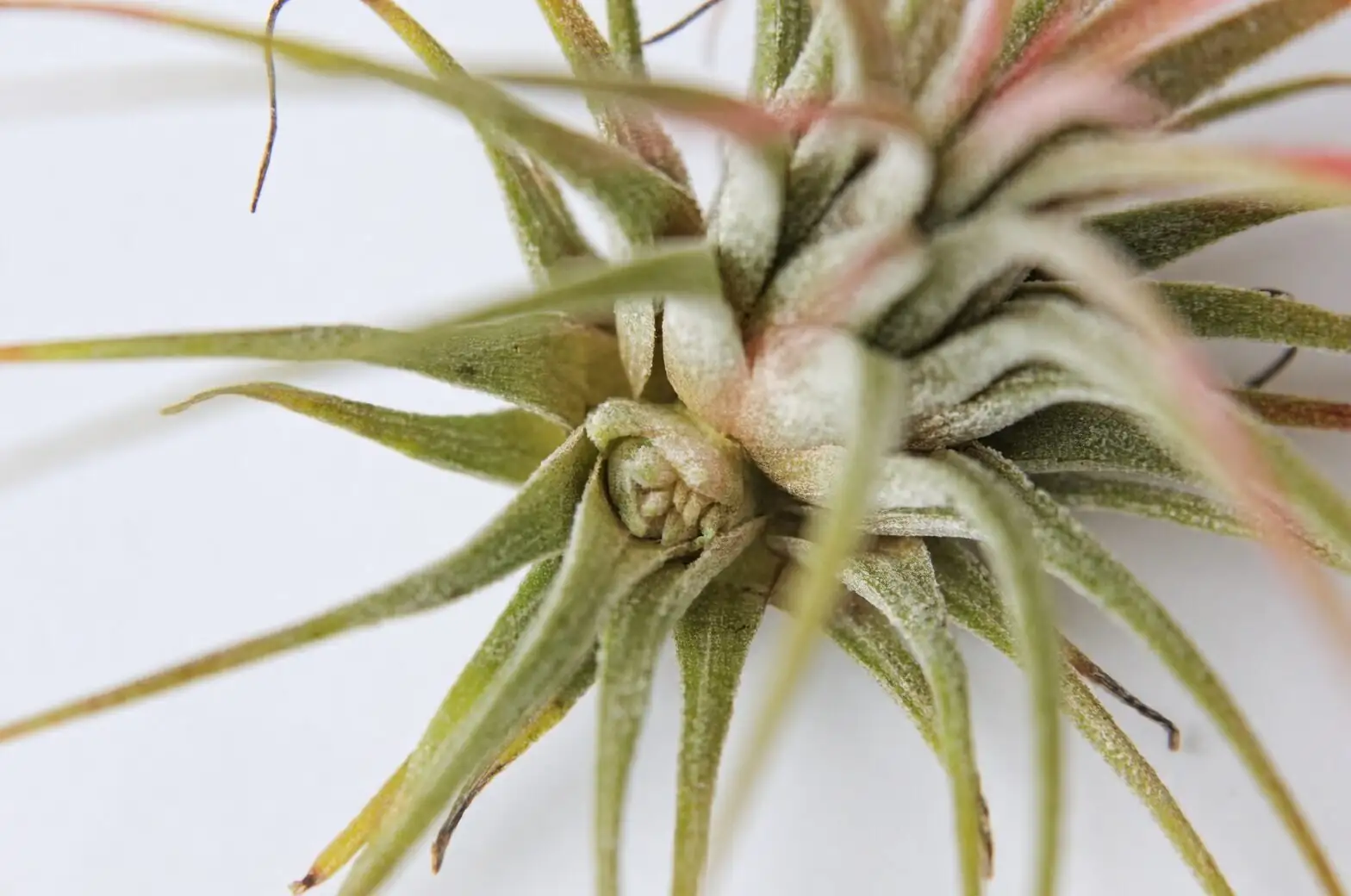
Pro tip: If your goal is a dense, architectural clump, ignore the scissors and let pups stay attached. T. juncea excels at building a fuller fountain with time.
—
Safe separation, step by step
When you want new, individual plants or a more curated composition, separate pups with care.
Tools
- Clean hands, bright workspace
- Fine bonsai or pruning scissors, or a sterile craft knife
- Isopropyl alcohol (70%) for blade sanitation
- Soft ties (florist wire, fishing line) or a breathable mount (cork, driftwood), if remounting
Prep
- Water the day before so leaves are turgid (easier handling, less breakage).
- Trim the faded bloom spike to redirect energy to offsets.
- Sanitize tools. Air plants are tough, but bases are sensitive.
The technique
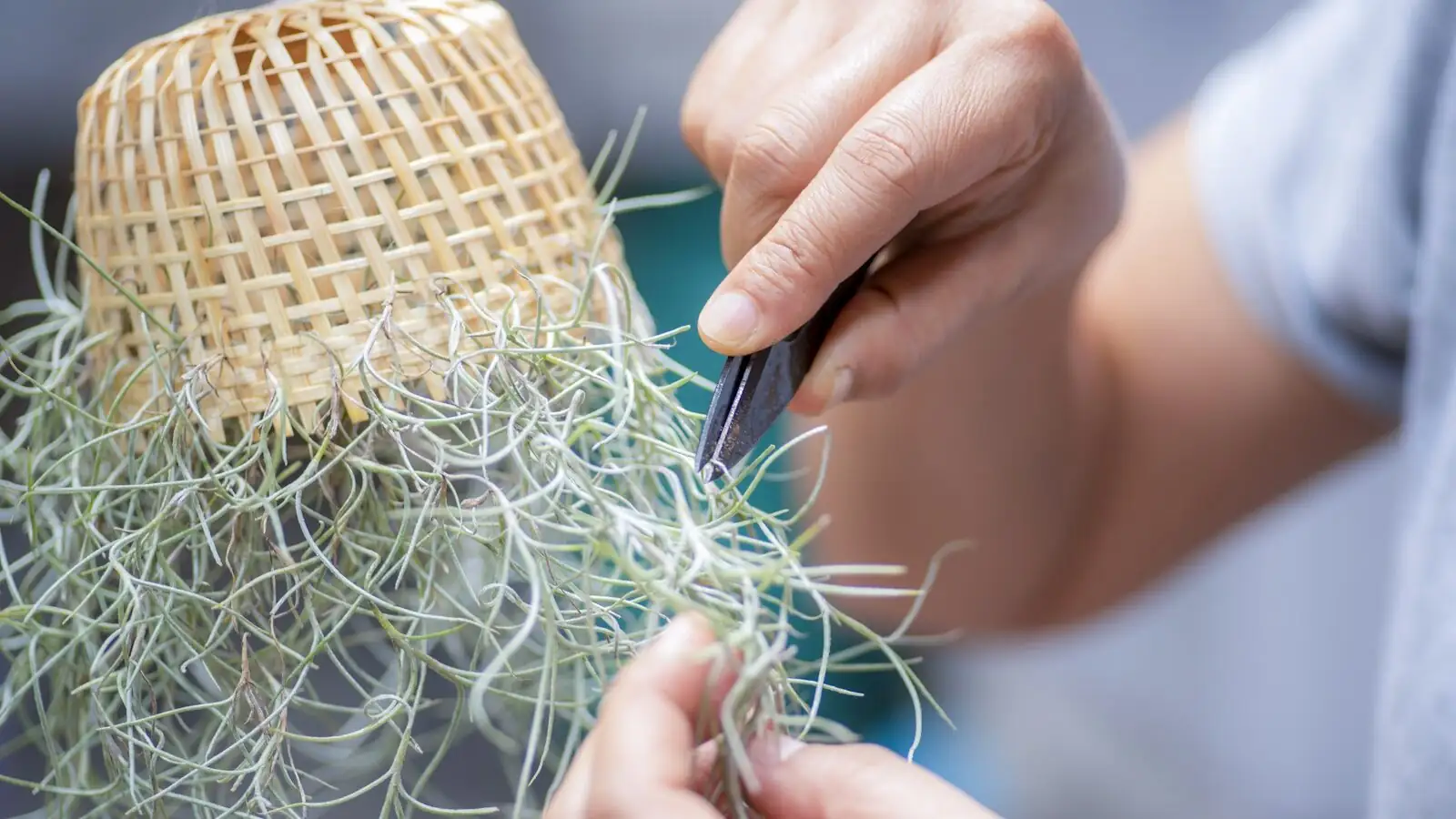
- Support the mother plant at the base with one hand.
- With the other, grasp the pup low, right where it meets the parent.
- Gently rock and pull the pup away. If it doesn’t give with light pressure, don’t force—use a careful, shallow cut at the seam.
- Keep cuts clean and minimal; avoid crushing the leaf sheaths.
Let it heal
- Rest both mother and pup in bright, airy conditions for 2–3 days before watering. This brief dry “healing” period helps the separation point harden and lowers rot risk.
First two weeks of aftercare
- Light: Bright, indirect light; avoid scorching sun.
- Water: Shorter soaks at first (10–15 minutes), then back to the normal 15–30 minutes once growth looks steady. Always shake out excess and dry within 2–4 hours.
- Fertilizer: Wait a couple of weeks, then feed monthly at 1/4 strength with a bromeliad/air-plant formula (or low-copper orchid feed). Rinse with plain water occasionally to prevent mineral buildup.
—
Let them clump: cultivating sculptural colonies
Leaving pups attached produces that coveted, fuller fountain. Here’s how to lean into it:
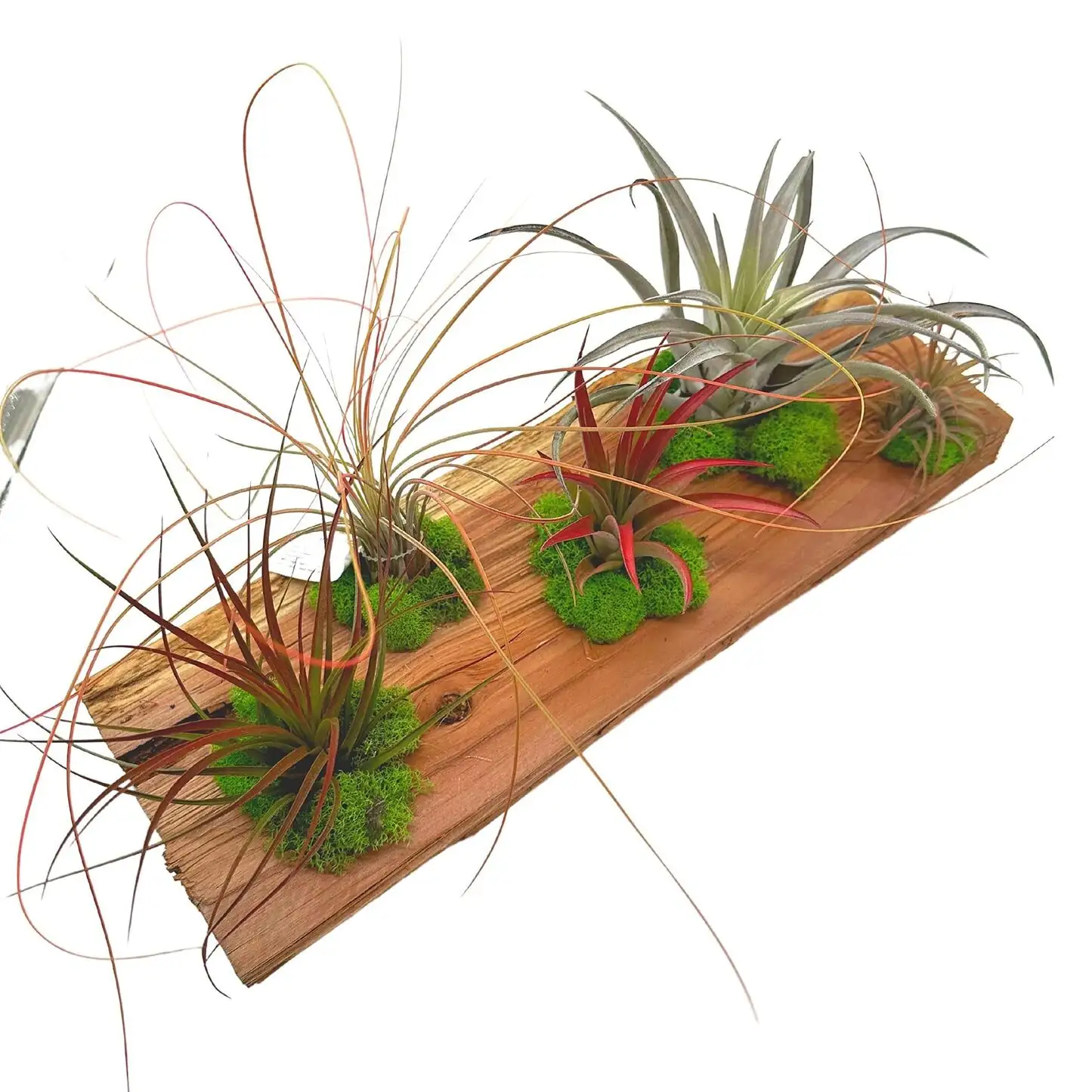
- Orientation = silhouette: Keep the original rosette slightly upright, then allow new pups to radiate around the base. Juncea’s long, narrow leaves naturally arc outward, creating a layered spray.
- Airflow scales with size: A big clump holds more moisture between leaf sheaths. Prioritize brisk air movement so the colony dries within 2–4 hours after soaking.
- Watering a clump: Dunk or soak thoroughly; then invert and gently shake to release trapped water. Never leave a clump sitting in a puddle or sealed container.
- Light for symmetry: Rotate your display weekly so pups develop evenly on all sides and the fountain stays balanced rather than lopsided.
- Patience pays: As the colony matures, multiple rosettes can color up and bloom in staggered fireworks—pink spikes with purple flowers across the clump.
Mounting ideas for clumps:
- Cork, driftwood, or grapewood with strong anchoring points
- Mesh baskets that cradle the base without smothering it
- Hanging slings or rings that let leaves sweep freely
Avoid glues or wraps that cover the base; juncea needs to breathe.
—
Design masterclass: fuller, fountain-shaped displays
Think “living fireworks” with controlled, outward energy. Use these pro styling moves:
Start with a strong anchor
- Choose a mount that’s slightly taller than it is wide; attach the mother plant just off-center so leaves can cascade without kinking.
- Use soft wire or fishing line; secure snugly but don’t cinch the base.
Arrange for an outward sweep
- Cluster strategy: Keep the largest rosette near the vertical axis; nudge 2–4 pups evenly around the base like compass points.
- Angle each pup 10–25° outward to exaggerate the fountain effect as they lengthen.
- Stagger heights: One slightly higher rosette adds motion and prevents a “flat” look.
Create depth and rhythm
- Trios read best: Group in threes (large, medium, small) to build a tiered spray.
- Layering: Tuck younger pups slightly under older leaves so the silhouette graduates from tight center to airy tips.
- Negative space is design: Leave “windows” between leaf fans so the form breathes.
Light and airflow as styling tools
- Bright, indirect light keeps leaves straight and glossy; gentle morning sun adds vigor without crisping.
- A small fan on low mimics canopy breezes, keeps the fountain crisp, and cuts drying time.
Mounting do’s and don’ts
- Do: Tie at leaf sheaths, not over tender leaf blades; refresh ties annually as the base expands.
- Do: Remount to a larger piece as the clump grows; keep the base uncovered.
- Don’t: Use sealed terrariums; juncea needs to dry fast.
- Don’t: Let water sit in the base or collect in a cup—always shake out after soaking.
—
Care cheat sheet (for propagators)
- Sunlight: Bright, indirect light to gentle morning sun; shield from harsh midday rays unless humidity and airflow are excellent.
- Temperature: 18–30°C (64–86°F). Protect from cold; keep above ~10°C (50°F). USDA Zone 10–11 outdoors.
- Humidity & air: 40–70% with strong airflow. Fast drying is non-negotiable.
- Watering: Soak 15–30 minutes 1–2× weekly in warm/dry seasons; every 10–14 days in cool/low light. Shake out and dry fully within 2–4 hours.
- Feeding: Monthly in spring–summer at 1/4 strength; occasional rinse with plain water to clear minerals.
- Grooming: Trim only fully brown, dead leaves; remove the bloom spike once faded. The parent will channel energy into pups.
- Placement: Bright window with moving air; bathrooms work if light is strong. Outdoors in warm seasons: bright shade with airflow.
- Safety: Generally non-toxic to people and pets (not edible). Keep away from chewing pets.
—
Troubleshooting and propagation FAQs
- The base is browning—what gives?
- Likely rot from staying wet too long or poor airflow. Shorten soaks, increase air movement, and ensure full drying after each watering. Never sit the plant in a puddle or a closed container.
- The pup won’t budge.
- It’s not ready. Wait until 1/3–1/2 parent size and a clear seam is visible. Mature pups separate with minimal effort.
- Does the mother plant die after flowering?
- The blooming rosette slows, then lives on through its offsets. Keep caring for the clump; that’s the plant’s continuation strategy.
- I found mealybugs or scale.
- Spot-treat with cotton swabs dipped in 70% isopropyl alcohol, isolate the plant, and improve airflow and drying speed.
- Can I grow juncea in a closed terrarium?
- No—choose open displays. Fast drying and air circulation are essential.
—
A brief note on symbolism
Air plants are often linked with independence and resilience—living without soil, making do with light, air, and fleeting rain. This isn’t a traditional “flower language” from historical floriography so much as a modern reading of their epiphytic lifestyle: they anchor lightly, adapt quickly, and thrive with minimal resources. Displaying a clump of Tillandsia juncea is a quiet ode to self-reliance and graceful tenacity.
—
Your propagation calendar and quick plan
- Spring–summer
- Best time for division and design refreshes.
- Increase light (avoid scorch), soak a bit more often, feed monthly, keep airflow strong.
- Separate pups at 1/3–1/2 size, then let cuts heal 2–3 days before watering.
- Fall–winter
- Water less often (every 10–14 days), maximize light, keep temps above 10°C (50°F).
- Ensure rapid drying after every soak; hold off on heavy redesigns.
Quick plan to a fuller fountain:
- Start with one healthy, firm-leaved T. juncea.
- After blooming, trim the spent spike; encourage pups.
- Leave first-generation pups attached for a season to build volume.
- For symmetry, selectively remove only the odd outlier (keep the best-positioned pups).
- Mount or remount to feature an outward, evenly spaced sweep.
- Maintain bright light, monthly feeding, and gusty airflow—then watch your living fountain flourish.