

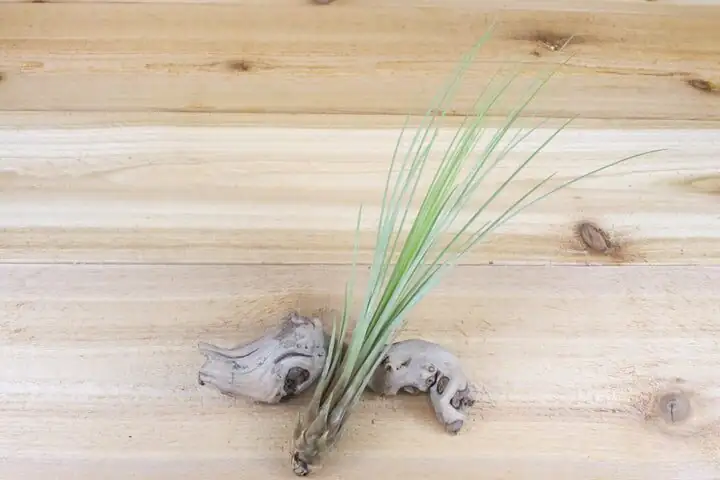
If your Tillandsia juncea ever looks “off,” speed is everything. This forgiving, fountain-shaped air plant can bounce back from a missed soak—but it won’t tolerate a wet, stagnant base. Use the photo cues and step‑by‑step protocols below to diagnose in seconds, treat precisely, and set up a prevention routine that keeps your Narrow-Leaf Air Plant looking crisp, springy, and jewel-toned when it blooms.
Meet Tillandsia juncea (Air Plant), the easygoing fountain
- Look: A dense, tidy spray of long, needle‑to‑strap‑like green leaves that clump over time. In bloom, it shoots a vivid pink, comet‑like spike topped with small purple tubular flowers.
- Size: Typically 15–30 cm (6–12 in) tall; mature clumps spread to 15–30 cm (6–12 in).
- Personality: Tough and tolerant—miss a watering and it often snaps back once rehydrated, as long as it dries fast afterward.
Fast photo diagnostics: base rot vs. drought crisping
When you only have a photo (or 10 seconds in real life), look for these high‑confidence visual tells.
If your photo shows…BASE ROT
- Color and texture at the base: Dark olive to black, translucent, or water‑soaked tissue; sometimes a sour smell.
- Touch test: Leaves detach with a gentle tug at the center (“heart leaves” slip out).
- Sheath area: Slimy or mushy where leaves meet the base; you may see brown streaks wicking upward.
- Overall stance: Plant slumps; leaves feel limp rather than stiff or springy.
- Recent history clue: Heavy watering with slow drying, trapped water in the crown, or display in a closed container.
What it means: The plant stayed wet too long with poor airflow. This is the number‑one killer.
If your photo shows…DROUGHT CRISPING
- Leaf tips and margins: Tan to cocoa‑brown, papery tips with a neat, dry “toast line.”
- Curling: Leaves taco inward or spiral tighter than usual.
- Surface: A pronounced silvery cast from raised trichomes; leaves feel dry and squeaky, not mushy.
- Base: Clean and firm—no black, no slime.
- Recent history clue: Infrequent soaking, strong light with low humidity, or extra airflow without compensatory watering.
What it means: Under‑watering and/or faster evaporation than your routine supplies. Good news: this is usually reversible.
Rapid response: what to do in the next 24–48 hours
- For base rot
- Isolate immediately to protect nearby plants.
- Gently remove any leaves that slip out; trim away clearly mushy tissue with sterile scissors.
- Invert the plant (base facing down) and shake out any trapped water.
- Air‑dry hard for 48–72 hours with strong, continuous airflow; bright, indirect light only.
- Resume cautious hydration: light misting at mid‑leaf to tips for a week; avoid soaking the base until new, firm tissue forms.
- Long‑term: Reevaluate placement and watering—this plant must dry fully within 2–4 hours after any soak.
- For drought crisping
- Rehydrate with a 15–20 minute soak in clean, room‑temperature water.
- Shake off excess, then dry in strong airflow; ensure it’s fully dry within 2–4 hours.
- Adjust cadence: in warm/dry conditions, 1–2 soaks per week; in cool/low light, about every 10–14 days.
- Trim only fully brown tips if desired; leave a thin sliver of brown to avoid nicking live tissue.
Mealybugs and scale: spot them fast, stop them faster
These sap‑feeders love tight leaf axils and the protected base—prime Tillandsia real estate. Catch them early and they’re easy.
Photo cues for positive ID
- Mealybugs: Cottony white tufts, especially where leaves meet; sticky honeydew; you might see ants farming them.
- Scale: Pinhead to pea‑sized tan, brown, or gray “helmets” stuck on leaves and sheaths; they don’t wipe away like dust.
- Secondary signs: Sooty mold on honeydew, deformed new growth, or a plant that’s oddly sticky.
Step‑by‑step: Isopropyl alcohol protocol (precise, plant‑safe)
Use 70% isopropyl alcohol only. Do not use ethanol or methanol, which can penetrate and damage plant tissues.
- Prep
- Tools: 70% isopropyl alcohol, cotton swabs, soft brush, paper towels, gloves, bright work light.
- Environment: Good ventilation. Isolate the plant away from your collection.
- Treatment
- Targeted swabbing: Dip a cotton swab in 70% isopropyl; dab each mealybug or scale directly. You’ll see mealybugs collapse; scale loosens as the waxy coat dissolves.
- Crevices: Use a soft brush or a fine swab to work into leaf axils and along the sheath lines.
- Avoid drenching: Spot‑treat—do not soak the entire plant in alcohol or spray heavily. Keep the meristem/base from prolonged wetting.
- Rinse option: After 5–10 minutes, a brief rinse with clean water can remove residue. Shake vigorously and dry fast with strong airflow.
- Repeat schedule: Recheck and re‑treat every 3 days for 2 weeks to break the life cycle.
- Aftercare and containment
- Keep the plant isolated until two consecutive clean checks.
- Improve airflow and drying speed permanently—pests favor still, damp nooks.
- Clean the display area and mounts; discard any stuck honeydew or cottony residue.
Tip: If ants appear, they’re often following honeydew. Treat the plant (the source) and manage ant access to prevent reinfestation.
The prevention playbook: airflow, drying speed, isolation
Think “breathe fast, dry fast.”
- Airflow
- Place near an open window, fan, or gentle vent for constant light movement.
- Rotate displays so the base isn’t tucked into a windless pocket.
- Drying speed
- Soak 15–30 minutes, then shake out water from the base and leaf axils.
- Aim for bone‑dry within 2–4 hours, every time. Never leave water pooling in the base.
- Avoid closed containers or sealed terrariums; choose open designs that move air.
- Light and exposure
- Bright, indirect light or gentle morning sun. Shield from harsh midday rays unless humidity is higher and airflow excellent.
- Hydration rhythm
- Warm/dry seasons: 1–2 soaks weekly.
- Cool/low‑light seasons: about every 10–14 days.
- If leaves curl tightly or feel papery, step up frequency; if they stay limp long after watering, you’re drying too slowly.
- Quarantine and hygiene
- Isolate new arrivals for 2–3 weeks.
- Inspect leaf axils and bases under bright light.
- Sanitize tools; avoid sharing mounts or ties between plants without cleaning.
- Mounting and placement
- No soil needed. Mount to cork or wood, set in a mesh basket, or display on an airy surface.
- Avoid anything that keeps the base continually damp.
- Climate guardrails
- Temperature: 18–30°C (64–86°F); keep above 10°C (50°F).
- Humidity: 40–70% paired with strong airflow so moisture never lingers.
Care quick‑start (all the good habits in one place)
- Watering: Soak 15–30 minutes; dry within 2–4 hours. Reduce in cool/dim periods.
- Feeding: Monthly in spring–summer with a bromeliad/air‑plant fertilizer at 1/4 strength (or a low‑copper orchid formula). Rinse with plain water occasionally to prevent mineral build‑up.
- Grooming: Remove only fully dead, brown leaves. After flowering, trim the fading spike; the plant continues by producing offsets (“pups”).
- Propagation: Separate pups at 1/3–1/2 the size of the parent, or keep them attached for a fuller clump.
- Placement: Bright window with airflow; bathrooms work if light is strong. Outdoors in warm seasons in bright shade with moving air.
- Safety: Generally non‑toxic to people and pets (not edible); keep from chewing pets to avoid upset tummies and frayed leaves.
Buying smart: choose bounce‑back candidates
- Yes, please: Firm, springy leaves; base clean and solid; a light silvery cast (healthy trichomes).
- Hard pass: Blackened or mushy centers, stuck‑on grime, or a plant that feels limp even when dry.
Bloom notes: the pink‑and‑purple payoff
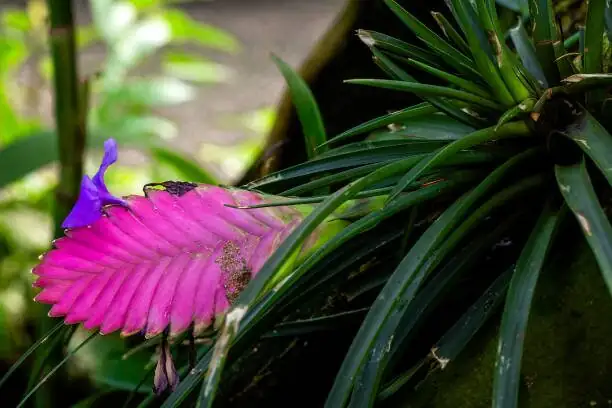
In late spring to summer (timing varies), Tillandsia juncea sends up a vivid pink spike that stays colorful for weeks, followed by small purple tubular flowers. Afterward, the flowering rosette slows but the plant lives on via pups—your clump only gets showier.
Symbolism and “flower language”
Often associated with independence and resilience, T. juncea’s symbolism comes straight from its lifestyle: an epiphyte that anchors to trees or rocks, living on light, air, and fleeting rain. Modern “flower language” assigns meanings to blooms, but here the metaphor runs deeper than romance—this plant embodies self‑sufficiency. It thrives without soil, rebounds from brief neglect, and rewards you when its environment is right. In a small space or a minimalist home, it’s a living reminder that the essentials—light, air, and time to dry—are enough.
Troubleshooting quick hits (the FAQs you’ll ask sooner or later)
- “Why is the base turning brown/black?” Likely rot from staying wet too long or weak airflow. Let it dry fast after each soak, keep water out of the base, and improve circulation.
- “Can I keep it in a closed terrarium?” No. Use open designs—this plant needs airflow to dry quickly.
- “Does it die after flowering?” The flowering rosette slows, but it produces pups. The clump continues and expands.
Snapshot checklist for your next photo triage
- Base dark, mushy, leaves slip out? Base rot—dry hard, trim mush, reset watering and airflow.
- Tips crispy, leaves curling tight, base clean? Drought—rehydrate and increase soak frequency.
- Cottony tufts or stuck “helmets” in axils? Mealybugs or scale—spot‑treat with 70% isopropyl every 3 days for 2 weeks, rinse, dry fast, and isolate.
Keep the air moving, the drying brisk, and the base clean, and your Tillandsia juncea will reward you with resilient growth, quick recoveries, and that unforgettable pink‑and‑purple bloom show.