

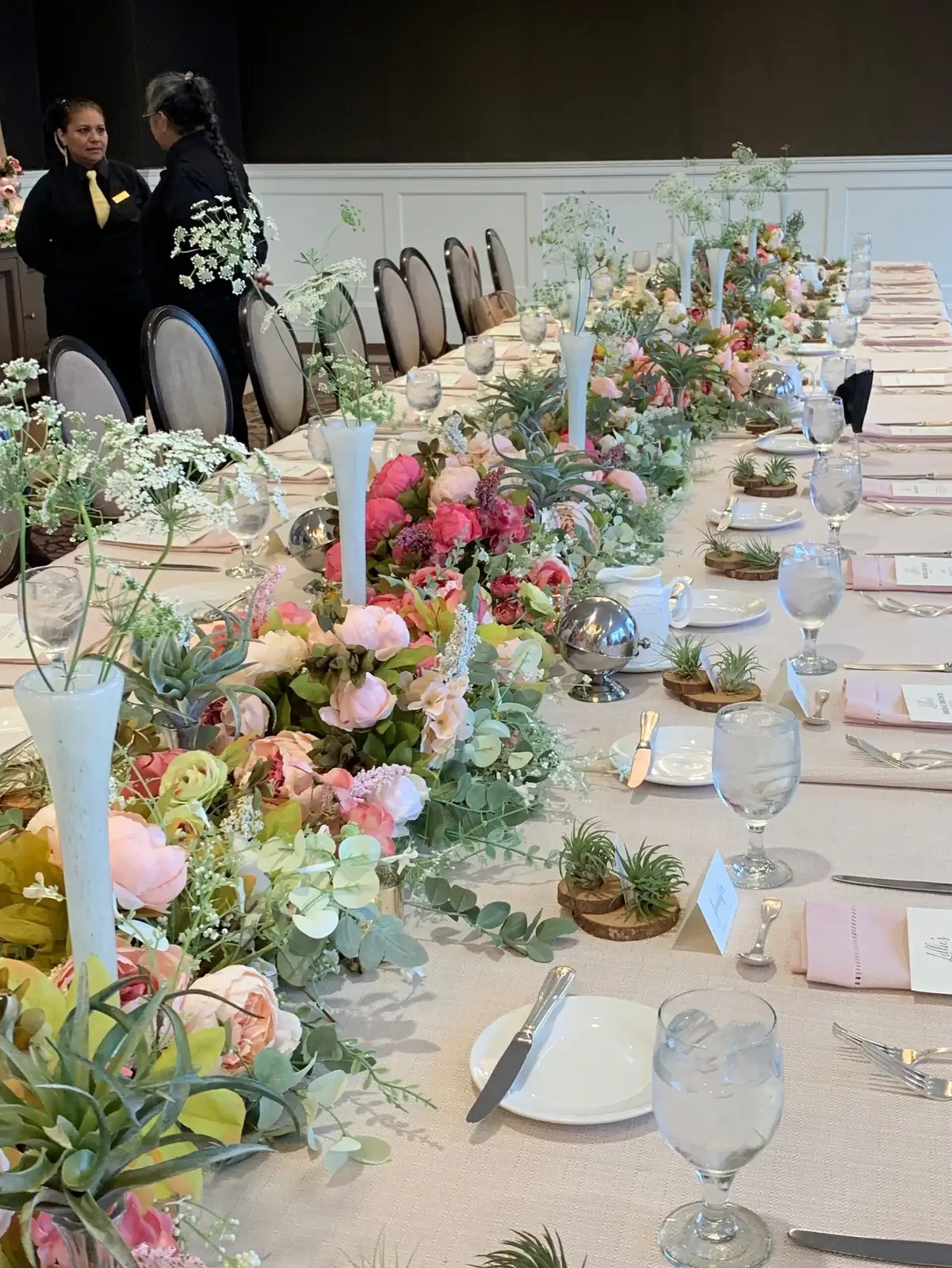
It’s no wonder stylists reach for Tillandsia xerographica—the “King of the Air Plants”—when they want instant theater. Those broad, silvery curls read like modern sculpture, they thrive without soil, and they hold up beautifully across multi-day installs when you set them up for success. Here’s how to build event magic that keeps your plants alive and gorgeous—from hidden, foam-free supports to travel-proof mounts, showtime lighting, and post-event rehab.
Meet the star: Tillandsia xerographica, living sculpture
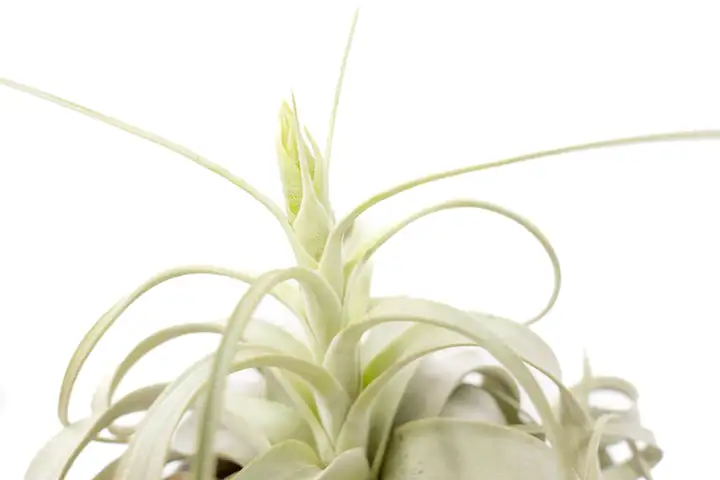
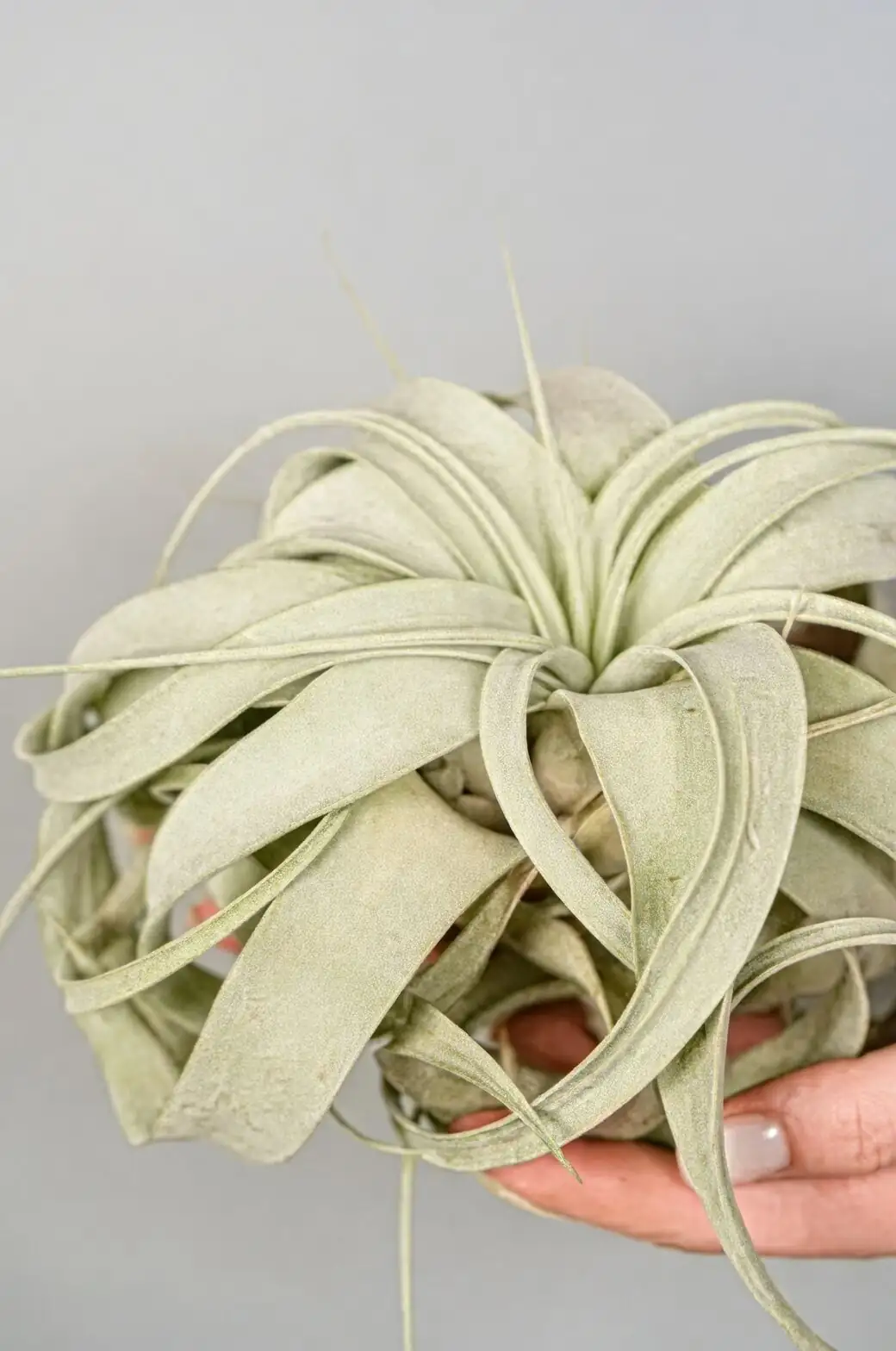
- Look: A dense, sculptural rosette of silvery-gray, strap-like leaves that arch and curl. The silver comes from trichomes (tiny scales) that capture moisture and reflect strong light.
- Size: Typically 6–24 in (15–60 cm) across; mature spikes can reach 12–35 in (30–90 cm).
- Habitat origins: Southern Mexico, Guatemala, El Salvador, and Honduras—bright, airy, and dry.
- Light: Bright light with some direct sun is ideal. Avoid deep shade and harsh, scorching midday rays.
- Water: Lower water needs than many air plants. Prefer thorough misting over soaking, and ensure plants dry completely within about 4 hours.
- Temperature and airflow: 59–86°F (15–30°C) with excellent ventilation. Keep frost-free and protect from chills below 50°F (10°C).
- Bonus: Mature plants may send up a long-lasting spike with small purple tubular flowers. After blooming, the “mother” slowly fades while producing pups.
Why stylists love it: No soil, big presence, and it plays beautifully with contemporary materials—cork, stone, metal, glass—provided air can move freely around the rosette.
Pre-game: sourcing and pre-hydration timeline
Set your event up for success with a simple schedule.
7–10 days before the event
- Source the right plants:
- Choose firm, silvery rosettes with no sour smell, mushy spots, or blackened bases.
- Minor brown tips are cosmetic; the base should be clean and tight.
- Prep gear: nylon monofilament (fishing line), soft Velcro plant ties, coated floral wire, clear acrylic rods, cork/driftwood, magnets with cushions, dry moss (for camouflage, not moisture), Command hooks, and breathable crates.
2–3 days before
- Acclimate: Unbox into bright, airy light. Inspect for mealybugs or scale (dab with 70% isopropyl alcohol if needed). Avoid oil-heavy sprays.
- Pre-hydrate for showtime:
- Morning: Thoroughly mist until leaves are evenly moistened, then shake gently and dry with strong airflow. Aim for a full dry-down within ~4 hours.
- Very dry environment? A quick 5–10 second rinse can help—then dry completely. Avoid long soaks unless a plant is severely dehydrated.
- Styling tip: Hydration subtly changes posture. Slightly less water = tighter curls; slightly more frequent (but still quick-dry) misting = a looser, fuller look. Stay within quick-dry parameters to avoid rot.
Day before or morning of install
- Final mist, then dry fully before packing.
- Confirm supports and mounts; test strength and invisibility.
Build invisible supports (no foam) that plants approve of
Floral foam traps moisture—a rot risk for air plants. Instead, work with breathable, removable anchors that protect the rosette and keep air moving.
Principles for foam-free success
- Never pierce the plant’s base. Support by cradling the outer leaves or tying around natural leaf overlaps.
- Keep all sides airy; avoid tight cups and closed containers.
- Hide hardware under dry moss shims, within wood crevices, or behind prop lines—without sealing the plant in.
Low-profile techniques
- Fishing-line halo: Create a gentle “belt” around mid-rosette using clear monofilament; tie to hidden screws/eyelets under a wood base or inside a vessel rim.
- Coated wire cradle: Form a soft ring cradle (use green-coated or paper-wrapped wire). Pad contact points with felt or moss; tie loosely so leaves aren’t compressed.
- Mesh holders and clips: Seat the plant in a wire mesh holder or orchid clip anchored to a stand; disguise with driftwood or lichen while keeping the base open.
- Magnet mounts: Cushion two strong magnets with cork/leather; place one behind a metal frame/backdrop, one on the plant-side to hold a tie or loop. Great for vertical walls.
- Pin frogs + risers: Set a kenzan in a low bowl and use a clear acrylic rod or U-bracket affixed to the frog as an “invisible pedestal” the rosette perches on—no piercing.
- Command-hook rigging: For arches and frames, run monofilament between discreet hooks; hang plants in balanced slings.
Materials to skip or treat with caution
- Floral foam or saturated moss pockets (trap moisture).
- Tight glass cloches or unvented terrariums (stale, humid air).
- Copper wire (bromeliads can be sensitive to copper).
- Heavy permanent glues on live tissue. If adhesive is essential, apply minimally to a dry, non-living surface (e.g., wood) and tie the plant instead.
Travel-safe mounts and packing
- Keep plants dry during transport. Never box a wet plant.
- Secure the mount, not the rosette. Pad the container; avoid pressure on leaf curls.
- Use breathable crates or boxes; don’t seal in plastic. Include “This Side Up” labels.
- Temperature control: protect from cold drafts and hot cars. Target 59–86°F (15–30°C); never below 50°F (10°C).
- On arrival: Unbox into bright, airy light. If leaves look a touch flat, give a fine mist in the morning and ensure they dry fully.
Lighting and life support on set
- Light: Bright light with some direct sun is ideal. Indoors, position near east/south windows with filtered midday sun or under bright LED panels. Avoid placing directly under hot stage lights that can scorch or desiccate.
- Airflow: Fans on low keep leaves dry and happy. Avoid cold AC blasts directly at the plants.
- Humidity: 40–60% works well if ventilation is strong.
- Watering during multi-day events:
- Mist in the morning as needed; aim for complete dry-down within ~4 hours.
- Skip evening misting (overnight dampness invites rot).
- Never let water sit deep in the rosette; after misting, tilt briefly to drain.
After the applause: post-event rehab
Give your stars a gentle spa day to transition from set life to home life.
- Unmount and dust: Brush off décor debris without polishing away trichomes (that soft silver is functional).
- Rehydrate: Morning thorough mist, then dry with airflow. In very dry homes, an occasional brief rinse (5–10 seconds) helps—dry completely afterward.
- Feed lightly: Use a bromeliad/air-plant fertilizer at 1/4 strength every 2–4 weeks during active growth; rinse with plain water occasionally to prevent buildup.
- Light and warmth: Bright conditions, some gentle direct sun, 59–86°F (15–30°C).
- Rot triage: Soft, dark bases or a sour smell mean the plant stayed wet. Remove deteriorated outer leaves, improve airflow and light, and keep moisture light and quick-drying.
- Dehydration triage: Crispy tips and accordion-folded leaves? Increase morning misting frequency and airflow; expect leaves to perk over several cycles.
- Pups and bloom: Mature plants may push a long-lasting spike with small purple tubular flowers. After flowering, the mother rosette declines naturally while producing pups. Separate pups when they’re 1/3–1/2 the size of the mother, or keep them clumped for drama. Don’t “tidy” by trimming the mother too soon.
Quick foam-free recipes for events
1) Cloud-bowl centerpiece
- Vessel: Low ceramic bowl with a hidden kenzan.
- Hardware: Clear acrylic U-bracket on the frog; dry moss shims to hide the bracket base.
- Planting: Perch one large xerographica as if floating above a bed of pebbles. Add a few airy elements (dried ruscus, thin branches) anchored to the frog—never through the plant.
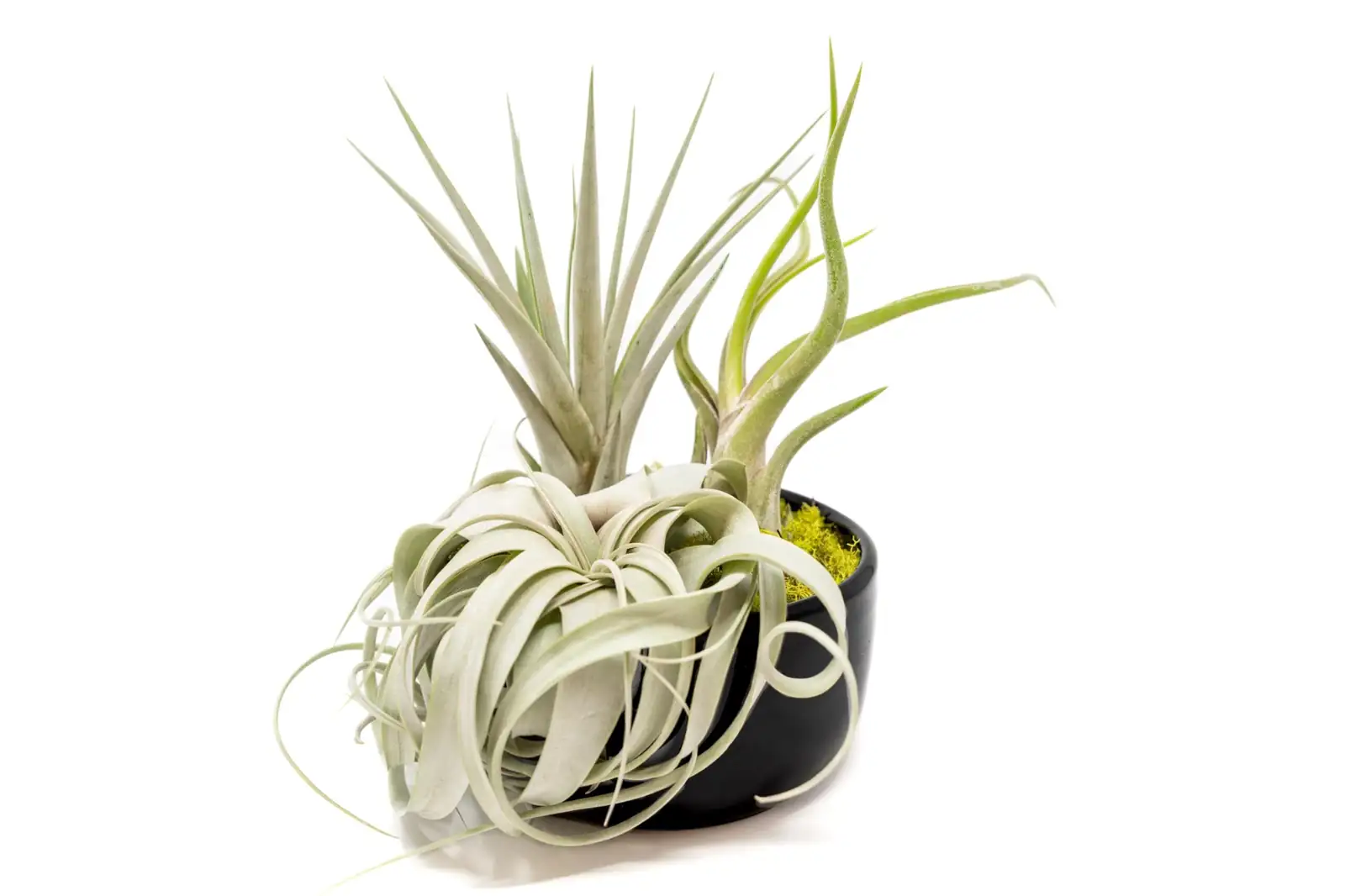
2) Hanging halo aisle markers
- Base: Lightweight hoop with a wire mesh “shelf.”
- Attachment: Nylon line cradle under the rosette, tied to the hoop’s inner rim. Camouflage with a crescent of dried lichen.
- Install: Command hooks on pews or a freestanding rod. Optional battery LED pin-spots aimed from below.
3) Welcome-table pedestal
- Base: Chunk of cork bark on a clear acrylic riser.
- Attachment: Eyelets screwed into the bark’s underside; monofilament “seatbelt” around the rosette. Underlight with a soft LED puck set back to avoid heat.
Troubleshooting for event teams
- Leaf tips turning brown?
- Typical from very dry air, inconsistent watering, or mineral-heavy water. Use rain/filtered water, mist slightly more often with quick-dry airflow, and boost light.
- Is it getting enough light on set?
- Happy plants stay silvery and firm. Greener, softer growth signals low light; pale or scorched patches mean too much harsh sun/heat.
- Can I use terrariums or cloches?
- Only if very well ventilated. Otherwise, stale humidity equals rot risk. Favor open designs.
- How long can it go without water during the event?
- With bright light and good airflow, a well-prepped xerographica often looks great for 1–2 days without misting. For multi-day installs, fine-mist in the morning and ensure a quick dry.
- Pets and people?
- Generally considered non-toxic (not edible). Chewing can cause mild stomach upset.
Sourcing and delivery timing tips
- Order a few days ahead of your event to inspect, pre-hydrate, and stage hardware.
- Build in time for plants to dry completely after any watering before packing or transport.
- Have backups for large installs; even tough plants appreciate a margin for weather or transit hiccups.
Symbolism and styling notes
- Symbolism: Often associated with independence and resilience—an elegant fit for designs that highlight modern minimalism and effortless beauty.
- A note on “flower language” (花语): Popular lists of meanings are a cultural overlay rather than a botanical rule. Use symbolism as a storytelling layer, not a constraint—let xerographica’s sculptural poise carry the narrative.
The one-page checklist
- Light: Bright, some direct; avoid scorch and deep shade.
- Water: Thorough misting; always dry within ~4 hours. Avoid long soaks unless rescuing a severely dehydrated plant.
- Airflow: Excellent—fans on low are your friend.
- Temperature: 59–86°F (15–30°C); protect from cold below 50°F (10°C).
- Supports: Foam-free; use monofilament, coated wire cradles, mesh holders, magnets, and risers. Keep the base open.
- Transport: Dry plants, breathable boxes, secure mounts, climate control.
- Aftercare: Morning mist, bright light, light feeding, patience for pups.
Treat Tillandsia xerographica like the living sculpture it is: give it light, air, and smart, invisible rigging, and it will reward your event with show-stopping form—and keep the encore going long after the last guest leaves.