

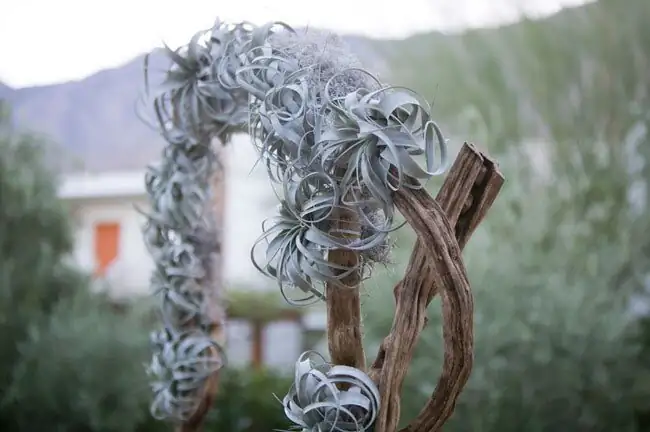
The “King of the Air Plants” earns its crown not just with sculptural silver curls, but with a life cycle designed to pass the throne. Grow Tillandsia xerographica with a propagator’s mindset—time your pup separations at just the right moment, coax gorgeous clumps, mount with intention, and care skillfully after bloom—and you’ll build a living dynasty that gets more dramatic every year.
Meet Tillandsia xerographica (a quick portrait)
- Origin: Dry forests and rocky slopes of southern Mexico, Guatemala, El Salvador, and Honduras.
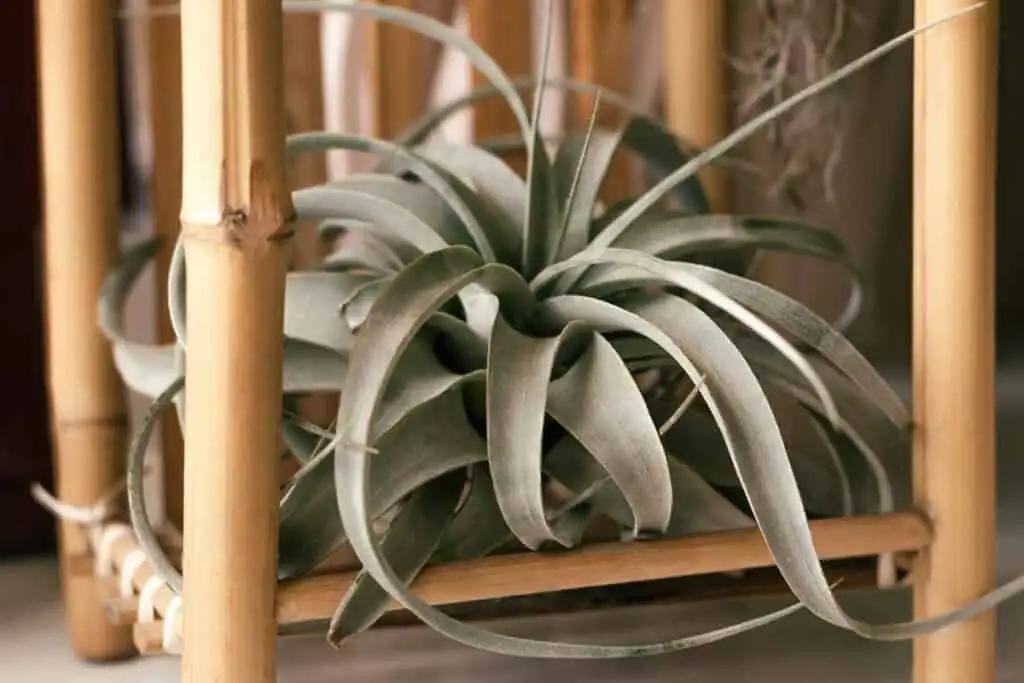
- Look: Broad, silvery-gray, strap-like leaves in a tight, curling rosette; dense trichomes give its signature matte glow.
- Size: Typically 6–24 in (15–60 cm) across; mature spikes can rise 12–35 in (30–90 cm).
- Bloom: A long-lasting, often branched spike with small purple tubular flowers—then the mother gradually declines while producing pups.
- Habit: Rosette-forming epiphyte; no soil required, ever.
The three pillars: light, air, water
- Light: Bright light with some gentle direct sun is ideal. Indoors, an east or bright south window with filtered midday sun keeps leaves silvery and firm.
- Air and humidity: Moderate humidity (around 40–60%) with excellent airflow. The non-negotiable: fast drying after watering.
- Water: This species wants less water than many air plants. Favor thorough misting over soaking. Water earlier in the day and ensure the plant dries completely within about 4 hours. In very dry homes, a quick rinse (5–10 seconds) can help—avoid long soaks except in severe dehydration. Strong airflow every time.
Pro tip: Leaves curling tighter than usual? That’s your “thirsty” cue. Hydrated leaves relax and arch more loosely.
Post-bloom care: how the dynasty begins
Bloom is the baton pass. After flowering, the mother rosette slowly steps back while channeling energy into offsets (pups).
- Do: Keep conditions bright and airy, continue light feeding, and be extra strict about fast dry-down after any moisture.
- Don’t: “Trim down” the mother or peel off live leaves. Let her support the next generation.
- Flower spike: Once the inflorescence is fully dry and papery, you can snip it off carefully without disturbing emerging pups.
- Patience: Many xerographicas make one to a few pups; some mothers push a second round later.
Pup timing: when 1/3–1/2 size is the sweet spot
Separation timing is the master move. Remove pups when they are:
- About one-third to one-half the size of the mother plant
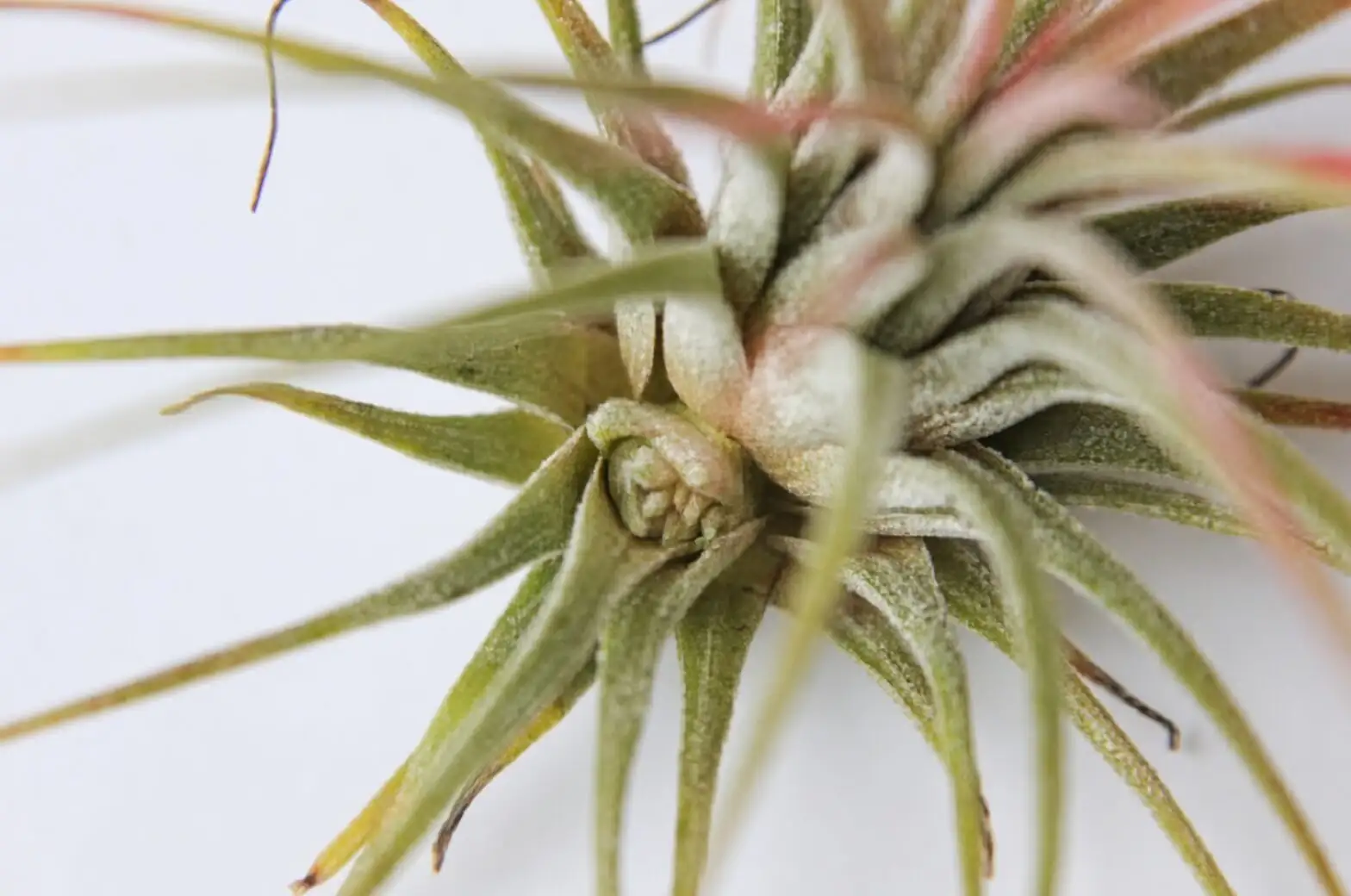
- Firmly rooted at the base but with visible separation points between rosettes
- Showing their own sturdy leaf set
Why this window works:
- Too early: tiny pups desiccate quickly and grow slowly.
- Too late: the clump becomes crowded, airflow suffers, and bases can stay damp, risking rot.
If your goal is a show-stopping clump, leave pups attached. If your goal is to multiply plants, separate at 1/3–1/2 size for the best balance of survival and vigor.
How to separate pups (step-by-step)
- Prep the scene
- Water the day before so tissue is hydrated, then let it fully dry.
- Gather tools: a sterile, sharp knife or scalpel; clean tweezers; isopropyl alcohol (70%).
- Inspect the base
- Gently lift outer leaves to locate the natural junction between mother and pup.
- The cut
- Stabilize the mother with one hand. With the other, make a small, decisive cut at the junction, angling away from the mother’s core. Avoid tearing.
- Clean edges
- If any ragged tissue remains, neaten with a sterile blade. Do not remove healthy leaves.
- Dry and callus
- Rest both plants in bright, airy conditions for 24–48 hours before any watering. This callus period is crucial for rot prevention.
- Aftercare
- For 2–3 weeks, give light, frequent misting rather than heavy rinses. Always dry within 4 hours. Gradually return to your normal schedule as the pup firms up.
Tip: If a pup resists, don’t force it—wait another few weeks. The cleanest separations often happen a little later in the 1/3–1/2 window.
Clump culture: encouraging fuller, healthier clusters
Want that cloudlike, many-headed xerographica? Grow toward a clump.
- Leave pups attached after bloom. Each pup will eventually flower and pup again, forming a compound specimen.
- Hang to shape: Suspending a developing clump by wire or fishing line encourages a spherical form and better all-around airflow.
- Light balance: Rotate the clump every few weeks so inner rosettes receive light; this evens growth and prevents a shaded, limp interior.
- Watering strategy: Mist from above and slightly from the sides so moisture reaches inner rosettes, then ensure brisk drying. A small fan on low nearby can be transformative.
- Crowding check: If a clump gets so dense that the interior stays damp, remove one or two pups to open the center. Healthy airflow is the clump’s insurance policy.
Mounting like a pro: secure, breathable, beautiful
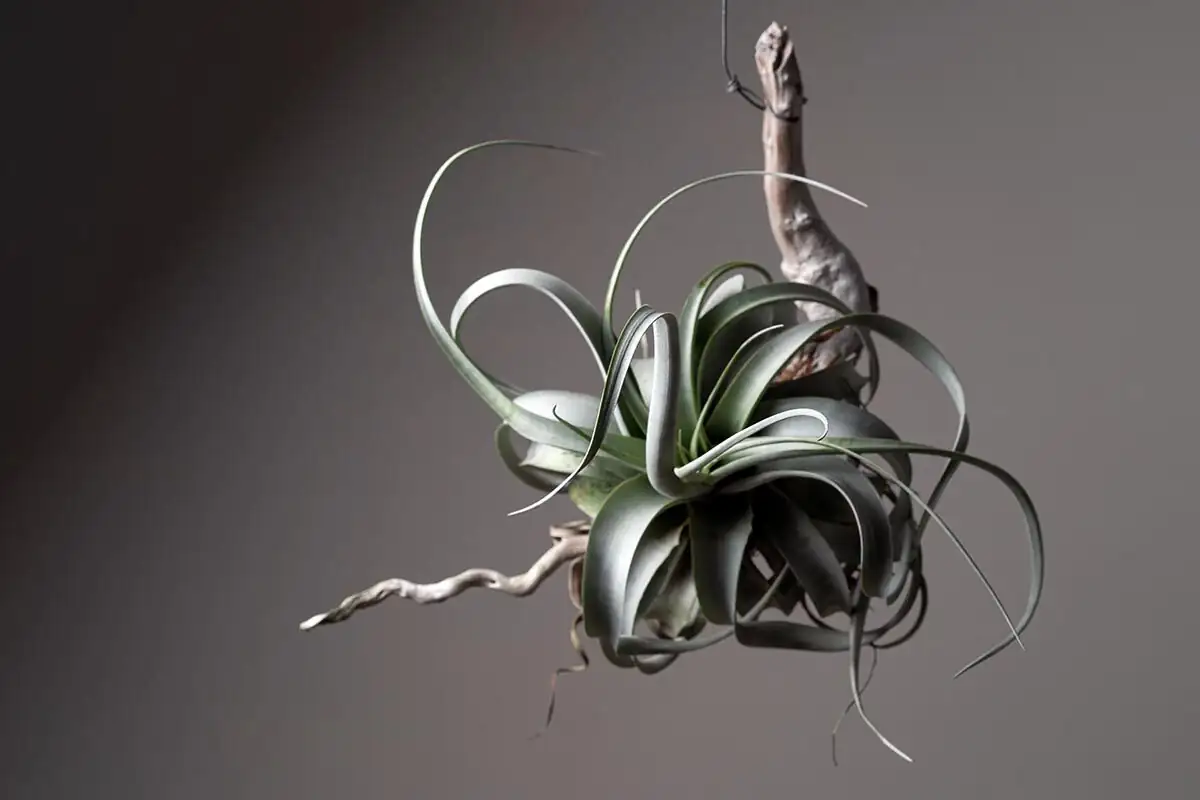
T. xerographica is an epiphyte—give it a perch, not a pot.
- Best mounts: Natural cork, hardwood, driftwood, rock, or wire/mesh holders. Avoid always-wet media and tight or closed containers.
- Positioning: Angle the rosette slightly sideways or downward so water never pools in the core.
- Fasteners:
- Fishing line or soft, non-metallic ties work well.
- If you must glue, use a tiny dab of aquarium-safe silicone or a plant-safe adhesive on the root pad only—never on leaves. Let set fully before watering.
- Avoid copper wire; it’s toxic to air plants.
- Display hacks:
- On shelves, use open stands or rings that allow airflow under the base.
- For hanging displays, a single suspension point lets you rotate for even light.
Watering and feeding, fine-tuned for propagation
- Watering rhythm:
- Morning thorough misting; then dry within ~4 hours.
- In very dry homes, add an occasional quick rinse (5–10 seconds).
- Reduce frequency in cool, low-light months; increase a notch in bright, warm months.
- Feeding:
- Use a bromeliad/air-plant fertilizer at 1/4 strength every 2–4 weeks (or monthly) during active growth.
- Rinse with plain water occasionally to prevent mineral buildup on trichomes.
- Pups vs. mothers:
- Newly separated pups benefit from slightly more frequent light misting for the first few weeks.
- Declining mothers need excellent airflow and careful, sparing moisture.
Seasonal rhythm
- Spring–summer: Brighter light, slightly more frequent misting, light monthly feeding.
- Fall–winter: Maximize light, keep warm (ideal 59–86°F / 15–30°C), water less, and insist on rapid drying.
Environment check (for long-lived dynasties)
- Sunlight: Bright light with some gentle direct sun; avoid deep shade and harsh, scorching midday rays.
- Temperature: Keep frost-free; protect below 50°F (10°C).
- Humidity: 40–60% is great if airflow is strong.
- Hardiness: USDA Zones 10–11 outdoors; elsewhere, treat as an indoor/outdoor seasonal guest.
Health, pests, and what to avoid
- Rot is enemy number one: It happens when plants stay wet without airflow. Keep cores dry and drying times short.
- Pests: Mealybugs and scale are the typical culprits. Dab with a cotton swab dipped in 70% isopropyl alcohol and improve airflow. Avoid oil-heavy sprays on air plants.
- Water quality: Use rain, distilled, or filtered water if your tap is mineral-heavy to prevent leaf-tip browning.
Sourcing prime stock
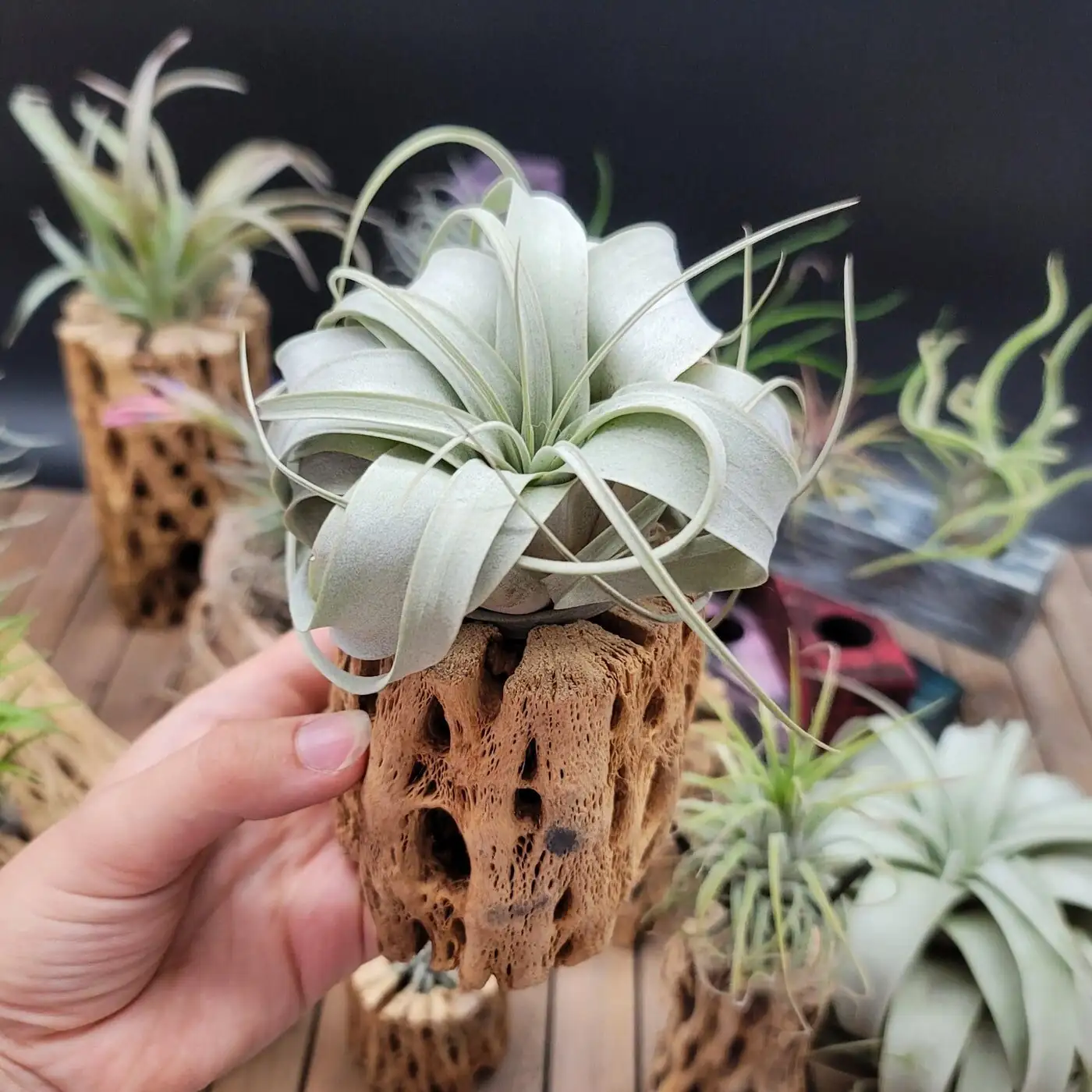
Choose plants with:
- Firm, silvery leaves and a tight rosette
- No blackened bases, mushy spots, or sour smell (rot signs)
- Minor brown tips are cosmetic and common
Propagation playbook: three winning strategies
- Solo expansion
- Separate pups at 1/3–1/2 size for a steady pipeline of new plants.
- Hybrid approach
- Leave the first pup or two attached for clump foundation; remove later pups to multiply.
- Show-clump approach
- Leave all pups attached; hang and rotate for symmetry. Thin lightly only if airflow suffers.
Symbolism and “flower language”
Xerographica often symbolizes independence and resilience—its roots don’t ask for soil, only light, air, and occasional rain. In contemporary design culture, it’s also linked to minimalist elegance and quiet strength. Unlike traditional “flower language” systems tied to centuries-old customs, this symbolism grows from the plant’s ecology and modern use: a living sculpture thriving on simplicity, passing its legacy through pups long after the initial bloom fades.
Quick FAQ for propagators
- When exactly do I cut? When a pup reaches about one-third to one-half the mother’s size and you can see a natural junction at the base.
- Can I keep it in a glass globe? Only if it’s very open and ventilated. Closed containers trap moisture—rot risk skyrockets.
- Should I soak it weekly? Not this species. Favor thorough misting and quick dry-down; use only brief rinses when conditions are very dry.
Grow your xerographica as a lineage, not a one-and-done. With perfect timing at 1/3–1/2 size, airy clump culture, smart mounting, and thoughtful post-bloom care, your “King of the Air Plants” won’t just reign—it will found a dynasty.