

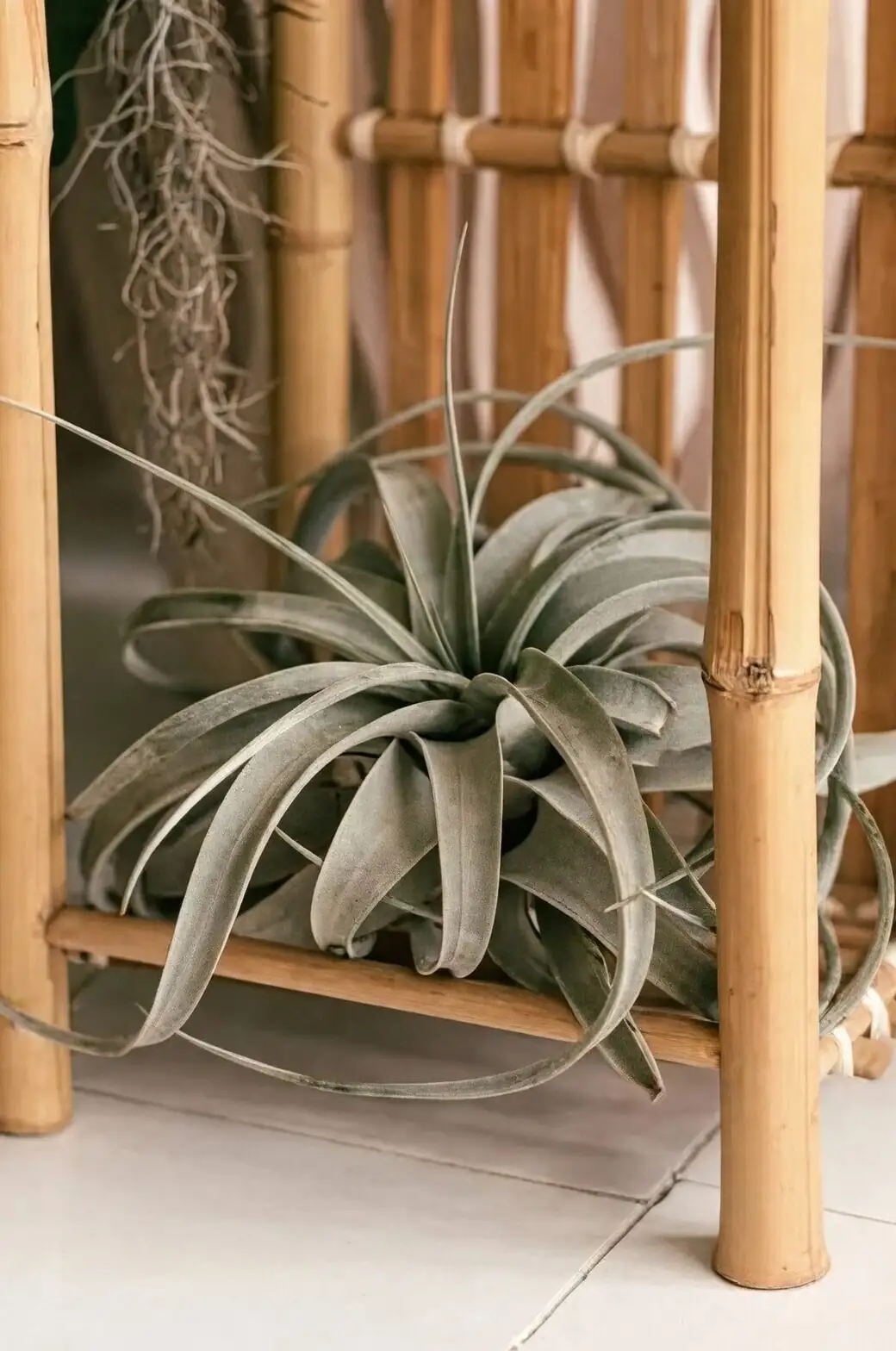
If a single plant could moonlight as a sculpture, it would be Tillandsia xerographica—the King of the Air Plants. Those wide, silvery curls, that poised rosette, the way it throws shadows like calligraphy on a wall… it’s a natural for interior styling. Treat it like a design object first, a plant second, and it will reward you with presence, poise, and (with time) a tall, dramatic bloom spike of purple flowers.
Below is your styling playbook—bowls vs pedestals, driftwood mounts, scale and negative space, lighting angles—and the honest truth about terrariums.
H2 Meet your muse: Tillandsia xerographica, explained briefly
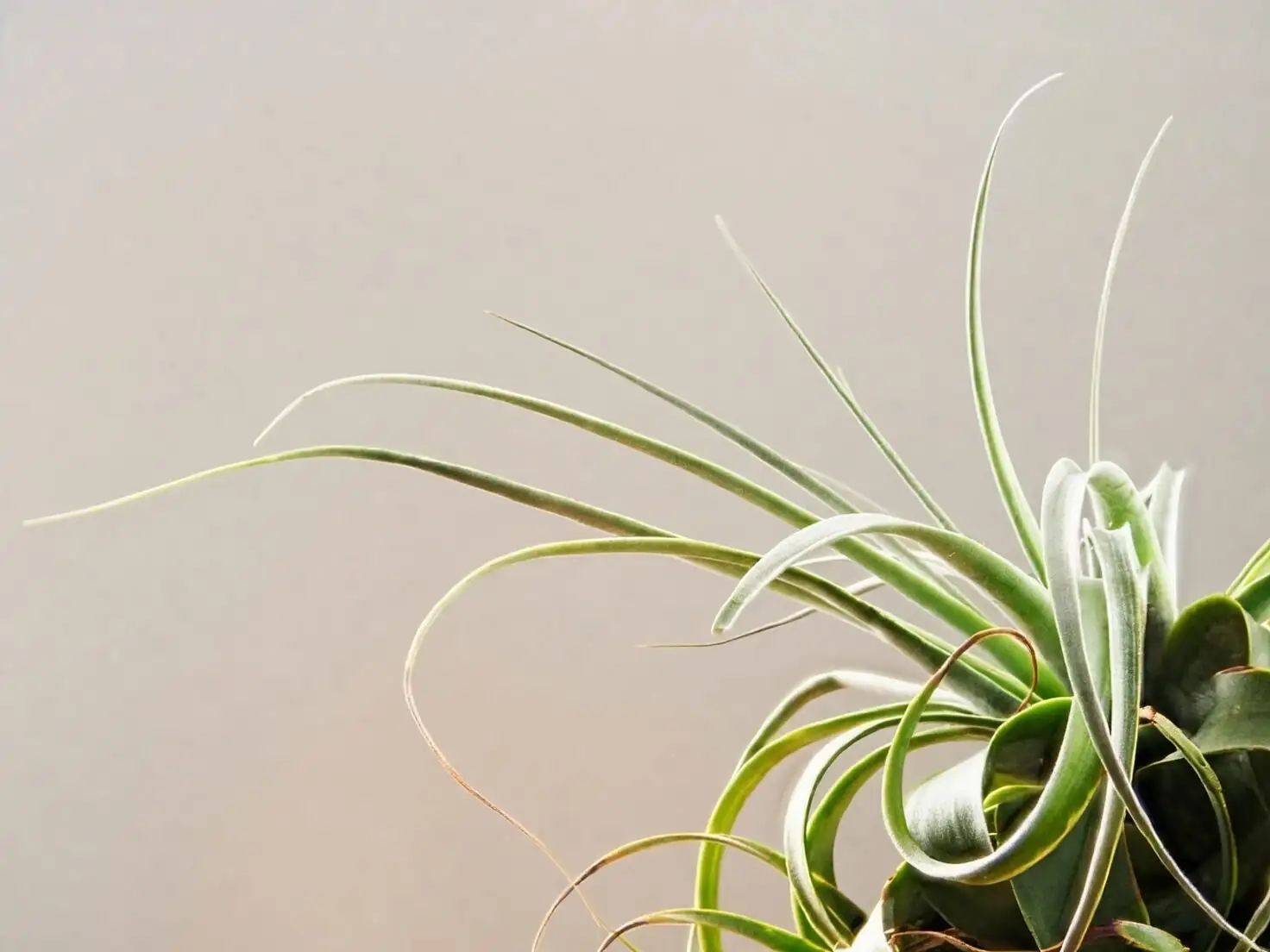
- Look: Broad, silvery-gray leaves curl and arch into a dense rosette with a soft matte glow (that shimmer comes from trichomes—tiny scales that catch moisture and reflect intense light).
- Size: Typically 15–60 cm (6–24 in) across; a mature flowering spike can reach 30–90 cm (12–35 in).
- Habit: Rosette-forming epiphyte that produces offsets (“pups”) after flowering; the mother slowly steps back while the clump grows.
- Light and air: Bright light with some direct sun and excellent airflow. Indoors, think an east window or a south window with filtered midday sun.
- Water: Less than most air plants—thorough misting over soaking. Water early in the day and make sure it dries completely within about 4 hours.
- No soil: Display on wood, stone, mesh, or a dry, airy surface. Avoid closed containers or wet media.
H2 Scale and negative space: make the rosette do the talking
Treat xerographica like a sculpture with a built-in halo of air.
- Read the rosette: Measure its diameter. For a clean, gallery feel, give it a “breathing margin” of at least 1–1.5× its width around it on all sides.
- Table proportioning:
- Coffee table focal point: plant width ≈ 1/3 the tabletop width.
- Credenza or console: let the leaves spill to within 5–8 cm (2–3 in) of the back wall; keep 20–30 cm (8–12 in) of open space on either side.
- Height matters: Raise it slightly (4–10 cm / 1.5–4 in) to highlight the curl and keep airflow under the base. This is where pedestals shine (more below).
- Shadow play: Side-lighting casts elegant, looping leaf shadows; don’t crowd it with objects that muddle those silhouettes.
H2 Bowls vs pedestals: which stage flatters the “King”?
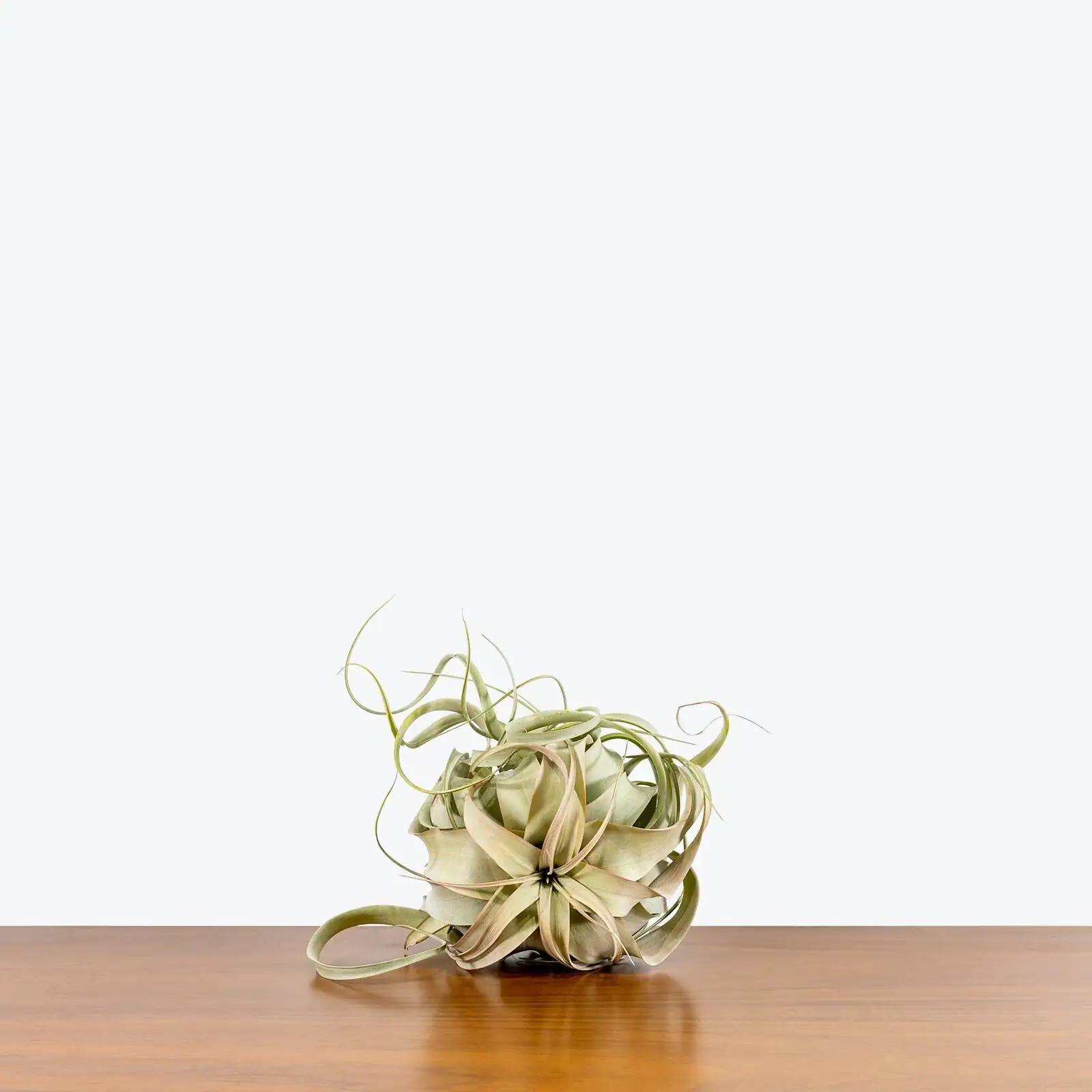
H3 Low, wide bowls: serene and sculptural (but choose wisely)
Best for calm, modern vignettes and centerpieces.
- Use:
- Very shallow, wide vessels (think 3–6 cm tall, generously wide).
- Dry, inert topdressings that don’t hold moisture: pebbles, lava rock, tumbled glass, or sand kept bone-dry.
- A discreet riser (a low ring of cork or a hidden pebble tripod) so the plant’s base never touches the bowl or damp material.
- Avoid:
- Deep bowls that trap stagnant air.
- Moist moss “nests”—they slow drying and invite rot.
- Style tip: Angle the rosette a few degrees off-center so the longest leaf curls spill asymmetrically—this looks intentional and adds movement.
H3 Pedestals and plinths: airy, gallery-grade impact
Perfect when you want presence without bulk.
- Why they work:
- Airflow all around, especially under the base—key for fast dry-down.
- Elevation creates a striking profile and crisp shadow edge.
- Choose:
- Stone, metal, or sealed wood pedestals 4–15 cm tall; top surface at least 60–80% of plant diameter for stability.
- Matte finishes to echo the plant’s silvery sheen.
- Placement:
- Solo on a console, grouped with a low stack of books and nothing else within 20 cm for negative space discipline.
- Maintenance advantage: Easier to lift for misting, shake dry, and return—no decorative gravel raining onto the floor.
H2 Driftwood mounts (and kin): organic drama with practical airflow
Mounting xerographica on driftwood, cork bark, or cholla wood channels its epiphytic roots—visually and functionally.
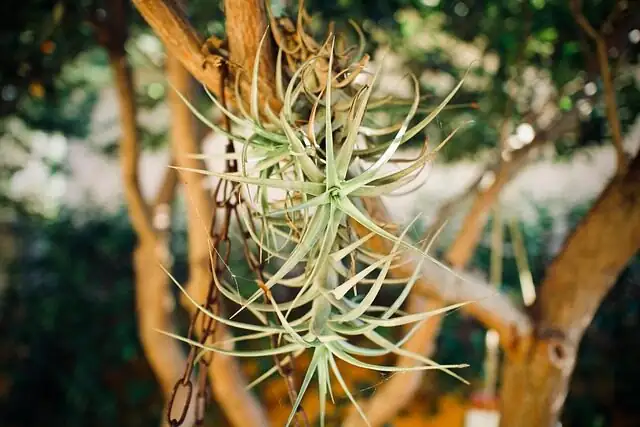
- Best materials: Smooth driftwood, cork bark slabs, or cholla skeleton for natural texture and built-in ventilation.
- Attachment:
- Wrap gently with clear fishing line or soft bonsai wire, or use a tiny dot of waterproof, plant-safe adhesive placed on tough outer leaf sheaths (never smother the central base).
- Leave the base open so water can’t pool.
- Orientation:
- Slightly tilted or even “side-on” looks dynamic and helps water run off after misting.
- Where it sings:
- Against a white wall near bright light; in wall frames or on floating shelves; as a horizontal centerpiece on a dining table.
- Bonus: Cork and cholla stay dry and breathe well, aligning with the plant’s need to dry quickly after watering.
H2 Lighting angles: make the silver glow (without the scorch)
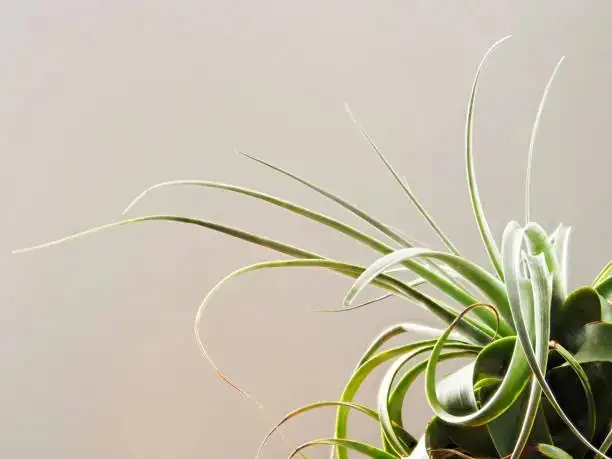
- Direction and intensity:
- East window: gentle morning sun makes trichomes sparkle—ideal daily light.
- South window: strong light is great; filter the harsh midday sun with a sheer curtain to prevent bleaching or scorch.
- Avoid deep shade: leaves turn greener and softer; growth weakens.
- Angle your light:
- 30–45° side light emphasizes curl and texture.
- Backlighting through sheer drapery creates a luminous rim on leaf edges.
- Rotate monthly: a quarter turn keeps the rosette symmetrical.
- Reflectors: a pale wall, white tabletop, or light-toned bowl/pedestal bounces light back under the leaves for depth.
H2 Why closed terrariums are a trap (and what to do instead)
Xerographica loves bright, airy conditions and fast drying. Closed or tightly lidded terrariums trap moisture and stale air—exactly what this species dislikes.
- The problems:
- Slow drying = rot at the base, the classic failure point.
- Condensation drips into the rosette, lingers, and invites fungal issues.
- Warm, enclosed glass overheats in sun; in shade, it’s too dim—both stress the plant.
- Smarter alternatives:
- Open glass vessels with broad cutouts on two or more sides.
- Wire frames, mesh cradles, open cloches propped ajar, or bell jars lifted a few centimeters for cross-ventilation.
- If you love a “terrarium look,” keep all media dry, leave generous openings, place in bright light (not baking sun), and add a small fan nearby for airflow.
H2 Care that supports the look
H3 Watering (light touch, quick dry)
- Method: Prefer thorough misting over soaking. Mist early in the day until leaves are evenly moistened, then ensure the plant dries fully within about 4 hours.
- In very dry homes: a brief rinse (5–10 seconds) can help occasionally—shake excess water off and tip the plant to drain.
- Avoid: Long soaks unless the plant is severely dehydrated, and never let water sit in the rosette or at the base.
H3 Light, temperature, humidity
- Light: Bright light with some direct sun; east or filtered south exposure is ideal.
- Temperature: 15–30°C (59–86°F). Protect from cold below 10°C (50°F).
- Humidity: 40–60% is comfortable if airflow is strong. The key is ventilation and fast drying after any moisture.
H3 Feeding and grooming
- Fertilize lightly during active growth with a bromeliad/air-plant formula at 1/4 strength every 2–4 weeks (or monthly). Rinse with plain water occasionally to prevent mineral buildup.
- Dust gently with a soft brush; a clean surface shows off that silver.
- Pests: Watch for mealybugs and scale. Spot-treat with a cotton swab dipped in 70% isopropyl alcohol and improve airflow. Avoid oil-heavy sprays.
H2 Five styling recipes to try now
H3 1) The levitating sculpture (pedestal)
- Vessel: Matte black or travertine pedestal, top 14–20 cm wide.
- Placement: South window with sheer curtain; 30–45° side light.
- Pro move: Keep 20–30 cm of empty space around it for strong shadows. Mist in place, then lift and shake over a sink.
H3 2) The quiet tide (shallow bowl)
- Vessel: Wide, shallow ceramic bowl with pale interior; base hidden riser.
- Surface: Bone-dry white sand or fine gravel (never damp).
- Composition: Offset the plant slightly; add one lava rock as a counterweight. East window for morning sparkle.
H3 3) Coastal drift (driftwood mount)
- Mount: Smooth driftwood with a subtle arc; attach with fishing line.
- Angle: Tilt the rosette 10–15° so water sheds; display on a console against a white wall.
- Light: Bright, indirect with a slice of morning sun.
H3 4) The modern totem (stacked pedestals)
- Pieces: Two staggered plinths at different heights; one xerographica and one smaller, darker tillandsia for contrast.
- Rule: Keep the taller piece behind and slightly to the side; maintain negative space triangle between them and any wall art.
H3 5) Air gallery (open frame)
- Structure: Floating frame or wire grid; mount the plant on cork fixed within the frame.
- Benefit: Maximal airflow, sculptural shadow. Works brilliantly near a bright window without direct midday sun.
H2 When it blooms (and after): styling the spike
- Expect a long-lasting, often branched spike with small purple tubular flowers once the plant is mature.
- Give vertical clearance: 45–60 cm above the rosette so the spike has room to shine.
- After flowering: The mother slowly declines and produces pups. Don’t trim down the rosette; either let pups clump for a fuller sculpture or separate when each pup is 1/3–1/2 the size of mom.
H2 Buying guide and quick troubleshooting
- Choose plants with:
- Firm, silvery leaves and a tight rosette.
- No blackened bases, mushy spots, or sour smell.
- Minor brown tips are usually cosmetic.
- Brown tips developing at home?
- Often dry air, inconsistent watering, or mineral-heavy water. Try slightly more frequent misting, use rain/filtered water, and keep light bright with strong airflow.
- Light check:
- Happy = silvery, firm, slow-steady growth.
- Too little = greener, softer leaves.
- Too much harsh sun = bleached or scorched patches.
H2 Safety, placement, and seasonality
- Placement: Bright windowsill, well-lit shelf, or airy patio in warm, frost-free climates. Indoors, aim fans or open windows for gentle airflow.
- Toxicity: Generally considered non-toxic to people and pets (not edible).
- Seasonal rhythm:
- Spring–summer: more light, slightly more frequent misting, light feeding.
- Fall–winter: reduce watering, keep warm, maximize light, ensure every watering dries fast.
H2 Symbolism and “flower language”
While not rooted in traditional flower language, xerographica’s modern symbolism comes from how it thrives without soil: independence, resilience, and minimalist elegance. Designers love its architectural calm—an emblem of doing more with less, creating presence through space as much as form. When it finally blooms, the long, steady spike reads like patience rewarded.
H2 The one-minute checklist
- Bright light with a touch of direct sun; avoid deep shade.
- Pedestal or shallow, open bowl—always with airflow under the base.
- Driftwood/cork/cholla mounts for natural texture and fast drying.
- Thorough morning mist, then dry fully within about 4 hours.
- Skip closed terrariums; choose open, well-ventilated displays.
- Light feeding, clean leaves, rotate monthly. Enjoy the sculpture.