

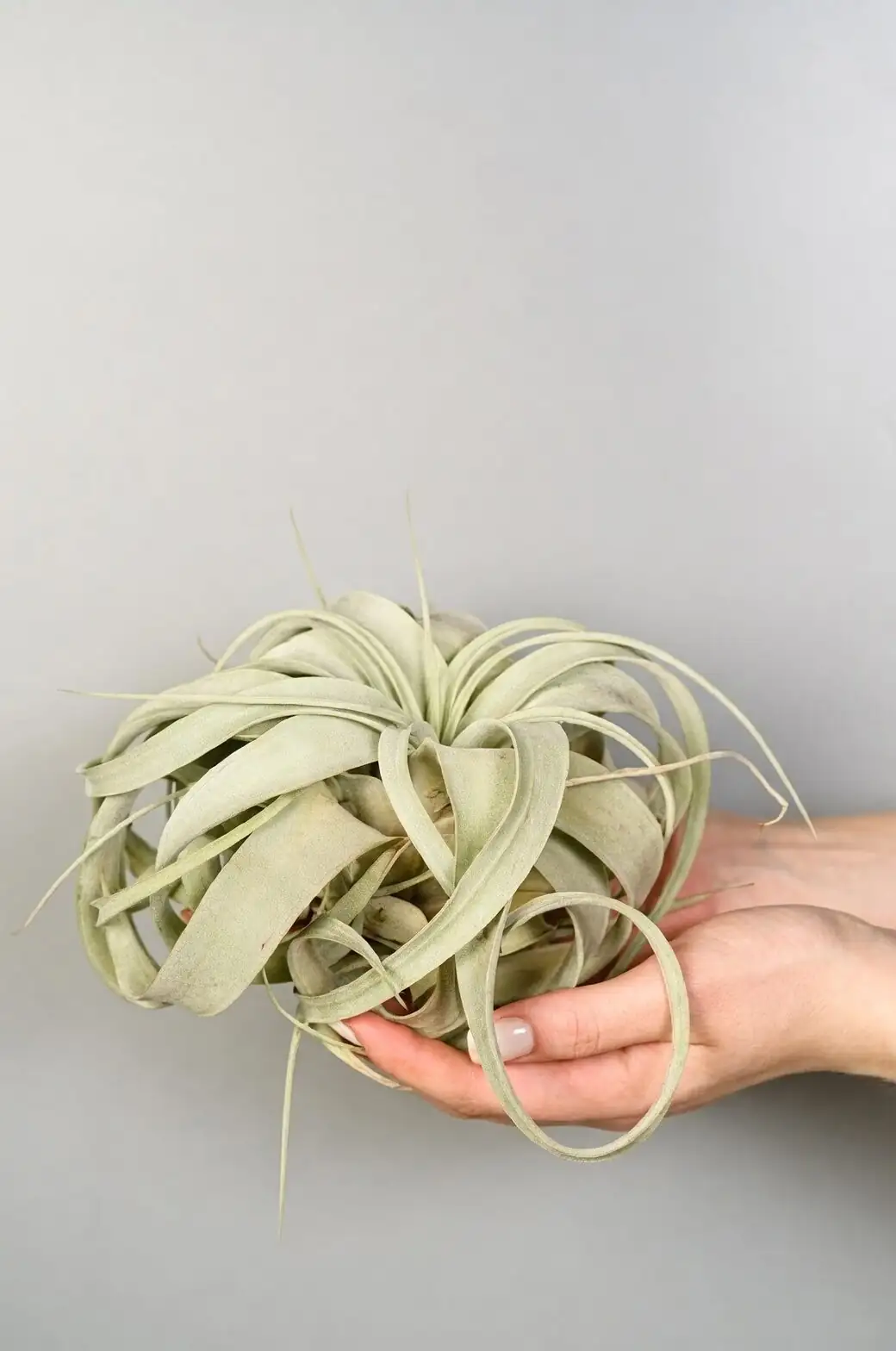
Imagine a plant that seems to levitate—no potting mix, no heavy planter—just a silver rosette that catches light and air as if it were designed by a minimalist sculptor. That’s Tillandsia xerographica, affectionately crowned the “King of the Air Plants.” Its modern flower language (huayu) took shape not in ancient scrolls but in sunlit studios, curated shelves, and calm, clutter-free homes—where its soilless life and serene form quietly redefined what a “meaningful” plant can say.
Meet Tillandsia xerographica, the King of the Air Plants
- Botanical family: Bromeliaceae; genus Tillandsia
- Native range: Southern Mexico, Guatemala, El Salvador, and Honduras—dry forests and rocky slopes
- Look: Broad, silvery-gray leaves curl into a dense, sculptural rosette; the silver comes from dense trichomes that sip moisture from the air and reflect sun
- Size: Typically 15–60 cm (6–24 in) across; a mature flowering spike can reach 30–90 cm (12–35 in) tall
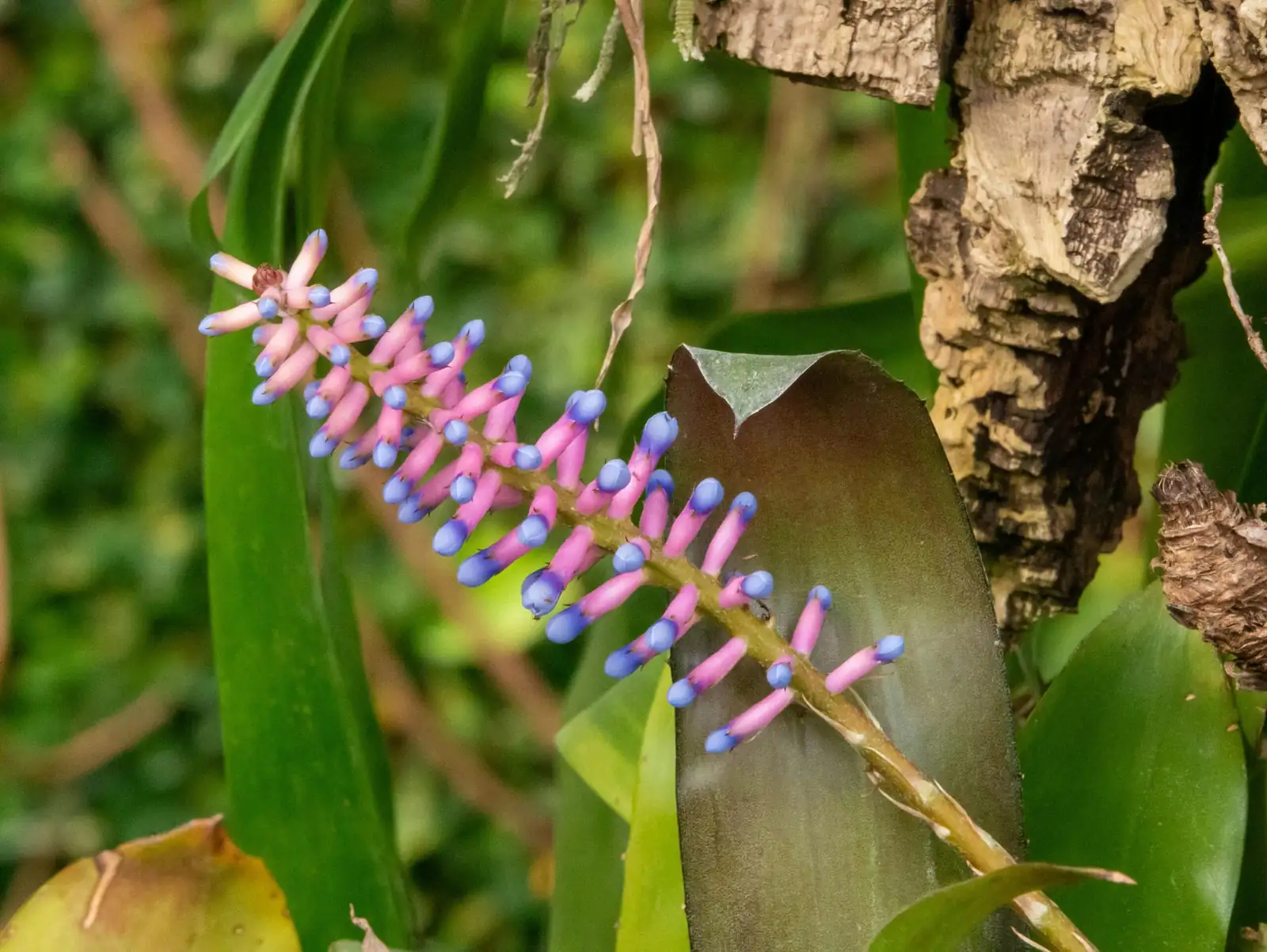
- Flower: A long-lasting, often branched spike with small purple tubular blooms when mature
- Habit: A rosette-forming epiphyte that later produces offsets (“pups”), gradually clumping into a living family
It’s a true statement piece—sleek, self-possessed, and quietly dramatic.
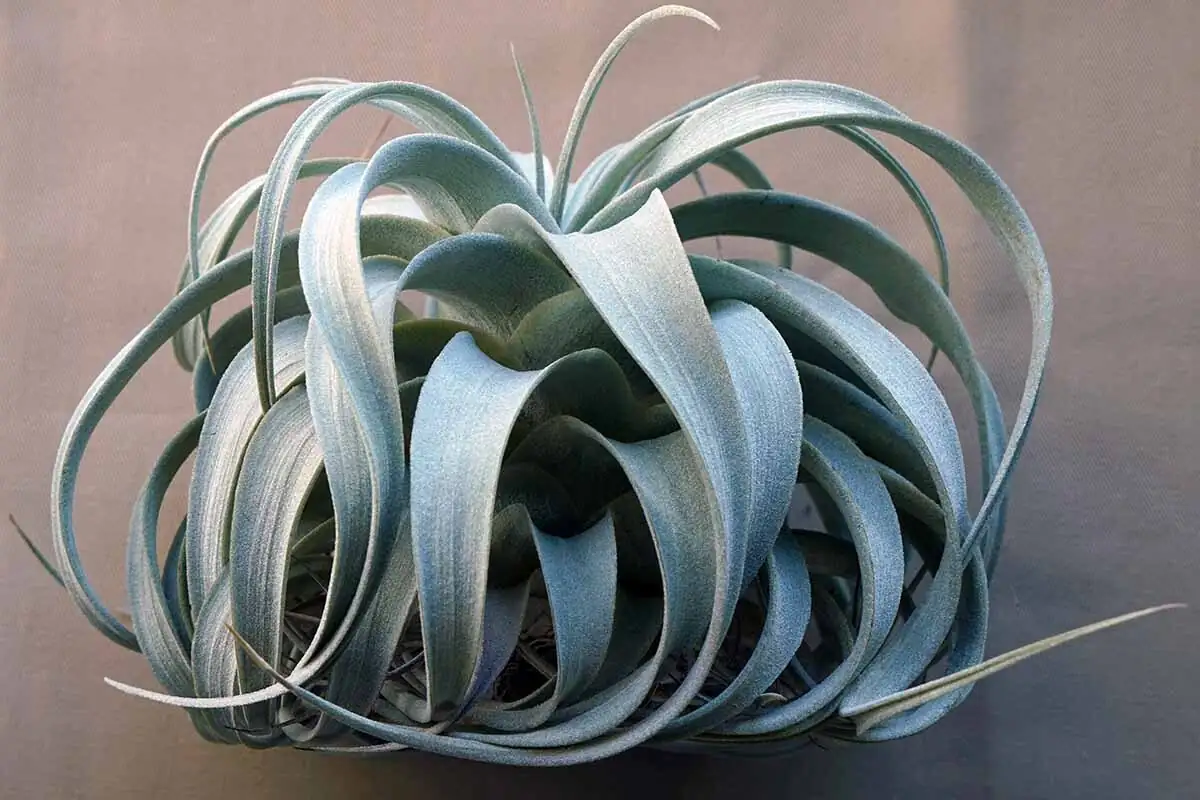
How a Modern Huayu Emerged: Meaning in a Soilless Life
Classical Chinese flower symbolism rarely included air plants. The huayu of Tillandsia xerographica is distinctly modern—born of urban living, design-led lifestyles, and the growing love for plants that embody clarity and calm.
Independence and resilience
Thriving without soil, this air plant anchors to wood, rock, or a simple stand and drinks from light mist and airflow. That soilless survival has become its defining message:
- Independence: Grow on your own terms
- Resilience: Adapt, simplify, and still flourish
- Self-trust: Minimal inputs, maximal poise
These qualities resonate today precisely because the plant thrives where others might falter—bright, dry rooms; airy patios; on shelves where pots would clutter.
Minimalist beauty and calm focus
Its cool, matte silver and spiraled geometry mirror minimalism’s core values: restraint, balance, and intention. In design languages from Scandinavian to Japandi, xerographica reads as:
- Clarity: A single sculptural form that quiets visual noise
- Balance: A rosette that feels centered and composed
- Presence: A living object, not just décor
From this aesthetic, a contemporary huayu unfolds: calm clarity, elegant restraint, and “strength with softness.”
New beginnings for modern lives
No soil. Easy to move. Low mess. In fast-changing cities, xerographica has become a symbol of:
- Fresh starts: Light, portable, and ready to go
- Mobility: A plant that travels well between homes and roles
- Continuity: After flowering, it produces pups—new life carried forward
In short, its modern flower language speaks of clean slates, agile transitions, and enduring momentum.
Feng Shui Readings: Where Form Meets Flow
While air plants aren’t part of classical systems, many contemporary feng shui practitioners read Tillandsia xerographica as aligned with the Metal element. Interpreted this way:
- Element: Metal (clarity, focus, structure, creativity)
- Directional emphasis: West (often linked to creativity, communication, and supportive relationships)
- Harmonizing choices: White or gray stands/holders, rounded shapes
Practical applications:
- On a work desk, a west-side placement can be a symbolic nudge toward crisp thinking and productive dialogue.
- In living rooms, a single, well-placed xerographica balances visual energy—avoid overcrowding; too many can feel “sharp” or over-metallic.
- Always prioritize literal flow: bright light, strong airflow, and room to dry quickly after misting. In feng shui, healthy qi starts with a healthy plant.
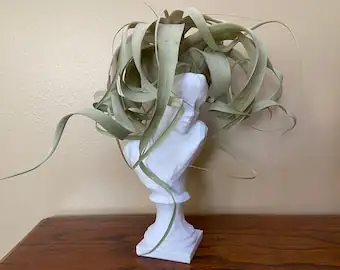
Design Magic: Styling the Silver Rosette
- Sculptural solo: Set one plant on a white or concrete pedestal to spotlight the curves.
- Warm-cool balance: Pair with raw wood or driftwood to warm the plant’s cool silver.
- Light catchers: Hang in an airy mobile near an east or south window with filtered midday sun.
- Gallery shelves: Use odd-number groupings (3 or 5) and vary size/height for pleasing irregularity.
- Terrarium “look,” not terrarium “trap”: If you love glass, choose very open vessels and prioritize airflow. Closed containers invite moisture buildup—this plant wants to dry fast.
Gifting Guide: What It Means to Give Tillandsia xerographica
Xerographica’s modern huayu lends itself beautifully to milestone gifts—especially when the message is a new chapter with minimalist grace.
New job or promotion: Focused clarity and creative confidence
- Meaning: Independence, mental clarity (Metal), resilient growth
- Note to include: “For clear thinking, steady poise, and elegant solutions.”
- Placement tip: Bright desk spot with airflow; west side of the workspace if you follow feng shui.
New home or big move: Lightness and fresh beginnings
- Meaning: A clean start with minimal baggage; easy transitions; continuity through pups
- Note: “For a home that breathes—light, calm, and ready for beautiful new routines.”
- Styling: A white, rounded stand whispers balance; keep it near a bright window.
Fresh start or graduation: Renewal with staying power
- Meaning: Start clean, grow steady, and pass the torch—eventually pups continue the story
- Note: “Begin again with grace. One rosette today; a family of rosettes tomorrow.”
- Ritual idea: A monthly “reset mist” in the morning—water lightly, breathe, set intentions.
Quick-Care Card to Tuck with Your Gift
- Light: Bright with some direct sun; avoid deep shade or harsh, all-day sun.
- Water: Prefer misting over soaking. Mist thoroughly, then let it dry completely within about 4 hours. In very dry homes, a brief rinse (5–10 seconds) is okay—avoid long soaks.
- Airflow: Essential. Think breezy windowsill, not a closed jar.
- Schedule: Water earlier in the day; more frequent in spring–summer, less in fall–winter.
- Mounting: No soil. Display on wood, rock, mesh, or an airy stand.
- Feeding: Light bromeliad/air-plant fertilizer at 1/4 strength every 2–4 weeks during active growth.
- Temperature: 15–30°C (59–86°F); protect from cold below 10°C (50°F).
- Safety: Generally non-toxic to people and pets (not edible).
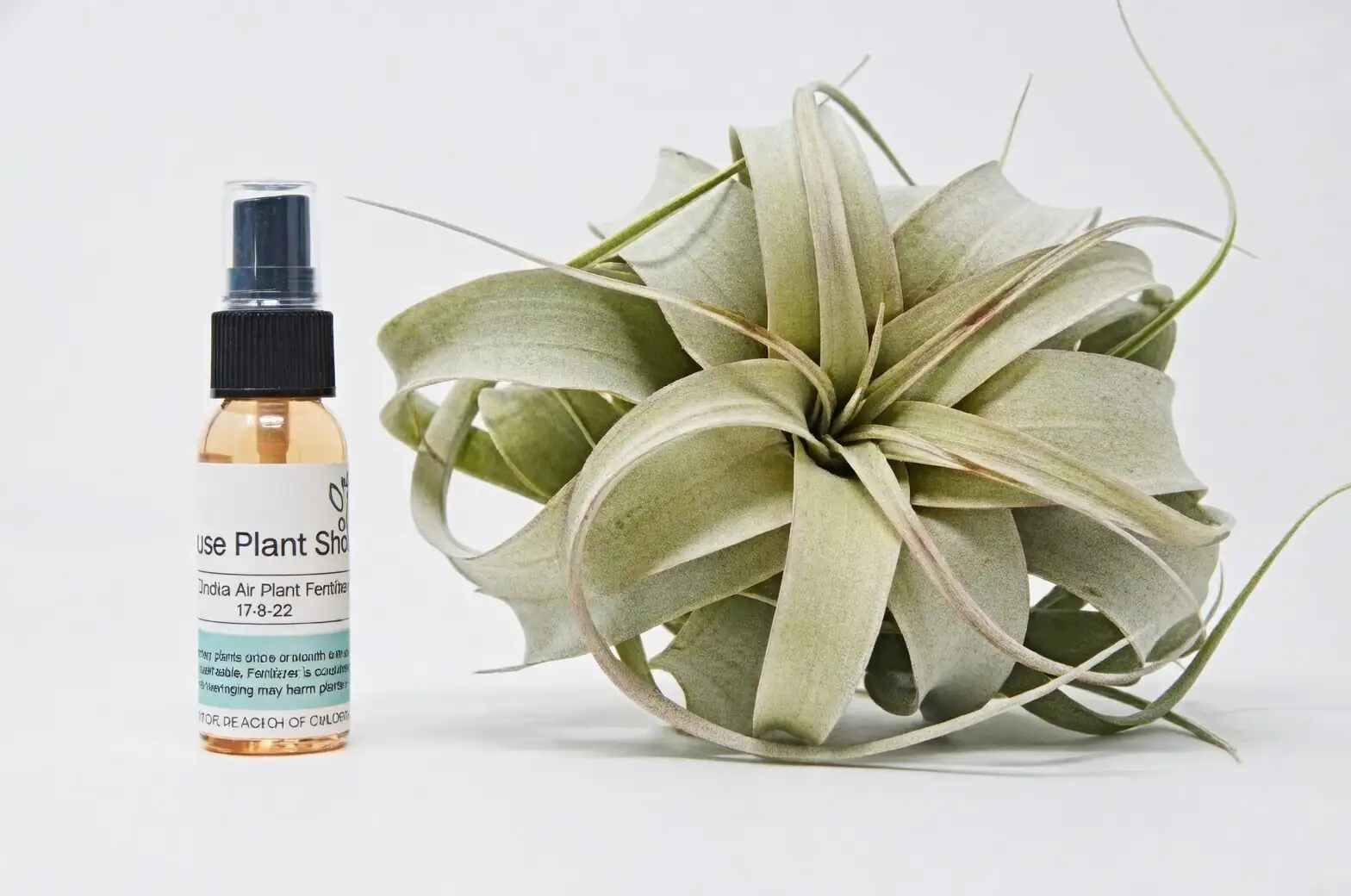
Care Notes that Keep the Meaning Alive
- Brightness shows: A happy xerographica stays silvery and firm. Too little light = greener, softer leaves; too much harsh sun = bleached or scorched patches.
- Rot is the real foe: This species wants less water than many Tillandsia. Water early, dry fast, keep air moving, and avoid closed containers.
- After the show: Following bloom, the mother rosette slowly steps back while pups take over—don’t trim it down. That quiet handoff is part of its story.
- Pests: Occasionally mealybugs or scale; dab with 70% isopropyl alcohol and improve airflow. Avoid oil-heavy sprays on air plants.
The Bloom as a Blessing
When mature, Tillandsia xerographica sends up a lasting spike with small purple flowers—then gracefully yields the stage to its offspring. In life-change seasons—new jobs, new keys, new paths—this feels like a blessing: savor the highlight, share the wisdom, and let the next chapter grow strong.
In today’s design-led homes, the “King of the Air Plants” speaks a clear, contemporary huayu: independence, resilient calm, and the beauty of a fresh start—rooted not in soil, but in light, air, and intention.