

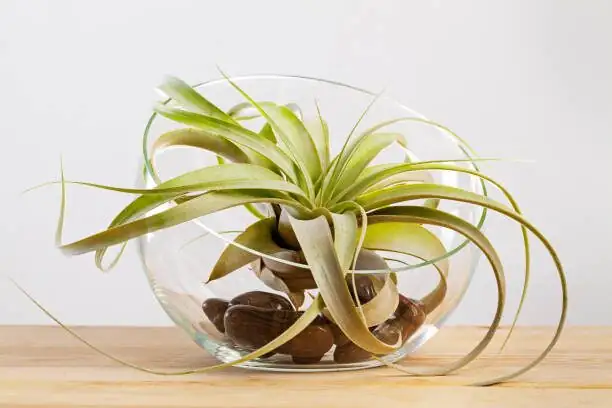
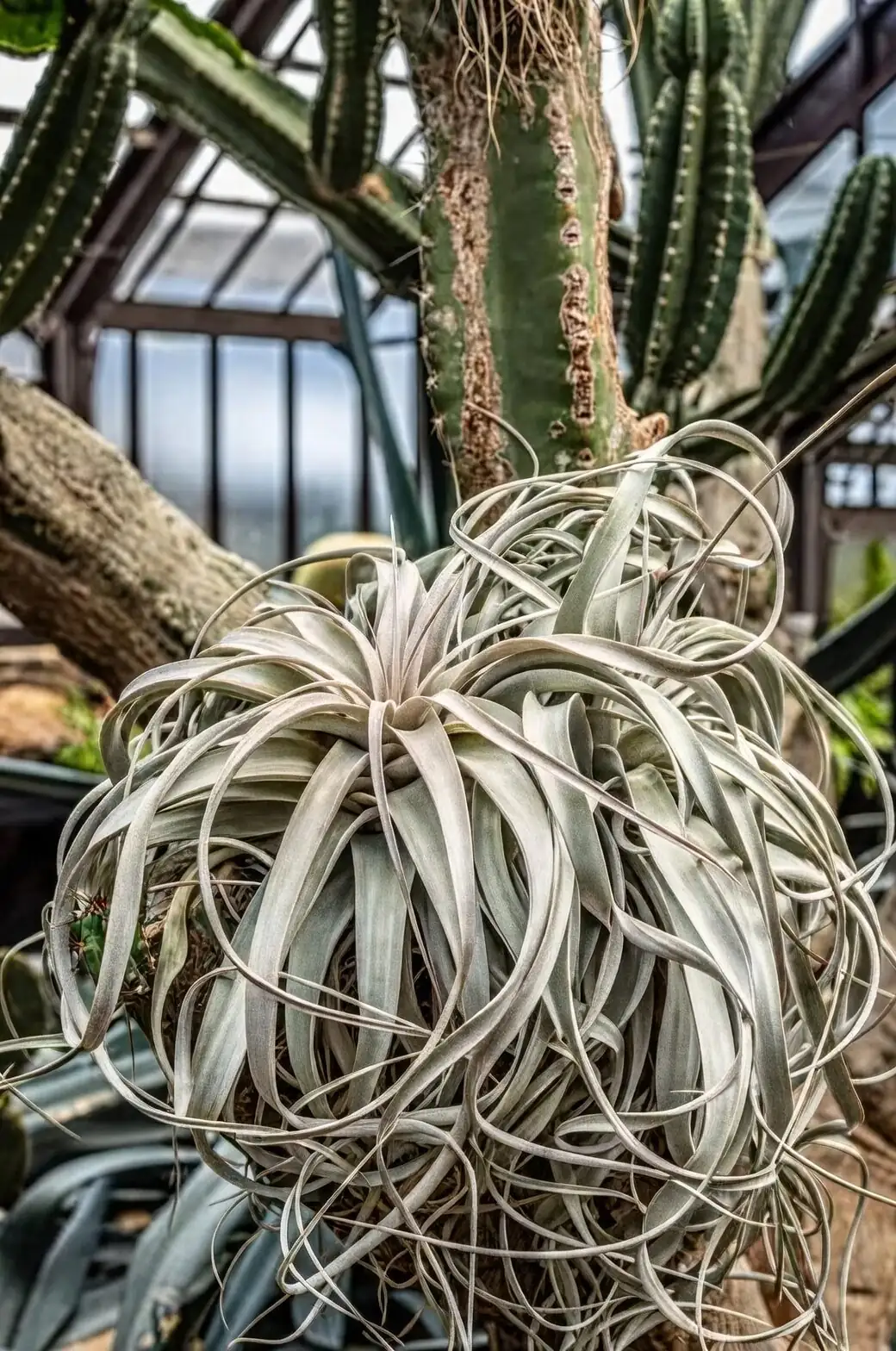
Meet the King of the Air Plants—your sculptural, silver-laced Tillandsia xerographica. Native to the bright, dry forests of southern Mexico and Central America, this rosette-forming bromeliad stays happiest when you keep its leaves silvery, its body firm, and its base dry. Here’s a crisp, step-by-step care guide zeroed in on light placement, misting vs. brief rinses, swift 4-hour dry times, airflow hacks, and smart seasonal tweaks.
Know your Xerographica at a glance
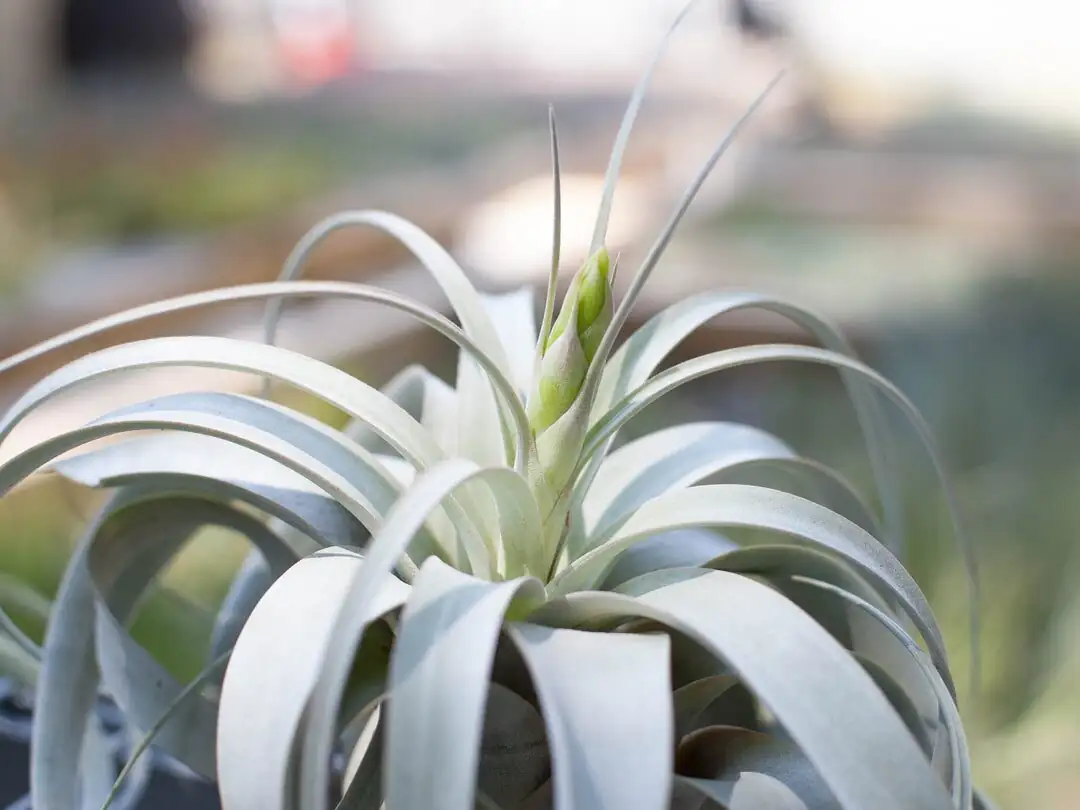
- Look: Broad, pale-silver leaves with a matte glow, curling into a dense, architectural rosette
- Size: 6–24 in (15–60 cm) across; mature spikes can reach 12–35 in (30–90 cm)
- Origins: Southern Mexico, Guatemala, El Salvador, Honduras (dry forests, rocky slopes)
- Habit: Rosette-forming epiphyte; produces offsets (“pups”) after blooming
- Bloom: Small purple tubular flowers on a long-lasting spike (only when mature)
- Hardiness: USDA 10–11; frost-free only
Light placement: set the stage for silver
Bright light is the magic. Too little, and leaves turn greener and softer; too much harsh sun, and they can bleach or scorch.
- Indoors
- Best spots: An east window or just back from a bright south window with filtered midday sun.
- Distance cues: If your south exposure is intense, move the plant a foot or two back or use a sheer curtain from late morning to mid-afternoon.
- What you want to see: A steady, silvery cast and firm leaves.
- Outdoors (frost-free climates)
- Place in bright, airy shade or gentle morning sun with dappled light the rest of the day.
- Protect from baking, reflective heat and heavy, prolonged rain.
- Light check
- Too little light: Greener, softer leaves; sluggish growth.
- Too much: Bleached or scorched patches. Dial back direct sun.
Watering, step-by-step: mist first, rinse only when needed
This species generally wants less water than many Tillandsia. Keep it hydrated without lingering wetness.
- Core method: thorough misting
1) Morning only. Use rain, filtered, or low-mineral water when possible.
2) Mist generously until the leaves darken and look evenly moistened.
3) Gently shake, then tilt or invert the rosette to release any trapped droplets.
4) Dry completely within about 4 hours (details below).
- When to add a brief rinse
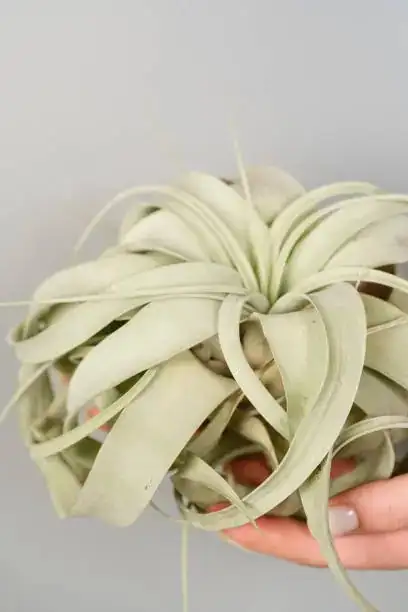
- In very dry homes or during heat spells, give a quick 5–10 second lukewarm rinse under the tap as an occasional boost. Then shake, invert, and dry fast.
- What to avoid
- Long soaks. Xerographica is prone to rot if water lingers. Skip soaking unless the plant is severely dehydrated, in which case a rare, very brief supervised soak can help—followed by a guaranteed quick dry-down.
- Seasonal frequency (start here, then adjust)
- Spring–summer: 2–3 thorough mists per week in bright spots with good airflow.
- Fall–winter: 1–2 thorough mists per week; keep warmer and brighter, but let it dry fast every time.
- The 4-hour dry rule—how to confirm
- By hour four, the base and leaf axils feel dry, and the foliage returns from “wet green” back to its soft silver, with trichomes visible again.
Airflow hacks: your silver insurance policy
Strong airflow is as important as water itself—this is what prevents rot and preserves that frosty sheen.
- Create a “drying station”
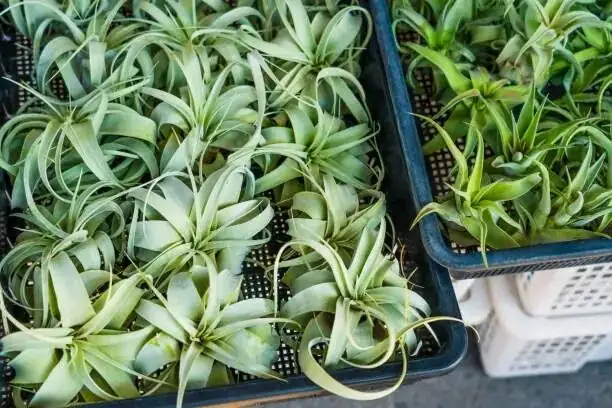
- After misting/rinsing, place the plant on a dish rack, mesh stand, or wire holder so air reaches all sides.
- Point a small fan on low across (not directly blasting) the plant for 30–60 minutes, or set under a ceiling fan.
- Angle for drainage
- Mount slightly tilted or hang upside down for 10–20 minutes post-watering so water can’t sit in the crown.
- Keep it out of still, enclosed displays
- Avoid sealed globes and tight terrariums. If you love the look, use only very well-ventilated containers with wide openings.
- Space matters
- Give each plant breathing room. Don’t wedge it into cups or nooks that cradle moisture at the base.
Your weekly routine (10 minutes or less)
- Day of choice, morning:
- Mist thoroughly → shake → invert briefly → move to the drying station with airflow and bright light → confirm it’s dry within ~4 hours → return to display.
- Midweek, only if needed (extra-dry air or heat):
- Quick 5–10 second rinse → shake → invert → dry fast as above.
Seasonal tweaks that keep leaves firm and silvery
- Spring–summer
- Light: Brighter overall; filter harsh midday sun.
- Water: Increase misting frequency as temperatures rise.
- Feed: Lightly every 2–4 weeks at 1/4 strength with a bromeliad/air-plant fertilizer. Rinse with plain water occasionally to prevent mineral buildup.
- Fall–winter
- Light: Maximize light (move closer to windows or add bright supplemental light).
- Water: Reduce frequency; room temps ideally 59–86°F (15–30°C), keep well above 50°F (10°C).
- Airflow: Extra important—homes are closed up; ensure every watering dries quickly.
Troubleshooting: fast fixes by symptom
- Leaves turning greener and soft
- Likely low light and/or too frequent moisture. Move brighter; ensure that 4-hour dry window.
- Leaf tips browning
- Common causes: very dry air, inconsistent watering, or mineral-heavy water. Slightly increase misting, switch to rain/filtered water, maintain airflow.
- Tight curling, wrinkles, or loss of firmness
- Thirst stress. Add one more mist per week or a brief rinse during heat spells. Always dry fast.
- Bleached or scorched spots
- Too much harsh sun. Shift to bright indirect light or filter midday rays.
- Blackened base, mushy spots, sour smell
- Rot from staying wet. Remove from any holder, peel away fully dead leaves, increase airflow, pause watering until fully dry, then resume with lighter misting and strict drying.
Feeding, mounting, and moving
- Fertilization
- Use a bromeliad/air-plant fertilizer at 1/4 strength every 2–4 weeks (or monthly) during active growth. Rinse with plain water occasionally to avoid residue.
- How to display
- No soil needed. Set on a dry, airy surface, mount on wood or rock, or place in an open mesh holder. Avoid wet moss pads and closed vessels that trap moisture.
- Remounting
- Not a “repotter.” As it grows, shift to a bigger stand or remount to keep airflow strong and the rosette free from crowding.
Blooming and pups
- Timing
- Indoors, blooming is variable (often spring to summer on mature plants). Expect a long-lasting spike with small purple tubular flowers.
- After the show
- The mother rosette slowly declines while producing pups. Don’t trim the center. Separate pups when they reach about 1/3–1/2 the size of mom—or keep them together for a statement clump.
Pests, safety, and health
- Pests
- Watch for mealybugs or scale. Dab with a cotton swab dipped in 70% isopropyl alcohol. Avoid oil-heavy sprays on air plants.
- Non-toxic
- Generally considered non-toxic to people and pets (not a snack, though).
Environment essentials
- Temperature: 59–86°F (15–30°C); protect from chills below 50°F (10°C); frost-free only.
- Humidity: Moderate (about 40–60%) with excellent airflow; higher humidity is fine if ventilation is strong.
- Placement: Bright windowsill or well-lit shelf indoors with air movement; bright, airy patio outdoors in warm climates.
Symbolism: independence with a modern edge
Xerographica often symbolizes resilience and self-sufficiency—fitting for a plant that thrives without soil, clinging to rock or bark while drawing life from light, air, and passing moisture. Its minimalist geometry and silver sheen have come to represent calm, contemporary elegance—strength without excess.
—
Keep these rhythms simple: bright-but-gentle light, a confident morning mist, quick shake-and-dry in under four hours, and lively air around the rosette. Do that, and your “King of the Air Plants” will stay exactly as it should—silvery, sculptural, and satisfyingly firm.