

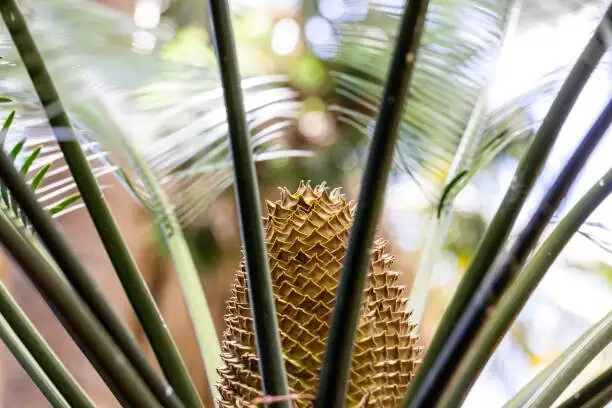
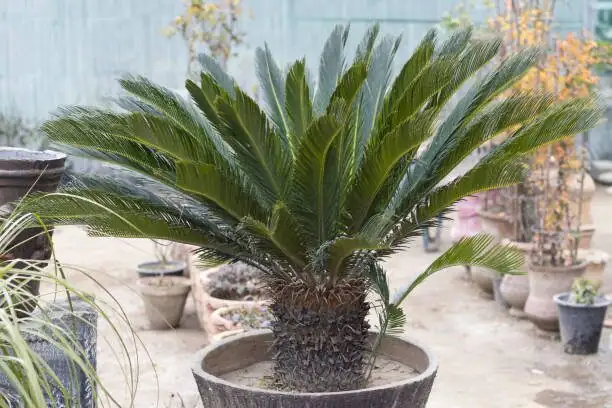
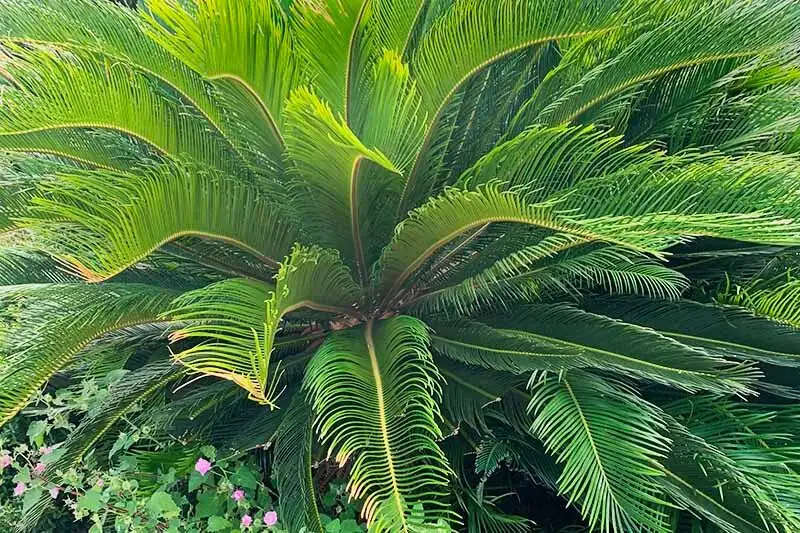
Meet the sculptor of the dry garden. Cycas revoluta—better known as the sago palm—isn’t a palm at all, but a stoic cycad with a chunky, textured trunk and an immaculate crown of stiff, glossy fronds. It reads like living architecture: dark green, symmetrical, and deeply structural. Pair it with drought-tough, bright-light companions and you get containers and dry beds that look curated all year, not just in bloom season. The secret? Design for contrast, and plant for drainage first.
Why sago palm earns the centerpiece role
- Architectural poise: A slow-growing rosette of rigid, arching fronds creates instant “tropical” structure without the fuss.
- Light sweet spot: Bright light with protection from harsh midday sun; it also tolerates partial sun/partial shade.
- Container scale: Often around 60 × 60 cm (24 × 24 in) in pots, maturing slowly—perfect for long-lived compositions.
- Climate: Best in USDA Zones 9–11; protect near freezing and from frost. Indoors, keep near a bright, filtered-light window.
- Handle with care: Leaflets are sharp and the plant is highly toxic (seeds especially). Place out of reach of kids and pets.
Drainage-first planting (the non-negotiables)
You can’t cheat physics with cycads. Give roots air, speed water away, and keep the crown dry.
Containers
- Pot: Unglazed terracotta or other porous containers with large drainage holes; raise on pot feet. For typical plant size, a 20–30 cm (8–12 in) diameter pot is right.
- Mix recipe: Very free-draining—blend 1:1 soil-based mix and general-purpose potting mix, then fold in extra grit/perlite/pumice until the mix feels coarse and quick to shed water.
- Planting height: Set the plant so the trunk base sits just above the rim line; never bury the crown.
- Top-dress: 1–2 cm of mineral grit or gravel to keep the crown area crisp and dry.
- Watering: Spring–autumn, water when the top of the mix has dried slightly; in winter, keep almost dry. Never pour water into the central crown.
- Feeding: Monthly at half strength in the growing season; cycads dislike heavy feeding.
In-ground dry beds
- Position: Bright exposure with midday protection (a high wall, open shade from a small tree, or east-facing site works well).
- Soil: Mound or berm planting is your friend. Amend native soil heavily with grit/perlite or sharp sand to create a quick-draining profile.
- Grade: Tilt the surface slightly so water moves away from the crown.
- Mulch: Use gravel or crushed stone—not organic mulch—around the base to keep rot at bay.
Sculptural container recipes
Each recipe pairs sago palm’s glossy, dark fronds with drought-tolerant plants that adore bright light. Adjust placement for gentle midday protection where summers scorch.
The Obsidian Oasis (moody and modern)
- Vessel: Low, wide matte-black bowl.
- Plants:
- Sago palm (centerpiece)
- Aeonium arboreum ‘Zwartkop’ (burgundy rosettes)
- Curio repens (blue chalksticks) for a frosty edge
- Dichondra argentea ‘Silver Falls’ to spill
- Why it works: Raven-dark, lacquered fronds meet smoky blues and silver cascades—high drama without flowers.
- Care notes: Aeoniums appreciate bright light but appreciate a breather from harsh midday sun in hot zones.
Blue Steel + Emerald (cool, sculptural tension)
- Vessel: Sand-colored cylinder or raw concrete.
- Plants:
- Sago palm
- Aloe ‘Blue Elf’ (narrow, blue-green fans)
- Echeveria ‘Lola’ (pale, powdery rosettes)
- Festuca glauca ‘Elijah Blue’ (grassy tuft for movement)
- Why it works: Matte blues make the sago’s glossy green read even richer; grasses add motion against rigid fronds.
- Care notes: Keep the mix gritty for both succulents and grass; rotate the pot quarterly for even form.
Citrus Glow (sunny pops, year-round)
- Vessel: Warm terracotta.
- Plants:
- Sago palm
- Crassula ovata ‘Hummel’s Sunset’ (gold-and-amber jade)
- Sedum rupestre ‘Angelina’ (chartreuse needles)
- Delosperma ‘Fire Spinner’ (low, jewel-toned ice plant at the rim)
- Why it works: Chartreuse and amber electrify the sago’s deep green, with seasonal sparks from ice plant blooms.
- Care notes: Delosperma needs sharp drainage and full brightness; sago prefers protection from the fiercest midday rays—an east exposure threads the needle.
Silver Sage Zen (soft textures, hard edges)
- Vessel: Oval trough.
- Plants:
- Sago palm
- Santolina chamaecyparissus ‘Nana’ (compact, silvery mounds)
- Helichrysum petiolare (licorice plant) to drape
- Sedum ‘White Diamond’ or ‘Crystalum’ (low, pale accents)
- Why it works: Feathery silvers and cascading forms soften the palm’s geometry without losing the drought-first ethos.
- Care notes: Trim Santolina lightly after bloom to keep tight mounds; don’t shear the sago’s green fronds.
Desert Sunset Lines (graphic silhouettes)
- Vessel: Tall, tapered planter to echo vertical lines.
- Plants:
- Sago palm
- Senecio vitalis (narrow, upright chalksticks)
- Kalanchoe luciae ‘Flapjacks’ (paddle leaves blushing red at the rims)
- Why it works: Linear blue-green spears and sunset-edged paddles frame the sago like a living sculpture garden.
- Care notes: Spare watering; top-dress with red or black lava rock for extra graphic pop.
Note on spines and sap: If you substitute agaves or pencil euphorbia, give generous spacing and handle with gloves. Many euphorbias have irritating sap; sago leaflets are sharp, too.
Dry-garden pairings in the ground
Blue-silver matrix
- Palette: Santolina, lavender, Artemisia ‘Powis Castle’, Festuca glauca, Curio repens drifts.
- Layout: Sago palms as punctuation—one every 2.5–3 m—rising from a carpet of silver and blue.
- Effect: The sago’s polished green punctures a sea of cool tones; gravel mulch completes the Mediterranean mood.
Spiky echelon
- Palette: Yucca rostrata, Dasylirion wheeleri, compact agaves, and low Echeveria banks.
- Layout: Sago as the rounded, feathery counterpoint to blades and bayonets; stage with boulders.
- Safety: Mind walkways—spiky neighbors belong a stride or two back from paths.
Sun-kissed tapestry
- Palette: Lantana ‘New Gold’, drought-wise gazanias, Delosperma mats.
- Layout: Color runs low and wide; sago provides the dark green column to anchor the heat.
- Light: Full brightness with a noon siesta (high shade or east aspect) keeps sago pristine.
Light and water choreography
- Light: Bright light is essential; protect from harsh midday sun. Partial sun/partial shade is fine, especially in heat.
- Water:
- Spring–autumn: water when the top of the mix dries slightly.
- Winter: keep almost dry.
- Never pour water into the crown—this can trigger crown rot.
- Indoors: Place near a bright, filtered-light window; keep away from heaters/vents in winter.
Fast-reference care
- Feeding: Monthly, half-strength balanced liquid fertilizer in spring through autumn; keep it light.
- Pruning: Only remove fully brown, dead fronds, cutting close to the trunk with clean tools. Green fronds are energy banks—don’t trim them for tidiness.
- Repotting: Every ~3 years (or when root-bound). Disturb roots minimally and stick with a very free-draining mix.
- Pests: Watch for scale, mealybugs, and spider mites, particularly indoors. Improve airflow, wipe leaflets gently, and treat early.
- Propagation: When present, basal offsets (“pups”) can be removed and rooted; seed is possible but slow and uncommon in home settings.
Safety first
- Toxicity: All parts are poisonous, seeds especially. Keep well out of reach of pets and children. Wear gloves when grooming—the leaflets are sharp.
Style notes that finish the look
- Material matches: Pair sago’s ancient texture with raw concrete, unglazed clay, weathered steel, or split granite.
- Top-dress tones: Black lava rock for drama, pale granite for a modern gallery feel, tawny pea gravel for warmth.
- Scale and spacing: Let the rosette breathe—negative space is part of the sculpture.
Symbolism, briefly
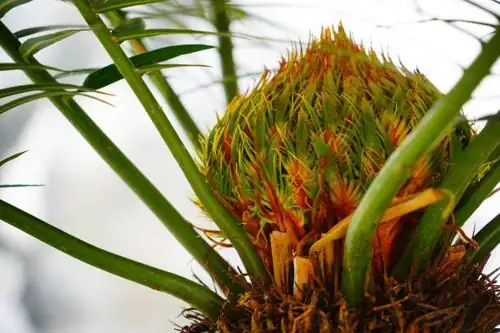
Cycads are often linked with longevity and resilience—fitting for a lineage that predates flowering plants. While sago palms don’t produce showy flowers, mature males make imposing cones and females a woolly seed structure; in design terms, their “flower language” is the language of endurance and form: a patient, timeless presence that steadies compositions year after year.
Design takeaway
Think of sago palm as the centerpiece in a stone-and-succulent still life. Contrast its glossy, dark fronds with silver, blue, and burgundy drought-lovers; stage the whole ensemble over fast-draining media, and keep the crown high and dry. Do that, and your containers and dry beds will read like sculpture—through heat, wind, and time.