


Meet the plant that looks like a palm, behaves like a fern in slow motion, and reproduces like a pine—yet is none of those things. Cycas revoluta, the sago palm, is a living fossil that rewards patient observers with clockwork symmetry, dramatic “frond flushes,” and the occasional sci‑fi cone. Here’s a geek’s tour of its coolest quirks—and how to keep one thriving without losing a fingertip.
1) Not a palm at all—this “king” is a cycad
- Despite the common name, sago palm is a cycad, part of an ancient lineage that predates flowering plants. Think dinosaur‑era aristocrat in modern décor.
- Origin story: Southern Japan (Ryukyu Islands), now widely cultivated in warm climates and bright interiors worldwide.
- Why we love it: a stout, textured trunk crowned by a perfectly neat rosette of glossy, stiff, arching fronds.
2) Geometry you can set your watch by: that perfect rosette
- The plant’s growth habit is a symmetrical rosette perched on a sturdy, palm‑like trunk. It’s living architecture—orderly, radial, and intensely photogenic.
- Name nerd note: “revoluta” refers to the leaflets’ rolled‑under (revolute) edges—a subtle ID clue that gives each frond blade a taut, sculpted look.
- Handle with care: those narrow leaflets are rigid and needle‑tipped. Handsome, yes. Forgiving? Not so much.
3) The frond flush: a time‑lapse spectacle
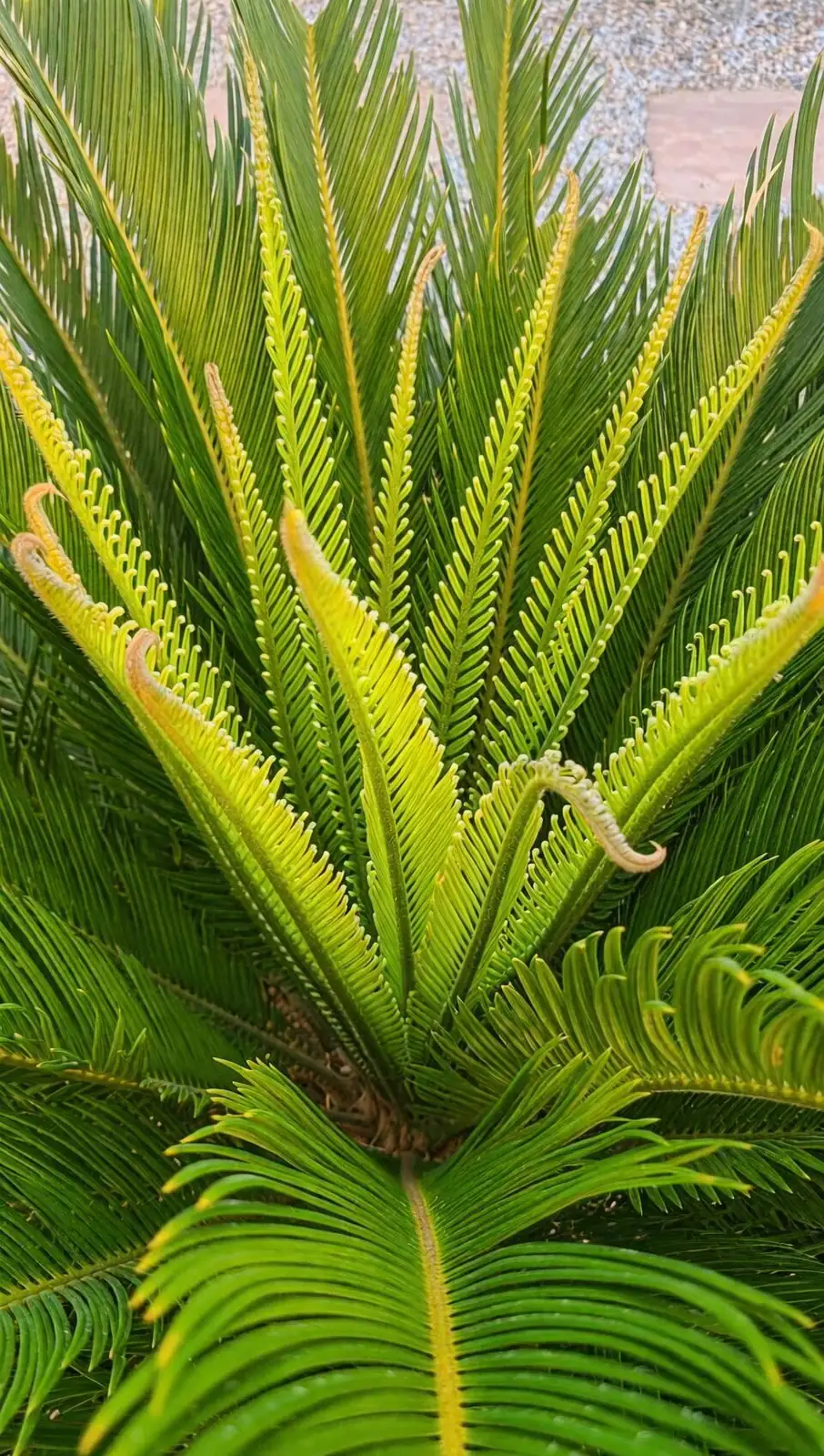
- New leaves don’t trickle in; they arrive in synchronized waves called flushes. Dozens of soft, fuzzy fiddleheads erupt from the crown, then unfurl into a spotless, even halo.
- Younger plants may flush more than once a year; older specimens often do it just once, typically in the warmer months.
- Pro tip: don’t touch! Fresh flushes are tender; jostling or rotating the plant mid‑unfurl can warp that perfect symmetry.
4) Life in ultra‑slow motion
- Expect small, dignified steps. As a container plant it commonly sits around 60 × 60 cm (about 24 × 24 in), expanding its caudex and stacking frond tiers at a glacial pace.
- The upside of slow: you’ll repot infrequently (about every 3 years) and enjoy a living sculpture that changes by seasons, not weeks.
5) Dioecious drama: cones vs. woolly seed nests
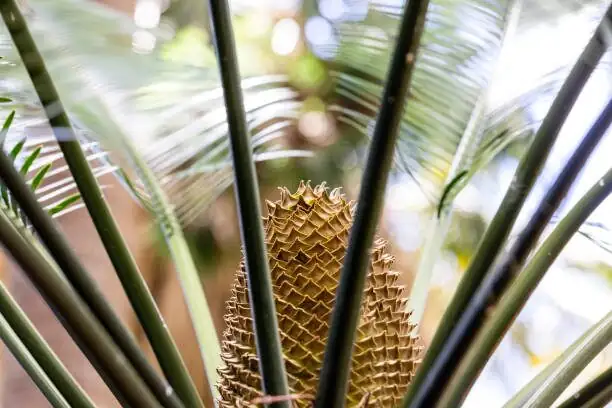
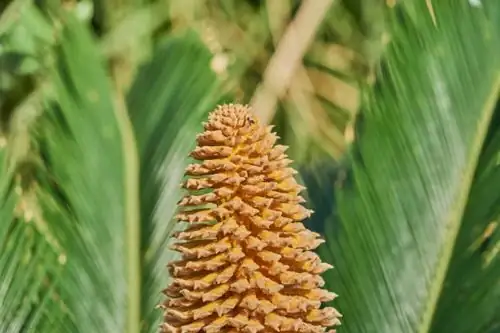
- Plants are either male or female. Males produce a single, impressive cone; females form a woolly, golden seed‑bearing structure tucked into the crown.
- It’s uncommon indoors and happens mostly on mature, well‑grown plants, typically late spring to summer outdoors.
- No partners, no seeds: viable seed requires both sexes in proximity. Most home growers propagate by removing basal “pups” instead.
6) The sago sleight of hand: edible name, poisonous plant
- Despite the name, this is not the source of edible sago—and every part of Cycas revoluta is poisonous (seeds especially). Keep well out of reach of kids and pets.
- Smart placement: admire the rosette, avoid the nibblers.
7) Ancient alliances underground
- Cycads grow odd, coral‑like roots that house cyanobacteria—tiny partners that can fix atmospheric nitrogen. It’s botanical co‑living from deep time.
- Translation for care: this is not a hungry plant. Feed lightly and infrequently; excess fertilizer is more harm than help.
8) Armor and etiquette: how to prune without getting pricked
- Leaflets are sharp—wear gloves. Only remove fully brown, dead fronds and cut close to the trunk with clean tools.
- Never pour water into the central crown (the heart where new fronds emerge). Trapped moisture there can trigger crown rot.

9) Light, temperature, and placement: the sweet spot
- Light: bright light with protection from harsh midday rays. Indoors, a bright window with filtered light is ideal.
- Temperature: 13–24°C (55–75°F). Protect from frost and cold drafts; it’s best suited to USDA Zones 9–11.
- Humidity: average indoor levels are fine. In hot, dry spells, a light mist can freshen the foliage.
10) Soil physics and watering: think fast‑draining and patient
- Potting mix: very free‑draining is non‑negotiable. A practical option is a 1:1 blend of soil‑based potting mix and general‑purpose mix, with extra grit or perlite as needed.
- Pot size: for a typical container specimen, a 20–30 cm (8–12 in) diameter pot is right in the comfort zone.
- Watering cadence:
- Spring–autumn: water when the top of the mix has dried slightly.
- Winter: keep the mix almost dry.
- Always avoid pooling water in the crown.
11) The “scale of doom” and other tiny adversaries
- Watch for scale insects, mealybugs, and spider mites—especially indoors. Inspect leaf midribs and leaf bases regularly.
- Biggest killer by far: overwatering. Keep air moving, give the roots a gritty home, and let the mix dry appropriately between drinks.
12) Buying and repotting like a pro
- Choose plants with a firm, solid trunk and deep green fronds. Skip any with soft or sour‑smelling bases, or with yellowing foliage sitting in wet compost.
- Repot every few years, disturbing roots as little as possible. This is a long game—small steps, big payoffs.
13) Flush frequency and the patience payoff
- Because growth is episodic, each flush is a major design moment. Give the plant stable light and orientation during that period to preserve the halo effect.
- Younger plants may surprise you with multiple flushes per year; older specimens usually stage one grand performance.
14) Symbolism and “flower language”
- Associated with longevity and resilience—fitting for a line that has weathered geological eras. In modern “flower language,” meanings often borrow from its age, toughness, and evergreen poise rather than literal blooms (it doesn’t produce true flowers).
- Read these as cultural metaphors: the plant’s survivalist pedigree and dignified symmetry make it a symbol of steadfastness, not romance.
Quick care recap
- Light: bright, filtered; avoid harsh midday sun.
- Water: let the top of the mix dry slightly; keep almost dry in winter; never water into the crown.
- Soil: very fast‑draining, gritty.
- Feeding: monthly at half strength in spring–autumn; go easy.
- Pruning: remove only fully brown fronds.
- Repot: about every 3 years.
- Safety: highly toxic, seeds most of all; keep away from pets and children.
Why it’s irresistibly geeky: the sago palm compresses deep time, strict geometry, and strange biology into a compact, armored rosette you can keep by a bright window. Give it patience, a gritty home, and a little personal space—and let the flushes do the rest.