

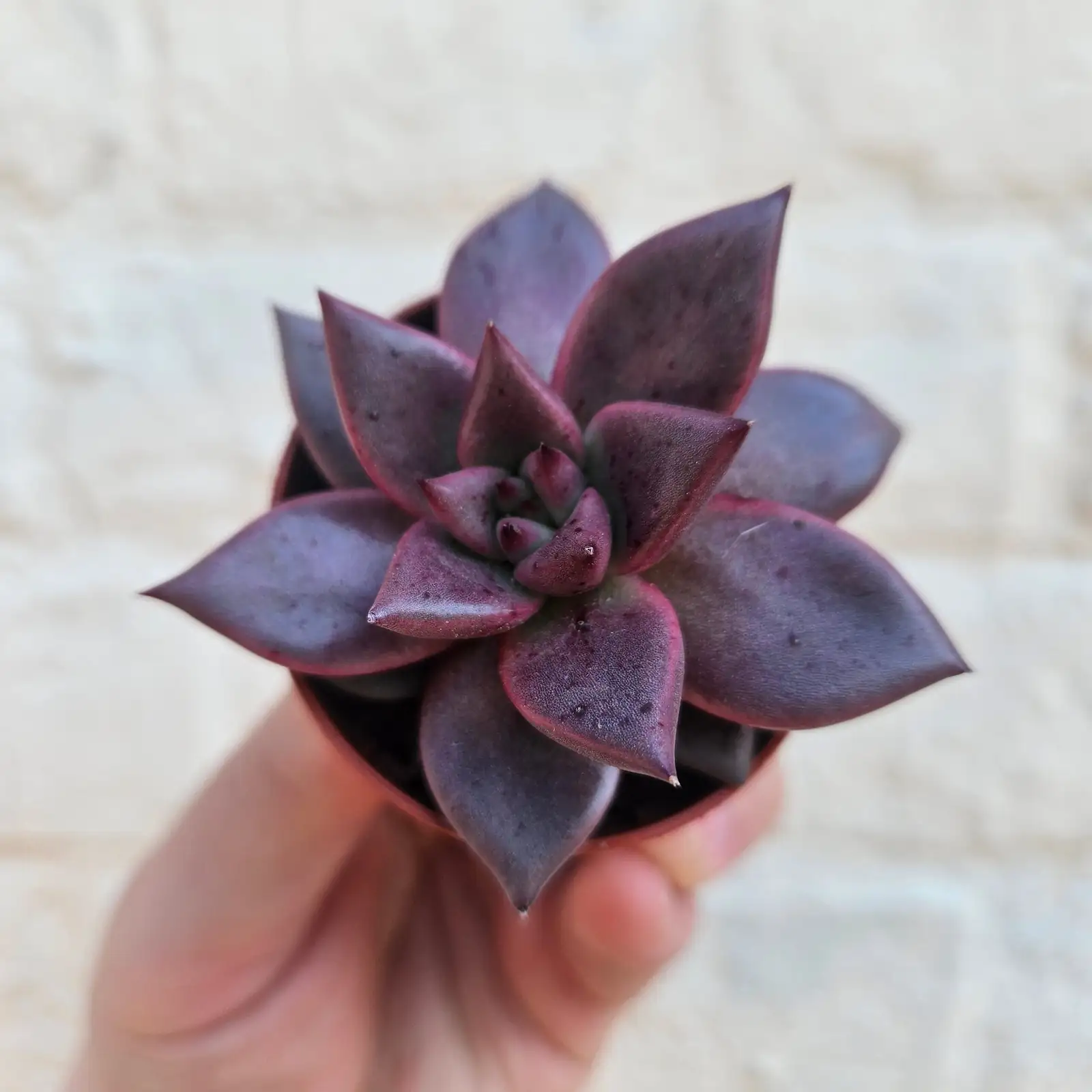
If your Red Taurus Echeveria has loosened its once-sculpted rosette, lost that deep wine-red glow, or started reaching for the ceiling, don’t panic. This clump-forming beauty bounces back with a little patience and a plan. Here’s a gentle, step-by-step recovery guide centered on light acclimation, safe PPFD targets for grow lights, when to behead and reroot, and watering tweaks that help rosettes pull back in tight and colorful again.
First, read the rosette: a quick symptom decoder
- Rosette opening up, leaves spacing out, color turning green: classic light shortage (etiolation).
- Pale, bleached, or crispy patches after a light change: light/heat stress or sunburn—dial it back and acclimate more slowly.
- Lower leaves shriveling occasionally: normal turnover; steady, rapid loss may mean too little light or water timing that’s off.
- Soft, translucent, or mushy leaves, or a rotting center: overwatering, poor drainage, or water trapped in the crown.
- Fine webbing or cottony tufts in leaf axils: spider mites or mealybugs—treat promptly.
Tip: Red Taurus holds its richest burgundy under strong light and with cooler nights. Indoors, you’ll simulate that with steady, bright light and excellent airflow.
Light is the heart of recovery
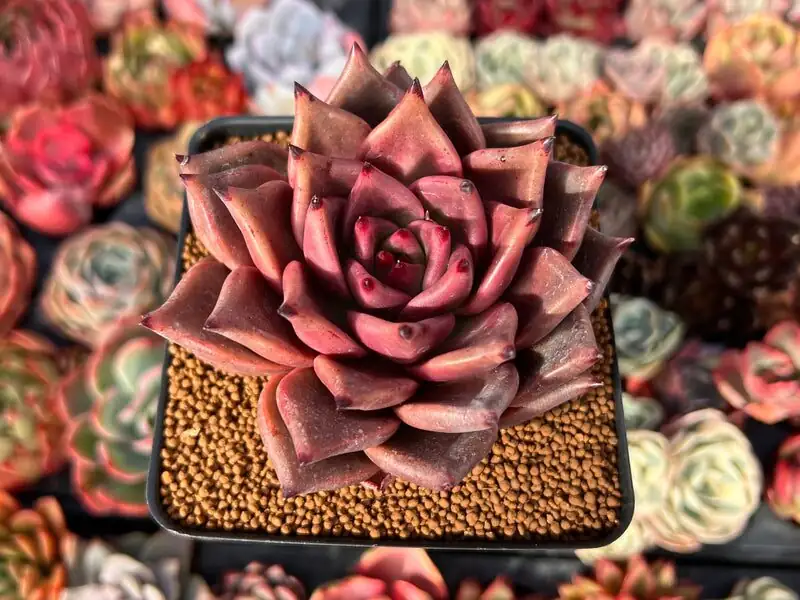
Red Taurus wants bright light to full sun. Outdoors, aim for 4–6+ hours of direct sun, with light afternoon shade in very hot climates. Indoors, a bright south- or west-facing window often needs a grow-light assist to keep the rosette compact and richly colored.
Sun or LEDs? Targets that work
- Indoor PPFD targets (at the canopy):
- Recovery/tight rosette maintenance: 200–300 µmol·m⁻²·s⁻¹ (12–14 hours/day; DLI ~10–15 mol·m⁻²·day⁻¹).
- Deep color and very tight form (once acclimated): 300–400 µmol·m⁻²·s⁻¹ (12–14 hours/day; DLI ~15–20).
- Grow light distance:
- Many Echeverias need to sit close to consumer LEDs to prevent stretch—often within 6–12 inches under typical bars or panels. Adjust to hit the PPFD above; use a PAR meter or a reliable phone app as a proxy.
- Outdoor sun:
- Morning sun plus bright shade is a safe starting point. Build toward several hours of direct sun. Provide light afternoon shade where summers scorch.
Note: More light only helps if it’s introduced gradually. Jumping from dim to intense light can bleach leaves and set you back.
A 14-day light acclimation plan (pick indoor or outdoor track)
- Days 1–3
- Indoor track: 100–150 PPFD for 12–14 hours.
- Outdoor track: 45–60 minutes of early morning sun, then bright shade.
- Days 4–6
- Indoor: 175–225 PPFD (raise light output or lower fixture slightly).
- Outdoor: 1.5–2 hours morning sun, then bright shade.
- Days 7–10
- Indoor: 250–300 PPFD.
- Outdoor: 3–4 hours of morning sun; shield from harsh midday.
- Days 11–14
- Indoor: 300–350 PPFD if you’re chasing deeper red; hold 200–300 for maintenance.
- Outdoor: 4–6 hours direct sun if temperatures are mild; in very hot zones, cap sun earlier and provide dappled afternoon shade.
Pause and hold your current level for several days if you see lightening/bleaching or crispy margins. Keep good airflow and don’t wipe the natural farina (that powdery bloom) off the leaves—it’s sunscreen for your Echeveria.
Watering tweaks to re-tighten the rosette
Red Taurus thrives on a careful soak-and-dry rhythm. Strong light tightens the rosette; the right watering rhythm keeps it firm without swelling or rot.
- Use a very free-draining mix: a cactus/succulent soil cut with mineral grit (pumice or perlite) to further improve drainage. A pot with drainage holes is non-negotiable; terracotta helps the mix dry faster.
- Watering rhythm:
- Spring–summer (active growth): water thoroughly, then wait until the mix is bone dry—often every 7–14 days depending on pot, mix, and climate.
- Winter or cool, low-light periods: reduce to about every 3–4 weeks (or even less), always letting the soil dry fully first.
- Technique:
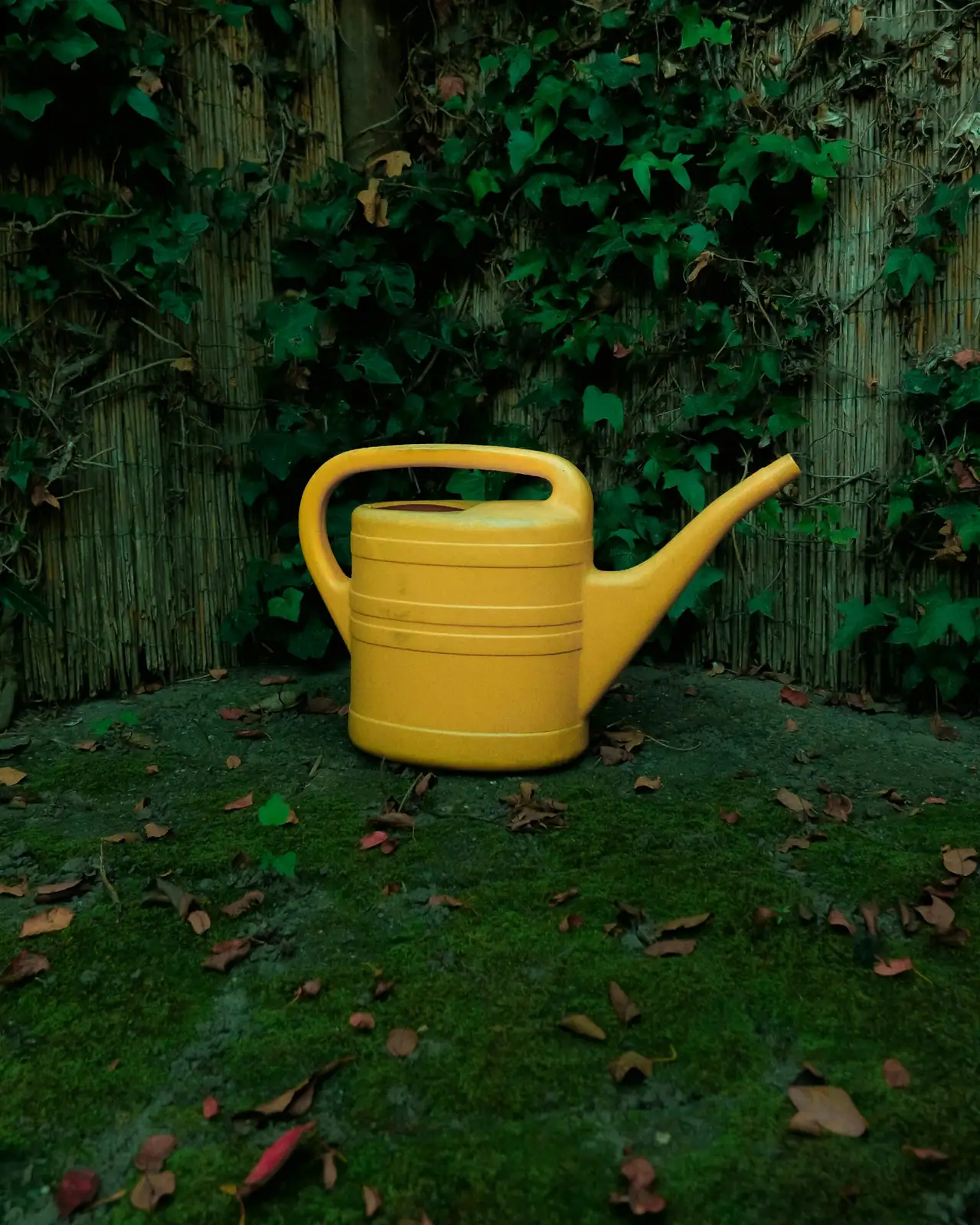
- Water at the soil line—avoid filling the rosette where moisture can cause crown rot.
- If in doubt, probe with a wooden skewer or your finger deep into the mix; only water when it comes out dry and clean.
- Signs your timing is right:
- Leaves feel firm, not squishy or papery.
- The rosette holds a compact shape without gaping.
- Color improves with the light plan above.
- Signs to tweak:
- Soft, translucent leaves: you watered before the mix fully dried; lengthen the interval and ensure better airflow.
- Persistent gaping with otherwise healthy leaves: increase light first; don’t “fix” stretch by overwatering.
- Rapid shriveling despite proper light: water a bit sooner, but still only after the mix dries.
Bonus: In peak summer heat, strong sun plus hot pots can accelerate drying. Check the soil more frequently, but keep the rule—dry before rewatering.
When to behead and reroot (and how to do it gently)
Beheading is the reset button for a leggy or compromised Echeveria. It’s especially useful when:
- The stem is long and bare from etiolation and the rosette won’t compact even with better light.
- Rot is creeping up the stem or crown (after you’ve trimmed back to healthy tissue).
- You want to refresh the top and encourage offsets from the old base.
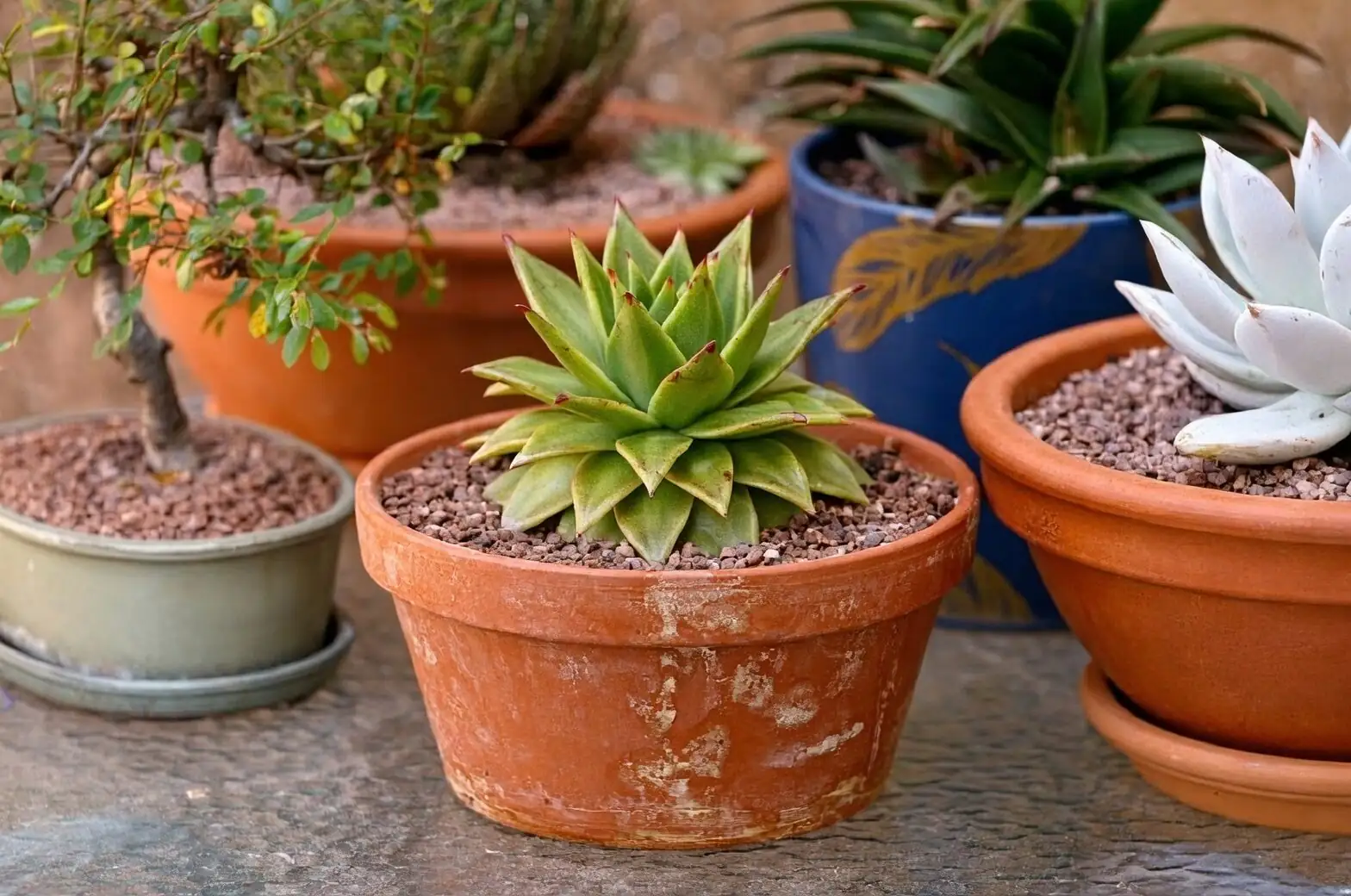
Step-by-step:
- Gather tools: a sterile, sharp blade; sulfur powder or cinnamon (optional); a clean, gritty potting mix and a dry pot with drainage.
- Choose the cut: aim 1–2 cm below the tightest, healthiest leaves. If there’s rot, keep slicing until the cross-section is clean and firm.
- Expose a stem collar: gently remove 2–4 of the lowest leaves from the rosette so you have 1–2.5 cm (0.5–1 in) of bare stem to plant later. Save healthy leaves for propagation if you like.
- Callus: let the cut rosette and any saved leaves dry in bright, indirect light for 2–5 days until cut surfaces are dry and papery.
- Plant dry: set the callused rosette on dry, gritty mix. Do not water initially. Provide gentle light (around 150–200 PPFD) for the first week.
- Root and ramp:
- After 7–10 days, begin lightly watering around the edge of the pot; wait for full dry between sips.
- Over 2–3 weeks, increase to normal soak-and-dry as roots establish, and step your light toward 200–300 PPFD (or your target). Keep airflow strong.
- The old stump:
- Leave it dry for a week, then resume light watering only after dry-down. With time, it often pushes offsets you can later divide.
Tip: Don’t rush watering newly beheaded pieces. Roots form more reliably when the medium stays dry-to-barely-damp at first.
Grow-room numbers at a glance
- Light: 200–300 PPFD for maintenance; 300–400 PPFD for color pop (12–14 h/day).
- Outdoors: 4–6+ hours direct sun; provide afternoon shade in extreme heat.
- Temperature: best at 15–27°C (59–81°F). Protect from frost; keep above 0–5°C (32–41°F).
- Humidity: low to moderate with good airflow.
- Soil: fast-draining succulent mix amended with pumice/perlite.
- Water: soak and dry; about every 7–14 days in warm seasons, 3–4 weeks in winter.
- Fertilizer: light feed in spring–summer at 1/4–1/2 strength every 4–6 weeks; skip in winter.
Seasonal rhythm to keep it thriving
- Spring: increase light gradually; repot if needed; start light feeding.
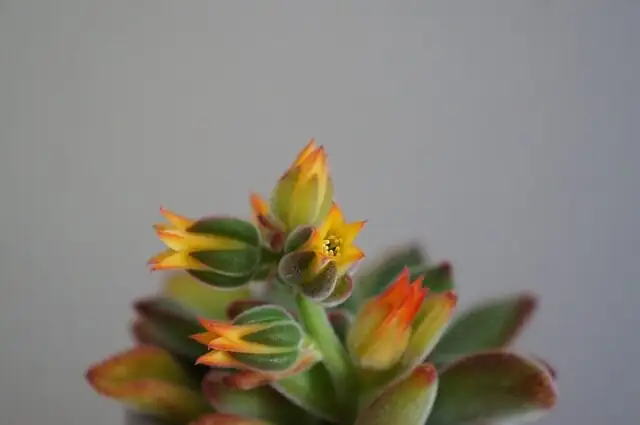
- Summer: protect from extreme heat; water only when fully dry; enjoy tall, bicolored red-and-yellow flower stalks.
- Autumn: begin easing off watering as light and temps decline.
- Winter: keep bright and cool; water very sparingly; protect from frost.
Pests, rot, and other “uh-ohs”
- Mealybugs hide in leaf axils and around the crown; dab with isopropyl alcohol or use insecticidal soap. Check offsets regularly.
- Spider mites can appear in hot, very dry spells—improve airflow and treat promptly.
- Crown or root rot usually follows trapped water in the rosette or persistently wet soil. Water at the soil line, use a gritty mix, and let the pot dry between drinks.
- Generally non-toxic to people and pets, though nibbling may cause mild stomach upset—best to keep it out of reach of curious chewers.
Putting it all together: the gentle recovery arc
- Stabilize water: allow a full dry-down; resume soak-and-dry on a slower cadence.
- Restore light gradually: follow the 14-day plan to reach 200–300+ PPFD (or outdoor sun) without burns.
- Re-tighten: as light improves and watering is disciplined, the rosette compacts and color deepens.
- Reset if needed: behead and reroot if etiolation was severe or rot is present, then ramp light carefully as roots form.
- Maintain: bright light, gritty mix, and patience—your Red Taurus will repay you with tight, symmetrical, burgundy rosettes and summer blooms on tall, cheerful stalks.
With a calm hand and steady numbers, Red Taurus Echeveria snaps back from stretch and sulk to the compact, wine-red showpiece you brought it home to be.