

Imagine a bowl of living gemstones: a wine-red rosette flanked by cool blue wands and a halo of sunlit gold. That’s the magic of pairing Echeveria ‘Red Taurus’ with blue chalk sticks and golden sedums—a trio that turns a simple planter into a color-charged vignette. Here’s how to design it so the colors truly pop, season after season.
Meet the Stars of the Arrangement
- Echeveria ‘Red Taurus’ (thriller)
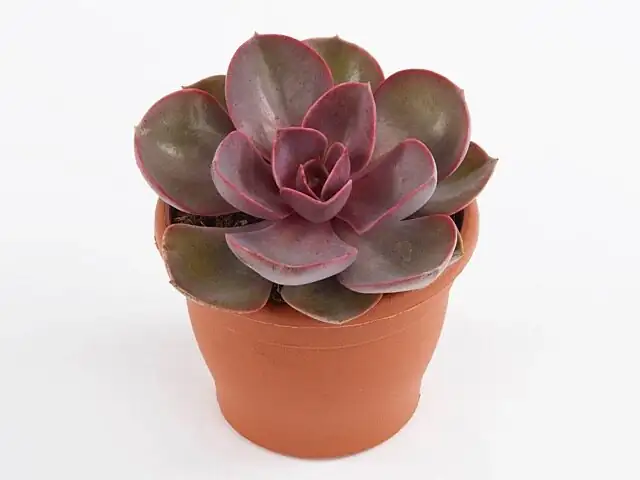
- A clump-forming, symmetrical rosette with deep burgundy to wine-red leaves. In strong light, it holds that rich color and offsets into a tight cluster. Summer brings tall, upright stalks topped with red-and-yellow bicolored flowers—a dramatic bonus above the foliage.
- Typical size: rosettes about 8–15 cm (3–6 in) wide; overall 10–20 cm (4–8 in) tall; flower stems 20–40 cm (8–16 in).
- Blue Chalk Sticks (filler/line)
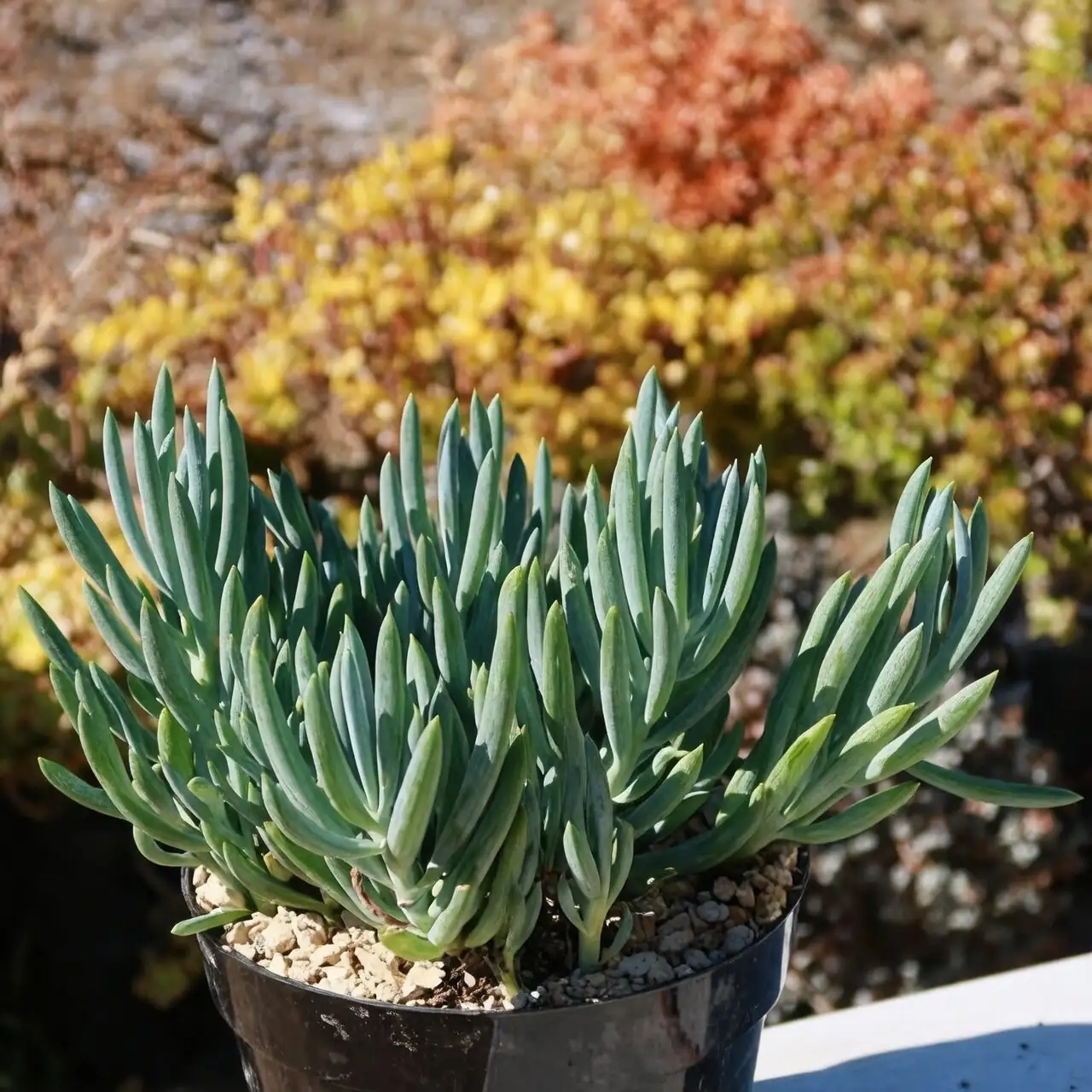
- Look for Curio (formerly Senecio) repens/mandraliscae: powdery blue to blue-gray stems that create clean lines and a cooling counterpoint to the red rosette.
- Golden Sedums (spiller/filler)
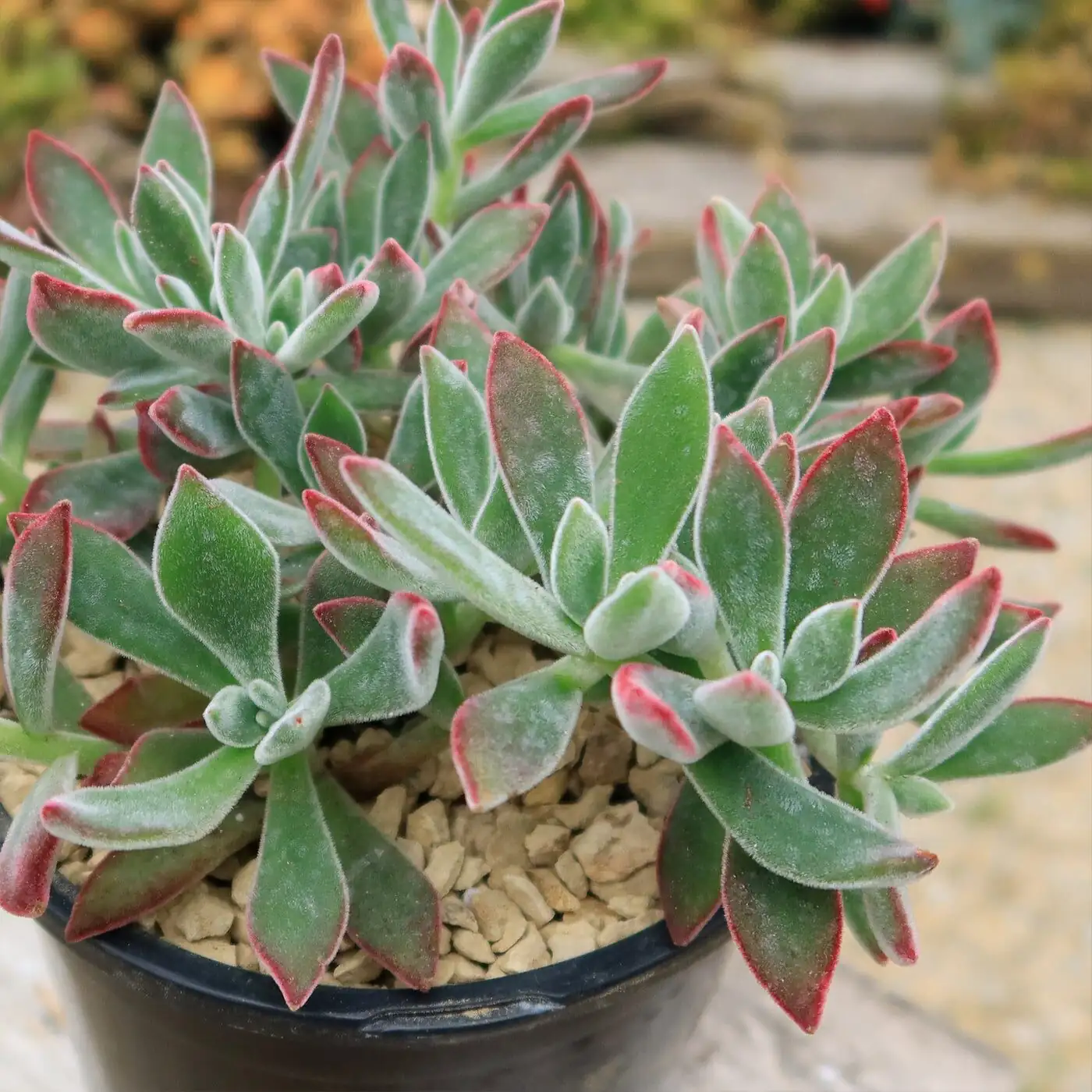
- Try Sedum nussbaumerianum (golden-coppery), Sedum adolphii (golden with orange blush), or Sedum rupestre ‘Angelina’ (chartreuse). Their warm glow intensifies the complementary contrast with blue and burgundy.
Why this trio works:
- All prefer bright light, lean, free-draining soil, and a “soak-and-dry” watering rhythm. Keeping cultural needs aligned ensures your design stays gorgeous and healthy.
The Container: Shape, Size, and Style
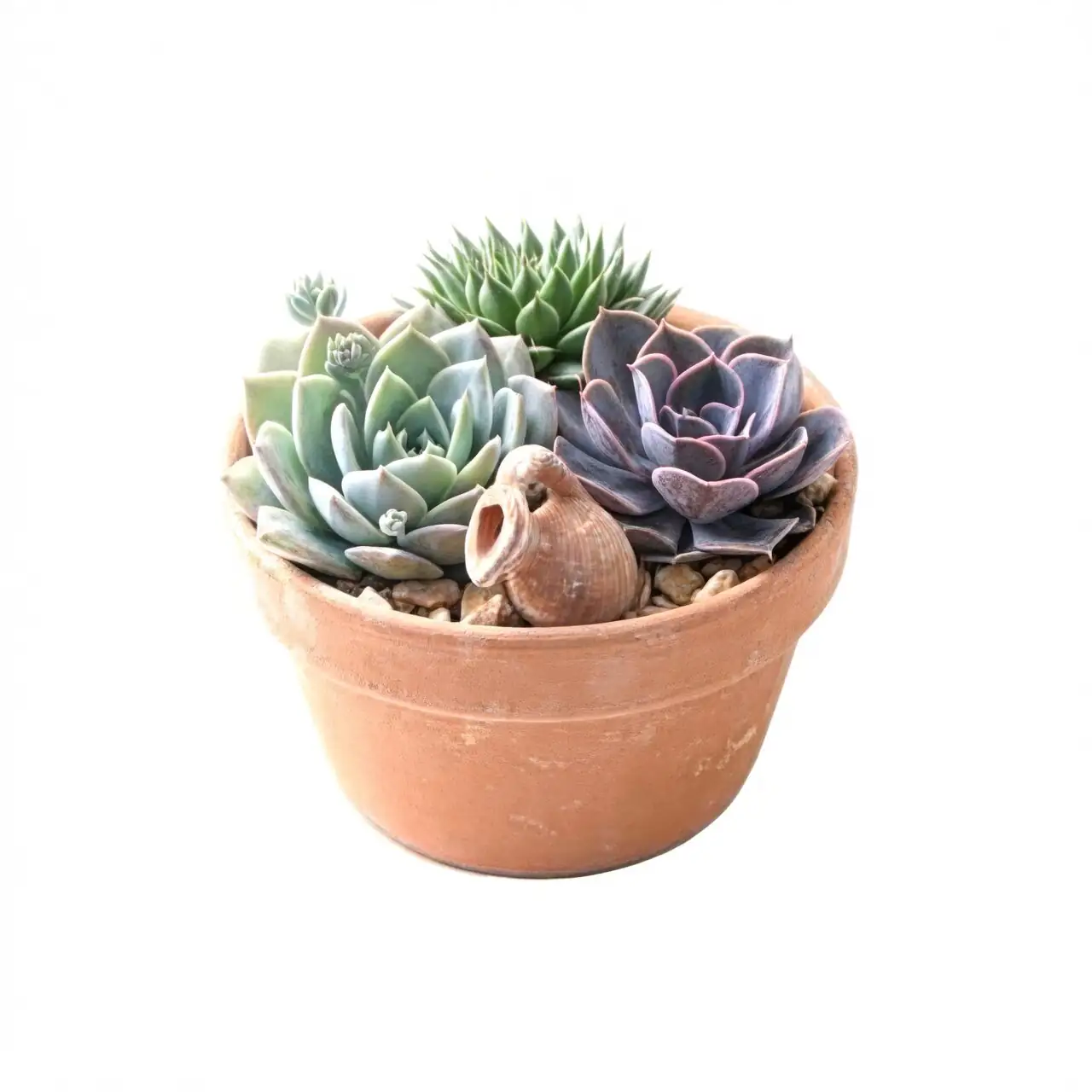
- Choose a shallow, wide bowl (30–36 cm / 12–14 in across; 10–15 cm / 4–6 in deep).
- Terracotta is excellent—it breathes and helps the mix dry faster. Ensure a drainage hole.
- Color counts: a matte charcoal, sand, or warm terra-cotta container intensifies both the reds and blues.
Composition Blueprint: Where Each Plant Goes
Think of “thriller-filler-spiller,” but with bold geometry.
- Place ‘Red Taurus’ just off-center toward the sun-facing side. Give its rosette 10–12 cm (4–5 in) of open space all around to mature without crowding.
- Set 3–5 blue chalk sticks in small drifts on the opposite side of the echeveria, pointing toward the rosette like cool brushstrokes. Keep stems 5–8 cm (2–3 in) from the echeveria’s leaf tips to avoid shading the rosette.
- Tuck 3 golden sedums around the rim as a luminous ring. Allow 8–10 cm (3–4 in) between sedum starts; they’ll knit into a glowing spill over time.
Optional accents:
- One dark, flat stone or a shard of black lava as a visual anchor near the echeveria. Dark accents deepen perceived saturation of foliage colors.
Soil Architecture for Color and Longevity
Color intensity starts with roots that breathe. Build a gritty, fast-draining profile.
- Mix recipe (by volume):
- 1 part quality cactus/succulent potting mix
- 1 part pumice or perlite
- 0.5 part coarse horticultural sand or 3–5 mm gravel
- Optional: a small handful (5%) horticultural charcoal to adsorb odors and keep the mix sweet
- Layering (smart, not soggy):
- Over the drainage hole: place mesh or a shard to keep soil from escaping.
- Add a very thin sprinkle (just a few mm) of coarse grit to keep the hole clear—not a tall “drainage layer.”
- Fill with your gritty mix.
- Around the crown of ‘Red Taurus,’ create a 2–3 cm (about 1 in) “pumice collar”—pure pumice or very coarse grit—to keep the rosette base drier.
- Top-dress the entire surface with 3–6 mm (⅛–¼ in) decorative gravel or black lava. This keeps leaves clean, reduces evaporation splash, and visually sharpens the color contrast.
Sunlight: Aim the Spotlight for Peak Color
- Give 4–6+ hours of direct sun daily to keep ‘Red Taurus’ tight and richly burgundy. Morning sun is ideal; in very hot climates, add light afternoon shade to prevent scorching.
- Place the planter so the echeveria faces the primary light source (east or south exposure). Blue chalk sticks can sit slightly behind or to the side—they tolerate heat and light well.
- Rotate the planter a quarter-turn every 2 weeks to maintain even color and symmetry. If a heatwave hits, slide it back a foot or provide a thin shade cloth during the hottest hours.
Water and Feeding: Keep It Lean, Keep It Clean
- Watering rhythm:
- Spring–summer: Water thoroughly, then let the mix dry out completely before the next drink—often every 7–14 days depending on heat and airflow.
- Winter: Bright and cool, water about every 3–4 weeks (or less). Always check that the mix is bone-dry first.
- Technique:
- Water at the soil line; avoid pooling in the echeveria’s rosette to prevent crown rot. A squeeze bottle or narrow-spout watering can helps.
- Feeding:
- Lightly fertilize in spring and summer with a cactus/succulent fertilizer at 1/4–1/2 strength every 4–6 weeks. Skip fertilizing in winter.
Step-by-Step Planting Day
- Pre-soak your gritty mix lightly and let it drain so it’s just barely moist and easy to work with.
- Prep the pot: mesh over the hole; a sprinkle of coarse grit; fill two-thirds with mix.
- Set ‘Red Taurus’ off-center toward the brightest side; add the pumice collar around its crown.
- Place blue chalk sticks in 3 small drifts, tips leaning outward to frame the focal rosette.
- Tuck golden sedums near the rim for a lively edge; maintain the spacing above.
- Backfill with mix, tapping to settle—don’t bury leaves.
- Top-dress with decorative grit/lava, keeping the rosettes free of debris.
- Wait 3–5 days before the first gentle watering to let any disturbed roots callus.
Through the Seasons: What to Expect
- Spring: Increase light and resume a regular soak-and-dry rhythm. Consider repotting or refreshing the top 3–5 cm (1–2 in) of mix every 1–2 years.
- Summer: ‘Red Taurus’ may send up 20–40 cm (8–16 in) flower stalks with red-and-yellow blooms—an eye-level firework above blue and gold. Enjoy the show; cut spent stalks when done.
- Autumn: Shorten watering intervals; keep bright light to retain color.
- Winter: Protect from frost; keep above 0–5°C (32–41°F). In cold regions, overwinter on a bright windowsill or in a greenhouse.
Grooming, Pests, and Staying Picture-Perfect
- Grooming:
- Gently remove dried lower leaves from the echeveria; tip-prune golden sedums if they sprawl too far.
- Blue chalk sticks can be lightly trimmed to keep clean lines; re-root cuttings if desired.
- Pests and diseases:
- Watch for mealybugs (especially in leaf axils), aphids on the summer flower stalks, and spider mites in hot, dry spells.
- Treat promptly with insecticidal soap or isopropyl alcohol swabs.
- Prevent rot with gritty soil, strong airflow, and crown-conscious watering.
- Propagation:
- ‘Red Taurus’ offsets: separate and re-root after letting cuts callus 2–5 days.
- Leaf cuttings also work—water sparingly after roots form.
Color Theory Tips for Extra Pop
- Complementary harmony: Burgundy-red ‘Red Taurus’ glows against blue chalk sticks and golden sedums (blue and gold are cool/warm foils that amplify each other).
- Dark top-dress (black lava or charcoal gravel) boosts saturation; pale gravel cools the palette.
- Use odd-number groupings (3, 5) for chalk sticks and sedums to keep the eye moving.
Quick Troubleshooting
- Leaves turning more green than red?
- Increase direct sun gradually; cooler nights also deepen red pigments.
- Rosette stretching tall and loose?
- It’s etiolation from low light. Move to brighter conditions; if needed, behead and re-root to restore symmetry.
- Rot at the center?
- Usually trapped water or a mix that stays wet too long. Water at the soil line, use a gritty substrate, and ensure excellent airflow.
Safety and Placement
- Generally considered non-toxic to people and pets, though nibbling may cause mild stomach upset. Place out of reach of curious chewers.
- Best outdoors year-round only in mild climates (approx. USDA Zone 10–11). Elsewhere, display on a bright patio in warm seasons and bring indoors before frost.
Symbolism and “Flower Language”
Succulents are often linked with endurance and self-reliance—beauty that thrives on less. Echeveria ‘Red Taurus’ embodies that spirit with its tight, resilient rosette and bold color under strong light. While traditional Victorian “flower language” rarely referenced echeverias specifically, modern succulent culture reads the plant’s red-and-gold summer blooms as a signal of vitality and optimism—energy lifted above the steady calm of blue and gold companions.
Set the stage with grit beneath, sunlight above, and harmony all around—and your ‘Red Taurus’ planter will perform like living art, every day of the year.