

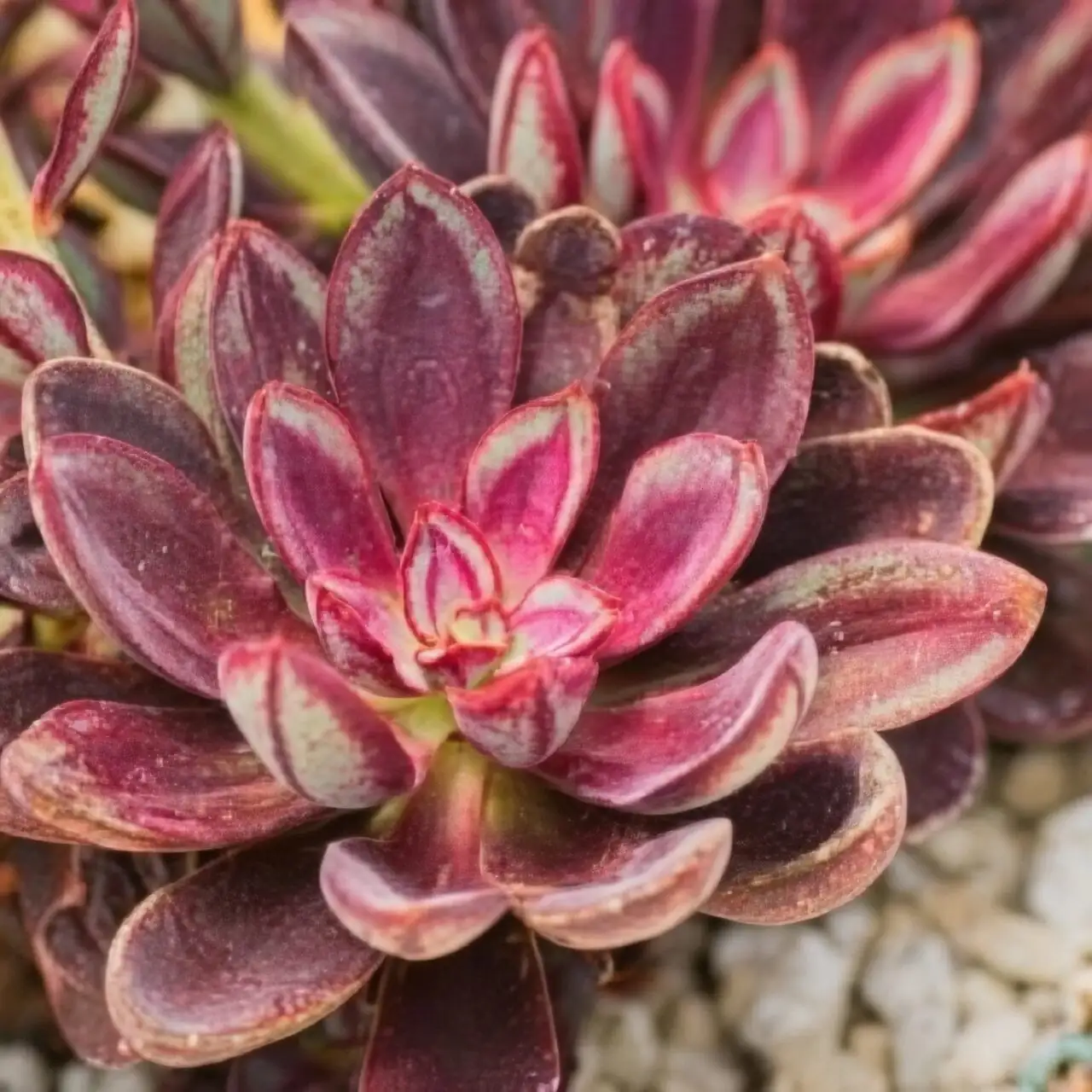
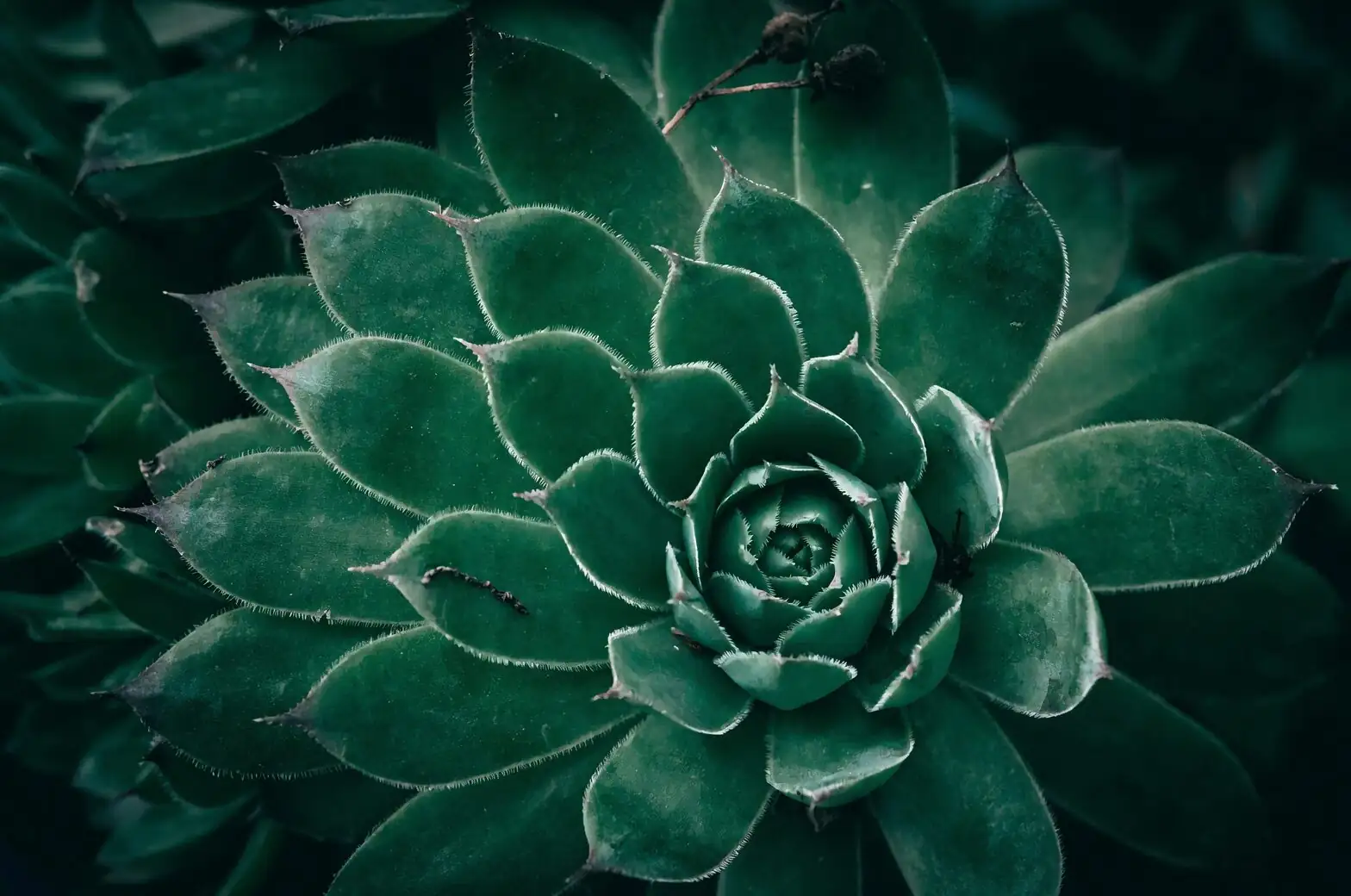
Meet Echeveria ‘Red Taurus,’ the clump-forming rosette that wears deep wine-red to burgundy leaves like polished garnets. Under strong light, the rosettes stay tight and richly colored—and once it’s happy, it throws offsets and, in summer, sends up tall flower stalks dotted with red-and-yellow blooms. In other words, it’s primed for multiplying. This masterclass focuses on the lowest-fail, most repeatable ways to turn one plant into many: offset division and leaf cuttings—with exact callusing timelines, rooting cues, seasonal timing, and aftercare that keeps those rosettes compact.
Before You Start: Timing, Light, and Setup
Best propagation windows
- Spring is prime: growth is active, temperatures are gentle (15–27°C / 59–81°F), and light is ramping up.
- Early summer works if you can give bright light with protection from extreme heat (light afternoon shade in very hot climates).
- Early autumn is possible if roots can establish before winter’s slowdown.
- Avoid deep winter unless you have grow lights and warm, steady conditions.
Light and airflow
- Aim for bright light to full sun: 4–6+ hours of direct sun helps maintain that deep burgundy color and tight symmetry.
- In heatwaves, provide light afternoon shade to prevent scorch.
- Ensure good airflow and low to moderate humidity; lingering dampness around crowns encourages rot.
Soil and containers
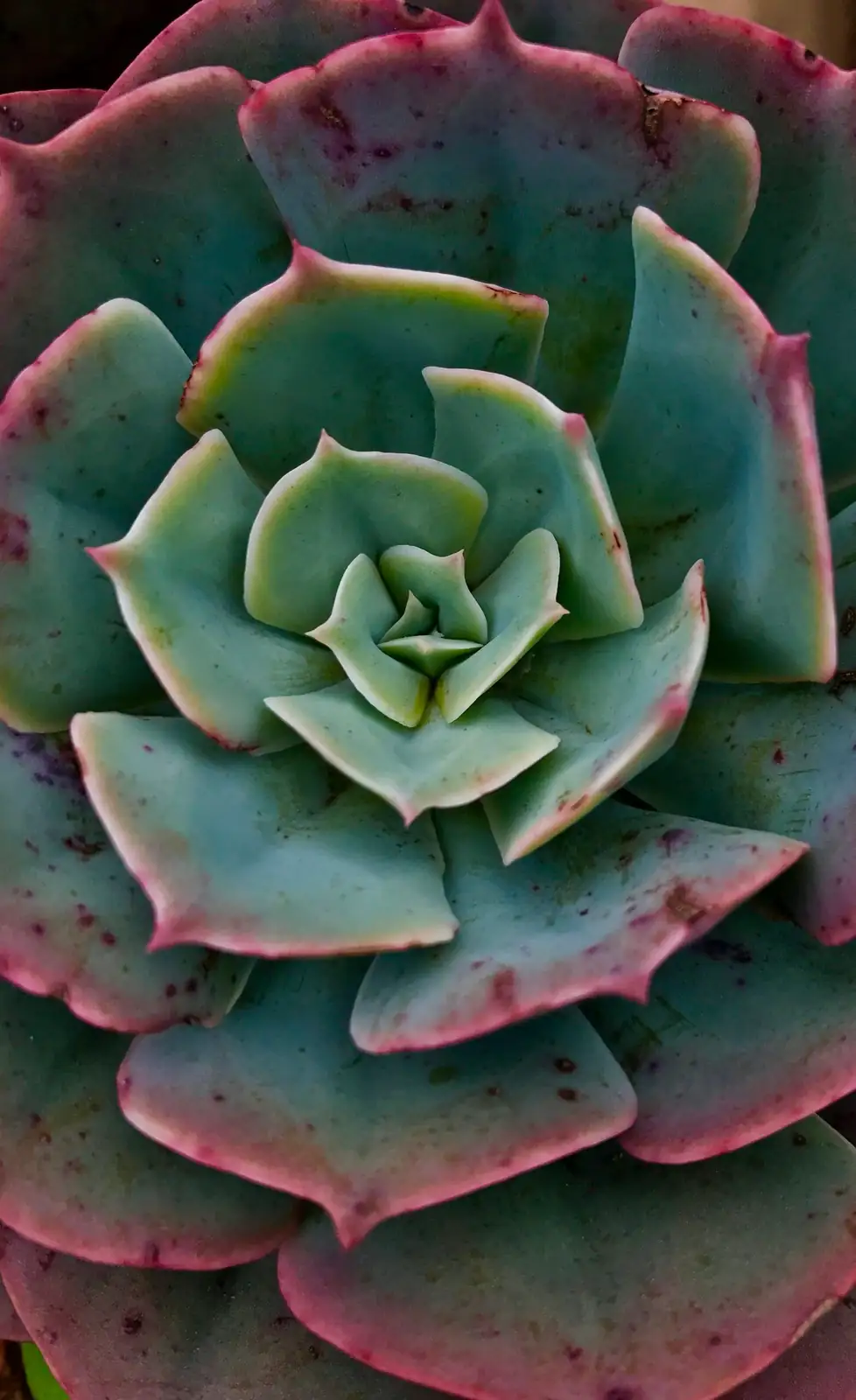
- Use a very free-draining succulent mix boosted with mineral grit:
- Example blend: 40–60% pumice/perlite + 40–60% high-quality cactus mix.
- Choose pots with drainage; terracotta helps the mix dry faster and keeps rosettes compact.
Tools
- Clean, sharp snips or a craft knife
- 70% isopropyl alcohol for sterilizing blades and dabbing mealybugs
- Mesh sieve/brush for removing old soil
- Optional: a pinch of dry sulfur/cinnamon on thick cuts (kept dry) for peace of mind
—
Offset Division: Low-Fail, Step-by-Step
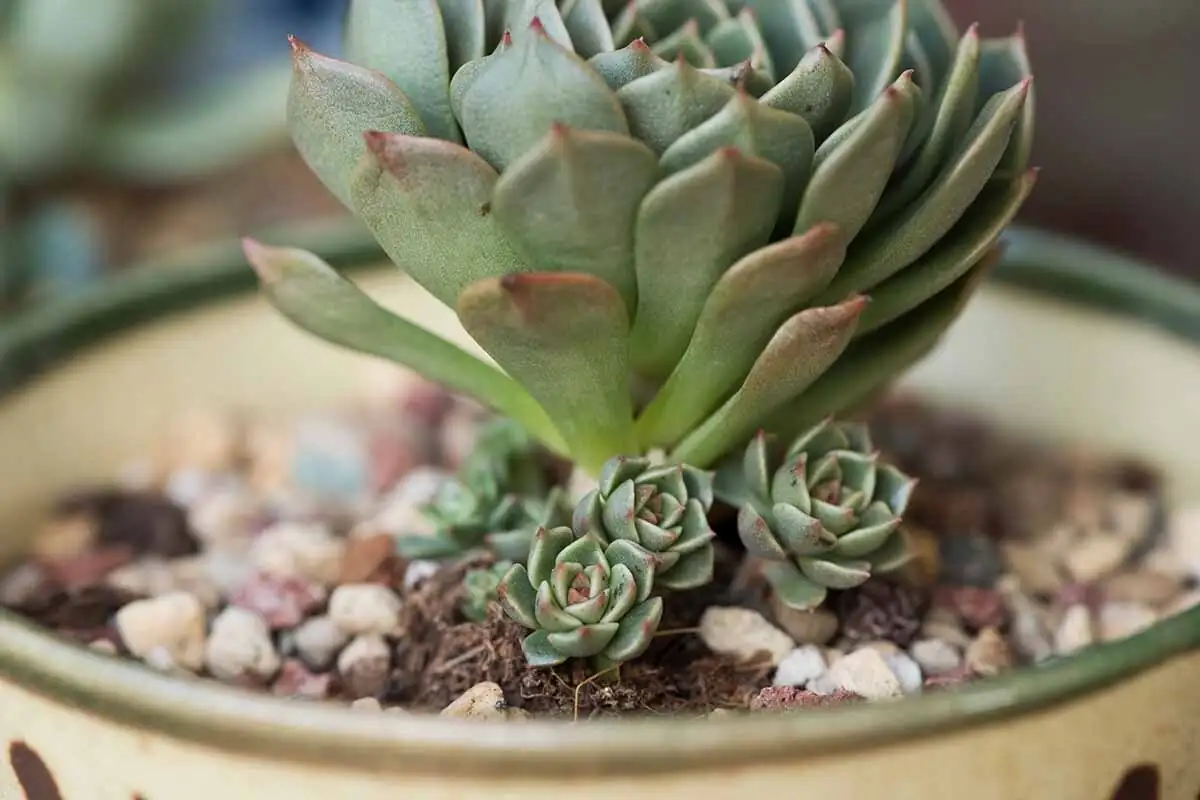
Echeveria ‘Red Taurus’ naturally clumps; offsets are your easiest, most reliable clones.
1) Identify and prepare
- Choose offsets at least one-third the size of the mother rosette, ideally with a hint of their own roots.
- Water the mother plant thoroughly 2–3 days before division. This firms leaves without leaving the crown sopping wet on “surgery day.”
2) Unpot and expose the base
- Gently tip the plant out and brush away soil to see where each offset joins the mother stem.
- Inspect for mealybugs in leaf axils and the crown; remove with alcohol.
3) Separate cleanly
- Wiggle and tease offsets free. If needed, slice at the narrow connection with a sterile blade, keeping as much of the offset’s basal plate as possible.
- Remove any mushy or damaged tissue.
4) Callus correctly (the rot-proofing step)
- Place offsets in bright, airy shade to callus for 2–5 days.
- Cues it’s ready: the cut surface looks matte, dry, and papery at the edges—no tackiness.
- In very humid weather, add a day; in extra-dry conditions, 2–3 days may suffice. When in doubt, wait—not watering yet is your safety net.
5) Stage for rooting
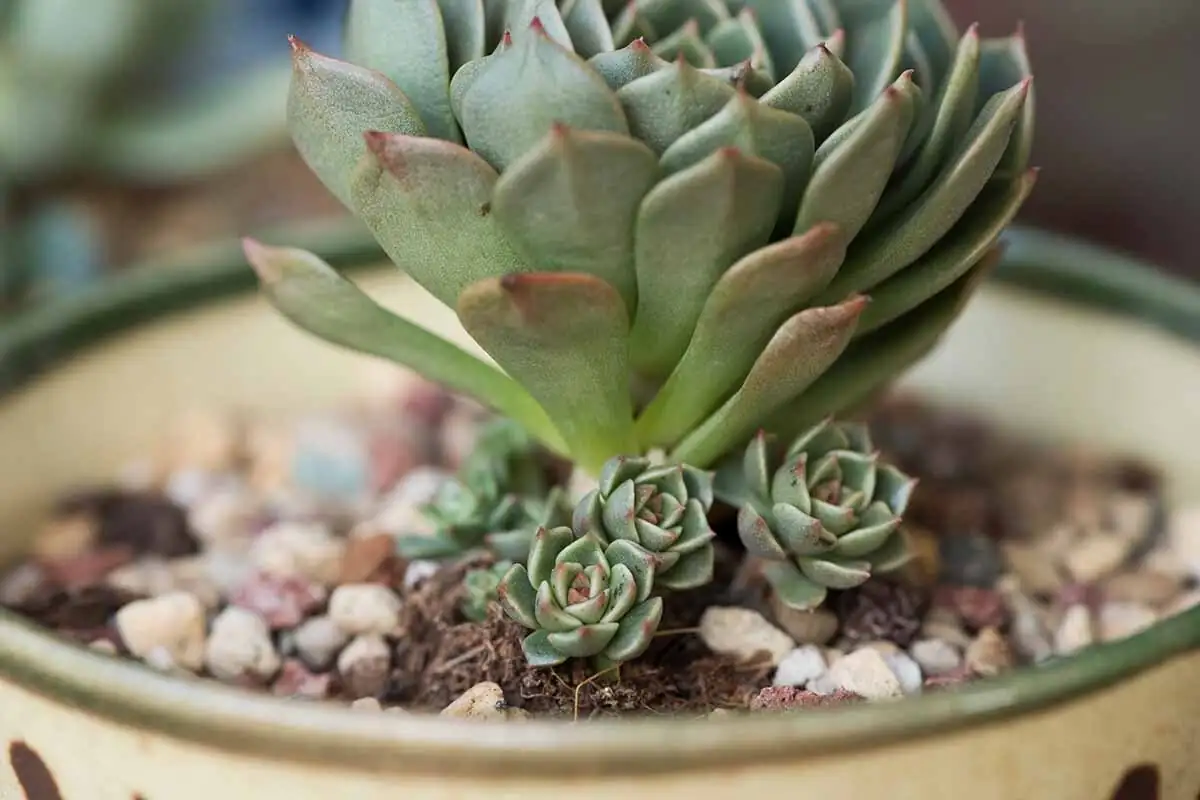
- Set offsets on top of dry, gritty mix. You can:
- Rest the callused base directly on the surface, or
- Perch the rosette so the base hovers just above the mix (roots naturally reach down).
- Light: bright, indirect light with excellent airflow.
6) Rooting timeline and cues
- Typical cues:
- Day 7–14: pale pink/white root nubs appear at the base.
- Week 2–3: a firmer “tug” tells you roots have anchored.
- Hold off on water until roots are visible.
7) First water—and how to keep it compact
- First drink: deliver a small, targeted trickle at the soil line once you see roots. No soaking yet.
- Wait 7–10 days. Then graduate to a deeper soak-and-dry cycle: water thoroughly, allow the mix to dry completely before watering again.
- Compact rosette protocol:
- Ramp up to 4–6+ hours of direct sun over 10–14 days.
- Use tight, shallow pots in gritty mix; avoid constant moisture.
- Feed lightly (1/4–1/2 strength succulent fertilizer) only in spring–summer, every 4–6 weeks.
—
Leaf Cuttings: Precision Moves for High Success
Some Echeverias are fussier by leaf than others, but ‘Red Taurus’ can be multiplied this way with careful technique.
1) Choose and remove the leaf
- Pick mature, plump leaves from the lower to mid rosette—no tears, no blemishes, no thin/dehydrated leaves.
- Twist gently with your thumb and forefinger until the entire leaf—including the tiny base that clasps the stem—releases. A clean “heel” matters; partial bases rarely root.
2) Callus (non-negotiable)
- Rest leaves in bright shade for 2–5 days until the broken end is fully dry and matte.
3) Lay and wait—on dry mix
- Lay leaves on top of a dry, gritty mix. Do not bury them.
- Light: bright, indirect; avoid harsh midday sun on unrooted leaves.
- Airflow: good circulation deters rot and encourages clean rooting.
4) Rooting and baby rosettes
- Typical timeline:
- Week 1–3: hairlike roots emerge from the callused end.
- Shortly after: a tiny rosette (“pup”) appears beside the roots.
- Water only when roots appear. Then:
- Deliver a teaspoon/syringe of water at the root zone; keep the leaf blade itself dry.
- Let the mix dry completely between these tiny drinks.
5) Potting up baby plants
- When the pup is 1–2 cm across and roots are ~2–3 cm long:
- Make a shallow divot in gritty mix, tuck in the roots, keep the rosette above the soil line.
- Leave the original leaf attached; it will shrivel as it feeds the pup. Remove only when it’s fully withered and detaches easily.
6) From seedling to showpiece—compactness rules
- Gradually increase light toward 4–6+ hours of direct sun.
- Keep water lean but decisive: thorough soaks spaced by full dry-downs.
- Small pots + mineral-heavy mix curb stretch and keep rosettes tight and richly colored.
—
Post-Root Watering Strategy That Prevents Stretch
- Watering sequence:
- First watering: a light, targeted sip after roots appear.
- Second watering (7–10 days later): a modest drink.
- Thereafter: soak-and-dry—deep water, then wait until the potting mix is bone-dry.
- Environment:
- Bright light is your “anti-etiolation” tool. Rotate pots weekly for even symmetry.
- Keep nights cooler when possible (still frost-free) to intensify red tones.
- Fertilizer:
- Minimal feeding in active seasons only; excess nitrogen prompts floppy growth.
—
Troubleshooting: Quick Saves
- Leaves turning green instead of deep red
- The fix: increase direct light gradually; cooler nights can enhance red tones.
- Rosette stretching tall and open (etiolation)
- The fix: more light; if badly stretched, behead and re-root the top in gritty mix.
- Rot at the center/crown
- Likely cause: water trapped in the rosette or soil staying wet too long.
- The fix: water at the soil line, use very fast-draining mix, let the pot dry fully.
- Leaf cuttings turning mushy
- Cause: watering before callus/roots or too-humid conditions.
- The fix: discard mushy ones, adjust to longer callus time and better airflow.
- Offsets shriveling post-separation
- Cause: not yet rooted—don’t drown them.
- The fix: keep on dry mix in bright shade, give the first sip only after roots form.
- Pests (mealybugs, aphids on bloom stalks, spider mites)
- The fix: alcohol swabs or insecticidal soap; increase airflow; isolate and treat promptly.
—
Fast Facts for Red Taurus Echeveria
- What you’ll see: tight, symmetrical rosettes in deep burgundy to wine-red; clumps form over time.
- Summer show: tall, upright stalks with bicolored red-and-yellow flowers.
- Size: rosettes about 8–15 cm wide; overall 10–20 cm tall; flower stems 20–40 cm.
- Light: bright light to full sun; 4–6+ hours direct for best color and compactness.
- Temperature: best at 15–27°C; protect from frost, ideally above 0–5°C in winter.
- Water: soak-and-dry; keep water out of the rosette.
- Soil: very free-draining succulent mix with added pumice/perlite.
- Non-toxic: generally safe for people and pets (ingestion may upset the stomach).
—
Care Calendar for Your New Clones
- Spring: prime time to divide/propagate; begin light feeding; increase sun gradually.
- Summer: shield from extreme heat; maintain soak-and-dry; enjoy the blooms.
- Autumn: taper watering as growth slows; ensure rooted cuttings are established before cold.
- Winter: keep bright, cooler, and very sparing with water; bring indoors before frost.
—
Symbolism and “Flower Language”
Echeverias are often associated with endurance and self-reliance—fitting for a plant that thrives on bright light, lean water, and a gritty mix. In the modern “flower language” trend, succulents symbolize resilience and quiet strength. Unlike classical Victorian floriography (which codified meanings for cut flowers like roses), succulent symbolism is contemporary and culture-driven: growers celebrate their toughness and beauty, their ability to root from a single leaf, and their calm minimalism in design. ‘Red Taurus,’ with its steadfast burgundy rosettes and determined clumping habit, embodies exactly that spirit.
—
Final Notes for Propagation Success
- Callus with patience (2–5 days), then root on dry, gritty mix.
- Water only after roots appear, then graduate to soak-and-dry.
- Maximize light (4–6+ hours) and airflow to keep rosettes tight and richly colored.
- Use small, well-drained pots and minimal fertilizer.
- Inspect crowns and leaf axils for pests—catch them early.
Do this, and your single ‘Red Taurus’ becomes a scarlet constellation—compact, symmetrical, and glowing from one pot to a plentiful cluster.